
🔥 Heat and Cooking Methods · Lesson 4 of 5
Smoke Points and Pan Heat: How Hot Is Hot Enough?
Read the pan, not the clock: shimmering oil, the first wisp of smoke, the water drop test and smoke points of common fats.
- Butter: about 302°F
- Unrefined peanut oil: about 320°F
- Extra virgin olive oil: about 374 to 405°F
- Lard: about 374°F
- Refined canola oil: about 400°F
- Vegetable oil: about 400 to 450°F
- Refined peanut oil: about 450°F
- Clarified butter: about 482°F
- Extra virgin avocado oil: 350 to 482°F, sources disagree
- Refined avocado oil: about 520°F
Why it matters
Every fat has a smoke point, the temperature where it starts to smoke, and it depends on how refined the fat is. Most home cooks either add food before the pan is hot or reach for a fat that can't take the heat. Matching the fat to the job and reading the oil fixes both.
Refined fats take more heat
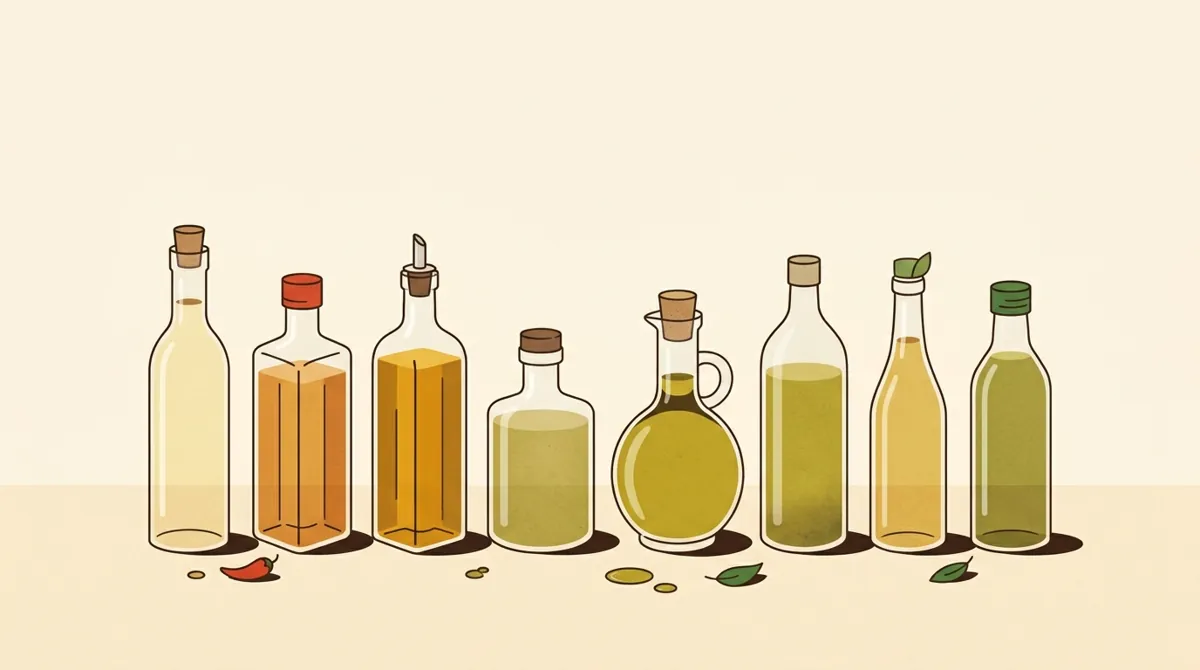
Smoke point tracks refinement. Unrefined oils keep flavorful compounds, free fatty acids and proteins that burn first, so they smoke sooner. Peanut oil shows the gap clearly: about 450°F refined and about 320°F unrefined. Whole butter smokes around 302°F, while clarified butter, with the milk solids removed, is listed around 482°F.
Sources disagree, so treat numbers as ranges
Published smoke points vary widely by brand, quality and how they were measured, and even by the size of the pan and the light in the room. Extra virgin avocado oil is listed at 482°F on Wikipedia but about 350°F by America's Test Kitchen. Wikipedia gives extra virgin olive oil 374 to 405°F depending on quality, and America's Test Kitchen puts olive oil above 400°F.
Shimmer first, then smoke
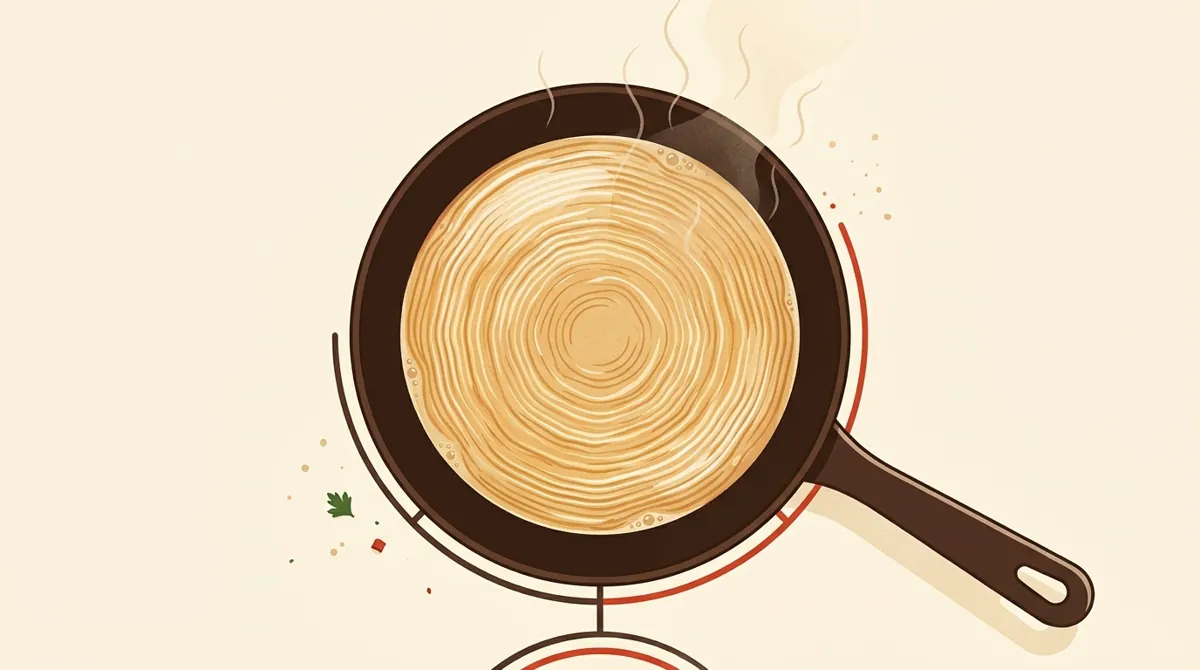
Heated oil first thins out and shimmers, at about 275°F, which is fine for shallow frying cutlets. Next it smokes, somewhere between 350 and 520°F depending on the oil, which America's Test Kitchen uses for searing steak and stir frying. Deep frying starts between 325 and 375°F, so it calls for a thermometer.
The water drop test
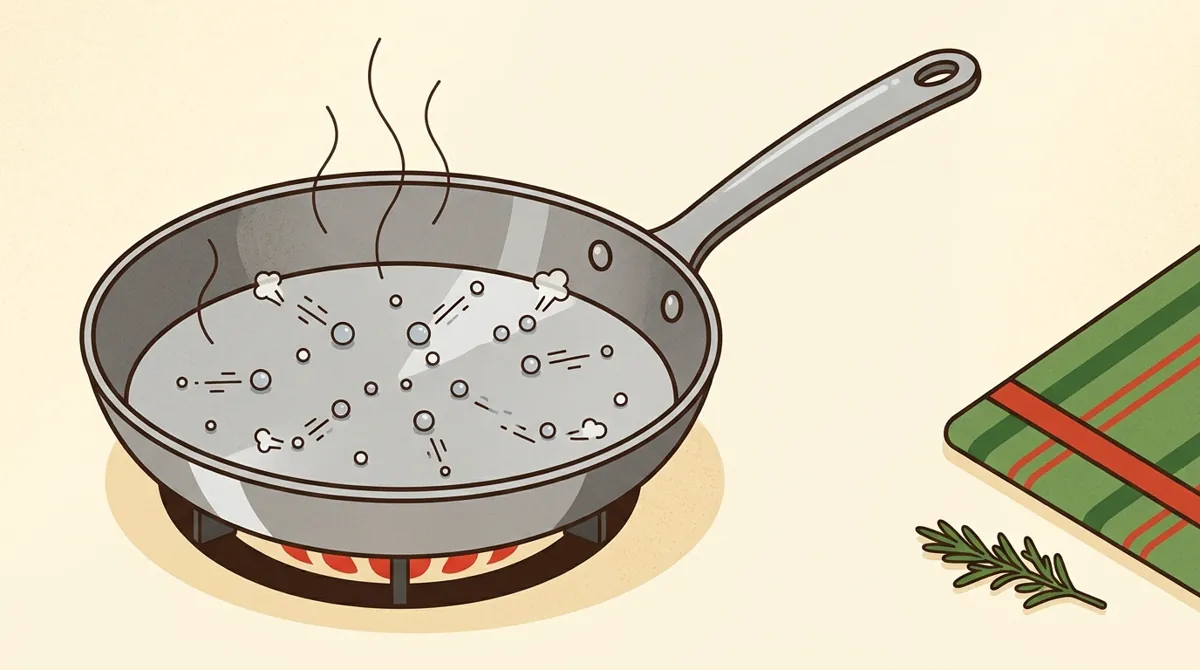
In a dry pan, before any oil goes in, flick in a few drops of water. Below 212°F they flatten and evaporate slowly, above 212°F they hiss and disappear fast, and past about 379°F they bunch into little balls and skitter around. Skittering drops mean the pan is properly hot.
Reused oil smokes sooner
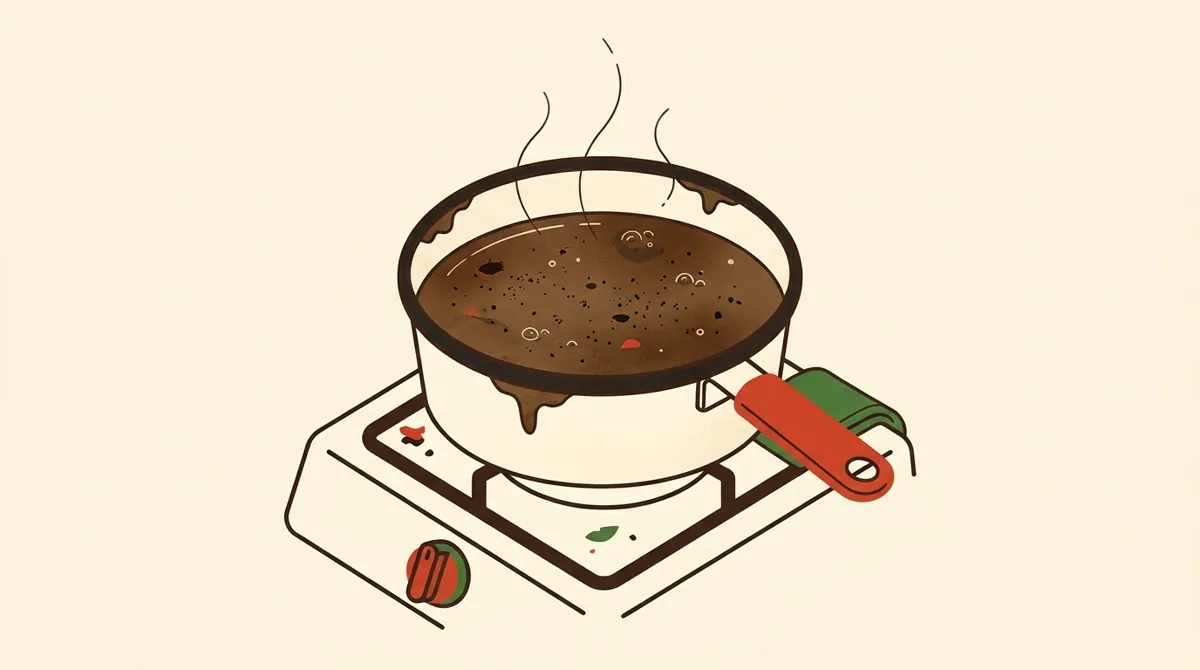
Each time frying oil is reused its smoke point drops. When an oil that used to behave starts smoking early, it is time for fresh oil.
Step by step
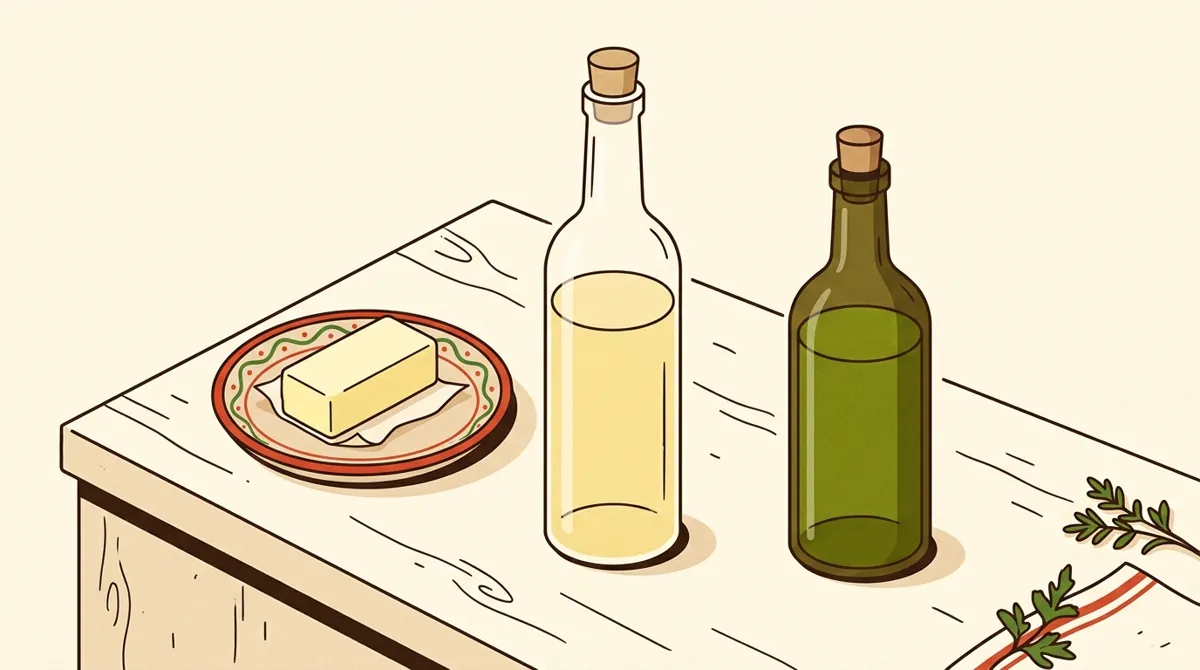
Pick the fat for the job: a refined, high smoke point oil for searing and stir frying, butter or extra virgin olive oil for gentler heat.
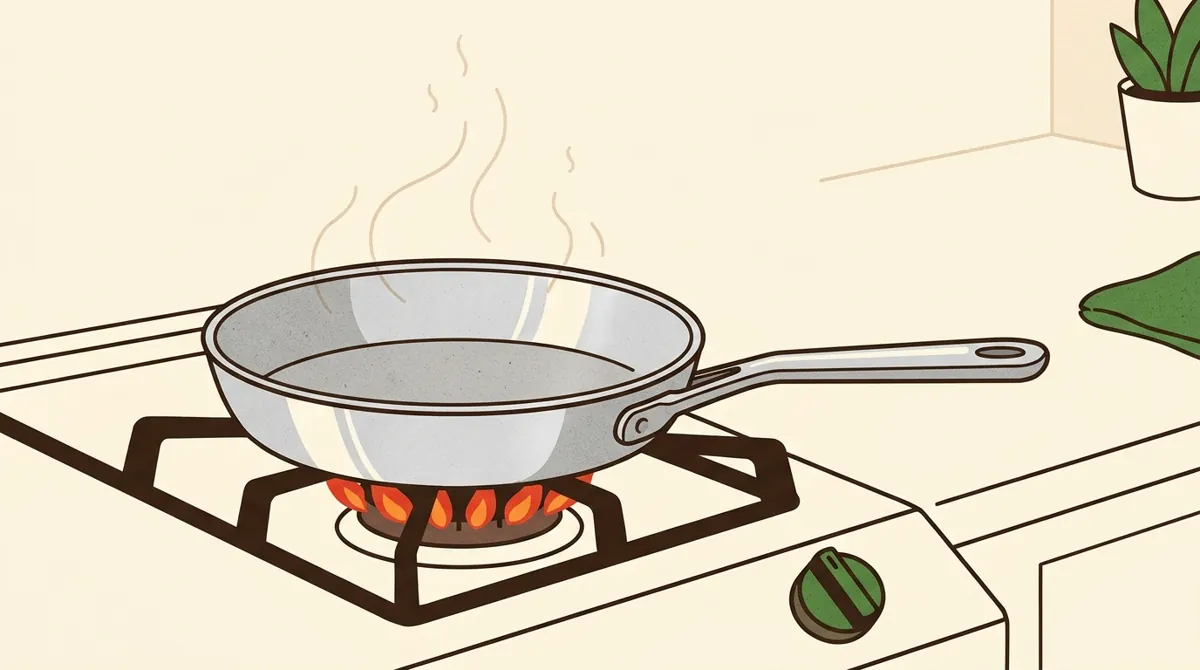
Heat the empty pan over medium-high for a few minutes.
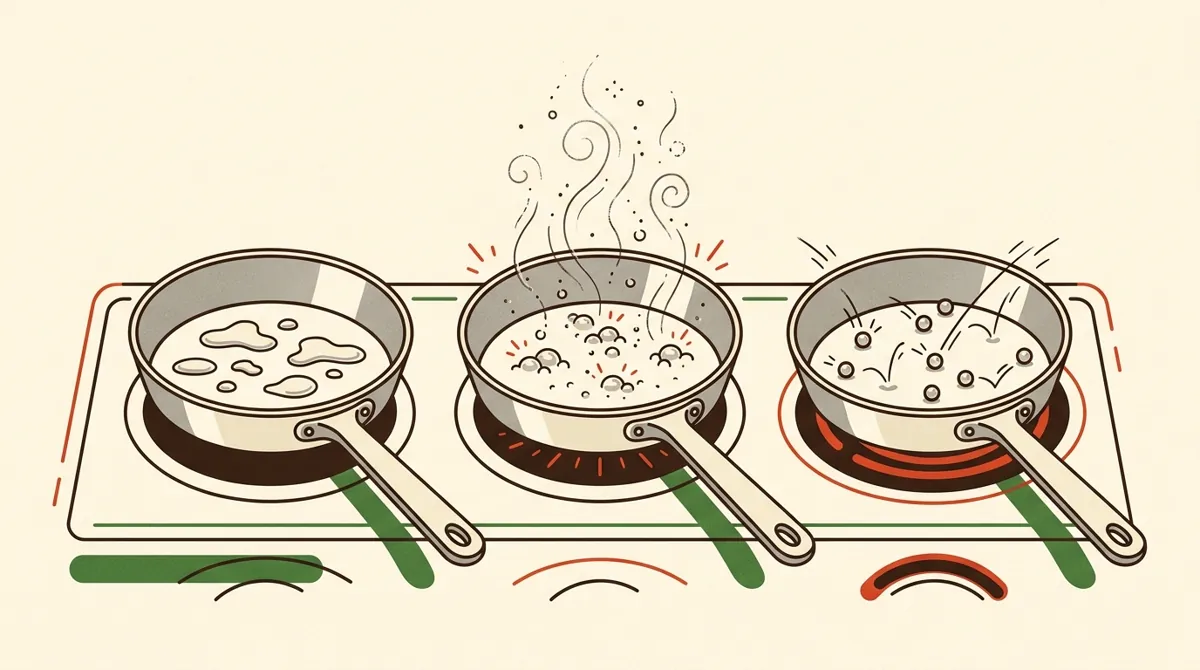
To check it, flick a few drops of water into the dry pan; if they bead up and skitter, it is hot. Wipe it dry.
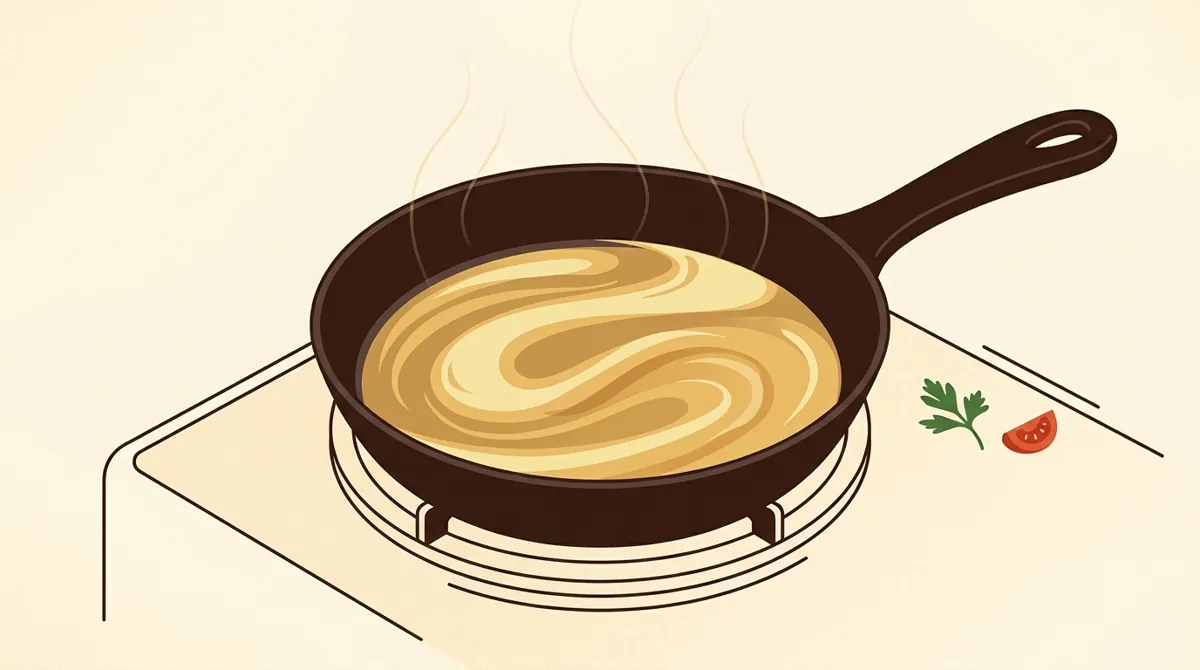
Add a thin film of oil and watch it: first it thins and shimmers, then the first wisps of smoke appear.
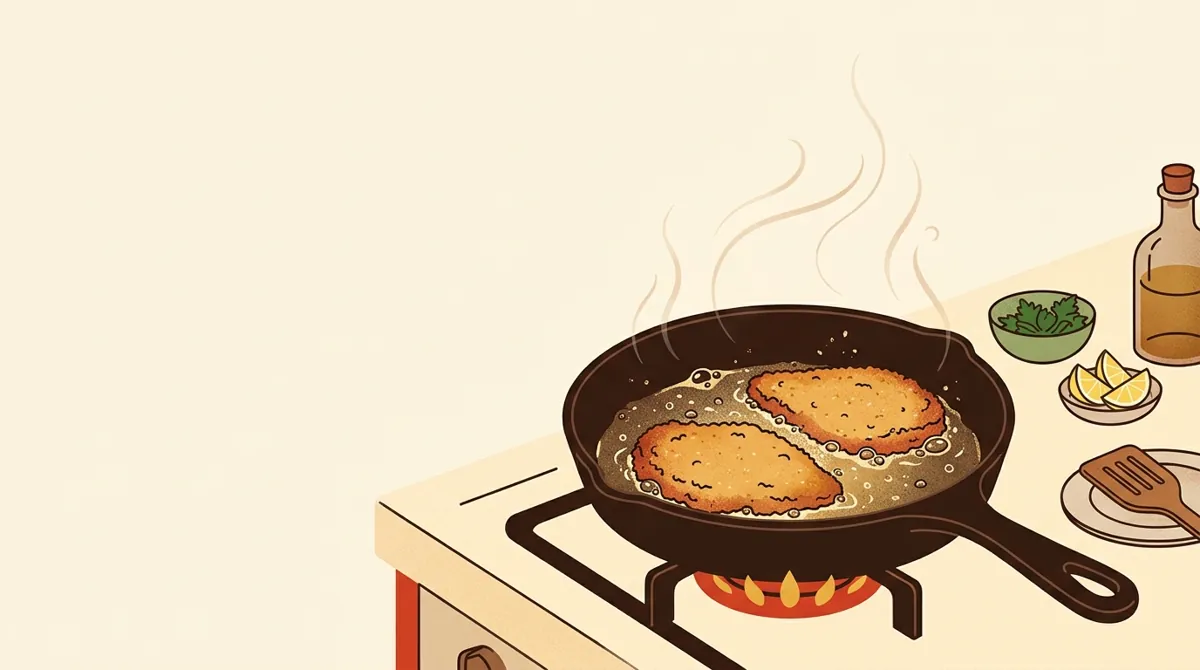
Add food at the shimmer for shallow frying and gentler cooking, or at the first smoke for a hard sear.
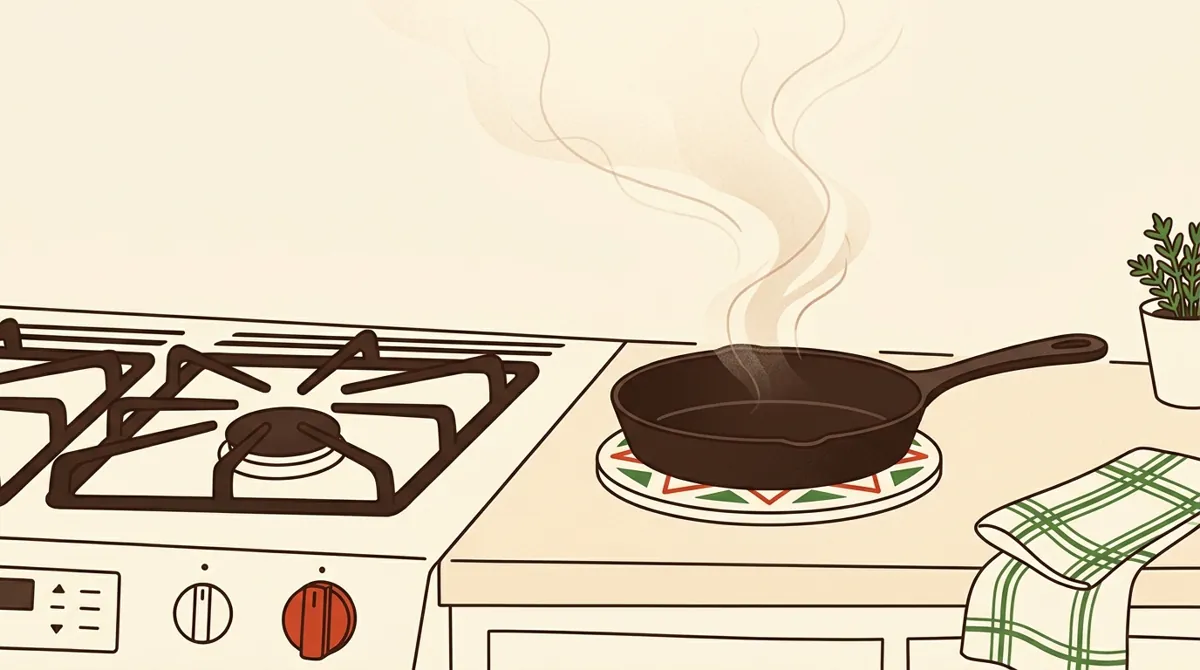
If the oil smokes heavily, lift the pan off the burner for a moment and turn the heat down.
Common mistakes
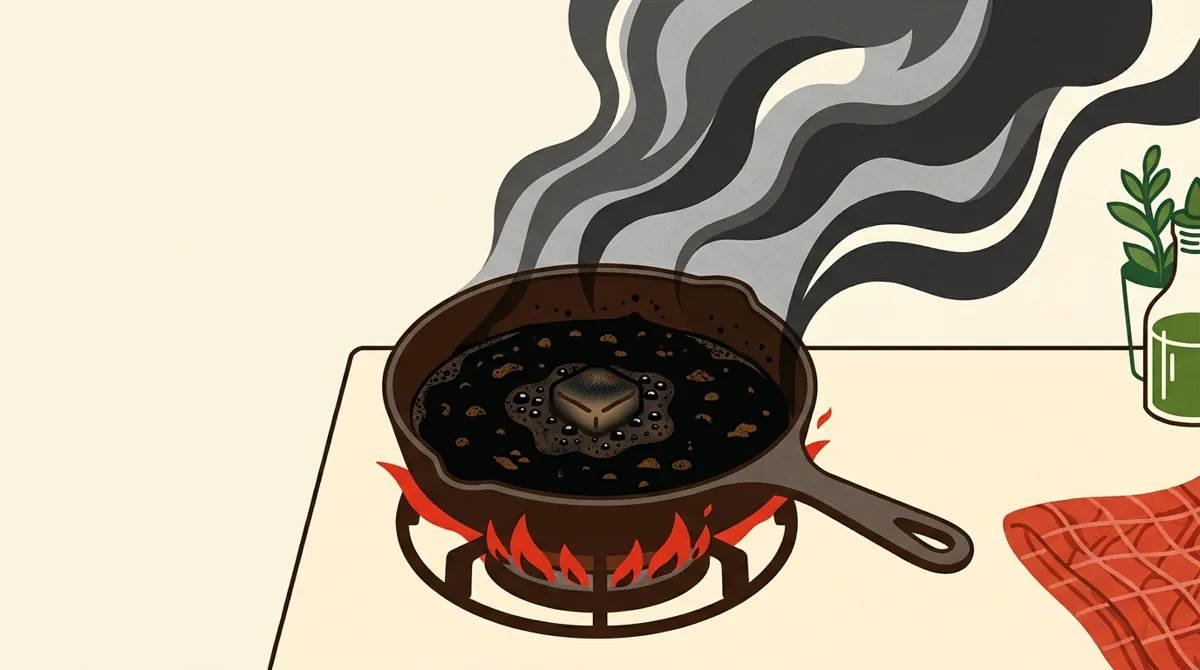
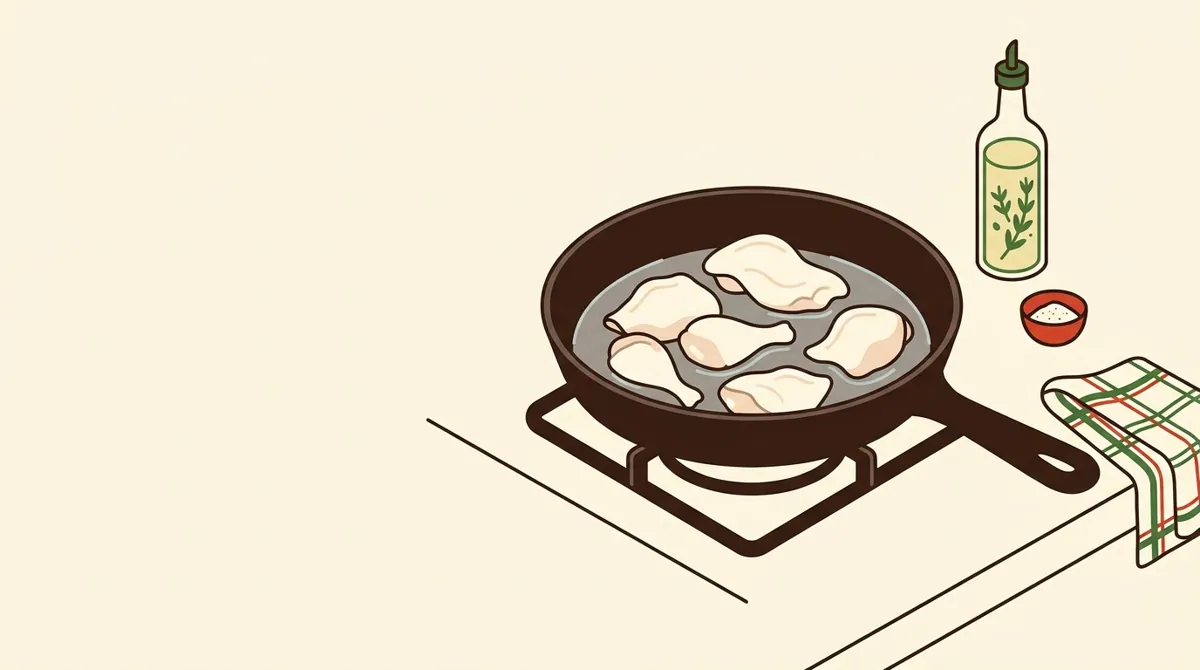
- Searing in whole butter: it smokes around 302°F, so sear in a refined oil or clarified butter and add butter at the end for flavor.
- Trusting one smoke point number: published values vary widely, so watch the oil in your own pan.
- Adding food the moment the oil goes in: below the smoke point browning takes too long and the food overcooks, so wait for the shimmer or the first wisp of smoke.
- Doing the water test in hot oil: do it only in a dry pan, before any fat goes in.
🏋️ Try it tonight
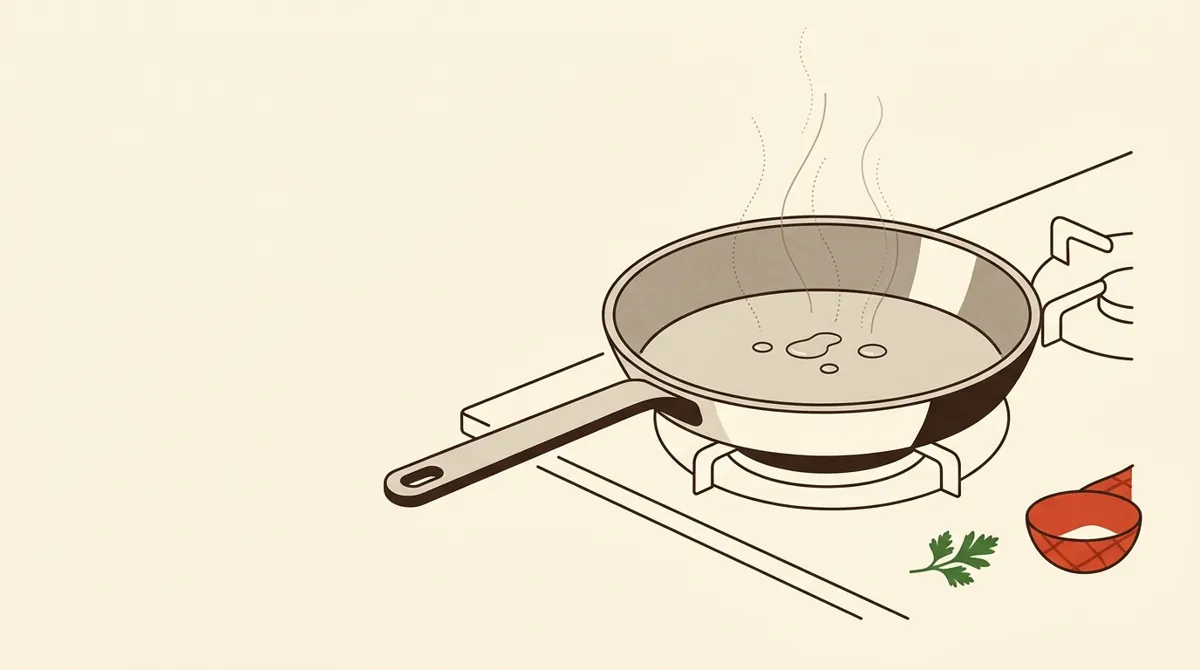
Set a dry skillet over medium heat and flick in a few drops of water every 30 seconds. Watch them go from sitting flat, to hissing away, to beading up and skittering. Wipe the pan dry, add a tablespoon of neutral oil and watch for the shimmer, then the first wisp of smoke. Turn off the heat as soon as you see it.
💡 Did you know?
A hotter pan makes water drops last longer: above about 379°F a drop rides on a cushion of its own steam, which conducts heat poorly, so it skates around instead of vanishing. This is called the Leidenfrost effect.
Use it tonight
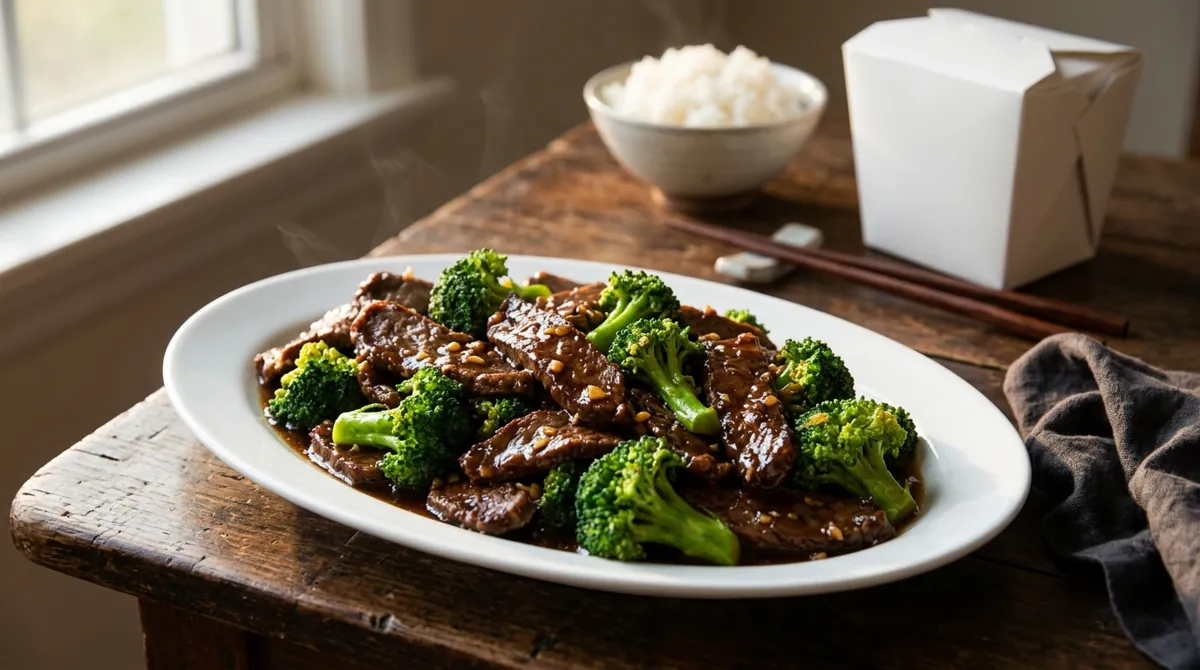
Beef and Broccoli
Thin slices of velveted flank steak seared in a smoking-hot wok, tossed with blanched broccoli florets, garlic and ginger in a glossy brown sauce of chicken stock, oyster sauce, soy sauce and a little sugar.
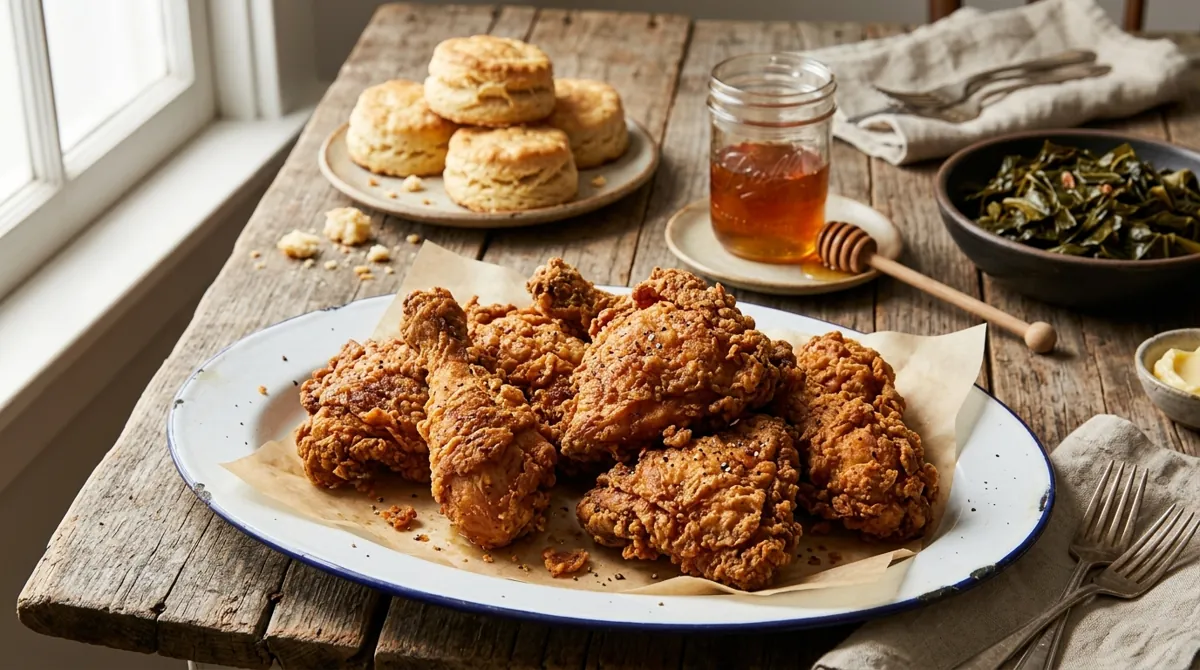
Southern Pan-Fried Buttermilk Chicken
Chicken brined in salt water, soaked overnight in buttermilk, dredged in flour and cornstarch, and pan-fried in a skillet of lard and butter flavored with country ham, the Edna Lewis way.
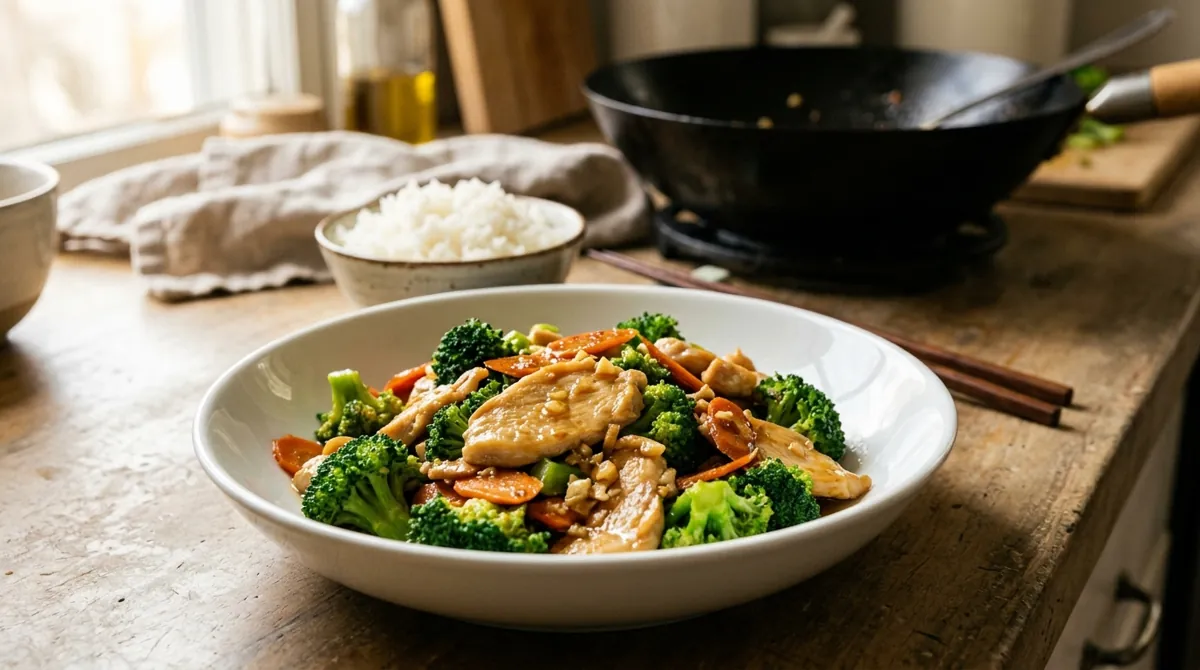
25-Minute Chicken and Broccoli Stir-Fry
The takeout template in 25 minutes: velveted chicken breast browned in a hot wok, tossed with blanched broccoli, carrot, garlic, ginger and scallion in a quick oyster sauce and soy sauce glaze.
Sources
- Smoke point (Wikipedia)
- Shimmer, Deep-Fry, and Smoke: How Oil Behaves at Different Temperatures (America's Test Kitchen)
- Science: Shimmer and Smoke (America's Test Kitchen)
- The 5 Best Oils for Frying at Home (America's Test Kitchen)
- All About Olive Oil (America's Test Kitchen)
- Leidenfrost effect (Wikipedia)