🔪 Knife Skills · Lesson 4 of 5
Honing vs Sharpening a Knife: What the Steel Actually Does
A honing steel straightens the edge you have; sharpening grinds a new one. Here's when to do each, and at what angle.
🎬 Watch the lesson
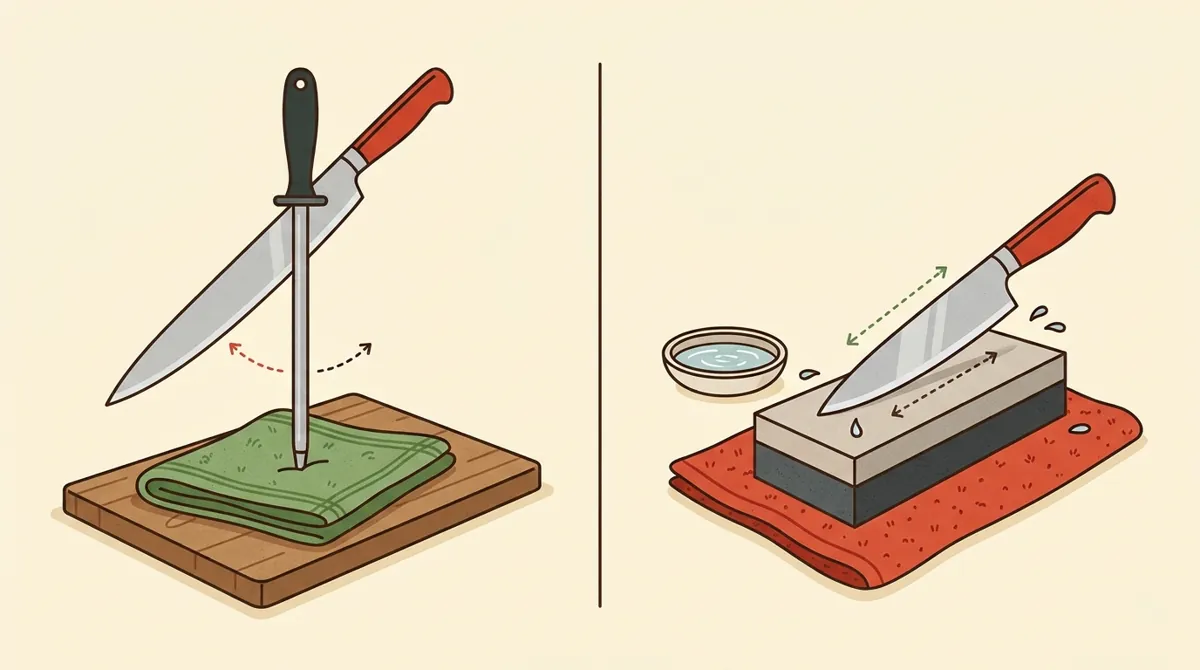
- Honing steel, tip resting on a towel
- About 20 degrees
- Whetstone on a damp towel
- Coarse side shapes, fine side polishes
Why it matters
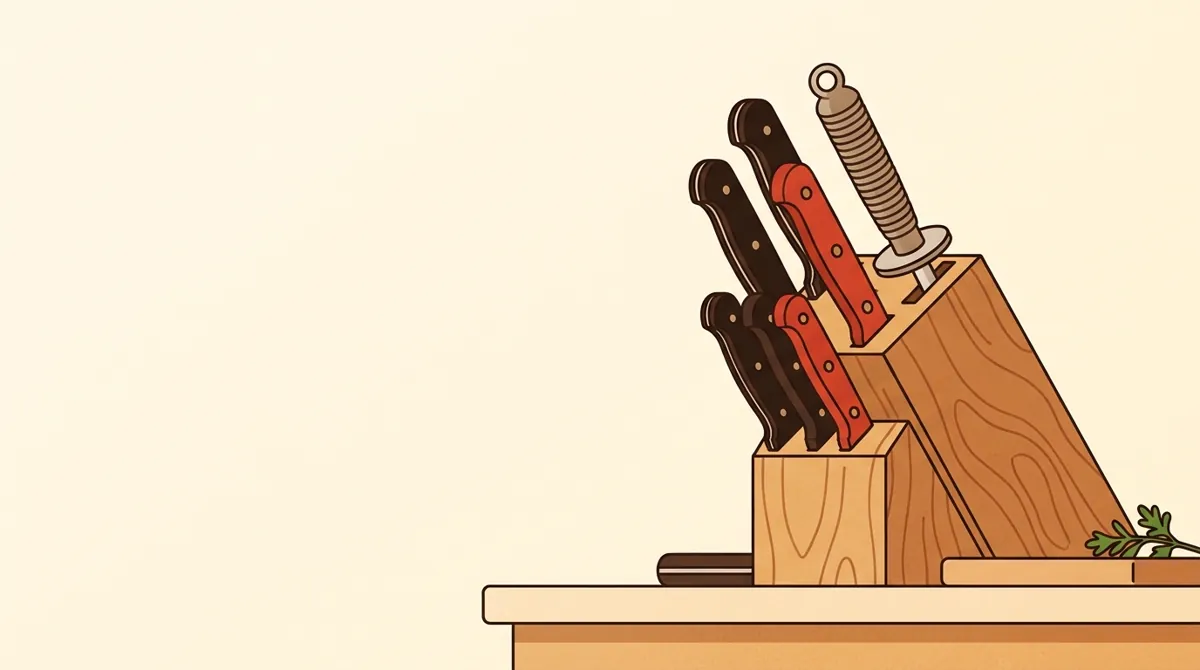
Most kitchens have a honing steel in the knife block that nobody uses, or that gets used as if it were a sharpener. They are two different jobs. Honing keeps a sharp knife sharp for longer; only sharpening brings a dull one back.
Honing straightens the edge
With use, the very thin edge of a knife bends over a little to one side. A smooth honing steel pushes it back into line. It removes no metal, so it can't fix a knife that is truly dull.
Sharpening grinds a new edge
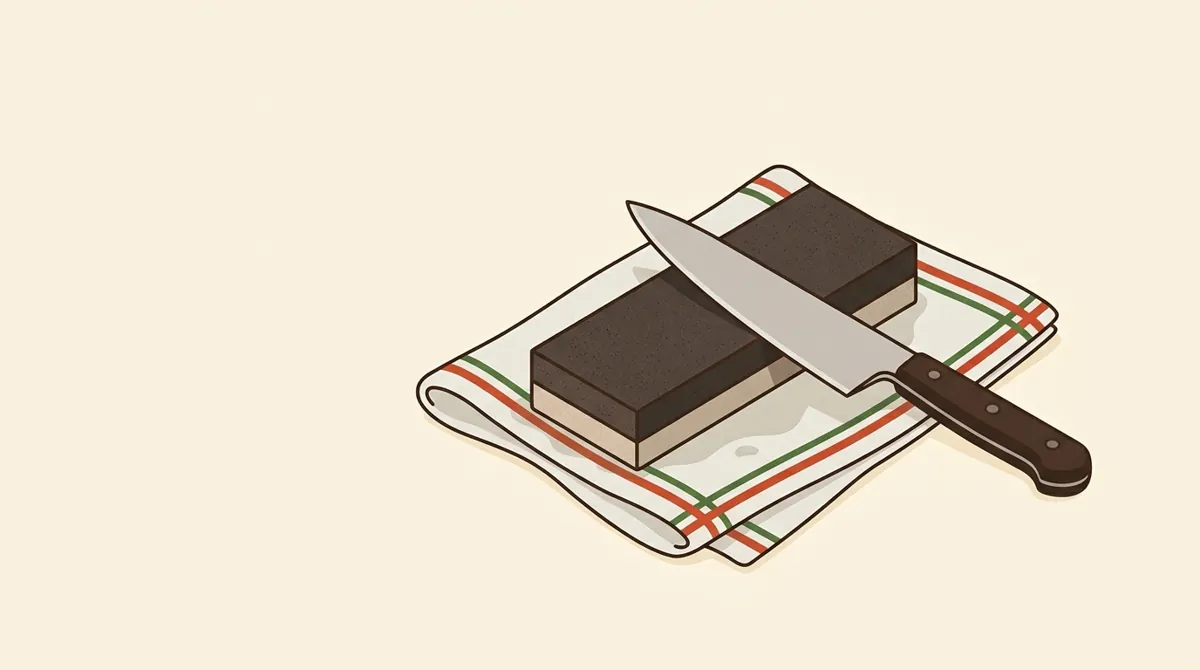
A whetstone or sharpener removes metal from both sides of the blade to form a new edge. Stones come in coarse grits that shape the edge and fine grits that refine it. It's done much less often than honing.
The angle
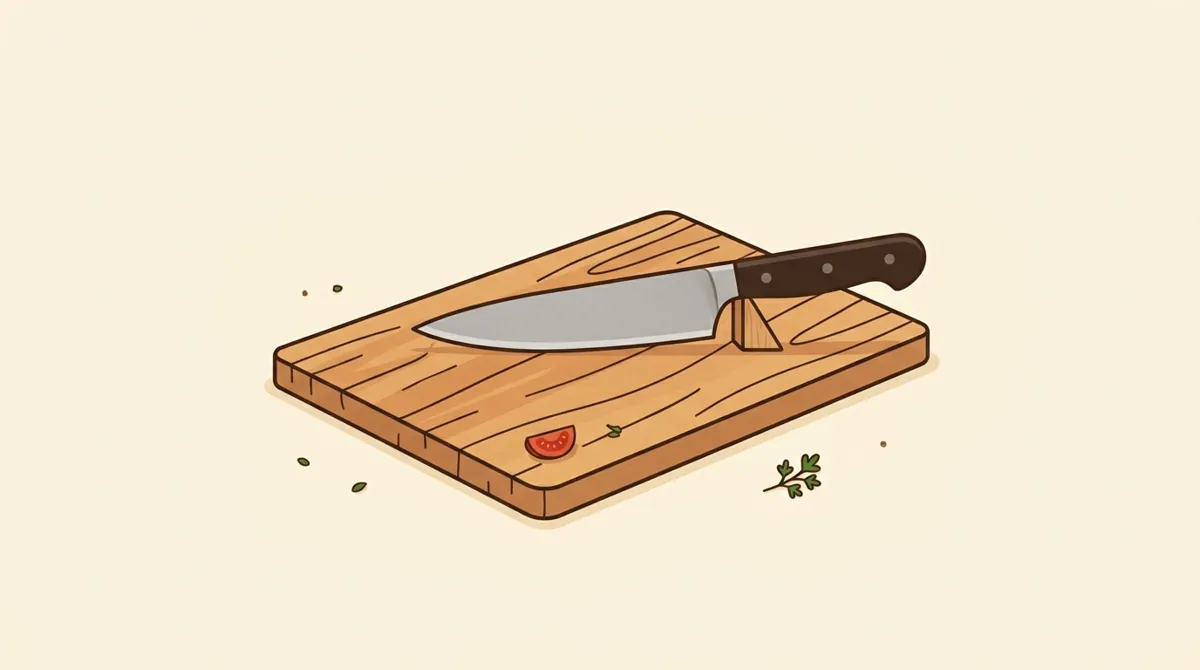
Western kitchen knives are usually sharpened to about 20 to 22 degrees on each side, and Japanese style knives to about 15 to 18 degrees. When honing, hold the blade at about 20 degrees to the steel, a little steeper than the knife's own edge.
A few light strokes
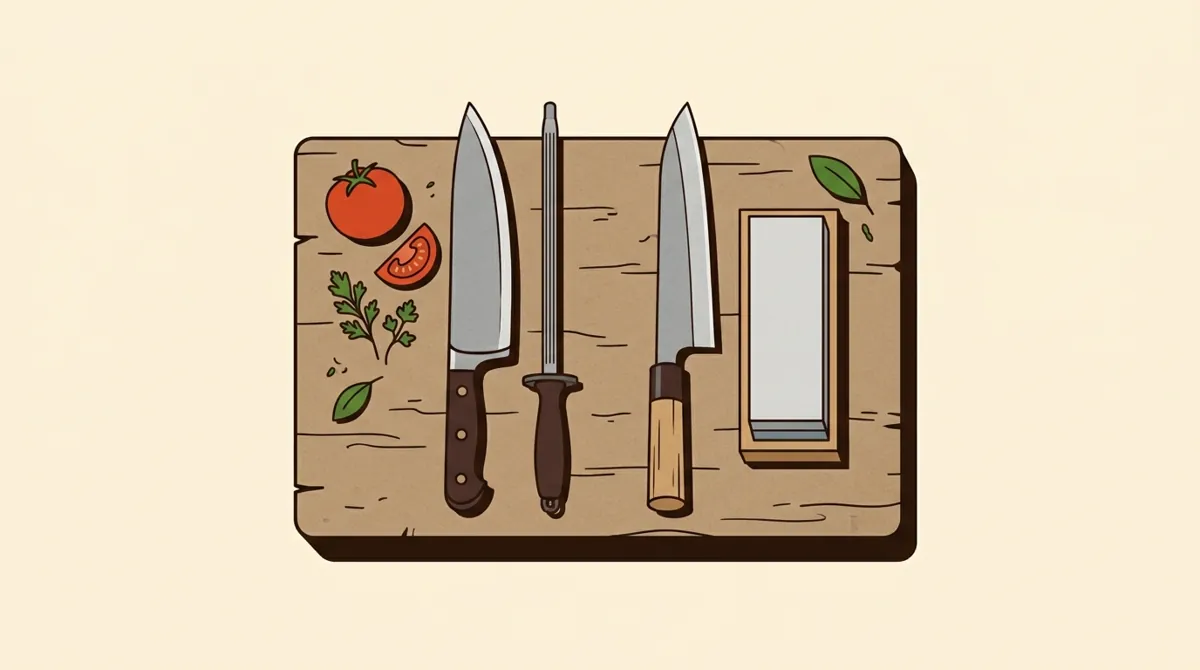
Five to ten light strokes on each side, alternating sides, is plenty. Many cooks hone before or after each use. Pressing harder doesn't help and can roll the edge the other way.
Not every rod is a hone
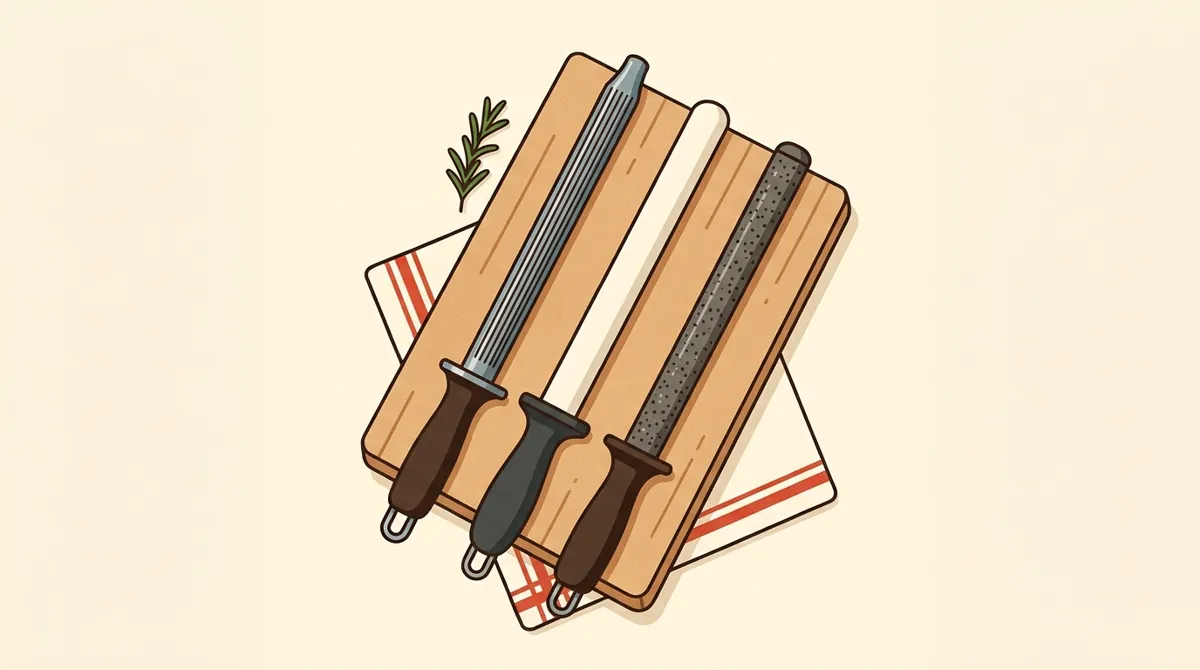
A smooth steel only straightens. Ceramic and diamond-coated rods are abrasive and remove a little metal each time, so they sit somewhere between honing and sharpening. Use them gently.
Step by step
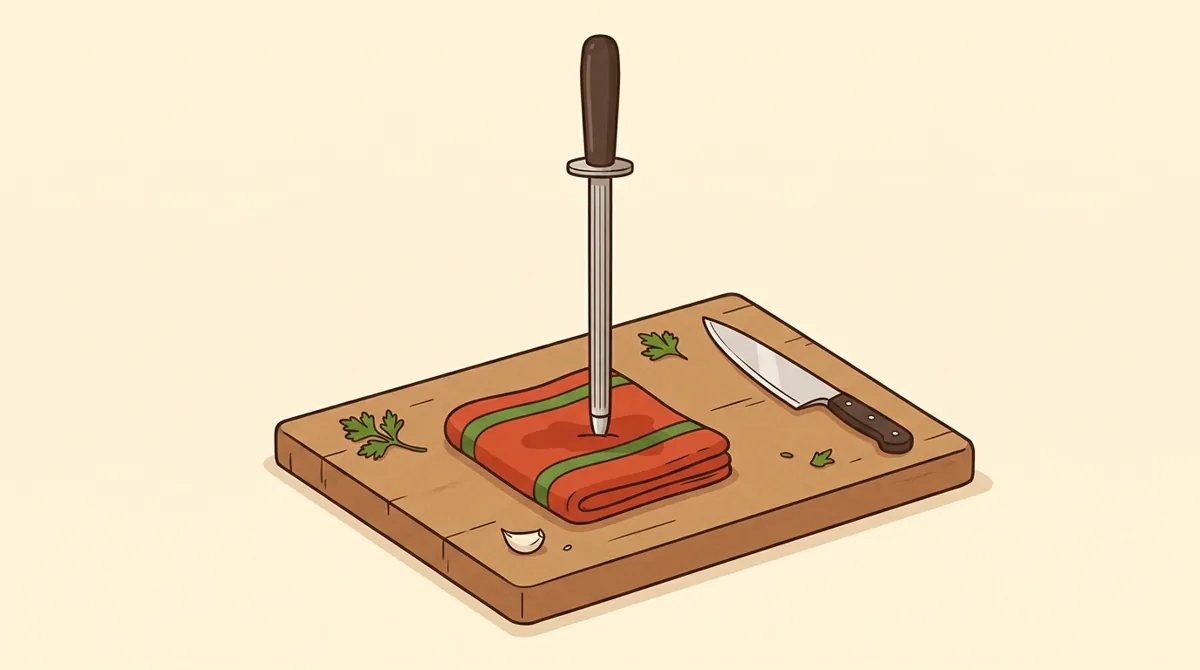
Hold the steel upright with its tip resting on a damp towel on the board.
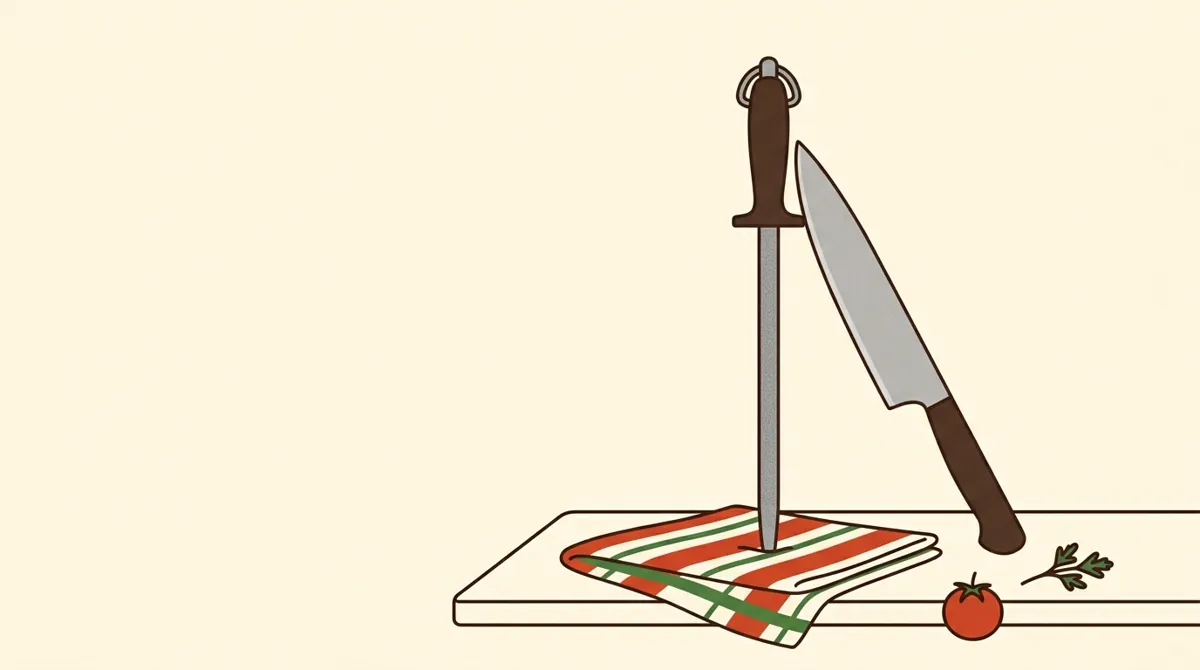
Set the heel of the knife against the top of the steel at about 20 degrees, roughly the angle of a matchbook tucked under the spine.
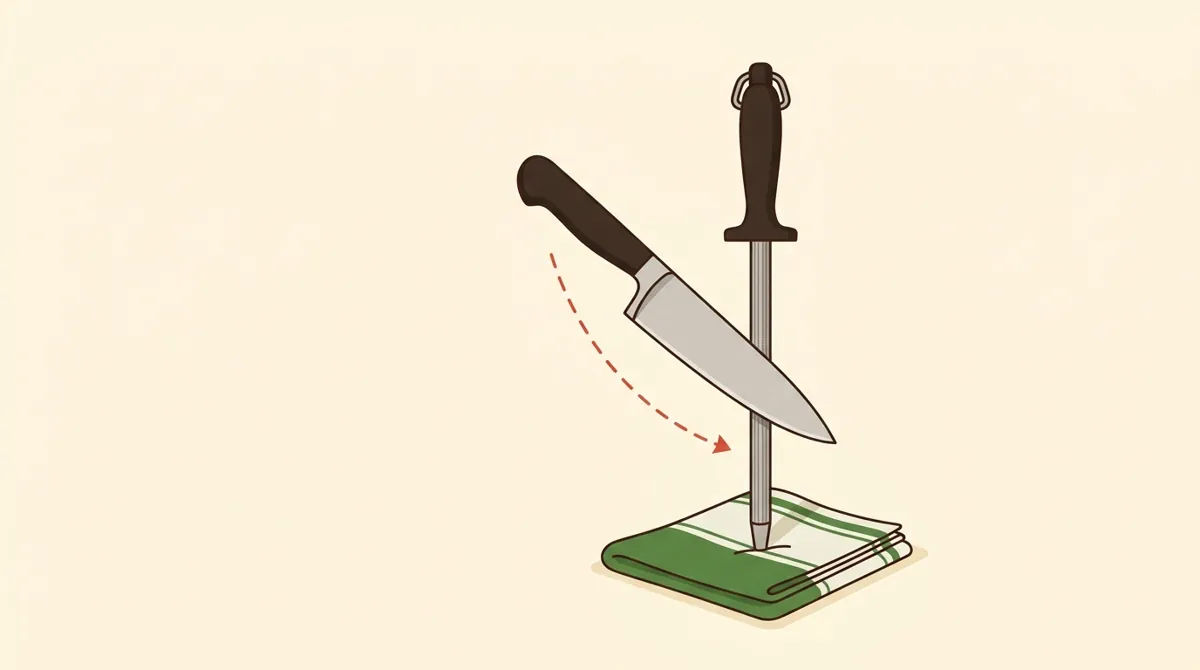
Draw the blade down and toward you in one smooth stroke so the whole edge, heel to tip, touches the steel.
Repeat on the other side of the steel for the other side of the blade.
Do 5 to 10 light strokes per side, alternating.
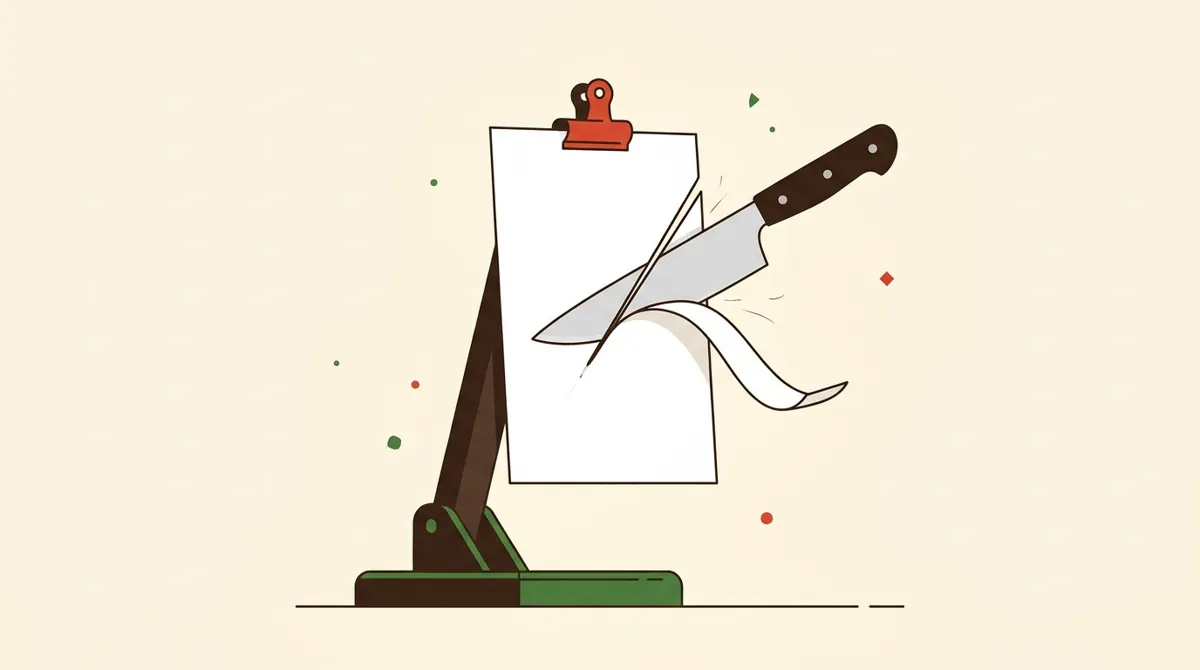
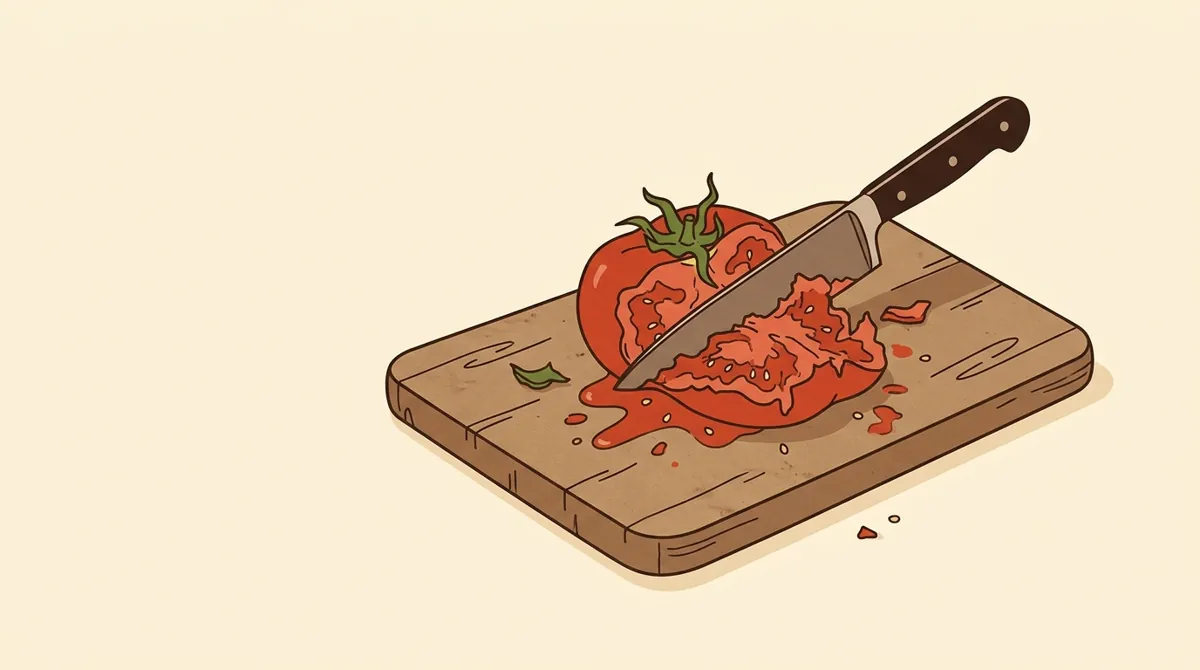
Test it on a sheet of paper or a tomato. If it still tears or skids, the knife needs sharpening, not more honing.
Common mistakes
- Honing a dull knife over and over: the steel can't put back metal that's worn away, so sharpen it.
- Holding the steel in the air and swinging fast: rest the tip on a towel on the board and go slowly.
- Changing the angle mid-stroke: keep the same angle from heel to tip.
- Pressing hard: use about the weight of the knife and let the number of strokes do the work.
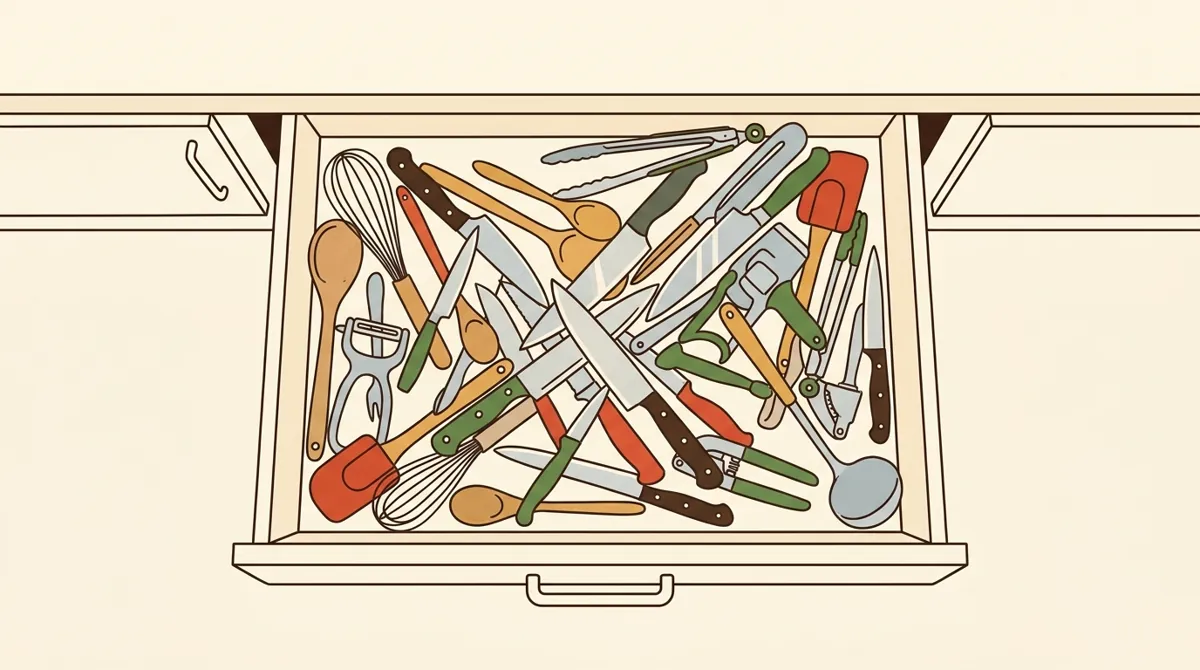
- Storing knives loose in a drawer: the edges knock against other tools, so use a block, a magnetic strip or edge guards.
🏋️ Try it tonight
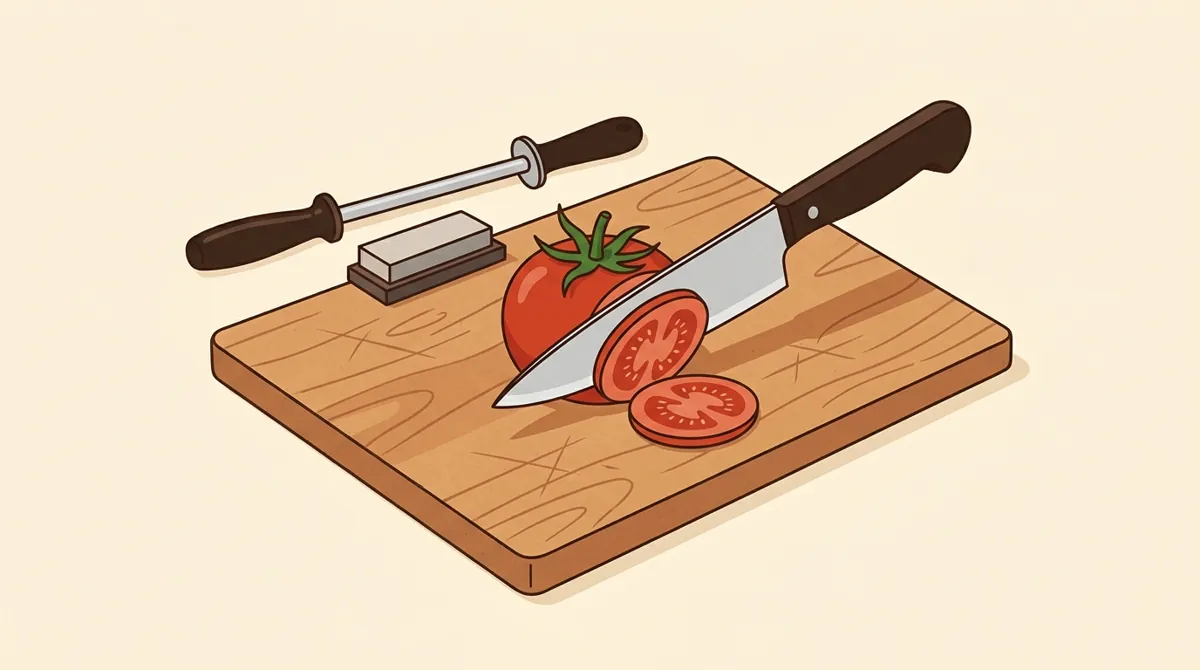
Find a sheet of printer paper and a ripe tomato. Slice down through the paper held by one corner and note where the knife snags. Hone with 8 light strokes per side at about 20 degrees, then slice the paper and the tomato again. If it now glides, you only needed honing; if it still snags or squashes the tomato, put sharpening on this weekend's list.
💡 Did you know?
A smooth honing steel removes no metal at all, so it can keep a sharp knife sharp but can never fix a dull one.