
🔪 Knife Skills · Lesson 5 of 5
Cutting Board Safety: a Board That Won't Slip and Won't Make You Sick
A damp towel stops the board sliding, separate boards stop raw meat spreading, and deep grooves mean it's time for a new one.
🎬 Watch the lesson
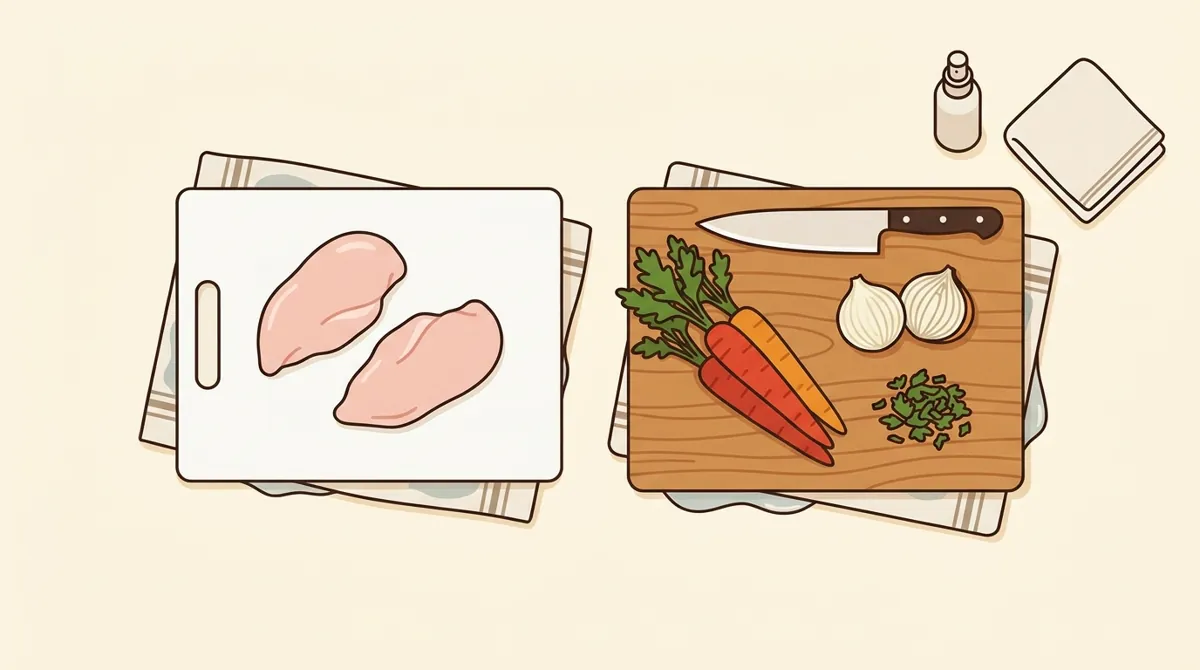
- Damp towel under the board
- Raw meat board
- Produce board
- Knife flat, edge away
Why it matters
A board that slides is how most kitchen cuts happen, and a board that carries raw chicken juice onto the salad is how food poisoning happens at home. Both are easy to fix, and neither needs special equipment.
Stop the slide
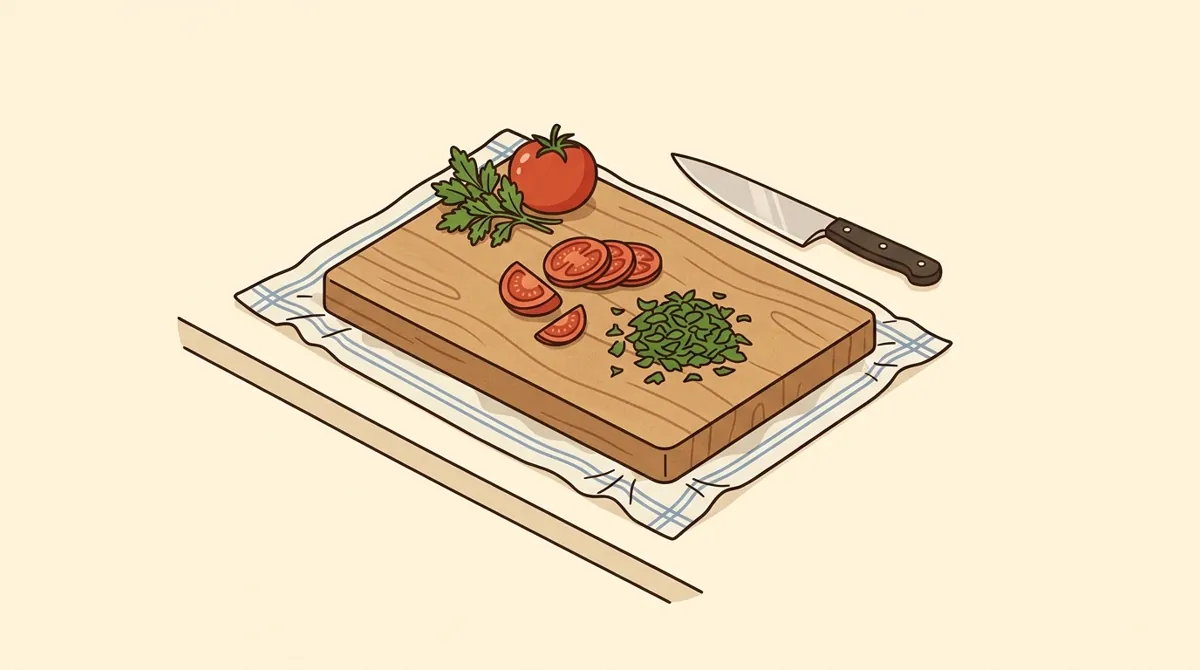
Wet a thin kitchen towel, wring it out until it's just damp, lay it flat and set the board on top. The damp cloth grips both the counter and the board. A damp paper towel works in a pinch. A soaking wet towel does the opposite and makes the board skate.
One board for raw meat
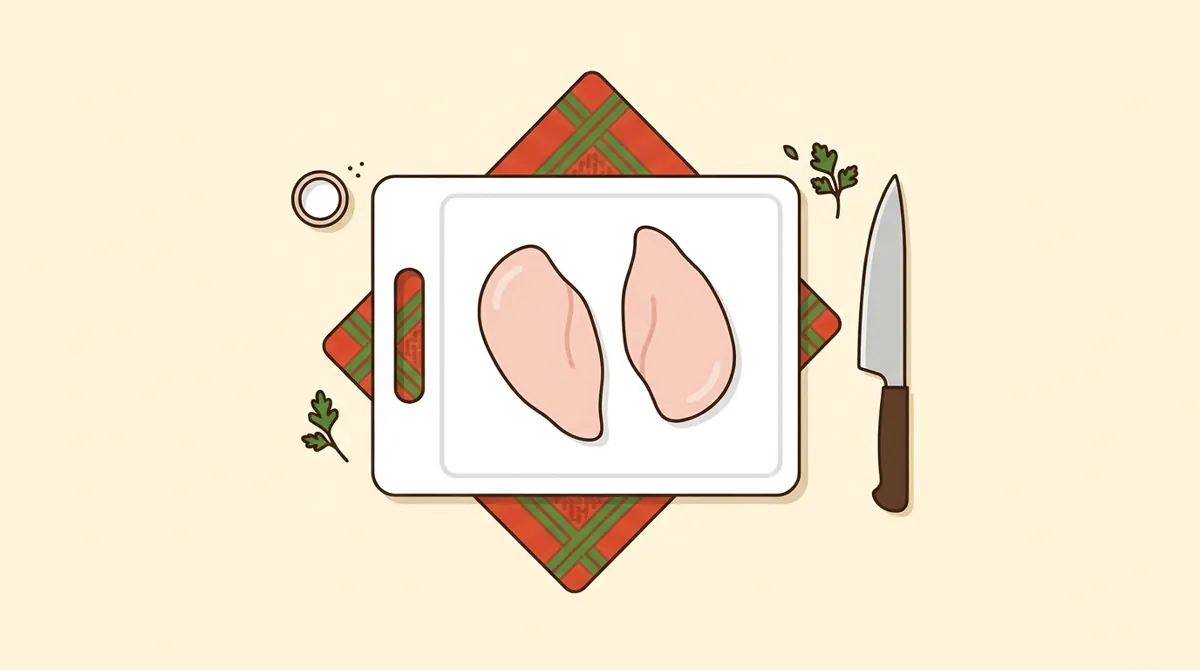
Food safety experts advise one board for raw meat, poultry and seafood and a separate one for produce, bread and anything that won't be cooked. If you only have one, cut the vegetables first and the raw meat last, then wash the board.
Wood or plastic are both fine
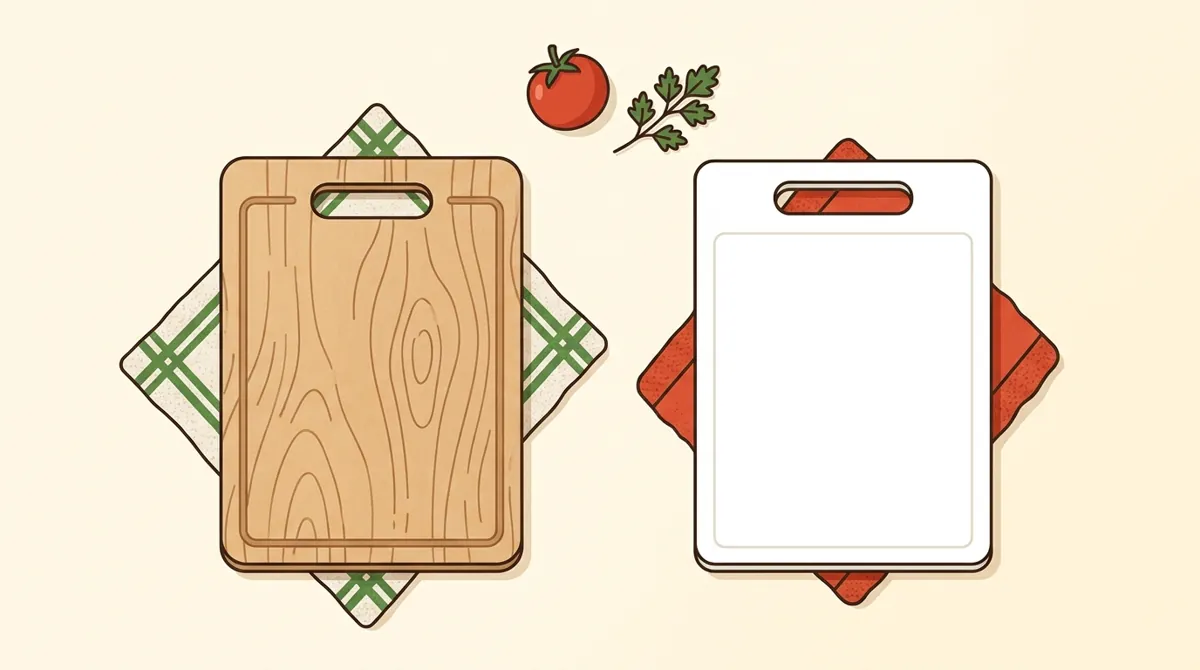
Either wood or a nonporous board like plastic is safe if you wash it in hot, soapy water after each use, rinse it and let it dry. Plastic and solid wood boards can go in the dishwasher; glued laminated boards can crack.
Sanitize after raw meat
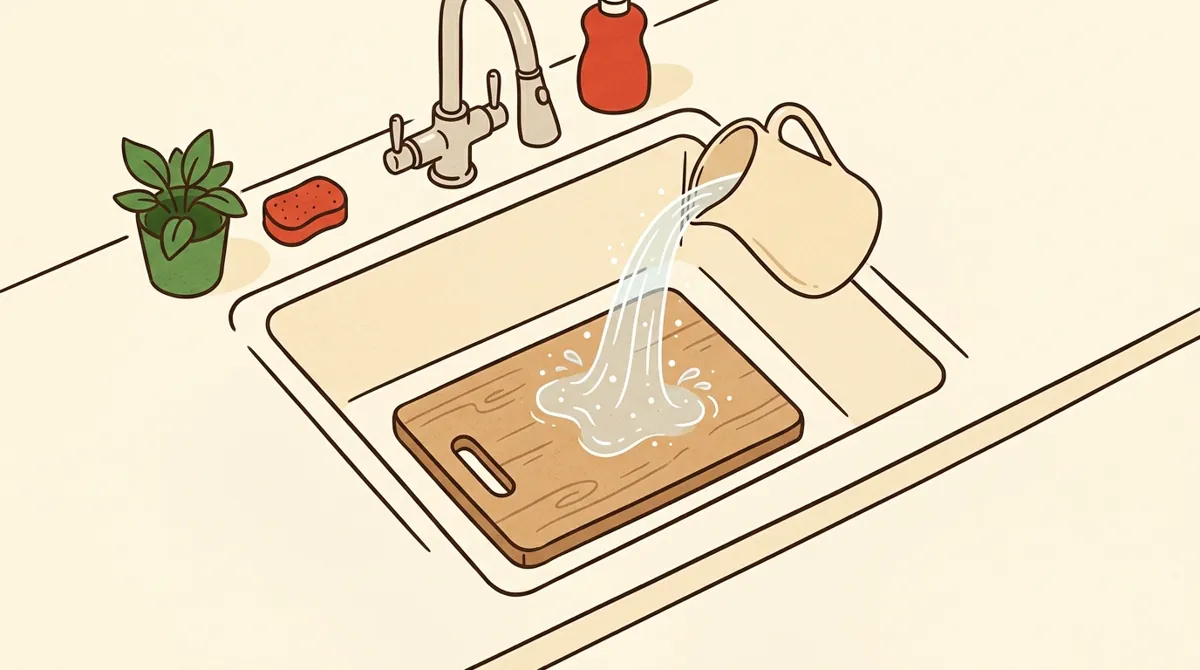
The usual sanitizer is 1 tablespoon of regular unscented chlorine bleach in 1 gallon of water. Pour it over the clean board, let it stand at least a minute, then rinse and air dry. Some extension guides use a stronger mix; this is the standard one.
Grooves mean replace it
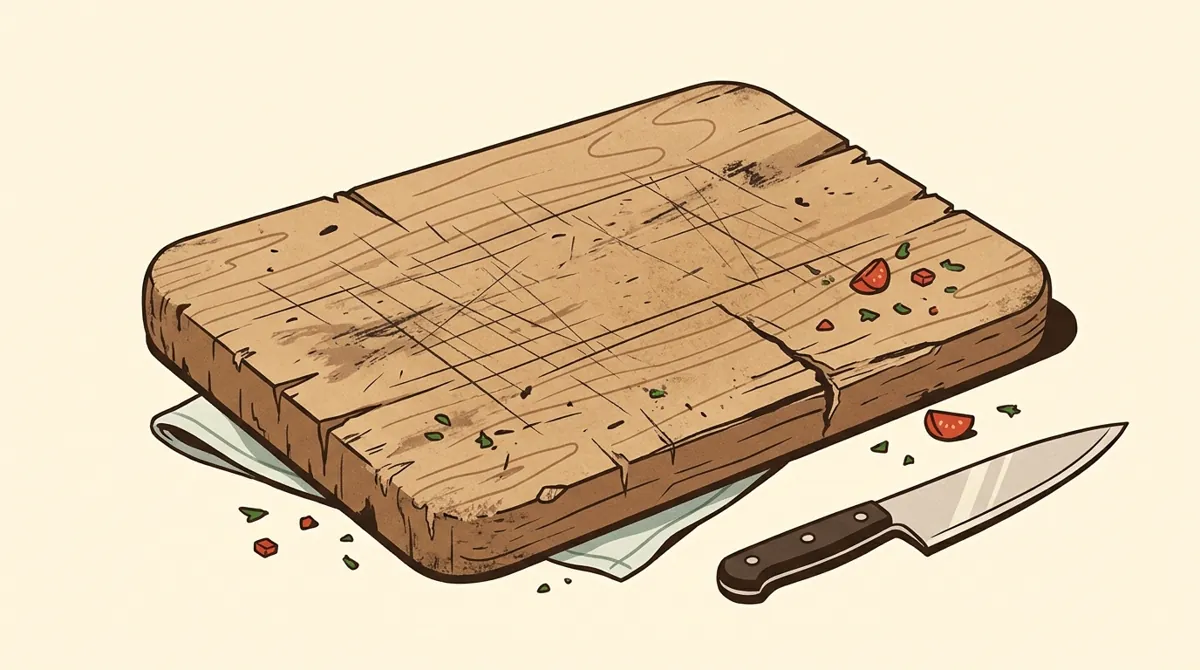
Deep knife marks and cracks hold bacteria that washing can't reach. When a board is scarred with deep grooves, replace it.
Step by step
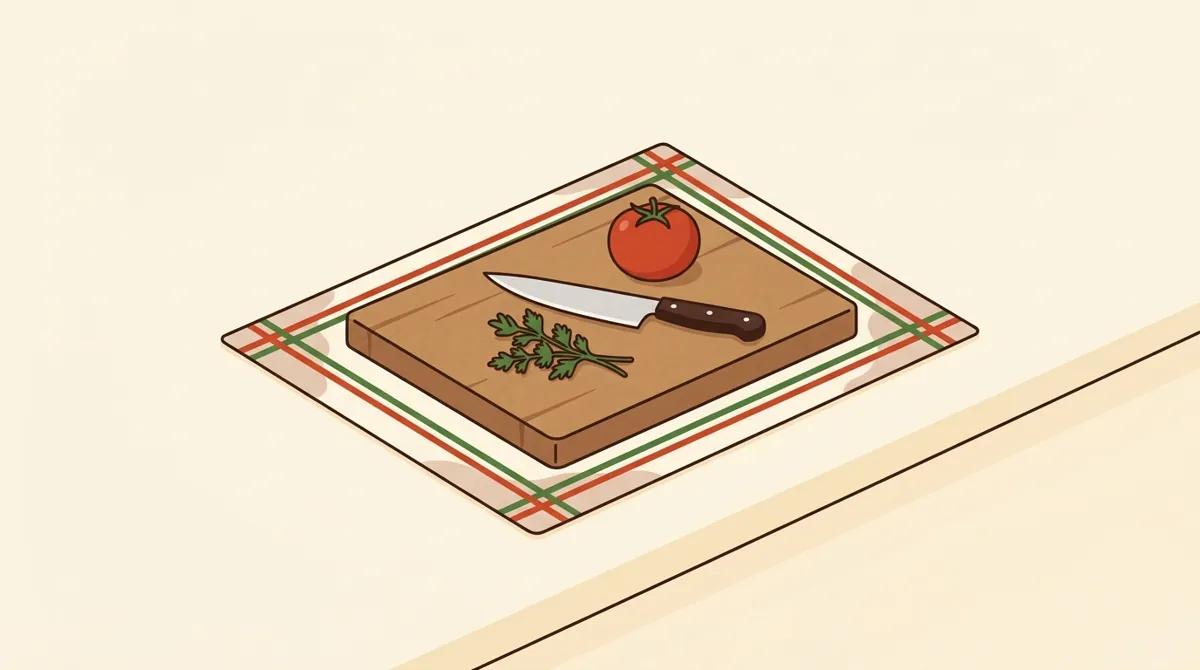
Wet a thin towel, wring it out well and lay it flat on the counter.
Set the board on the towel and push on one corner to check it doesn't move.
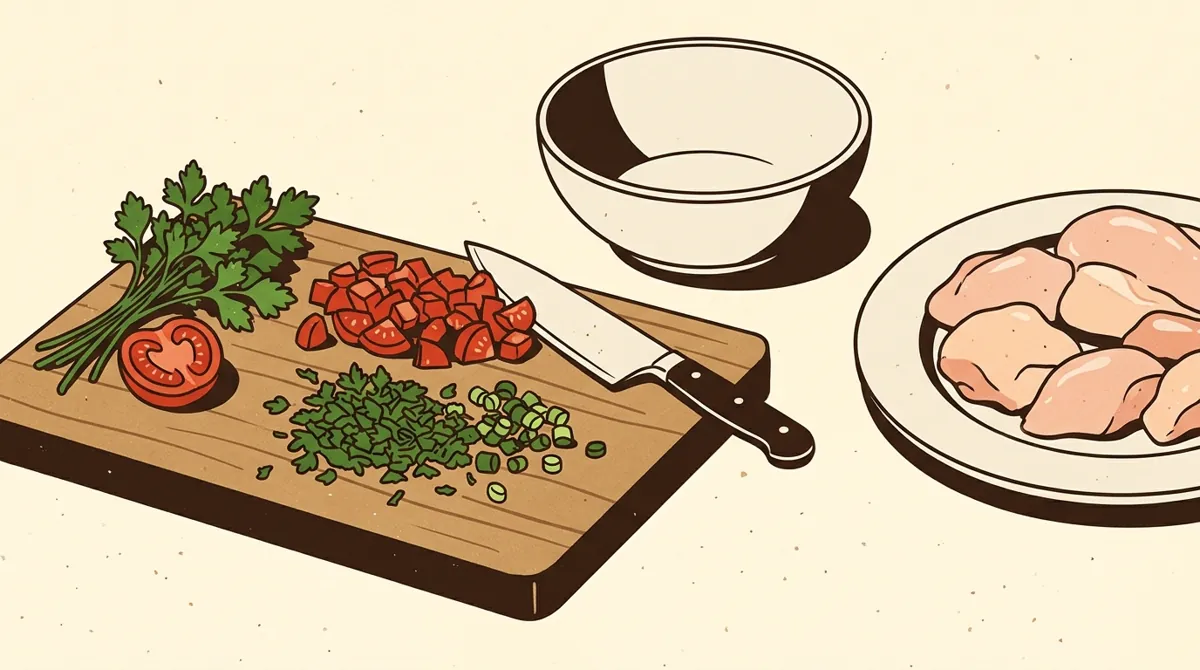
Set up two zones: produce on one board, raw meat on another.
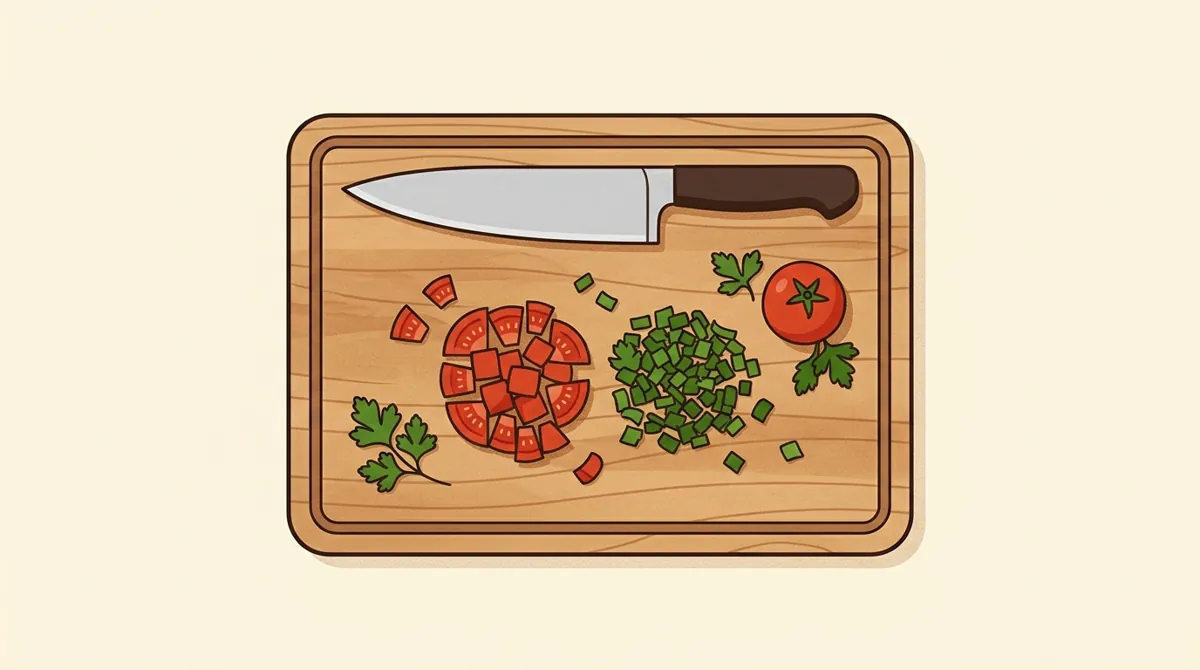
Keep the knife lying flat at the top of the board when you aren't cutting, edge facing away from you.
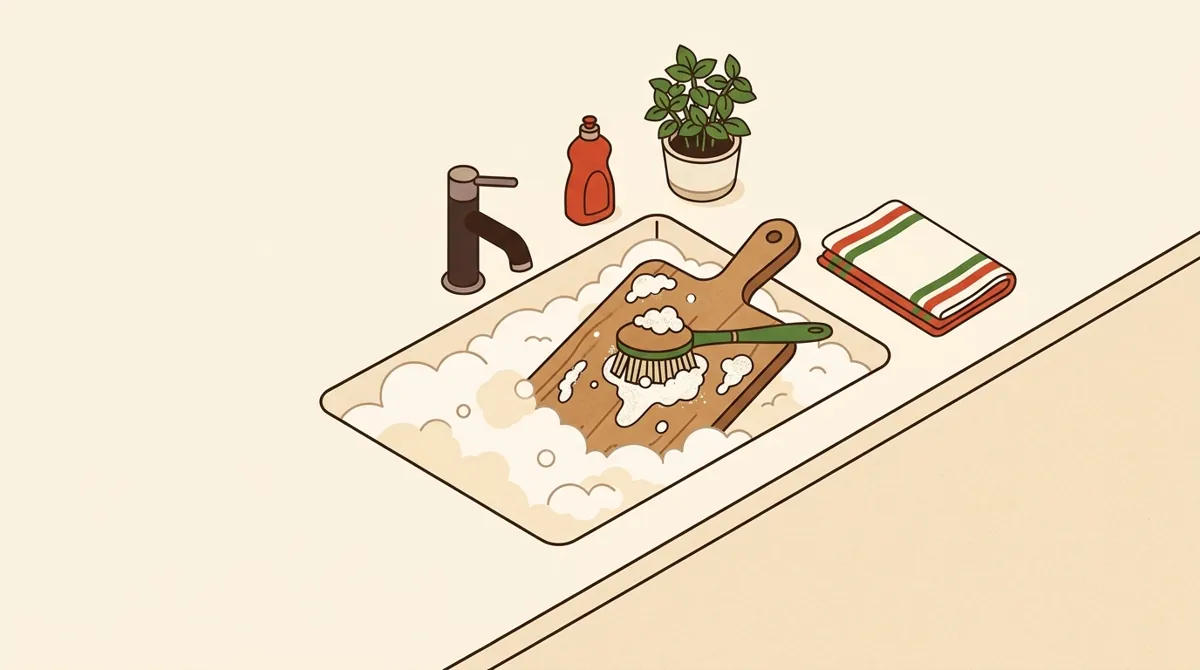
After raw meat, scrape the board, wash it in hot soapy water and rinse it.
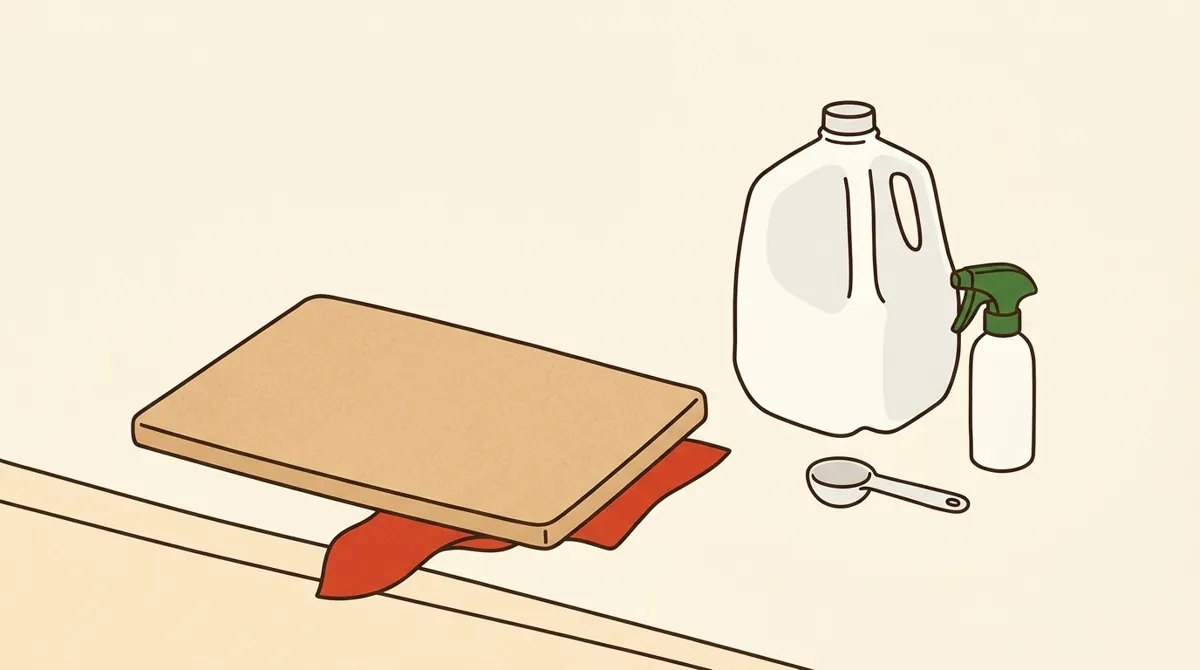
Sanitize with 1 tablespoon of unscented bleach per gallon of water, wait a minute, rinse and air dry.
Common mistakes
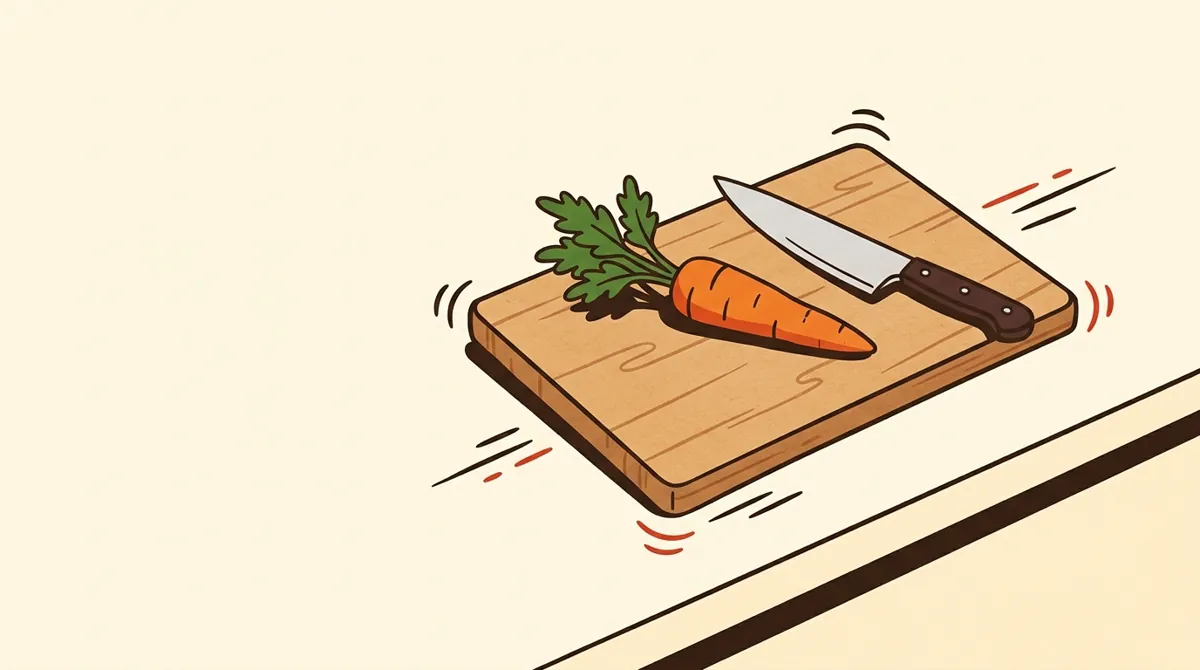
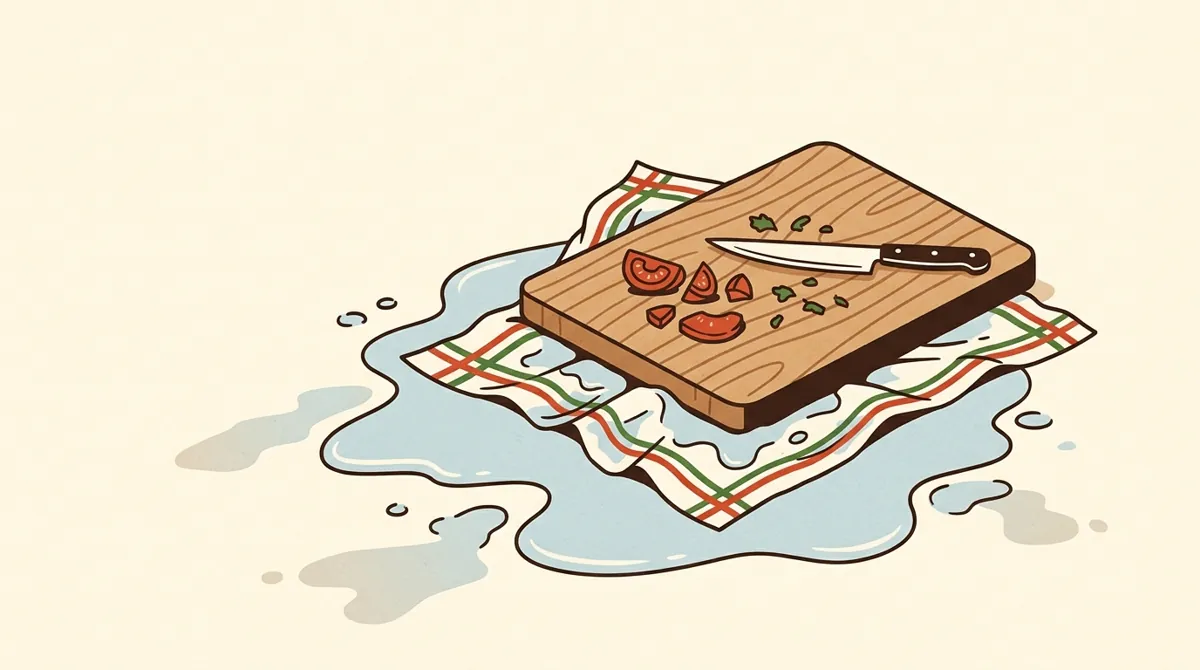
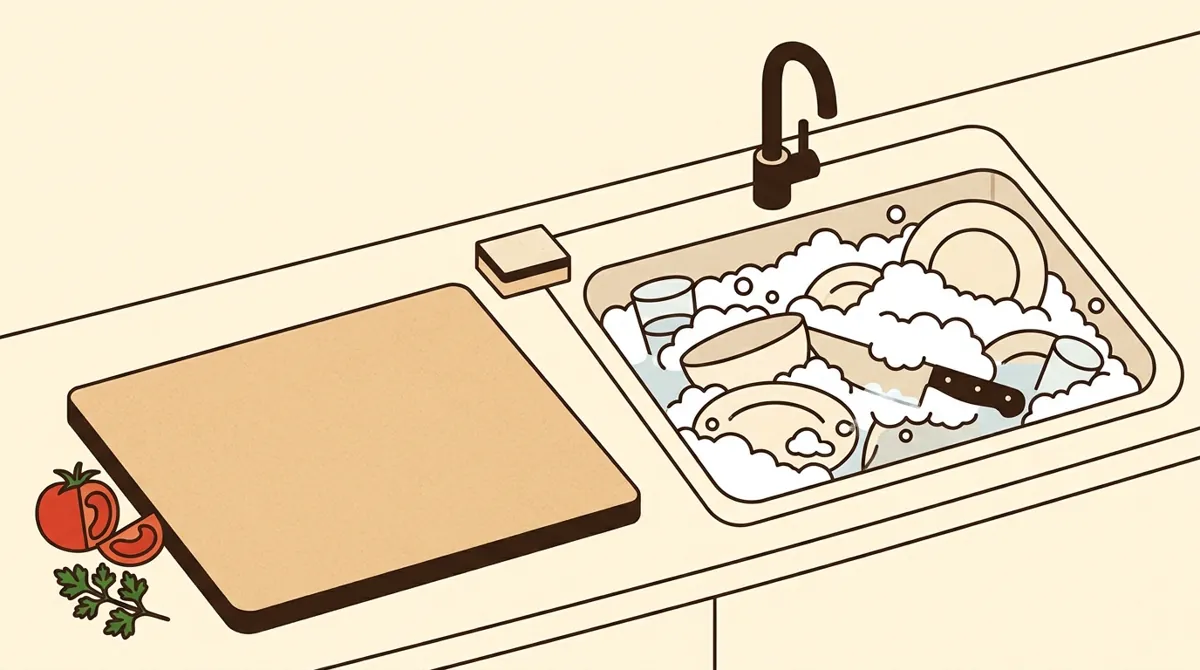
- Cutting on a board that rocks or slides: put a damp towel under it before you start.
- Slicing salad on the board that just held raw chicken: use a second board or wash it first.
- Leaving the knife in a sink of soapy water: someone reaches in blind, so wash it right away and put it back.
- Trying to catch a falling knife: step back and let it drop.
- Keeping a board with deep cracks or grooves: bacteria hide there, so replace it.
🏋️ Try it tonight
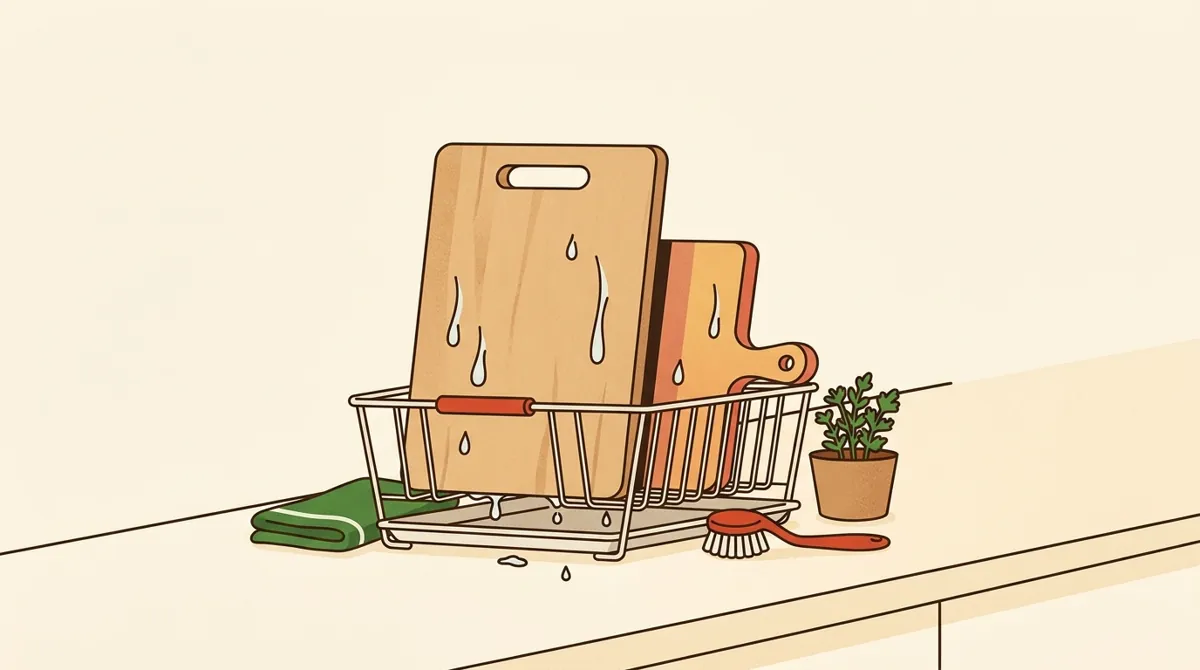
Set up your board on a damp towel and push hard on each corner. Then pick a second board, or buy a cheap plastic one, for raw meat only and mark it with a strip of tape. Mix a gallon of sanitizer once, with 1 tablespoon of unscented bleach, and sanitize both boards, so the routine is ready for the next time you cook chicken.
💡 Did you know?
Wood or plastic matters less than the scars: food safety experts say to replace any board with deep grooves, because knife marks are where bacteria hide.
Use it tonight

Creamy Chicken and Gnocchi Soup, Inspired by Olive Garden
Inspired by, not official: celery, shredded carrot, onion and garlic softened in butter, thickened with flour and chicken broth, then store-bought potato gnocchi, cooked chicken, baby spinach, heavy cream and thyme, in one pot in 40 minutes.

White Chicken Chili
Shredded chicken and creamy white beans in a light, green-chile broth of poblano, Anaheim and jalapeño, finished with lime, cilantro and scallions.