
📋 Mise en Place · Lesson 1 of 5
What Is Mise en Place? Set Up Before You Cook
Mise en place means everything in its place: read, gather, prep and line up every ingredient before the heat goes on.
🎬 Watch the lesson
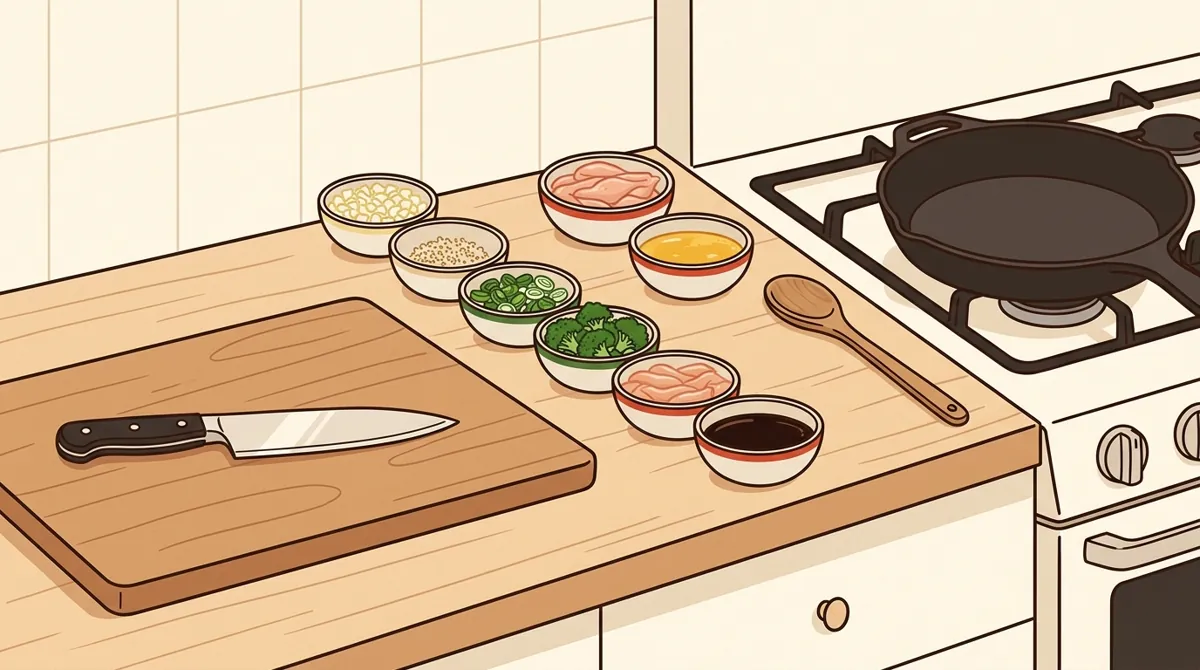
- Small bowls of prepped ingredients
- Lined up in the order they go in
- Tools out and ready
- Pan on the stove, burner still off
Why it matters
Most home cooks turn on the stove first and chop while the pan heats, and then something burns while they hunt for the garlic. Mise en place flips the order: everything is read, gathered, cut and measured before any heat goes on, so the cooking becomes the easy part.
It means putting in place
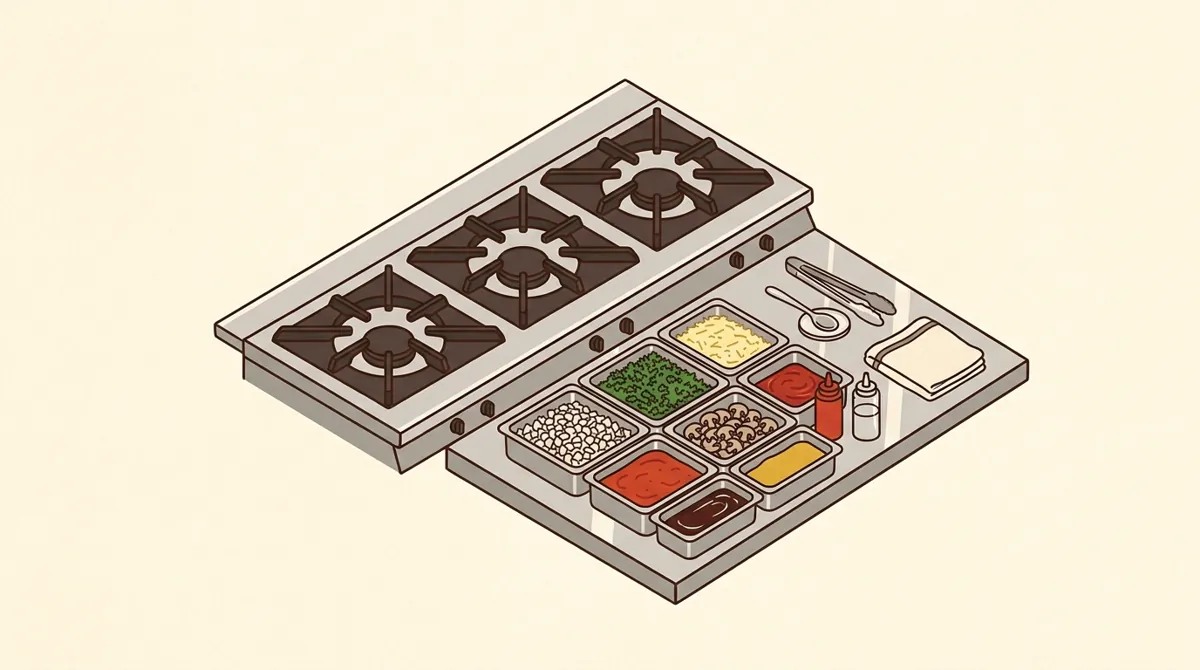
Mise en place is French for putting in place. In a restaurant it means every ingredient a cook needs for a shift, cut, measured and set out at the station before service. At home it means the same thing for one meal.
A noun, a verb and a habit
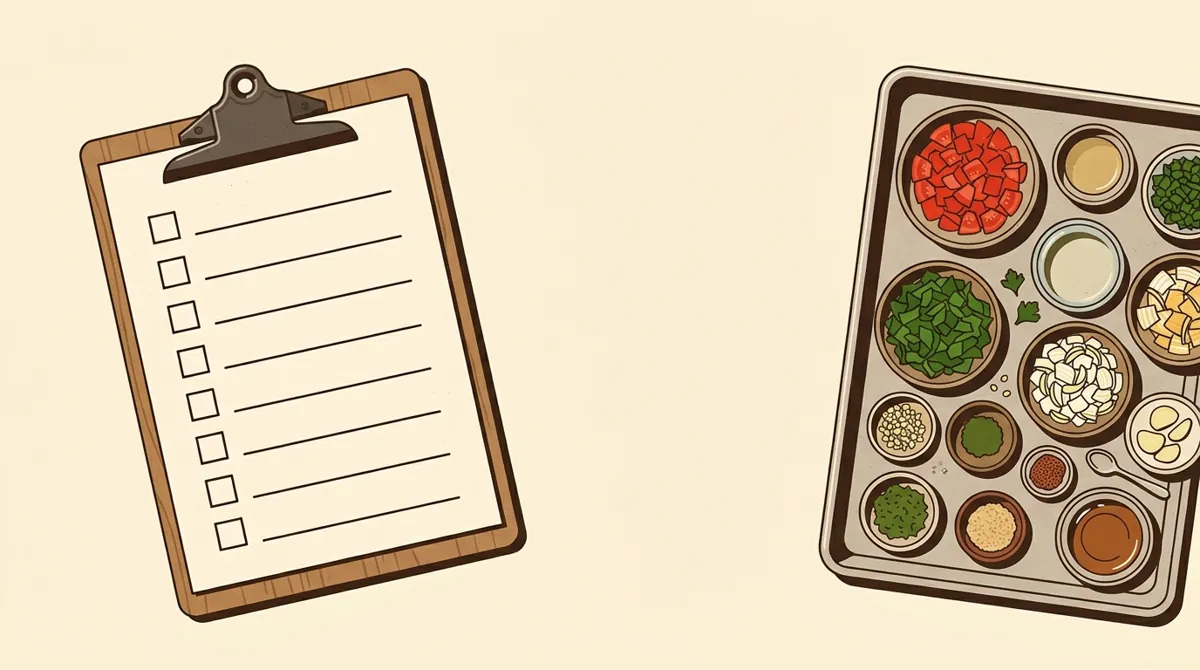
Cooks use the phrase three ways. The prepped ingredients are the mise en place, setting them up is doing your mise en place, and the habit of planning ahead is a way of working. All three come down to doing the thinking before the cooking.
Fast recipes need it most
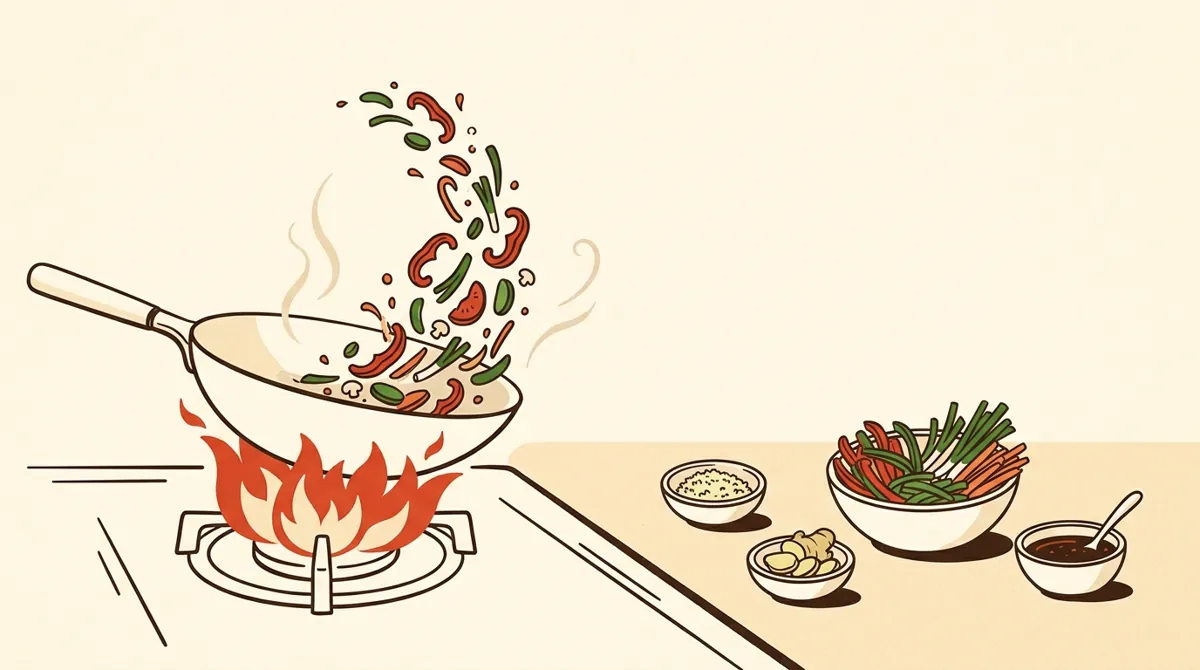
A stir-fry or fried rice cooks in a few minutes over high heat, and there is no time to mince garlic once the oil is hot. The faster the cooking, the more of the work has to be done before it starts.
Line it up in the order it goes in
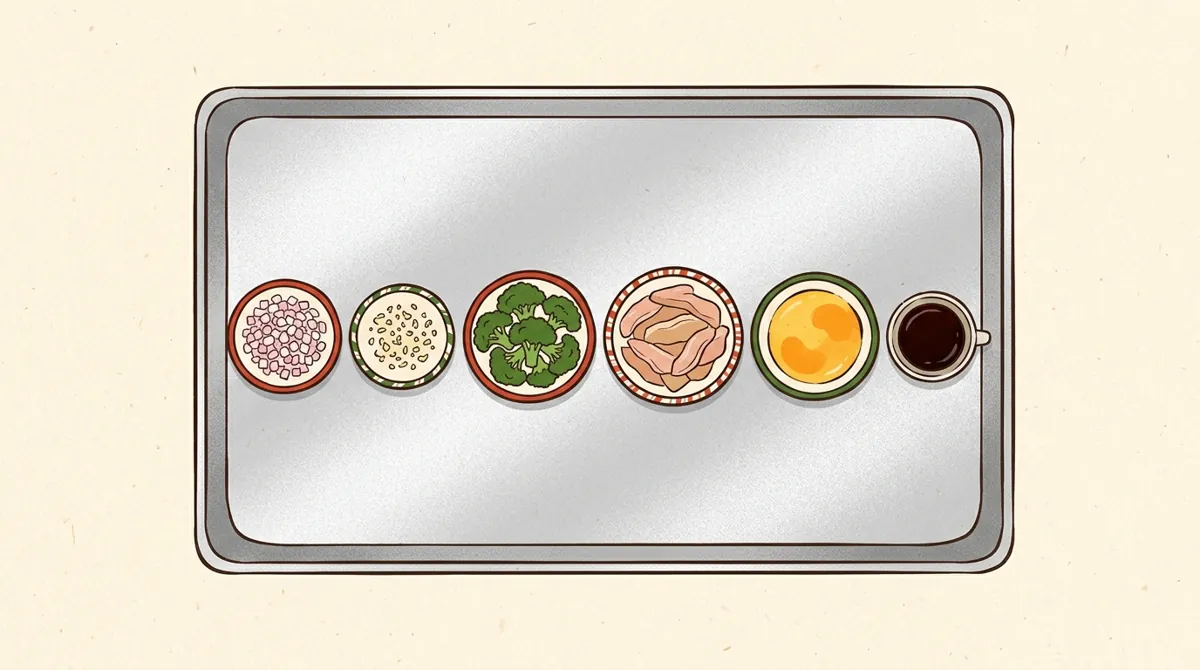
Put each prepped ingredient in a small bowl and line the bowls up near the stove in the order the recipe uses them. You can cook straight down the line without reading the recipe mid-sizzle.
It catches problems early
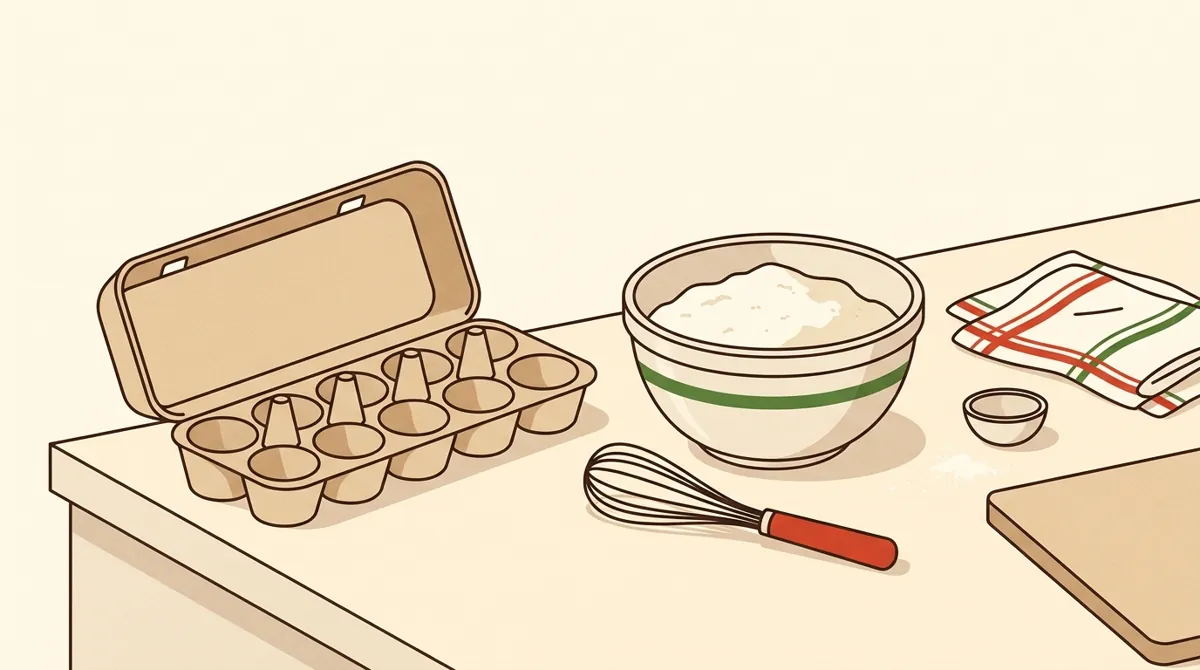
Reading and gathering first means you find the missing ingredient or the hour of chilling time with the pantry door open, not with onions already in the pan.
Step by step
Read the whole recipe, start to finish.
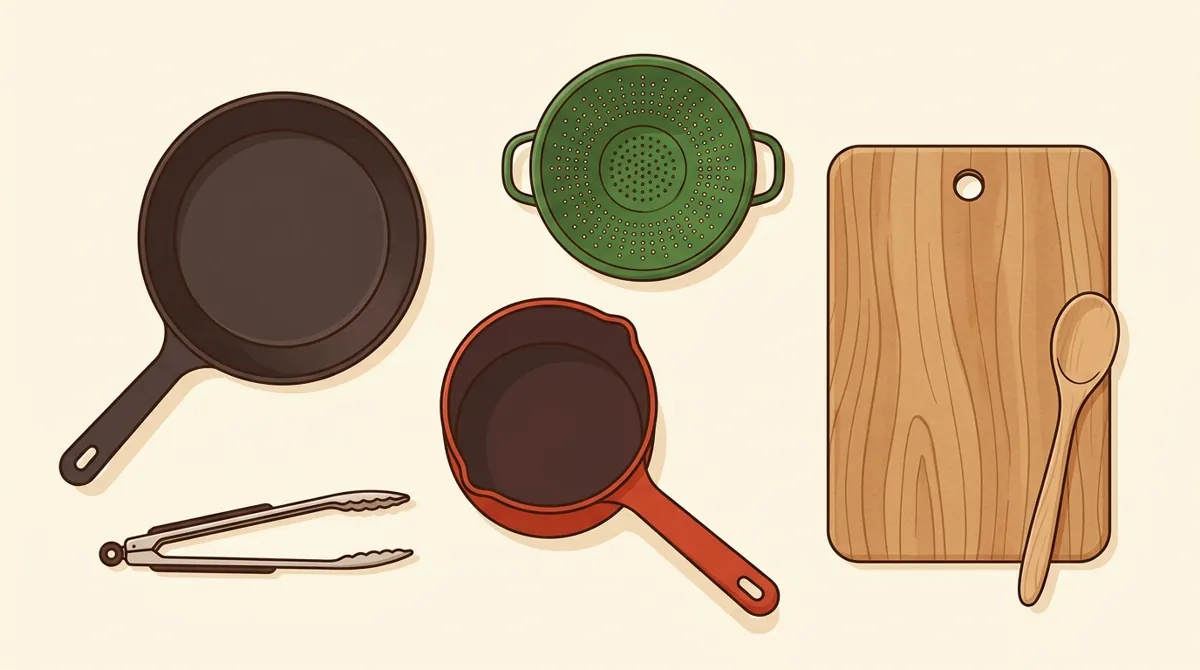
Pull out every pot, pan and tool the recipe needs.
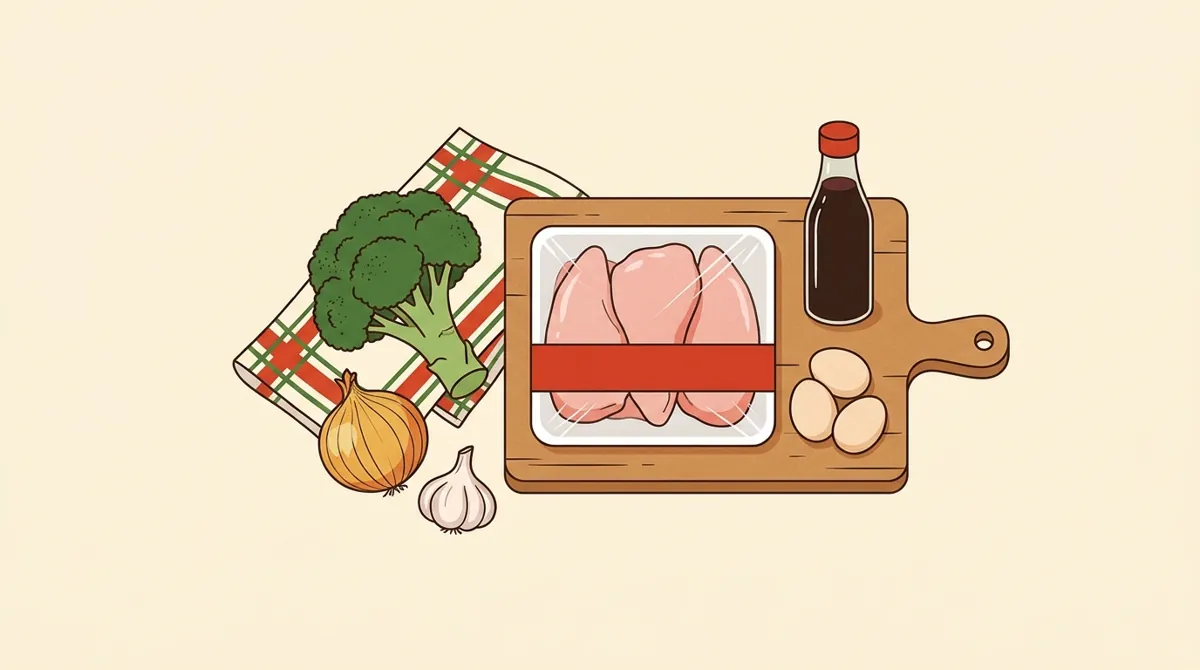
Set every ingredient out on the counter.
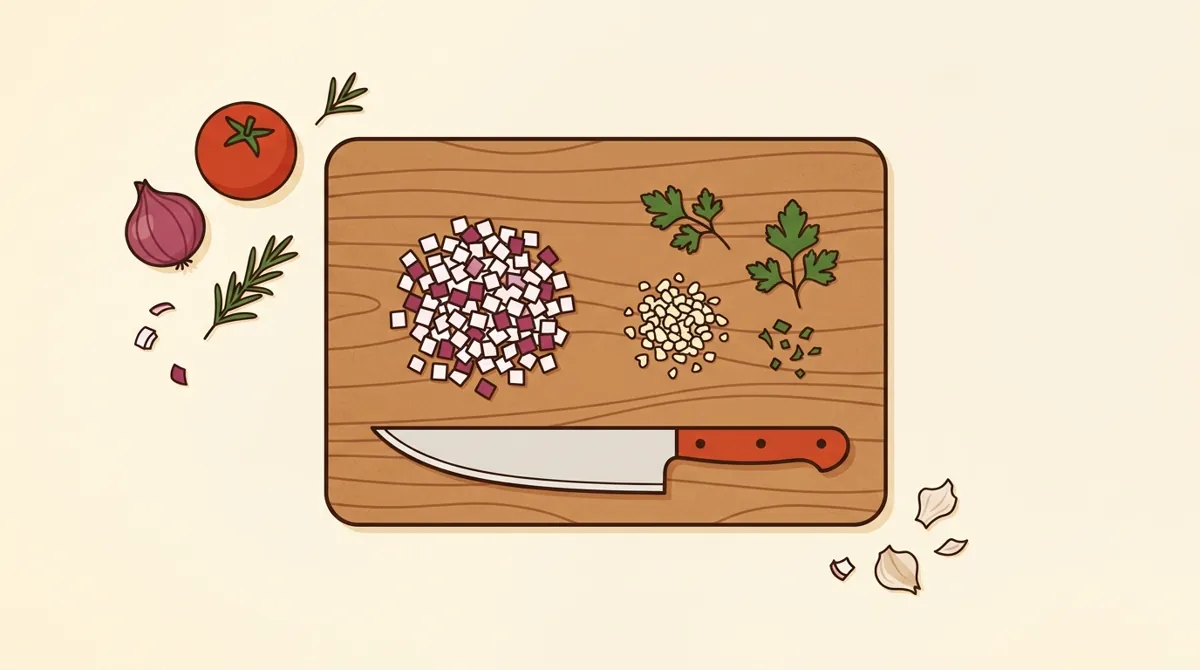
Wash, peel, cut and measure each one.
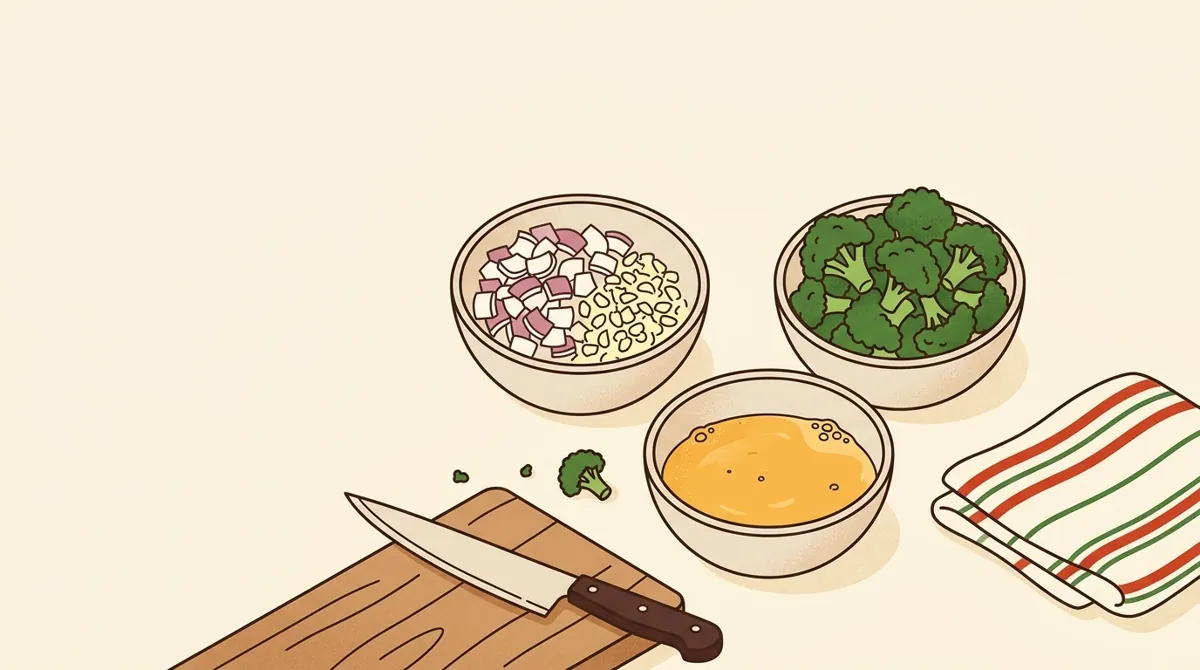
Put each prepped ingredient in its own small bowl, or group the ones that go into the pan together.
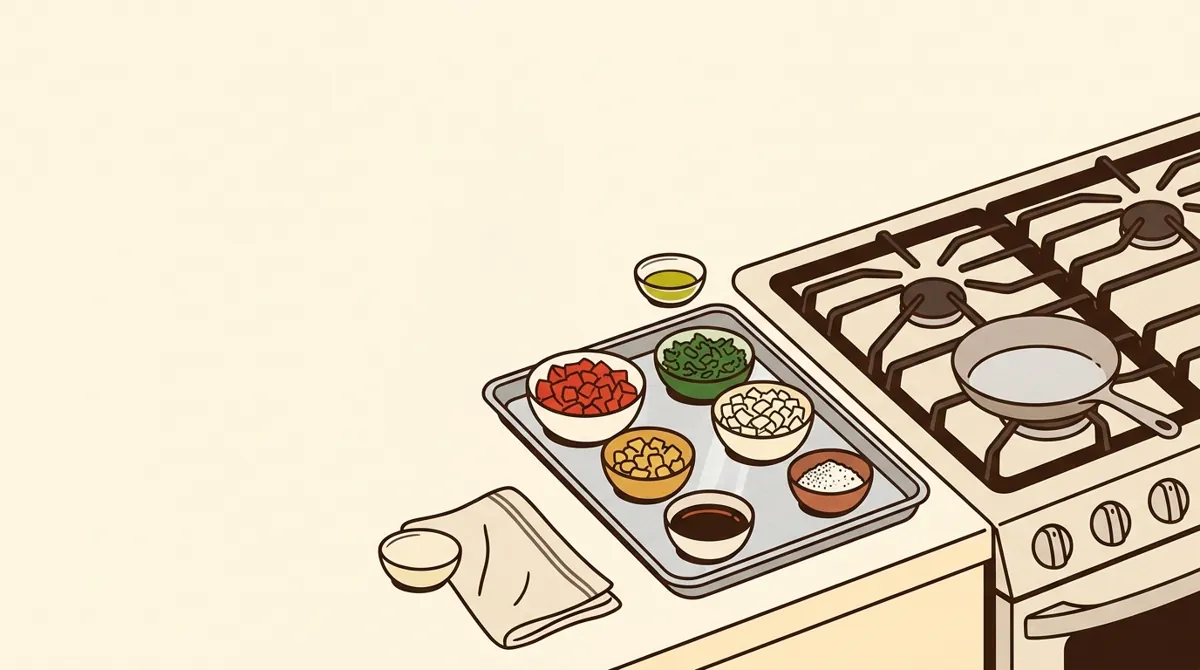
Line the bowls up near the stove in the order they go in.
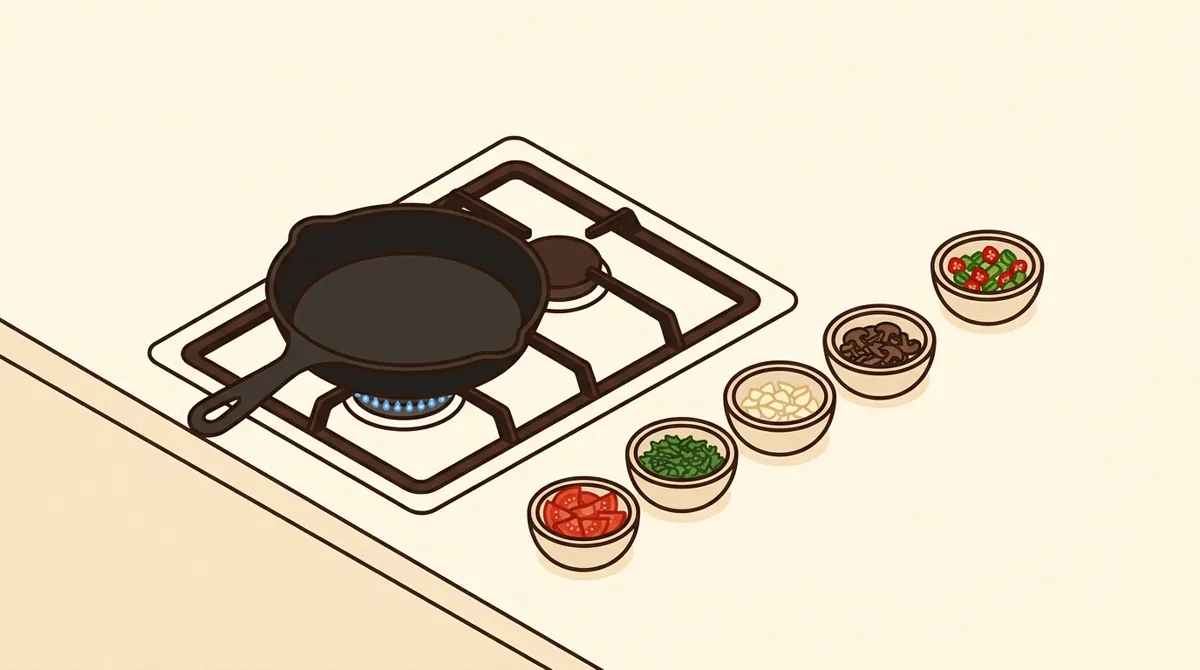
Only then turn on the heat.
Common mistakes
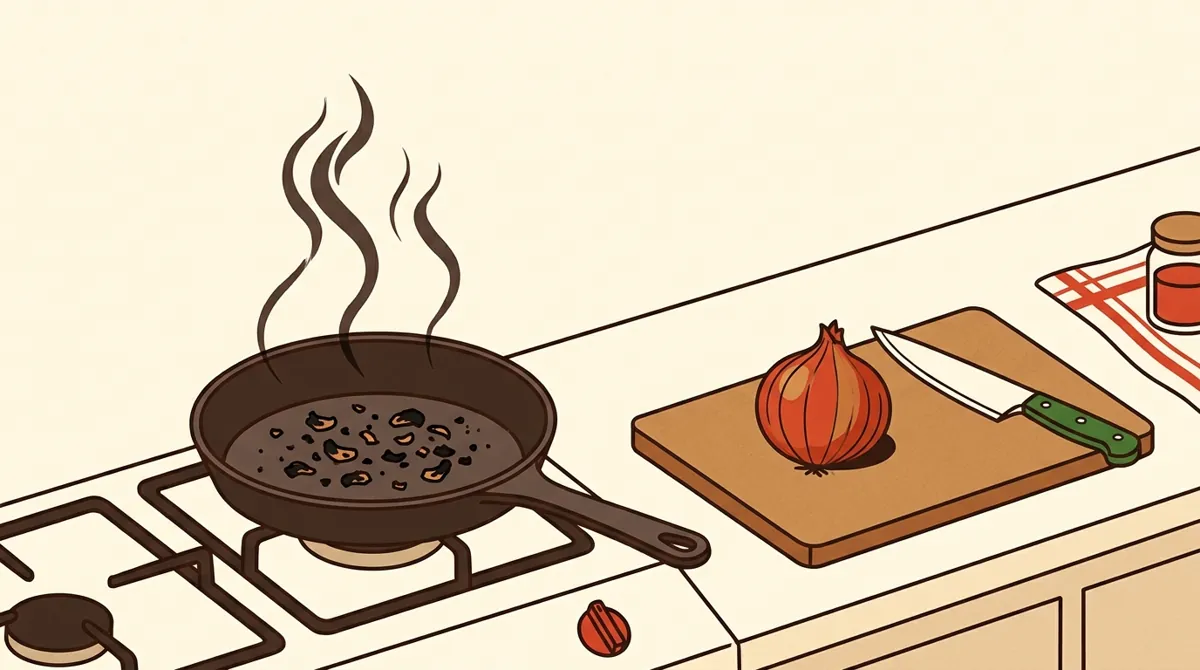
- Chopping while the pan heats: the oil smokes or the garlic burns, so finish the prep before the burner goes on.
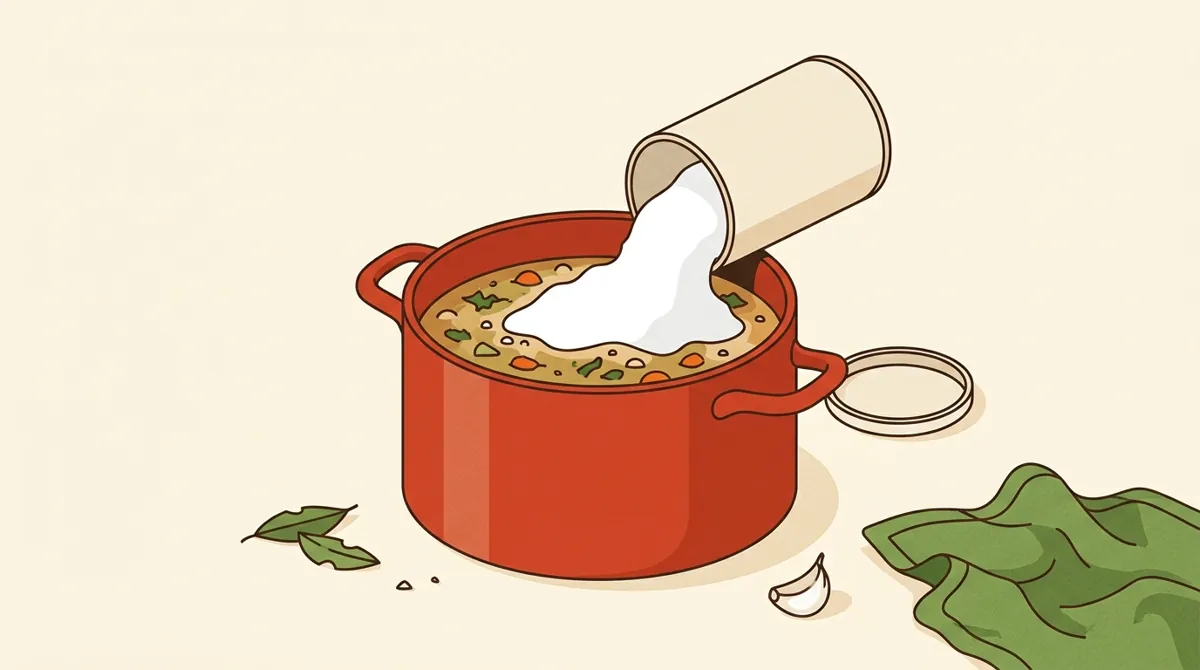
- Measuring straight over the pot: one slip of the salt and it is in for good, so measure into a bowl first.
- Skipping it for an easy recipe: the quickest dishes go wrong fastest, so they need it the most.
- Bowls in a jumble: line them up in the order they go in, so the next one is always the next one.
- Leaving peels and packages everywhere: clear them as you go so the counter stays usable.
🏋️ Try it tonight
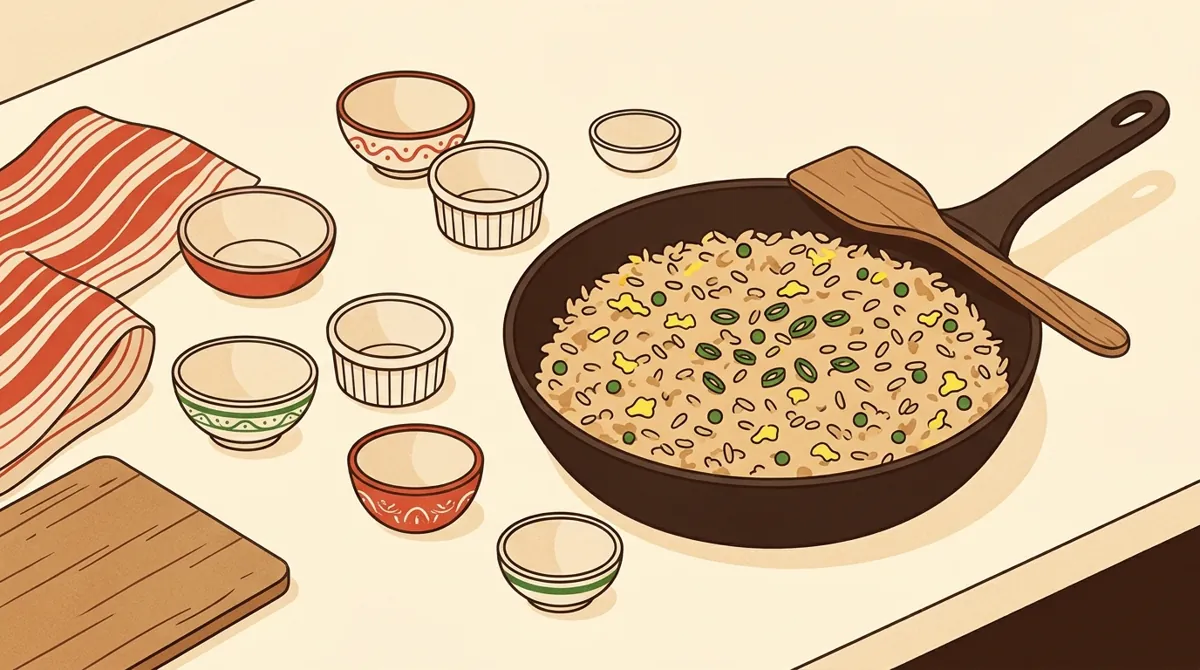
Make a simple fried rice or stir-fry tonight, but do every bit of prep before you turn on the stove. Cut the onion, garlic and vegetables, beat the eggs, stir the sauce together in a cup and line it all up by the stove in order. Then cook, and notice that you never once stop to chop.
💡 Did you know?
Mise en place is French for putting in place, and the idea has traveled far beyond kitchens: the phrase is also used for setting up classrooms, hospitals and other workplaces.
Use it tonight
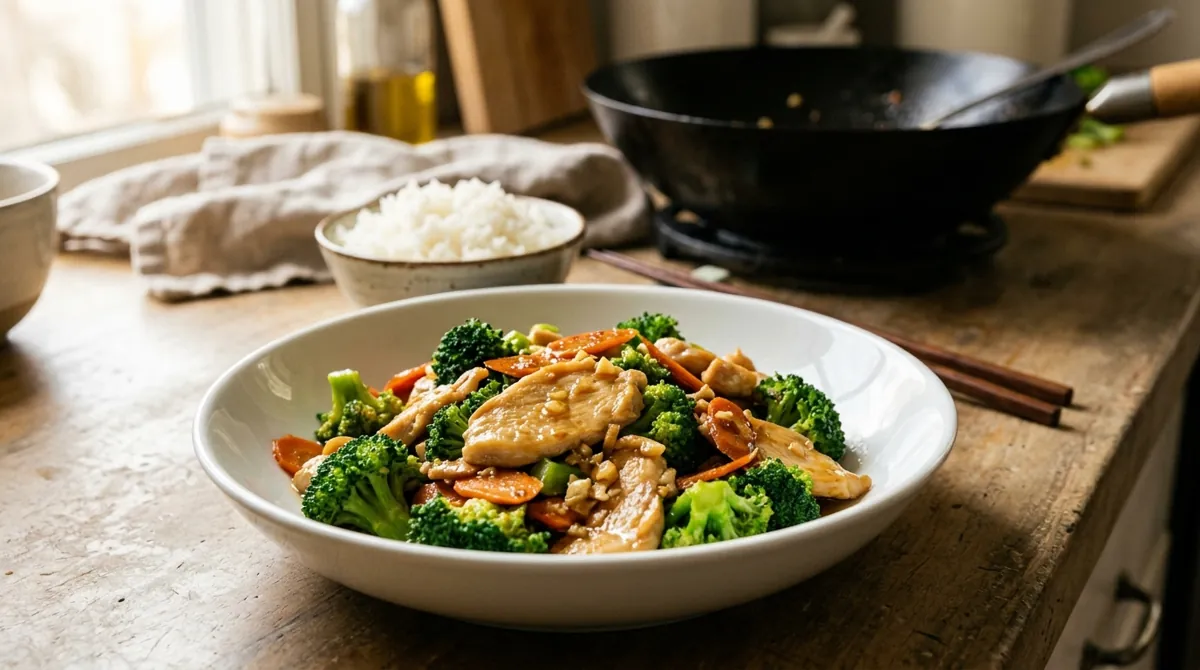
25-Minute Chicken and Broccoli Stir-Fry
The takeout template in 25 minutes: velveted chicken breast browned in a hot wok, tossed with blanched broccoli, carrot, garlic, ginger and scallion in a quick oyster sauce and soy sauce glaze.
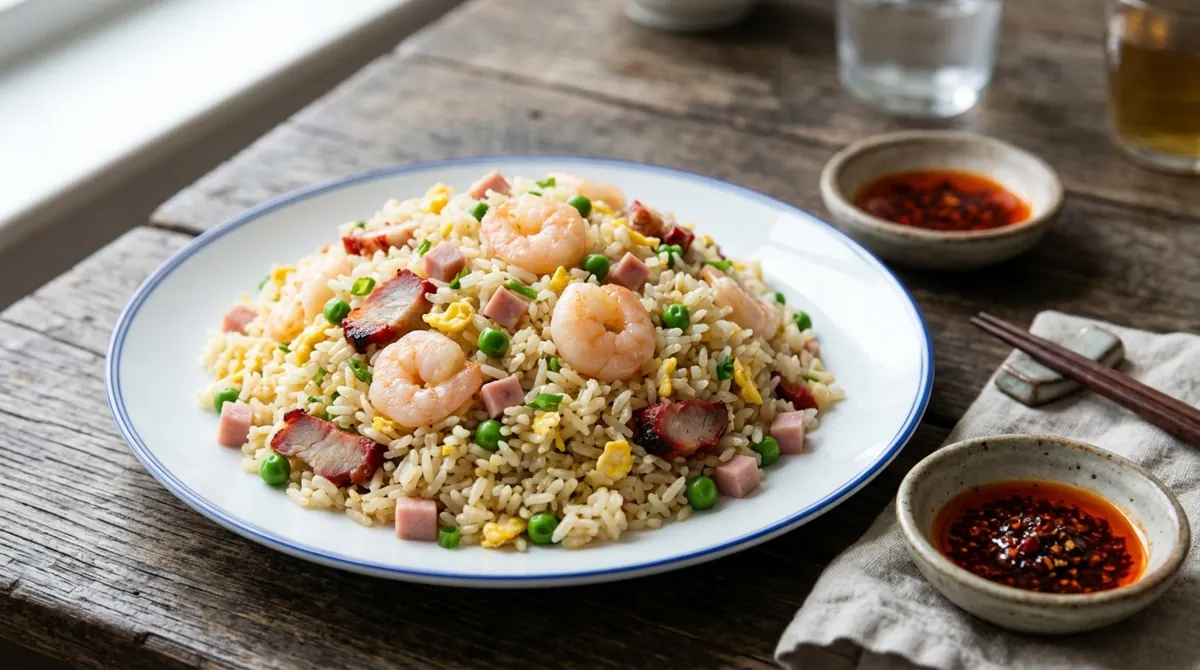
Yangzhou Fried Rice (Young Chow Fried Rice)
China's most famous fried rice: day-old rice stir-fried with egg, shrimp, ham, roast pork, onion and peas, seasoned with salt, a pinch of sugar and Shaoxing wine instead of soy sauce, and finished with crisp lettuce and scallions.
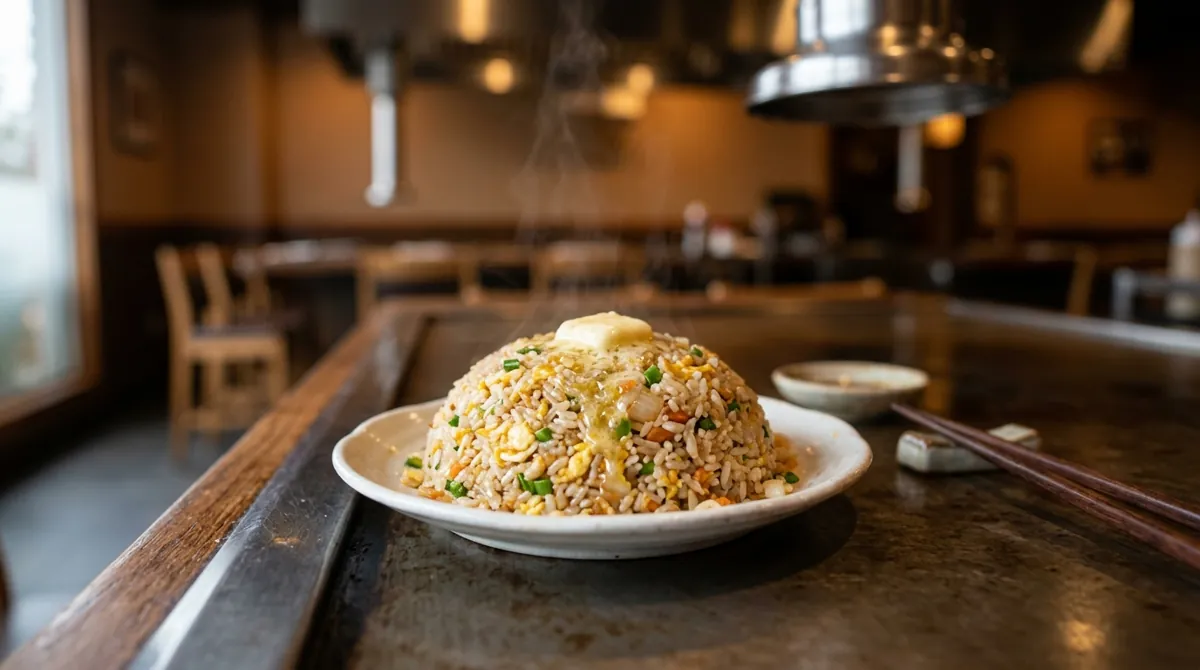
Hibachi Fried Rice (Japanese Steakhouse Garlic Butter Fried Rice)
The flat-top fried rice of America's Japanese steakhouses: freshly boiled long-grain rice fried until it sizzles and pops with soft egg and scallions, glazed with soy sauce and mirin and finished with garlic butter.