
Artusi's Roast Chicken with Sausage and Chestnut Stuffing (1891)
Pellegrino Artusi's family stuffing of Italian sausage, chicken liver, roasted chestnuts, dried mushrooms and nutmeg, bound with egg and a little bread soaked in broth, packed into a whole chicken and roasted until the stuffing itself reads 165°F.
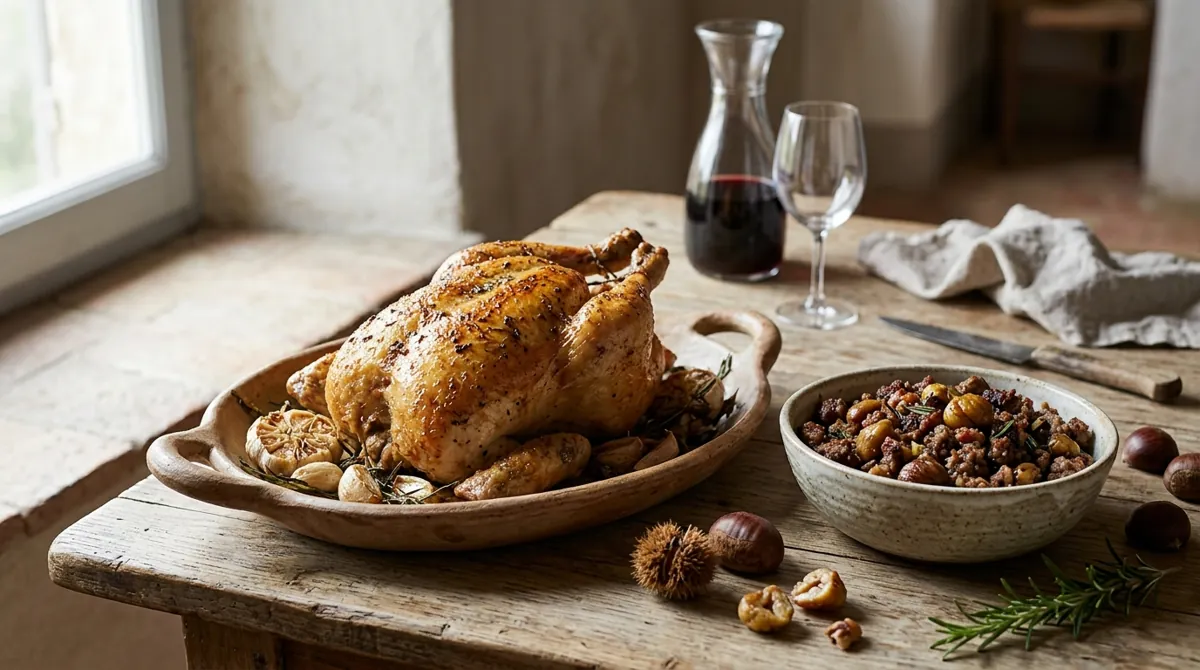
Pellegrino Artusi's "La scienza in cucina e l'arte di mangiar bene" (Science in the Kitchen and the Art of Eating Well), first published in Florence in 1891, became the cookbook of united Italy. Its our 539 recipe, "Pollo ripieno arrosto", is a stuffing Artusi calls not fine-dining but family cooking: two sausages, the chicken's own liver, comb and wattles, eight or ten well-roasted chestnuts, a few pieces of truffle or dried mushroom, a scent of nutmeg and one egg, half-cooked in butter, pounded fine and bound with a little bread soaked in broth. For a turkey, he says, double it (Project Gutenberg, Italian text:). He adds that the stuffing slices better cold than hot. His our 549 recipe tells the turkey's story as he knew it: a bird of North America, called "pollo d'India" in Italy because Columbus thought he had reached the Indies. Sausage in the stuffing is the thread that runs to Italian-American Thanksgiving tables (our Italian-American Sausage and Fennel Stuffing recipe).
📖 Myth check: Is It Safe to Cook Stuffing Inside the Turkey? →
Why it works the kitchen science
Half-cook the meat first
Browning the sausage and livers in butter renders some fat and builds flavor, while leaving them pink means they finish gently inside the bird instead of drying out.
Bread soaked in broth
Artusi's "pappa soda", a thick bread paste, holds the moisture and binds the stuffing so it slices instead of crumbling.
Step by step
- Step 1
Heat the oven to 375°F with a rack in the lower-middle position. Melt the butter in a skillet over medium heat, add the sausage and livers and cook 5 minutes, turning, until browned outside but still pink inside (half-cooked, as Artusi says). Lift them onto a plate.
- Step 2
Pour the broth into the hot skillet, scrape up the browned bits, add the bread and mash it into a thick paste, about 1 minute. Take the skillet off the heat.
- Step 3
Pulse the sausage, livers, porcini and half the chestnuts in a food processor 8 to 10 times, until finely chopped. Add the bread paste, egg, nutmeg, salt and pepper and pulse just to combine. Break the remaining chestnuts into pieces and stir them in.
- Step 4
Right away, spoon the stuffing loosely into the chicken's body cavity (about 2 cups; FSIS says no more than 3/4 cup per pound of bird). Do not pack it. Tie the legs together, rub the chicken with the oil and salt and set it breast up in a roasting pan.
- Step 5
Put it in the oven immediately. Roast 75 to 90 minutes, until the breast reads 165°F, the thigh 175°F and the very center of the stuffing 165°F. If the chicken is done before the stuffing, keep roasting until the stuffing gets there, tenting the breast with foil.
- Step 6
Rest the chicken 20 minutes, then spoon all the stuffing out into a warm bowl before carving.
- Step 7
Serve the chicken in pieces with spoonfuls of stuffing and the pan juices. Refrigerate leftovers, stuffing separately, within 2 hours.
Artusi's Roast Chicken with Sausage and Chestnut Stuffing (1891)
Serves 4 · 1 roast chicken with about 2 cups stuffing · 2 hr 10 min total
Stuffing
- 2 links fresh Italian sausage (about 8 oz), casings removed
- 2 oz chicken livers, trimmed
- 1 tbsp butter
- 1/4 cup low-sodium chicken broth
- 1 slice white bread, crust removed, torn
- 1/4 oz dried porcini mushrooms, soaked in hot water 15 minutes and drained
- 10 roasted, peeled chestnuts (about 3 1/2 oz)
- 1 large egg
- 1/8 tsp ground nutmeg
- Pinch of salt and black pepper
Chicken
- 1 whole chicken (about 4 lb), giblets removed, patted dry
- 1 tbsp olive oil or soft butter
- 1 tsp kosher salt
Method
- Heat the oven to 375°F with a rack in the lower-middle position. Melt the butter in a skillet over medium heat, add the sausage and livers and cook 5 minutes, turning, until browned outside but still pink inside (half-cooked, as Artusi says). Lift them onto a plate.
- Pour the broth into the hot skillet, scrape up the browned bits, add the bread and mash it into a thick paste, about 1 minute. Take the skillet off the heat.
- Pulse the sausage, livers, porcini and half the chestnuts in a food processor 8 to 10 times, until finely chopped. Add the bread paste, egg, nutmeg, salt and pepper and pulse just to combine. Break the remaining chestnuts into pieces and stir them in.
- Right away, spoon the stuffing loosely into the chicken's body cavity (about 2 cups; FSIS says no more than 3/4 cup per pound of bird). Do not pack it. Tie the legs together, rub the chicken with the oil and salt and set it breast up in a roasting pan.
- Put it in the oven immediately. Roast 75 to 90 minutes, until the breast reads 165°F, the thigh 175°F and the very center of the stuffing 165°F. If the chicken is done before the stuffing, keep roasting until the stuffing gets there, tenting the breast with foil.
- Rest the chicken 20 minutes, then spoon all the stuffing out into a warm bowl before carving.
- Serve the chicken in pieces with spoonfuls of stuffing and the pan juices. Refrigerate leftovers, stuffing separately, within 2 hours.
Adapted from Pellegrino Artusi, "La scienza in cucina e l'arte di mangiar bene" (1891), our 539 recipe, Pollo ripieno arrosto, Project Gutenberg: (our translation and summary). Artusi gives counts, not weights, and no roasting time or temperature. We leave out the comb and wattles, use 2 oz chicken livers in place of the single liver, use dried porcini in place of truffle, and pulse the mixture in a food processor instead of pounding it in a mortar. All weights, the oven temperature, the roasting time and every safety step (from USDA FSIS, see the Food safety baseline) are ours. Project Gutenberg. Ingredient list follows the source; the method is in our own words.
All sources (1)
Tips
- A thermometer is not optional for a stuffed bird. Check the center of the stuffing through the cavity opening, not near the edge.
- Artusi says the stuffing tastes and slices better cold: chill the leftovers and slice them like a terrine.
- Never stuff the chicken ahead or with leftover cooked stuffing (FSIS).
The rules people argue about
What the sources agree on, what they don't, and what is just a good story.
- Stuffing a bird is unsafe. Disputed as worded: FSIS says cooking stuffing separately is safest and most even, but allows stuffing a bird if the center of the stuffing reaches 165°F and every other rule is followed.
- Use the bird's own giblets. Documented for Artusi (liver, comb and wattles); most modern Italian recipes we saw use sausage and chestnuts without them.
- Truffle makes it Italian. Folklore as a rule: Artusi allows dried mushrooms when you have no truffle.
- The Spanish brought turkeys to Europe early in the 1500s. Documented as Artusi's 1891 view ("Pare accertato", it seems certain); other sources give dates from 1518 to 1530 (search results only).
Every other stuffing
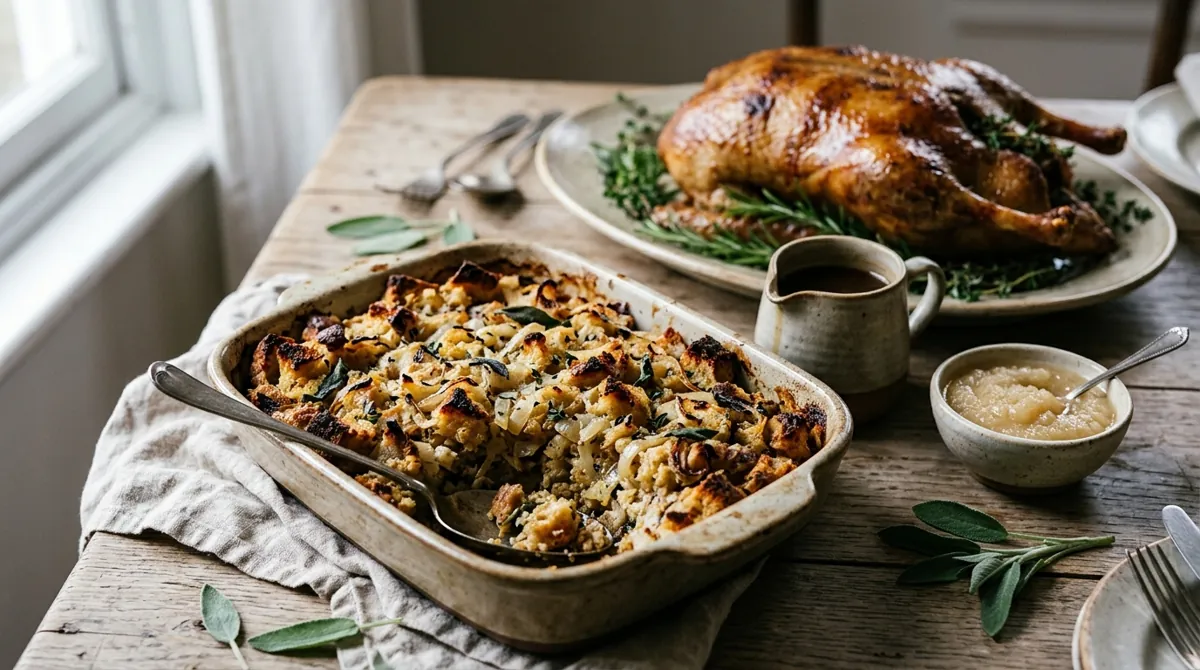
Sage and Onion Stuffing (Mrs Beeton, 1861)
The Victorian English stuffing for goose, duck and pork: onions simmered until mild, chopped fine with fresh sage, worked together with bread crumbs, butter and an egg yolk, and baked in its own dish until crisp on top.
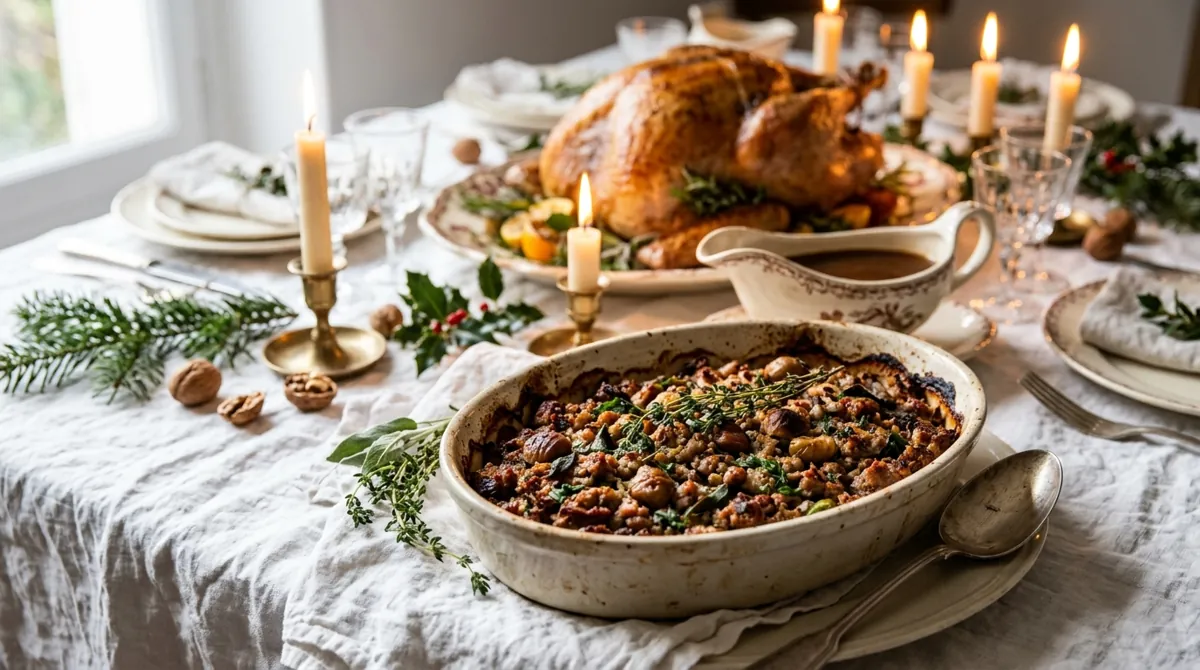
Chestnut and Pork Stuffing (Farce aux Marrons)
Whole chestnuts simmered in broth until just tender, folded into seasoned ground pork with shallots, thyme and a splash of Cognac, and baked in its own dish: the classic French stuffing for a Christmas turkey.
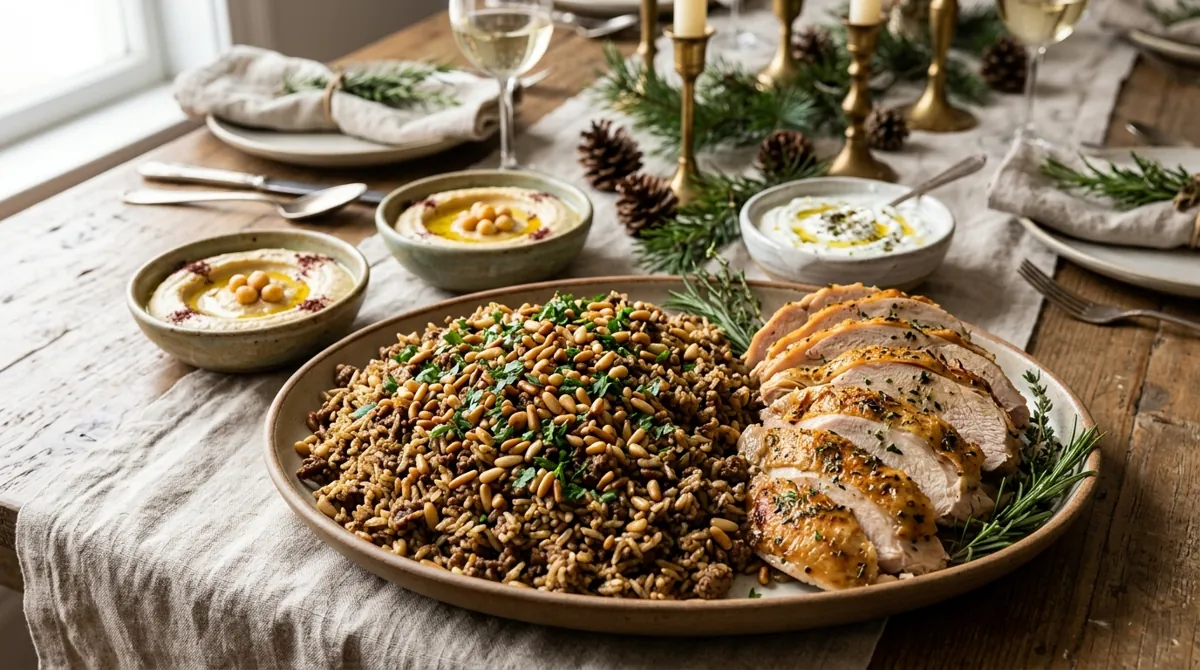
Lebanese Hashweh (Spiced Rice and Beef Stuffing)
Ground beef and onion browned in olive oil, seasoned with Lebanese seven-spice, cooked with basmati rice in chicken broth and finished with toasted pine nuts and parsley: served on its own or as a stuffing for turkey.
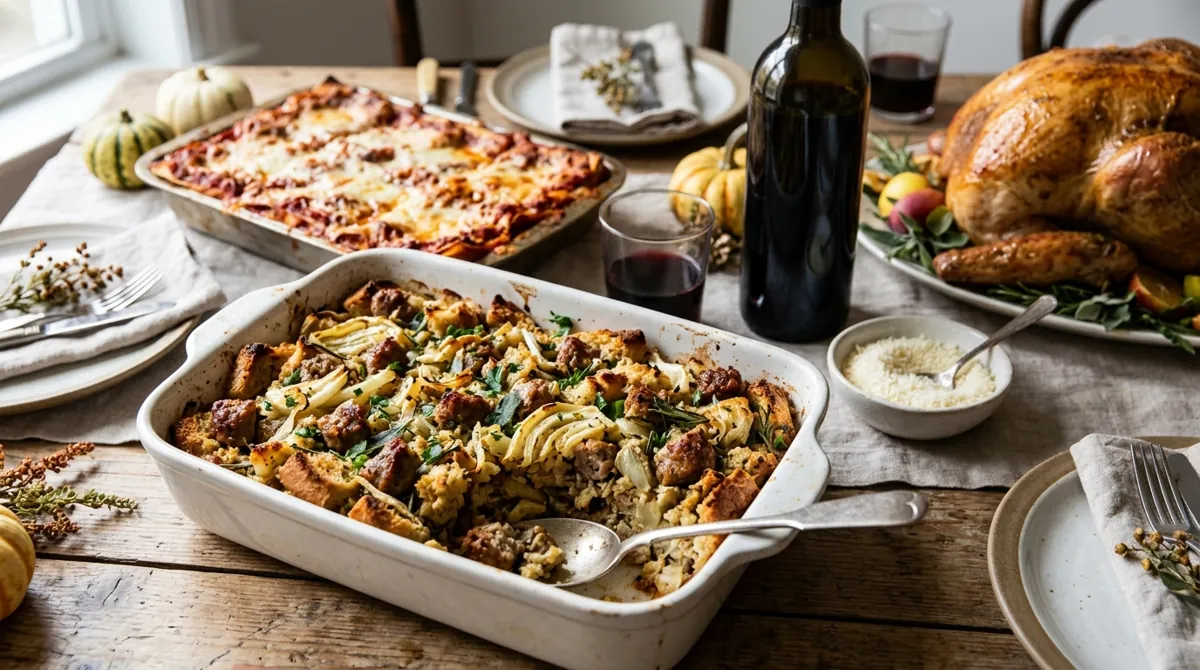
Italian-American Sausage and Fennel Stuffing
Oven-dried white bread cubes tossed with browned sweet Italian sausage, onion and fennel cooked in butter, fresh thyme, marjoram and sage, chicken broth and eggs, baked covered and then uncovered until golden.
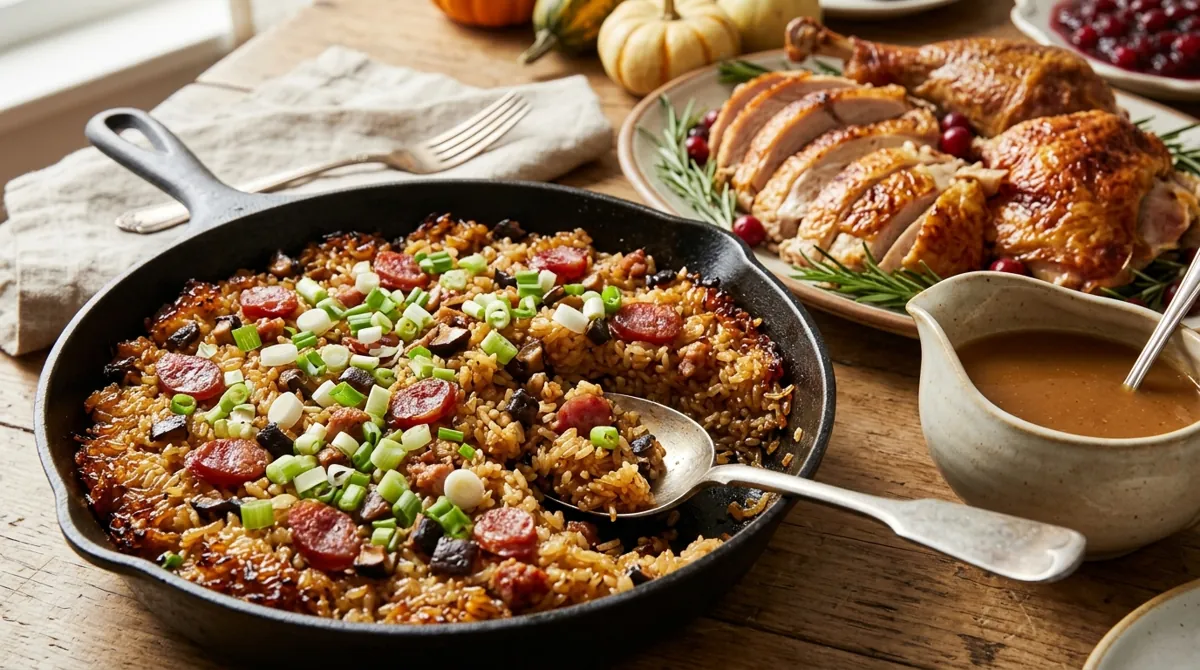
Chinese-American Sticky Rice Stuffing
Soaked and steamed glutinous rice tossed with lap cheong (sweet Chinese sausage), onion and caramelized shiitake, seasoned with light and dark soy sauce and chicken stock, then roasted in a cast-iron skillet until the top and bottom turn crisp.
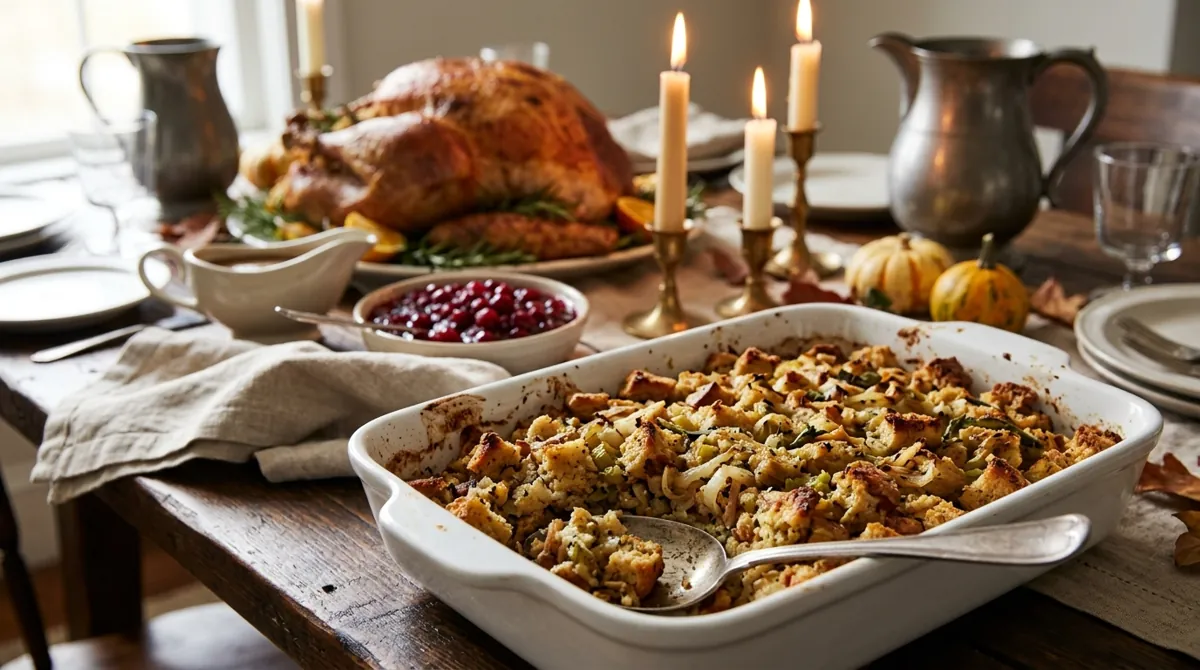
New England Sage Bread Stuffing
Dried French bread cubes tossed with onion and celery cooked in butter, sage, thyme, marjoram and parsley, chicken broth and eggs, baked covered until fragrant and then uncovered until a golden crust forms.
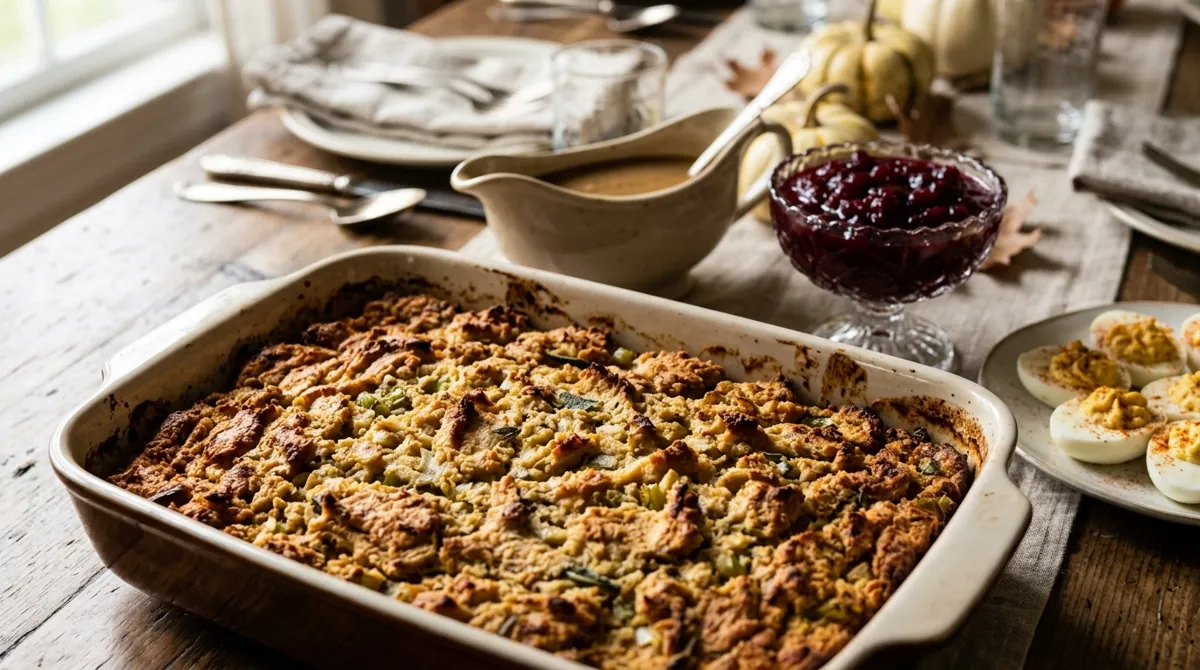
Southern Cornbread Dressing
A pan of cornbread baked, crumbled while hot and mixed with sausage, onion, bell pepper and celery, poultry seasoning, broth, milk and eggs, then baked in ridges with butter brushed on top until crisp outside and almost creamy inside.
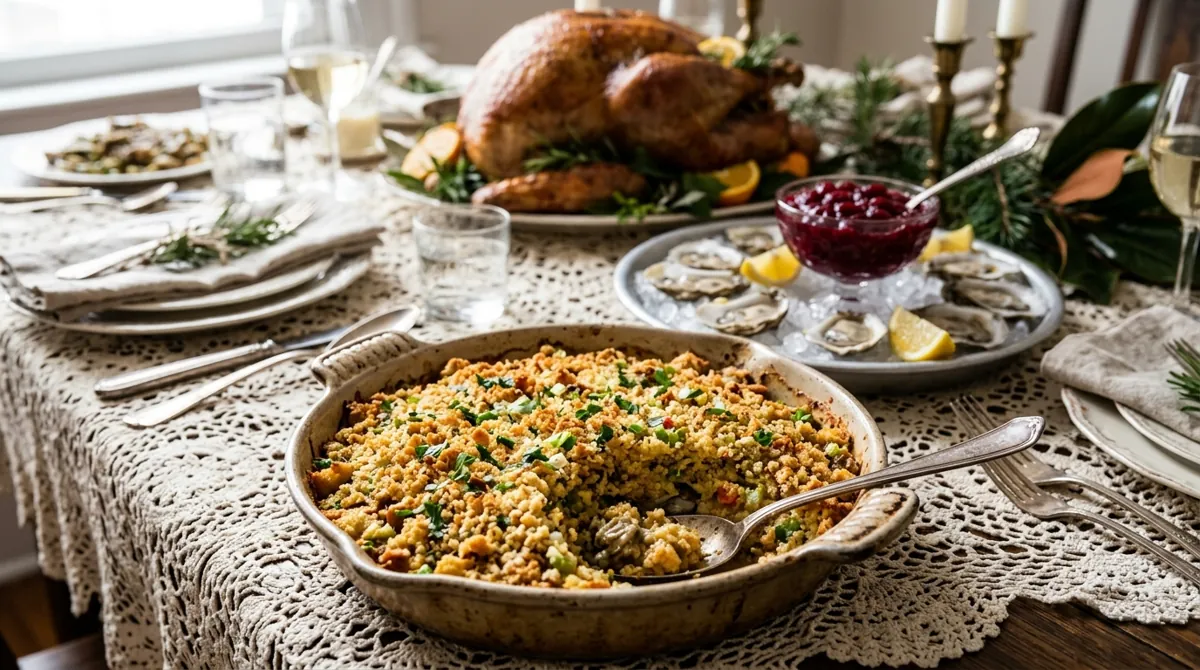
New Orleans Oyster Dressing (Leah Chase)
Leah Chase's holiday dressing: day-old bread soaked in oyster liquor, browned ground beef and the Creole trinity cooked in butter, chopped Gulf oysters, thyme and cayenne, bound with egg and baked under seasoned bread crumbs.
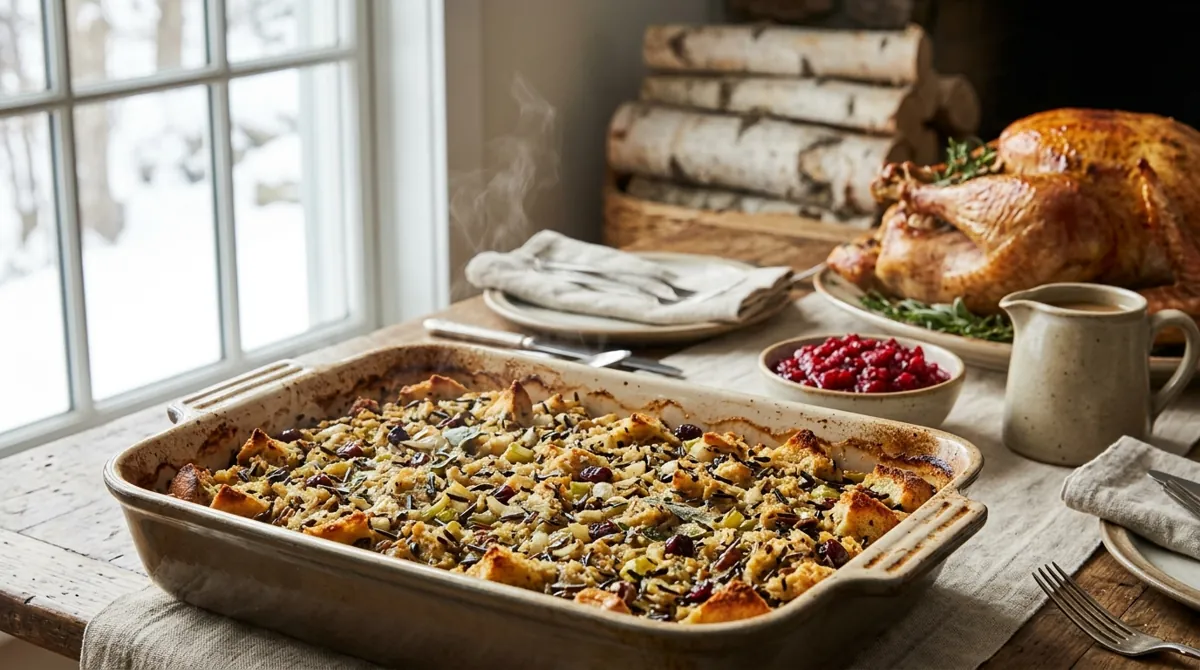
Wild Rice Dressing (Minnesota)
Nutty wild rice cooked in broth, mixed with toasted bread crumbs, onion, celery, garlic, sage and thyme and a light custard of cream, eggs and the rice's own cooking liquid, baked covered until set.
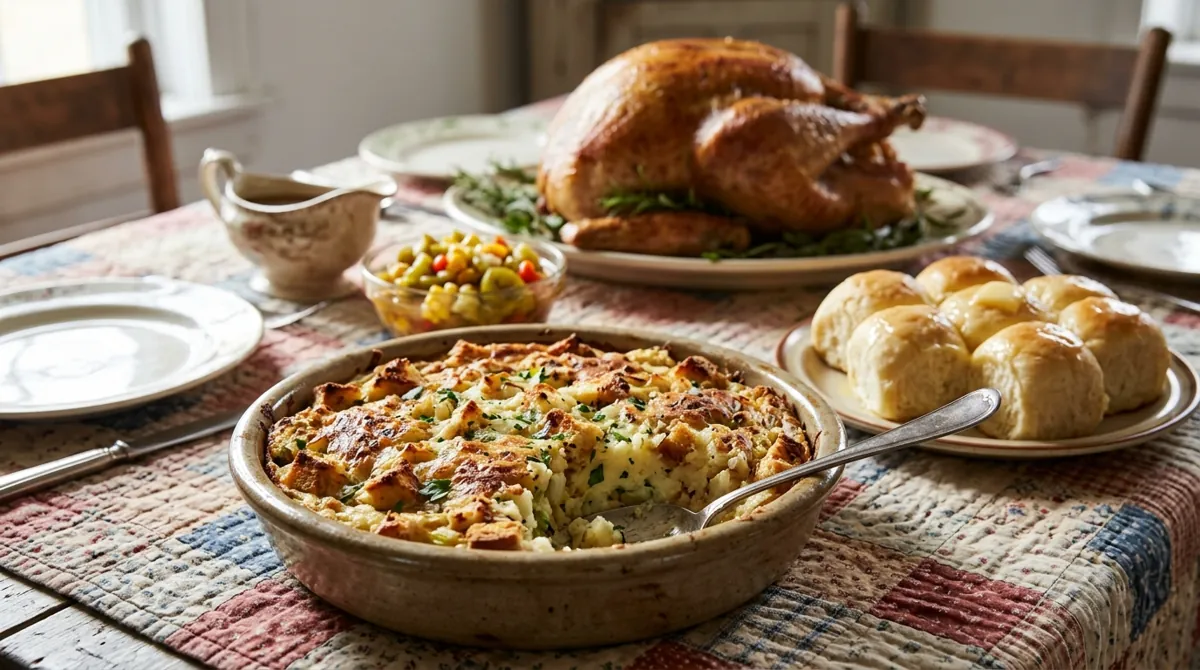
Pennsylvania Dutch Potato Filling
Half mashed potatoes, half stuffing: boiled potatoes beaten with milk, eggs and parsley, mixed with onion and celery cooked in butter and buttery toasted bread cubes, and baked until crusty on top.
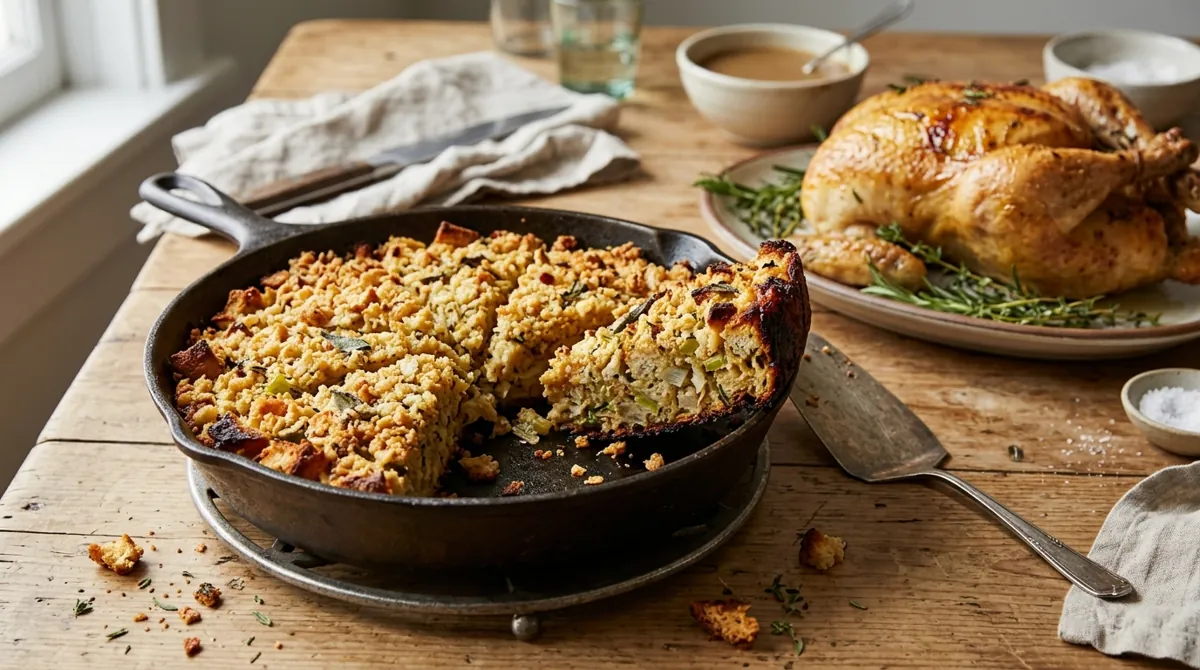
Weeknight Crispy Skillet Stuffing
A half-size, one-skillet stuffing for any night: baguette cubes toasted in a hot oven, soaked in broth and egg with browned onion, celery, sage and thyme, crisped on the stove and finished in the oven with a golden crust on top and bottom.
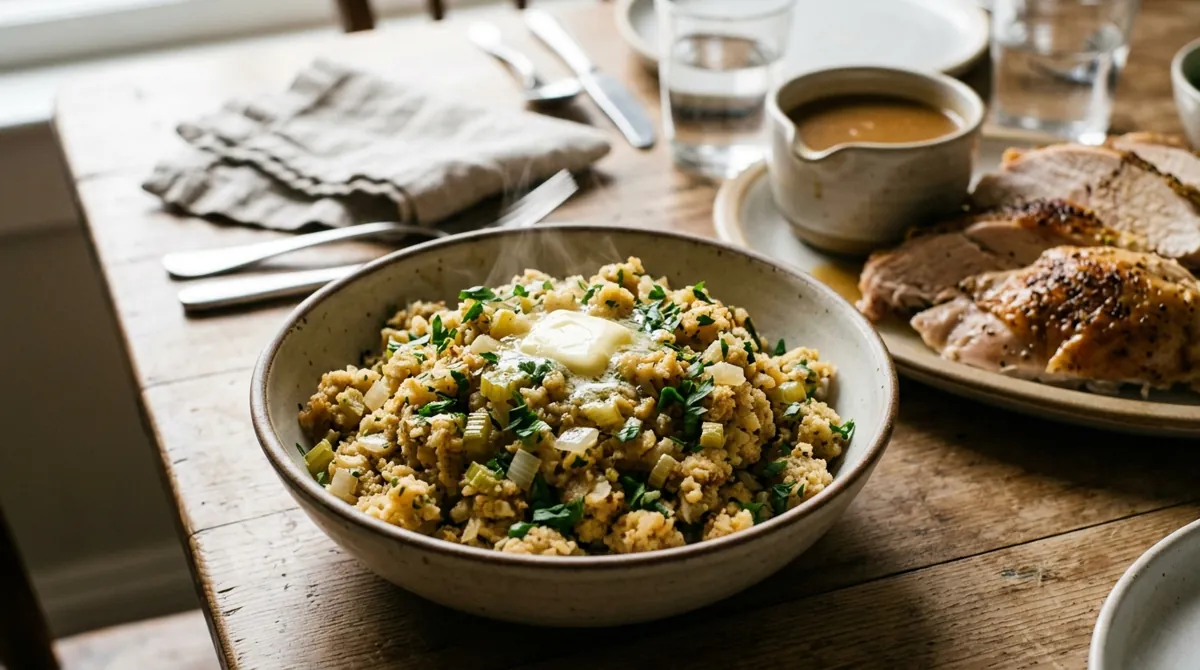
Stovetop-Style Stuffing, Inspired by Stove Top
The boxed classic made from scratch: white and whole wheat bread cut into eraser-size crumbs and dried in the oven, then stirred into a simmering pot of broth, butter, dried onion, celery and poultry seasoning, covered and left to stand 5 minutes. Inspired by, not official.
Meatballs of the World

Italian-American Meatballs
Big, tender meatballs braised for an hour in red sauce over spaghetti. The one most Americans grew up with.

Pallottine (Abruzzo Meatballs)
Tiny meatballs, smaller than a marble, tossed right through square spaghetti alla chitarra. No bread at all.

Swedish Meatballs (Köttbullar)
Small, soft meatballs browned in butter, in a cream sauce made from the same pan, with lingonberry jam on the plate.

Danish Frikadeller
Pork meatballs shaped with a spoon and fried slowly in butter, crusty outside and soft in the middle.

Königsberger Klopse
German meatballs that are never fried: poached, then served in a creamy white sauce with capers.

Spanish Albóndigas in Almond Saffron Sauce
The tapas bar classic: small meatballs in a golden sauce thickened with fried almonds and bread.

Mexican Albóndigas with Chipotle and Mint
Soft meatballs with rice and fresh mint inside, simmered in a smoky tomato and chipotle broth.

Izgara Köfte (Turkish Grilled Meatballs)
Small, flat meatballs kneaded hard, rested cold, and charred on a hot grill pan.

Lion's Head Meatballs
Big, soft pork meatballs, stirred into a sticky paste, fried to set, then braised in a savory sauce.

Chicken Tsukune
Japan's chicken meatball: kneaded sticky, grilled on skewers, glazed with sweet soy tare, dipped in egg yolk.