
Lebanese Hashweh (Spiced Rice and Beef Stuffing)
Ground beef and onion browned in olive oil, seasoned with Lebanese seven-spice, cooked with basmati rice in chicken broth and finished with toasted pine nuts and parsley: served on its own or as a stuffing for turkey.
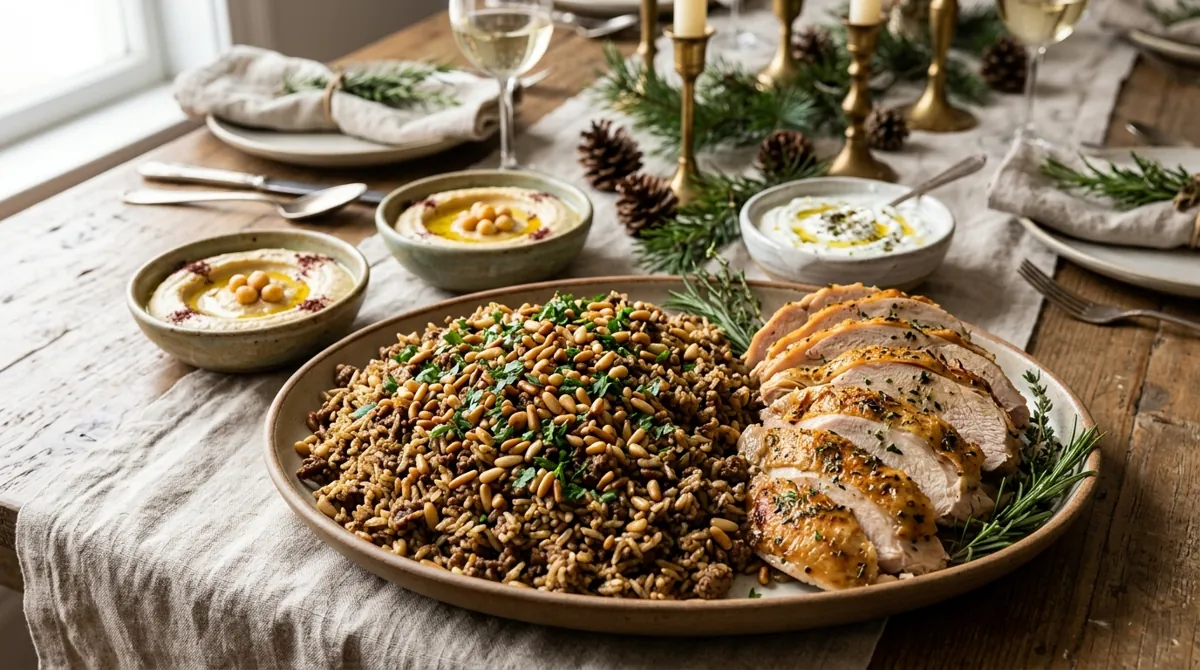
Hashweh means "stuffing" in Arabic. Tasting Table describes it as meat, rice and spices, sometimes with yogurt, popular across Syria, Jordan, Palestine and beyond, traditionally used to stuff a whole lamb and eaten on its own as well; it notes there is rarely consensus on where it began, and that lamb was the traditional meat before ground beef became common. Yumna Jawad, who grew up among Lebanese families in Sierra Leone and whose family settled in the United States in 1993, writes that her first American Thanksgiving had hummus, tabbouleh and grape leaves beside the turkey, and that her mother later began stuffing the turkey with hashweh, "our special way of making Thanksgiving infused with our Lebanese traditions" (Food Network, November 5, 2021:). Her mother uses the same mixture to stuff peppers, squash, potatoes, cabbage and chicken.
Why it works the kitchen science
Brown, then season
Jawad's note says to salt the beef only once it is mostly cooked, since early salt draws out moisture and the meat steams instead of browning.
Rice cooked in the meat's own fat
The grains are coated in beef fat and spice before the broth goes in, so every grain carries the seasoning.
Step by step
- Step 1
Toast the pine nuts in a large, dry, heavy pot over medium-low heat, stirring, 3 to 4 minutes, until golden. Tip them onto a plate.
- Step 2
Add the olive oil, onion and beef to the pot and cook over medium heat 5 to 8 minutes, breaking up the beef, until the onion is soft and the meat is browned.
- Step 3
Stir in the seven-spice, 1/2 tsp of the salt and the pepper, then the rice and the remaining 1 tsp salt, and stir 1 minute to coat the grains.
- Step 4
Pour in the broth, stir once and bring to a boil over high heat.
- Step 5
Lower the heat to low, cover tightly and simmer 15 minutes, until the liquid is absorbed and the rice is tender.
- Step 6
Take the pot off the heat and let it steam, still covered, 10 minutes.
- Step 7
Fluff with a fork and scatter the pine nuts and parsley over the top. Serve hot, as a side or over sliced turkey.
Lebanese Hashweh (Spiced Rice and Beef Stuffing)
Serves 6 · about 6 cups · 50 min total
Hashweh
- 1/3 cup pine nuts
- 1 tbsp olive oil
- 1 medium onion, chopped
- 1 lb lean ground beef (90% lean)
- 2 tsp Lebanese seven-spice blend
- 1 1/2 tsp salt, divided
- 1/2 tsp black pepper
- 1 cup basmati rice, rinsed until the water runs clear
- 2 cups low-sodium chicken broth
To finish
- 1/4 cup chopped parsley (or cilantro)
Method
- Toast the pine nuts in a large, dry, heavy pot over medium-low heat, stirring, 3 to 4 minutes, until golden. Tip them onto a plate.
- Add the olive oil, onion and beef to the pot and cook over medium heat 5 to 8 minutes, breaking up the beef, until the onion is soft and the meat is browned.
- Stir in the seven-spice, 1/2 tsp of the salt and the pepper, then the rice and the remaining 1 tsp salt, and stir 1 minute to coat the grains.
- Pour in the broth, stir once and bring to a boil over high heat.
- Lower the heat to low, cover tightly and simmer 15 minutes, until the liquid is absorbed and the rice is tender.
- Take the pot off the heat and let it steam, still covered, 10 minutes.
- Fluff with a fork and scatter the pine nuts and parsley over the top. Serve hot, as a side or over sliced turkey.
Adapted from Yumna Jawad's "Thanksgiving Hashweh", Food Network, as written (Food Network says 4 to 6 servings; we call it 6 as a side). Jawad gives no amount for the pine nuts and herbs; 1/3 cup pine nuts and 1/4 cup parsley are ours, as is the toasting time. The stuffing-a-turkey steps follow USDA FSIS (see the Food safety baseline). Food Network. Ingredient list follows the source; the method is in our own words.
All sources (3)
Tips
- To stuff a turkey, use the hashweh hot, right after it finishes cooking: spoon it loosely into the bird, about 3/4 cup per pound, put the bird in the oven at 325°F or higher at once and roast until the center of the stuffing reads 165°F. Never cool it first or stuff the bird ahead.
- Jawad adds nuts after stuffing so they stay crunchy.
- Many Lebanese families use ground lamb; swap it in pound for pound.
- Seven-spice blends vary; a typical one includes allspice, black pepper and cinnamon. Taste yours.
The rules people argue about
What the sources agree on, what they don't, and what is just a good story.
- Hashweh is Lebanese. Disputed: Jawad and other Lebanese-American cooks call it Lebanese; Tasting Table presents it as a traditional Palestinian dish and says there is rarely consensus on its origin.
- Lamb, not beef. Folklore as a rule: Tasting Table says lamb was traditional and beef is now common; Jawad uses beef.
- Hashweh always goes inside the bird. Documented as both: Jawad says it is stuffed into the turkey or served on its own.
- Pine nuts are essential. Folklore: Jawad lists them as a garnish; Tasting Table's description of stuffed lamb includes pine nuts.
Every other stuffing
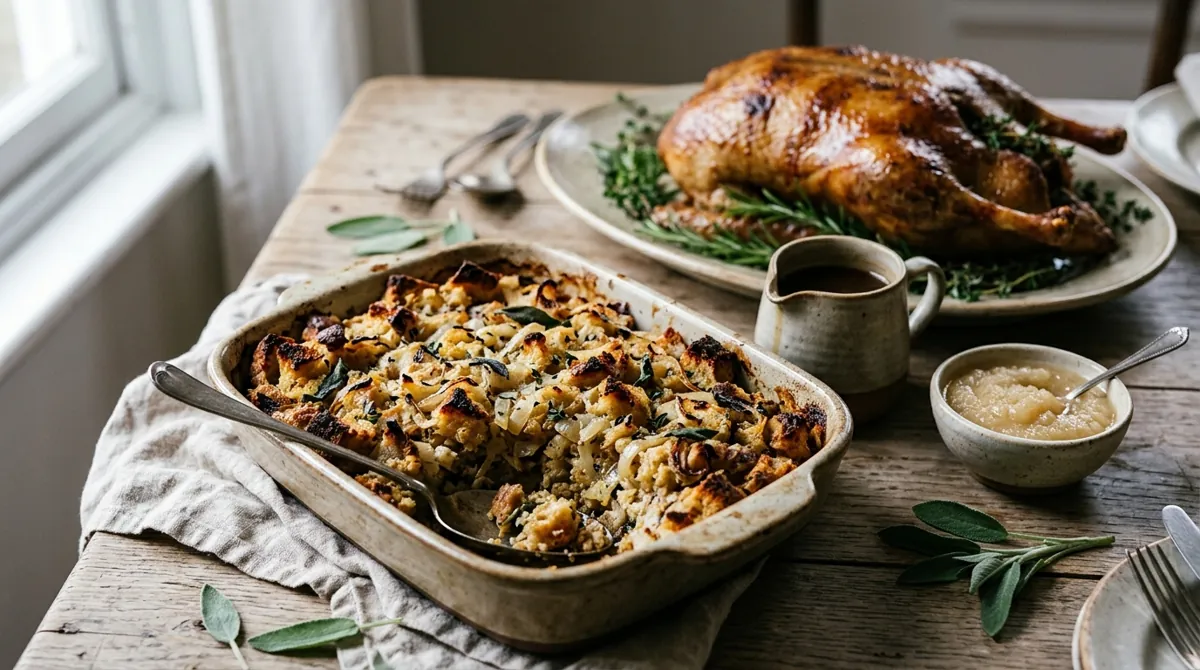
Sage and Onion Stuffing (Mrs Beeton, 1861)
The Victorian English stuffing for goose, duck and pork: onions simmered until mild, chopped fine with fresh sage, worked together with bread crumbs, butter and an egg yolk, and baked in its own dish until crisp on top.
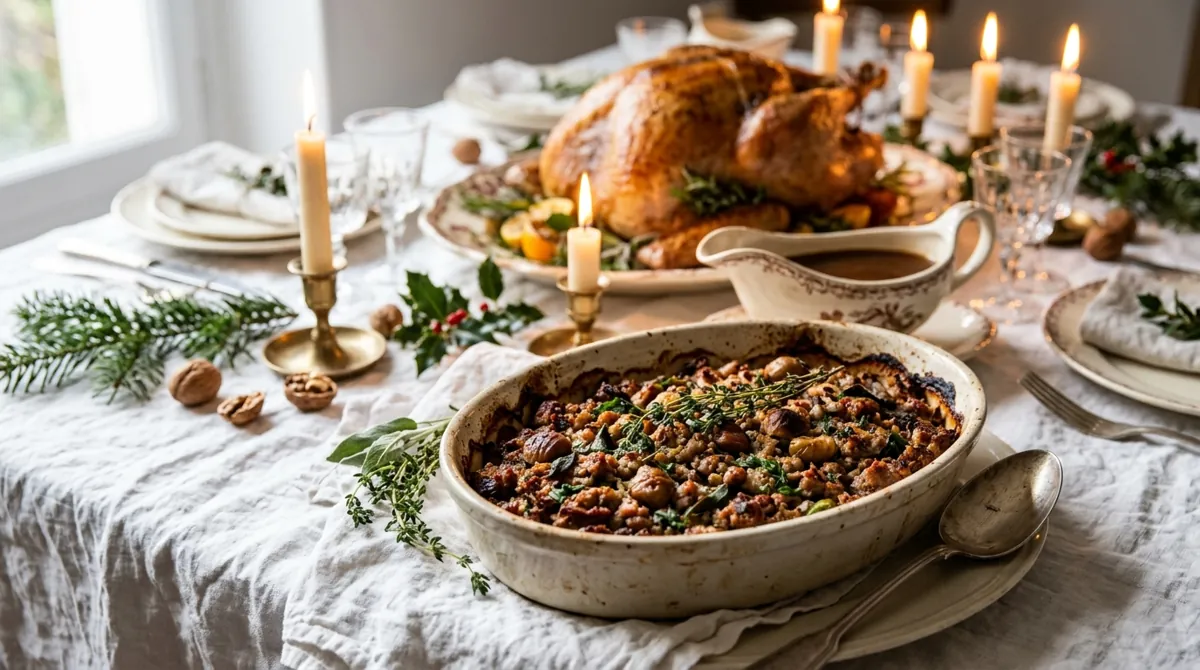
Chestnut and Pork Stuffing (Farce aux Marrons)
Whole chestnuts simmered in broth until just tender, folded into seasoned ground pork with shallots, thyme and a splash of Cognac, and baked in its own dish: the classic French stuffing for a Christmas turkey.
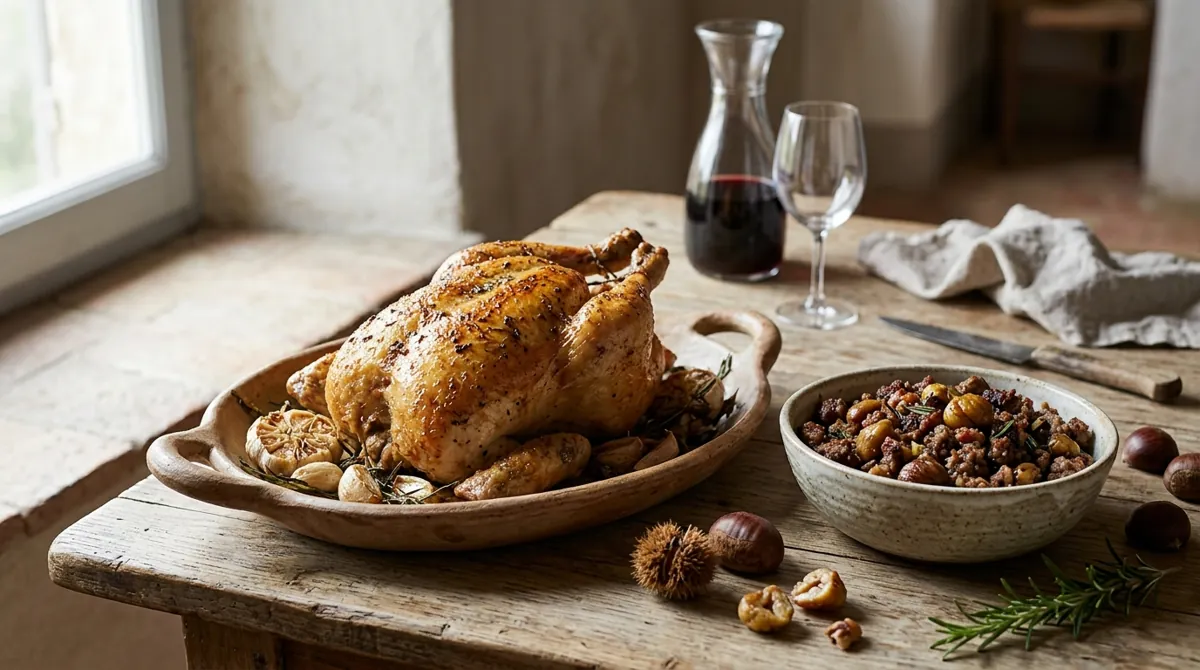
Artusi's Roast Chicken with Sausage and Chestnut Stuffing (1891)
Pellegrino Artusi's family stuffing of Italian sausage, chicken liver, roasted chestnuts, dried mushrooms and nutmeg, bound with egg and a little bread soaked in broth, packed into a whole chicken and roasted until the stuffing itself reads 165°F.
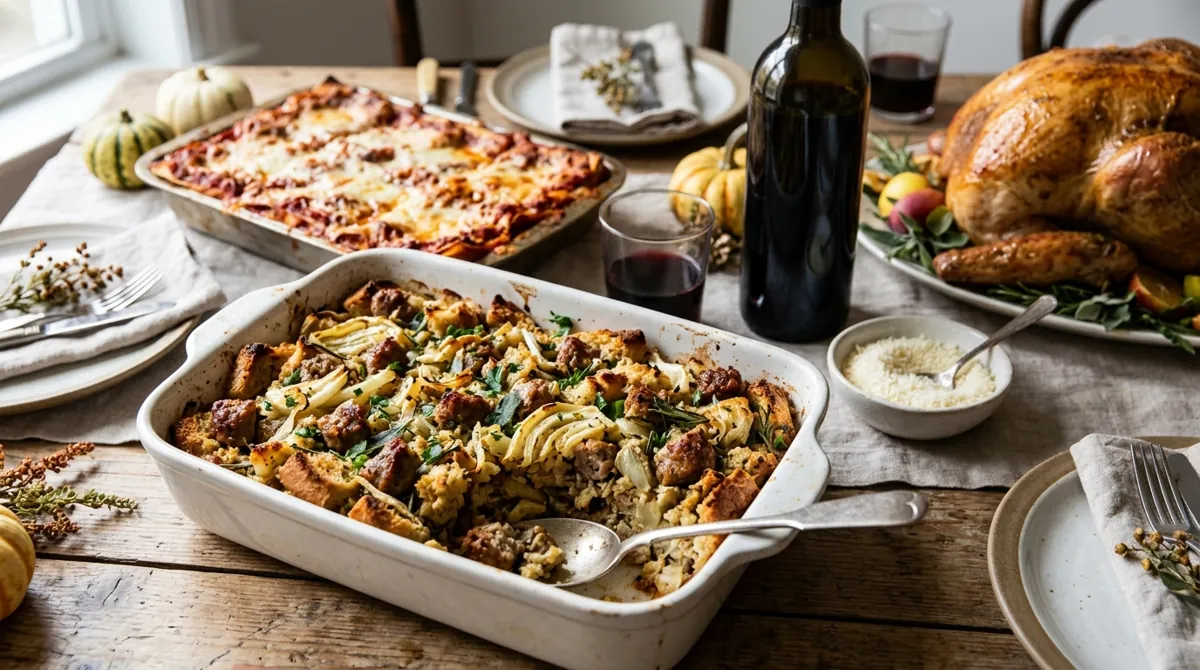
Italian-American Sausage and Fennel Stuffing
Oven-dried white bread cubes tossed with browned sweet Italian sausage, onion and fennel cooked in butter, fresh thyme, marjoram and sage, chicken broth and eggs, baked covered and then uncovered until golden.
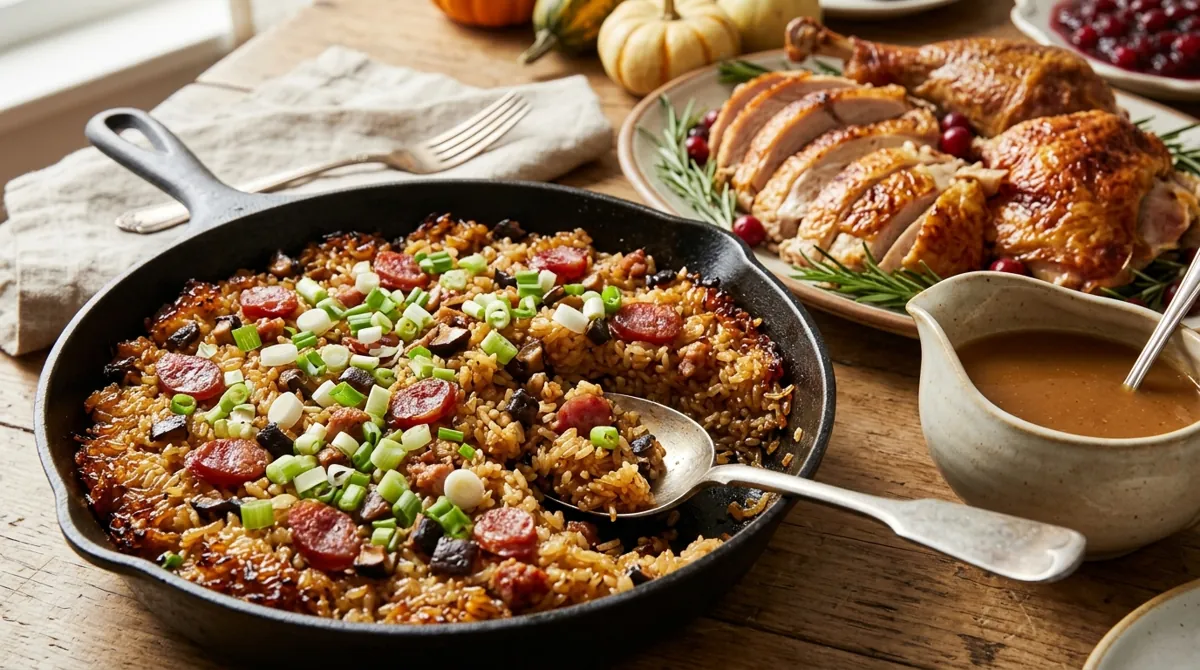
Chinese-American Sticky Rice Stuffing
Soaked and steamed glutinous rice tossed with lap cheong (sweet Chinese sausage), onion and caramelized shiitake, seasoned with light and dark soy sauce and chicken stock, then roasted in a cast-iron skillet until the top and bottom turn crisp.
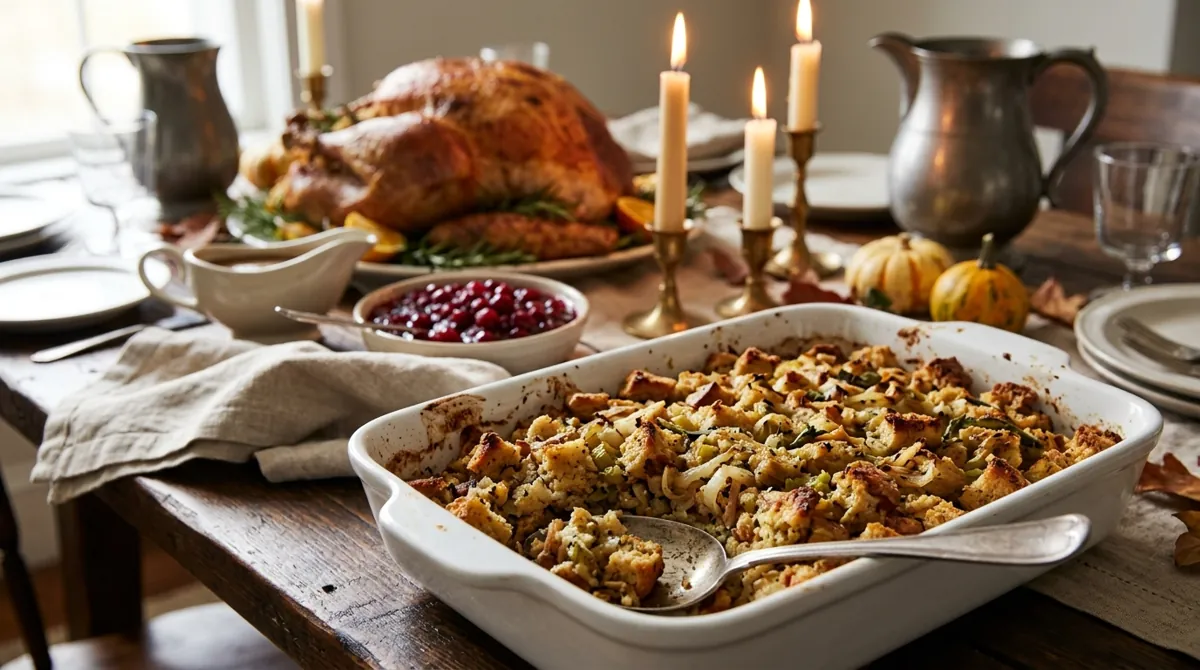
New England Sage Bread Stuffing
Dried French bread cubes tossed with onion and celery cooked in butter, sage, thyme, marjoram and parsley, chicken broth and eggs, baked covered until fragrant and then uncovered until a golden crust forms.
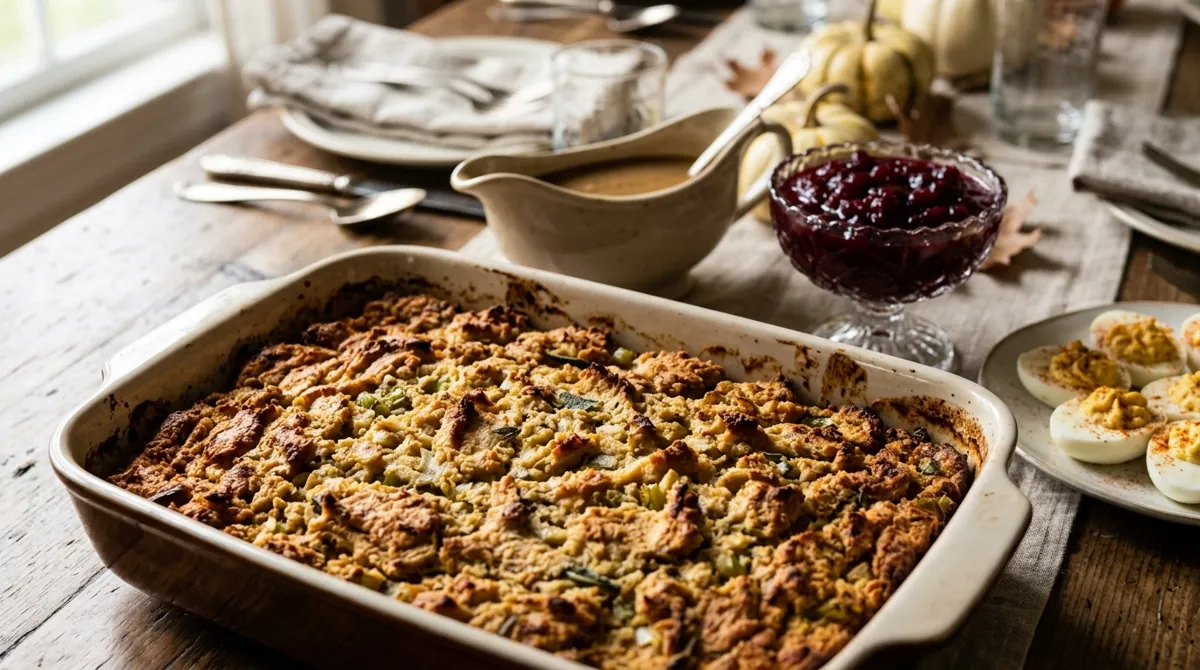
Southern Cornbread Dressing
A pan of cornbread baked, crumbled while hot and mixed with sausage, onion, bell pepper and celery, poultry seasoning, broth, milk and eggs, then baked in ridges with butter brushed on top until crisp outside and almost creamy inside.
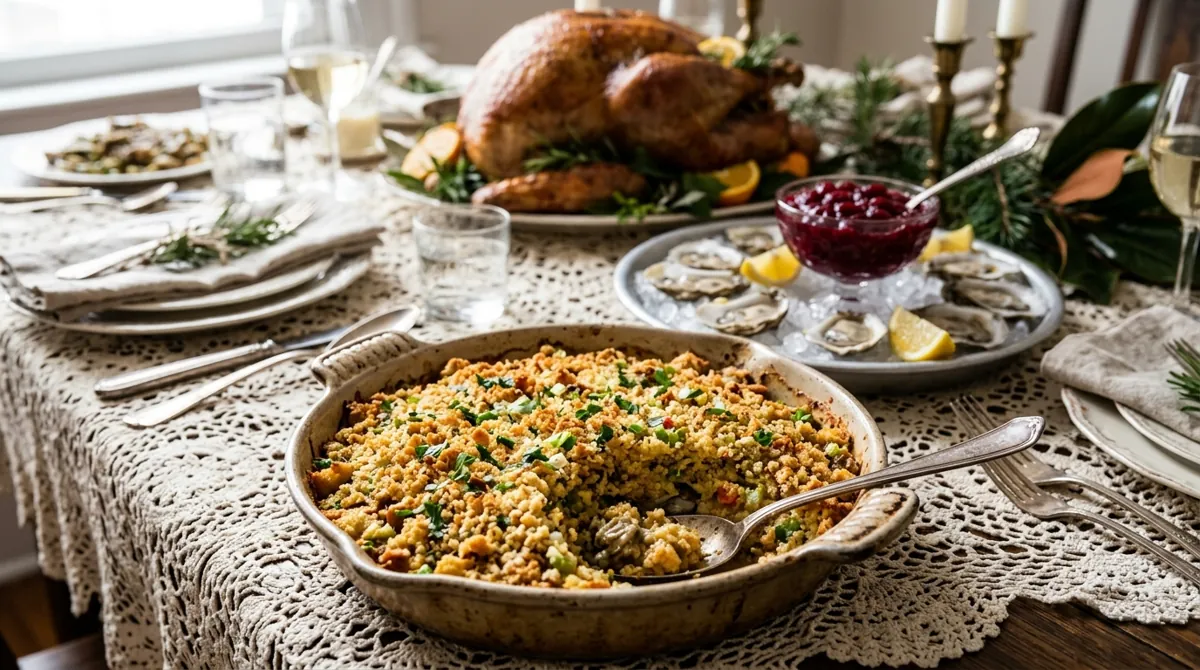
New Orleans Oyster Dressing (Leah Chase)
Leah Chase's holiday dressing: day-old bread soaked in oyster liquor, browned ground beef and the Creole trinity cooked in butter, chopped Gulf oysters, thyme and cayenne, bound with egg and baked under seasoned bread crumbs.
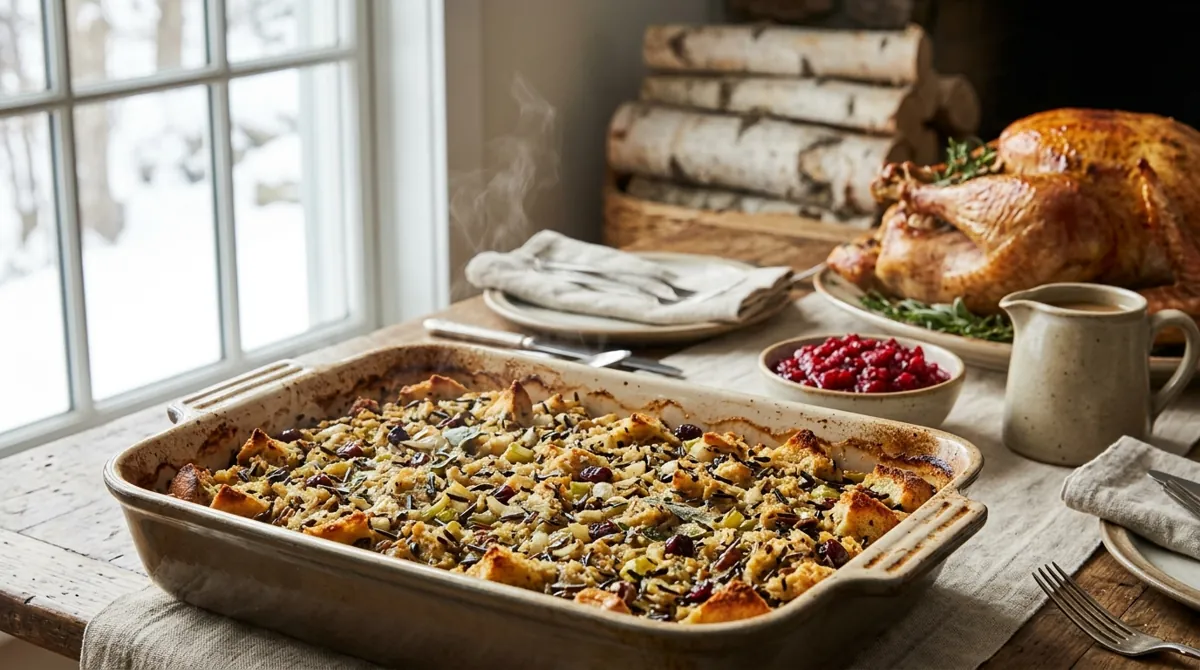
Wild Rice Dressing (Minnesota)
Nutty wild rice cooked in broth, mixed with toasted bread crumbs, onion, celery, garlic, sage and thyme and a light custard of cream, eggs and the rice's own cooking liquid, baked covered until set.
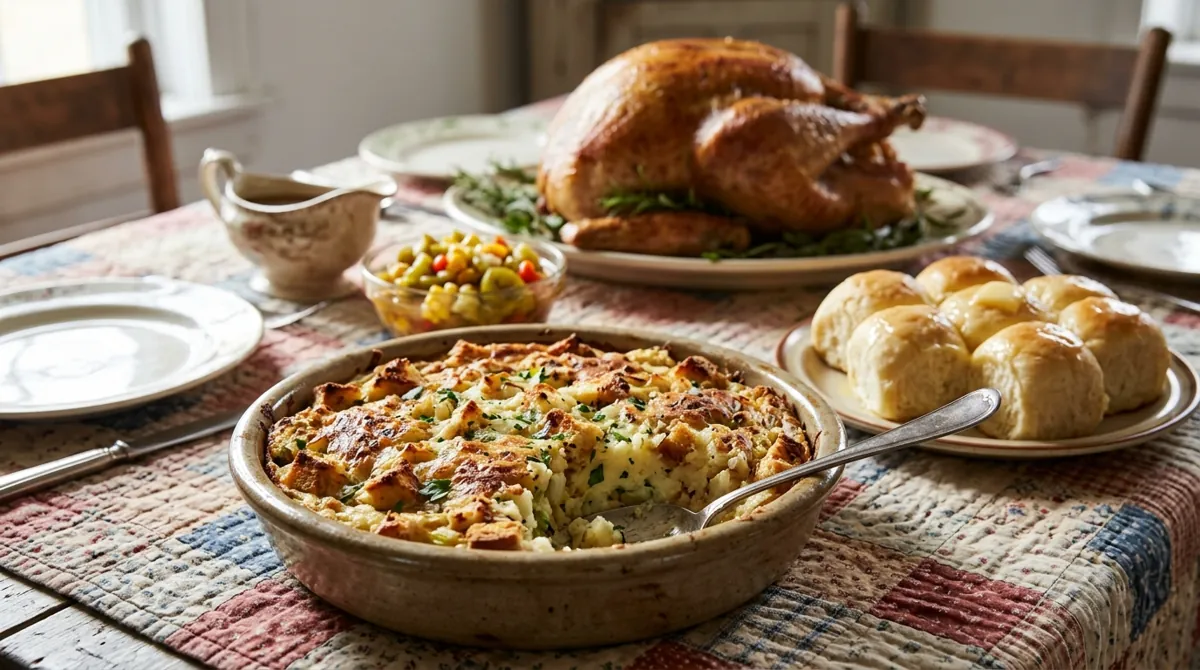
Pennsylvania Dutch Potato Filling
Half mashed potatoes, half stuffing: boiled potatoes beaten with milk, eggs and parsley, mixed with onion and celery cooked in butter and buttery toasted bread cubes, and baked until crusty on top.
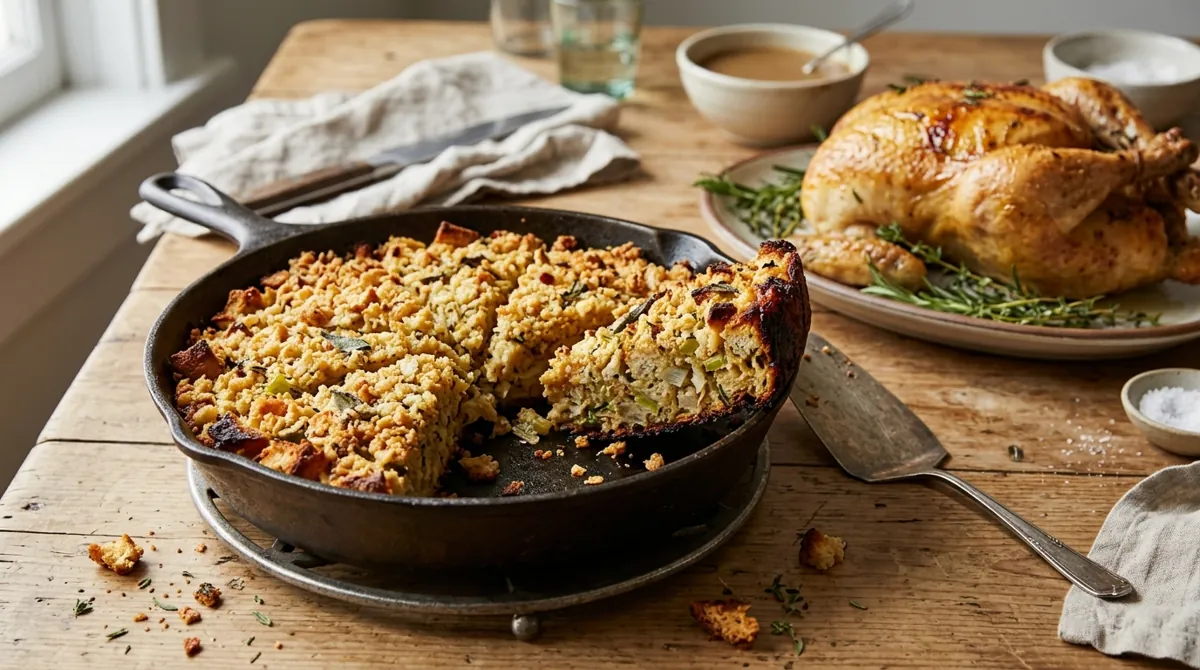
Weeknight Crispy Skillet Stuffing
A half-size, one-skillet stuffing for any night: baguette cubes toasted in a hot oven, soaked in broth and egg with browned onion, celery, sage and thyme, crisped on the stove and finished in the oven with a golden crust on top and bottom.
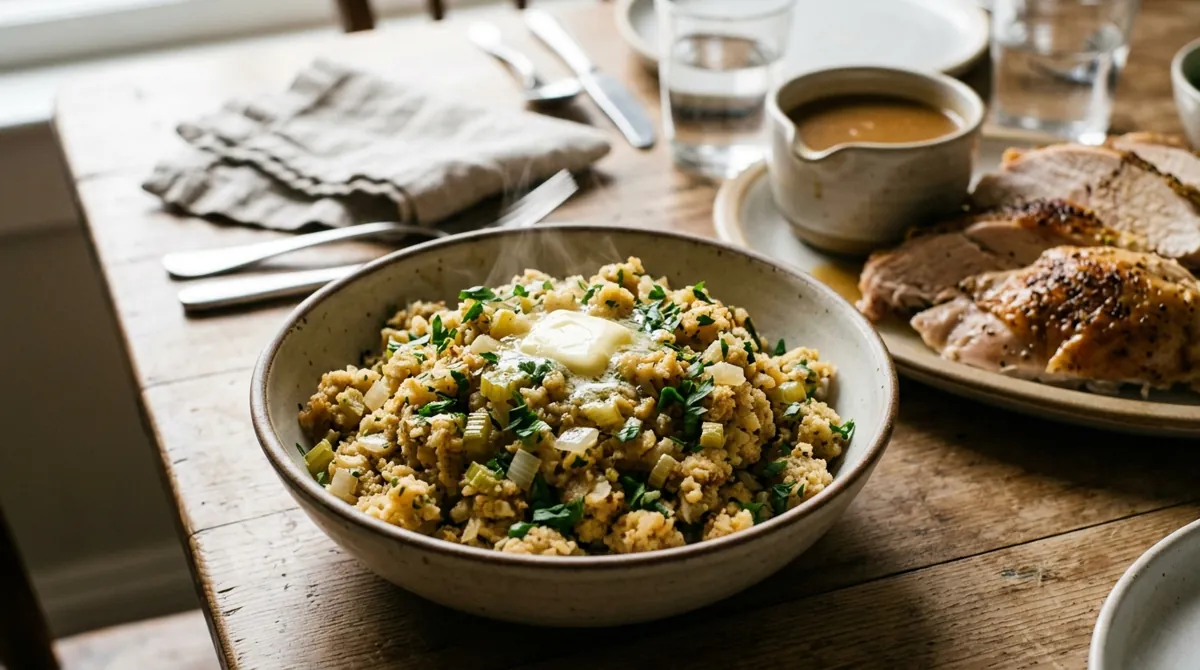
Stovetop-Style Stuffing, Inspired by Stove Top
The boxed classic made from scratch: white and whole wheat bread cut into eraser-size crumbs and dried in the oven, then stirred into a simmering pot of broth, butter, dried onion, celery and poultry seasoning, covered and left to stand 5 minutes. Inspired by, not official.
Meatballs of the World

Italian-American Meatballs
Big, tender meatballs braised for an hour in red sauce over spaghetti. The one most Americans grew up with.

Pallottine (Abruzzo Meatballs)
Tiny meatballs, smaller than a marble, tossed right through square spaghetti alla chitarra. No bread at all.

Swedish Meatballs (Köttbullar)
Small, soft meatballs browned in butter, in a cream sauce made from the same pan, with lingonberry jam on the plate.

Danish Frikadeller
Pork meatballs shaped with a spoon and fried slowly in butter, crusty outside and soft in the middle.

Königsberger Klopse
German meatballs that are never fried: poached, then served in a creamy white sauce with capers.

Spanish Albóndigas in Almond Saffron Sauce
The tapas bar classic: small meatballs in a golden sauce thickened with fried almonds and bread.

Mexican Albóndigas with Chipotle and Mint
Soft meatballs with rice and fresh mint inside, simmered in a smoky tomato and chipotle broth.

Izgara Köfte (Turkish Grilled Meatballs)
Small, flat meatballs kneaded hard, rested cold, and charred on a hot grill pan.

Lion's Head Meatballs
Big, soft pork meatballs, stirred into a sticky paste, fried to set, then braised in a savory sauce.

Chicken Tsukune
Japan's chicken meatball: kneaded sticky, grilled on skewers, glazed with sweet soy tare, dipped in egg yolk.