
Sage and Onion Stuffing (Mrs Beeton, 1861)
The Victorian English stuffing for goose, duck and pork: onions simmered until mild, chopped fine with fresh sage, worked together with bread crumbs, butter and an egg yolk, and baked in its own dish until crisp on top.
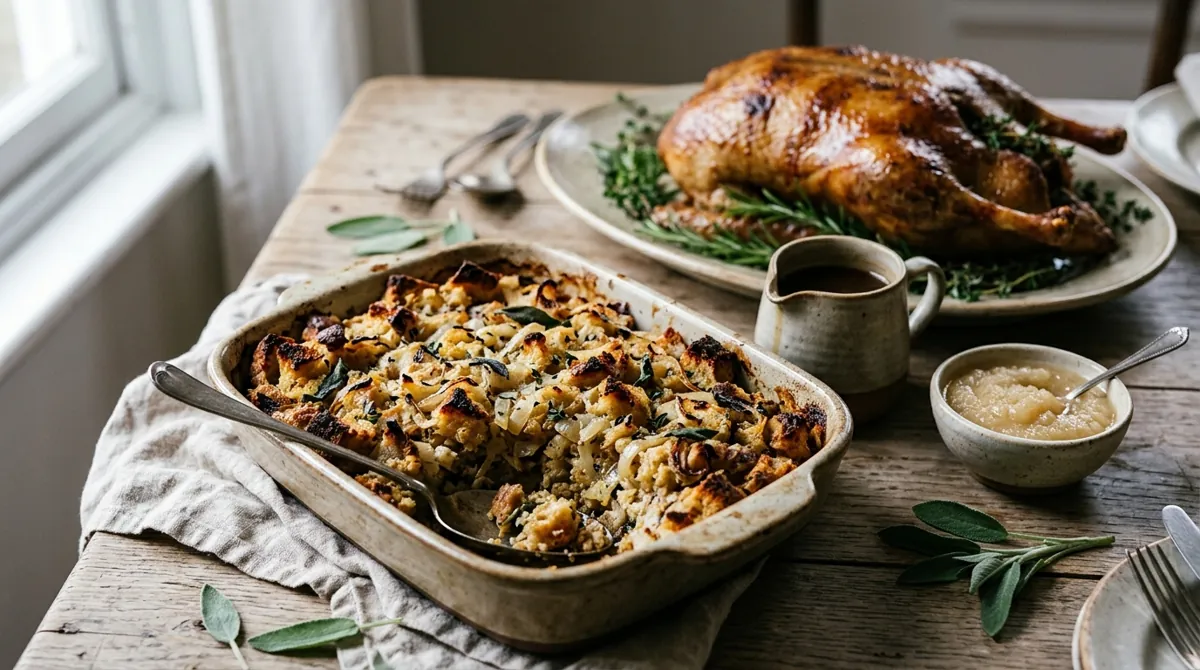
Isabella Beeton's "Book of Household Management", issued in parts from 1859 to 1861 and first published as a bound book in 1861, gives "Sage-and-Onion Stuffing, for Geese, Ducks, and Pork" as recipe No. 504: four large onions simmered about five minutes, ten sage leaves dipped in at the end "to take off their rawness", chopped very fine with a quarter pound of bread crumbs, butter, seasoning and an egg yolk (Project Gutenberg:). She notes that many cooks used the onions raw, which made the stuffing much stronger, and that serving the sage and onion separately from the roast was "a frequent plan, and we think a good one", since not everybody liked the flavor. Goose, not turkey, was the everyday English Christmas bird for a long time: BBC Countryfile Magazine says turkey stayed an expensive luxury until the 19th century, and that by Georgian times a roast goose was usually stuffed with chestnuts or with bread crumbs, sage and onion. In 1901 John Crampton, a butcher in Eccles near Manchester, devised the boxed stuffing mix Paxo to sell to Sunday lunch shoppers; Wikipedia, citing the owner Premier Foods, says sales were slow at first because stuffing went with chicken, then a luxury, and grew in the 1950s and 1960s as chicken got cheaper.
🇬🇧 The original
The Victorian English stuffing for goose, duck and pork: onions simmered until mild, chopped fine with fresh sage, worked together with bread crumbs, butter and an egg yolk, and baked in its own dish until crisp on top.
🇺🇸 The American version
New England kept the sage but made it a big pan of buttered bread cubes, celery and onion, moistened with stock: the Thanksgiving stuffing most Americans know. See the New England Sage Bread Stuffing recipe.
📖 : Stuffing vs Dressing: What's the Difference? →
Why it works the kitchen science
Simmer the onions first
Beeton's five minutes in boiling water takes the harsh edge off raw onion, so four large onions taste sweet and mild instead of sharp.
A yolk, not a whole egg
One yolk binds a lot of wet onion to the crumbs without turning the dish into a set custard, so it bakes up soft inside and crisp on top.
Step by step
- Step 1
Heat the oven to 375°F and butter an 8-inch square baking dish (or a 1-quart dish).
- Step 2
Bring a large saucepan of water to a boil, add the whole peeled onions and simmer 6 to 7 minutes, until the outer layers turn translucent. Drop the sage leaves into the water for the last 1 minute.
- Step 3
Drain well and let the onions cool 5 minutes, until you can handle them. Chop the onions and sage very fine on a board (or pulse 6 to 8 times in a food processor; do not purée).
- Step 4
In a bowl, mix the onions and sage with the bread crumbs, butter, salt and pepper, then work in the egg yolk until the mixture holds together. It should be well seasoned; taste before the yolk goes in and add salt if needed.
- Step 5
Spread the stuffing in the dish without packing it down and rough up the top with a fork.
- Step 6
Bake 30 to 35 minutes, until the top is golden and crisp at the edges and the center reads 165°F.
- Step 7
Rest 5 minutes and serve with roast goose, duck, pork or chicken and gravy.
Sage and Onion Stuffing (Mrs Beeton, 1861)
Serves 6 · about 3 cups, one 8-inch dish · 1 hr 10 min total
Stuffing
- 4 large onions (about 1 1/4 lb), peeled
- 10 fresh sage leaves
- 2 cups fresh white bread crumbs (4 oz, from about 4 slices)
- 3 tbsp butter, softened, plus more for the dish
- 1 large egg yolk
- 3/4 tsp kosher salt
- 1/2 tsp black pepper
Method
- Heat the oven to 375°F and butter an 8-inch square baking dish (or a 1-quart dish).
- Bring a large saucepan of water to a boil, add the whole peeled onions and simmer 6 to 7 minutes, until the outer layers turn translucent. Drop the sage leaves into the water for the last 1 minute.
- Drain well and let the onions cool 5 minutes, until you can handle them. Chop the onions and sage very fine on a board (or pulse 6 to 8 times in a food processor; do not purée).
- In a bowl, mix the onions and sage with the bread crumbs, butter, salt and pepper, then work in the egg yolk until the mixture holds together. It should be well seasoned; taste before the yolk goes in and add salt if needed.
- Spread the stuffing in the dish without packing it down and rough up the top with a fork.
- Bake 30 to 35 minutes, until the top is golden and crisp at the edges and the center reads 165°F.
- Rest 5 minutes and serve with roast goose, duck, pork or chicken and gravy.
Adapted from Mrs Beeton, "The Book of Household Management" (1861), recipe No. 504, Sage-and-Onion Stuffing, Project Gutenberg text. Beeton gives the ingredients ("Sufficient for 1 goose, or a pair of ducks") and the method; she gives no oven temperature because her stuffing went inside the bird. We bake it separately, as FSIS advises (see the Food safety baseline) and as Beeton herself approves of serving it separately; the dish size, oven temperature, baking time and the 165°F check are ours. "A quarter pound of bread crumbs" is fresh crumbs from about 4 slices of white bread. We use the yolk, as her method says (her ingredient list says "1 egg"). Project Gutenberg. Ingredient list follows the source; the method is in our own words.
Tips
- For stuffing balls, roll the mixture into 12 balls, set them on a buttered sheet pan and bake at 375°F for 25 to 30 minutes, turning once, until browned and 165°F in the center.
- Beeton says that for goose, a little of the bird's liver, simmered a few minutes and minced, is often added.
- Use fresh sage only; dried sage turns dusty in so simple a mixture.
The rules people argue about
What the sources agree on, what they don't, and what is just a good story.
- Parboil the onions. Documented as Beeton's method; she also says many cooks used them raw for a stronger stuffing, so both are "traditional".
- Sage and onion belongs with goose and pork. Documented for Beeton's title ("for Geese, Ducks, and Pork"); today it is served with chicken and turkey too.
- Turkey replaced goose at Christmas only in Victorian times. Disputed in detail: Countryfile says turkey reached England by the 16th century (Thomas Tusser recommended it in 1573) but stayed a luxury until the 19th century; dates for when it became the usual bird differ by class and region.
- Paxo was invented in 1901. Documented as Premier Foods' account (via Wikipedia); Grace's Guide says the Crampton firm itself dates to 1849.
- Paxo's first flavor was sage and onion. Folklore: Grace's Guide says the first flavor was parsley, lemon and thyme, and sage and onion came later.
Every other stuffing
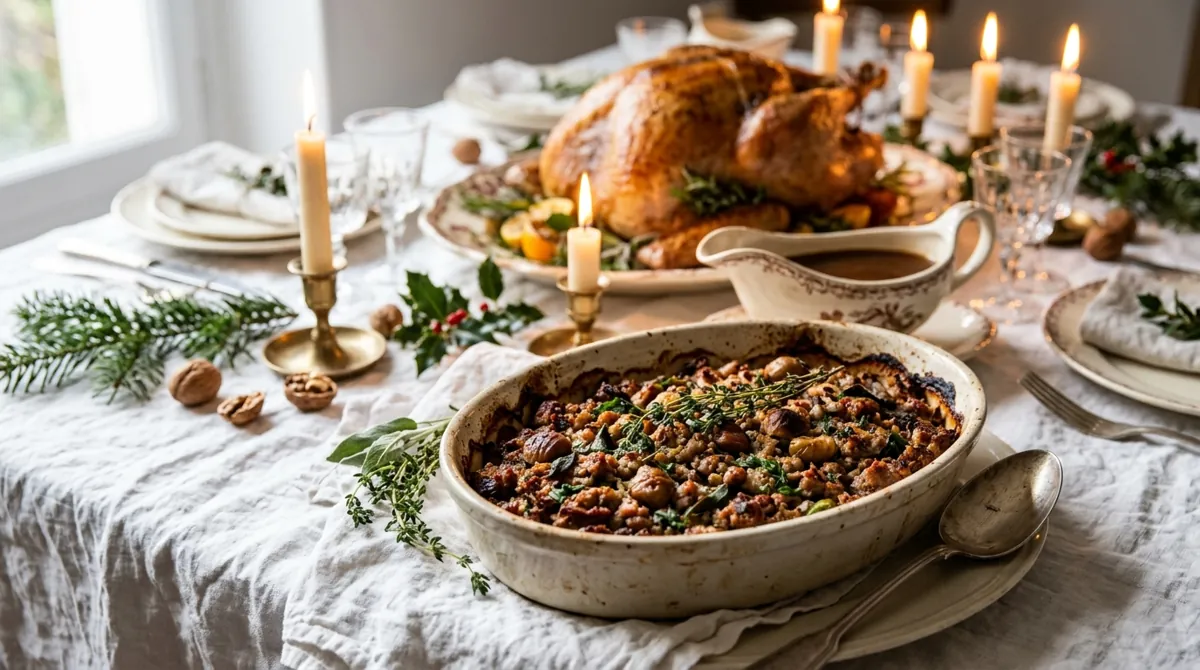
Chestnut and Pork Stuffing (Farce aux Marrons)
Whole chestnuts simmered in broth until just tender, folded into seasoned ground pork with shallots, thyme and a splash of Cognac, and baked in its own dish: the classic French stuffing for a Christmas turkey.
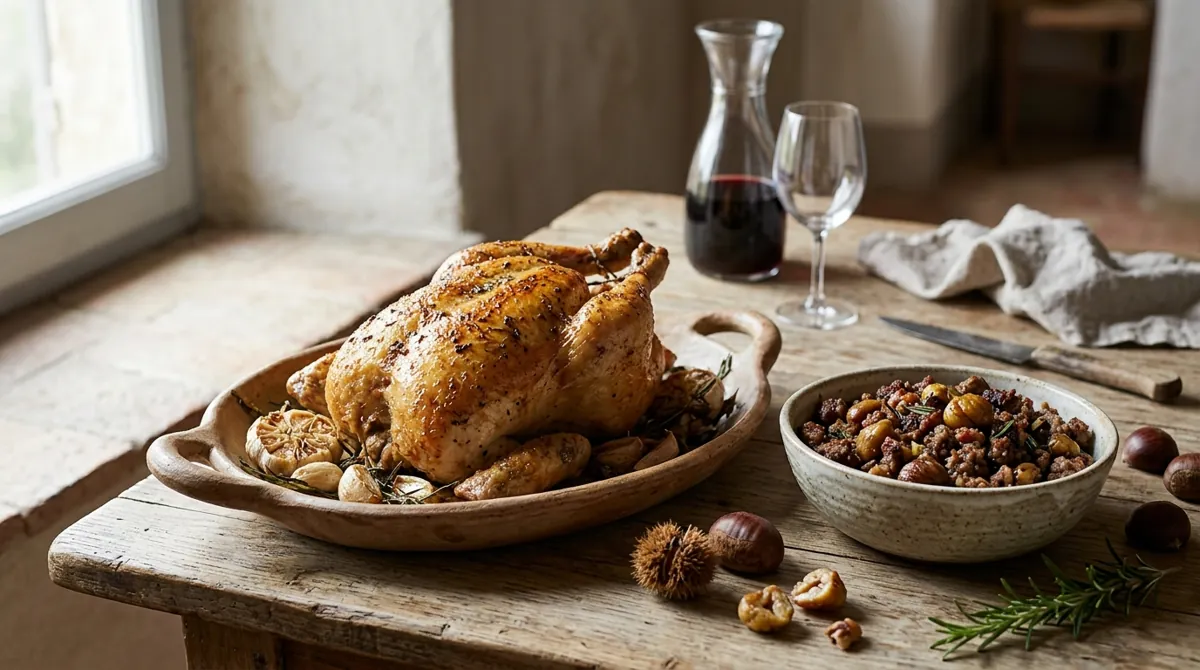
Artusi's Roast Chicken with Sausage and Chestnut Stuffing (1891)
Pellegrino Artusi's family stuffing of Italian sausage, chicken liver, roasted chestnuts, dried mushrooms and nutmeg, bound with egg and a little bread soaked in broth, packed into a whole chicken and roasted until the stuffing itself reads 165°F.
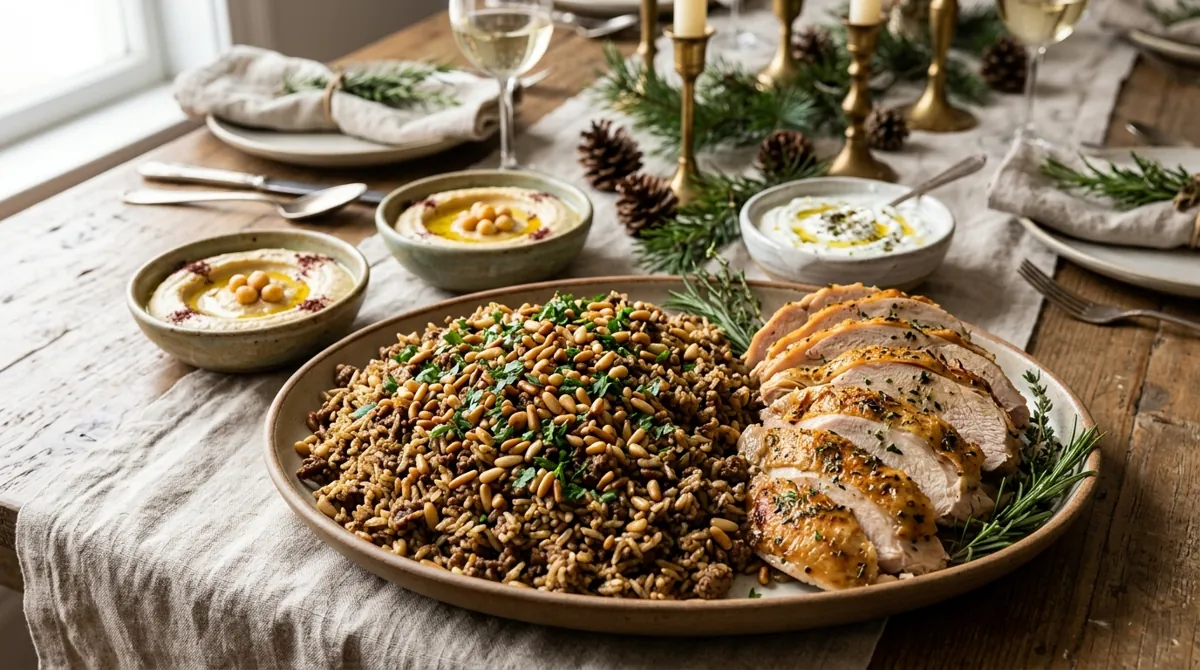
Lebanese Hashweh (Spiced Rice and Beef Stuffing)
Ground beef and onion browned in olive oil, seasoned with Lebanese seven-spice, cooked with basmati rice in chicken broth and finished with toasted pine nuts and parsley: served on its own or as a stuffing for turkey.
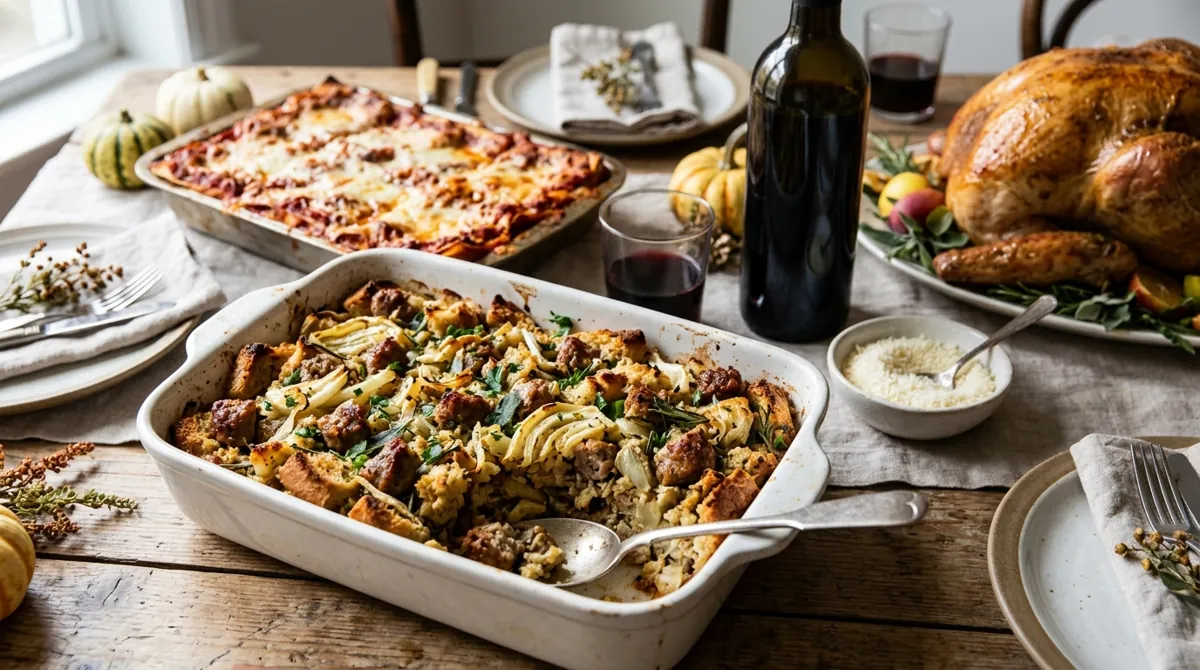
Italian-American Sausage and Fennel Stuffing
Oven-dried white bread cubes tossed with browned sweet Italian sausage, onion and fennel cooked in butter, fresh thyme, marjoram and sage, chicken broth and eggs, baked covered and then uncovered until golden.
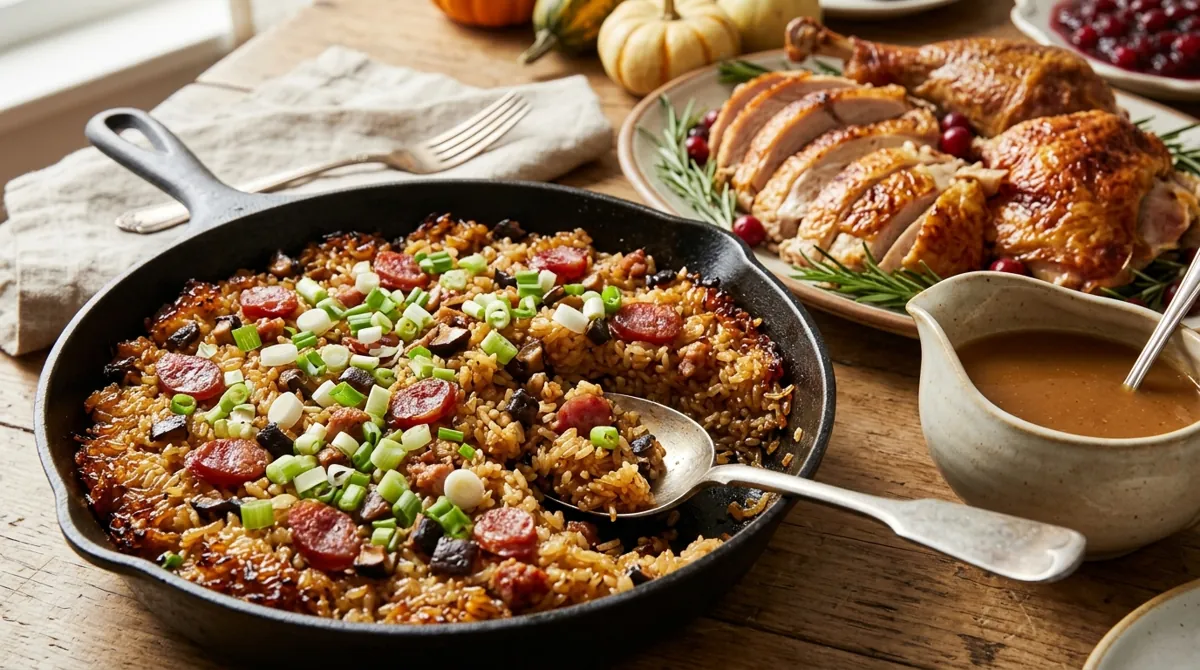
Chinese-American Sticky Rice Stuffing
Soaked and steamed glutinous rice tossed with lap cheong (sweet Chinese sausage), onion and caramelized shiitake, seasoned with light and dark soy sauce and chicken stock, then roasted in a cast-iron skillet until the top and bottom turn crisp.
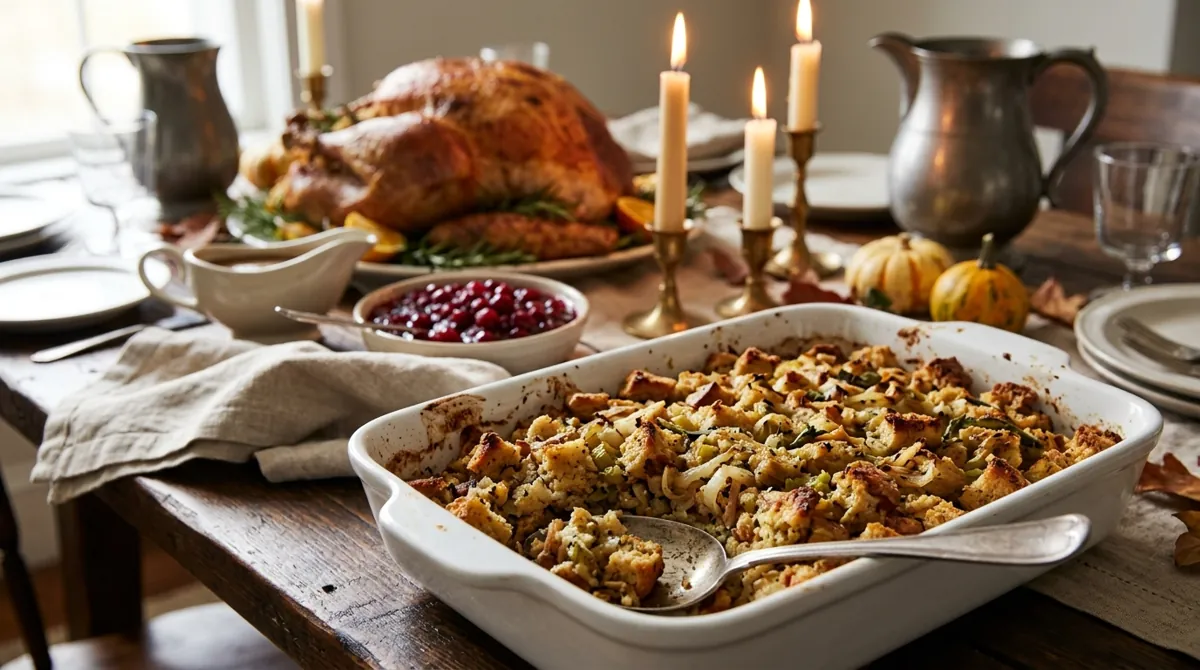
New England Sage Bread Stuffing
Dried French bread cubes tossed with onion and celery cooked in butter, sage, thyme, marjoram and parsley, chicken broth and eggs, baked covered until fragrant and then uncovered until a golden crust forms.
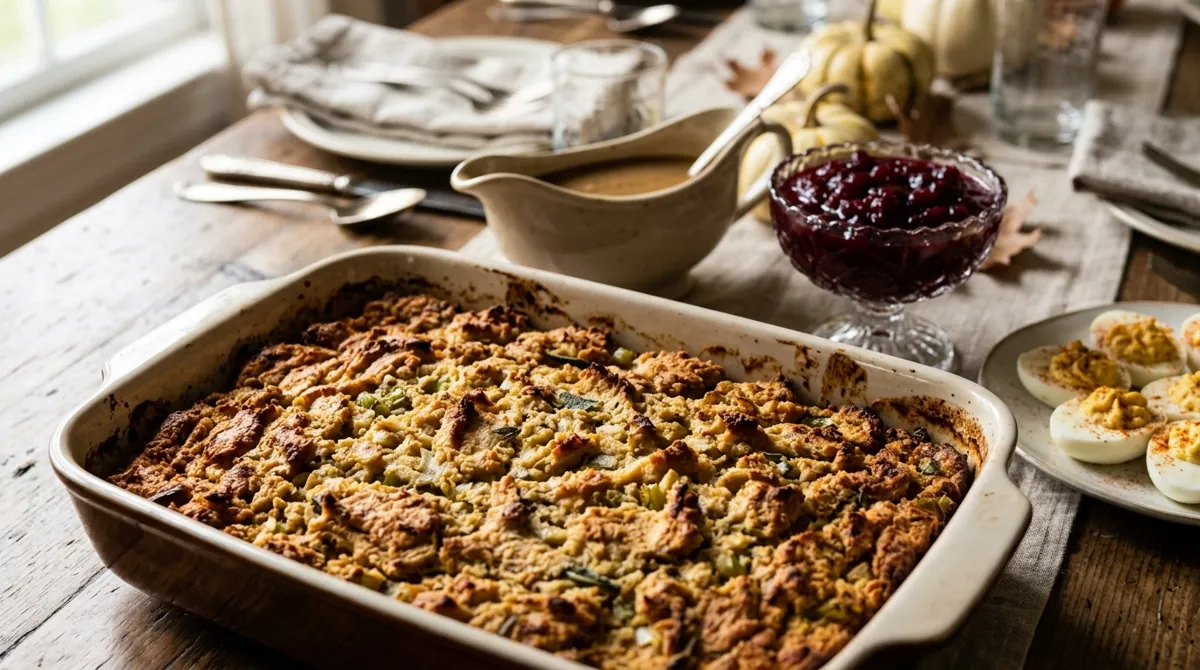
Southern Cornbread Dressing
A pan of cornbread baked, crumbled while hot and mixed with sausage, onion, bell pepper and celery, poultry seasoning, broth, milk and eggs, then baked in ridges with butter brushed on top until crisp outside and almost creamy inside.
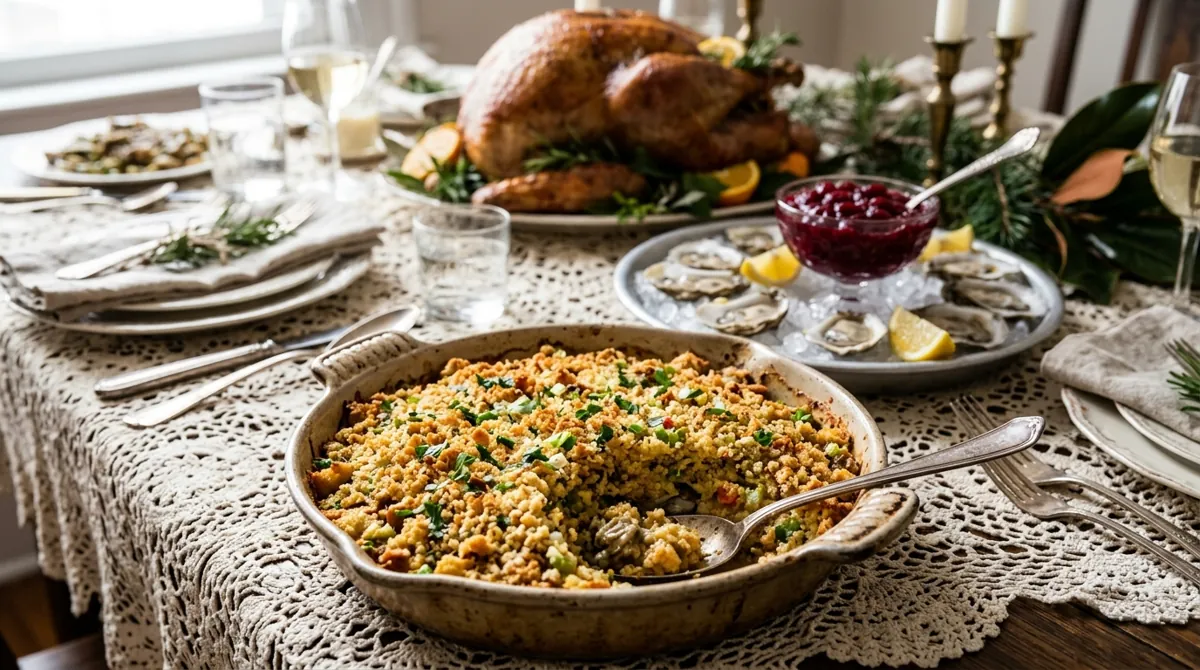
New Orleans Oyster Dressing (Leah Chase)
Leah Chase's holiday dressing: day-old bread soaked in oyster liquor, browned ground beef and the Creole trinity cooked in butter, chopped Gulf oysters, thyme and cayenne, bound with egg and baked under seasoned bread crumbs.
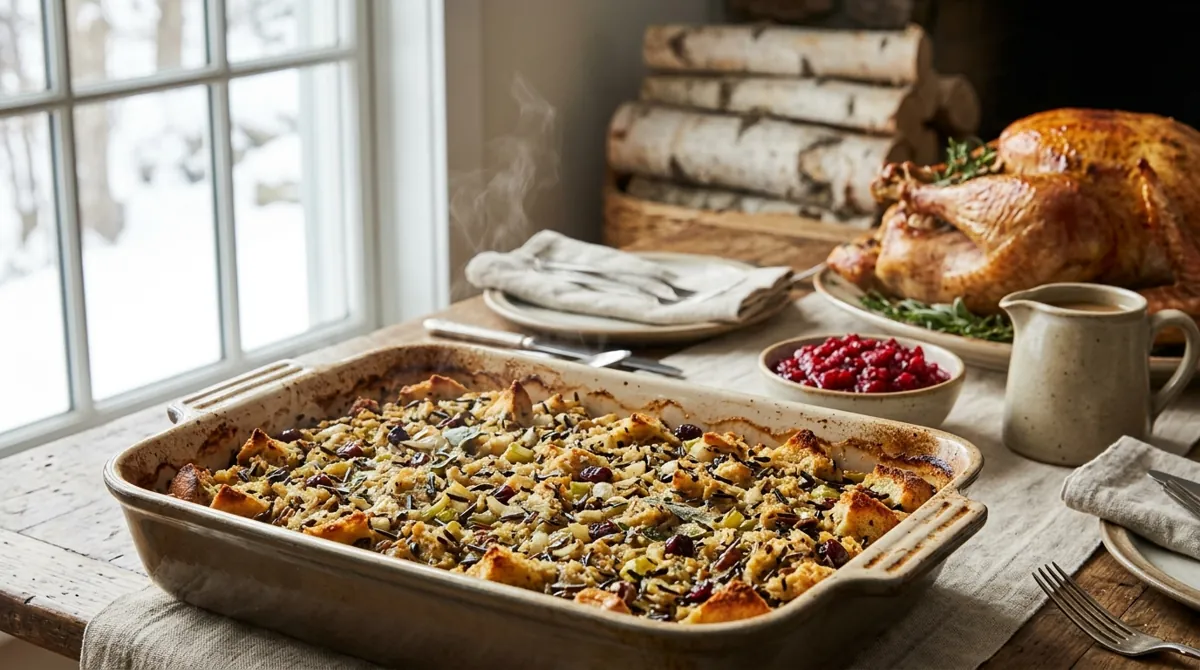
Wild Rice Dressing (Minnesota)
Nutty wild rice cooked in broth, mixed with toasted bread crumbs, onion, celery, garlic, sage and thyme and a light custard of cream, eggs and the rice's own cooking liquid, baked covered until set.
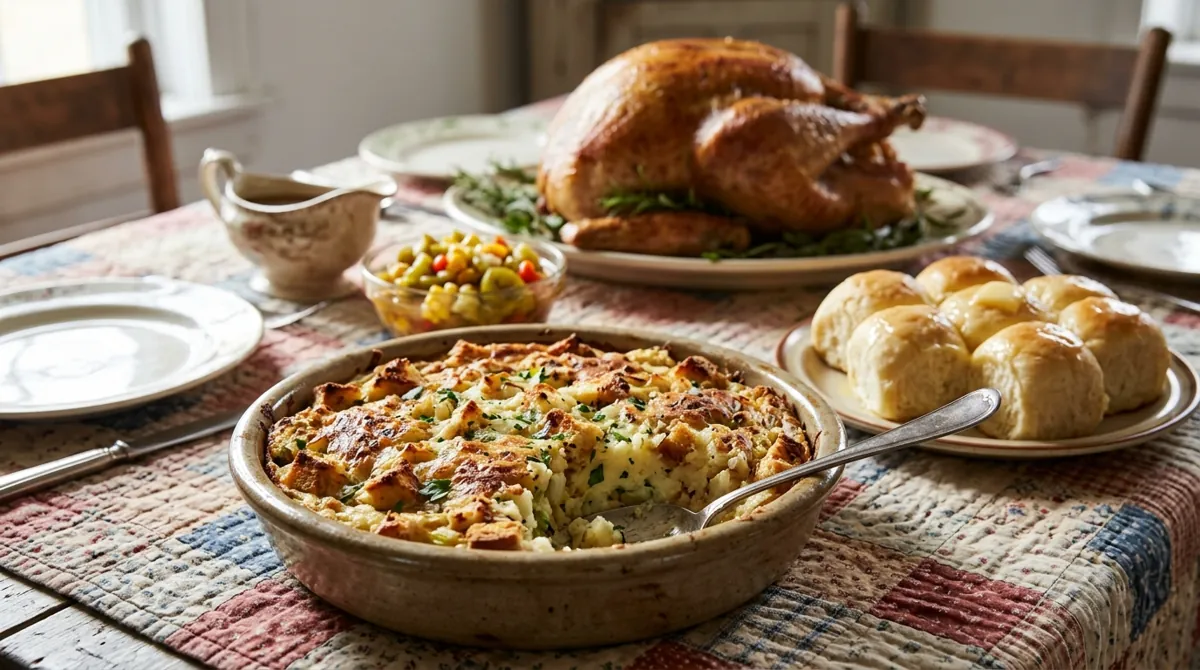
Pennsylvania Dutch Potato Filling
Half mashed potatoes, half stuffing: boiled potatoes beaten with milk, eggs and parsley, mixed with onion and celery cooked in butter and buttery toasted bread cubes, and baked until crusty on top.
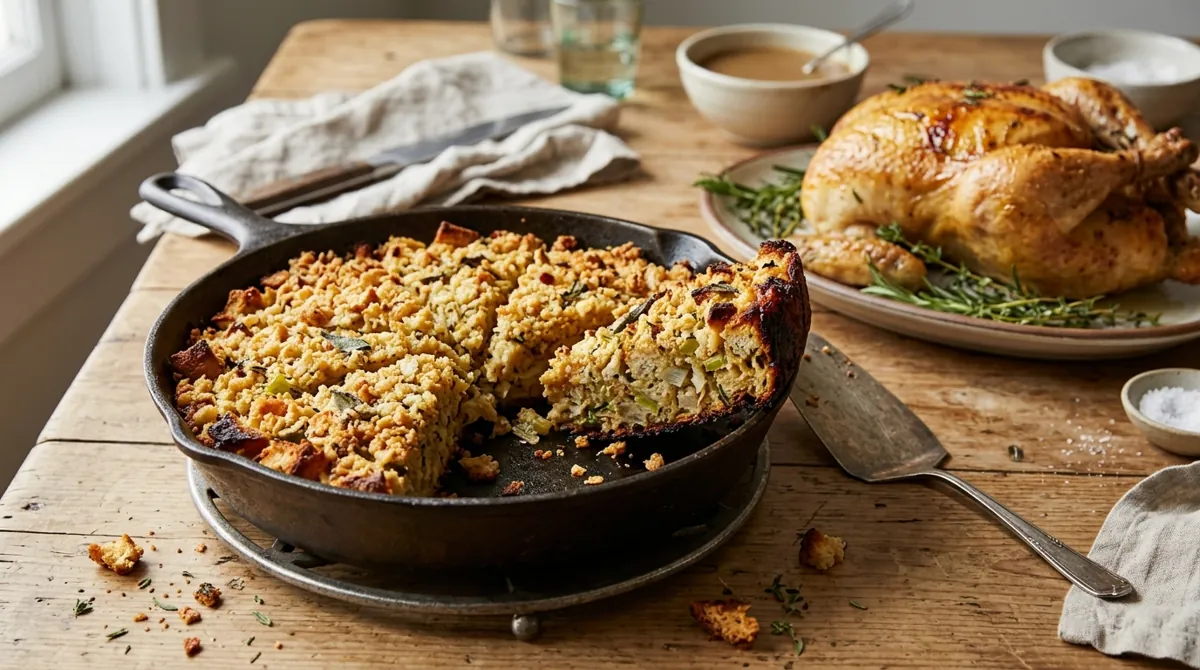
Weeknight Crispy Skillet Stuffing
A half-size, one-skillet stuffing for any night: baguette cubes toasted in a hot oven, soaked in broth and egg with browned onion, celery, sage and thyme, crisped on the stove and finished in the oven with a golden crust on top and bottom.
Stovetop-Style Stuffing, Inspired by Stove Top
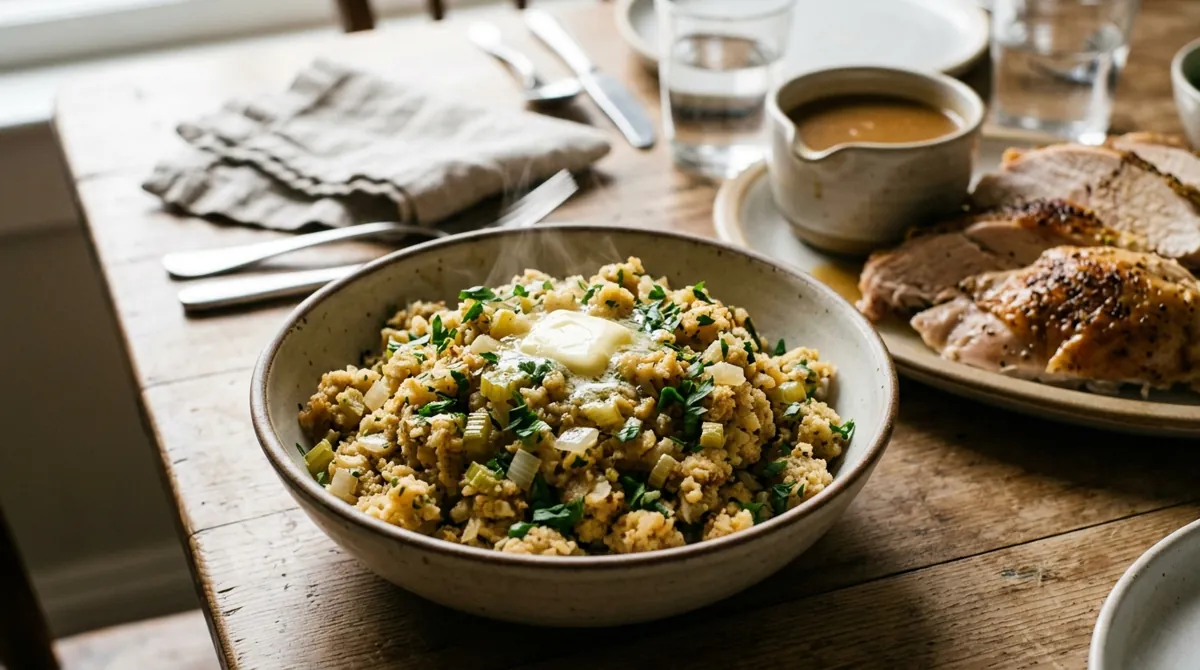
The boxed classic made from scratch: white and whole wheat bread cut into eraser-size crumbs and dried in the oven, then stirred into a simmering pot of broth, butter, dried onion, celery and poultry seasoning, covered and left to stand 5 minutes. Inspired by, not official.
Meatballs of the World

Italian-American Meatballs
Big, tender meatballs braised for an hour in red sauce over spaghetti. The one most Americans grew up with.

Pallottine (Abruzzo Meatballs)
Tiny meatballs, smaller than a marble, tossed right through square spaghetti alla chitarra. No bread at all.

Swedish Meatballs (Köttbullar)
Small, soft meatballs browned in butter, in a cream sauce made from the same pan, with lingonberry jam on the plate.

Danish Frikadeller
Pork meatballs shaped with a spoon and fried slowly in butter, crusty outside and soft in the middle.

Königsberger Klopse
German meatballs that are never fried: poached, then served in a creamy white sauce with capers.

Spanish Albóndigas in Almond Saffron Sauce
The tapas bar classic: small meatballs in a golden sauce thickened with fried almonds and bread.

Mexican Albóndigas with Chipotle and Mint
Soft meatballs with rice and fresh mint inside, simmered in a smoky tomato and chipotle broth.

Izgara Köfte (Turkish Grilled Meatballs)
Small, flat meatballs kneaded hard, rested cold, and charred on a hot grill pan.

Lion's Head Meatballs
Big, soft pork meatballs, stirred into a sticky paste, fried to set, then braised in a savory sauce.

Chicken Tsukune
Japan's chicken meatball: kneaded sticky, grilled on skewers, glazed with sweet soy tare, dipped in egg yolk.