
Crackly Honey-Glazed Spiral Ham (Copycat)
A spiral ham heated under foil with honey, then coated in a spiced sugar and melted with a kitchen torch or the broiler into a thin, crackly shell. Inspired by the HoneyBaked Ham Company's famous store ham; not official.
 Edited by JP Lambiase
Change the estimate
Swaps change the price only: cook any meat to its own safe temperature. Where these numbers come from
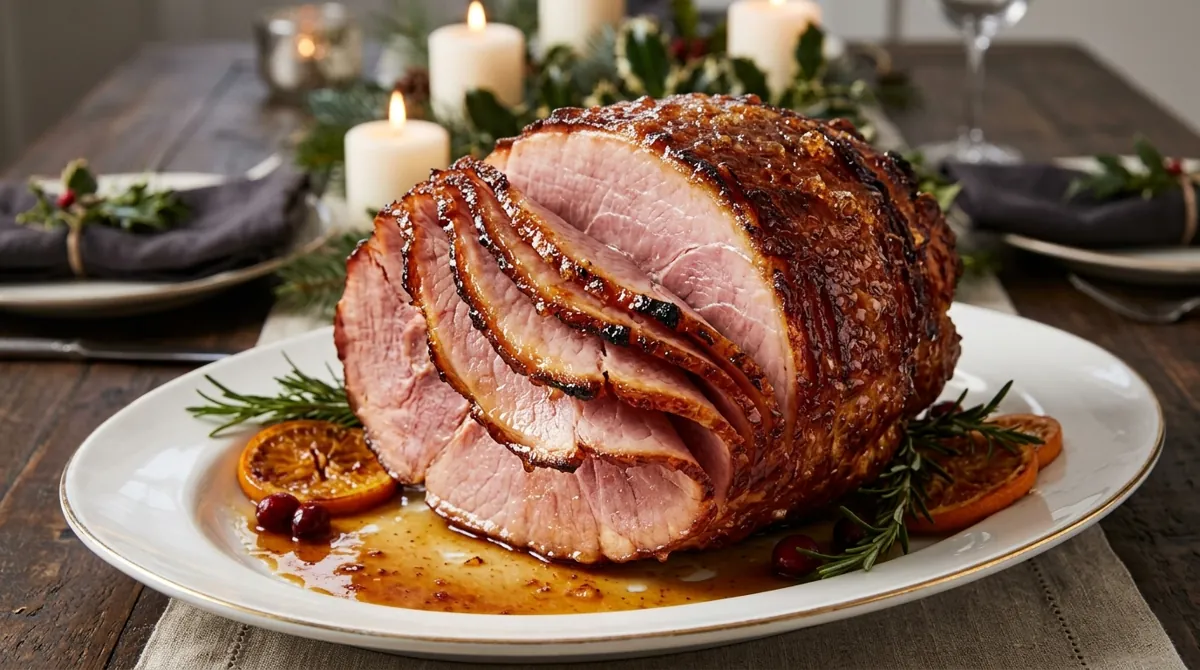
Inspired by a store ham; not official. The famous crackly-crusted spiral ham comes from a Detroit company that Wikipedia says Harry J. Hoenselaar founded in 1957 and that moved its headquarters to Alpharetta, Georgia, in 2015 (Wikipedia's article on the company is listed in Source). Wikipedia, citing Kim Severson in The New York Times (2019), calls him the father of spiral-cut ham and says he built his first slicer from a tire jack, a pie tin, a washing machine motor and a knife. His patents are on record: US Patent 2,470,078, "Apparatus for slicing ham on the bone", filed September 7, 1944 and granted May 10, 1949, and US Patent 2,599,328, for the spiral-sliced ham itself, granted June 3, 1952. When the slicer was "invented" is DISPUTED: 1924 (Wikipedia), the 1930s (Taste of Home) or 1957 (USDA FSIS's ham fact sheet). The company's glaze recipe is secret; this is a home version.
🇺🇸 This one is American
A spiral ham heated under foil with honey, then coated in a spiced sugar and melted with a kitchen torch or the broiler into a thin, crackly shell. Inspired by the HoneyBaked Ham Company's famous store ham; not official.
🇺🇸 The original
The old American ham is the salt-cured country ham: soaked, simmered and sliced thin, a Virginia tradition older than the country. See the Virginia Country Ham, Soaked and Simmered recipe.
📖 Myth check: Is Hawaiian Pineapple Ham From Hawaii? →
Why it works the kitchen science
Honey under the sugar
The sticky layer of honey holds the dry sugar in place and melts with it into a thin, glassy shell instead of a syrup that runs off.
Heat, then crust
The ham is fully heated before any sugar goes on, so the torch or broiler only has to melt the surface and the crust stays crisp.
🧰 You'll need 9 items
Everything the steps call for. Tick off what you have before you start.
Appliances
Pans and pots
Tools
Supplies
Step by step
- Step 1
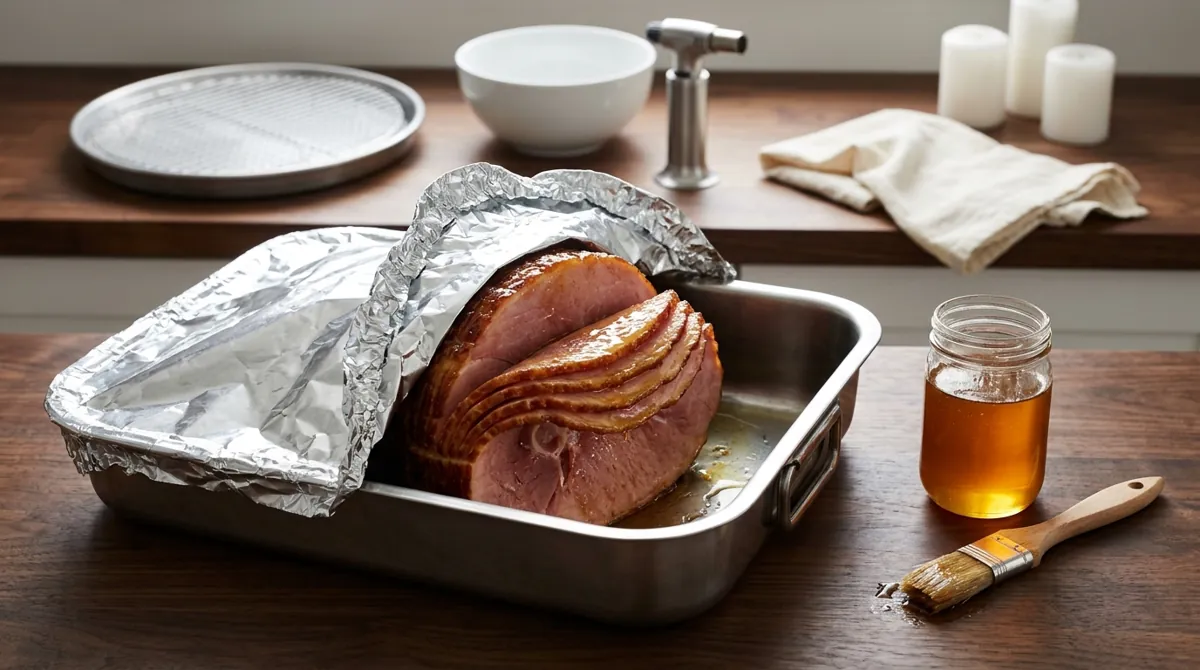
Heat the oven to 325°F. Set the ham cut side down in a large roasting pan, pour the water around it and brush the ham with 1/2 cup of the honey. Cover the pan tightly with heavy foil.
- Step 2
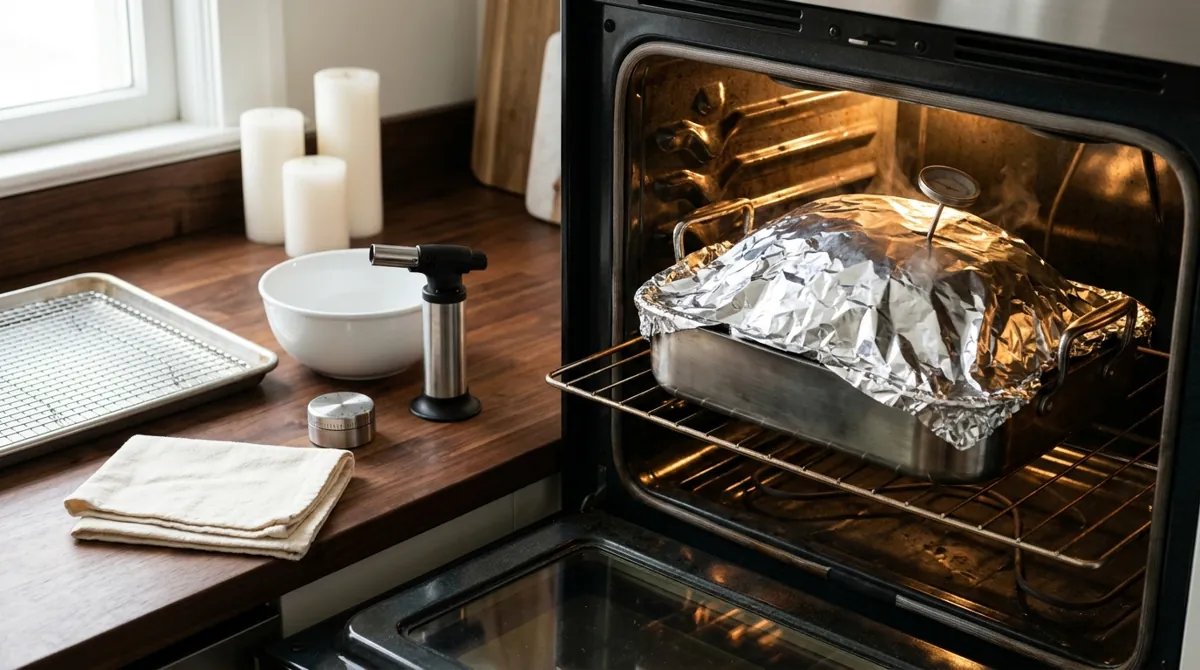
Heat about 10 minutes per pound (about 90 minutes for 9 lb), until the center reads 140°F.
- Step 3
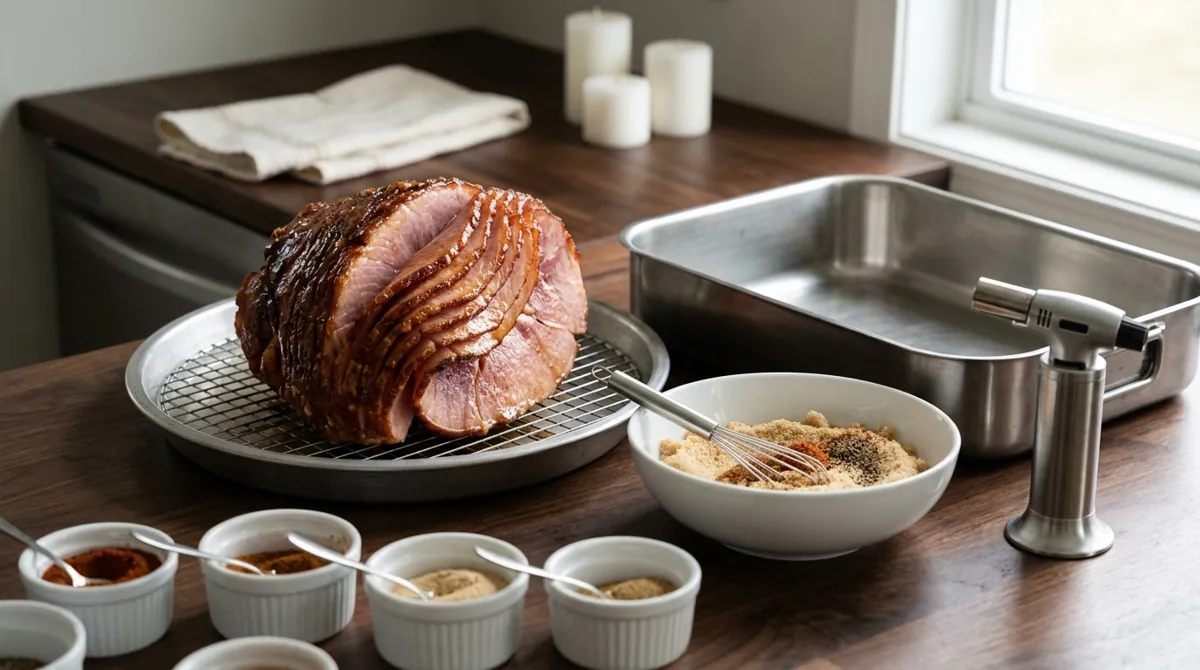
Meanwhile, stir the sugar and all the spices together in a bowl.
- Step 4
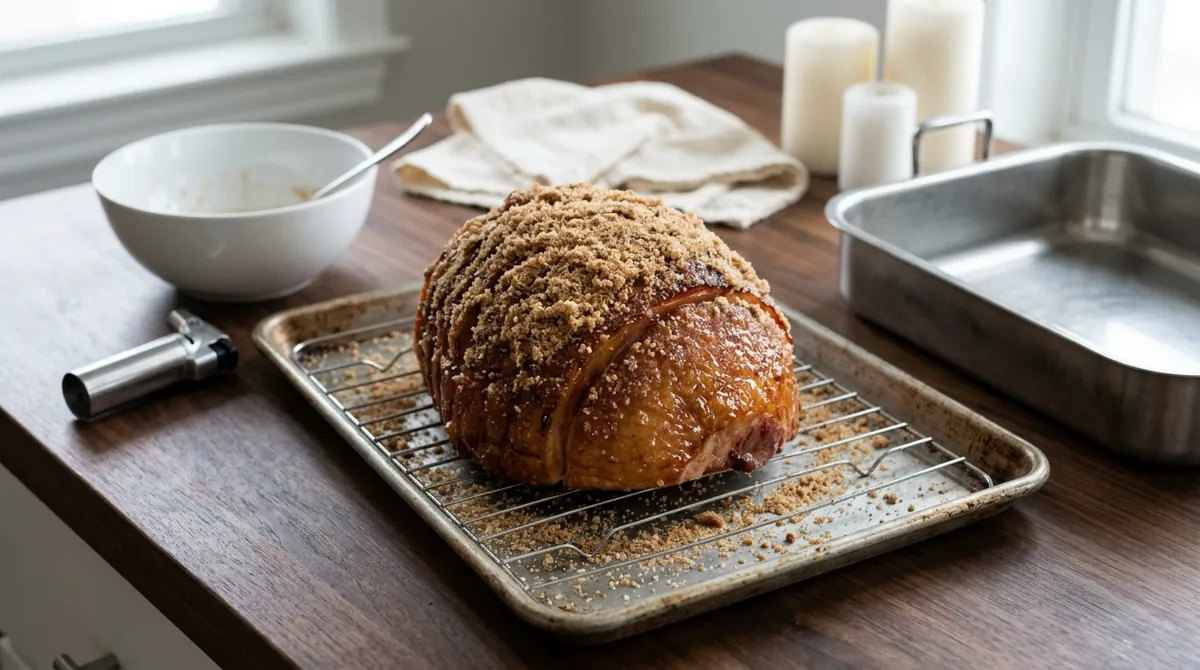
Move the ham, cut side down, to a rack set in a shallow broiler-safe pan. Brush it with the remaining 1/4 cup honey, then sprinkle the spiced sugar over the top and sides, pressing it on so it sticks.
- Step 5
Torch the sugar: hold the flame 1 to 2 inches from the surface and move it in small circles until the sugar melts, bubbles and turns amber, working in sections and adding a second thin layer of sugar where it looks bare. No torch? Broil 6 to 8 inches from the heat 3 to 5 minutes, turning the pan, until the sugar melts and lightly browns.
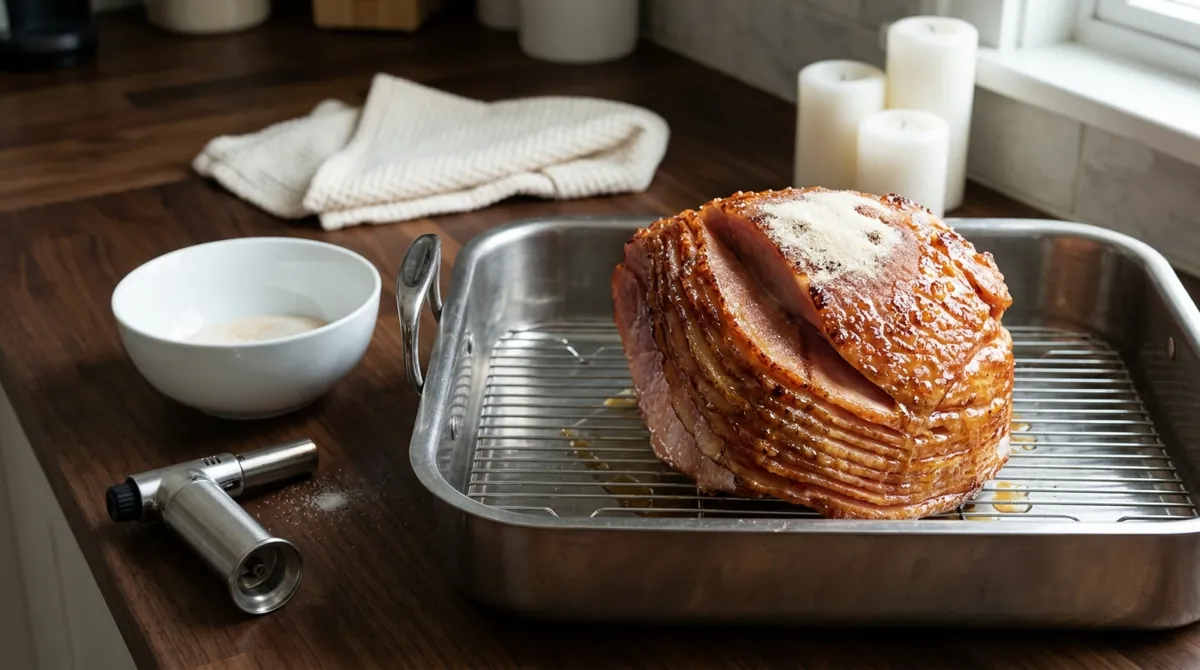
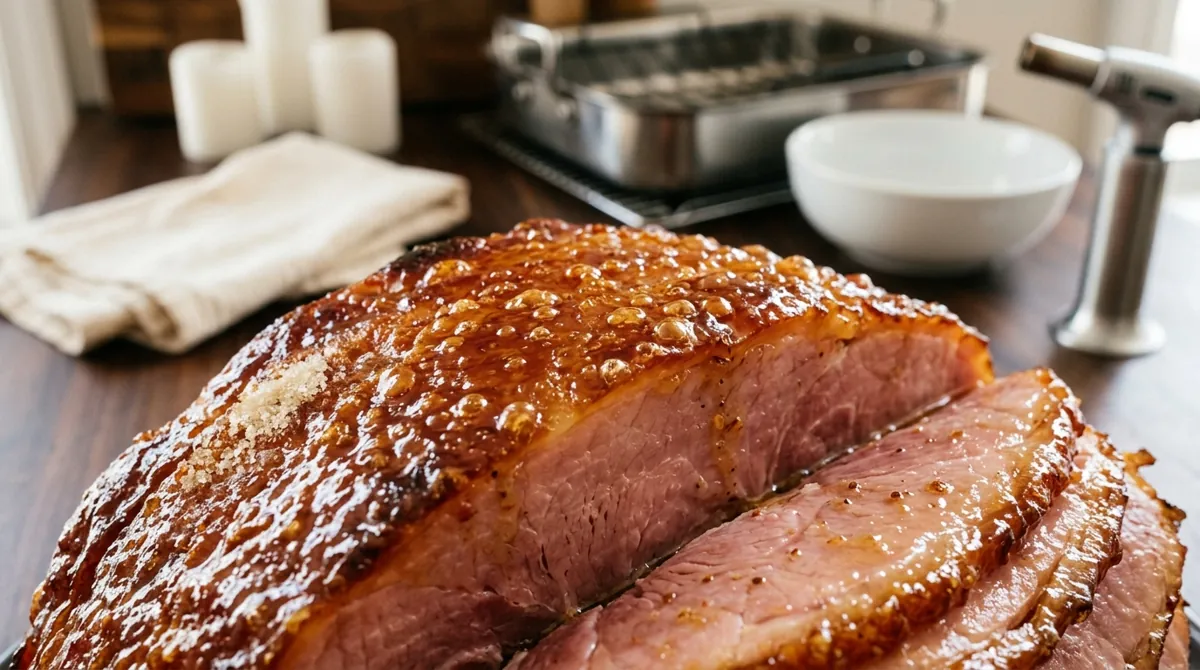
✓ What it should look like - Step 6
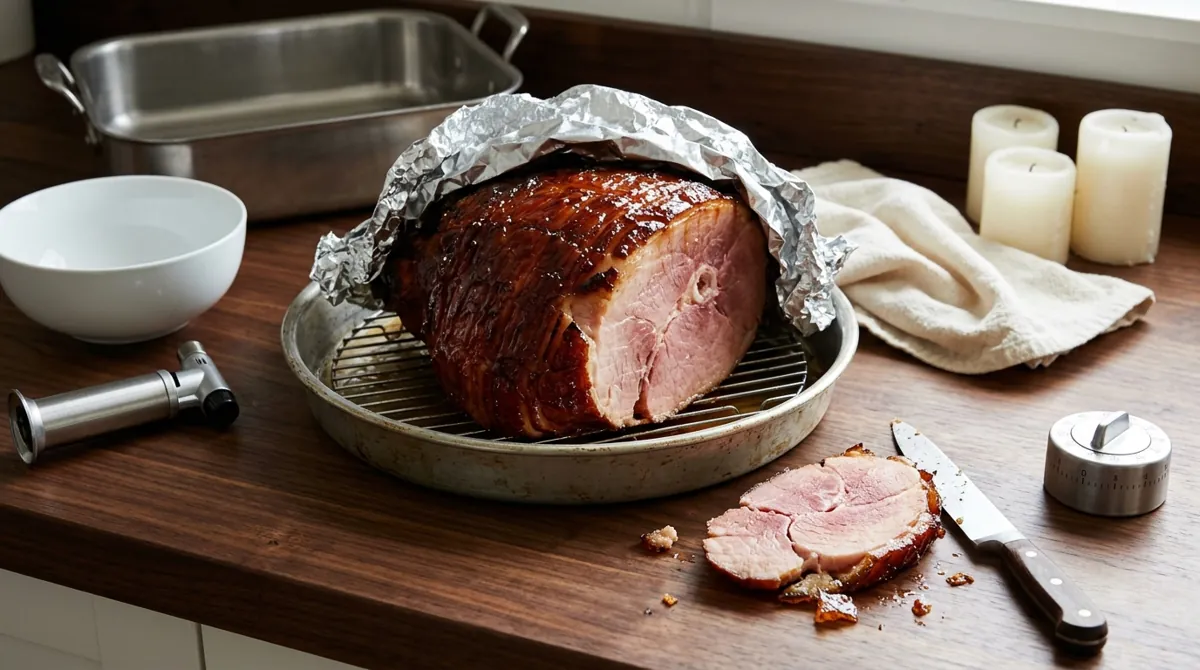
Cover loosely with foil and let stand about 30 minutes, until the glaze hardens into a crust. Carve along the bone.
Crackly Honey-Glazed Spiral Ham (Copycat)
Serves 16 · one 9 lb ham, about 16 servings · 2 hr 35 min total
Ham
- 1 fully cooked, bone-in spiral-sliced ham (8 to 10 lb)
- 1 cup water
- 3/4 cup honey, divided
Spiced sugar
- 1 cup sugar
- 1/2 tsp ground cinnamon
- 1/2 tsp ground allspice
- 1/2 tsp black pepper
- 1/2 tsp paprika
- 1/4 tsp ground ginger
- 1/4 tsp ground nutmeg
- 1/4 tsp ground mustard
- 1/4 tsp Chinese five-spice powder
- 1/8 tsp ground cloves
Equipment
- A kitchen torch (or your broiler)
Equipment: Oven, Roasting pan, Instant-read thermometer, Chef's knife and cutting board, Measuring cups and spoons, Mixing bowls, Pastry brush, Kitchen torch, Aluminum foil
Method
- Heat the oven to 325°F. Set the ham cut side down in a large roasting pan, pour the water around it and brush the ham with 1/2 cup of the honey. Cover the pan tightly with heavy foil.
- Heat about 10 minutes per pound (about 90 minutes for 9 lb), until the center reads 140°F.
- Meanwhile, stir the sugar and all the spices together in a bowl.
- Move the ham, cut side down, to a rack set in a shallow broiler-safe pan. Brush it with the remaining 1/4 cup honey, then sprinkle the spiced sugar over the top and sides, pressing it on so it sticks.
- Torch the sugar: hold the flame 1 to 2 inches from the surface and move it in small circles until the sugar melts, bubbles and turns amber, working in sections and adding a second thin layer of sugar where it looks bare. No torch? Broil 6 to 8 inches from the heat 3 to 5 minutes, turning the pan, until the sugar melts and lightly browns.
- Cover loosely with foil and let stand about 30 minutes, until the glaze hardens into a crust. Carve along the bone.
Adapted from Taste of Home's copycat spiral ham recipe (recipe by Donna Gribbins of Shelbyville, Kentucky; tested by Alicia Rooker, RDN; updated July 1, 2024), for 16 as written. Taste of Home heats the ham in a slow cooker; we use the oven, following FSIS's spiral-ham method (covered with foil at 325°F, about 10 minutes per pound, to 140°F). The torch is the option Taste of Home gives from the recipe's creator. Company history. Inspired by, not official. Taste of Home. Ingredient list follows the source; the method is in our own words.
Tips
- Make the spiced sugar ahead and keep it airtight (Taste of Home).
- Do not glaze ahead; the crust is best fresh (Taste of Home).
- Torch away from paper towels and the foil; scorched spots taste bitter.
- Darker honey, such as buckwheat, gives a deeper flavor (Taste of Home).
The rules people argue about
What the sources agree on, what they don't, and what is just a good story.
- The spiral slicer was invented in 1957. Disputed: USDA FSIS's ham fact sheet says the slicing method was "invented in 1957", the year Wikipedia gives for the company; Wikipedia says Hoenselaar created the slicer in 1924; Taste of Home says the 1930s; his first patent was filed in 1944 and granted in 1949.
- Hoenselaar invented spiral-cut ham. Documented for the patents (1949 and 1952); the "father of spiral-cut ham" title is The New York Times's, via Wikipedia.
- The idea came to him in a dream. Folklore: his own story, as told in The New York Times (via Wikipedia).
- The store crust is torched by hand. Disputed: widely repeated by copycat writers; we found no company source describing how the glaze is applied.
- This is the real recipe. Folklore: it is a copycat, inspired by, not official.
Every other ham
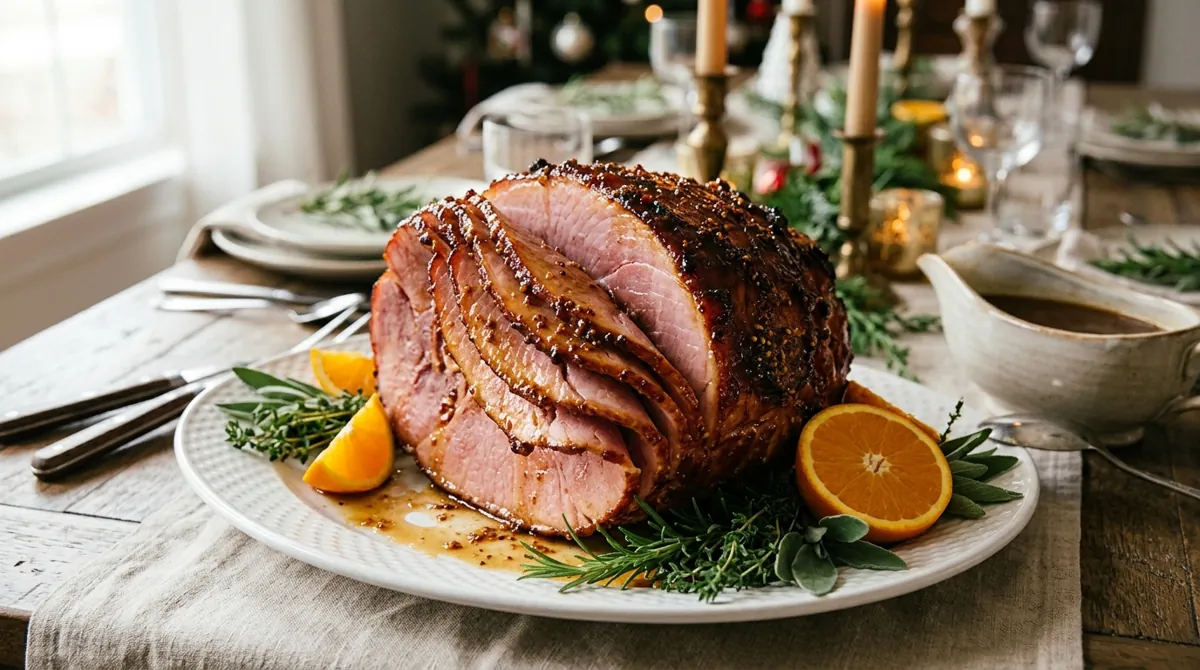
Brown Sugar and Mustard Glazed Spiral Ham
The American holiday centerpiece: a fully cooked spiral ham heated gently under foil, then brushed twice with a glaze of dark brown sugar, grainy mustard, cider vinegar and fresh orange until it is sticky and glossy.
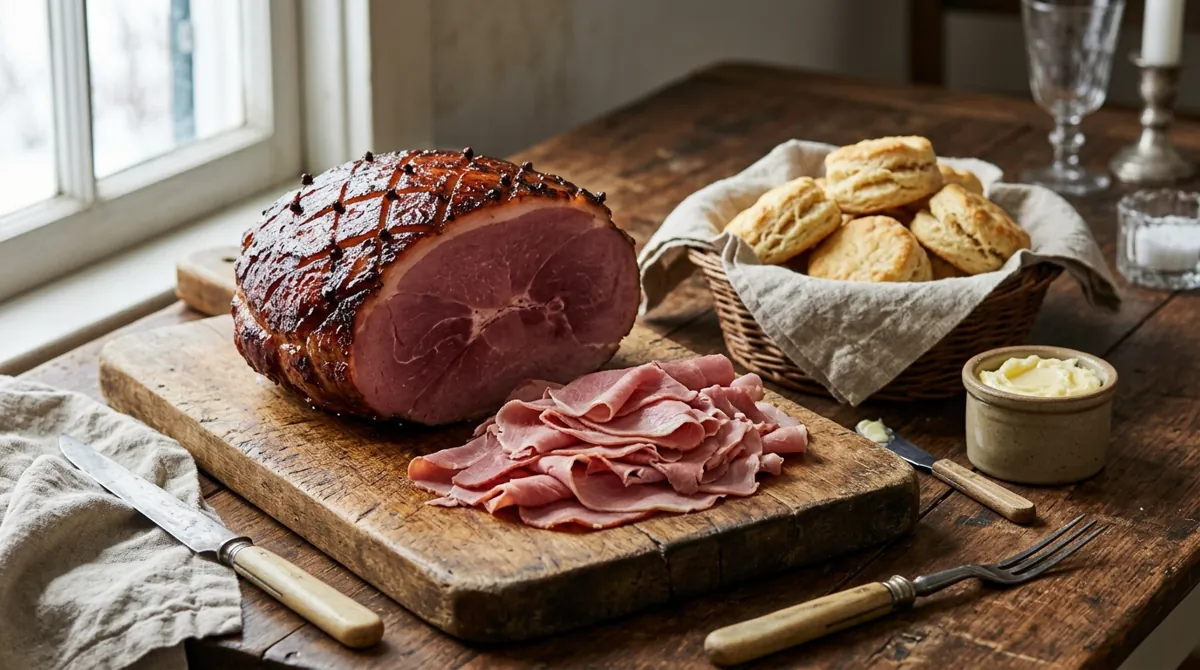
Virginia Country Ham, Soaked and Simmered
A dry-cured, aged country ham scrubbed, soaked overnight, held just below a simmer until tender, then rubbed with brown sugar and dry mustard and glazed in a hot oven, for paper-thin slices on biscuits.
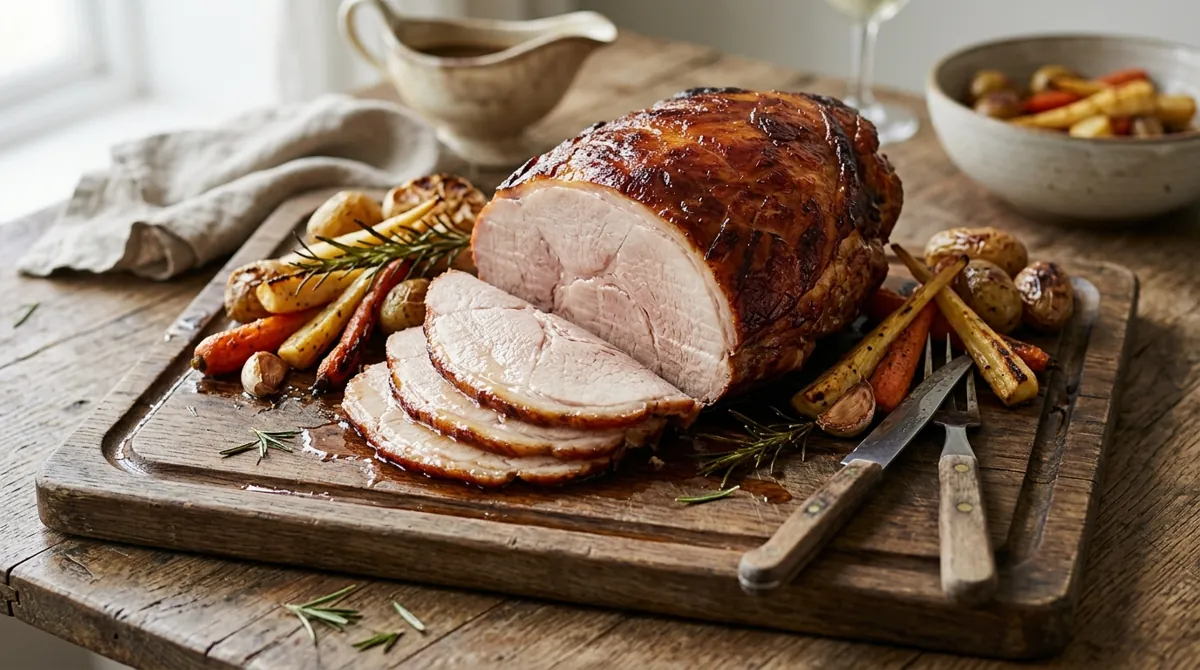
Slow-Roasted Fresh Ham
The leg before it becomes ham: an uncured, bone-in fresh ham salted overnight with brown sugar, rosemary and thyme, roasted slowly in an oven bag and finished with a maple, molasses and mustard glaze.
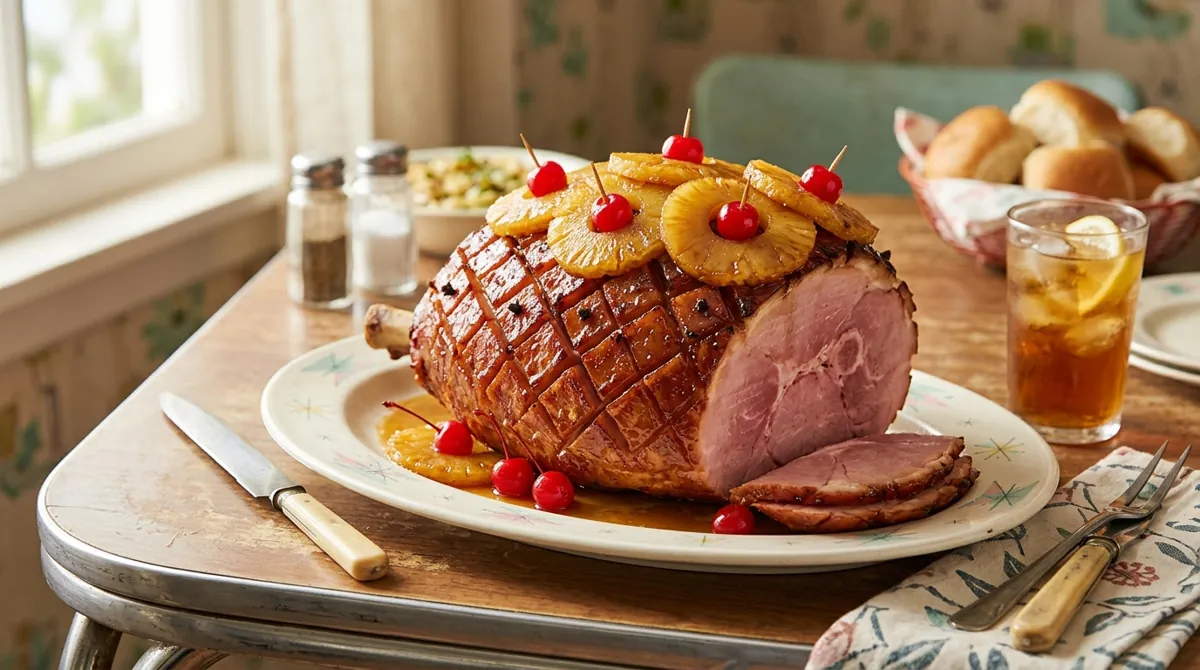
Pineapple and Brown Sugar Glazed Ham
The mid-century "Hawaiian" ham: a spiral ham pinned all over with canned pineapple rings, wrapped tight and baked low, then roasted hot with a brown sugar, pineapple juice and two-mustard glaze until sticky and golden.
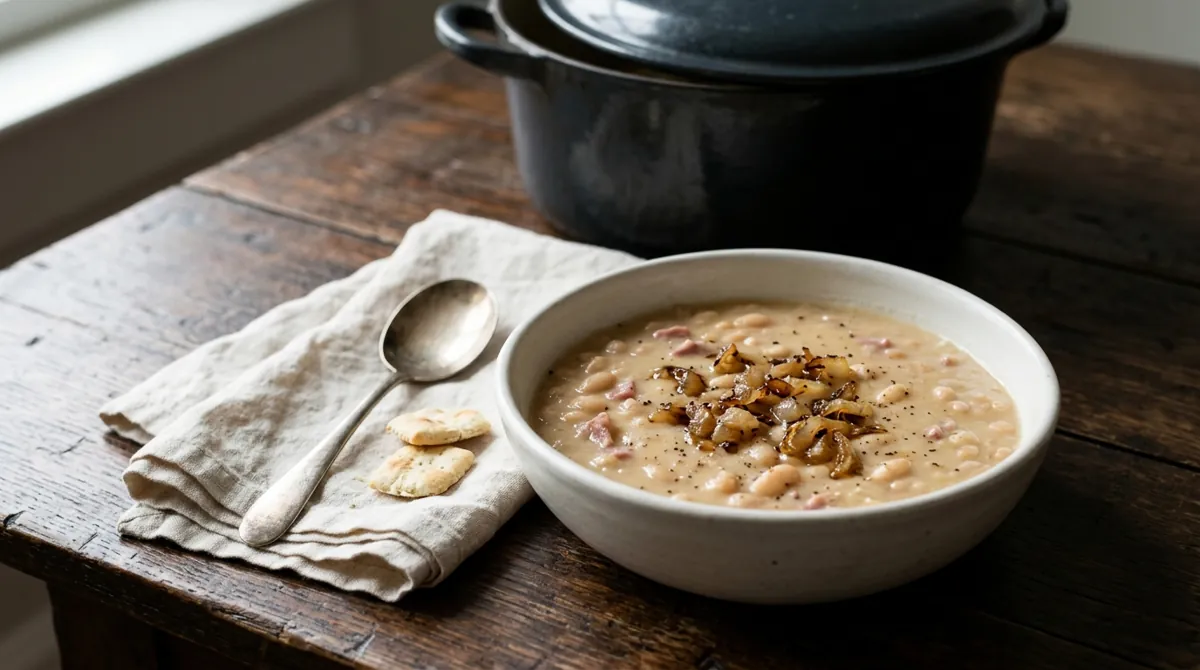
Senate Navy Bean Soup with the Leftover Ham Bone
The soup the US Senate restaurant has served for more than a century: dried navy beans simmered three hours with a meaty leftover ham bone, finished with diced ham and onion browned in butter.
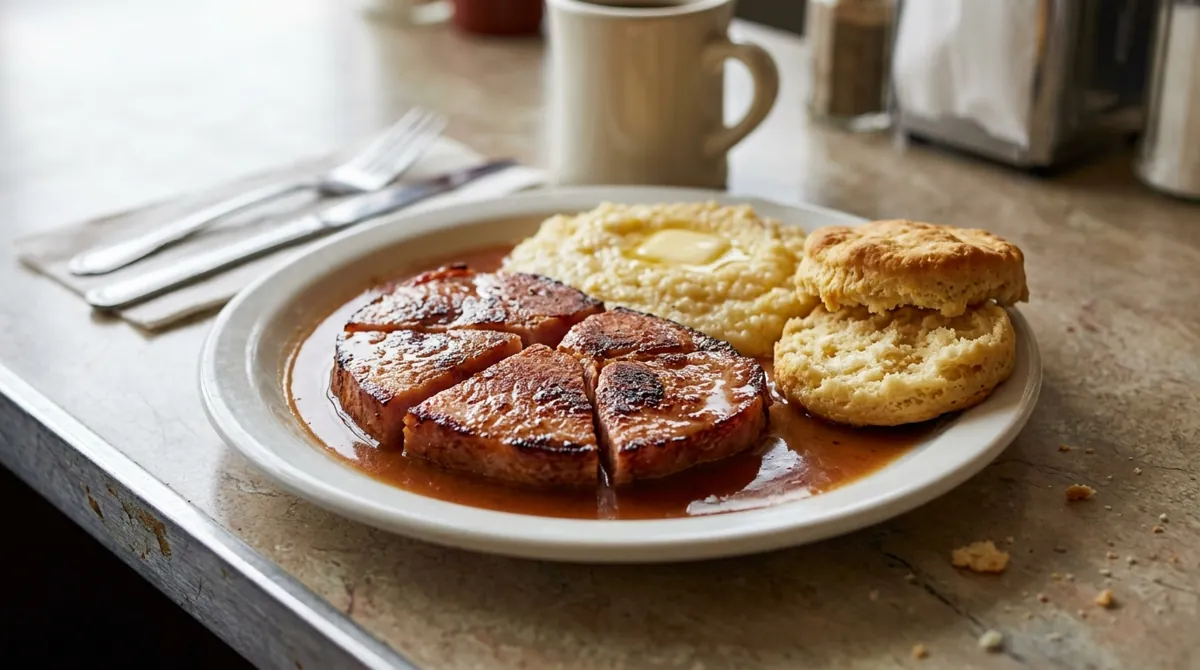
Skillet Ham Steak with Maple Red-Eye Gravy
A bone-in ham steak browned in bacon fat, then a quick pan gravy of broth, maple syrup and espresso powder, swirled with butter: the Southern country breakfast classic as a 30 minute dinner.
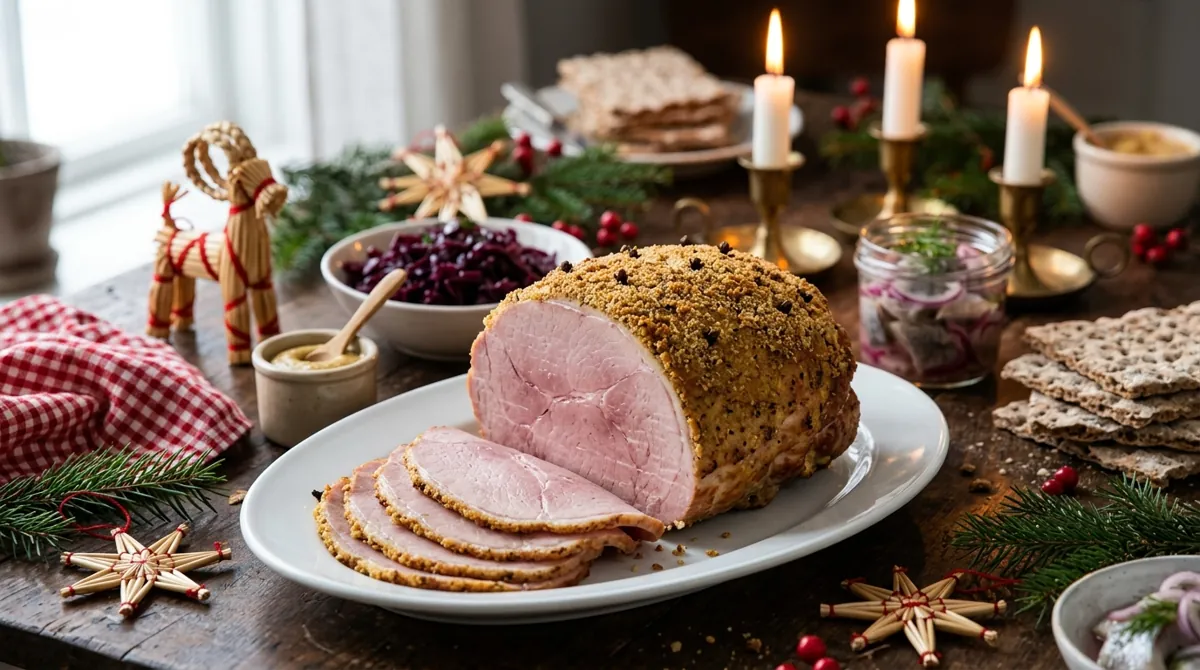
Swedish Christmas Ham with Mustard Crust (Julskinka)
Sweden's Christmas ham: a cured ham simmered gently until 158°F, cooled, then spread with egg, two mustards and sugar, dusted with breadcrumbs and baked hot into a golden crust, served cold on the julbord with the broth saved for dipping bread.
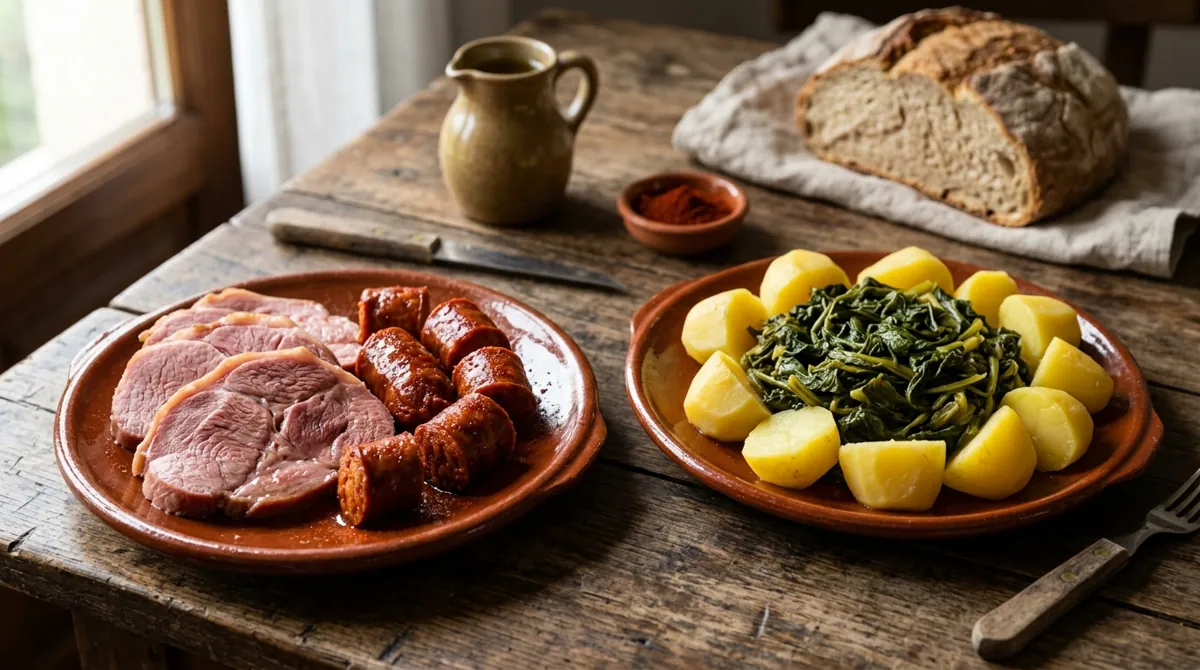
Galician Cured Pork Shoulder with Turnip Greens (Lacón con Grelos)
Galicia's Carnival feast: a whole salt-cured pork foreleg soaked for two days, boiled until it falls from the bone, and served with chorizo, potatoes and turnip greens cooked in the same broth.
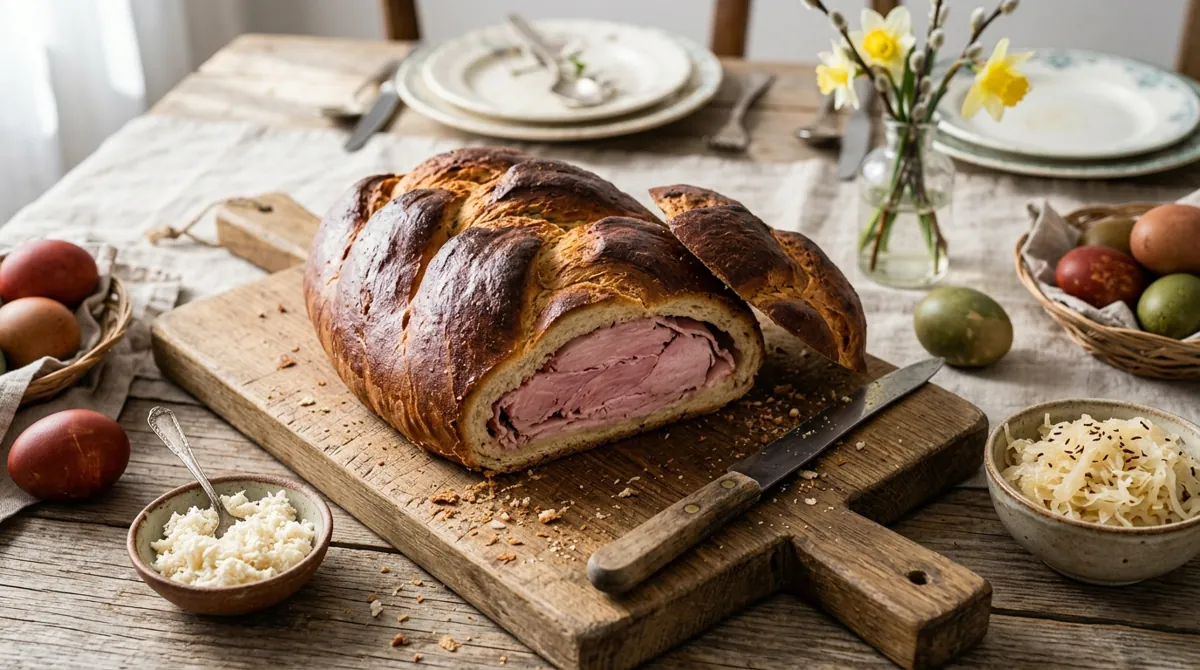
Ham Baked in Bread Dough (Schinken im Brotteig)
The Viennese Easter ham: a cured ham simmered with caraway, fennel and coriander, wrapped in a rye and wheat bread dough with a braided top, and baked until the crust is dark and the ham inside is steaming.
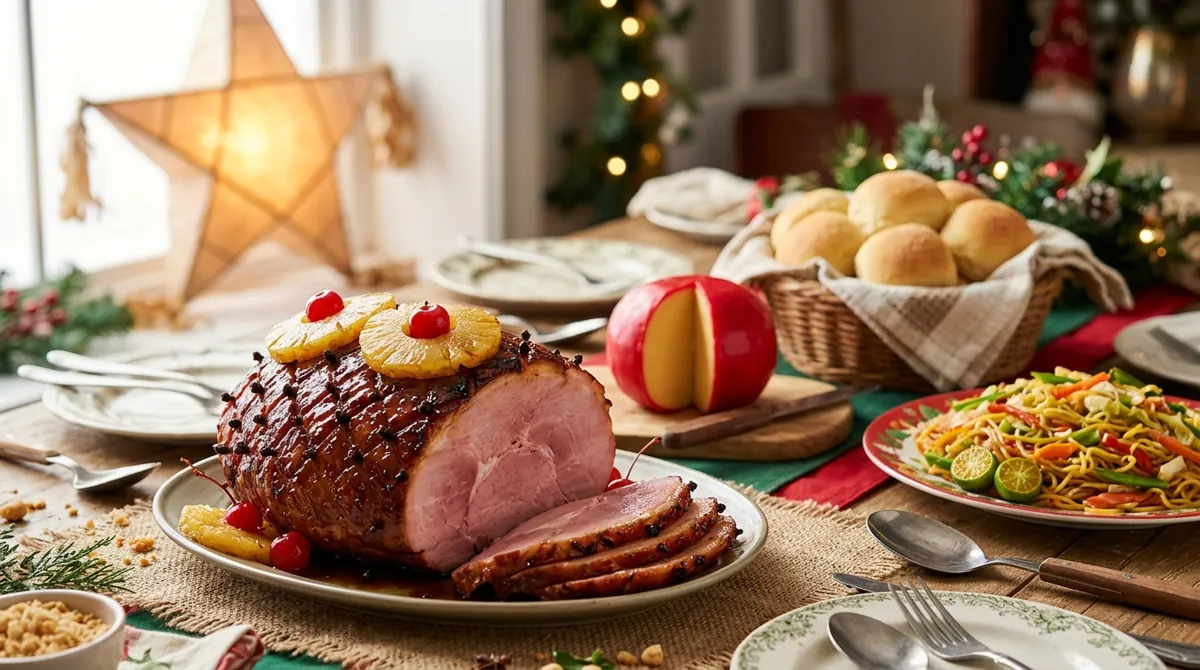
Filipino Christmas Ham with Pineapple Glaze (Hamon)
The Noche Buena ham: a bone-in ham poached for an hour in pineapple juice and brown sugar, scored, spread thickly with pineapple jam and baked hot until dark and glossy.
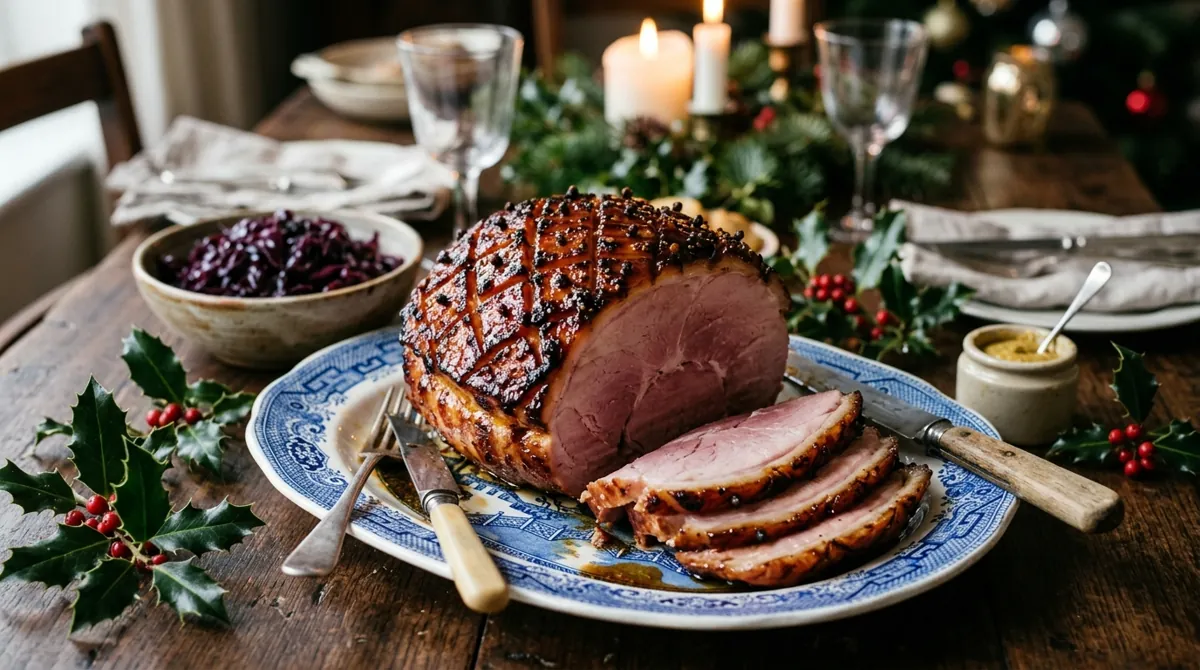
British Gammon Simmered in Cola with Treacle and Mustard Glaze
A mild-cure gammon joint simmered for over two hours in cola with an onion, then skinned, studded with cloves, painted with black treacle, patted with mustard powder and demerara sugar and blasted in a very hot oven.
Meatballs of the World

Italian-American Meatballs
Big, tender meatballs braised for an hour in red sauce over spaghetti. The one most Americans grew up with.

Pallottine (Abruzzo Meatballs)
Tiny meatballs, smaller than a marble, tossed right through square spaghetti alla chitarra. No bread at all.

Swedish Meatballs (Köttbullar)
Small, soft meatballs browned in butter, in a cream sauce made from the same pan, with lingonberry jam on the plate.

Danish Frikadeller
Pork meatballs shaped with a spoon and fried slowly in butter, crusty outside and soft in the middle.

Königsberger Klopse
German meatballs that are never fried: poached, then served in a creamy white sauce with capers.

Spanish Albóndigas in Almond Saffron Sauce
The tapas bar classic: small meatballs in a golden sauce thickened with fried almonds and bread.

Mexican Albóndigas with Chipotle and Mint
Soft meatballs with rice and fresh mint inside, simmered in a smoky tomato and chipotle broth.

Izgara Köfte (Turkish Grilled Meatballs)
Small, flat meatballs kneaded hard, rested cold, and charred on a hot grill pan.

Lion's Head Meatballs
Big, soft pork meatballs, stirred into a sticky paste, fried to set, then braised in a savory sauce.

Chicken Tsukune
Japan's chicken meatball: kneaded sticky, grilled on skewers, glazed with sweet soy tare, dipped in egg yolk.