
Slow-Roasted Fresh Ham
The leg before it becomes ham: an uncured, bone-in fresh ham salted overnight with brown sugar, rosemary and thyme, roasted slowly in an oven bag and finished with a maple, molasses and mustard glaze.
 Edited by JP Lambiase
Change the estimate
Swaps change the price only: cook any meat to its own safe temperature. Where these numbers come from
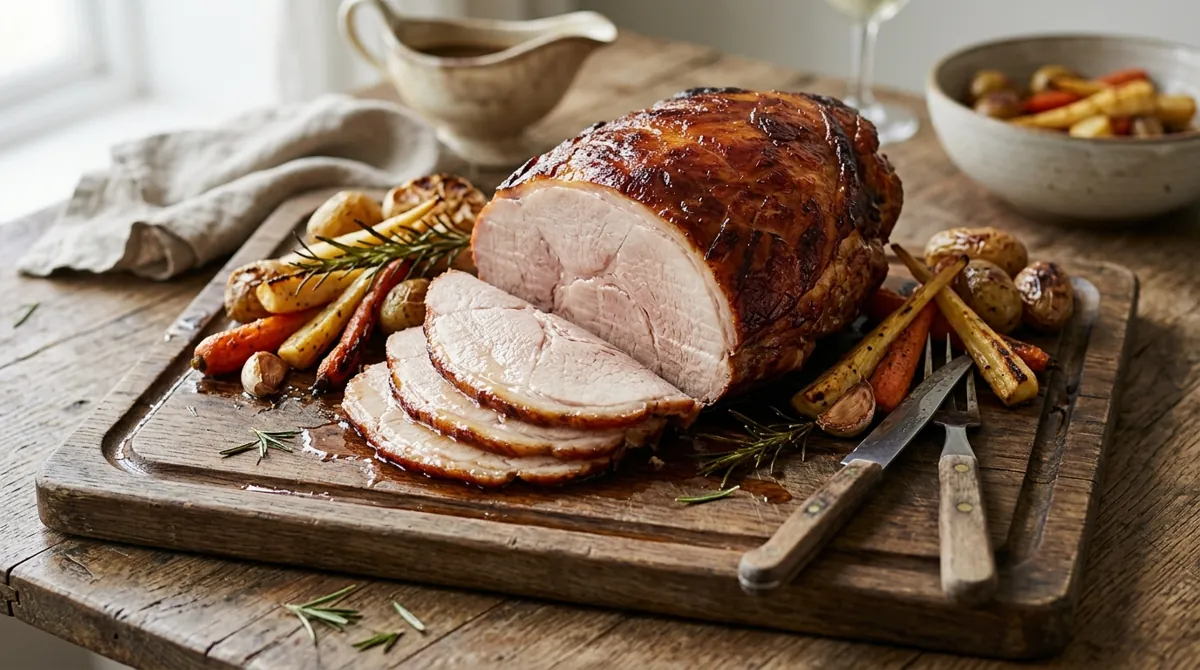
Ham, to USDA, means the cured leg of pork. The same cut uncured is "fresh ham", and the label must say "fresh": raw it has the pale pink color of a pork roast, and cooked it turns grayish white, tasting like a pork loin roast rather than pink deli ham (FSIS, Ham and Food Safety, glossary). Every recipe in this hub starts from this leg; curing with salt, and often sugar, nitrite and smoke, is what turns it into "ham". America's Test Kitchen calls fresh ham an uncured roast from the hind leg and roasts the shank end because it is easier to carve. It is the version to show anyone who thinks ham has to be pink.
📖 Origin story: Why Do We Eat Ham at Christmas and Easter? →
Why it works the kitchen science
Salt overnight, in a pocket
ATK found 12 hours of salting seasons deep into the meat and keeps it moist, and the pocket carries the salt into the thickest part.
An oven bag
The bag keeps the roast in moist heat for even cooking at 325°F, then comes off so the glaze can set at 450°F.
🧰 You'll need 9 items
Everything the steps call for. Tick off what you have before you start.
Appliances
Pans and pots
Tools
Supplies
Step by step
- Step 1
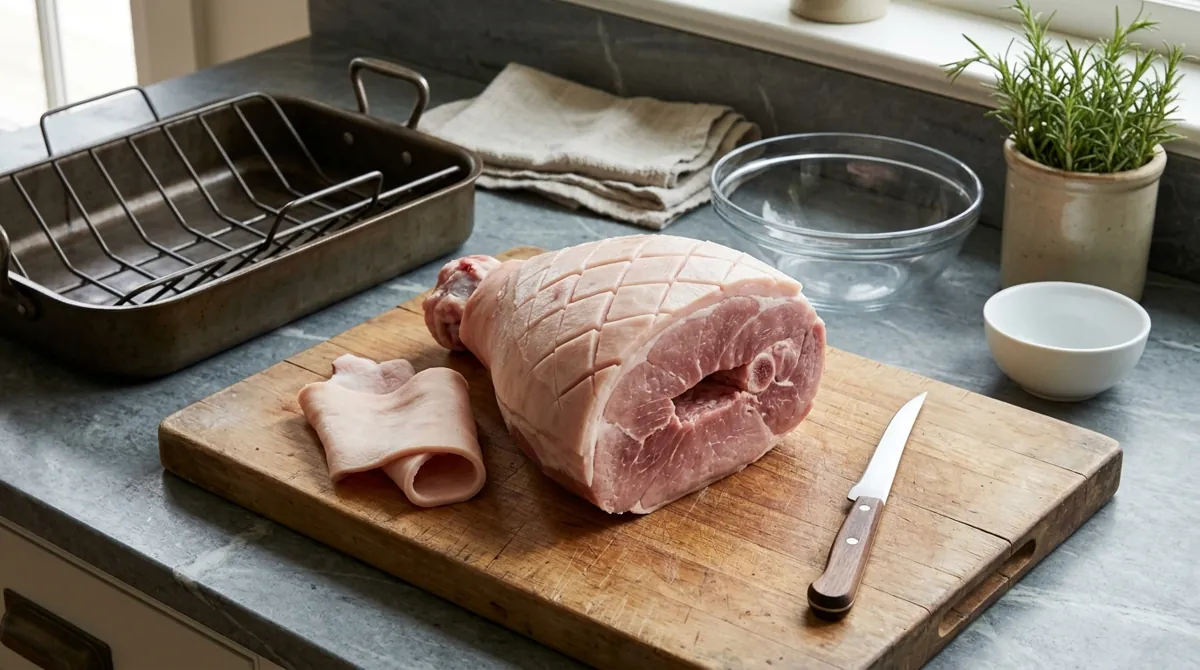
Cut away the skin, leaving 1/4 to 1/2 inch of fat. Score the fat in a 1-inch diagonal crosshatch without cutting the meat. In the center of the flat side, cut a pocket about 4 inches wide and 2 inches deep.
- Step 2
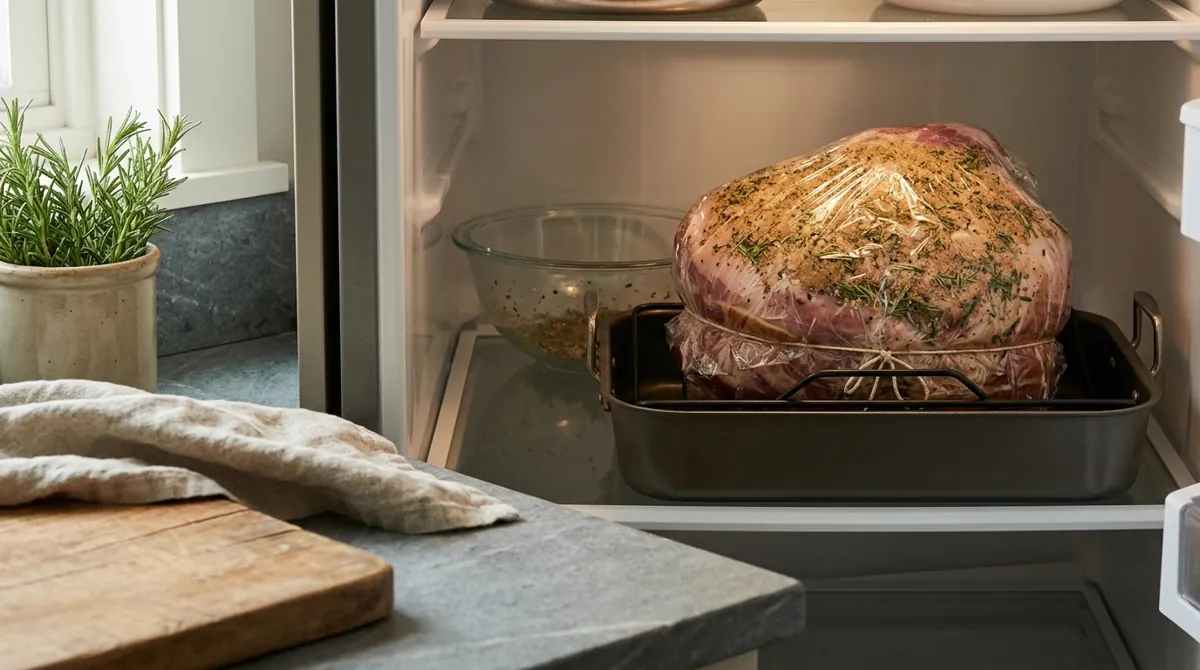
Mix the brown sugar, salt, rosemary and thyme. Rub half into the pocket, tie twine tightly around the base, rub the rest over the outside, wrap tightly in plastic and refrigerate 12 to 24 hours.
- Step 3
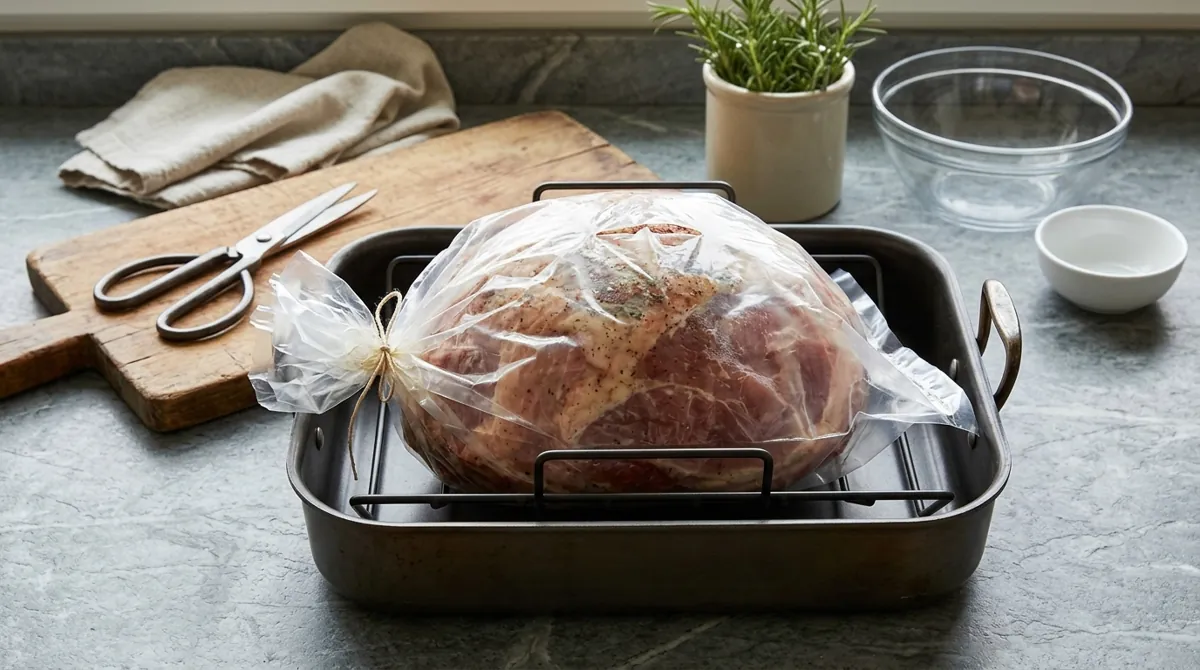
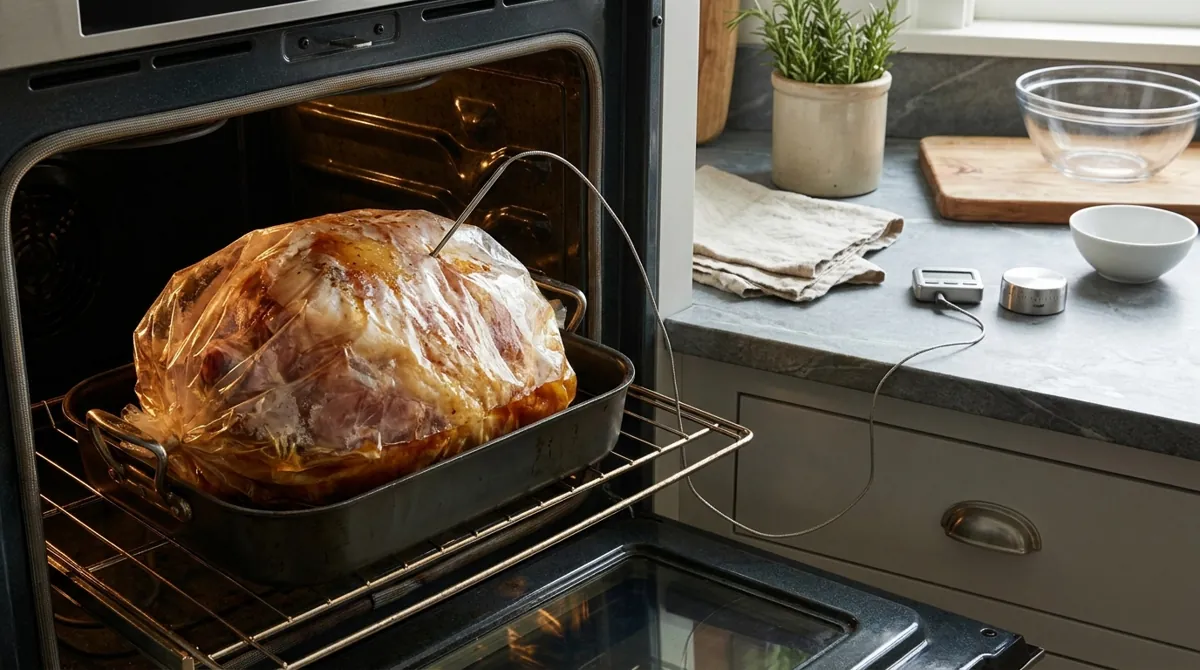
Set a rack in the lowest position and heat the oven to 325°F. Unwrap the ham, put it flat side down in the oven bag, tie the bag shut and cut a 1/2-inch slit in the top. Set it flat side down on a V-rack in a large roasting pan.
- Step 4
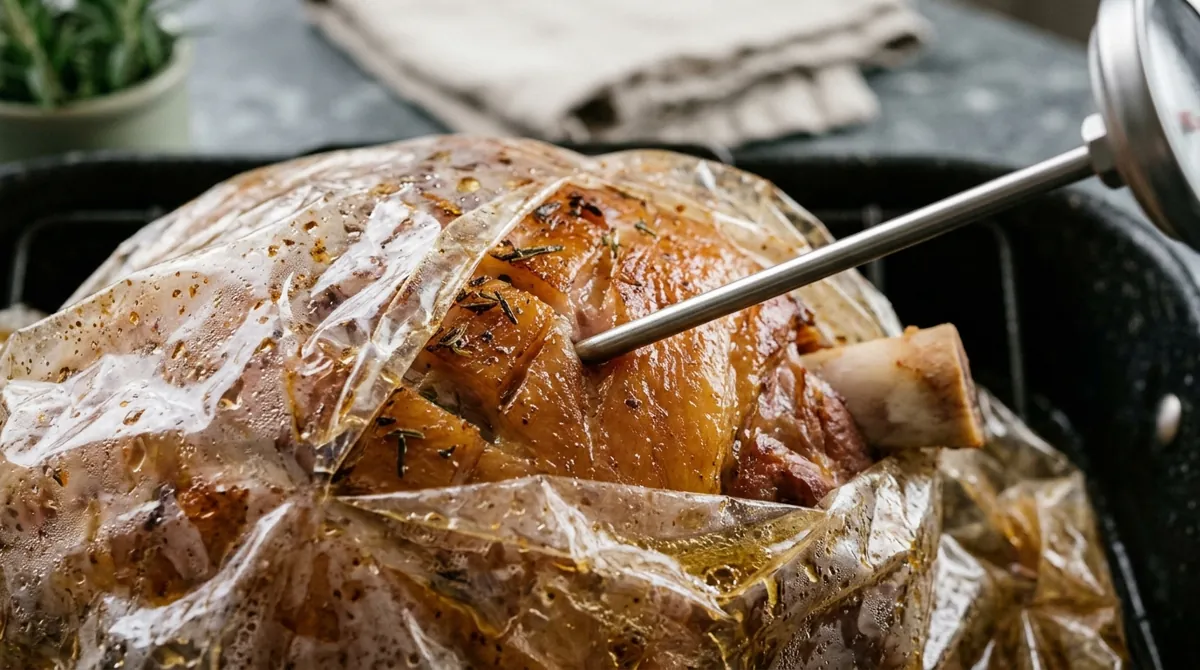
Roast 3 1/2 to 5 hours, until the center, near but not touching the bone, reads 160°F (at least 145°F).
✓ What it should look like - Step 5
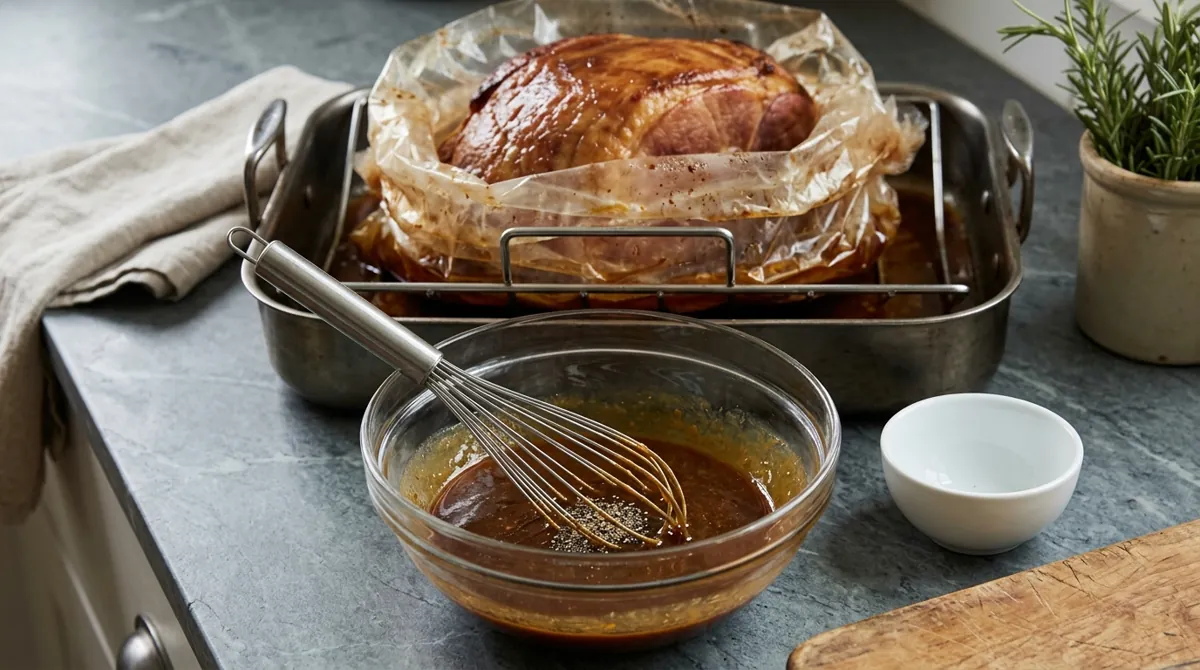
Let the ham rest in the bag on the rack 1 hour. Meanwhile raise the oven to 450°F and whisk the maple syrup, molasses, soy sauce, mustard and pepper.
- Step 6
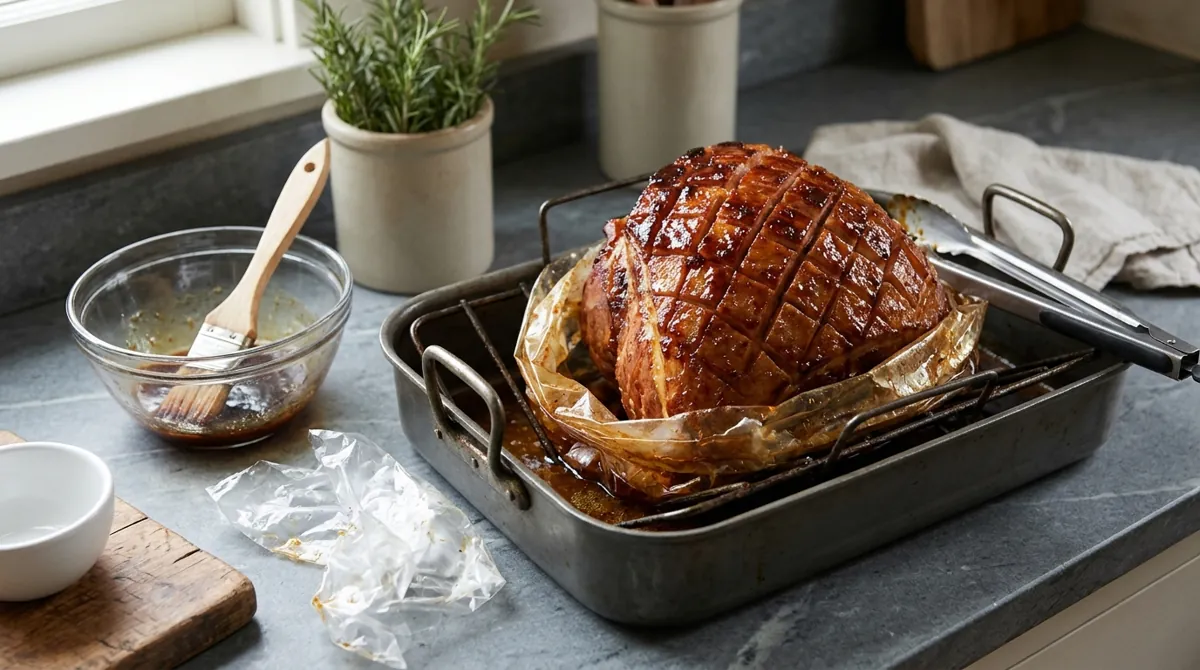
Cut open the top of the bag, press the ham gently with tongs so the juices run into the pan, and discard the bag. Brush on half the glaze and roast 10 minutes.
- Step 7
Brush on the rest, rotate the pan and roast about 10 minutes more, until deep amber. Rest 20 minutes on a board, skim the fat from the pan juices, and carve into 1/4-inch slices, moistening them with the juices.
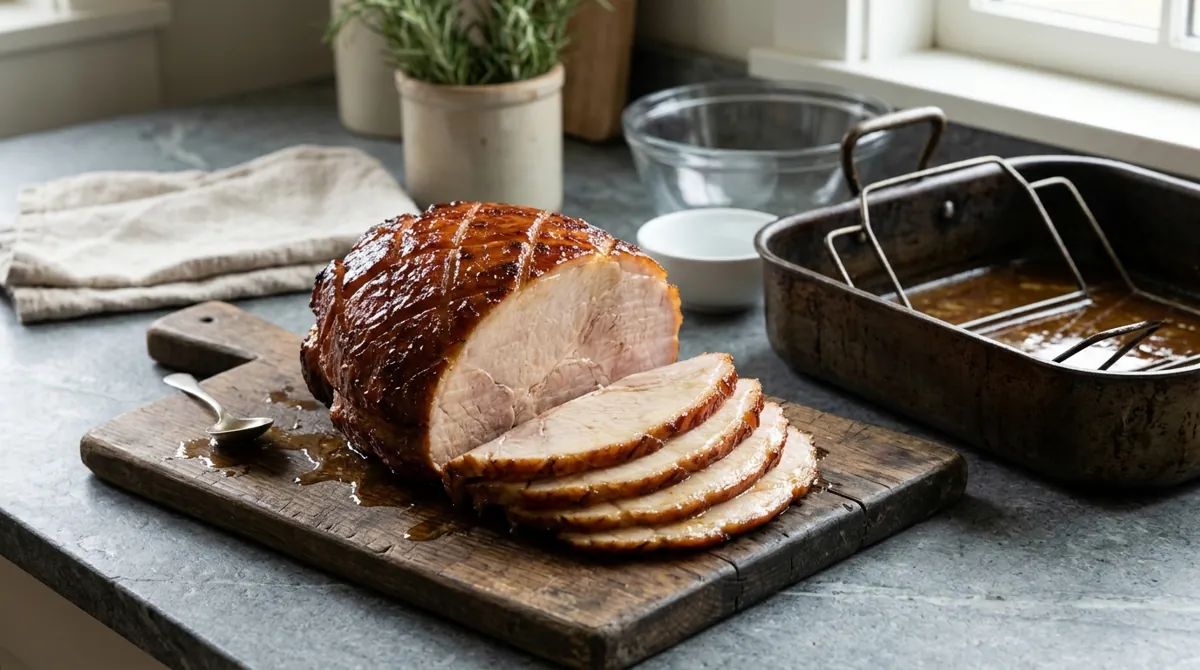
Slow-Roasted Fresh Ham
Serves 14 · one 9 lb roast, about 14 servings · 6 hr 50 min total
Ham
- 1 bone-in, skin-on fresh ham, shank end (8 to 10 lb)
- 1 turkey-size oven bag
- Kitchen twine
Salt rub
- 1/3 cup packed brown sugar
- 1/3 cup kosher salt
- 3 tbsp minced fresh rosemary
- 1 tbsp minced fresh thyme
Glaze
- 2 tbsp maple syrup
- 2 tbsp molasses
- 1 tbsp soy sauce
- 1 tbsp Dijon mustard
- 1 tsp black pepper
Equipment: Oven, Roasting pan, Instant-read thermometer, Chef's knife and cutting board, Measuring cups and spoons, Whisk, Tongs, Pastry brush, Kitchen twine
Method
- Cut away the skin, leaving 1/4 to 1/2 inch of fat. Score the fat in a 1-inch diagonal crosshatch without cutting the meat. In the center of the flat side, cut a pocket about 4 inches wide and 2 inches deep.
- Mix the brown sugar, salt, rosemary and thyme. Rub half into the pocket, tie twine tightly around the base, rub the rest over the outside, wrap tightly in plastic and refrigerate 12 to 24 hours.
- Set a rack in the lowest position and heat the oven to 325°F. Unwrap the ham, put it flat side down in the oven bag, tie the bag shut and cut a 1/2-inch slit in the top. Set it flat side down on a V-rack in a large roasting pan.
- Roast 3 1/2 to 5 hours, until the center, near but not touching the bone, reads 160°F (at least 145°F).
- Let the ham rest in the bag on the rack 1 hour. Meanwhile raise the oven to 450°F and whisk the maple syrup, molasses, soy sauce, mustard and pepper.
- Cut open the top of the bag, press the ham gently with tongs so the juices run into the pan, and discard the bag. Brush on half the glaze and roast 10 minutes.
- Brush on the rest, rotate the pan and roast about 10 minutes more, until deep amber. Rest 20 minutes on a board, skim the fat from the pan juices, and carve into 1/4-inch slices, moistening them with the juices.
Adapted from America's Test Kitchen, "Slow-Roasted Fresh Ham" by Diane Unger (January 31, 2014), as written (ATK serves 12 to 14; we call it 14). ATK roasts to 160°F; FSIS's minimum for fresh ham is 145°F with a 3-minute rest, so 160°F is a texture choice, not a safety rule. America's Test Kitchen. Ingredient list follows the source; the method is in our own words.
All sources (1)
Tips
- Order a fresh ham from the butcher a week ahead; ask for the shank end and say "fresh, not cured".
- Do not salt longer than 24 hours.
- Leftovers are pork roast, not cured ham: refrigerate within a few hours and use within 3 to 4 days.
The rules people argue about
What the sources agree on, what they don't, and what is just a good story.
- Ham is always cured. Documented as USDA labeling: "ham" alone means the cured leg; the uncured leg must be called fresh ham (FSIS glossary).
- Cook fresh ham to 160°F. Disputed: ATK uses 160°F for texture; USDA FSIS's minimum is 145°F with a 3-minute rest. Both are safe.
- The shank end is better. Folklore: ATK chose it for easier carving; the sirloin end is just as good to eat.
Every other ham
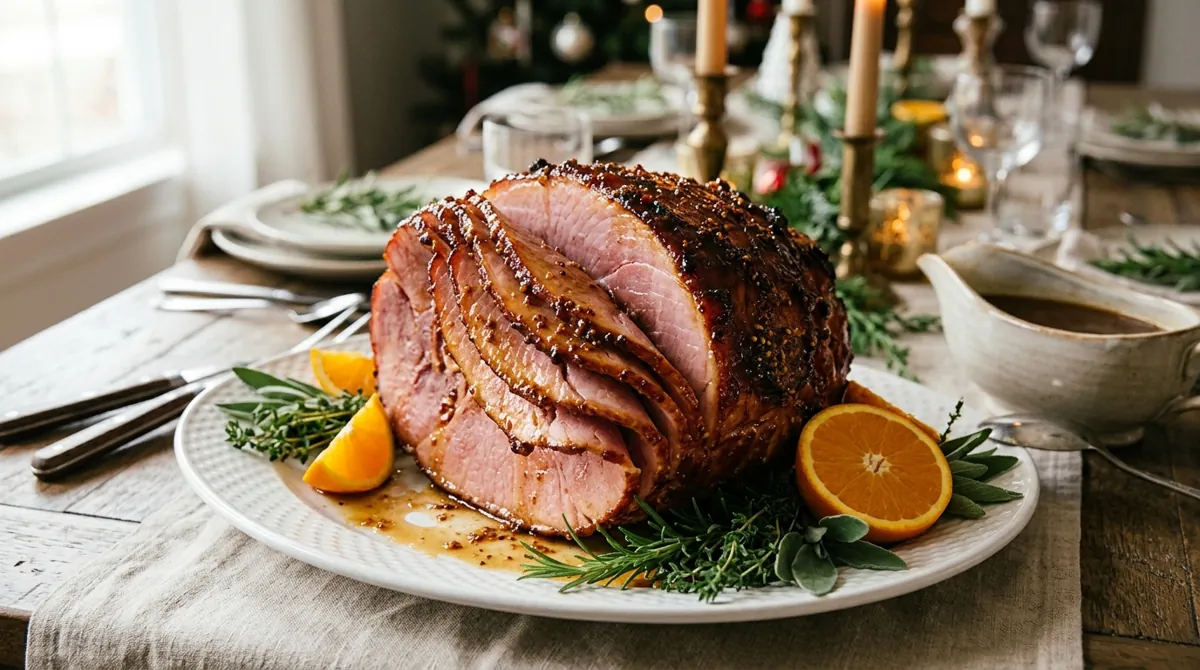
Brown Sugar and Mustard Glazed Spiral Ham
The American holiday centerpiece: a fully cooked spiral ham heated gently under foil, then brushed twice with a glaze of dark brown sugar, grainy mustard, cider vinegar and fresh orange until it is sticky and glossy.
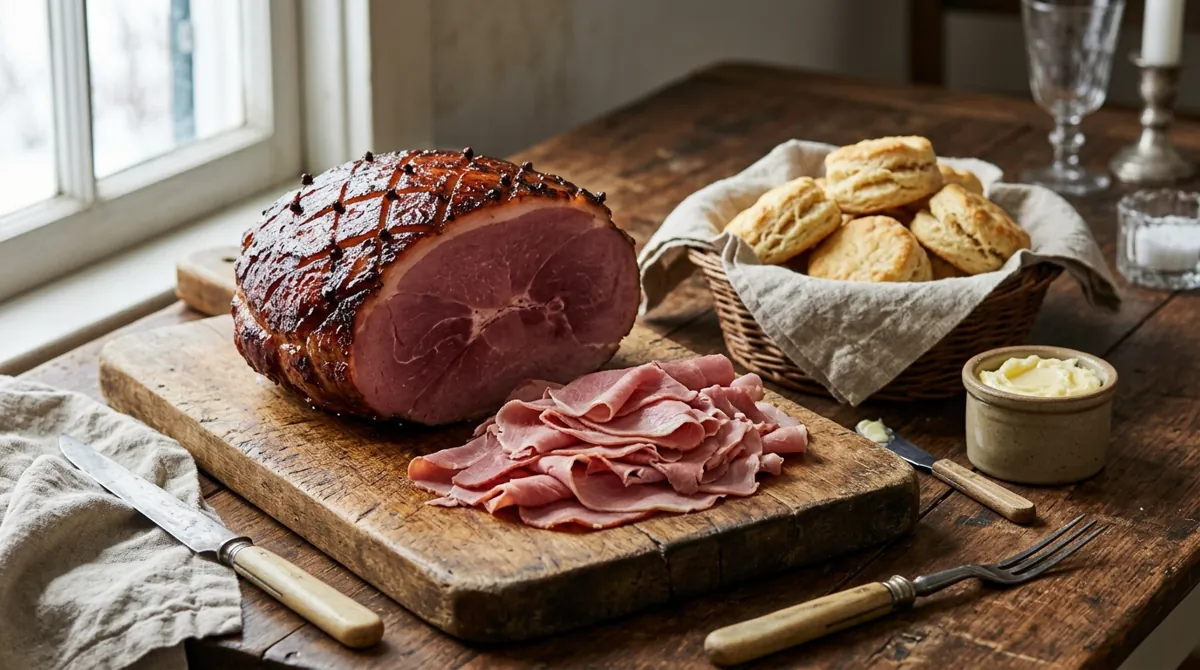
Virginia Country Ham, Soaked and Simmered
A dry-cured, aged country ham scrubbed, soaked overnight, held just below a simmer until tender, then rubbed with brown sugar and dry mustard and glazed in a hot oven, for paper-thin slices on biscuits.
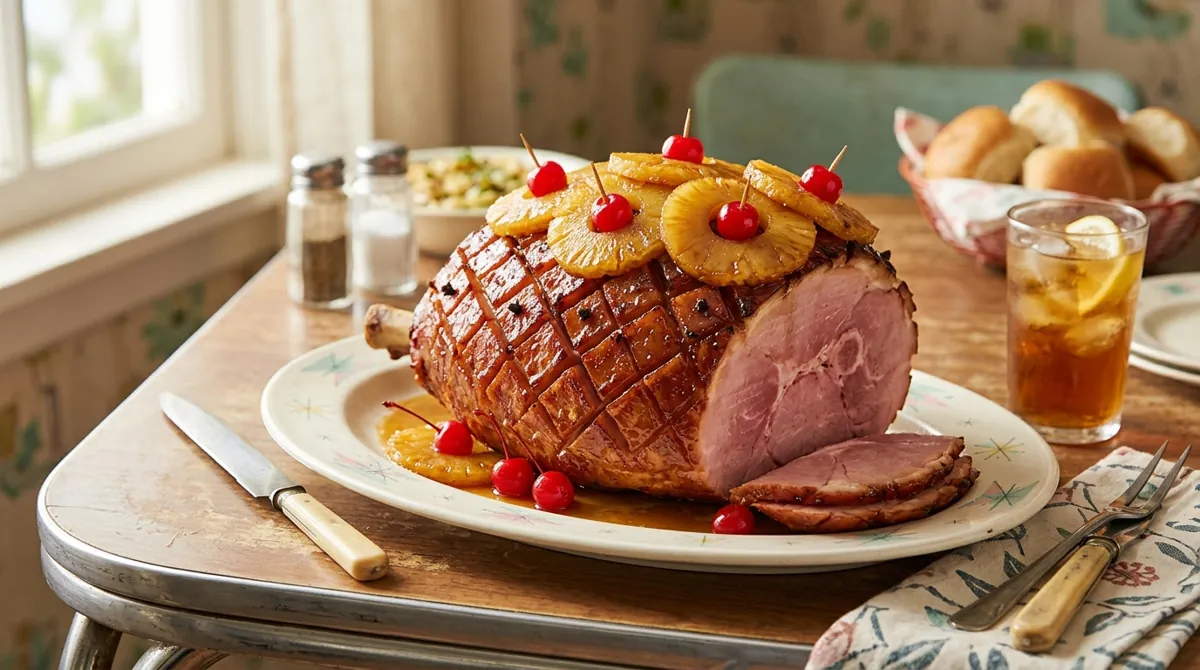
Pineapple and Brown Sugar Glazed Ham
The mid-century "Hawaiian" ham: a spiral ham pinned all over with canned pineapple rings, wrapped tight and baked low, then roasted hot with a brown sugar, pineapple juice and two-mustard glaze until sticky and golden.
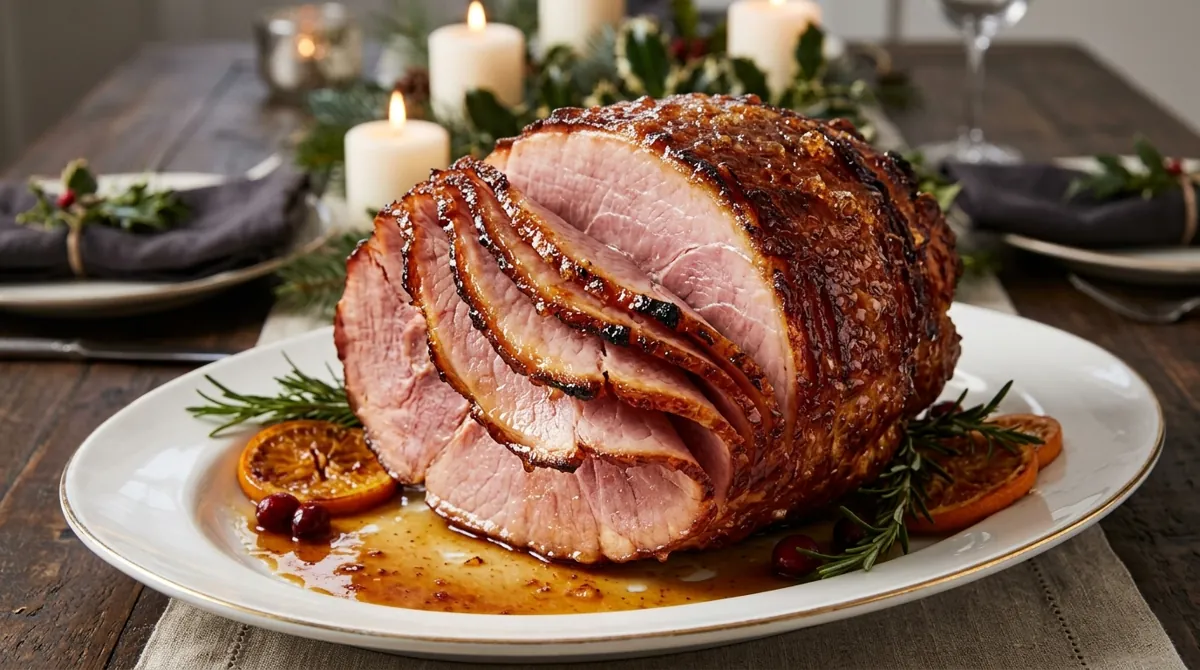
Crackly Honey-Glazed Spiral Ham (Copycat)
A spiral ham heated under foil with honey, then coated in a spiced sugar and melted with a kitchen torch or the broiler into a thin, crackly shell. Inspired by the HoneyBaked Ham Company's famous store ham; not official.
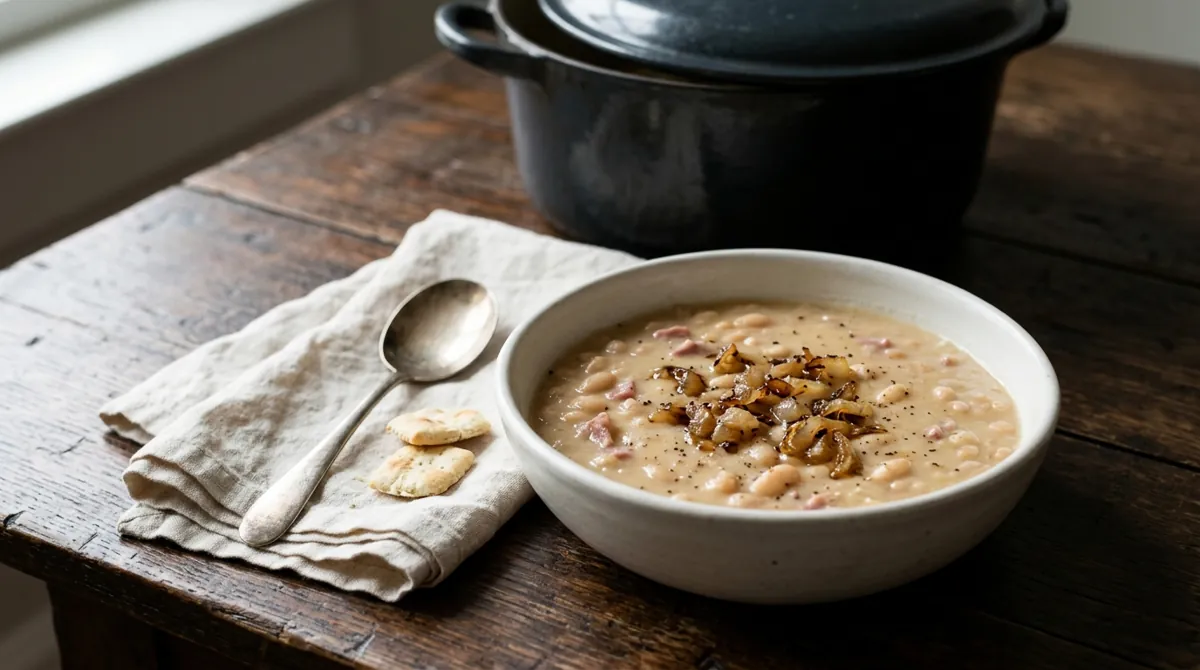
Senate Navy Bean Soup with the Leftover Ham Bone
The soup the US Senate restaurant has served for more than a century: dried navy beans simmered three hours with a meaty leftover ham bone, finished with diced ham and onion browned in butter.
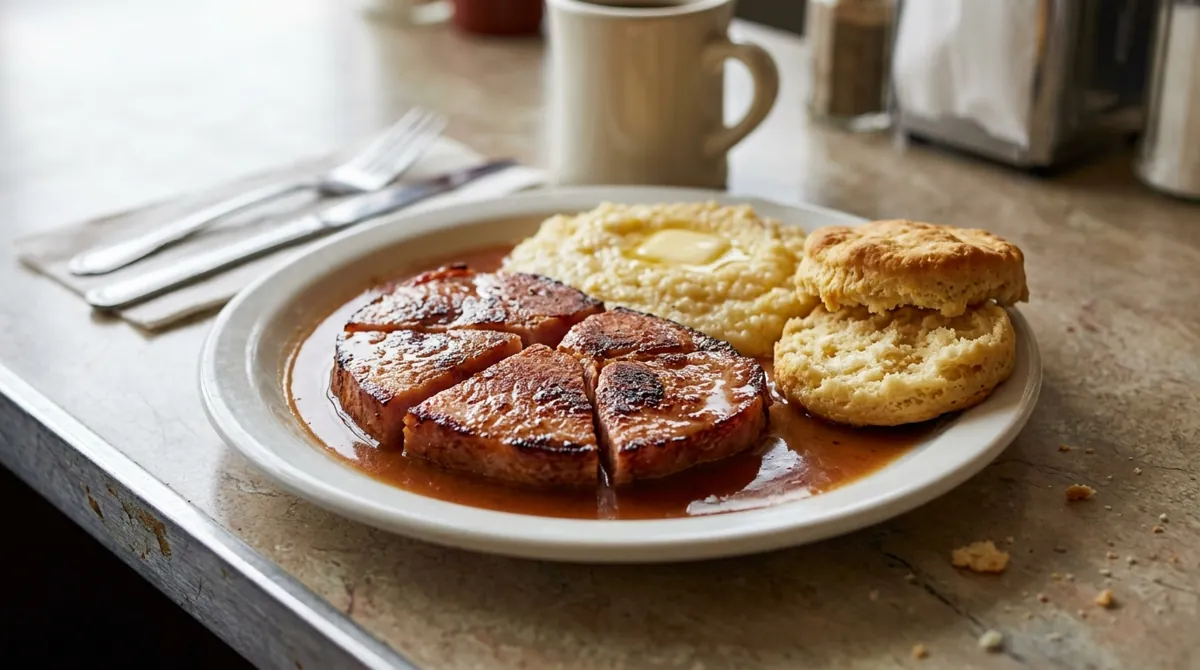
Skillet Ham Steak with Maple Red-Eye Gravy
A bone-in ham steak browned in bacon fat, then a quick pan gravy of broth, maple syrup and espresso powder, swirled with butter: the Southern country breakfast classic as a 30 minute dinner.
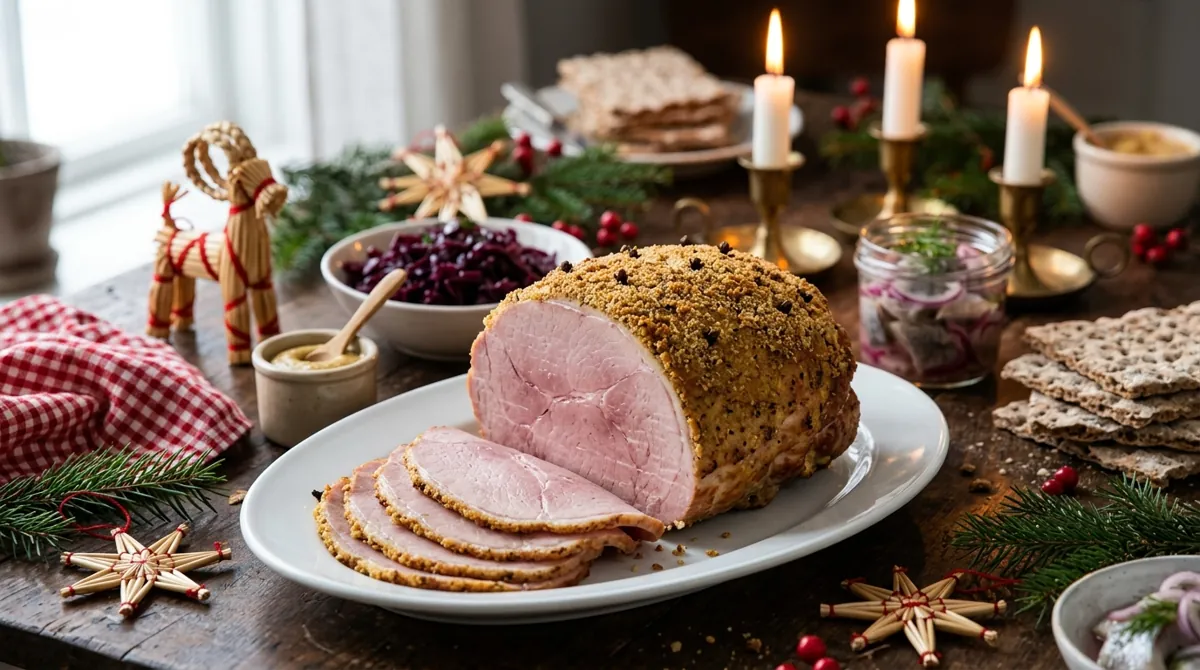
Swedish Christmas Ham with Mustard Crust (Julskinka)
Sweden's Christmas ham: a cured ham simmered gently until 158°F, cooled, then spread with egg, two mustards and sugar, dusted with breadcrumbs and baked hot into a golden crust, served cold on the julbord with the broth saved for dipping bread.
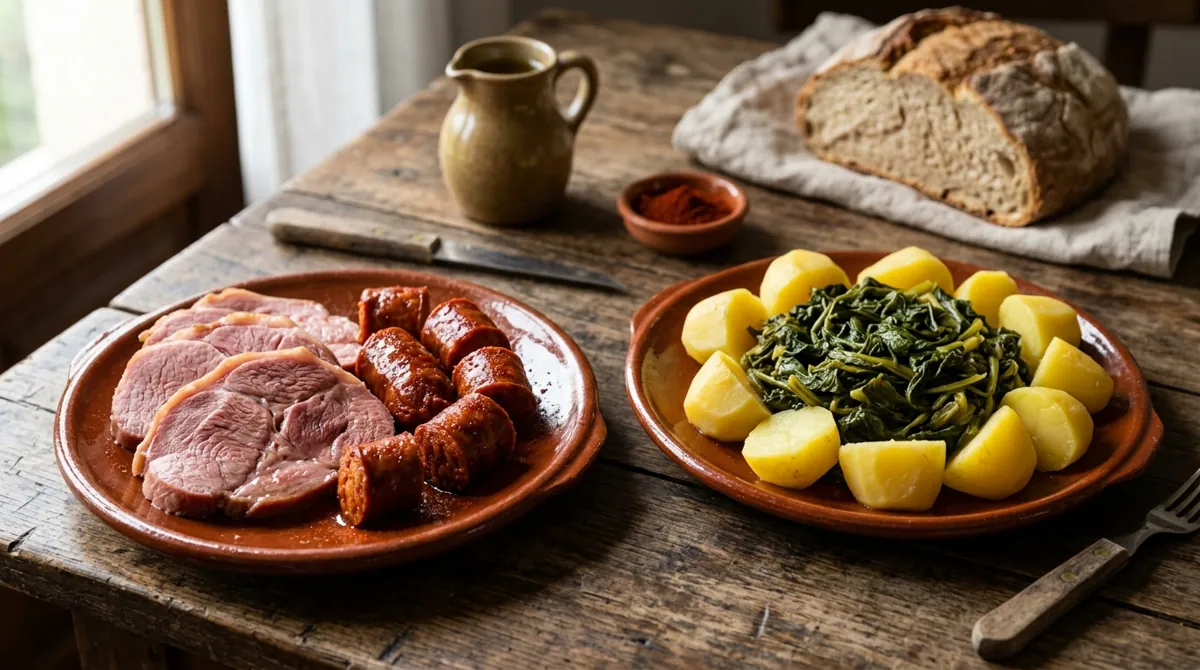
Galician Cured Pork Shoulder with Turnip Greens (Lacón con Grelos)
Galicia's Carnival feast: a whole salt-cured pork foreleg soaked for two days, boiled until it falls from the bone, and served with chorizo, potatoes and turnip greens cooked in the same broth.
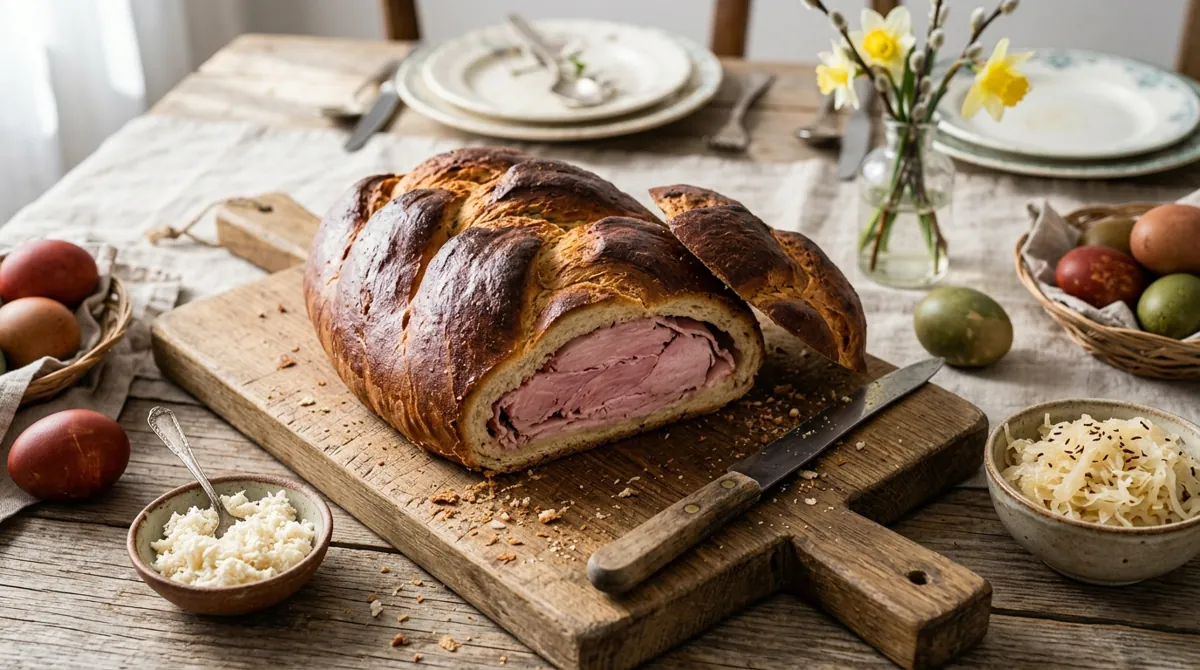
Ham Baked in Bread Dough (Schinken im Brotteig)
The Viennese Easter ham: a cured ham simmered with caraway, fennel and coriander, wrapped in a rye and wheat bread dough with a braided top, and baked until the crust is dark and the ham inside is steaming.
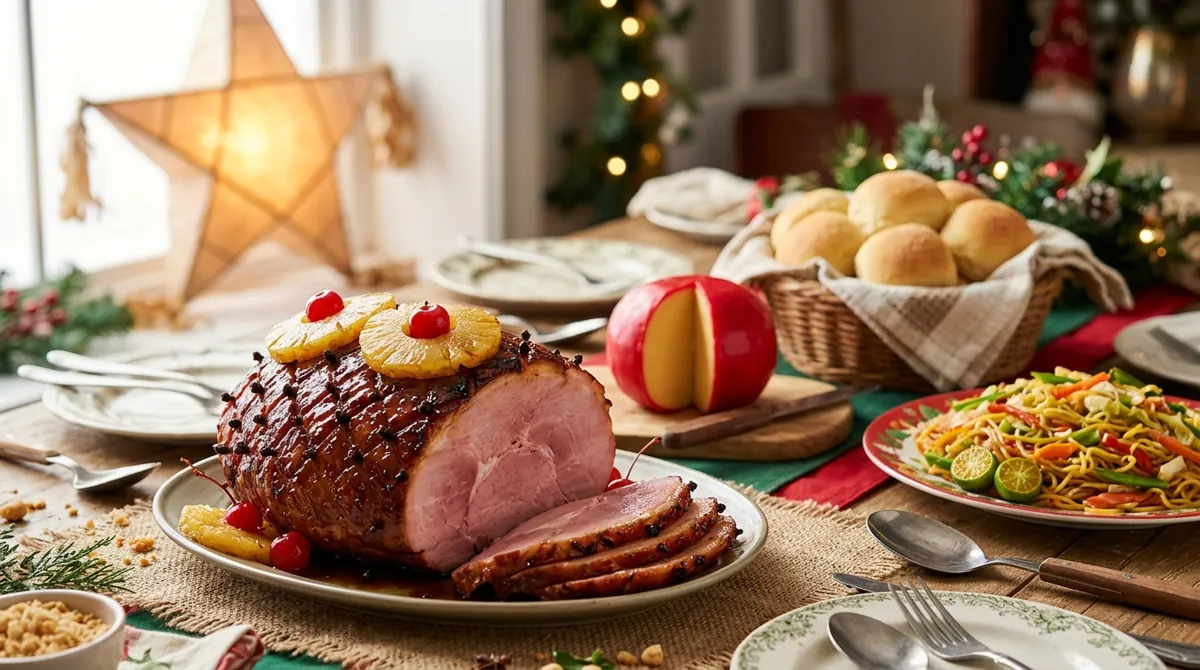
Filipino Christmas Ham with Pineapple Glaze (Hamon)
The Noche Buena ham: a bone-in ham poached for an hour in pineapple juice and brown sugar, scored, spread thickly with pineapple jam and baked hot until dark and glossy.
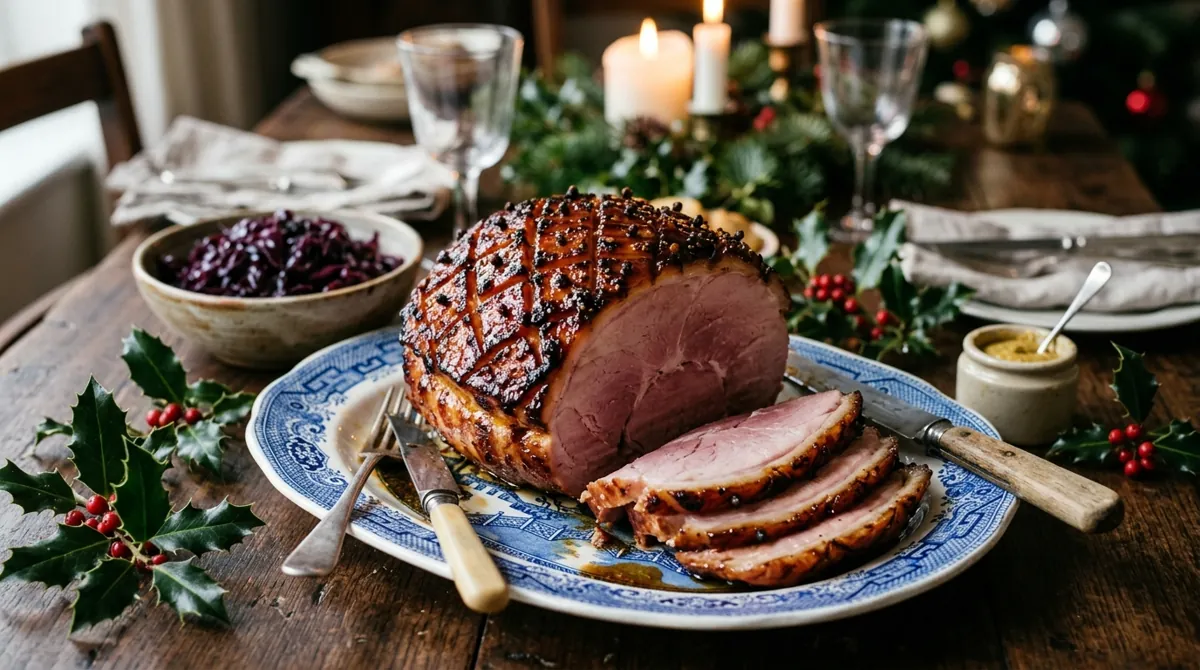
British Gammon Simmered in Cola with Treacle and Mustard Glaze
A mild-cure gammon joint simmered for over two hours in cola with an onion, then skinned, studded with cloves, painted with black treacle, patted with mustard powder and demerara sugar and blasted in a very hot oven.
Meatballs of the World

Italian-American Meatballs
Big, tender meatballs braised for an hour in red sauce over spaghetti. The one most Americans grew up with.

Pallottine (Abruzzo Meatballs)
Tiny meatballs, smaller than a marble, tossed right through square spaghetti alla chitarra. No bread at all.

Swedish Meatballs (Köttbullar)
Small, soft meatballs browned in butter, in a cream sauce made from the same pan, with lingonberry jam on the plate.

Danish Frikadeller
Pork meatballs shaped with a spoon and fried slowly in butter, crusty outside and soft in the middle.

Königsberger Klopse
German meatballs that are never fried: poached, then served in a creamy white sauce with capers.

Spanish Albóndigas in Almond Saffron Sauce
The tapas bar classic: small meatballs in a golden sauce thickened with fried almonds and bread.

Mexican Albóndigas with Chipotle and Mint
Soft meatballs with rice and fresh mint inside, simmered in a smoky tomato and chipotle broth.

Izgara Köfte (Turkish Grilled Meatballs)
Small, flat meatballs kneaded hard, rested cold, and charred on a hot grill pan.

Lion's Head Meatballs
Big, soft pork meatballs, stirred into a sticky paste, fried to set, then braised in a savory sauce.

Chicken Tsukune
Japan's chicken meatball: kneaded sticky, grilled on skewers, glazed with sweet soy tare, dipped in egg yolk.