
Indiana Sugar Cream Pie (Hoosier Pie)
Indiana's eggless pie: sugar, heavy cream, butter and vanilla cooked into a thick custard on the stove, poured into a fully baked crust, chilled until sliceable and dusted with nutmeg.
 Edited by JP Lambiase
Change the estimate
Swaps change the price only: cook any meat to its own safe temperature. Where these numbers come from
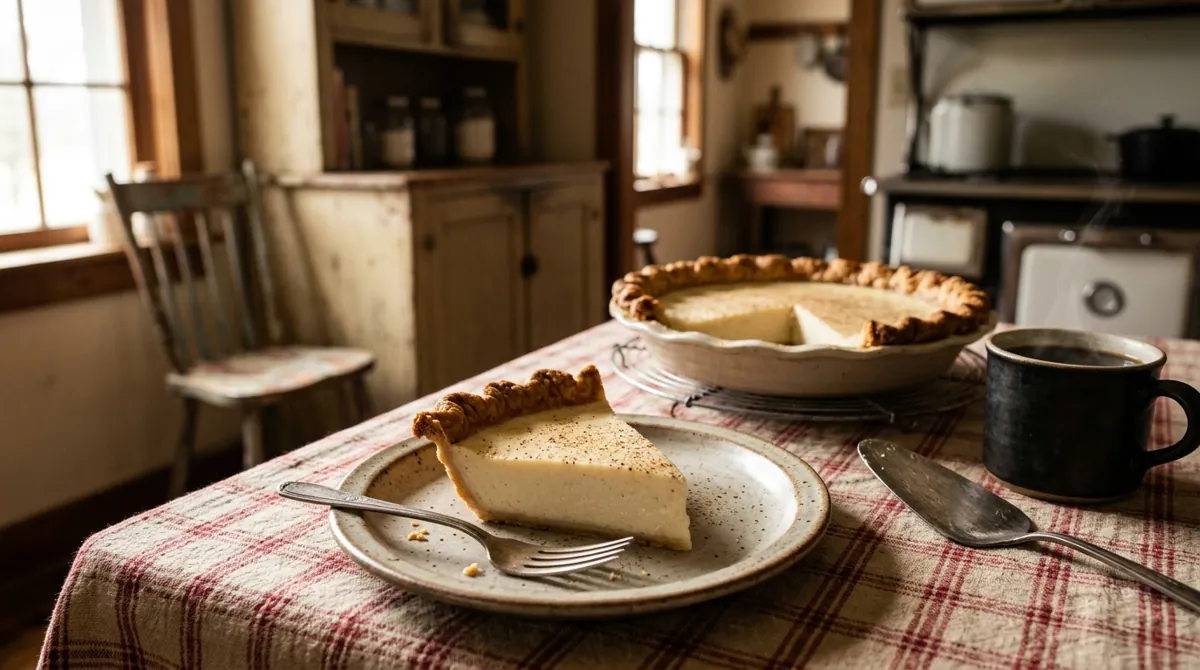
Sugar cream pie is Indiana's pie, and it is famous for what it leaves out: no fruit, and in the old style, no eggs. America's Test Kitchen notes that its Hoosier pie skips eggs, which were once a precious commodity. Nobody is sure who brought it. Kate Scott of the Indiana Historical Society writes that it "probably originated with Shaker communities in Indiana or Pennsylvania" and arose separately in Amish baking, and that the full name "sugar cream pie" did not become common in cookbooks until after World War II (March 23, 2017:). Wikipedia doubts the Shakers, whose only Indiana settlement, near Vincennes, was abandoned in 1827, and points to Quaker settlers from North Carolina instead. The commercial pie came from Winchester: WNIN reports that Duane Wickersham's sugar cream pie dates to 1944 (November 21, 2017:). In 2009 a resolution to make it the official state pie and rename it "Hoosier pie" passed the Indiana Senate but, as WNIN puts it, never made its way to the governor's desk, which is why it is usually called the unofficial state pie.
🇺🇸 This one is American
Indiana's eggless pie: sugar, heavy cream, butter and vanilla cooked into a thick custard on the stove, poured into a fully baked crust, chilled until sliceable and dusted with nutmeg.
🇬🇧 The original
The British original is the mince pie: a small, sealed pastry of dried fruit, suet and spice that once held real minced meat. See the British Mince Pies recipe.
📖 Origin story: Why Is It Called Chess Pie? →
Why it works the kitchen science
Cook the custard, bake the crust
ATK found the classic bake-it-all-together method unreliable, so the crust is baked fully and the filling is thickened on the stove; you get a crisp, dry crust and a custard that is creamy but slices.
No eggs
Cornstarch and the reduction of 3 cups of cream do all the setting, which gives the pie its pure, milky sugar flavor.
🧰 You'll need 10 items
Everything the steps call for. Tick off what you have before you start.
Appliances
Pans and pots
Tools
Supplies
Step by step
- Step 1
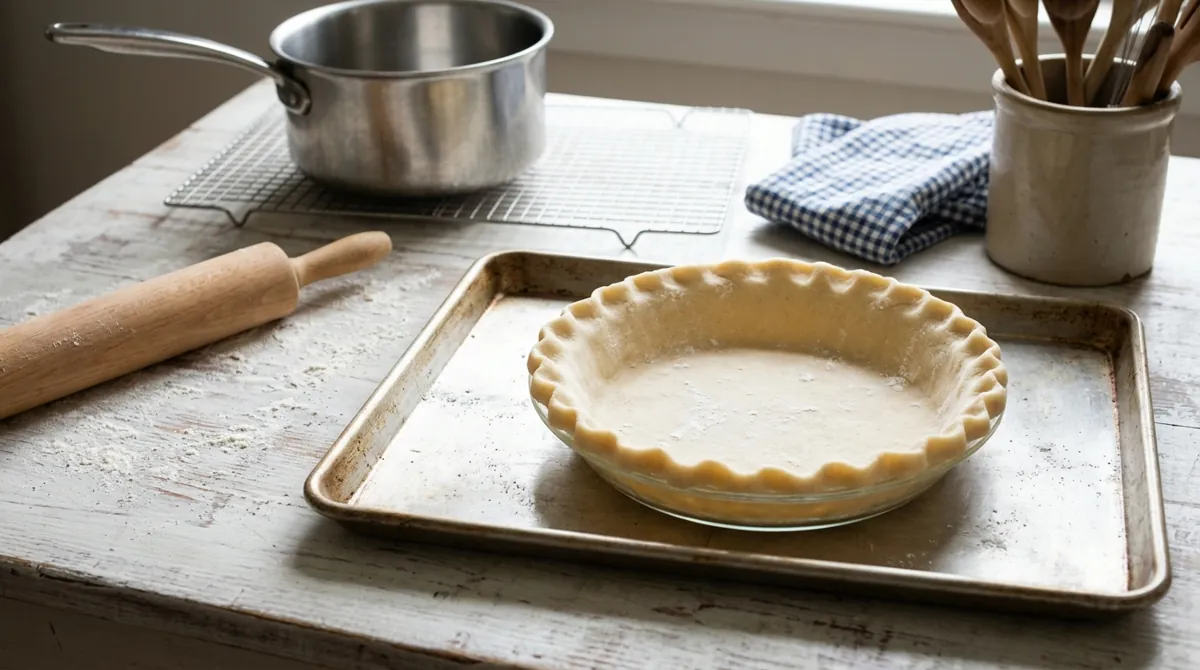
Make and chill the dough 30 minutes (see the crust baseline). Set a rack in the lower-middle position and heat the oven to 375°F. Roll the dough to a 12-inch circle, ease it into a 9-inch pie plate, trim to 1/2 inch, tuck it under flush with the rim and crimp. Wrap loosely and freeze about 15 minutes, until firm.
- Step 2
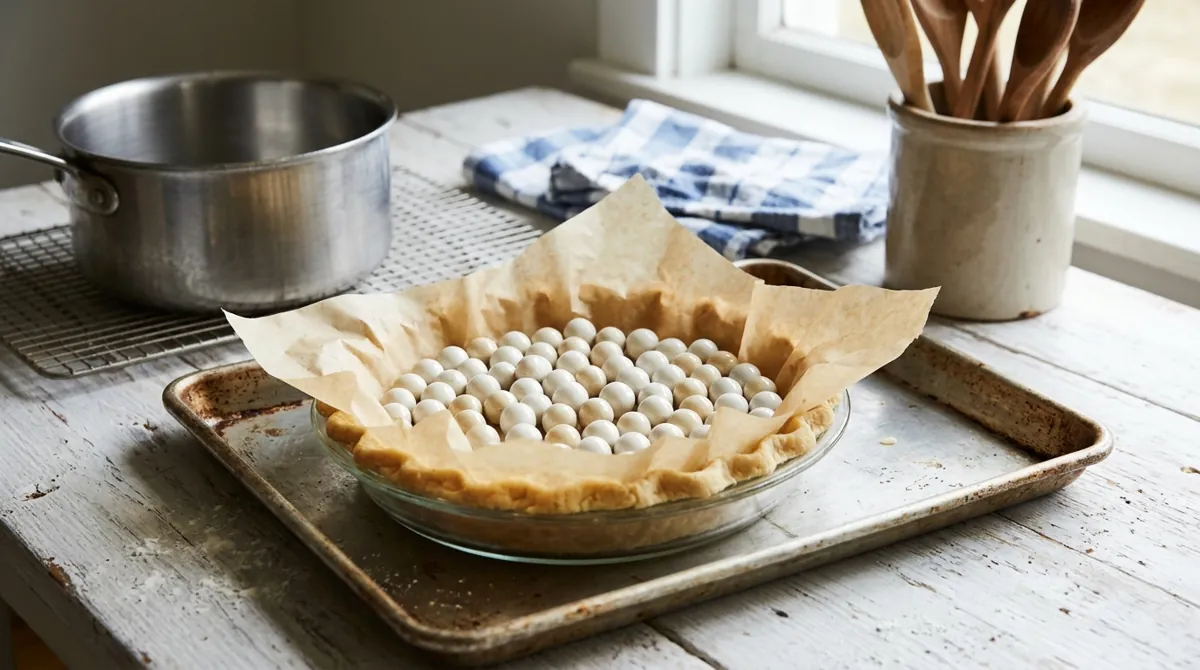
Line the shell with parchment or a double layer of foil that hangs over the edge, fill with pie weights and bake about 20 minutes, until the edges are light golden, rotating halfway.
- Step 3
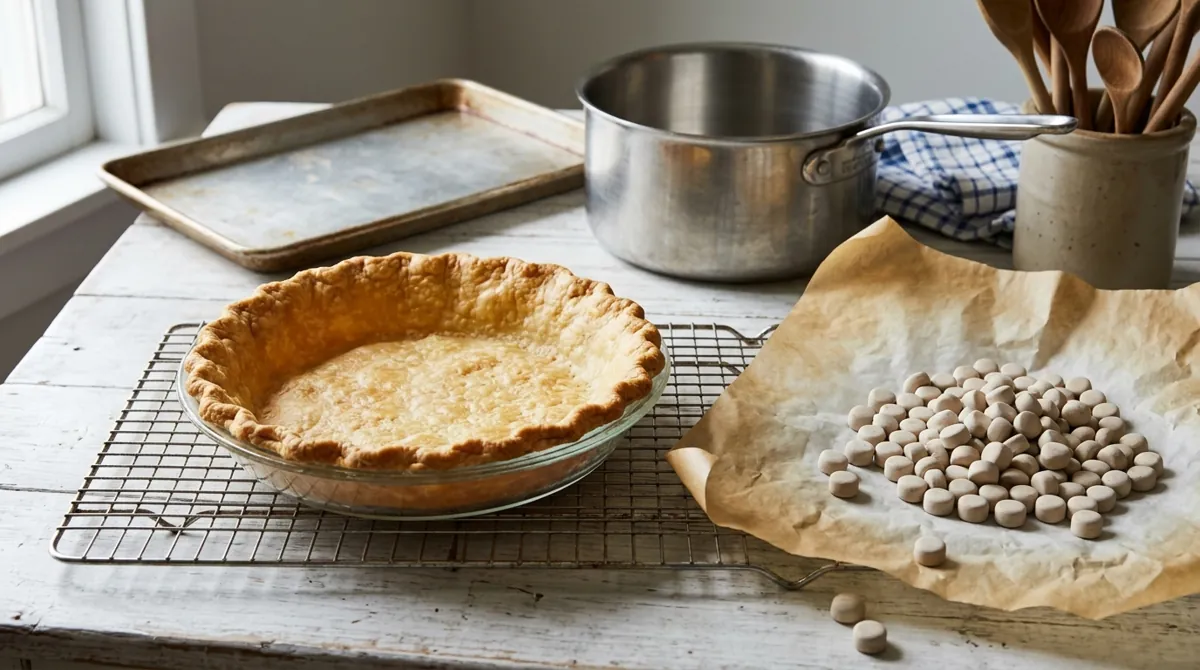
Remove the parchment and weights and bake 7 to 11 minutes more, until golden brown all over. Set it on a rack; it doesn't need to cool fully.
- Step 4
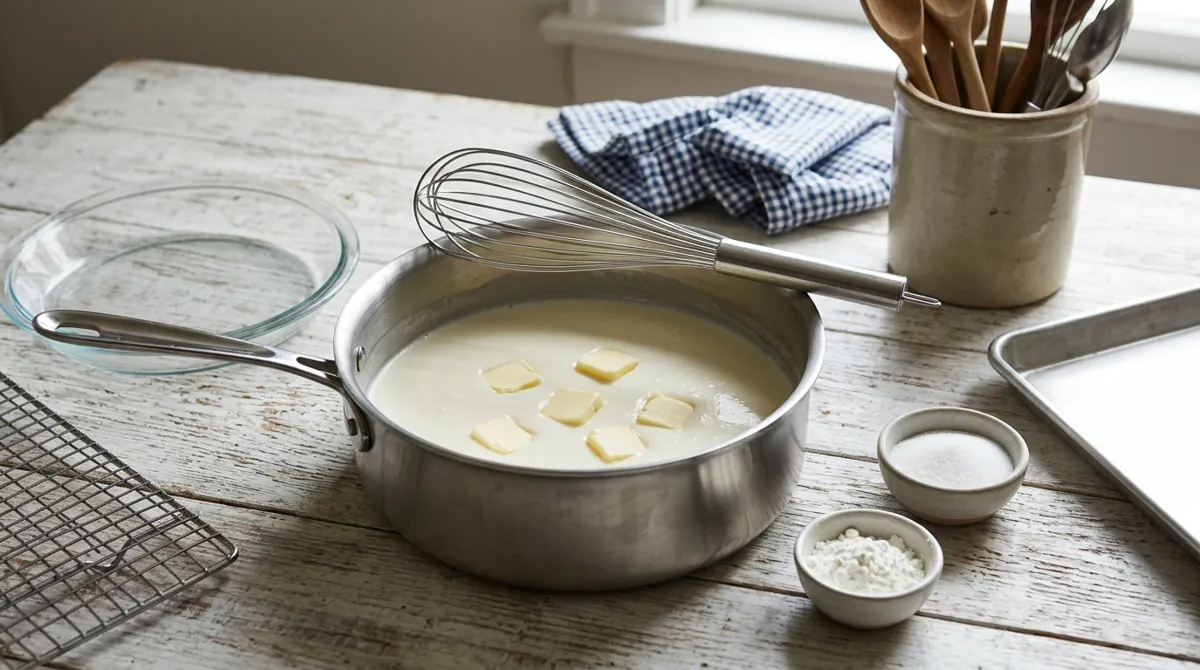
Whisk the sugar, cornstarch and salt in a large saucepan, then whisk in the cream until smooth. Add the butter.
- Step 5
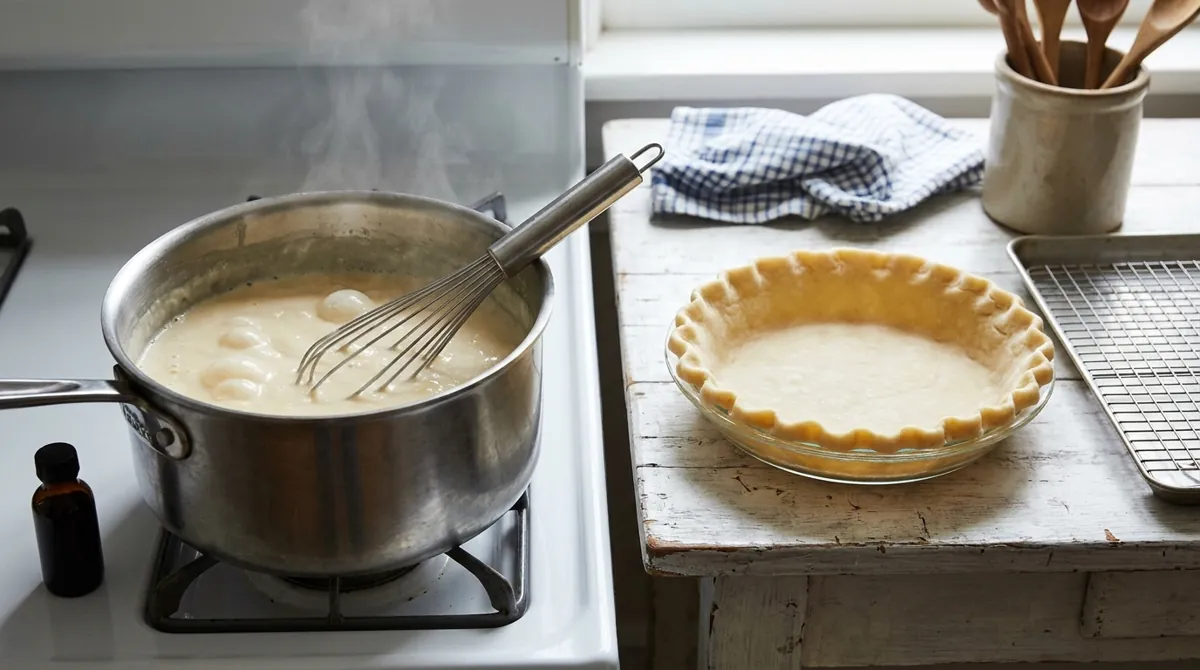
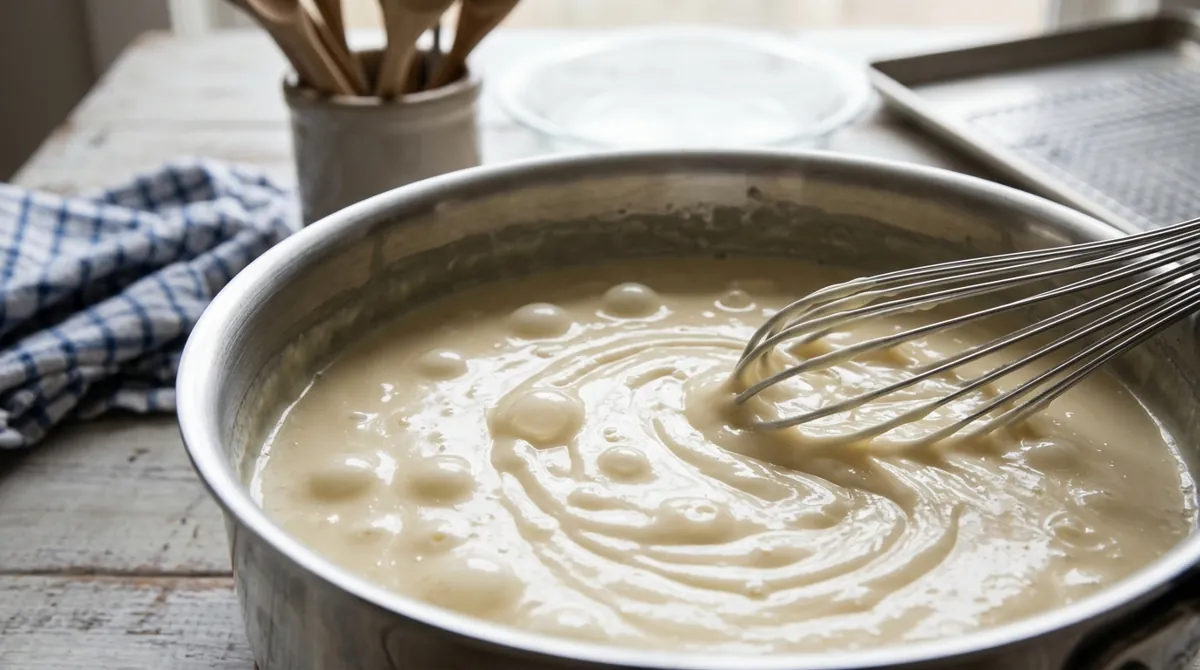
Cook over medium heat, whisking constantly, 6 to 8 minutes, until the custard thickens and large bubbles break the surface. Keep whisking 20 seconds more, then take it off the heat and whisk in the vanilla.
✓ What it should look like - Step 6
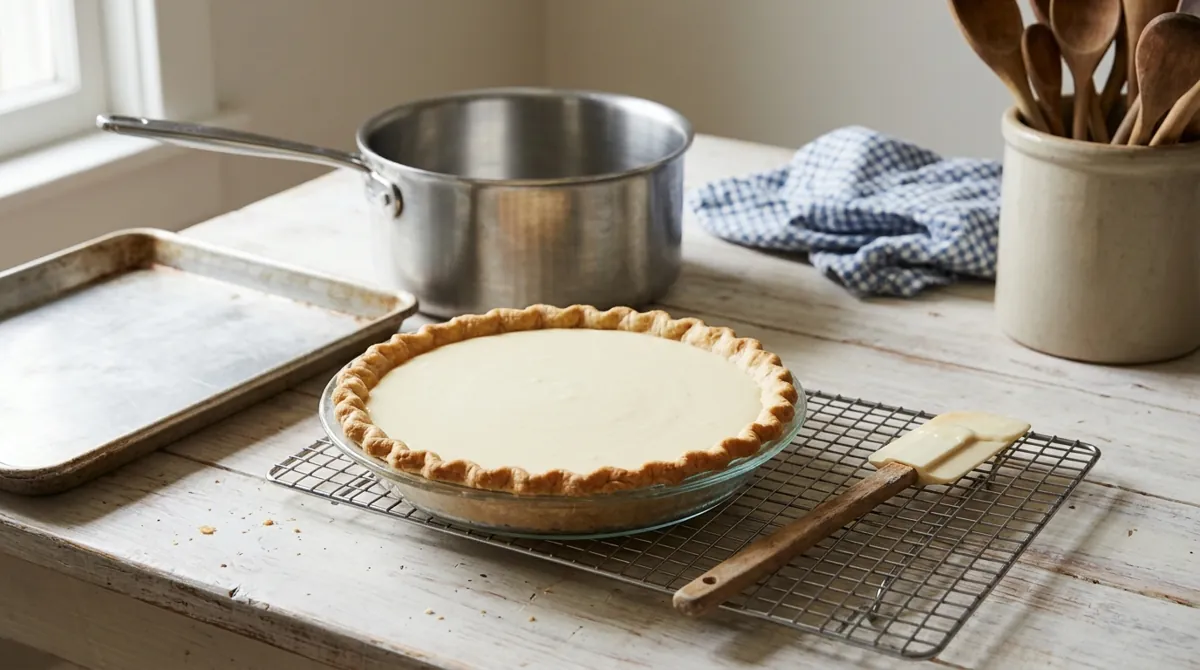
Pour the hot custard into the baked shell and smooth the top with a spatula.
- Step 7
Cool at room temperature about 2 hours, then refrigerate about 2 hours more, until cold and set. Dust with nutmeg just before serving.
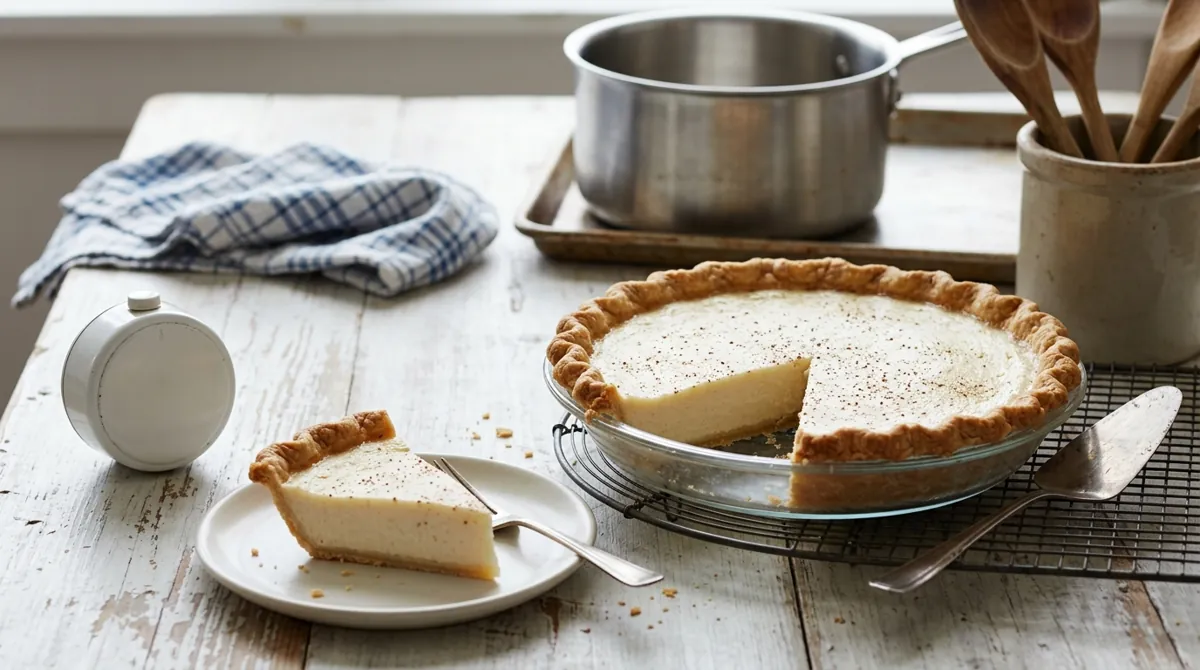
Indiana Sugar Cream Pie (Hoosier Pie)
Serves 8 · one 9-inch pie · 1 hr 5 min total
Crust (King Arthur's Classic Single Pie Crust, or a store-bought round)
- 1 1/2 cups (180 g) all-purpose flour
- 1/2 tsp table salt
- 4 tbsp (46 g) vegetable shortening
- 5 tbsp (71 g) cold unsalted butter
- 3 to 5 tbsp ice water
Filling
- 1 cup (198 g) sugar
- 1/4 cup cornstarch
- 1/4 tsp salt
- 3 cups heavy cream
- 5 tbsp unsalted butter, cut into 5 pieces
- 1 tbsp vanilla extract
- Ground nutmeg, for dusting
Equipment: Oven, 9-inch pie plate, Large saucepan, Chef's knife and cutting board, Measuring cups and spoons, Whisk, Spatula, Rolling pin, Parchment paper, Aluminum foil
Method
- Make and chill the dough 30 minutes (see the crust baseline). Set a rack in the lower-middle position and heat the oven to 375°F. Roll the dough to a 12-inch circle, ease it into a 9-inch pie plate, trim to 1/2 inch, tuck it under flush with the rim and crimp. Wrap loosely and freeze about 15 minutes, until firm.
- Line the shell with parchment or a double layer of foil that hangs over the edge, fill with pie weights and bake about 20 minutes, until the edges are light golden, rotating halfway.
- Remove the parchment and weights and bake 7 to 11 minutes more, until golden brown all over. Set it on a rack; it doesn't need to cool fully.
- Whisk the sugar, cornstarch and salt in a large saucepan, then whisk in the cream until smooth. Add the butter.
- Cook over medium heat, whisking constantly, 6 to 8 minutes, until the custard thickens and large bubbles break the surface. Keep whisking 20 seconds more, then take it off the heat and whisk in the vanilla.
- Pour the hot custard into the baked shell and smooth the top with a spatula.
- Cool at room temperature about 2 hours, then refrigerate about 2 hours more, until cold and set. Dust with nutmeg just before serving.
Adapted from America's Test Kitchen, "Hoosier Pie" by Katie Leaird (December 14, 2017; from "The Perfect Pie" and Cook's Country, February/March 2018), one 9-inch pie, serves 8 to 10. Amounts, the 375°F blind bake, the stovetop custard and the cooling times are ATK's. ATK uses a store-bought round; we write out King Arthur's Classic Single Pie Crust (a store-bought round works). History from the Indiana Historical Society, WNIN and Wikipedia, linked in the Story; the 2009 resolution's number and sponsor came to us through search summaries only (see What we could not source). America's Test Kitchen. Ingredient list follows the source; the method is in our own words.
Tips
- Whisk the corners of the pan; cornstarch catches and lumps there first.
- Don't skip the 20 extra seconds of whisking after the big bubbles: it cooks out the starchy taste.
- Old Indiana cooks often dust it with nutmeg or cinnamon; nutmeg is ATK's choice.
The rules people argue about
What the sources agree on, what they don't, and what is just a good story.
- Sugar cream pie is Indiana's official state pie. Disputed: Visit Indiana's blog (April 20, 2014) says "The Indiana State Senate voted to adopt the Sugar Cream Pie as the state pie in 2009"; WNIN (2017) and Wikipedia call it the unofficial state pie, and WNIN says the 2009 bill never reached the governor's desk.
- The Shakers brought it to Indiana. Disputed: the Indiana Historical Society says it probably began with Shaker communities; Wikipedia says the Shakers' short stay (1810 to 1827) makes that unlikely and favors Quakers from North Carolina.
- It has been made in Indiana since statehood in 1816. Disputed wording: Wikipedia and WNIN both connect it to 1816, but neither names the recipe, and the Indiana Historical Society says the name became common only after World War II.
- Real sugar cream pie has no eggs. Disputed: ATK and the Indiana Historical Society favor few or no eggs; the historical society says bakers disagree.
- It is a "desperation pie". Documented as a label: the Indiana Historical Society and Wikipedia both use it, for a pie made without seasonal fruit.
Every other holiday pie
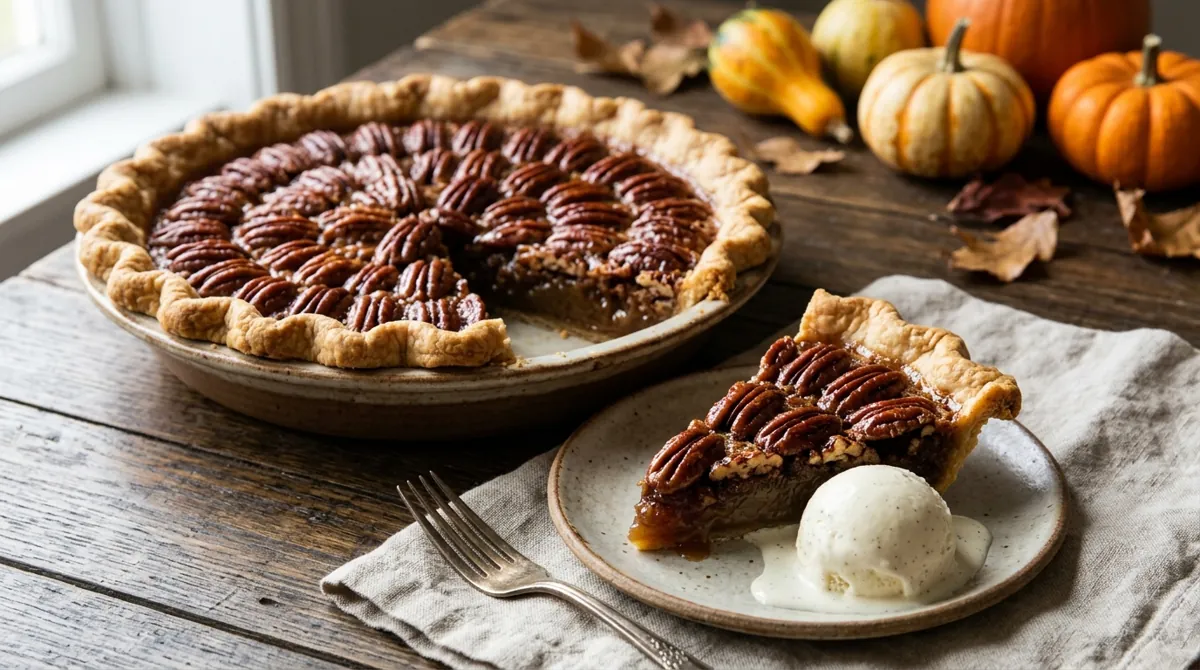
Classic Southern Pecan Pie
The corn syrup pecan pie: eggs, light and dark corn syrup, butter and toasted pecans in a flaky par-baked crust, baked until puffed and just set and crowned with pecan halves.
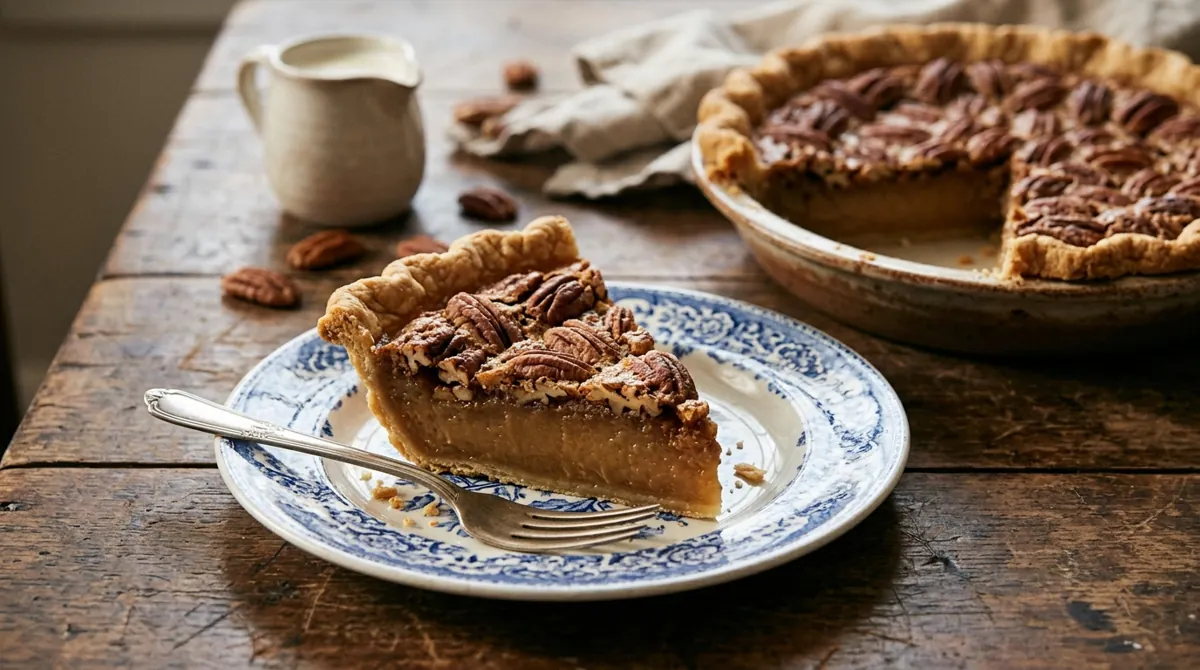
Old-Fashioned Pecan Pie Without Corn Syrup
Pecan pie the way it was made before corn syrup took over: a smooth custard of brown sugar, milk, eggs, butter and a splash of vinegar, with toasted diced pecans inside and halves roasting on top.
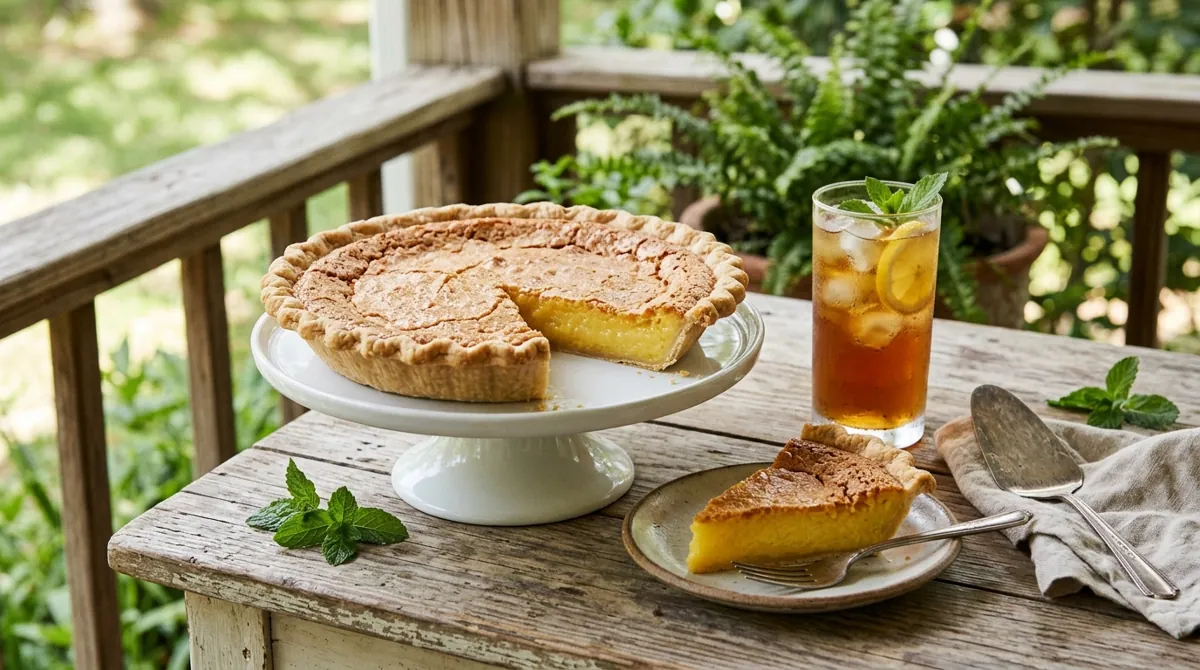
Southern Lemon Chess Pie
The South's pantry pie: eggs, sugar, butter, lemon and a spoonful of cornmeal baked in a par-baked crust until the top turns into a thin, crackly sugar crust over a soft, tart custard.
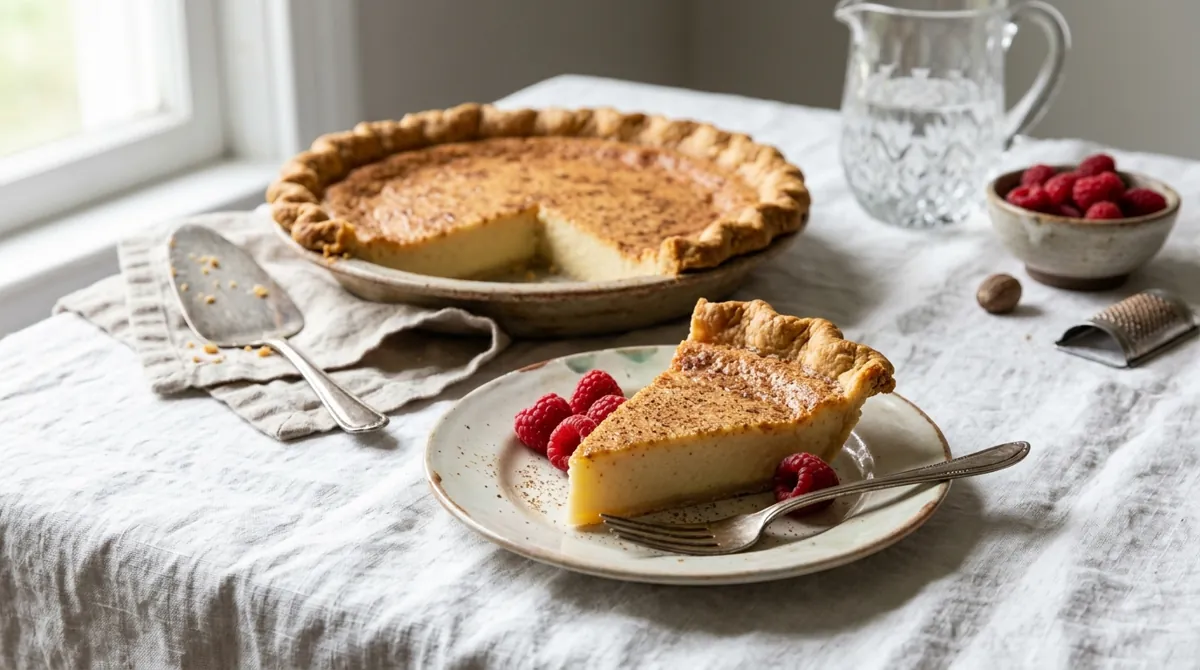
Southern Buttermilk Pie
A tangy Southern custard pie: plenty of buttermilk, eggs and yolks, a little cream, butter and vinegar, baked low to 180°F in a fully baked crust, then flashed in a hot oven for a golden top.
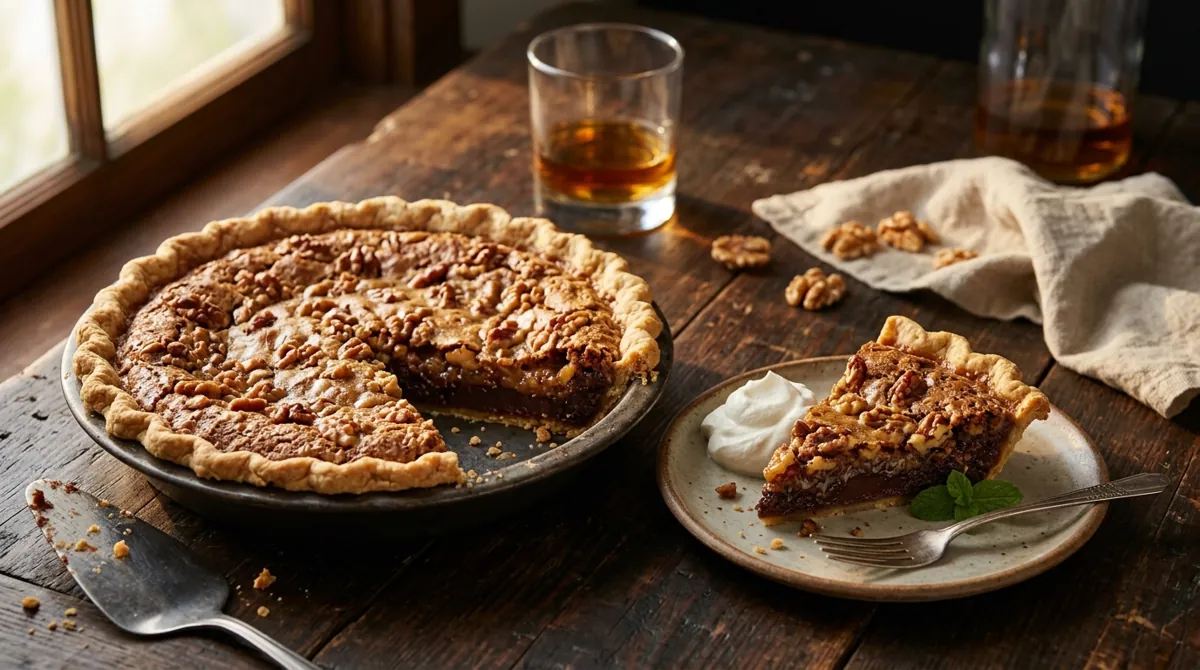
Kentucky Chocolate Walnut Pie with Bourbon
Kentucky's chocolate and walnut pie: a layer of melted bittersweet chocolate in a blind-baked crust under a brown butter, bourbon and brown sugar filling packed with toasted walnuts.
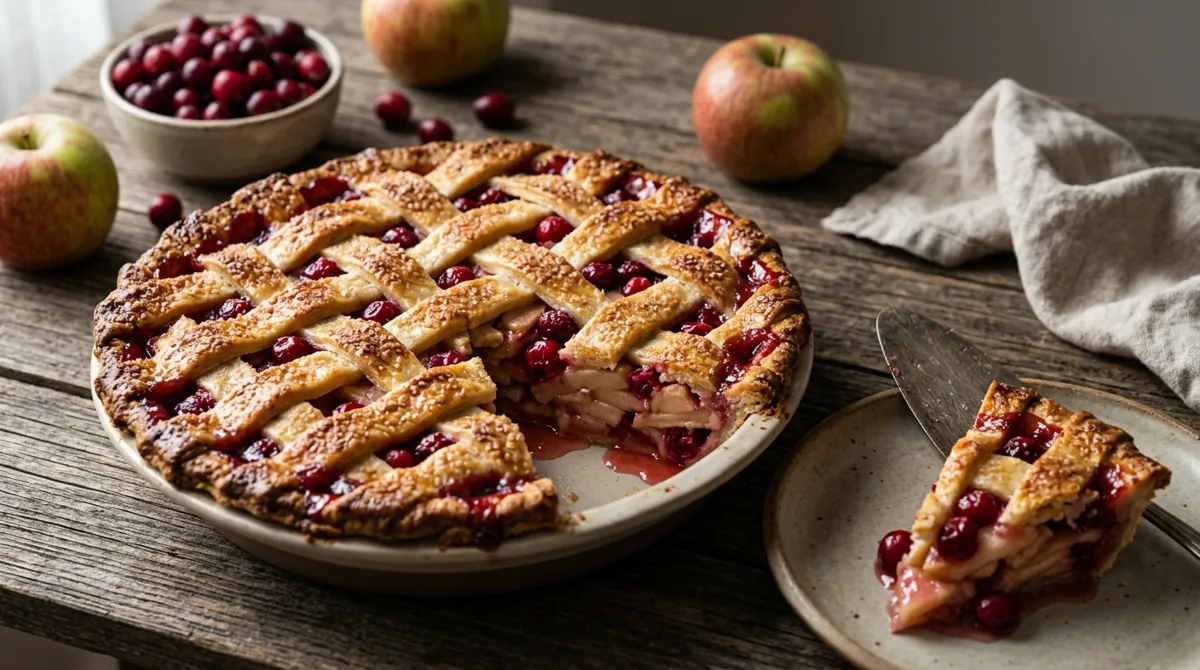
Apple Cranberry Lattice Pie
A Thanksgiving fruit pie in two layers: cinnamon apples on a bed of pecans, topped with cranberries cooked down with sugar, orange juice and zest, under a golden lattice.
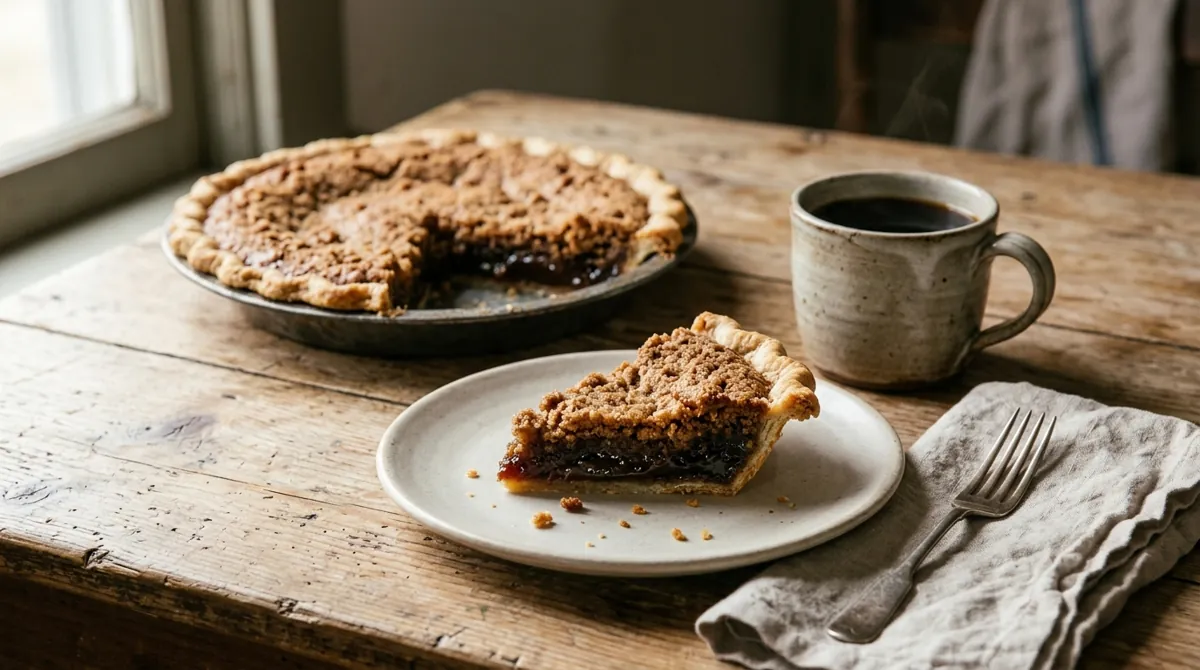
Pennsylvania Dutch Shoofly Pie
The Pennsylvania Dutch breakfast pie: a wet-bottom molasses filling lightened with baking soda and boiling water, under a spiced brown sugar crumb top, in a flaky sour cream crust.
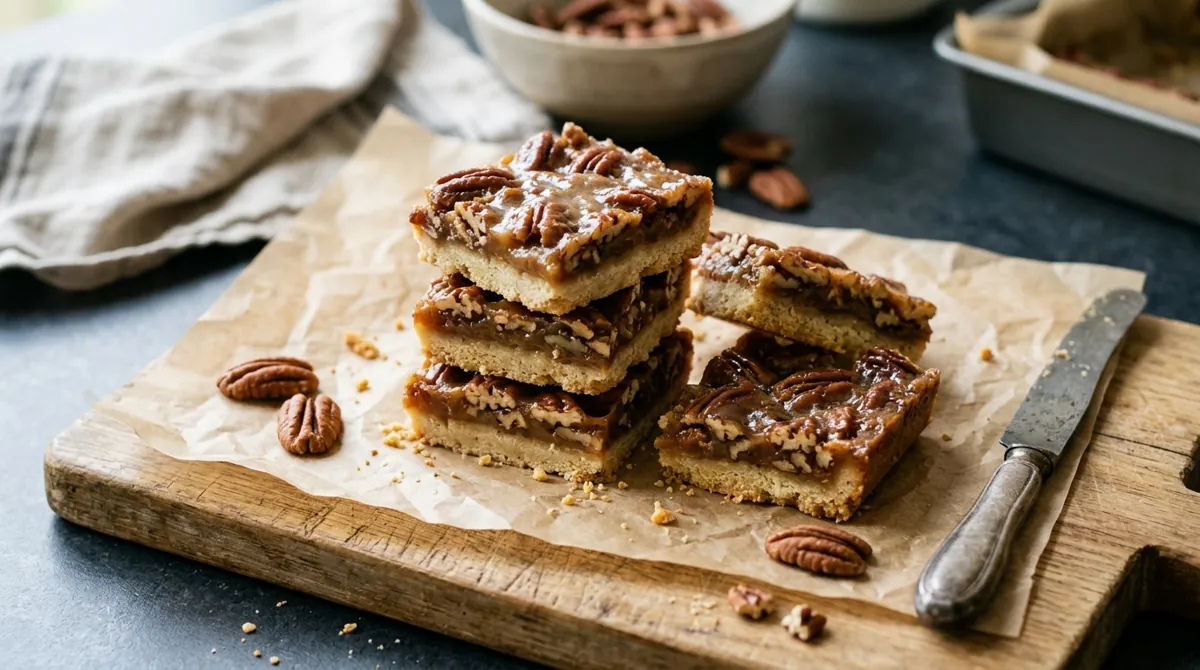
Easy Pecan Pie Bars
Pecan pie for a crowd with no rolling pin: a press-in brown sugar shortbread crust topped with chopped pecans in a quick honey, butter and brown sugar caramel, baked in one 9 by 13-inch pan.
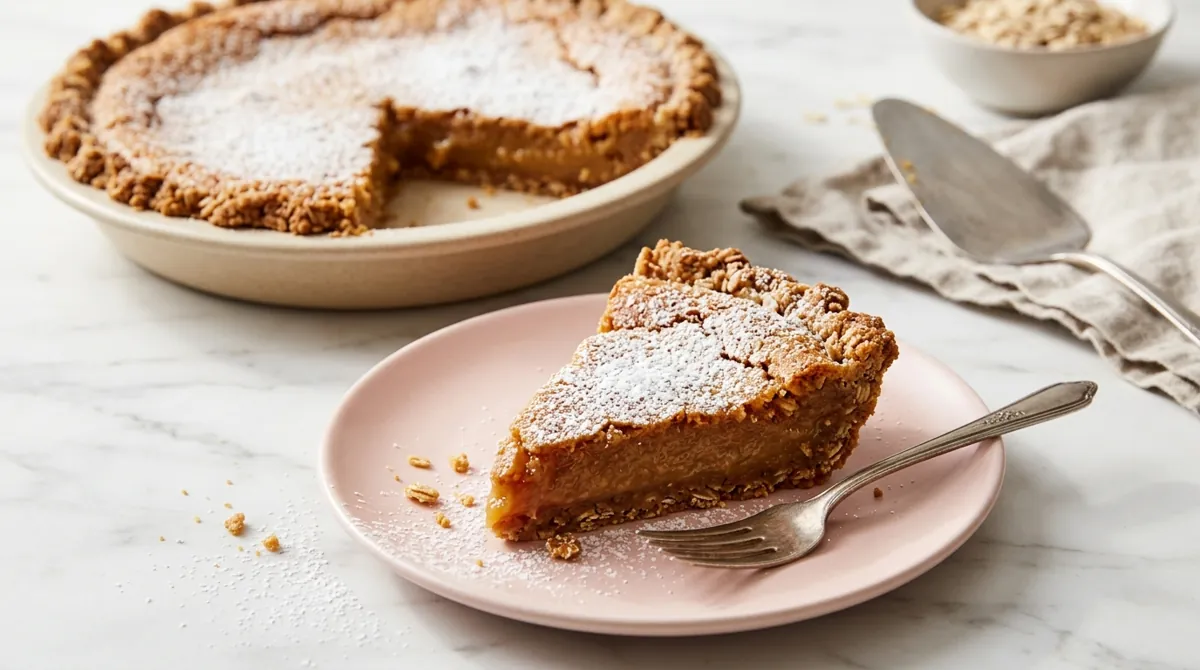
Gooey Butter Pie with Oat Cookie Crust
A dense, gooey butter and brown sugar filling thickened with egg yolks and milk powder, in a crust of crumbled homemade oat cookie, baked briefly and frozen until it slices like soft caramel. Inspired by Milk Bar's Milk Bar Pie; not official.
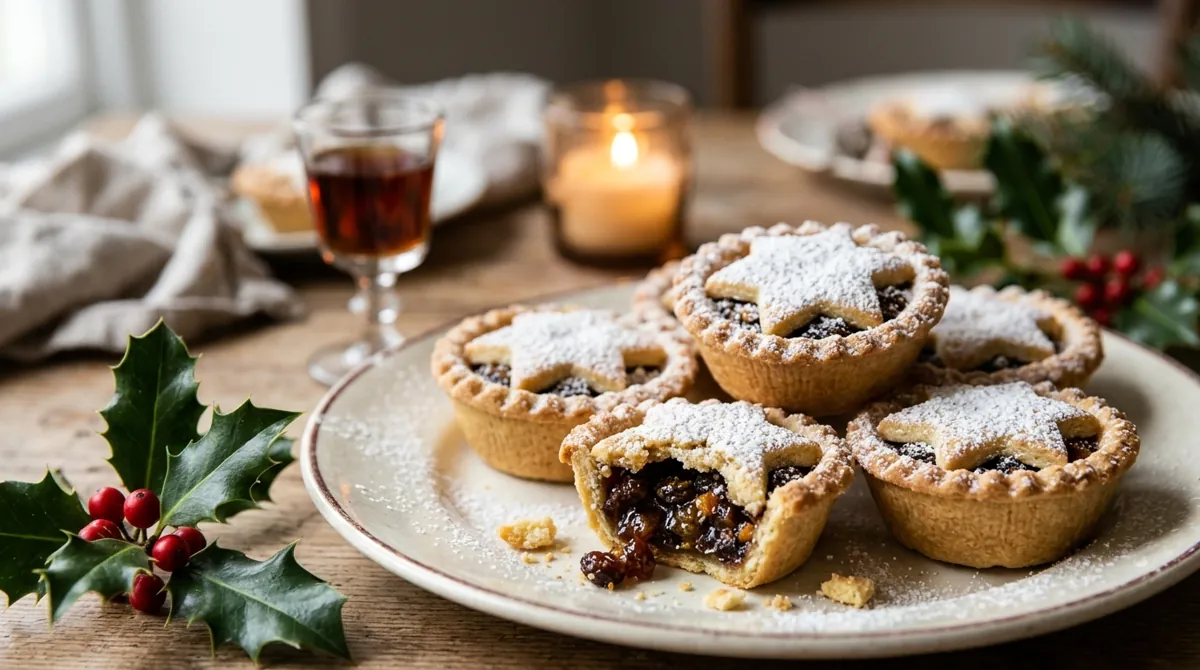
British Mince Pies
Britain's Christmas pies: small sweet shortcrust tarts filled with a week-old mincemeat of beef suet, raisins, currants, peel, grated apple, citrus, spice, brandy, rum, port and sherry, with sugared star or round lids.
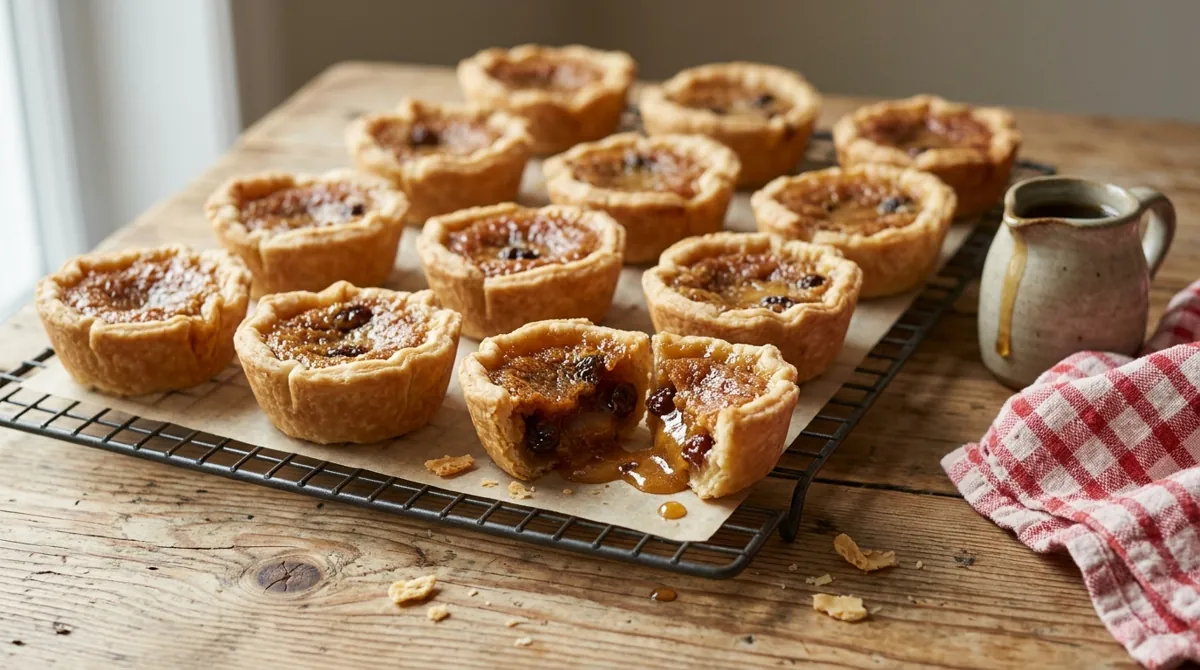
Canadian Butter Tarts
Canada's own tart: flaky little pastry cups in a muffin pan, filled with a runny, just-set mix of brown sugar, maple syrup, butter, eggs and a dash of vinegar, with raisins or without.
Quebec Tarte au Sucre (Brown Sugar Pie)
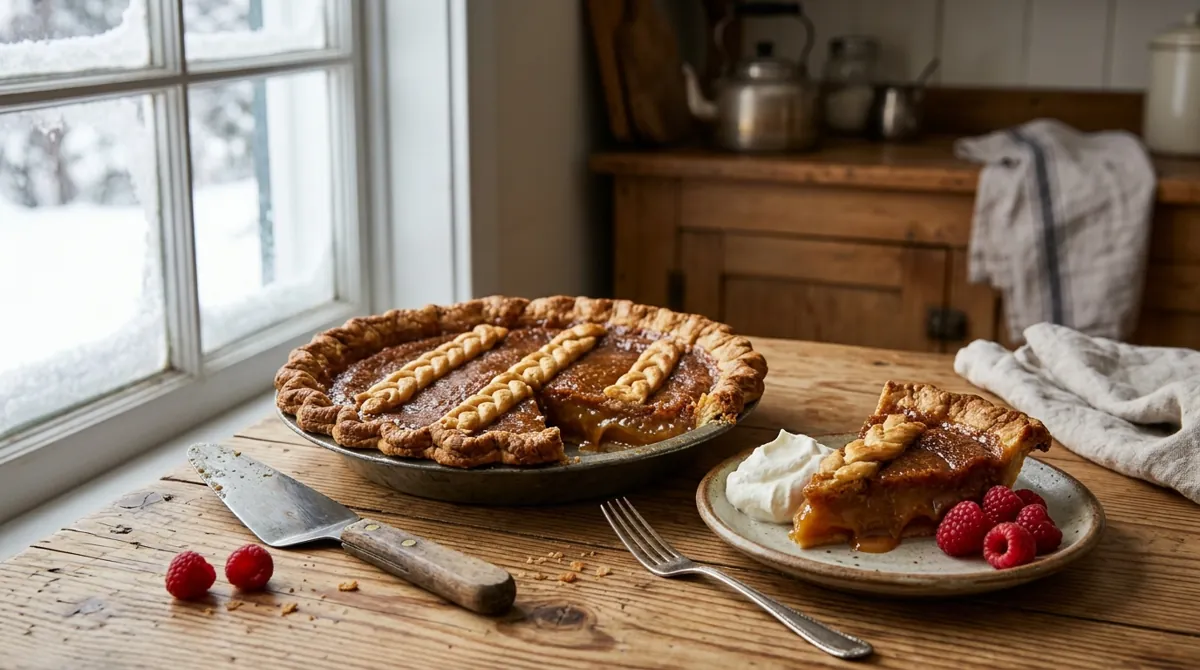
The French Canadian sugar pie: a thick, custardy filling of brown sugar, cream, butter, flour, egg and vanilla in a deep-dish crust, topped with braided or woven pastry strips and baked until the center barely jiggles.
English Treacle Tart
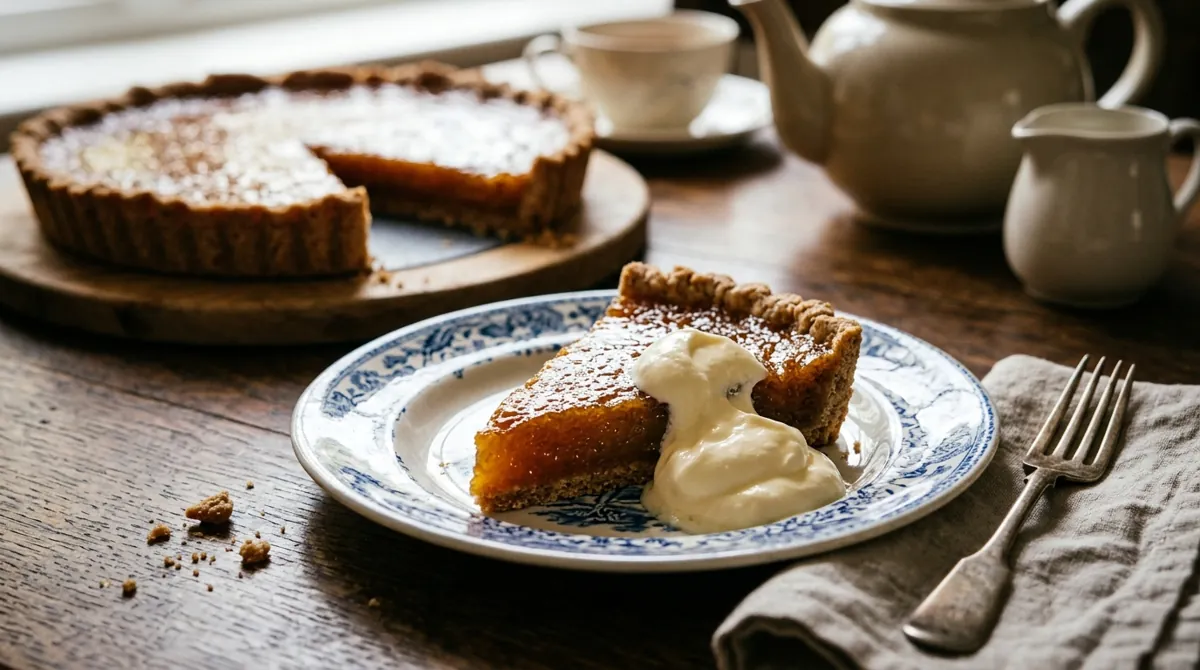
Britain's golden syrup tart: soft white breadcrumbs soaked in golden syrup, brightened with orange, stem ginger and a spoonful of black treacle, baked in a blind-baked wholemeal pastry case.
Meatballs of the World

Italian-American Meatballs
Big, tender meatballs braised for an hour in red sauce over spaghetti. The one most Americans grew up with.

Pallottine (Abruzzo Meatballs)
Tiny meatballs, smaller than a marble, tossed right through square spaghetti alla chitarra. No bread at all.

Swedish Meatballs (Köttbullar)
Small, soft meatballs browned in butter, in a cream sauce made from the same pan, with lingonberry jam on the plate.

Danish Frikadeller
Pork meatballs shaped with a spoon and fried slowly in butter, crusty outside and soft in the middle.

Königsberger Klopse
German meatballs that are never fried: poached, then served in a creamy white sauce with capers.

Spanish Albóndigas in Almond Saffron Sauce
The tapas bar classic: small meatballs in a golden sauce thickened with fried almonds and bread.

Mexican Albóndigas with Chipotle and Mint
Soft meatballs with rice and fresh mint inside, simmered in a smoky tomato and chipotle broth.

Izgara Köfte (Turkish Grilled Meatballs)
Small, flat meatballs kneaded hard, rested cold, and charred on a hot grill pan.

Lion's Head Meatballs
Big, soft pork meatballs, stirred into a sticky paste, fried to set, then braised in a savory sauce.

Chicken Tsukune
Japan's chicken meatball: kneaded sticky, grilled on skewers, glazed with sweet soy tare, dipped in egg yolk.