
Jamaican Jerk Wings
Wings marinated in a blended paste of scallions, Scotch bonnet, thyme, garlic, allspice and soy, grilled slowly on the cool side, then brushed with fresh paste and charred over the fire.
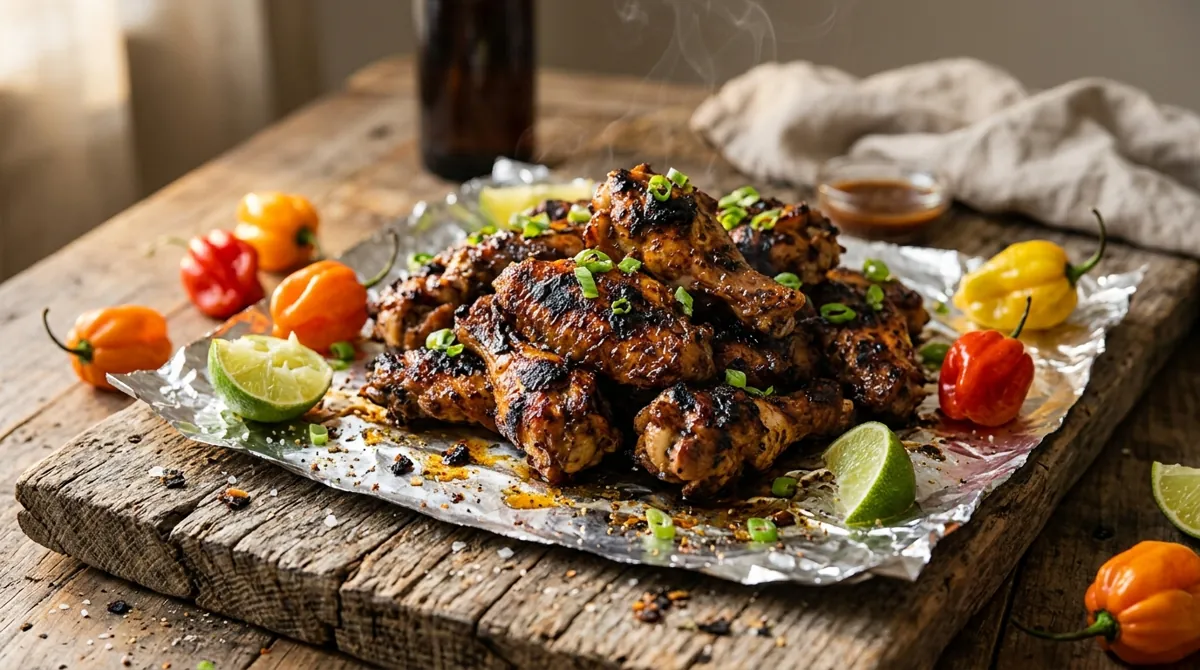
Wikipedia traces jerk to the Taíno, whose way of cooking meat on a wooden frame over fire, seasoned with native peppers and pimento (allspice), was recorded by Gonzalo Fernández de Oviedo y Valdés in 1516. After the English invasion of 1655, enslaved Africans who escaped or were freed became some of the first Maroons; they mixed with the remaining Taíno, hunted wild hogs and jerked them, and the Maroons are believed to have primarily developed jerk sauce (Wikipedia). The word "jerk" is said to come from "charqui", a Spanish word of Quechua origin for dried meat. Jerk seasoning is mainly allspice and Scotch bonnet peppers, traditionally cooked slowly over pimento wood; oil drums were turned into portable jerk grills in the 1960s, and Jamaica registered "Jamaica Jerk" as a geographical indication in September 2015 (Wikipedia). Wings are a modern cut for an old method.
Why it works the kitchen science
Cool side first
Cooking covered away from the flames lets the wings render and cook through while the paste clings, instead of sliding off and burning over direct heat (ATK).
A fresh coat at the end
Brushing on reserved marinade just before the sear adds a bright, raw-chile layer of jerk flavor over the cooked one (ATK).
Step by step
- Step 1
Wearing gloves for the chiles, blend all the marinade ingredients about 30 seconds, scraping down the jar, until smooth. Set aside 1/4 cup in the refrigerator.
- Step 2
Put the wings and the rest of the marinade in a 1-gallon zipper-lock bag, press out the air, seal and turn to coat. Refrigerate at least 1 hour and up to 24 hours, turning now and then.
- Step 3
Set up a two-zone fire. Charcoal: light a large chimney (about 7 quarts) of briquettes and, when the top coals are partly covered in ash, spread them over half the grill; cover and heat 5 minutes. Gas: heat all burners on high 15 minutes, then leave the primary burner on high, turn the others off and hold the grill at 450°F to 500°F.
- Step 4
Clean and oil the grate. Lay the wings skin side up on the cooler side, cover, and cook 20 to 25 minutes, turning once, until the fat has rendered and the thickest drumette reads 165°F.
- Step 5
Brush the wings with half the reserved marinade, move them to the hot side, brush with the rest and grill 1 to 2 minutes per side, until lightly charred. Watch for flare-ups and move pieces as needed.
- Step 6
Rest the wings 5 minutes and serve with lime wedges.
Jamaican Jerk Wings
Serves 4 (as a main; 6 to 8 as a snack) · about 24 wing pieces · 50 min total
Jerk marinade
- 4 scallions
- 1/4 cup vegetable oil
- 1/4 cup soy sauce
- 2 tbsp cider vinegar
- 2 tbsp packed brown sugar
- 1 to 2 Scotch bonnet or habanero chiles, stemmed
- 10 sprigs fresh thyme
- 5 cloves garlic, peeled
- 2 1/2 tsp ground allspice
- 1 1/2 tsp table salt
- 1/2 tsp ground cinnamon
- 1/2 tsp ground ginger
Wings
- 3 lb chicken wings, split into drumettes and flats, tips removed
To serve
- Lime wedges
Method
- Wearing gloves for the chiles, blend all the marinade ingredients about 30 seconds, scraping down the jar, until smooth. Set aside 1/4 cup in the refrigerator.
- Put the wings and the rest of the marinade in a 1-gallon zipper-lock bag, press out the air, seal and turn to coat. Refrigerate at least 1 hour and up to 24 hours, turning now and then.
- Set up a two-zone fire. Charcoal: light a large chimney (about 7 quarts) of briquettes and, when the top coals are partly covered in ash, spread them over half the grill; cover and heat 5 minutes. Gas: heat all burners on high 15 minutes, then leave the primary burner on high, turn the others off and hold the grill at 450°F to 500°F.
- Clean and oil the grate. Lay the wings skin side up on the cooler side, cover, and cook 20 to 25 minutes, turning once, until the fat has rendered and the thickest drumette reads 165°F.
- Brush the wings with half the reserved marinade, move them to the hot side, brush with the rest and grill 1 to 2 minutes per side, until lightly charred. Watch for flare-ups and move pieces as needed.
- Rest the wings 5 minutes and serve with lime wedges.
Adapted from America's Test Kitchen, "Grilled Jerk Chicken" by Cecelia Jenkins (June 17, 2019). The marinade and grill setup are ATK's as written for 3 lb of chicken; we use 3 lb of split wings instead of bone-in pieces, so the grilling times are ours, and we cook to 165°F (USDA FSIS) instead of ATK's 160°F for breasts. The oven method in Tips is ours. America's Test Kitchen. Ingredient list follows the source; the method is in our own words.
All sources (2)
Tips
- Heat control: remove the seeds and ribs from the chiles, or use jalapeños, for milder wings (ATK).
- Thyme stems can go into the blender whole (ATK).
- No grill? Our oven method: bake the marinated wings on a rack over a foil-lined sheet at 425°F for 35 to 40 minutes, then brush with the reserved marinade and broil 2 to 3 minutes per side.
- Real jerk is smoked; ATK's testers still liked the charred grilled version. A handful of soaked wood chips on the coals adds some smoke (our suggestion).
The rules people argue about
What the sources agree on, what they don't, and what is just a good story.
- The Maroons invented jerk. Disputed: Wikipedia says the Taíno jerked meat first and the Maroons are "believed to have primarily developed" jerk sauce.
- Jerk must be cooked over pimento wood. Folklore as a rule: pimento wood is the tradition (Wikipedia), but grills and oil-drum pits are how most jerk is cooked today.
- Boston Bay is the birthplace of jerk. Folklore: a common claim for the Portland parish beach; we found it only in search summaries.
- Habanero and Scotch bonnet are the same. Disputed: ATK's 2011 "Easy Jerk Chicken" treats them as interchangeable; ATK's 2019 recipe calls Scotch bonnets the more traditional choice.
- "Jamaica Jerk" is protected. Documented (Wikipedia: registered as a geographical indication in September 2015).
Every other wing
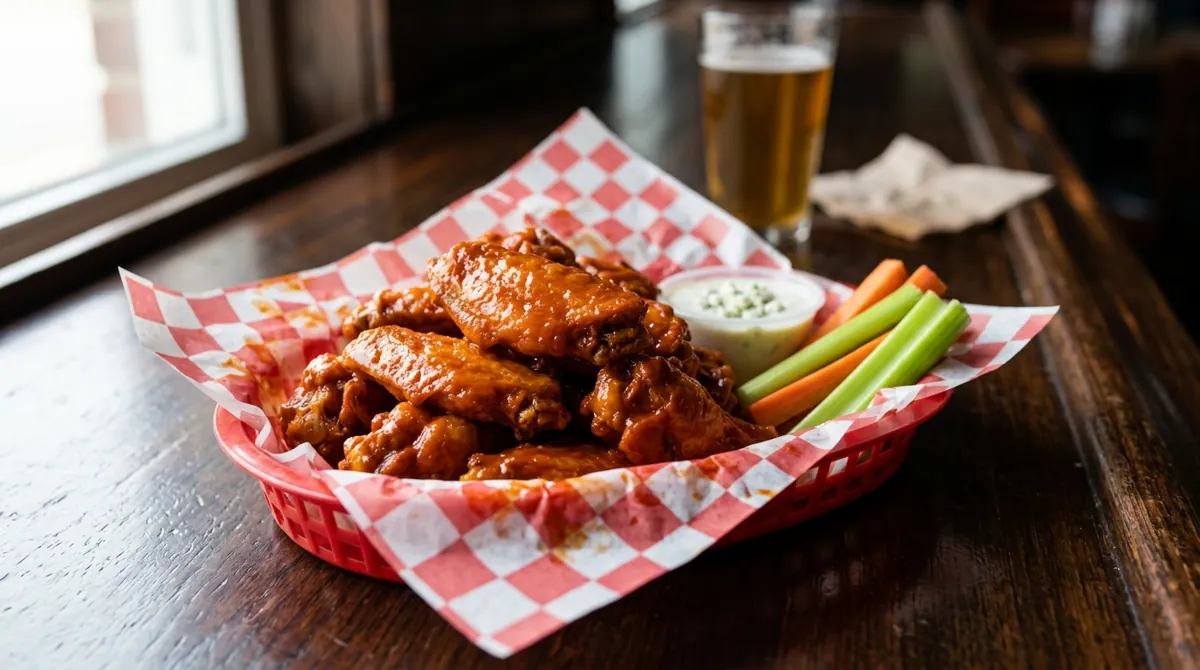
Buffalo Wings (Anchor Bar Style)
Unbreaded wings fried crisp and tossed in a buttery cayenne pepper sauce, served with celery, carrots and a chunky blue cheese dressing, the way Buffalo's Anchor Bar made them famous.
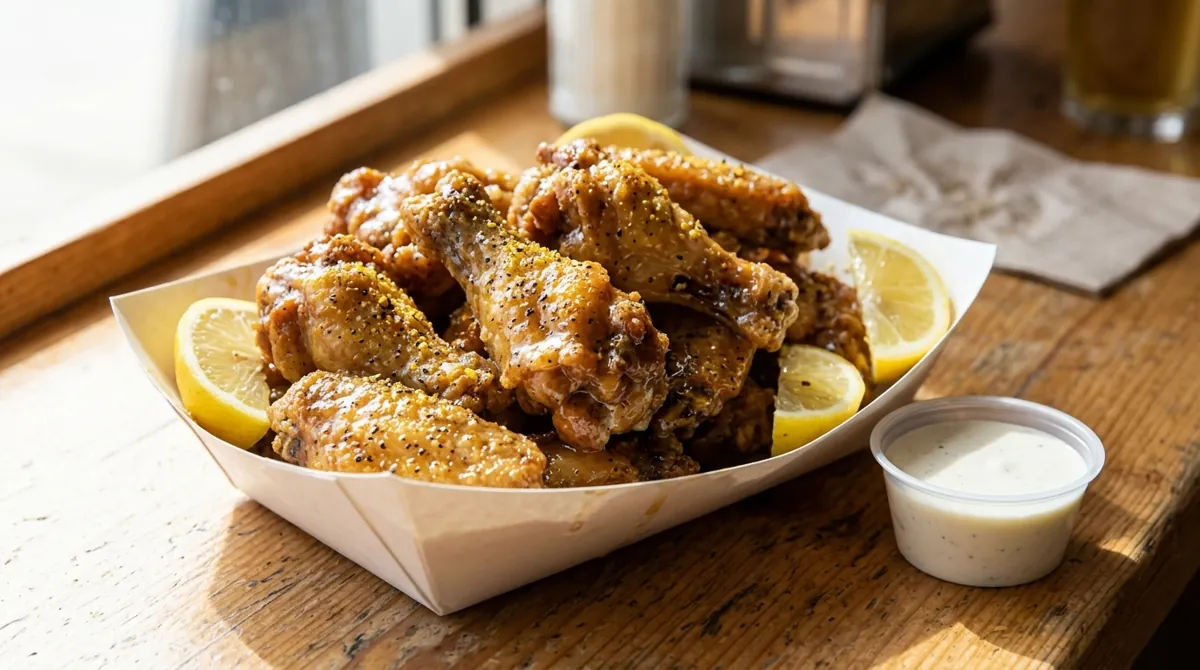
Atlanta Lemon Pepper Wet Wings
Crisp fried wings tossed in melted butter with a little hot sauce, lemon and honey, then showered with a homemade lemon pepper seasoning: Atlanta's favorite way to order wings.
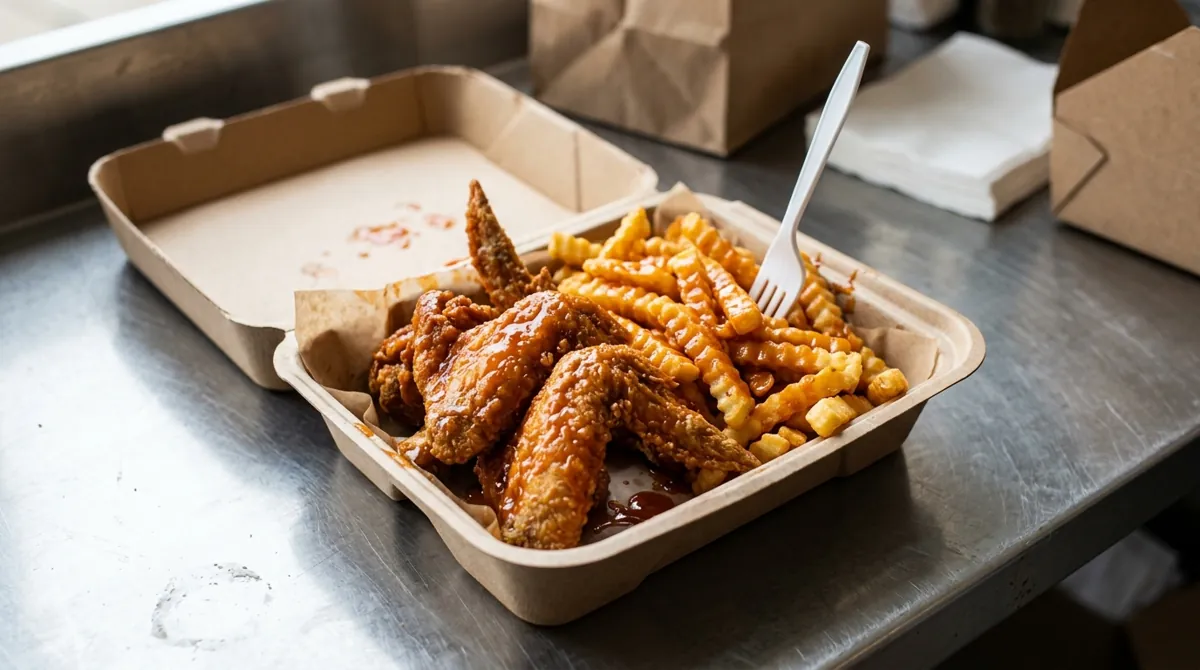
DC Carryout Wings with Mambo Sauce
Whole wings dredged in seasoned flour and fried hard, then drenched in mambo sauce, the sweet, tangy, red carryout sauce Washington calls its own.
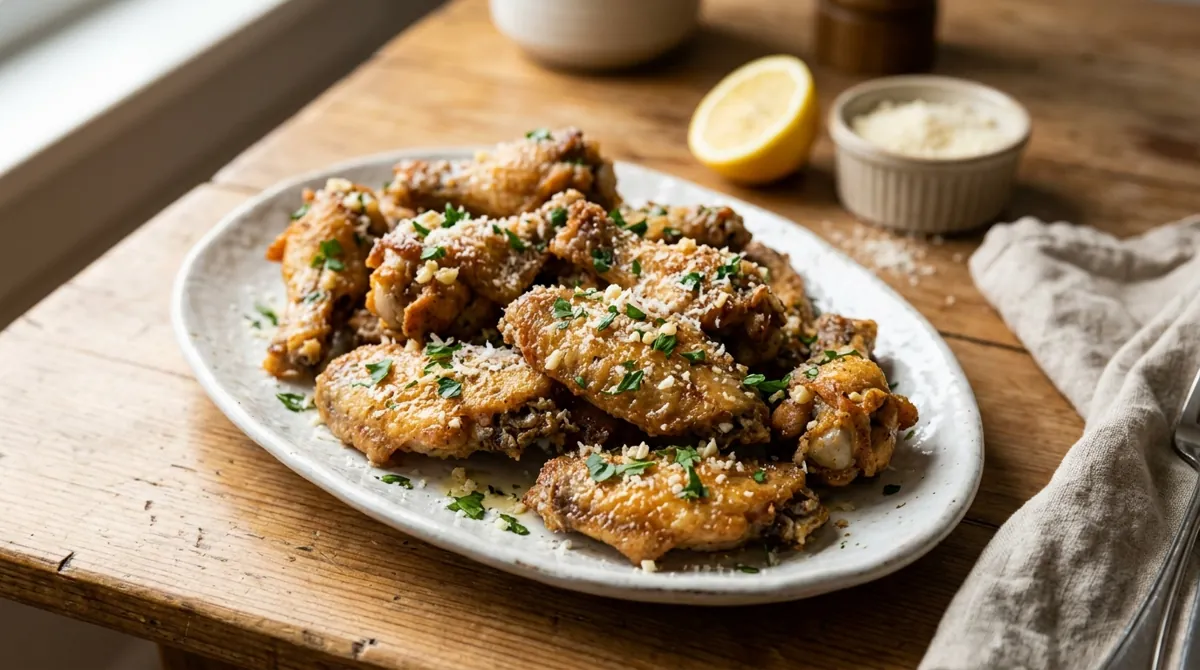
Garlic Parmesan Wings
Oven-baked wings with crackly skin, tossed in melted butter with fresh garlic, Parmesan and parsley and run under the broiler: the no-heat wing found on many American wing menus.
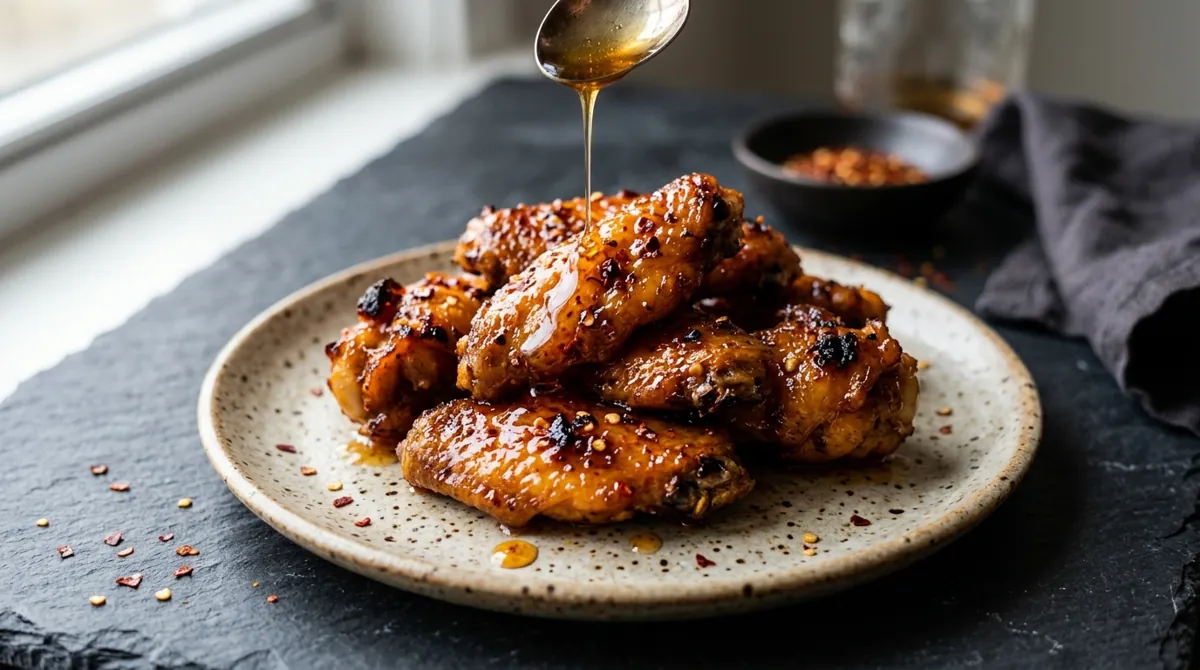
Hot Honey Wings
Wings in a light seasoned-flour coat, fried crisp and tossed in melted butter, chili-infused honey, cider vinegar and red pepper flakes: sweet first, heat second.
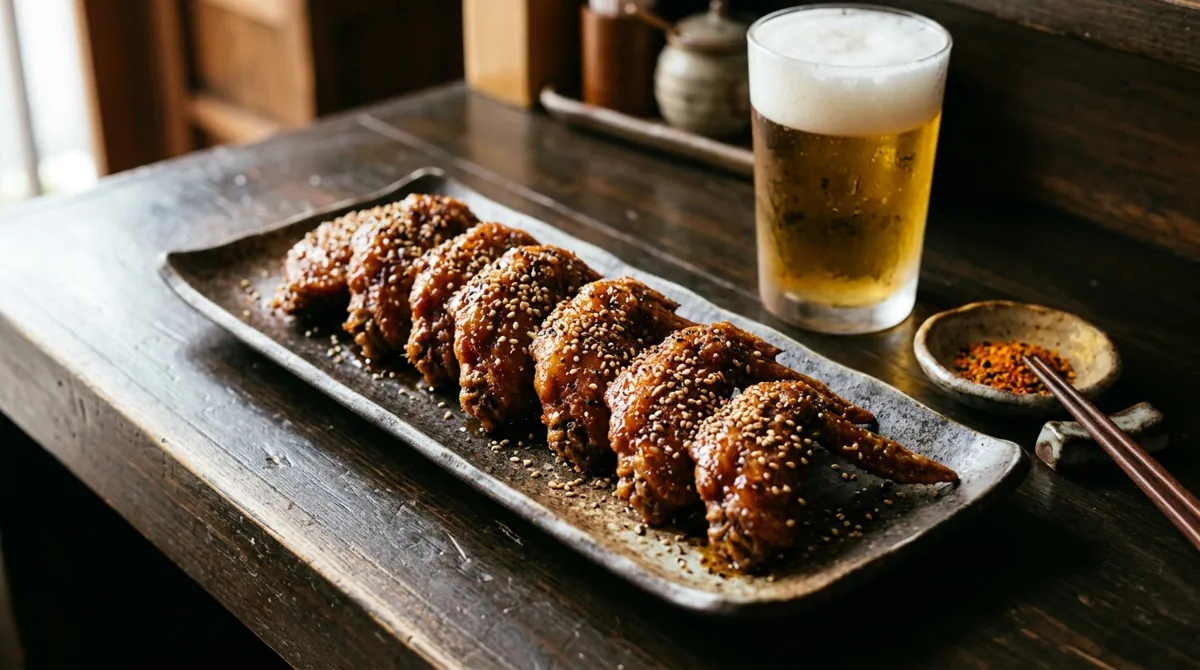
Nagoya Tebasaki (Sweet Soy Chicken Wings)
Wings dusted in potato starch, fried twice, coated in a sweet soy, mirin, garlic and ginger glaze and finished with sesame seeds and pepper, the bar snack Nagoya is famous for.
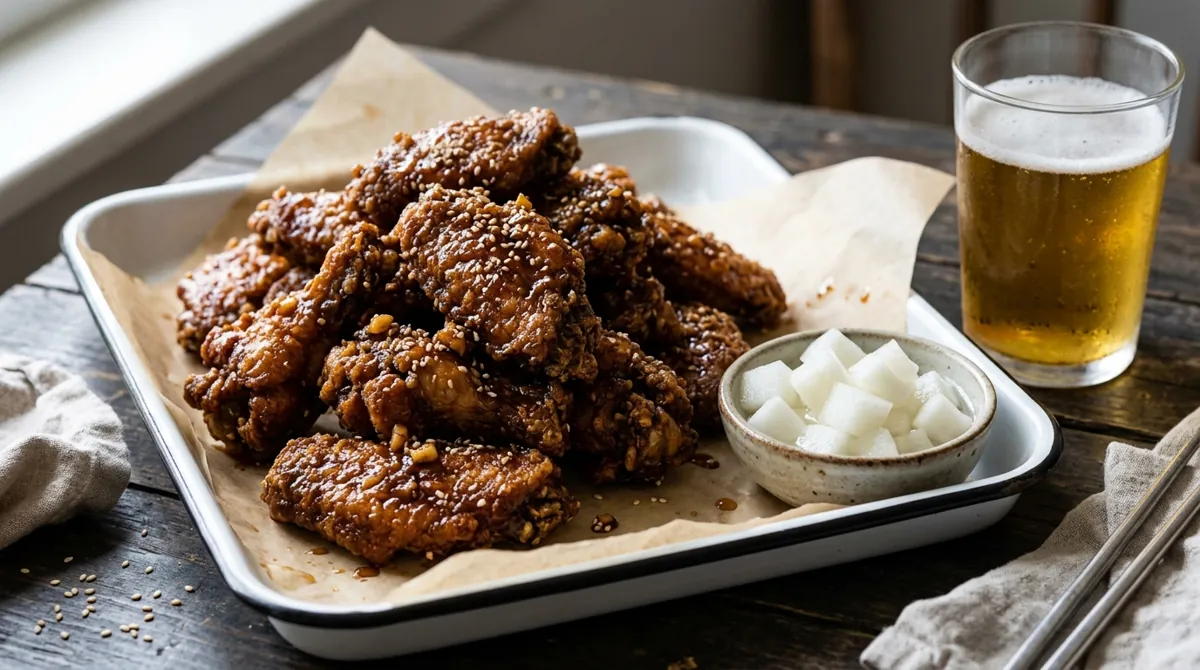
Korean Soy Garlic Wings (Double Fried)
Wings dusted in cornstarch, dipped in a thin, crackly batter and fried twice, then brushed with a glossy glaze of soy sauce, garlic, ginger, brown sugar and honey: Korean fried chicken that isn't red.
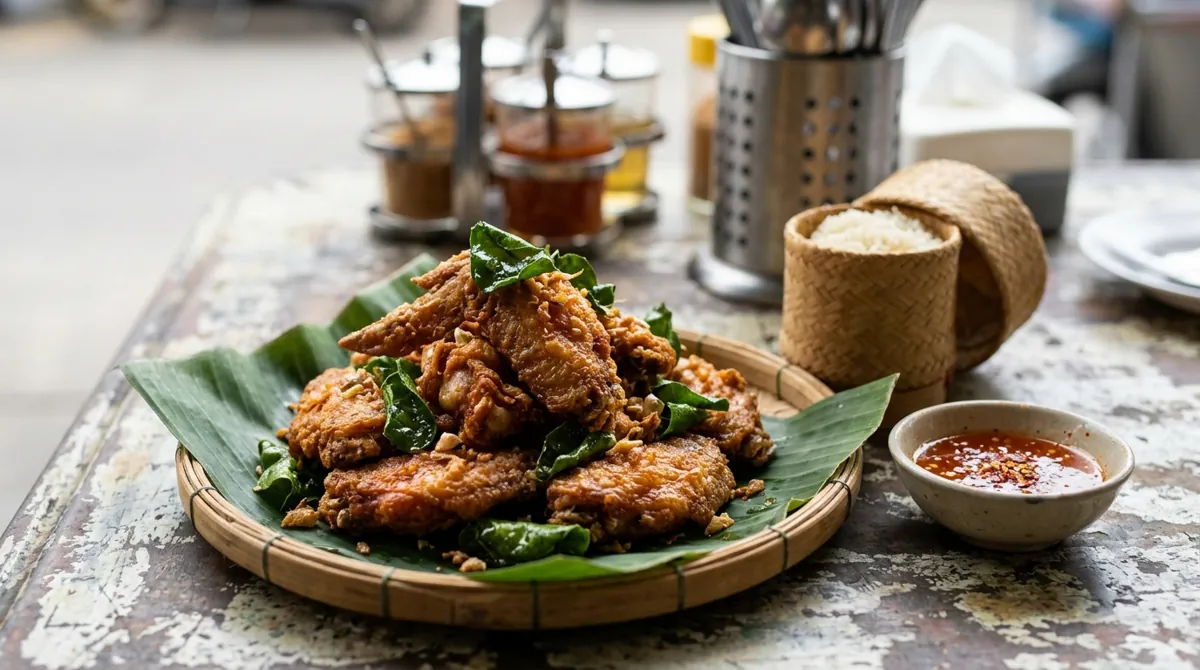
Thai Fried Chicken Wings (Peek Gai Tod)
Wings rubbed with a pounded paste of garlic, coriander root, white pepper and soy sauce, dusted with flour, fried golden and served with crisp fried lime leaves and sweet chili sauce.
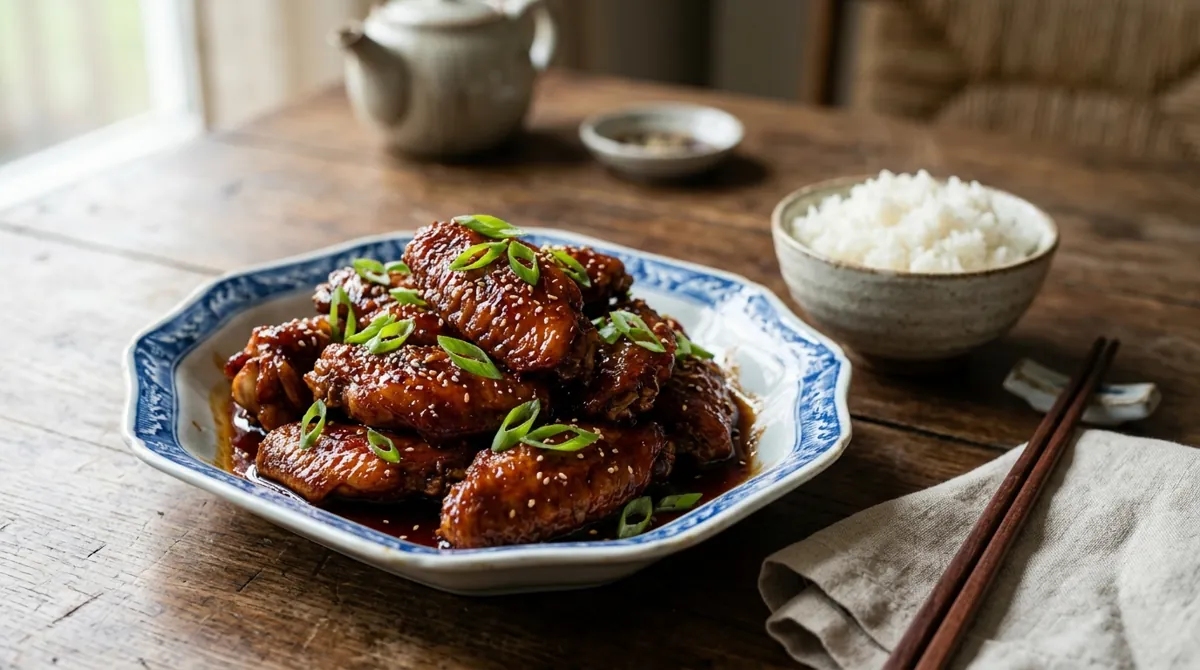
Chinese Coca-Cola Chicken Wings (Ke Le Ji Chi)
Wings browned with ginger in a skillet, then simmered in cola, soy sauce and Shaoxing wine until the liquid cooks down to a sticky, shiny glaze: a Chinese home-cooking classic.
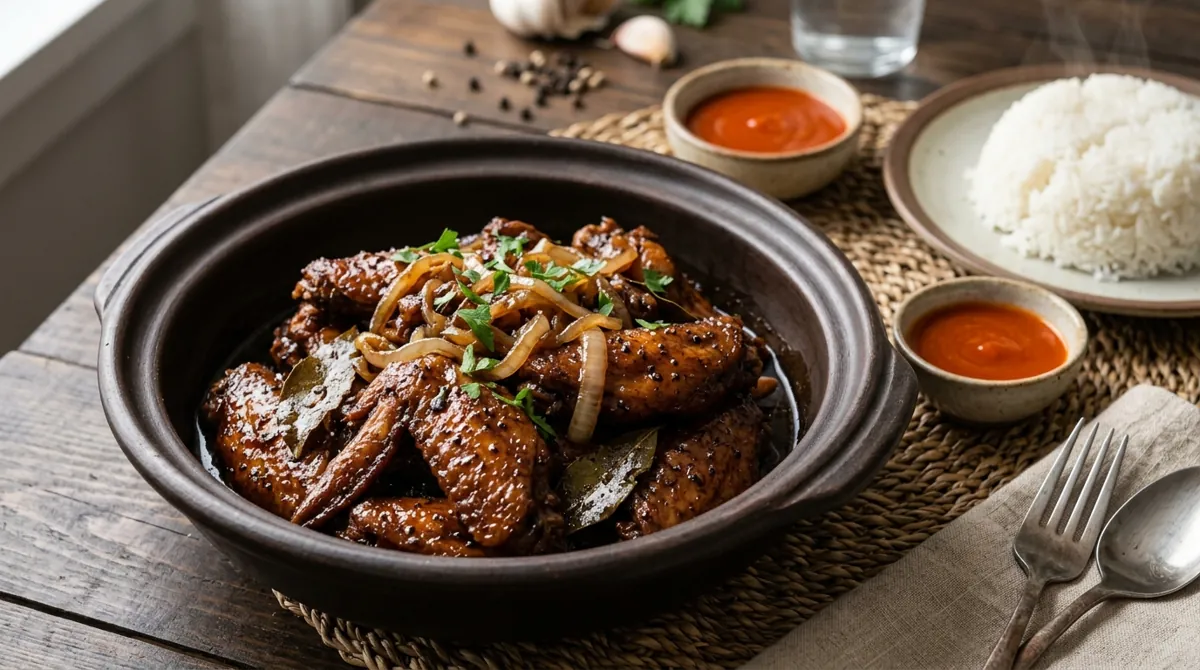
Filipino Adobo Chicken Wings
Wings marinated and simmered in vinegar, soy sauce, garlic, black pepper and bay leaves, then tossed in the cooking liquid boiled down to a glaze with onions and served with sweet homemade banana ketchup.
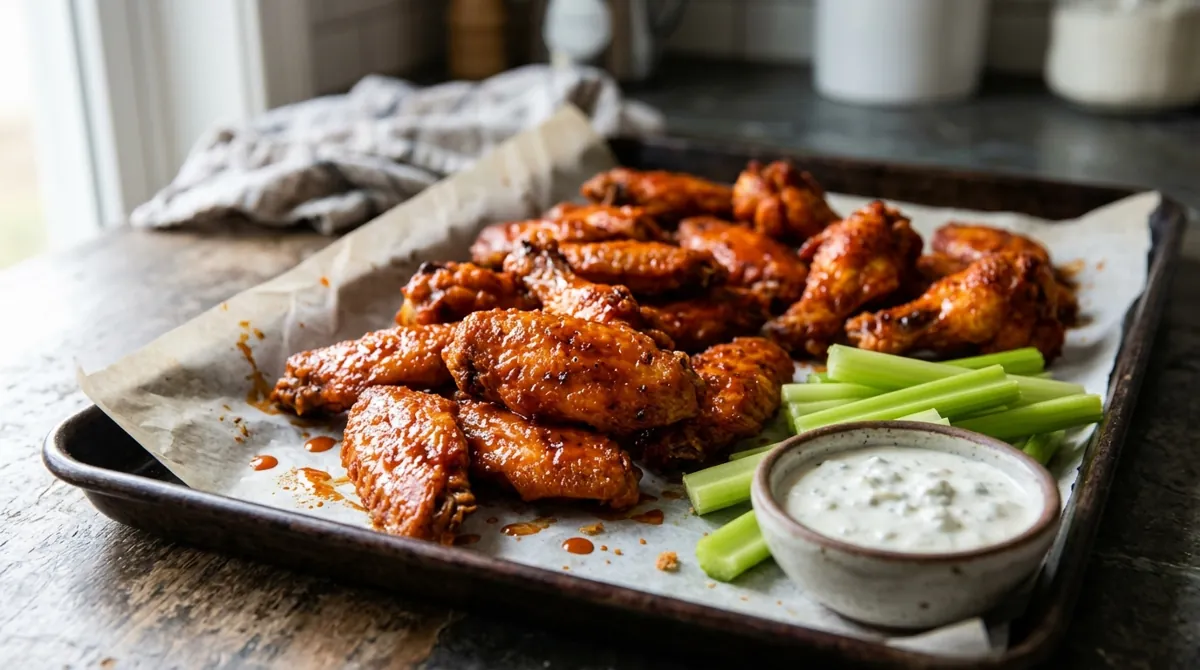
Crispy Baked Buffalo Wings (Baking Powder Method)
No fryer and no fuss: wings tossed with baking powder and salt, roasted on a rack in a very hot oven, broiled for extra crunch and tossed in a quick hot sauce, butter and molasses sauce.
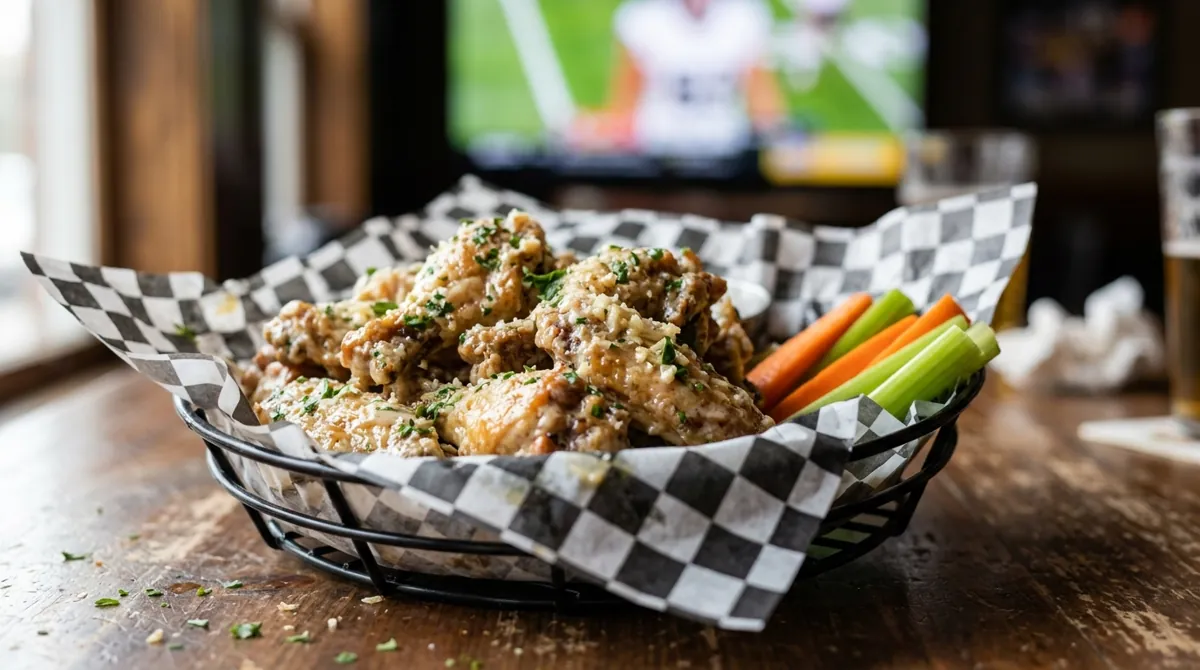
Creamy Parmesan Garlic Wings, Inspired by Buffalo Wild Wings
Inspired by, not official: plain fried wings tossed in a creamy sauce of roasted garlic, mayonnaise, Parmesan, lemon and dried herbs, in the style of the sports-bar chain's Parmesan Garlic flavor.
Meatballs of the World

Italian-American Meatballs
Big, tender meatballs braised for an hour in red sauce over spaghetti. The one most Americans grew up with.

Pallottine (Abruzzo Meatballs)
Tiny meatballs, smaller than a marble, tossed right through square spaghetti alla chitarra. No bread at all.

Swedish Meatballs (Köttbullar)
Small, soft meatballs browned in butter, in a cream sauce made from the same pan, with lingonberry jam on the plate.

Danish Frikadeller
Pork meatballs shaped with a spoon and fried slowly in butter, crusty outside and soft in the middle.

Königsberger Klopse
German meatballs that are never fried: poached, then served in a creamy white sauce with capers.

Spanish Albóndigas in Almond Saffron Sauce
The tapas bar classic: small meatballs in a golden sauce thickened with fried almonds and bread.

Mexican Albóndigas with Chipotle and Mint
Soft meatballs with rice and fresh mint inside, simmered in a smoky tomato and chipotle broth.

Izgara Köfte (Turkish Grilled Meatballs)
Small, flat meatballs kneaded hard, rested cold, and charred on a hot grill pan.

Lion's Head Meatballs
Big, soft pork meatballs, stirred into a sticky paste, fried to set, then braised in a savory sauce.

Chicken Tsukune
Japan's chicken meatball: kneaded sticky, grilled on skewers, glazed with sweet soy tare, dipped in egg yolk.