
Nagoya Tebasaki (Sweet Soy Chicken Wings)
Wings dusted in potato starch, fried twice, coated in a sweet soy, mirin, garlic and ginger glaze and finished with sesame seeds and pepper, the bar snack Nagoya is famous for.
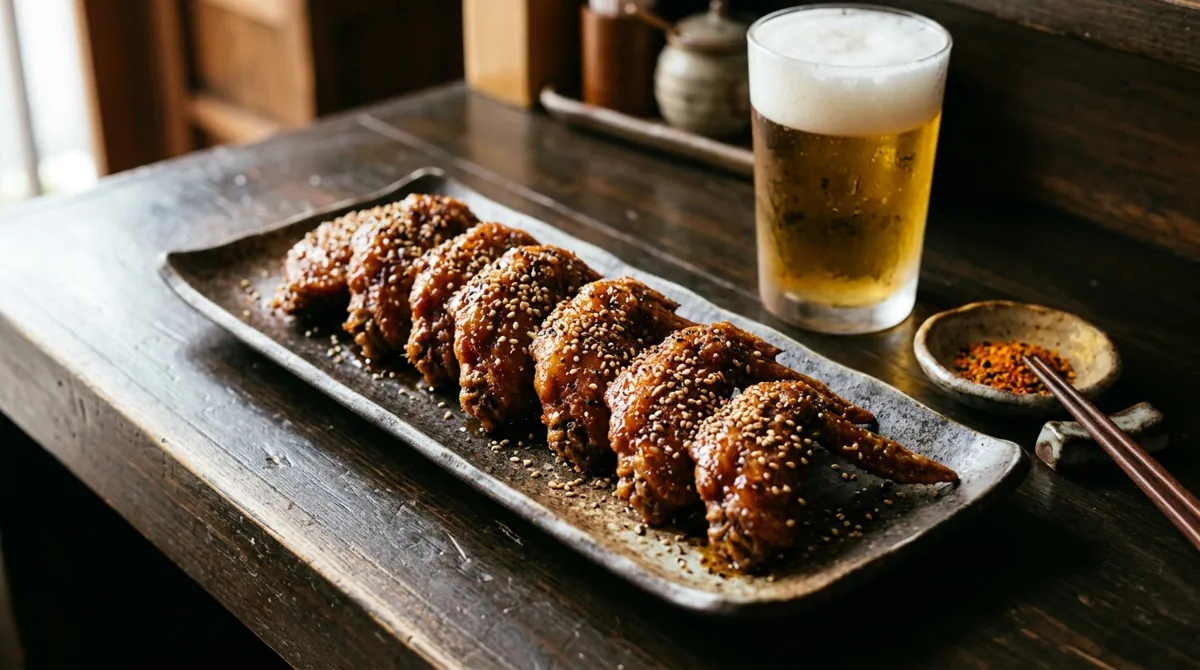
Tebasaki, chicken wings in a sweet sauce with sesame, is one of the dishes of Nagoya meshi, the regional cooking of Nagoya and the surrounding Chūkyō area (Wikipedia:). Just One Cookbook describes Nagoya-style wings as starch-dredged, fried twice and coated in sweet soy sauce, and credits the Nagoya restaurant Furaibo with inventing them. Japanese food site macaro-ni dates Furaibo to 1963 (Showa 38) and counts more than 80 shops, some overseas (October 5, 2018:). GIGAZINE calls Furaibo the first restaurant in Japan to come up with fried tebasaki, and describes its other house dish, "Tarzan-yaki", made from half a chicken (April 24, 2010:). Its big rival is Sekai no Yamachan, which says it was founded on June 14, 1980, in a 13-seat shop in Shinsakae, Nagoya, and created its "maboroshi no tebasaki" (phantom chicken wings) in 1995 to draw attention to wings, which were not yet popular. Food writers in our searches describe Furaibo's wings as sweeter and Yamachan's as peppery and spicy.
Why it works the kitchen science
Two fries
The low first fry cooks the meat through gently; the hotter second fry drives off moisture so the starch crust turns glassy and stays crisp under the glaze.
A reduced glaze
Simmering the mirin, soy and sugar to a syrup means a thin coat sticks to every piece instead of soaking the crust.
Step by step
- Step 1
Make the sauce: bring all the sauce ingredients except the salt to a boil in a small saucepan, then lower the heat and simmer 15 to 20 minutes, until reduced and syrupy. Taste, add the salt if it needs it, and set aside; it thickens as it cools.
- Step 2
Pat the wings very dry. Dredge them in the starch and shake off the excess.
- Step 3
Heat the oil in a heavy pot over medium heat to 320°F. Fry the wings in batches 8 to 10 minutes, until pale and about 80% cooked. Drain on a wire rack 3 to 5 minutes.
- Step 4
Raise the oil to 350°F. Fry the wings again in batches 3 to 5 minutes, until crisp and golden brown and the thickest drumette reads 165°F.
- Step 5
While each batch is hot, toss it with a few spoonfuls of sauce, or plate the wings and spoon the sauce over.
- Step 6
Sprinkle with sesame seeds and white pepper or shichimi and serve right away.
Nagoya Tebasaki (Sweet Soy Chicken Wings)
Serves 3 (as a main; 6 to 8 as a snack) · about 16 wing pieces; the sauce batch makes extra (it keeps about a month) · 1 hr total
Sauce (makes extra)
- 1 cup mirin
- 1/2 cup soy sauce
- 3 tbsp sake
- 1/3 cup sugar
- 1/4 tsp Diamond Crystal kosher salt (add near the end, see Tips)
- 1/2-inch knob fresh ginger, sliced
- 2 cloves garlic, crushed
Wings
- 2 lb chicken wings, split into flats and drumettes, tips removed
- 1/2 cup potato starch or cornstarch
- Neutral oil, about 2 inches deep (about 6 cups), for frying
To finish
- 1 tbsp toasted white sesame seeds
- 1/2 tsp white pepper or shichimi togarashi
Method
- Make the sauce: bring all the sauce ingredients except the salt to a boil in a small saucepan, then lower the heat and simmer 15 to 20 minutes, until reduced and syrupy. Taste, add the salt if it needs it, and set aside; it thickens as it cools.
- Pat the wings very dry. Dredge them in the starch and shake off the excess.
- Heat the oil in a heavy pot over medium heat to 320°F. Fry the wings in batches 8 to 10 minutes, until pale and about 80% cooked. Drain on a wire rack 3 to 5 minutes.
- Raise the oil to 350°F. Fry the wings again in batches 3 to 5 minutes, until crisp and golden brown and the thickest drumette reads 165°F.
- While each batch is hot, toss it with a few spoonfuls of sauce, or plate the wings and spoon the sauce over.
- Sprinkle with sesame seeds and white pepper or shichimi and serve right away.
Adapted from Just One Cookbook, "Nagoya-Style Fried Chicken Wings" by Namiko Hirasawa Chen (updated February 5, 2025). JOC fries 1 lb of wings for 4 snack servings and says its sauce covers up to 2 lb; we use 2 lb and double the starch, and keep the sauce batch as written. The 165°F check is from USDA FSIS. Furaibo's and Yamachan's sauces are secret; this is a home version. Just One Cookbook. Ingredient list follows the source; the method is in our own words.
Tips
- A JOC reader found the sauce too salty with the salt added at the start; add it at the end, only if needed.
- Leftover sauce keeps about a month in the refrigerator and makes a good marinade for beef or chicken (JOC readers).
- For Yamachan-style heat, finish with plenty of coarsely ground black pepper.
- Tebasaki are eaten as a bar snack with beer; Furaibo serves them with eating instructions at the table (search summaries only).
The rules people argue about
What the sources agree on, what they don't, and what is just a good story.
- Furaibo invented tebasaki. Disputed: Just One Cookbook, GIGAZINE and many Japanese food sites credit it, but most say "it is said" rather than citing a record; Yamachan, not Furaibo, is often the better-known name.
- Furaibo opened in 1963. Documented as the restaurant's own founding year, repeated by macaro-ni; we did not see a primary record.
- Wings were only used for soup before tebasaki. Folklore: Japanese food sites in our searches tell it as the founder's story; not confirmed.
- Yamachan's founding year. Disputed: its own site says June 14, 1980; search summaries of other guides give 1981 or 1965.
- Tebasaki must be fried twice. Folklore: JOC fries twice; it is a technique, not a law.
Every other wing
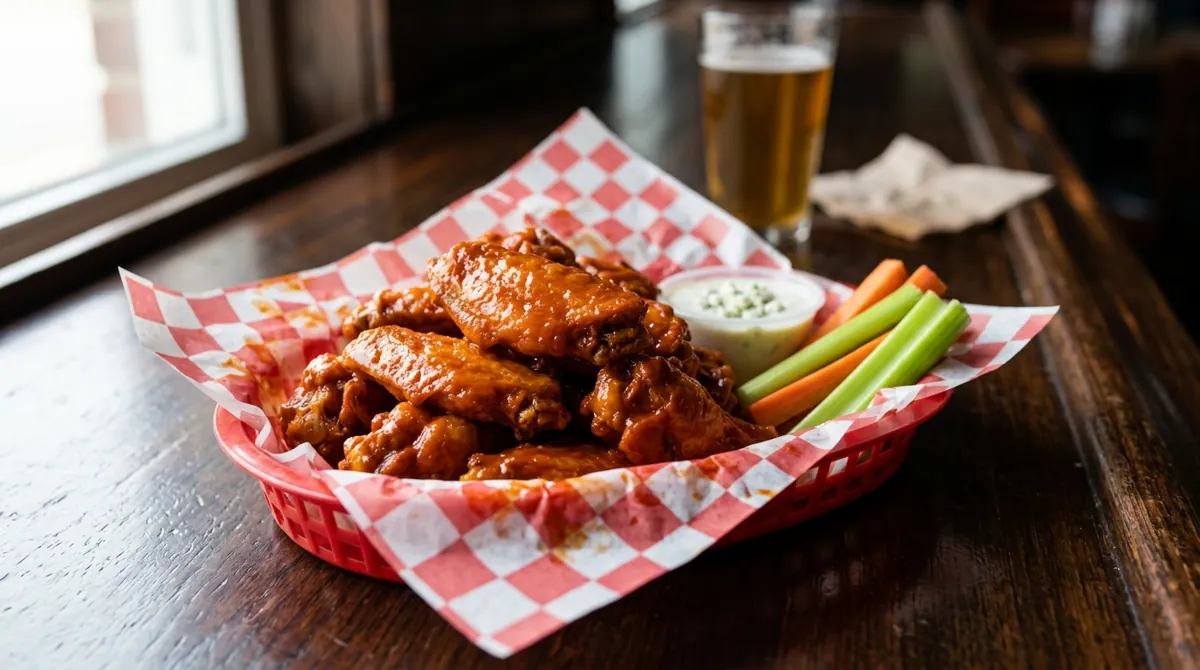
Buffalo Wings (Anchor Bar Style)
Unbreaded wings fried crisp and tossed in a buttery cayenne pepper sauce, served with celery, carrots and a chunky blue cheese dressing, the way Buffalo's Anchor Bar made them famous.
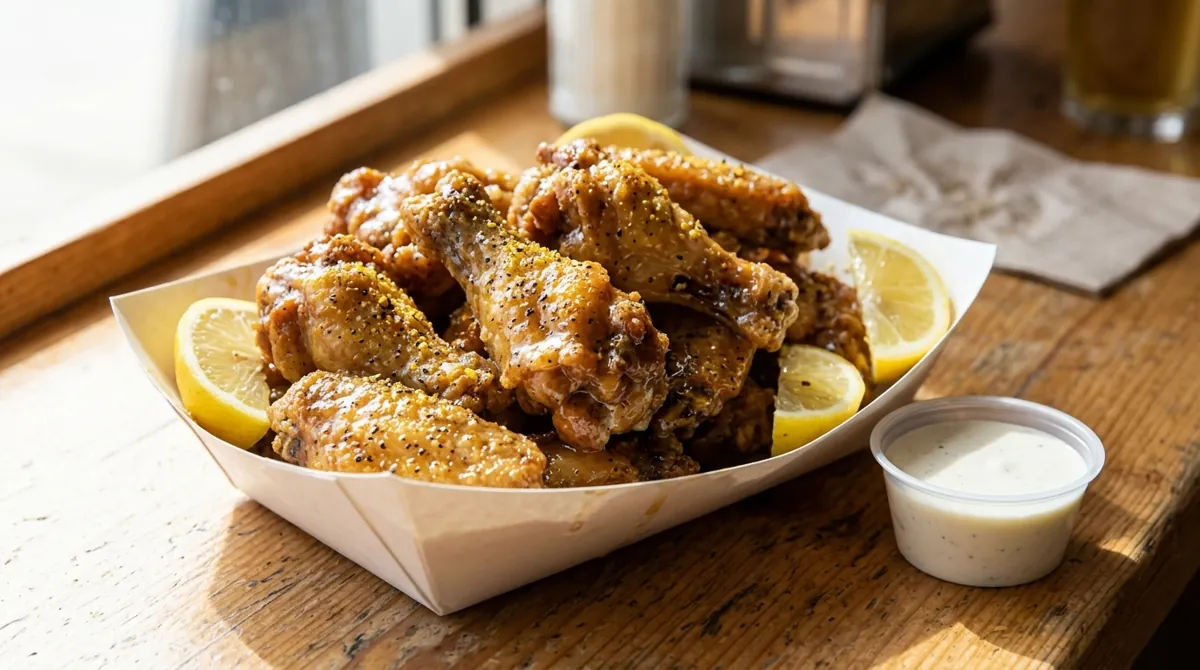
Atlanta Lemon Pepper Wet Wings
Crisp fried wings tossed in melted butter with a little hot sauce, lemon and honey, then showered with a homemade lemon pepper seasoning: Atlanta's favorite way to order wings.
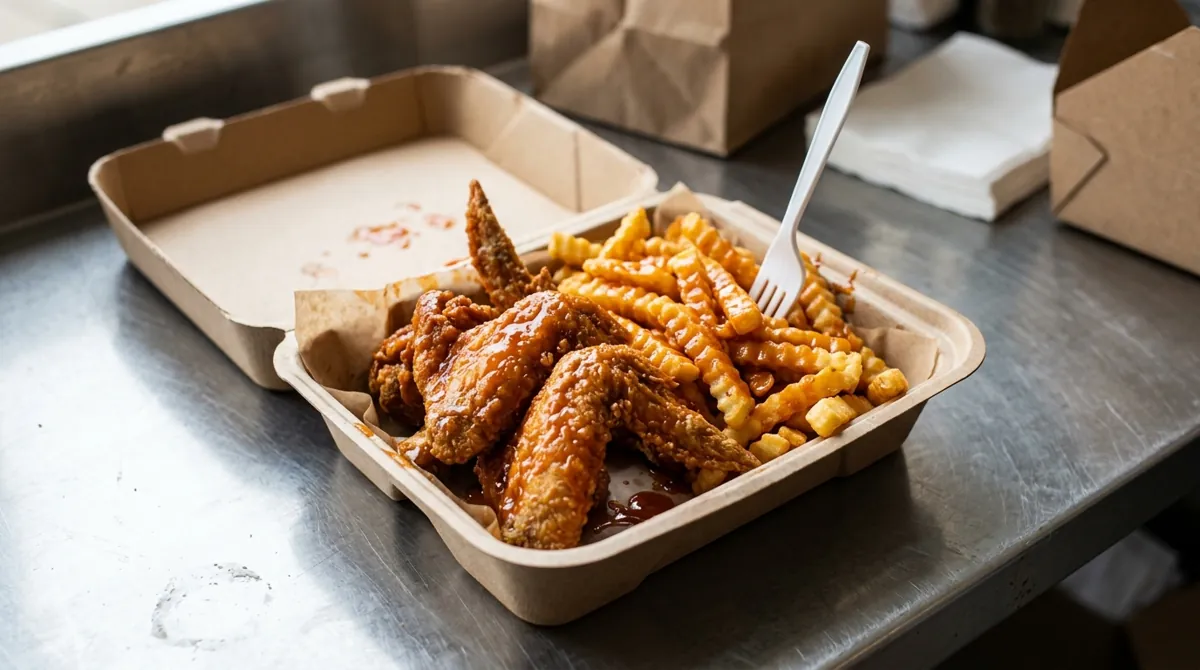
DC Carryout Wings with Mambo Sauce
Whole wings dredged in seasoned flour and fried hard, then drenched in mambo sauce, the sweet, tangy, red carryout sauce Washington calls its own.
Garlic Parmesan Wings
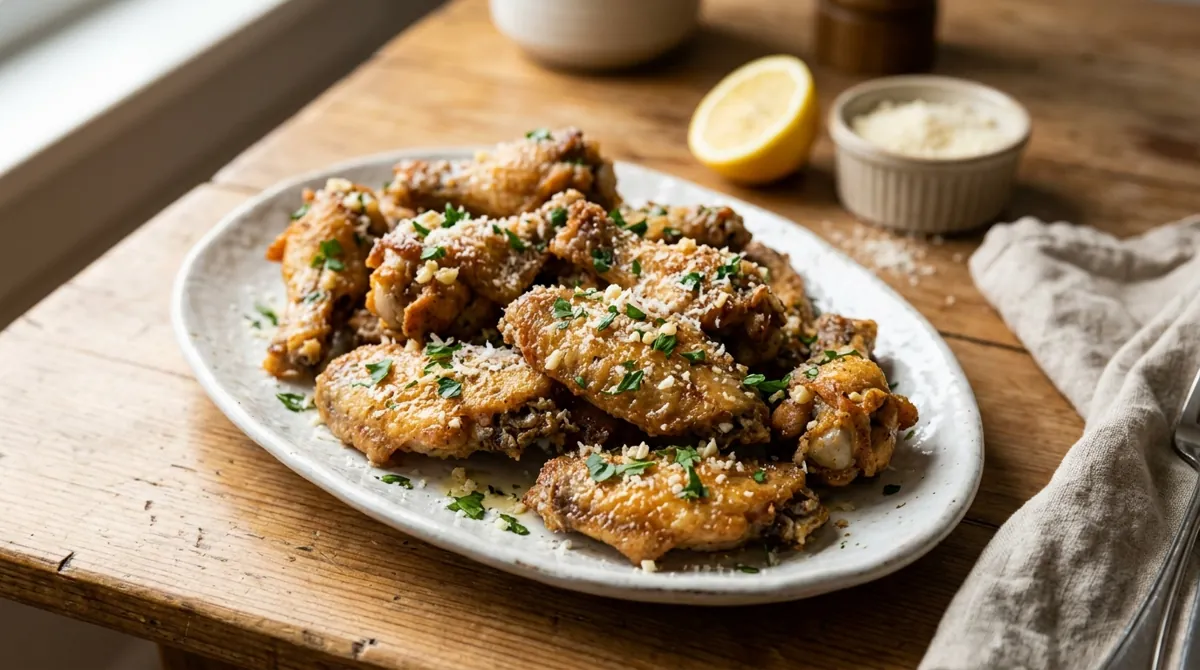
Oven-baked wings with crackly skin, tossed in melted butter with fresh garlic, Parmesan and parsley and run under the broiler: the no-heat wing found on many American wing menus.
Hot Honey Wings
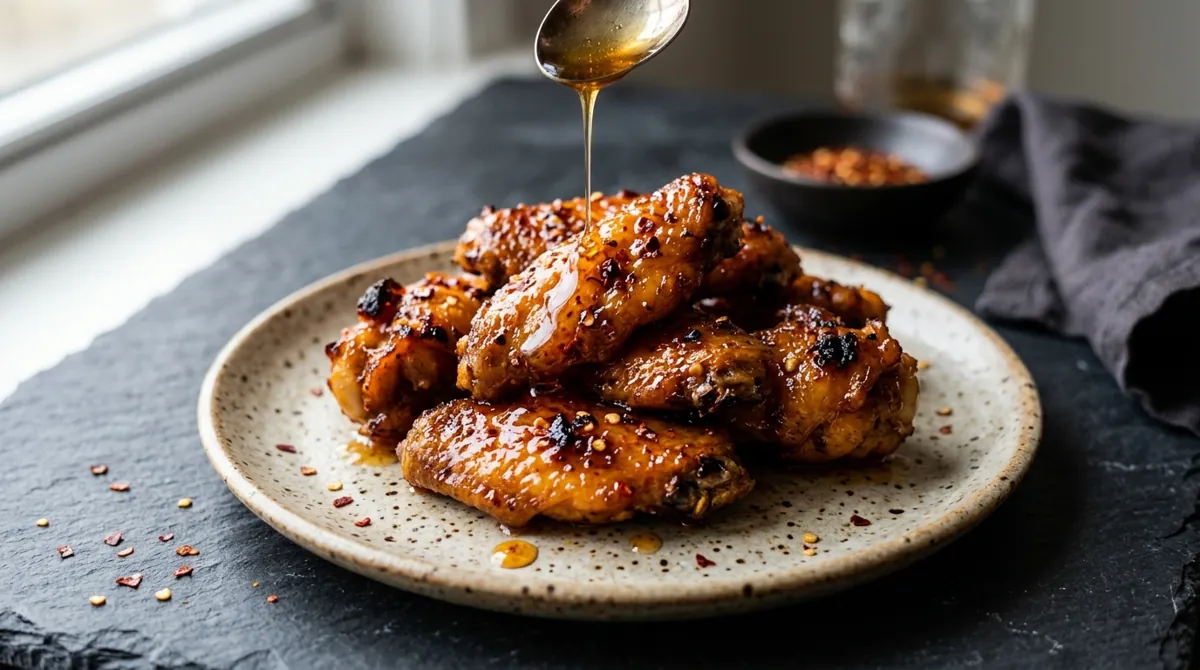
Wings in a light seasoned-flour coat, fried crisp and tossed in melted butter, chili-infused honey, cider vinegar and red pepper flakes: sweet first, heat second.
Korean Soy Garlic Wings (Double Fried)
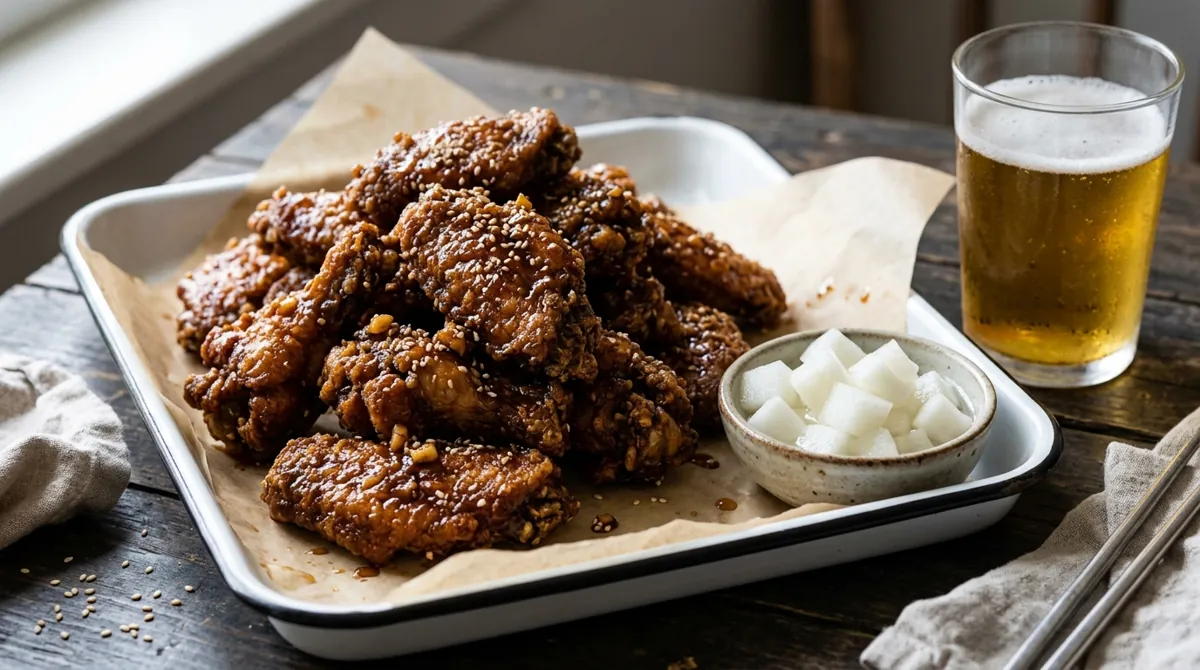
Wings dusted in cornstarch, dipped in a thin, crackly batter and fried twice, then brushed with a glossy glaze of soy sauce, garlic, ginger, brown sugar and honey: Korean fried chicken that isn't red.
Thai Fried Chicken Wings (Peek Gai Tod)
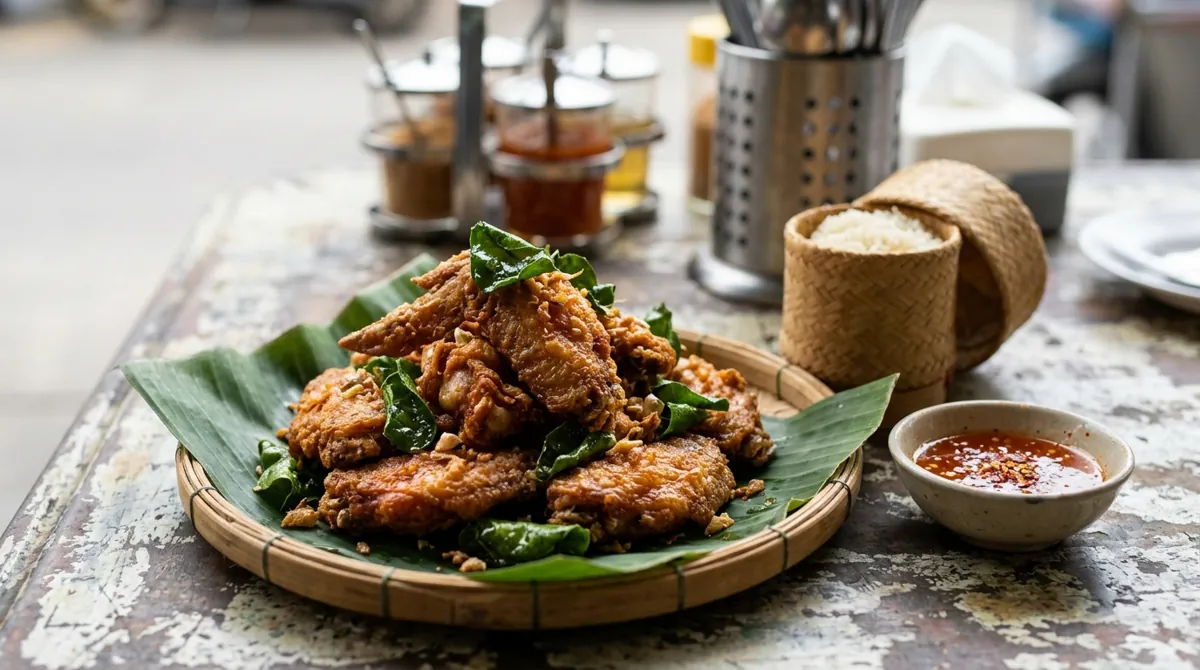
Wings rubbed with a pounded paste of garlic, coriander root, white pepper and soy sauce, dusted with flour, fried golden and served with crisp fried lime leaves and sweet chili sauce.
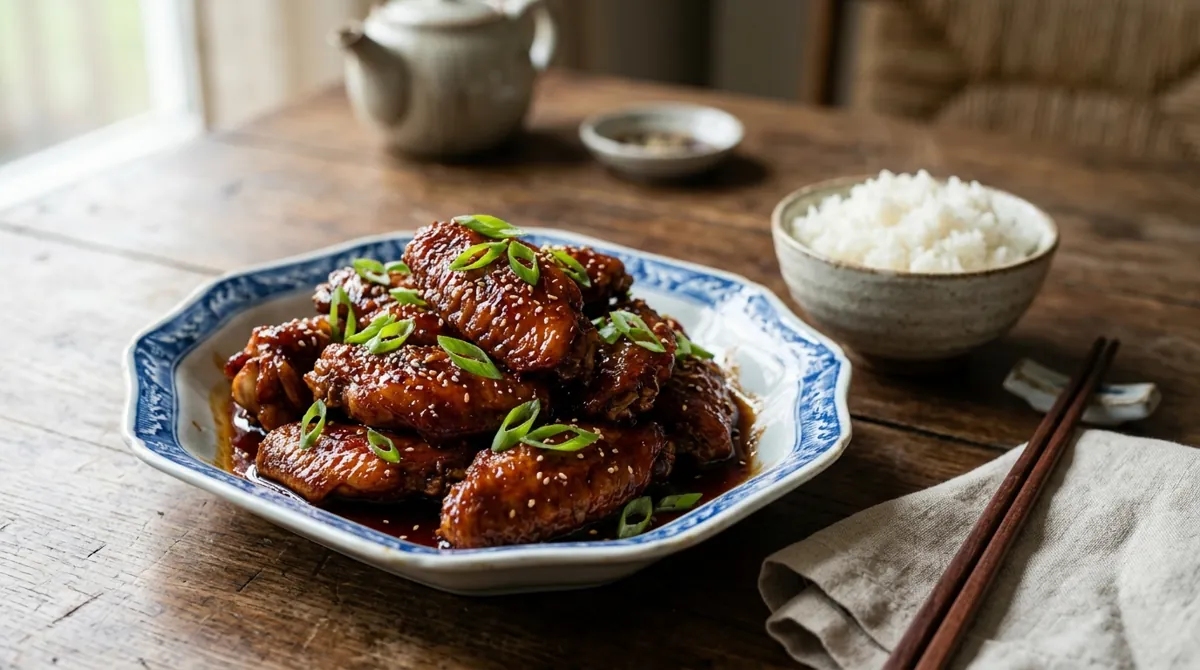
Chinese Coca-Cola Chicken Wings (Ke Le Ji Chi)
Wings browned with ginger in a skillet, then simmered in cola, soy sauce and Shaoxing wine until the liquid cooks down to a sticky, shiny glaze: a Chinese home-cooking classic.
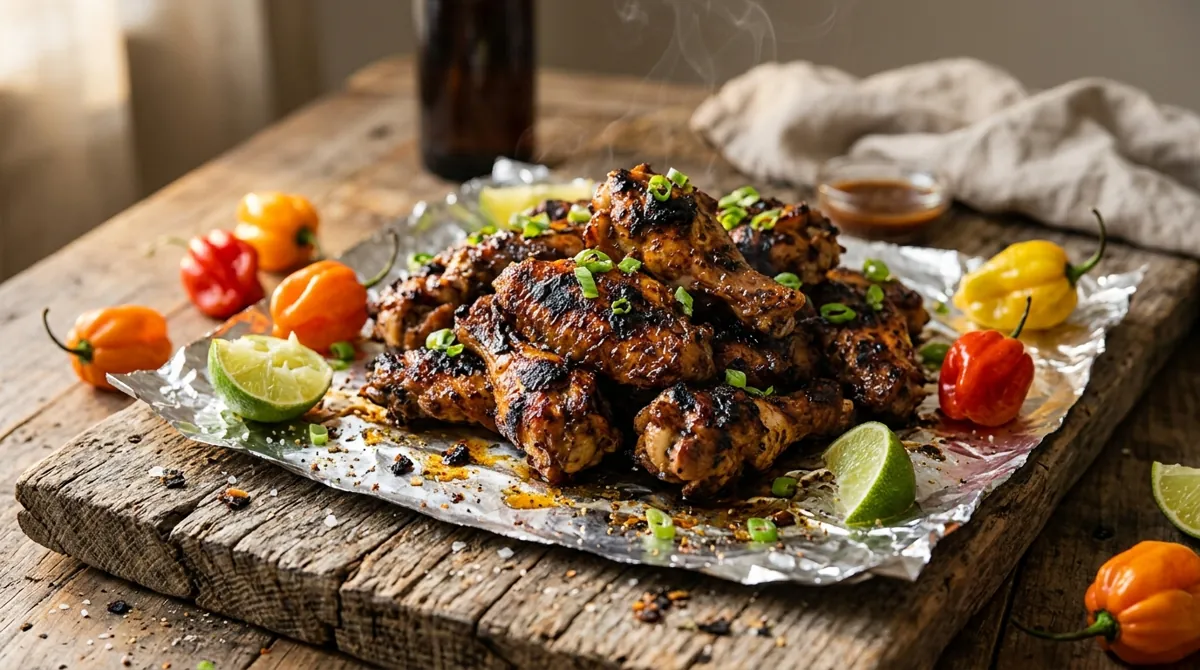
Jamaican Jerk Wings
Wings marinated in a blended paste of scallions, Scotch bonnet, thyme, garlic, allspice and soy, grilled slowly on the cool side, then brushed with fresh paste and charred over the fire.
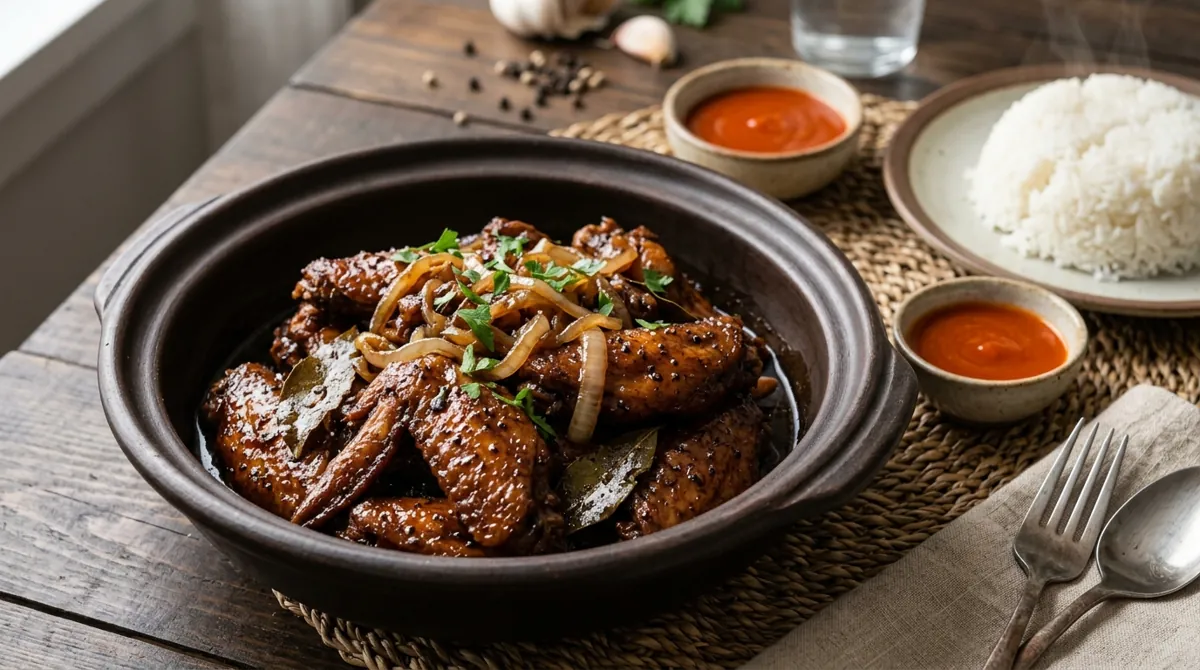
Filipino Adobo Chicken Wings
Wings marinated and simmered in vinegar, soy sauce, garlic, black pepper and bay leaves, then tossed in the cooking liquid boiled down to a glaze with onions and served with sweet homemade banana ketchup.
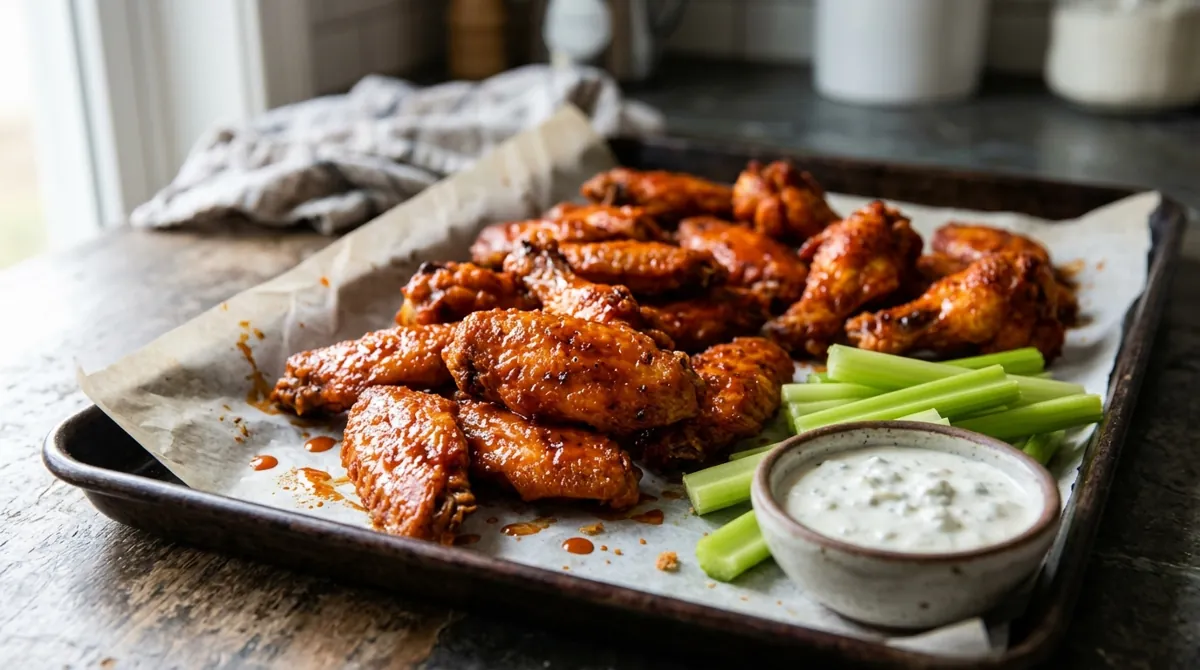
Crispy Baked Buffalo Wings (Baking Powder Method)
No fryer and no fuss: wings tossed with baking powder and salt, roasted on a rack in a very hot oven, broiled for extra crunch and tossed in a quick hot sauce, butter and molasses sauce.
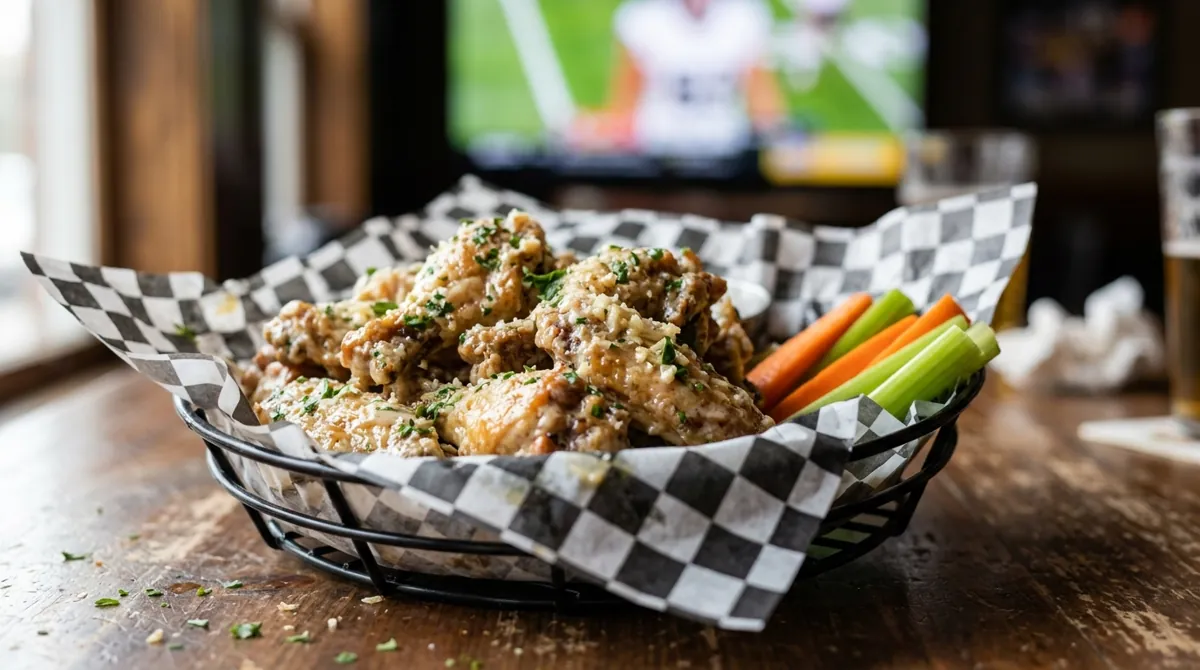
Creamy Parmesan Garlic Wings, Inspired by Buffalo Wild Wings
Inspired by, not official: plain fried wings tossed in a creamy sauce of roasted garlic, mayonnaise, Parmesan, lemon and dried herbs, in the style of the sports-bar chain's Parmesan Garlic flavor.
Meatballs of the World

Italian-American Meatballs
Big, tender meatballs braised for an hour in red sauce over spaghetti. The one most Americans grew up with.

Pallottine (Abruzzo Meatballs)
Tiny meatballs, smaller than a marble, tossed right through square spaghetti alla chitarra. No bread at all.

Swedish Meatballs (Köttbullar)
Small, soft meatballs browned in butter, in a cream sauce made from the same pan, with lingonberry jam on the plate.

Danish Frikadeller
Pork meatballs shaped with a spoon and fried slowly in butter, crusty outside and soft in the middle.

Königsberger Klopse
German meatballs that are never fried: poached, then served in a creamy white sauce with capers.

Spanish Albóndigas in Almond Saffron Sauce
The tapas bar classic: small meatballs in a golden sauce thickened with fried almonds and bread.

Mexican Albóndigas with Chipotle and Mint
Soft meatballs with rice and fresh mint inside, simmered in a smoky tomato and chipotle broth.

Izgara Köfte (Turkish Grilled Meatballs)
Small, flat meatballs kneaded hard, rested cold, and charred on a hot grill pan.

Lion's Head Meatballs
Big, soft pork meatballs, stirred into a sticky paste, fried to set, then braised in a savory sauce.

Chicken Tsukune
Japan's chicken meatball: kneaded sticky, grilled on skewers, glazed with sweet soy tare, dipped in egg yolk.