
Japanese Hambagu (Hamburg Steak with Red Wine Sauce)
Tender oval patties of beef and pork bound with panko, milk and sautéed onion, steamed in red wine and finished with a glossy pan sauce of butter, ketchup and tonkatsu sauce.
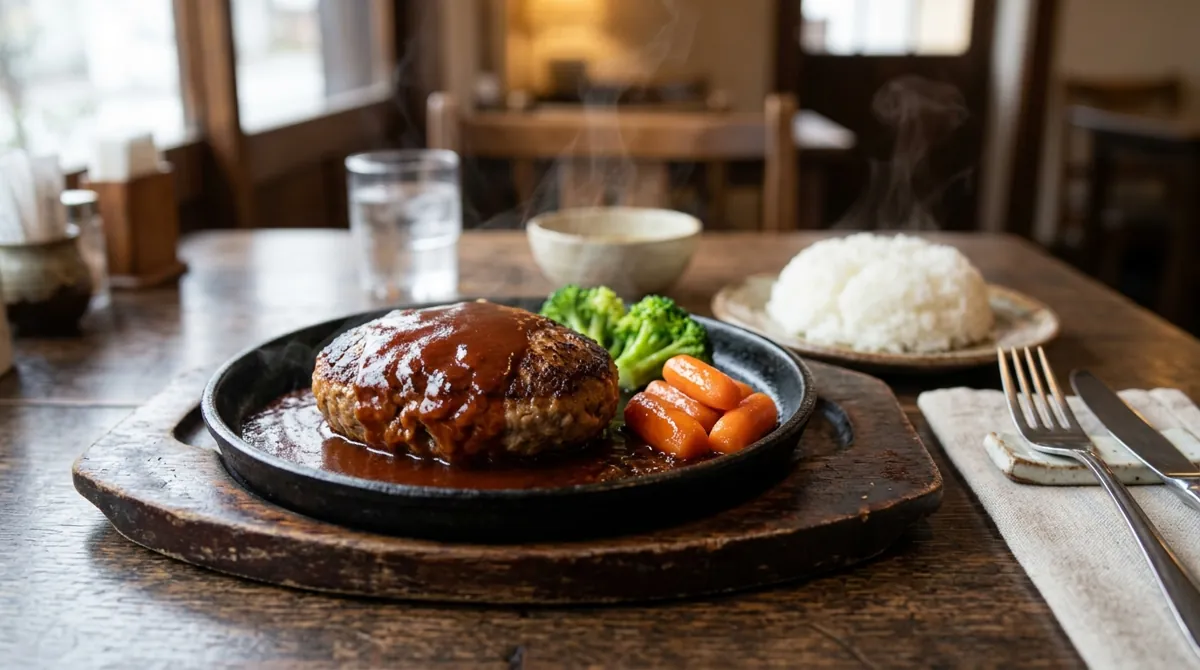
In Japan, a hamburger in a bun is a hanbāgā; without the bun it is hanbāgu, the Hamburg steak, usually made with mixed ground beef and pork (aibikiniku) and often served with demi-glace (Wikipedia:). The Government of Japan's Highlighting Japan magazine (April 2026) quotes the chairman of the Japan Hamburg Association: a prototype called "hamburogu steak" was reportedly served in 1882 at a reception for Japan's first cooking school, Akahori Cooking School; by the late 1890s it was on the menus of Western-style (yoshoku) restaurants in Tokyo; refrigeration in 1955 to 1964 let butcher shops sell ground meat and moved it into home kitchens; the pre-cooked "Marushin Hamburg" launched in 1962; and school lunches added it between 1965 and 1974.
The same article draws the line this hub is about. Europe and the United States prize an all-beef patty with no binders; Japan uses beef and pork with breadcrumbs for a softer bite and serves it with sauce, rice and vegetables, often on a sizzling iron plate. Wikipedia adds that Hawaii's plate-lunch hamburg steak, and its egg-topped cousin the loco moco, are close relatives.
Why it works the kitchen science
Kneading until sticky
Working the meat with the salt binds it, so the soft, bread-filled patty holds together and stays juicy instead of crumbling.
Brown, then steam
A hard sear builds flavor on both sides, and a few spoonfuls of wine under a lid cook the thick oval through gently, leaving the browned bits in the pan for the sauce.
Step by step
- Step 1
Heat 1 tbsp oil in a large skillet over medium heat. Cook the onion, stirring, 5 to 6 minutes, until tender and nearly translucent. Move it to a large bowl and let it cool completely, about 10 minutes.
- Step 2
Add the beef, pork, salt, pepper and nutmeg to the cooled onion, then the panko, milk and egg. Mix with a spatula, then knead by hand 1 to 2 minutes, until the mixture turns sticky and pale.
- Step 3
Divide into 4 portions. Toss each one from hand to hand about five times to push out trapped air, then shape it into a 3/4-inch-thick oval. Cover and refrigerate at least 30 minutes.
- Step 4
Heat 1 tbsp oil in the skillet over medium heat. Add the patties and press two fingers into the center of each to make a shallow dent. Cook about 3 minutes, until browned, then flip carefully and cook 3 minutes more.
- Step 5
Pour in 3 tbsp red wine, turn the heat to low, cover and cook 5 to 7 minutes, until the center reads 160°F (and a skewer brings out clear juices).
- Step 6
Uncover, raise the heat to medium for 30 seconds to cook off the alcohol, and move the patties to plates. Don't wash the pan.
- Step 7
Add the butter, ketchup and tonkatsu sauce to the pan drippings, then the 3 tbsp red wine and 1 tbsp water. Simmer over medium heat, stirring, 2 to 3 minutes, until a spatula drawn through it leaves a line; add up to 2 tbsp more water if it gets too thick.
- Step 8
Spoon the sauce over the patties and serve with rice, miso soup and a salad.
Japanese Hambagu (Hamburg Steak with Red Wine Sauce)
Serves 4 · 4 patties · 50 min total
Patties
- 1/2 yellow onion (5 oz), finely minced
- 1 tbsp neutral oil
- 8 oz ground beef (80% lean)
- 4 oz ground pork
- 1/2 tsp Diamond Crystal kosher salt
- Black pepper
- 1/2 tsp ground nutmeg
- 1/3 cup panko
- 2 tbsp whole milk
- 1 large egg
To cook
- 1 tbsp neutral oil
- 3 tbsp red wine (or beef stock)
Sauce
- 1 tbsp unsalted butter
- 3 tbsp ketchup
- 3 tbsp tonkatsu sauce (or 2 1/2 tbsp Worcestershire sauce plus 1 1/2 tsp sugar)
- 3 tbsp red wine (or beef stock)
- 1 to 3 tbsp water
Method
- Heat 1 tbsp oil in a large skillet over medium heat. Cook the onion, stirring, 5 to 6 minutes, until tender and nearly translucent. Move it to a large bowl and let it cool completely, about 10 minutes.
- Add the beef, pork, salt, pepper and nutmeg to the cooled onion, then the panko, milk and egg. Mix with a spatula, then knead by hand 1 to 2 minutes, until the mixture turns sticky and pale.
- Divide into 4 portions. Toss each one from hand to hand about five times to push out trapped air, then shape it into a 3/4-inch-thick oval. Cover and refrigerate at least 30 minutes.
- Heat 1 tbsp oil in the skillet over medium heat. Add the patties and press two fingers into the center of each to make a shallow dent. Cook about 3 minutes, until browned, then flip carefully and cook 3 minutes more.
- Pour in 3 tbsp red wine, turn the heat to low, cover and cook 5 to 7 minutes, until the center reads 160°F (and a skewer brings out clear juices).
- Uncover, raise the heat to medium for 30 seconds to cook off the alcohol, and move the patties to plates. Don't wash the pan.
- Add the butter, ketchup and tonkatsu sauce to the pan drippings, then the 3 tbsp red wine and 1 tbsp water. Simmer over medium heat, stirring, 2 to 3 minutes, until a spatula drawn through it leaves a line; add up to 2 tbsp more water if it gets too thick.
- Spoon the sauce over the patties and serve with rice, miso soup and a salad.
Adapted from Namiko Hirasawa Chen, "Japanese Hamburger Steak (Hambagu)", Just One Cookbook (first posted December 17, 2012; byline updated February 12, 2025; recipe revised July 31, 2026). As written for 4: 3/4 lb beef and pork at 2:1, half an onion, panko, milk, egg, nutmeg, red wine for steaming and a butter, ketchup, tonkatsu sauce and red wine sauce. Just One Cookbook judges doneness by clear juices; the 160°F check is ours. Its tonkatsu sauce swap (Worcestershire sauce and sugar) gives no amounts; ours are 2 1/2 tbsp and 1 1/2 tsp. Just One Cookbook. Ingredient list follows the source; the method is in our own words.
All sources (3)
Tips
- Just One Cookbook's ratio: 2:1 beef to pork (or 3:1 for beefier).
- Toss the meat between your hands to remove air; Just One Cookbook says skipping it makes patties crack.
- The dent in the center keeps the patty from puffing into a ball as it cooks.
- Cooked hambagu keep up to 3 days in the fridge or 1 month in the freezer (Just One Cookbook).
The rules people argue about
What the sources agree on, what they don't, and what is just a good story.
- Hambagu arrived in 1882. Disputed: Highlighting Japan says the 1882 prototype was "reportedly" served; Wikipedia says only that the dish dates to the Meiji period and is believed to have first been served in Yokohama.
- Hambagu should be all beef. Disputed: Highlighting Japan says most Japanese hambagu is beef and pork with breadcrumbs, but highlights Shizuoka's Sawayaka chain, whose signature patty is 100 percent beef with no binders.
- The 1960s made it a home staple. Documented: Highlighting Japan (refrigeration in 1955 to 1964, Marushin Hamburg in 1962) and Wikipedia (magazines printed the recipe through the decade).
- It's the same as Salisbury steak. Folklore: the dishes are close relatives; Just One Cookbook compares them, and Wikipedia treats them as separate dishes.
Every other burger
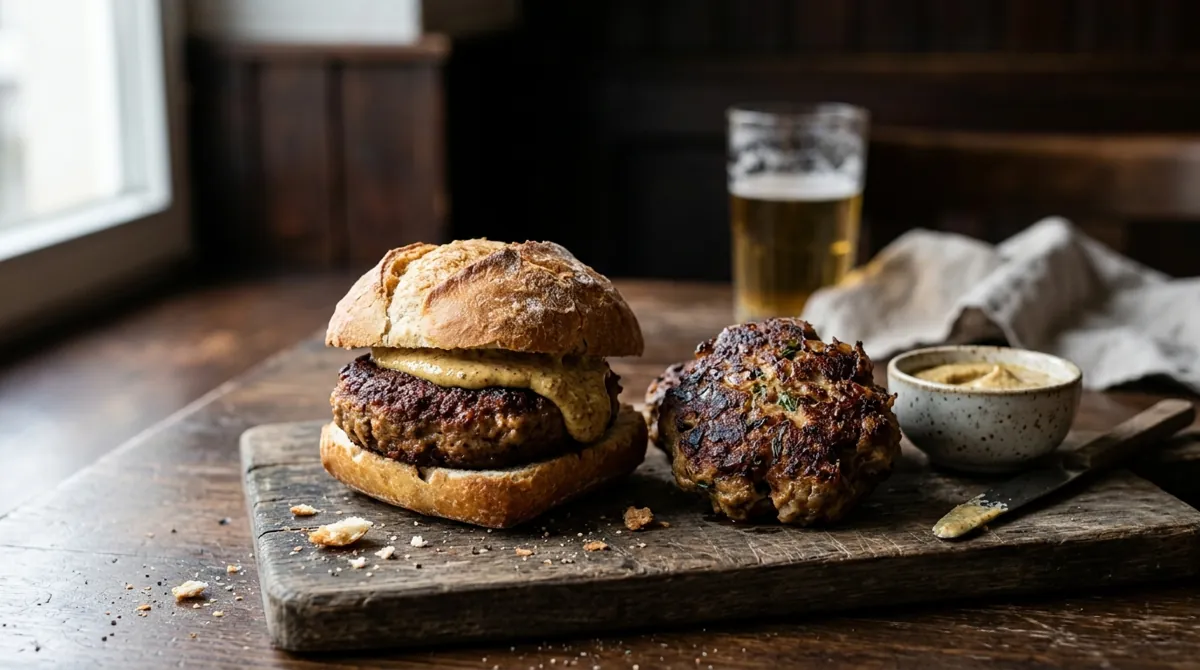
German Frikadellen (Hamburg-Style Meat Patties)
Germany's pan-fried meat patties, made with half beef and half pork, a stale roll soaked in milk, sweated onion and parsley, then fried slowly to a deep brown crust and served with mustard.
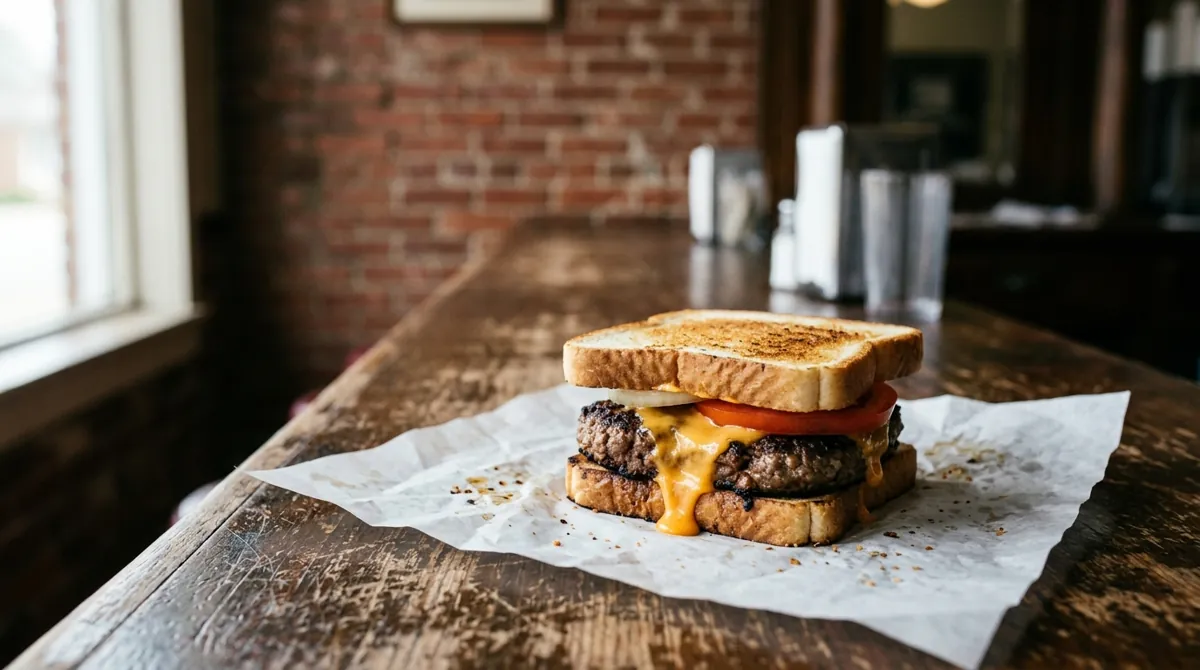
The Louis' Lunch Hamburger on Toast (New Haven)
A square patty of ground chuck and sirloin with an onion slice pressed into it, cooked over a hot fire and served the New Haven way: between two slices of white toast with tomato, onion and a sharp cheese sauce, and no ketchup.
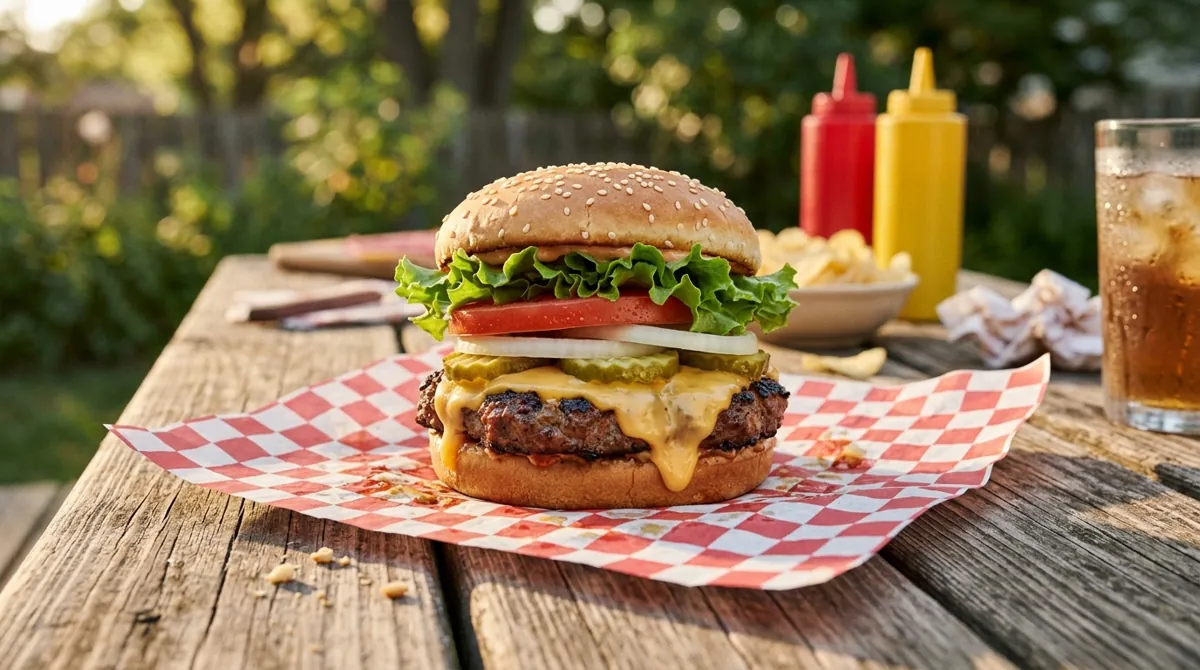
The Classic Backyard Grilled Cheeseburger
Thick, juicy patties of 85 percent lean beef with a dent in the center so they grill flat, topped with American cheese and stacked on soft buns with lettuce, tomato, onion, pickles, ketchup and mustard.
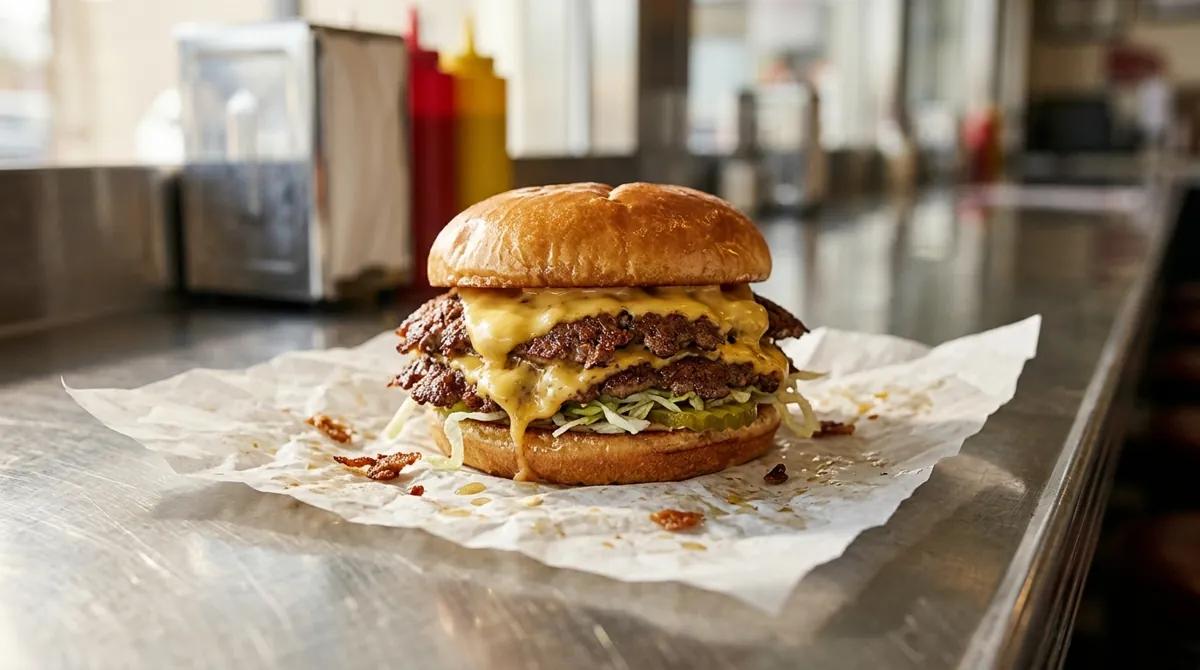
The Smash Burger
Two small balls of beef chuck smashed paper-thin onto a screaming-hot pan, scraped up with every bit of brown crust, and stacked with a slice of American cheese melting between them.
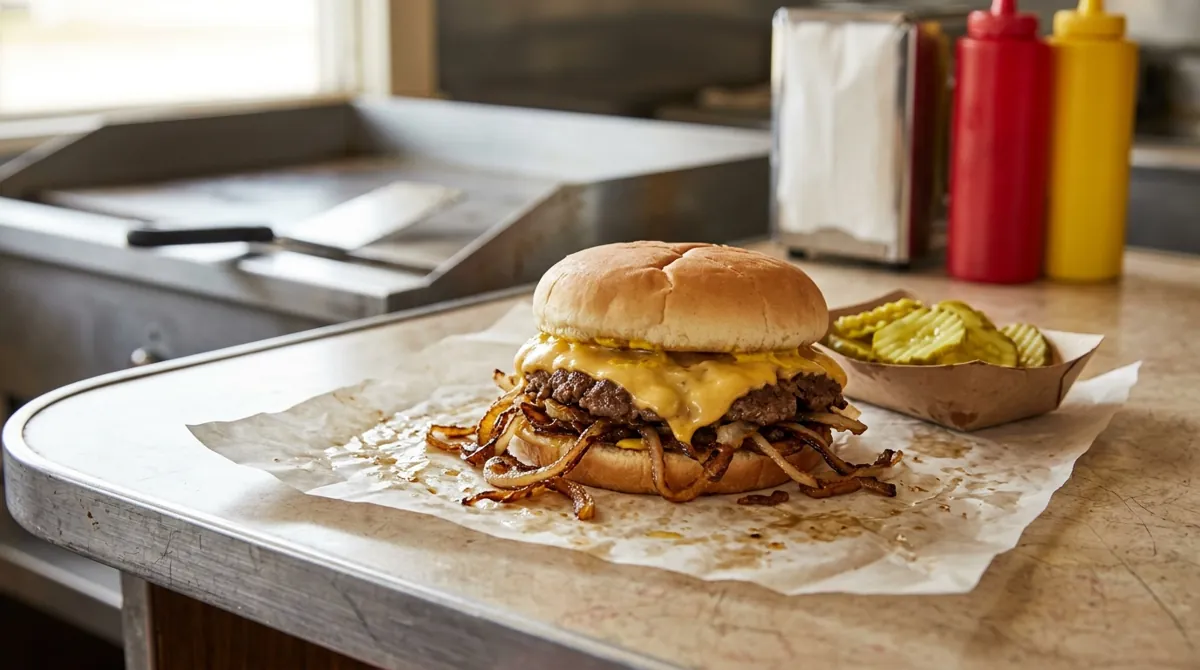
The Oklahoma Fried Onion Burger
A small ball of beef smashed thin on a hot skillet with a mound of paper-thin onions pressed into it, flipped so the onions fry and caramelize, then topped with American cheese and a bun steamed right over the onions.
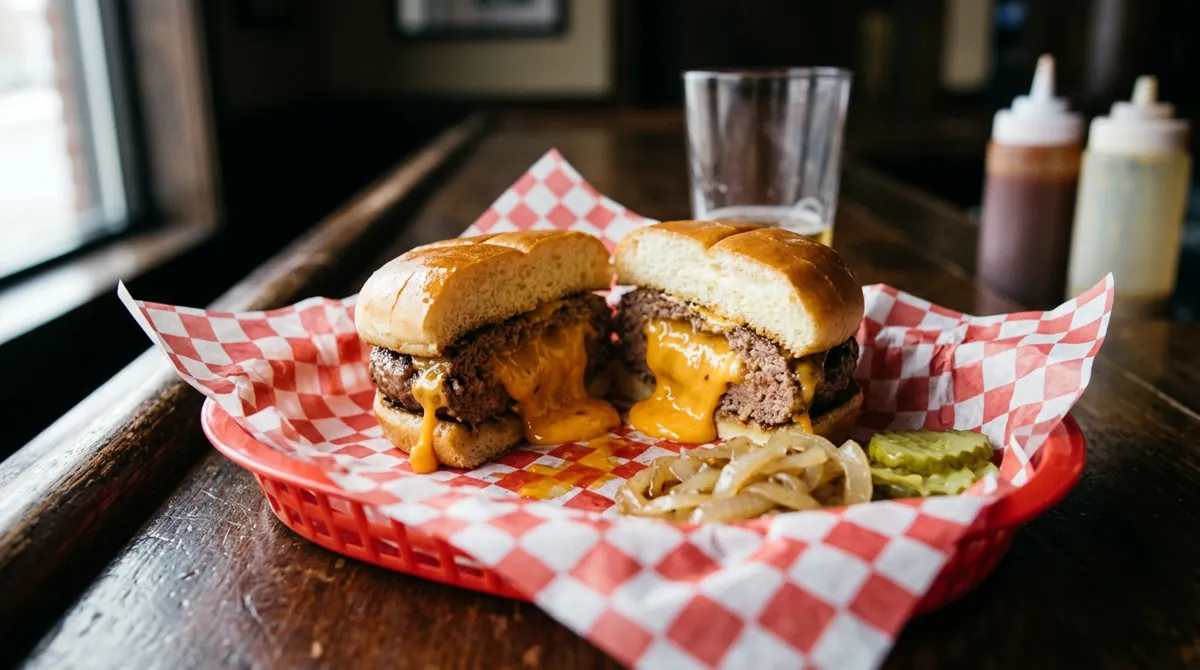
The Juicy Lucy (Minneapolis Cheese-Stuffed Burger)
Two thin beef patties sealed around rounds of American cheese, seared in a cast-iron skillet until the cheese inside turns molten, and served on a potato roll with buttery onions and pickles.
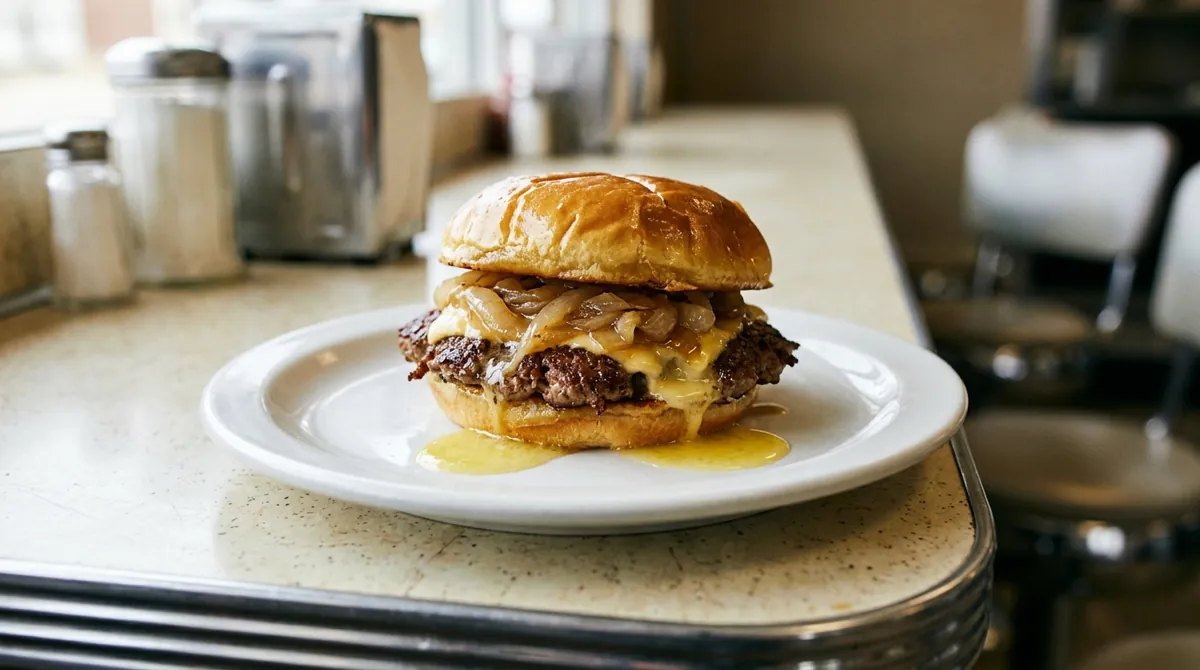
The Wisconsin Butter Burger
Lean ground sirloin enriched with cold butter seasoned with a little soy sauce, seared in a hot skillet and topped with a thick pat of the same butter and a spoonful of soft stewed onions, so the butter melts down into the bun.
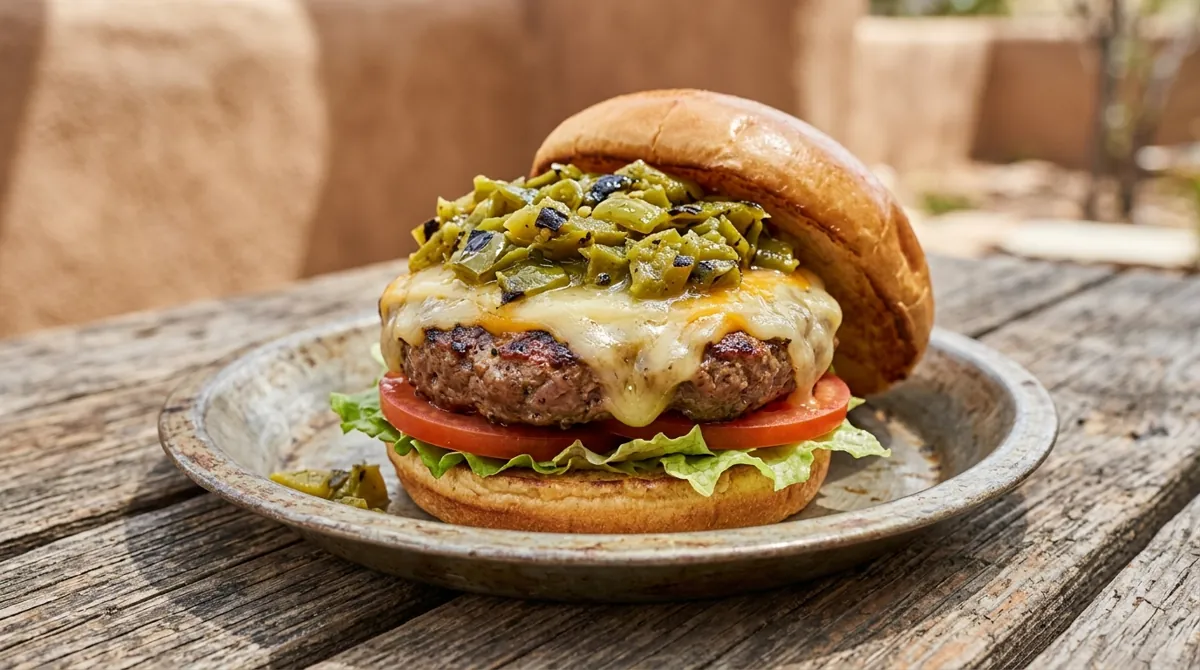
The New Mexico Green Chile Cheeseburger
Thick ground-chuck burgers grilled over a two-level fire, topped with melted cheese and a heap of freshly roasted, peeled and chopped New Mexico green chiles, on soft buns with tomato and lettuce.
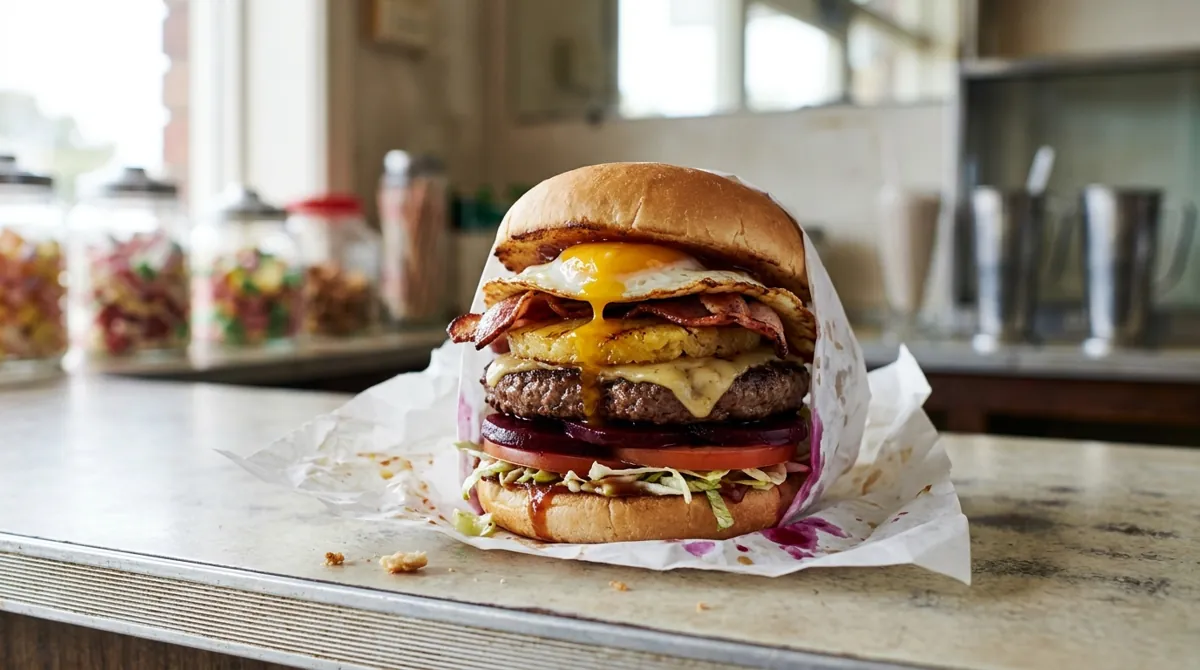
The Australian Burger with the Lot
A seasoned beef patty with onion, garlic and parsley, piled into a toasted roll with barbecue sauce, lettuce, cheese, canned beetroot, a pineapple ring, tomato, a fried egg, bacon and red onion.
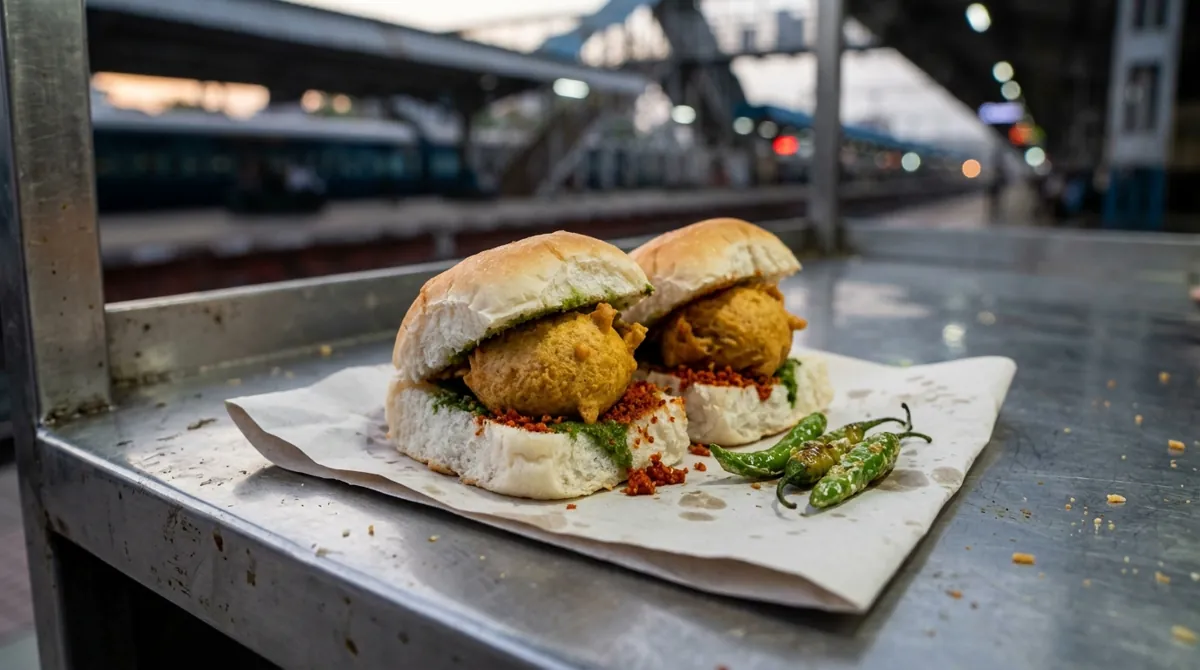
Vada Pav (Mumbai's Potato Fritter "Burger")
A spiced mashed potato patty dipped in chickpea batter and deep-fried, tucked into a soft white roll with green chutney and a crunchy dry garlic, coconut and peanut chutney.
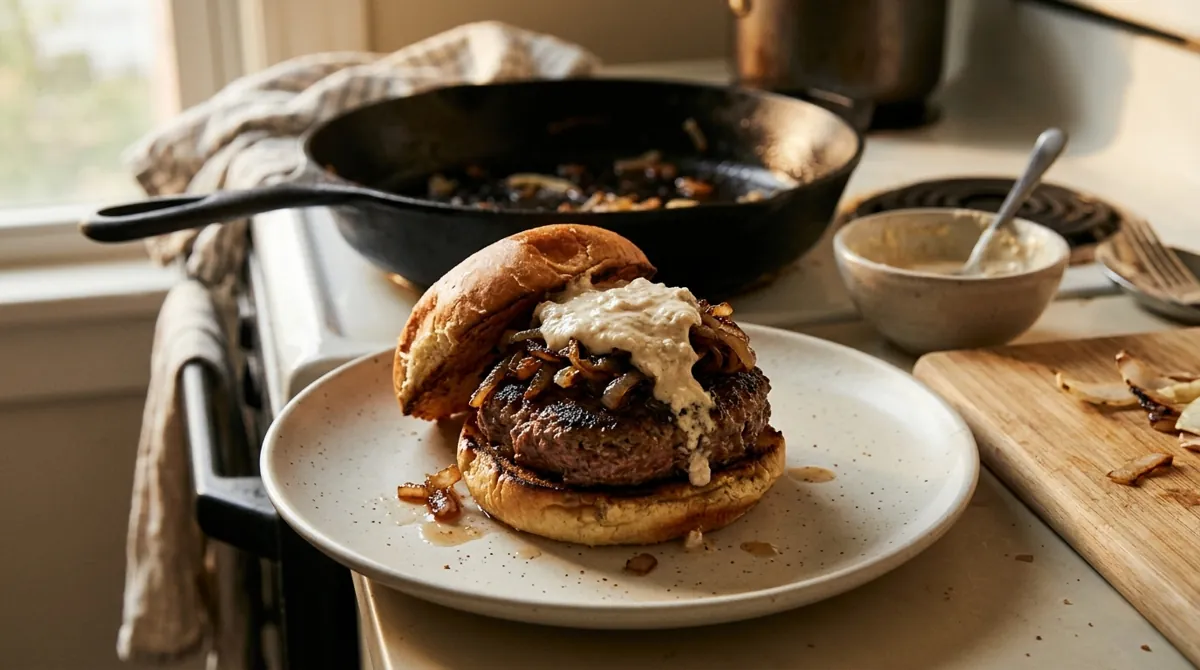
30-Minute Weeknight Skillet Burgers with Onions and Horseradish Sauce
Garlicky burgers seared in one skillet, then onions browned in the drippings, with a quick sour cream and horseradish sauce, on the table in 30 minutes with no grill.
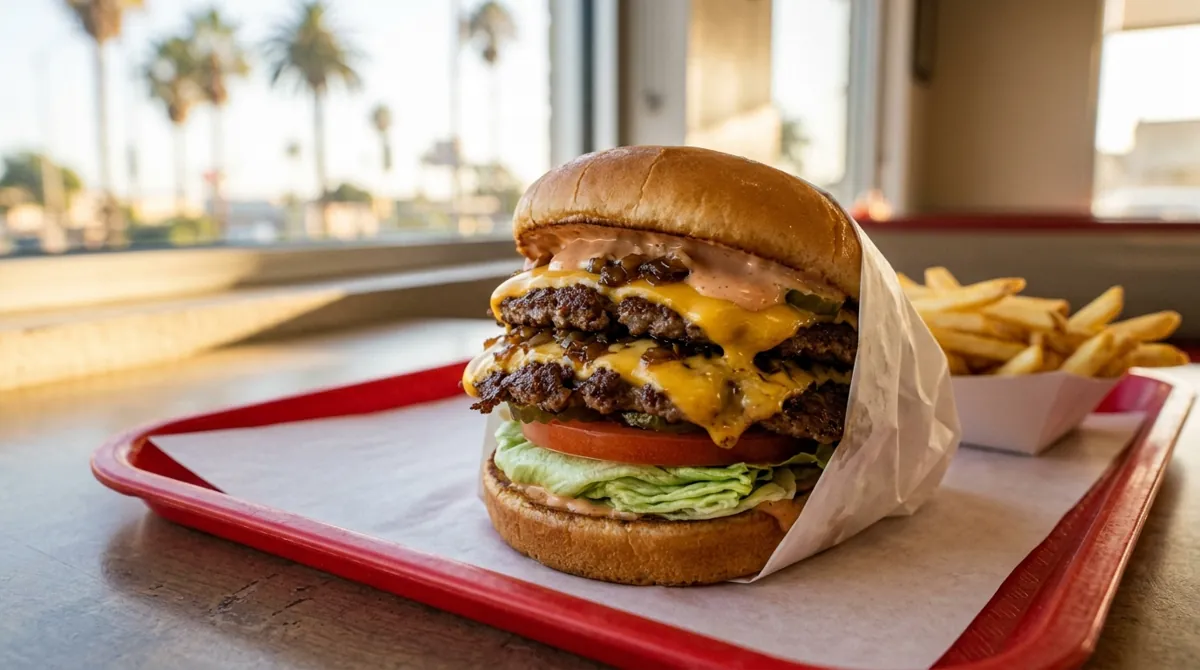
Double-Double Style Burger, Animal Style, Inspired by In-N-Out
Inspired by, not official: two thin mustard-seared patties with American cheese, deeply caramelized onions, pickles, tomato, lettuce and a pink Thousand Island-style spread on a toasted bun.
Meatballs of the World

Italian-American Meatballs
Big, tender meatballs braised for an hour in red sauce over spaghetti. The one most Americans grew up with.

Pallottine (Abruzzo Meatballs)
Tiny meatballs, smaller than a marble, tossed right through square spaghetti alla chitarra. No bread at all.

Swedish Meatballs (Köttbullar)
Small, soft meatballs browned in butter, in a cream sauce made from the same pan, with lingonberry jam on the plate.

Danish Frikadeller
Pork meatballs shaped with a spoon and fried slowly in butter, crusty outside and soft in the middle.

Königsberger Klopse
German meatballs that are never fried: poached, then served in a creamy white sauce with capers.

Spanish Albóndigas in Almond Saffron Sauce
The tapas bar classic: small meatballs in a golden sauce thickened with fried almonds and bread.

Mexican Albóndigas with Chipotle and Mint
Soft meatballs with rice and fresh mint inside, simmered in a smoky tomato and chipotle broth.

Izgara Köfte (Turkish Grilled Meatballs)
Small, flat meatballs kneaded hard, rested cold, and charred on a hot grill pan.

Lion's Head Meatballs
Big, soft pork meatballs, stirred into a sticky paste, fried to set, then braised in a savory sauce.

Chicken Tsukune
Japan's chicken meatball: kneaded sticky, grilled on skewers, glazed with sweet soy tare, dipped in egg yolk.