
The Oklahoma Fried Onion Burger
A small ball of beef smashed thin on a hot skillet with a mound of paper-thin onions pressed into it, flipped so the onions fry and caramelize, then topped with American cheese and a bun steamed right over the onions.
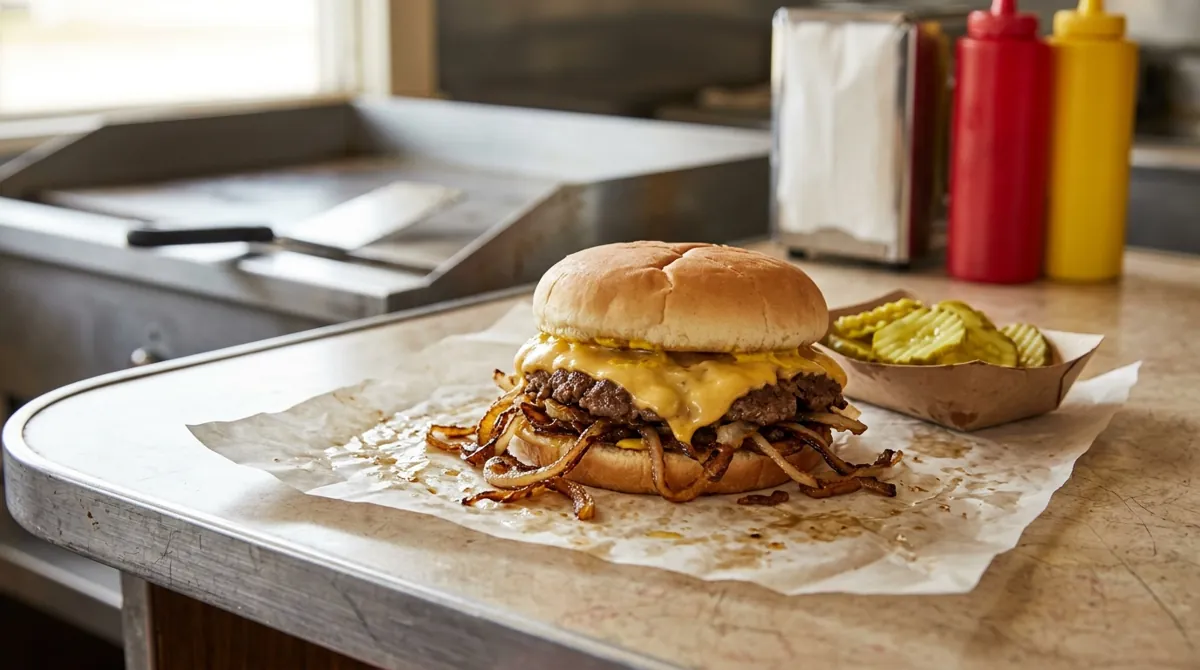
The fried onion burger is a specialty of El Reno, Oklahoma, on Route 66. Wikipedia credits Homer and Ross Davis, father and son, at their Hamburger Inn near Route 66 and U.S. Route 81, who stretched expensive beef with cheap onions to feed striking railroad workers during the Great Railroad Strike of 1922, sold it as the five-cent "Depression Burger", and saw it spread across western Oklahoma. Route 66 News, reporting a 2024 historical marker from the William G. Pomeroy Foundation, tells it more carefully: "according to town lore", Ross Davis developed the burger at the Hamburger Inn in the 1920s. From the marker you can see the three restaurants that carry it on: Johnnie's, Robert's Grill and Sid's Diner.
The burger is roughly half onion. Wikipedia notes that the buns are steamed on top of the cooking burger, that pickles come on the side with yellow mustard, and that cheese is common but rarely ordered by older Oklahomans. El Reno holds Fried Onion Burger Day every first Saturday in May, and John T. Edge called the onion habit a frugal impulse "more universal than local".
🇺🇸 This one is American
A small ball of beef smashed thin on a hot skillet with a mound of paper-thin onions pressed into it, flipped so the onions fry and caramelize, then topped with American cheese and a bun steamed right over the onions.
🇩🇪 The original
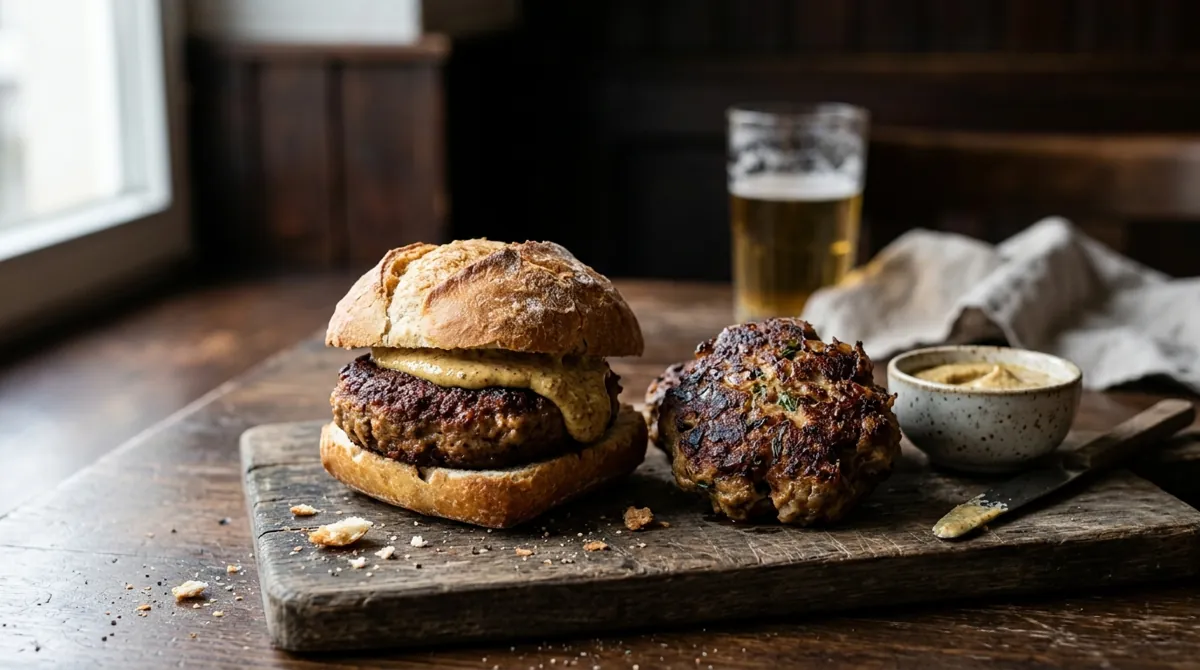
Germany's Frikadellen are pan-fried patties of beef and pork with a soaked roll, onion and parsley, eaten with mustard and potato salad, with no bun. The burger's name points to Hamburg, though how it got there is disputed. See the German Frikadellen (Hamburg-Style Meat Patties) recipe.
Why it works the kitchen science
Onions pressed into raw beef
The thin slices stick to the meat, so when you flip, they fry in the beef fat into sweet, browned strands that become part of the patty.
A steamed bun
Stacking both bun halves over the cooking onions softens them with onion-scented steam, the way El Reno griddles do it.
Step by step
- Step 1
Rub a large cast-iron skillet with the oil using a paper towel and heat it over high heat 3 to 4 minutes, until lightly smoking.
- Step 2
Add 2 balls of beef and press each completely flat with the back of a stiff spatula. Season generously with salt and pepper.
- Step 3
Working quickly, pile a quarter of the onions on each patty and press them down hard so they sink into the meat. Cook without pressing again about 2 minutes, until the bottoms are well browned.
- Step 4
Flip each burger with a stiff spatula, scraping up all the browned meat, so the onions are now underneath. Cook about 1 minute, until the onions begin to soften and brown.
- Step 5
Lay a slice of cheese on each, set the top bun on the cheese and the bottom bun upside down on top of it, so both halves steam in the onion vapor, about 1 minute (the first burger should read 160°F with a thermometer slid in sideways).
- Step 6
Move the bottom buns to plates and add mustard and pickles. Lift the onions, burger and top bun together onto the bottom bun and serve. Repeat with the other 2 balls.
The Oklahoma Fried Onion Burger
Serves 4 · 4 burgers · 30 min total
Burgers
- 1/2 tsp vegetable or canola oil
- 10 oz ground beef (80% lean), divided into 4 balls of about 2 1/2 oz
- Kosher salt and black pepper
- 2 medium yellow onions, sliced paper-thin (about 2 cups; a mandoline helps)
- 4 slices American cheese
- 4 soft hamburger buns
To serve
- Yellow mustard
- Dill pickle chips
Method
- Rub a large cast-iron skillet with the oil using a paper towel and heat it over high heat 3 to 4 minutes, until lightly smoking.
- Add 2 balls of beef and press each completely flat with the back of a stiff spatula. Season generously with salt and pepper.
- Working quickly, pile a quarter of the onions on each patty and press them down hard so they sink into the meat. Cook without pressing again about 2 minutes, until the bottoms are well browned.
- Flip each burger with a stiff spatula, scraping up all the browned meat, so the onions are now underneath. Cook about 1 minute, until the onions begin to soften and brown.
- Lay a slice of cheese on each, set the top bun on the cheese and the bottom bun upside down on top of it, so both halves steam in the onion vapor, about 1 minute (the first burger should read 160°F with a thermometer slid in sideways).
- Move the bottom buns to plates and add mustard and pickles. Lift the onions, burger and top bun together onto the bottom bun and serve. Repeat with the other 2 balls.
Adapted from J. Kenji López-Alt, "Oklahoma-Style Onion Burgers", Serious Eats (June 24, 2013; updated December 8, 2025). Serious Eats makes 2 burgers (5 oz beef in two 2 1/2-oz balls, 1 medium onion, 2 slices American cheese); we double it to 4 and cook them two at a time. The smoking-hot cast iron, the 2-minute first side, the 1-minute second side and the bun steamed over the onions are Serious Eats'. Serious Eats. Ingredient list follows the source; the method is in our own words.
All sources (3)
Tips
- Slice the onions as thin as you can; thick slices steam instead of frying.
- For crisper onions, America's Test Kitchen tosses them with salt, drains them 30 minutes in a colander and squeezes them dry in a towel.
- Serve the pickles on the side, the El Reno way.
The rules people argue about
What the sources agree on, what they don't, and what is just a good story.
- The Davises invented it for striking railroad workers in 1922. Disputed: Wikipedia gives the 1922 strike; Route 66 News calls Ross Davis's role "town lore" and says the 1920s; other accounts (search summaries only) place it in the Depression.
- Cheese doesn't belong on an onion burger. Folklore: Wikipedia says cheese is common but rarely chosen by older Oklahomans; Serious Eats adds it.
- The burger is half onion. Documented (Wikipedia).
- Onion-stretched beef was an El Reno invention. Disputed: Wikipedia notes an 1883 Boston Cooking School recipe already mashed onions into ground beef.
- The festival dates to 1988. Disputed: Wikipedia and other sources give 1988 or 1989 (search summaries only).
Every other burger
German Frikadellen (Hamburg-Style Meat Patties)
Germany's pan-fried meat patties, made with half beef and half pork, a stale roll soaked in milk, sweated onion and parsley, then fried slowly to a deep brown crust and served with mustard.
Japanese Hambagu (Hamburg Steak with Red Wine Sauce)
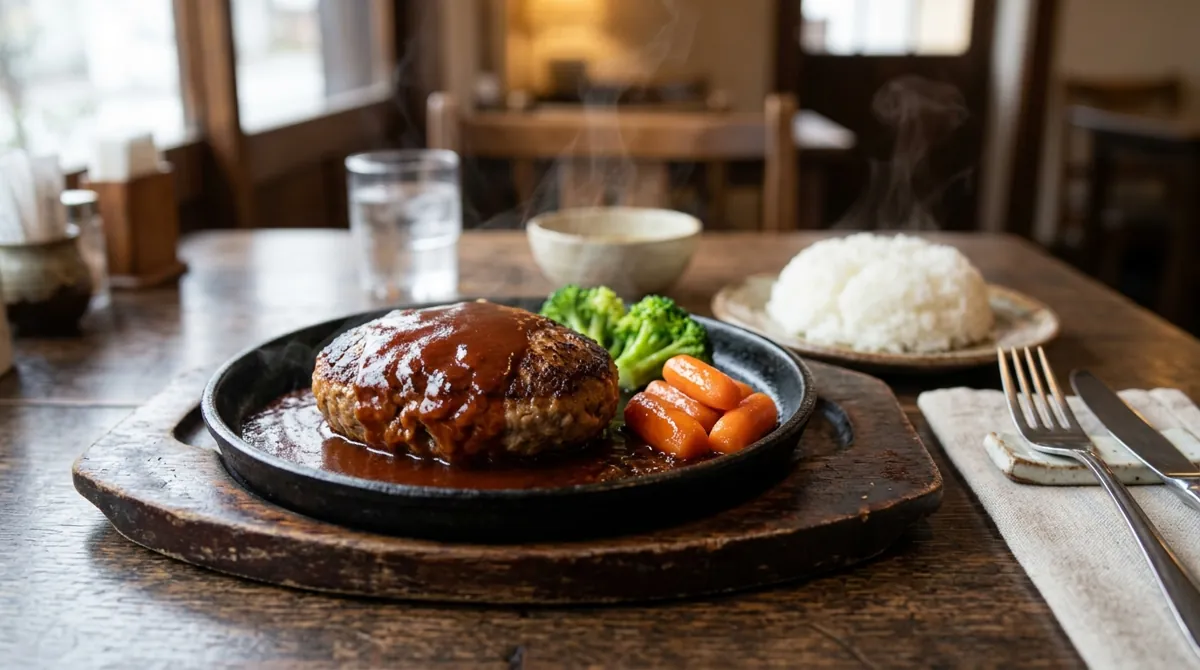
Tender oval patties of beef and pork bound with panko, milk and sautéed onion, steamed in red wine and finished with a glossy pan sauce of butter, ketchup and tonkatsu sauce.
The Louis' Lunch Hamburger on Toast (New Haven)
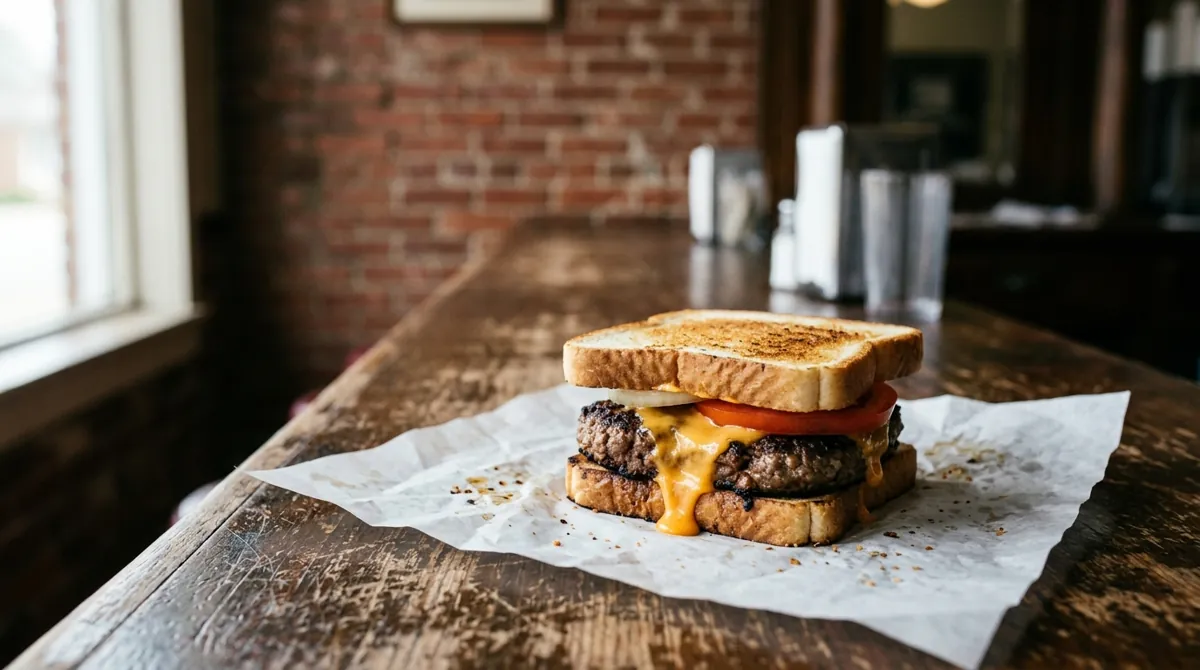
A square patty of ground chuck and sirloin with an onion slice pressed into it, cooked over a hot fire and served the New Haven way: between two slices of white toast with tomato, onion and a sharp cheese sauce, and no ketchup.
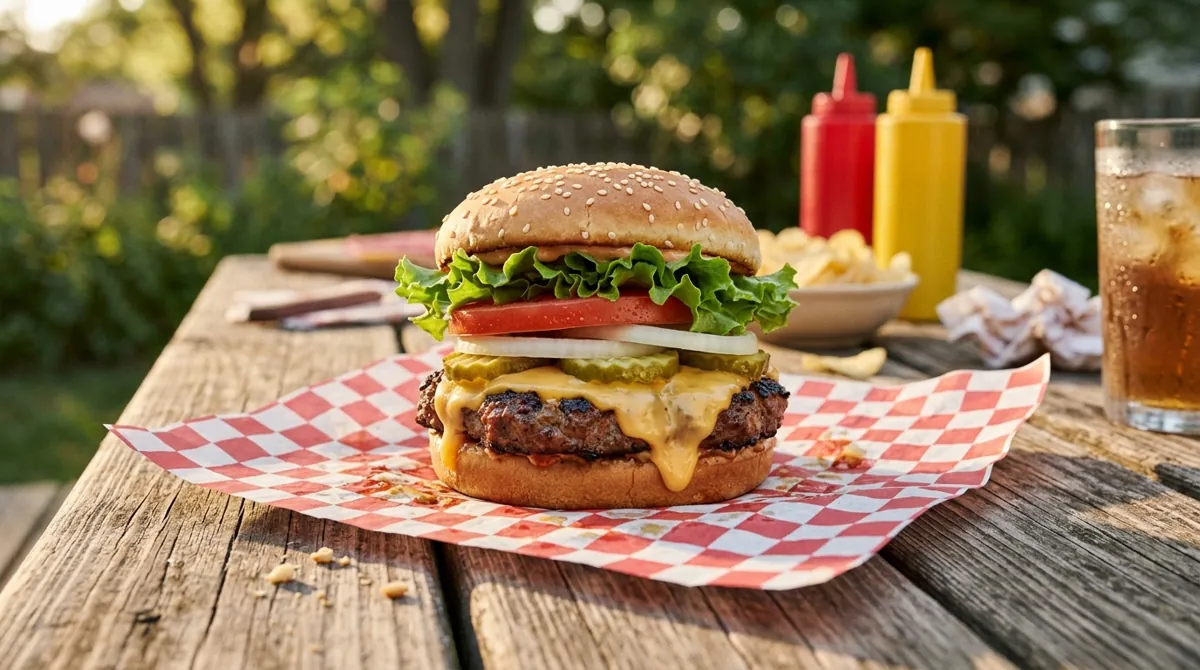
The Classic Backyard Grilled Cheeseburger
Thick, juicy patties of 85 percent lean beef with a dent in the center so they grill flat, topped with American cheese and stacked on soft buns with lettuce, tomato, onion, pickles, ketchup and mustard.
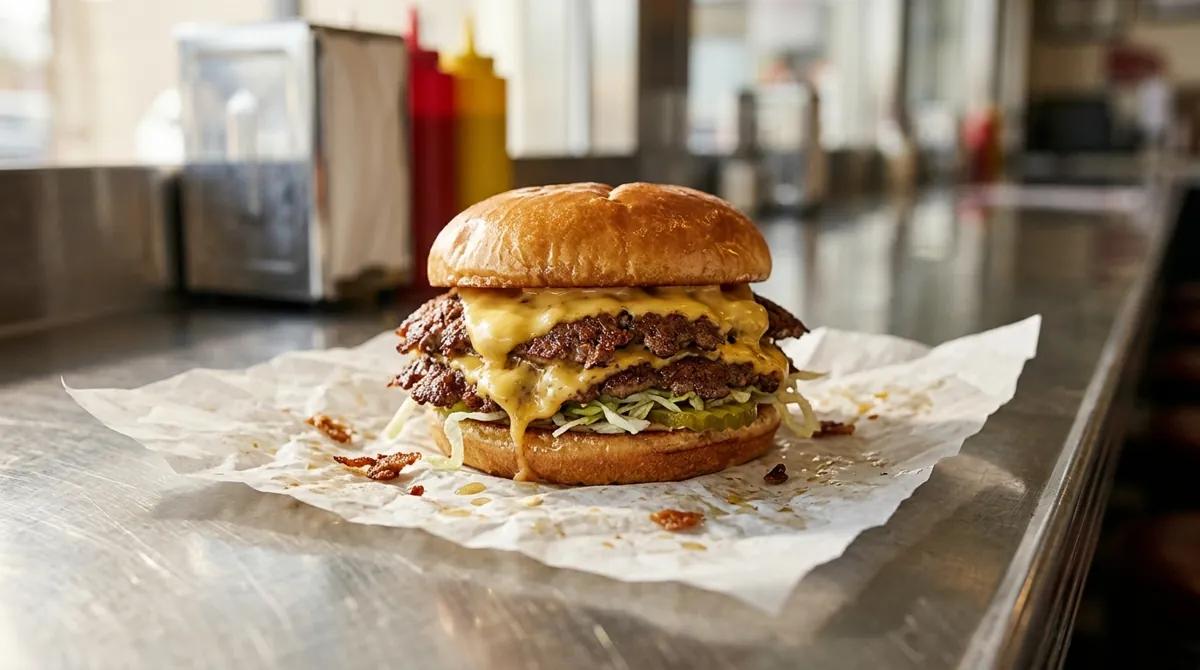
The Smash Burger
Two small balls of beef chuck smashed paper-thin onto a screaming-hot pan, scraped up with every bit of brown crust, and stacked with a slice of American cheese melting between them.
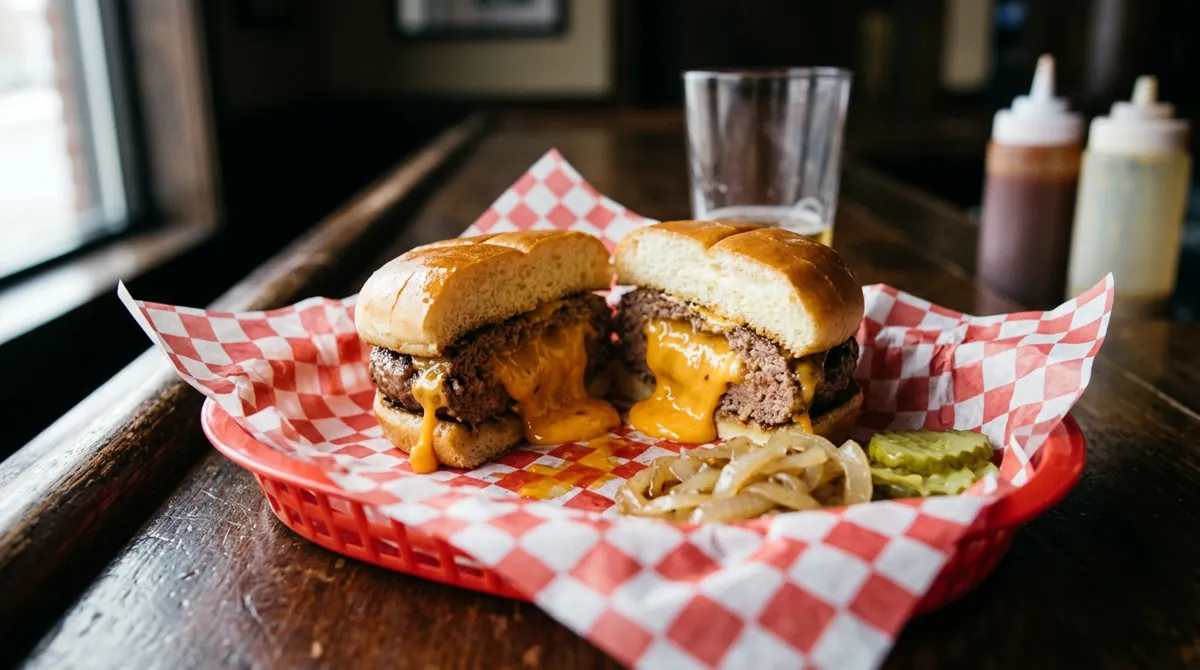
The Juicy Lucy (Minneapolis Cheese-Stuffed Burger)
Two thin beef patties sealed around rounds of American cheese, seared in a cast-iron skillet until the cheese inside turns molten, and served on a potato roll with buttery onions and pickles.
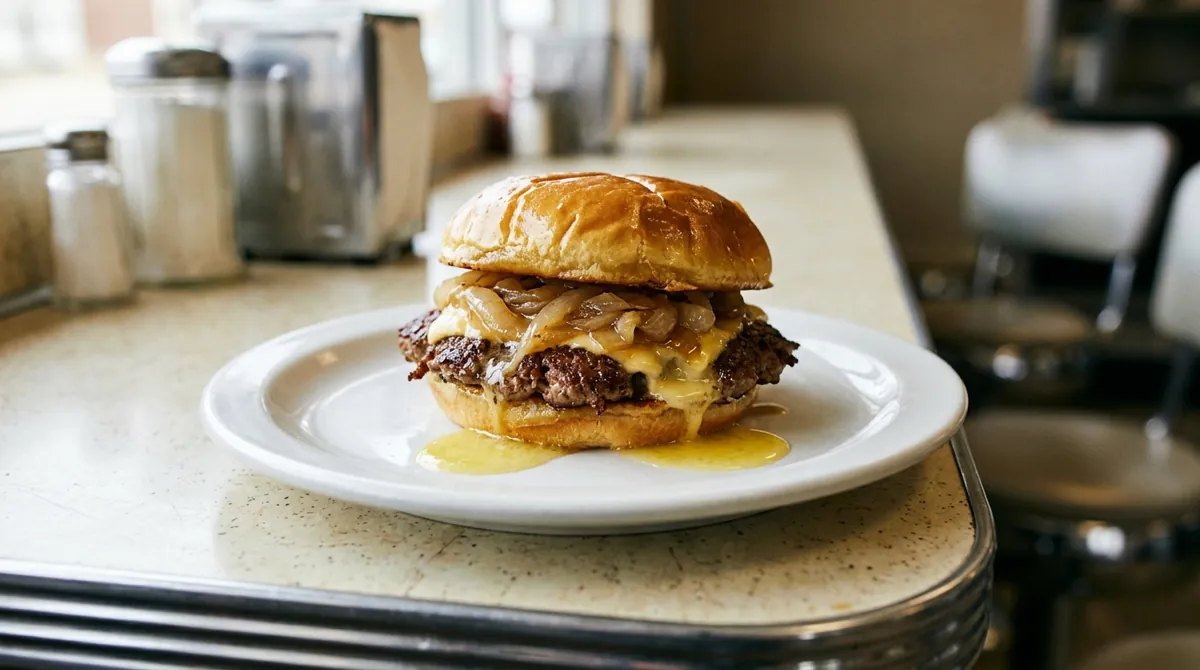
The Wisconsin Butter Burger
Lean ground sirloin enriched with cold butter seasoned with a little soy sauce, seared in a hot skillet and topped with a thick pat of the same butter and a spoonful of soft stewed onions, so the butter melts down into the bun.
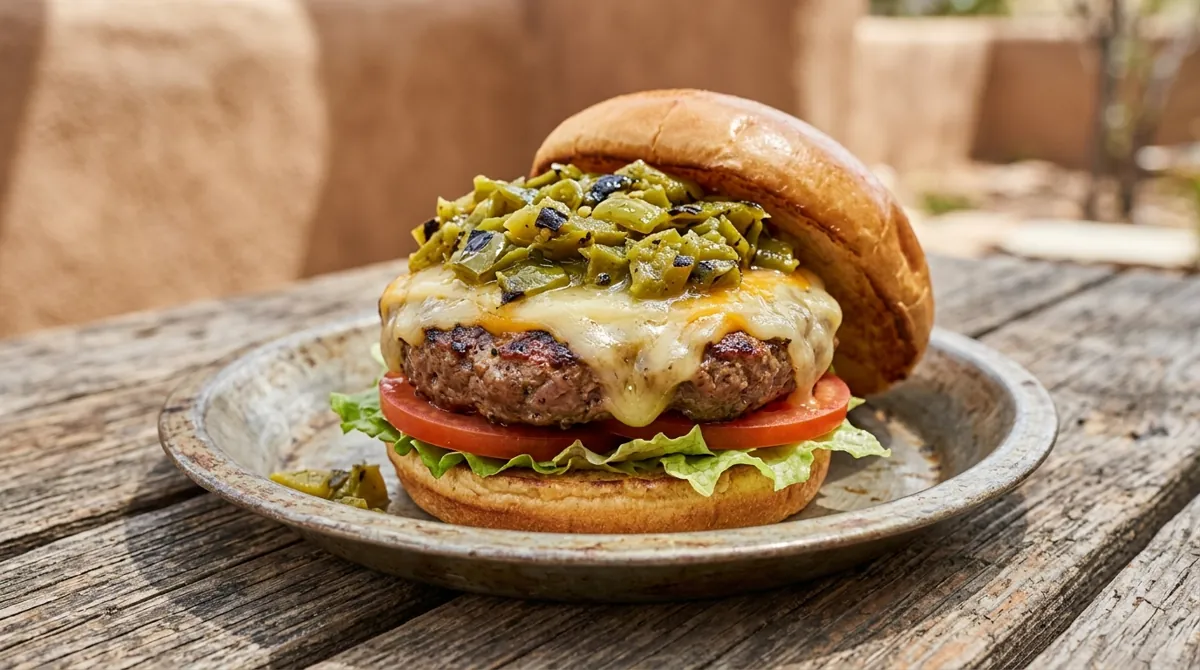
The New Mexico Green Chile Cheeseburger
Thick ground-chuck burgers grilled over a two-level fire, topped with melted cheese and a heap of freshly roasted, peeled and chopped New Mexico green chiles, on soft buns with tomato and lettuce.
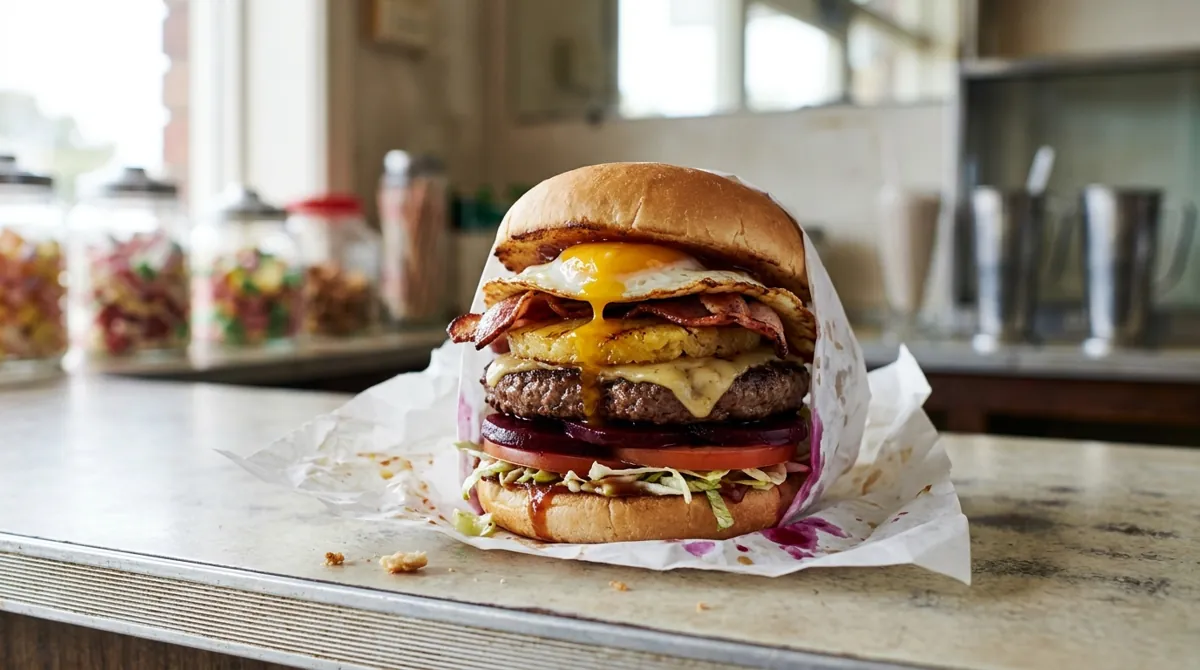
The Australian Burger with the Lot
A seasoned beef patty with onion, garlic and parsley, piled into a toasted roll with barbecue sauce, lettuce, cheese, canned beetroot, a pineapple ring, tomato, a fried egg, bacon and red onion.
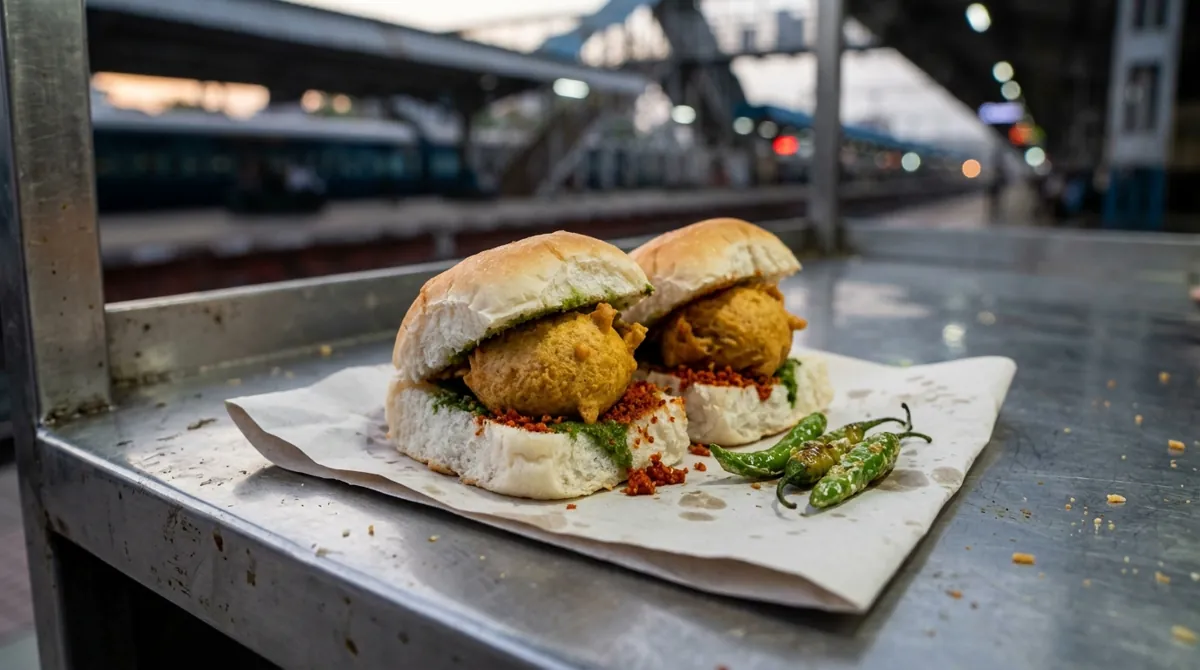
Vada Pav (Mumbai's Potato Fritter "Burger")
A spiced mashed potato patty dipped in chickpea batter and deep-fried, tucked into a soft white roll with green chutney and a crunchy dry garlic, coconut and peanut chutney.
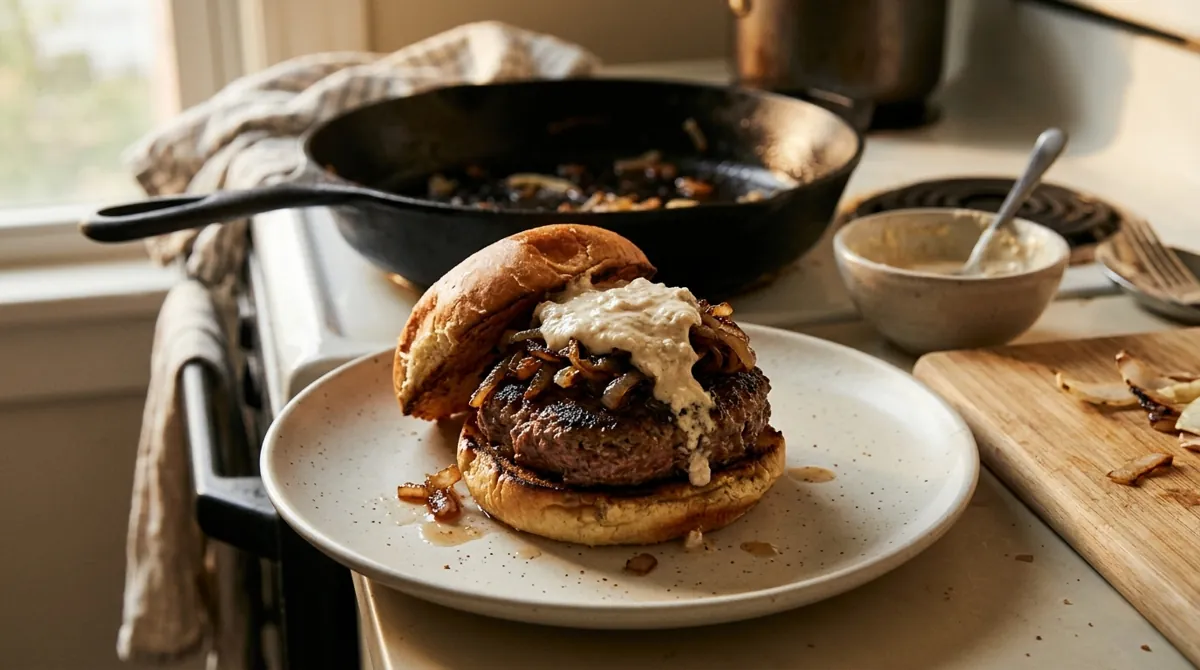
30-Minute Weeknight Skillet Burgers with Onions and Horseradish Sauce
Garlicky burgers seared in one skillet, then onions browned in the drippings, with a quick sour cream and horseradish sauce, on the table in 30 minutes with no grill.
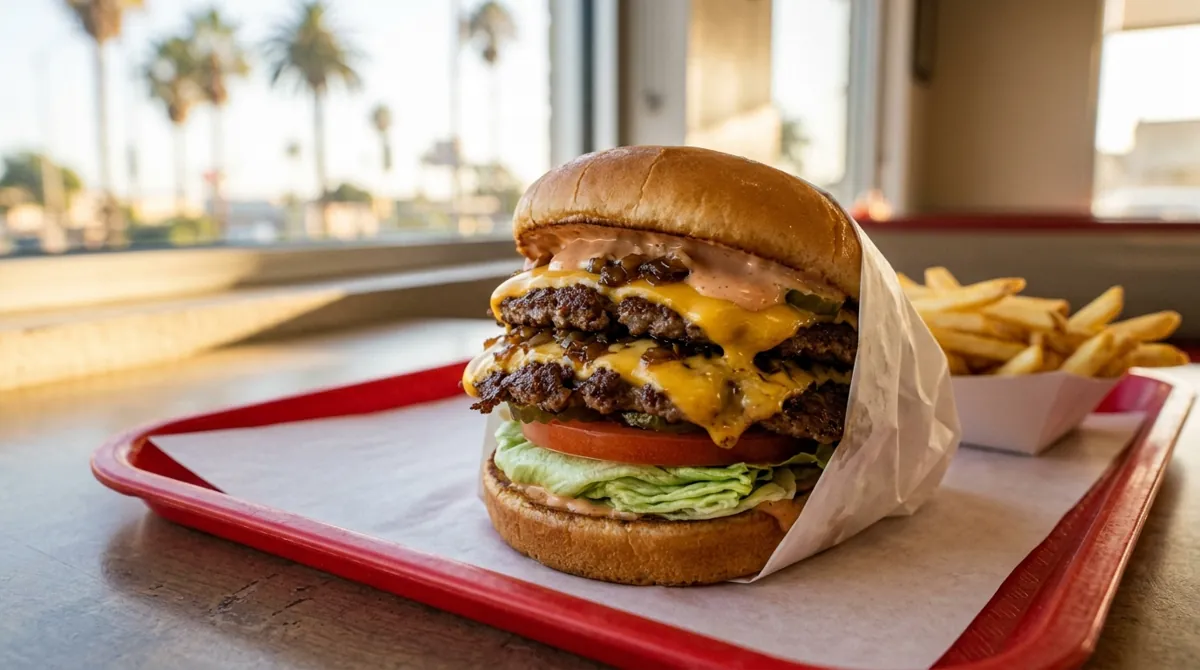
Double-Double Style Burger, Animal Style, Inspired by In-N-Out
Inspired by, not official: two thin mustard-seared patties with American cheese, deeply caramelized onions, pickles, tomato, lettuce and a pink Thousand Island-style spread on a toasted bun.
Meatballs of the World

Italian-American Meatballs
Big, tender meatballs braised for an hour in red sauce over spaghetti. The one most Americans grew up with.

Pallottine (Abruzzo Meatballs)
Tiny meatballs, smaller than a marble, tossed right through square spaghetti alla chitarra. No bread at all.

Swedish Meatballs (Köttbullar)
Small, soft meatballs browned in butter, in a cream sauce made from the same pan, with lingonberry jam on the plate.

Danish Frikadeller
Pork meatballs shaped with a spoon and fried slowly in butter, crusty outside and soft in the middle.

Königsberger Klopse
German meatballs that are never fried: poached, then served in a creamy white sauce with capers.

Spanish Albóndigas in Almond Saffron Sauce
The tapas bar classic: small meatballs in a golden sauce thickened with fried almonds and bread.

Mexican Albóndigas with Chipotle and Mint
Soft meatballs with rice and fresh mint inside, simmered in a smoky tomato and chipotle broth.

Izgara Köfte (Turkish Grilled Meatballs)
Small, flat meatballs kneaded hard, rested cold, and charred on a hot grill pan.

Lion's Head Meatballs
Big, soft pork meatballs, stirred into a sticky paste, fried to set, then braised in a savory sauce.

Chicken Tsukune
Japan's chicken meatball: kneaded sticky, grilled on skewers, glazed with sweet soy tare, dipped in egg yolk.