
Sheet-Pan Brussels Sprouts with Bacon and Onion
One pan, one very hot oven: bacon and sliced onion get a head start, then halved Brussels sprouts go in cut side down and roast until deep golden and crisp at the edges. About 50 minutes, most of it hands-off.
 Edited by JP Lambiase
Change the estimate
Swaps change the price only: cook any meat to its own safe temperature. Where these numbers come from
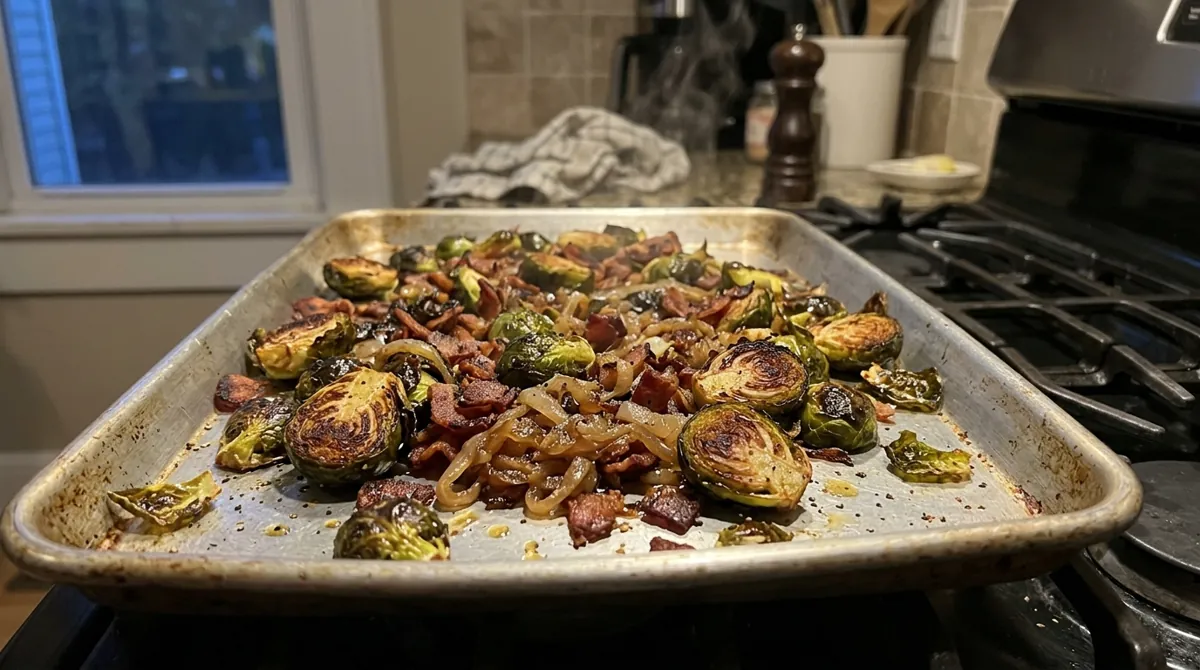
Brussels sprouts went from the most-mocked vegetable on the plate to a restaurant favorite, and plant breeding is part of the reason. Wikipedia says sprouts were probably grown near Brussels, where they got their name, possibly as early as the 13th century; the first written reference is from 1587; French settlers grew them in Louisiana; commercial planting in the Louisiana delta began in 1925; and by 1939 much of the US crop had moved to California's Central Coast. In the 1990s the Dutch scientist Hans van Doorn identified the compounds that make sprouts bitter, sinigrin and progoitrin, which let seed companies cross old, mild varieties with high-yielding ones; Wikipedia says that is part of why sprouts became popular again. Roasting at high heat is the American way to finish the job: America's Test Kitchen's version starts the bacon and onion first, then presses the sprouts cut side down onto the hot pan.
🇺🇸 This one is American
One pan, one very hot oven: bacon and sliced onion get a head start, then halved Brussels sprouts go in cut side down and roast until deep golden and crisp at the edges. About 50 minutes, most of it hands-off.
🇺🇸 The original
The original is succotash: corn and beans cooked together, the Three Sisters of Native American farming with squash beside them. See the Three Sisters Succotash recipe.
Why it works the kitchen science
Head start for the bacon
The bacon renders its fat and the onion softens before the sprouts go in, so they finish at the same time and the sprouts roast in bacon fat (ATK).
Cut side down on the lowest rack
Flat faces pressed against a very hot pan near the heat brown deeply and sweetly instead of steaming (ATK).
🧰 You'll need 6 items
Everything the steps call for. Tick off what you have before you start.
Appliances
Pans and pots
Tools
Step by step
- Step 1
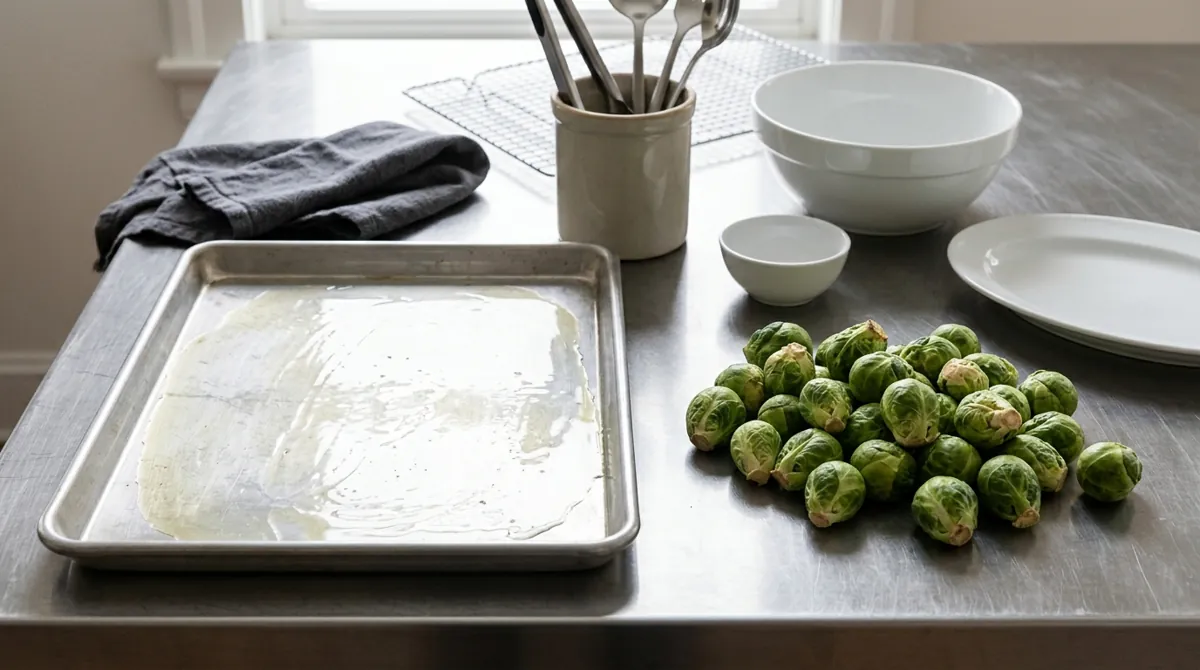
Set a rack in the lowest position and heat the oven to 475°F. Spray a rimmed baking sheet with oil spray.
- Step 2
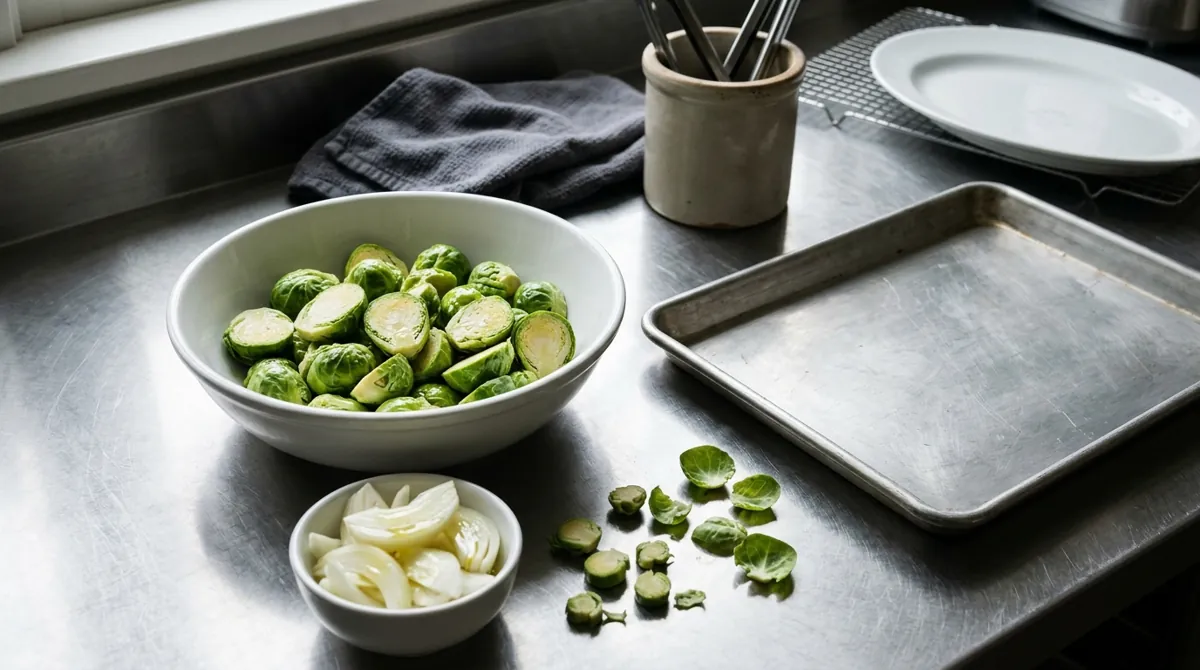
Trim only a thin slice off each sprout stem so the leaves stay attached, then halve them. Toss the sprouts with 1 tbsp oil in a large bowl. Toss the onion with the other 1 tbsp oil in a small bowl.
- Step 3
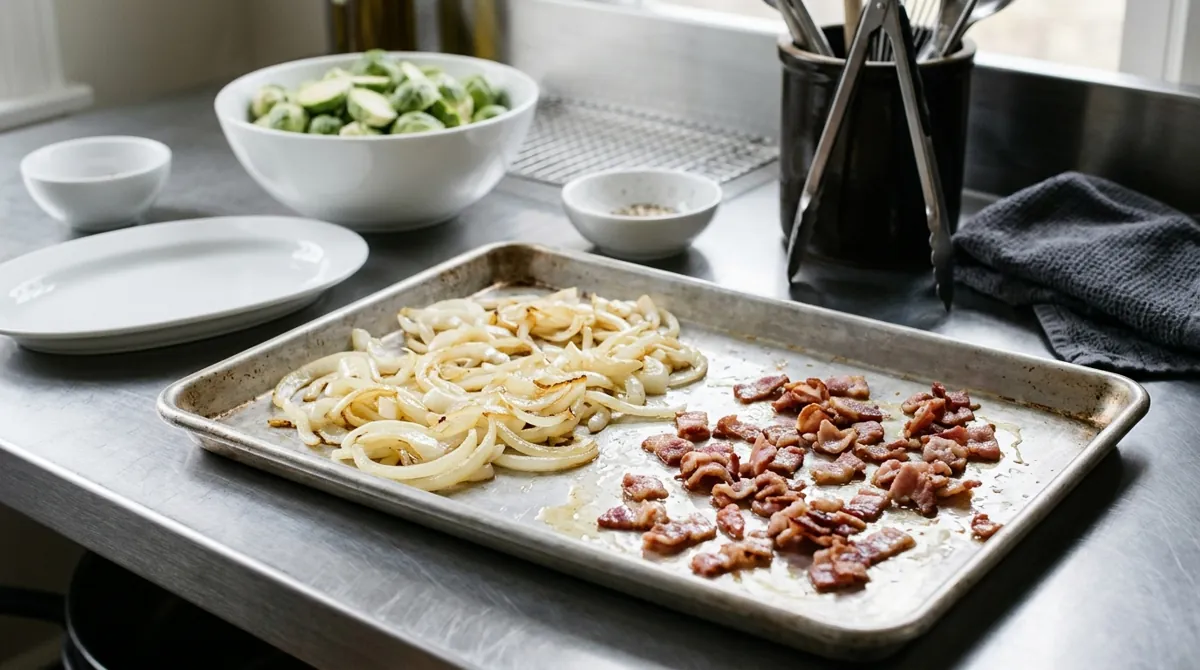
Spread the onion on one half of the baking sheet and the bacon on the other half. Roast 7 to 9 minutes, until the bacon starts to brown and the onion softens.
- Step 4
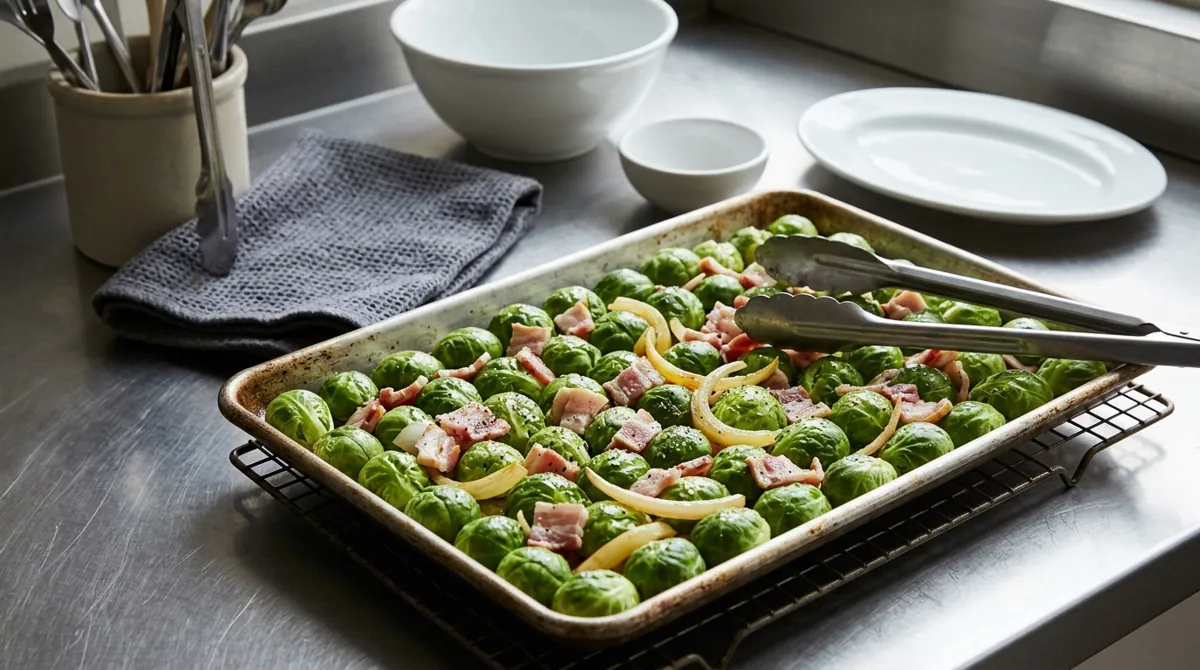
Set the sheet on a wire rack. Add the sprouts, stir them together with the bacon and onion, then turn every sprout cut side down and press it into the pan.
- Step 5
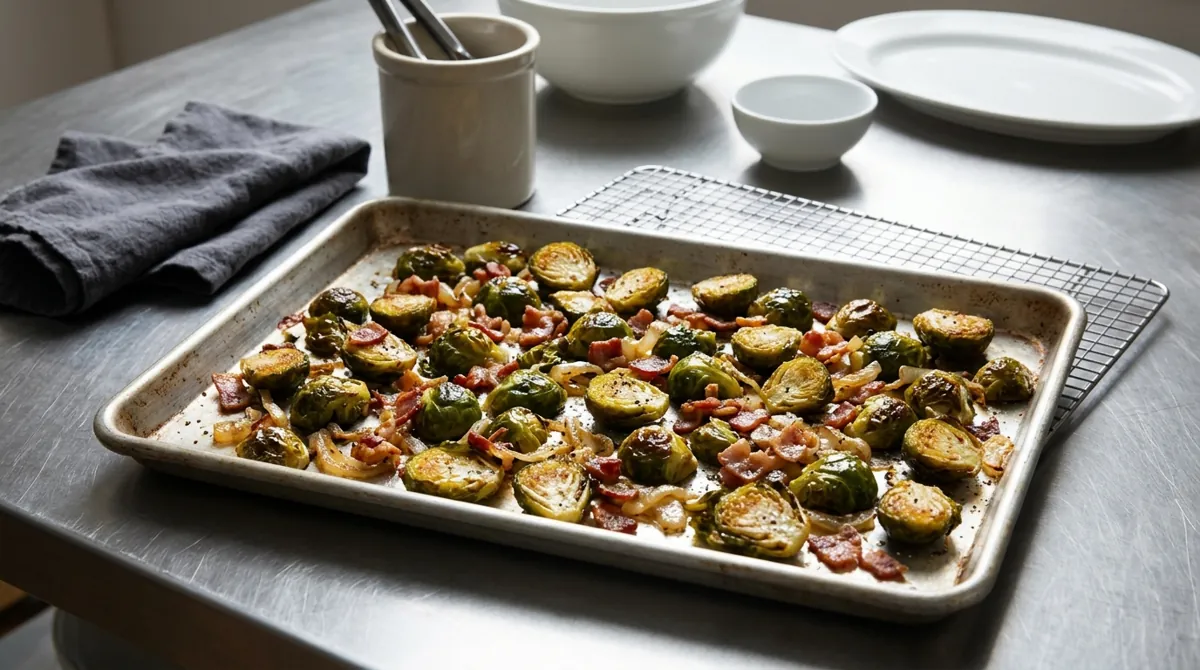
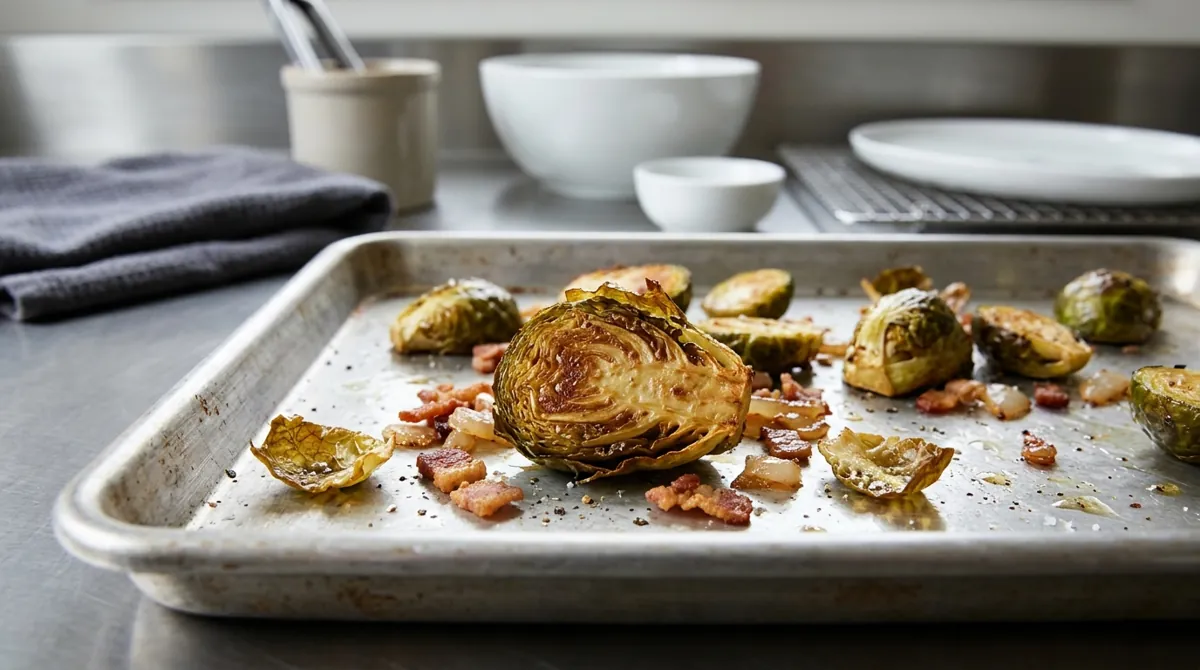
Roast 15 to 17 minutes more, until the sprouts are deep golden brown underneath and the bacon is crisp.
✓ What it should look like - Step 6
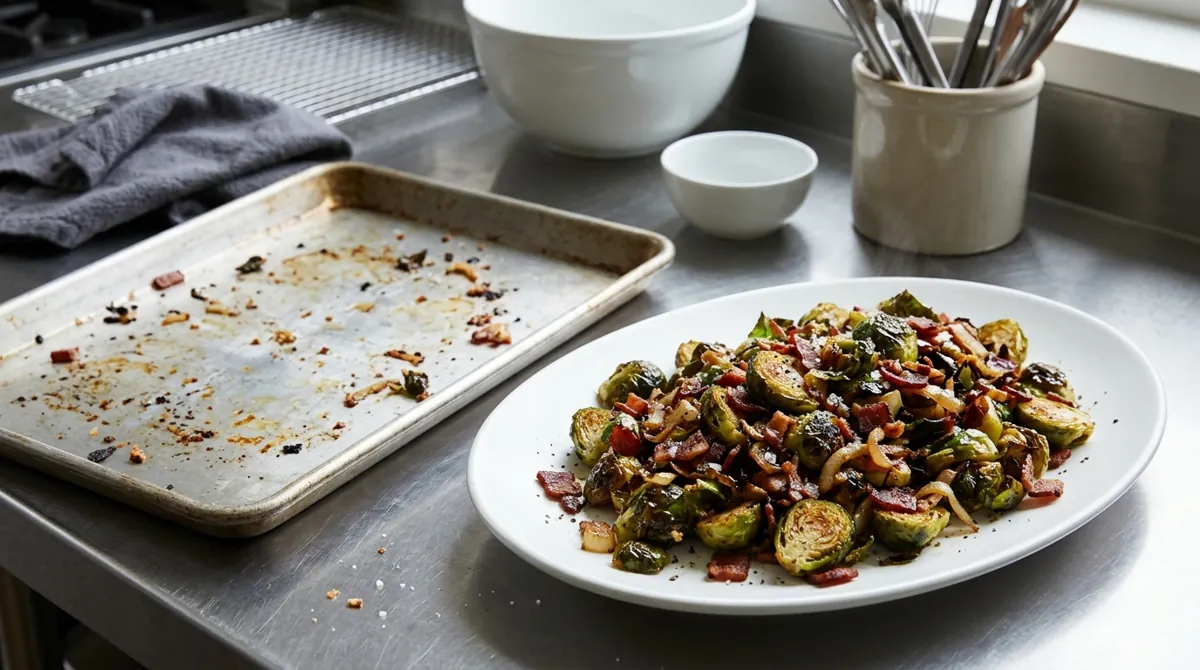
Sprinkle with the salt and pepper, scrape everything onto a platter, browned bits and all, and serve.
Sheet-Pan Brussels Sprouts with Bacon and Onion
Serves 4 · about 4 cups · 50 min total
- 1 1/2 lb Brussels sprouts, similar in size, trimmed and halved
- 2 tbsp olive oil, divided
- 1 onion, halved and sliced 1/4 inch thick
- 3 slices thick-cut bacon, cut into 1/4-inch pieces
- 1/4 tsp salt
- 1/4 tsp black pepper
- Vegetable oil spray
Equipment: Oven, Rimmed baking sheet, Wire rack, Chef's knife and cutting board, Measuring cups and spoons, Mixing bowls
Method
- Set a rack in the lowest position and heat the oven to 475°F. Spray a rimmed baking sheet with oil spray.
- Trim only a thin slice off each sprout stem so the leaves stay attached, then halve them. Toss the sprouts with 1 tbsp oil in a large bowl. Toss the onion with the other 1 tbsp oil in a small bowl.
- Spread the onion on one half of the baking sheet and the bacon on the other half. Roast 7 to 9 minutes, until the bacon starts to brown and the onion softens.
- Set the sheet on a wire rack. Add the sprouts, stir them together with the bacon and onion, then turn every sprout cut side down and press it into the pan.
- Roast 15 to 17 minutes more, until the sprouts are deep golden brown underneath and the bacon is crisp.
- Sprinkle with the salt and pepper, scrape everything onto a platter, browned bits and all, and serve.
Adapted from America's Test Kitchen (Cook's Country, October/November 2016), "Roasted Brussels Sprouts with Bacon and Onion" by Diane Unger (August 19, 2016), as written (ATK says 4 to 6; we call it 4). America's Test Kitchen. Ingredient list follows the source; the method is in our own words.
All sources (2)
Tips
- Make-ahead (ours): trim and halve the sprouts Wednesday and refrigerate them in a zip-top bag with a paper towel. Slice the onion and cut the bacon the same day.
- Pick sprouts of the same size so they cook evenly (ATK).
- For a crowd, use two sheet pans on the lowest and lower-middle racks and switch them halfway through the second roast.
- A drizzle of maple syrup or balsamic vinegar at the end is a popular finish; it is not in ATK's recipe.
The rules people argue about
What the sources agree on, what they don't, and what is just a good story.
- Brussels sprouts come from Brussels. Disputed: Wikipedia says they were grown near Brussels, "possibly" by the 13th century, but the same article also says sprouts first appeared in northern Europe in the 5th century.
- Sprouts used to taste more bitter. Documented: Wikipedia says breeders crossed in low-bitterness varieties after Hans van Doorn identified the bitter compounds in the 1990s.
- Cut an X in the stem so they cook evenly. Folklore: Wikipedia says it is commonly believed and may be ineffective; it is not needed for halved sprouts.
- Roasting beats boiling. Folklore: a matter of taste, but the browning only happens in dry heat.
Every other Thanksgiving side
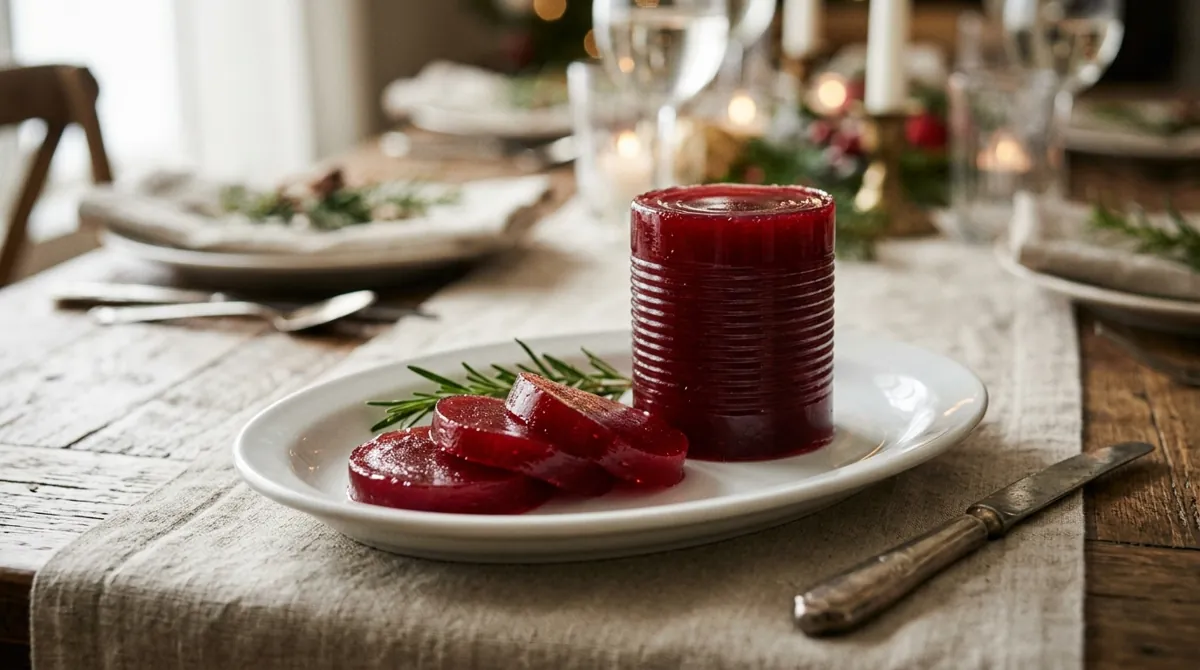
Jellied Cranberry Sauce, Canned Style
A smooth, sliceable cranberry jelly cooked in cranberry juice, strained, and set in a clean can so it slides out with the ridges. Inspired by Ocean Spray's canned jellied cranberry sauce. Not official.
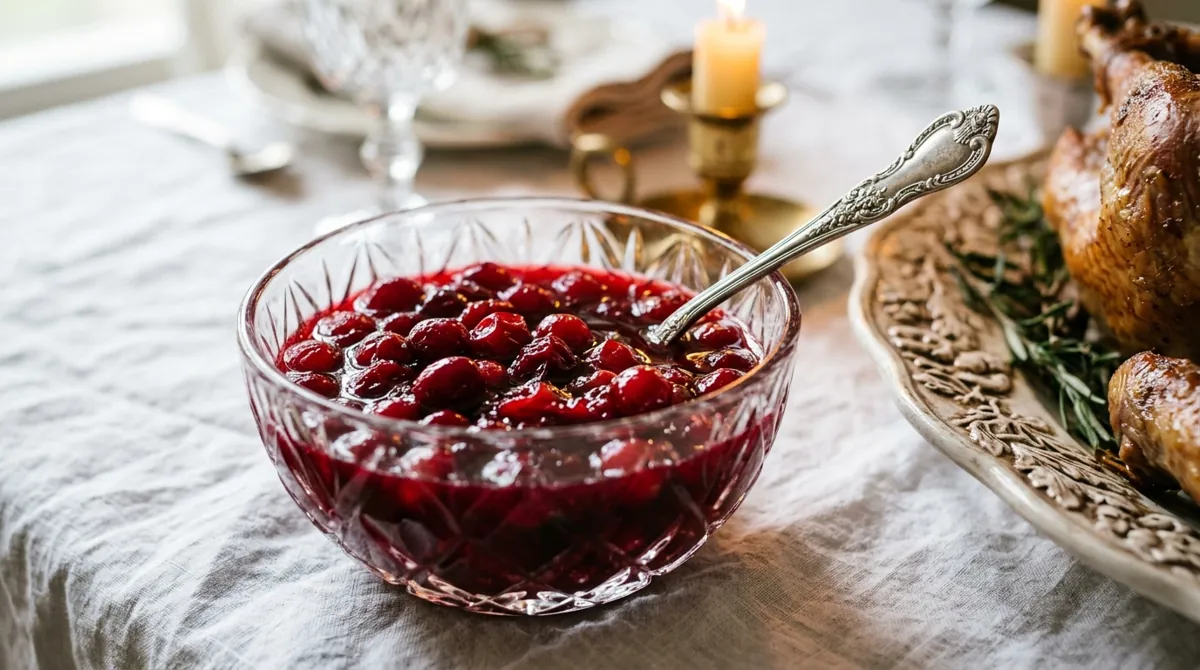
Whole-Berry Cranberry Sauce (Boston Cooking-School, 1896)
The old New England stovetop sauce: one bag of cranberries boiled ten minutes in sugar syrup until most of the berries pop, then cooled until it sets loose and glossy.
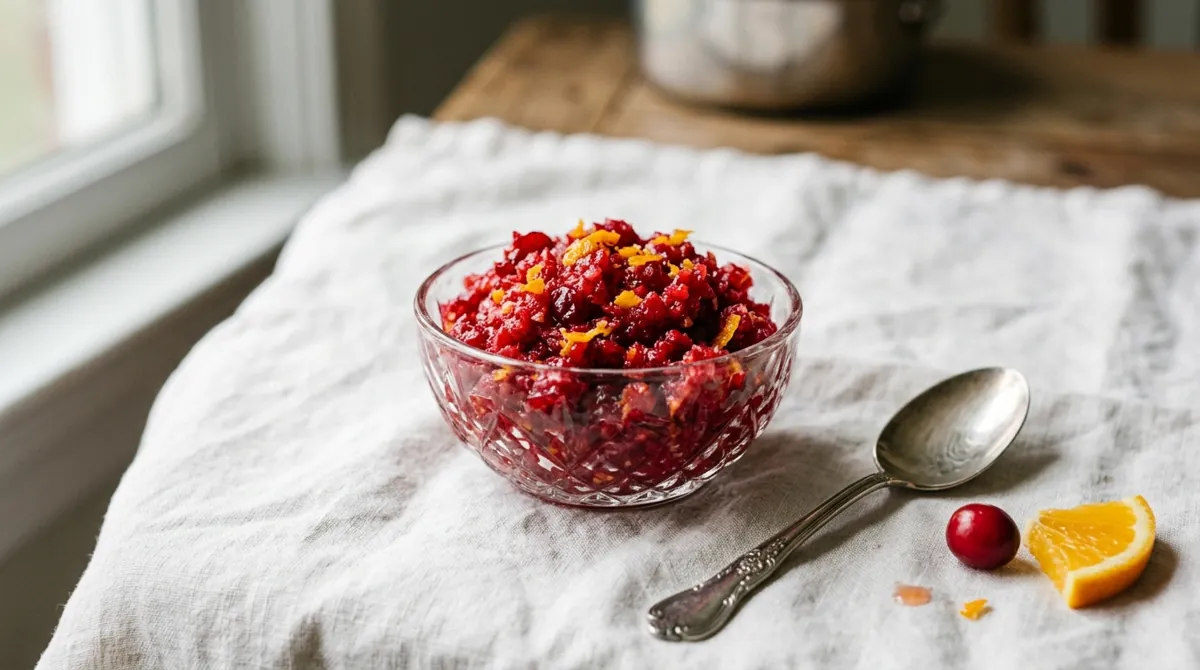
Raw Cranberry-Orange Relish (the Grinder Classic)
No stove at all: raw cranberries, a whole unpeeled orange, an apple and sugar ground coarse and left to sit a day, the way families once cranked it through a meat grinder clamped to the table.
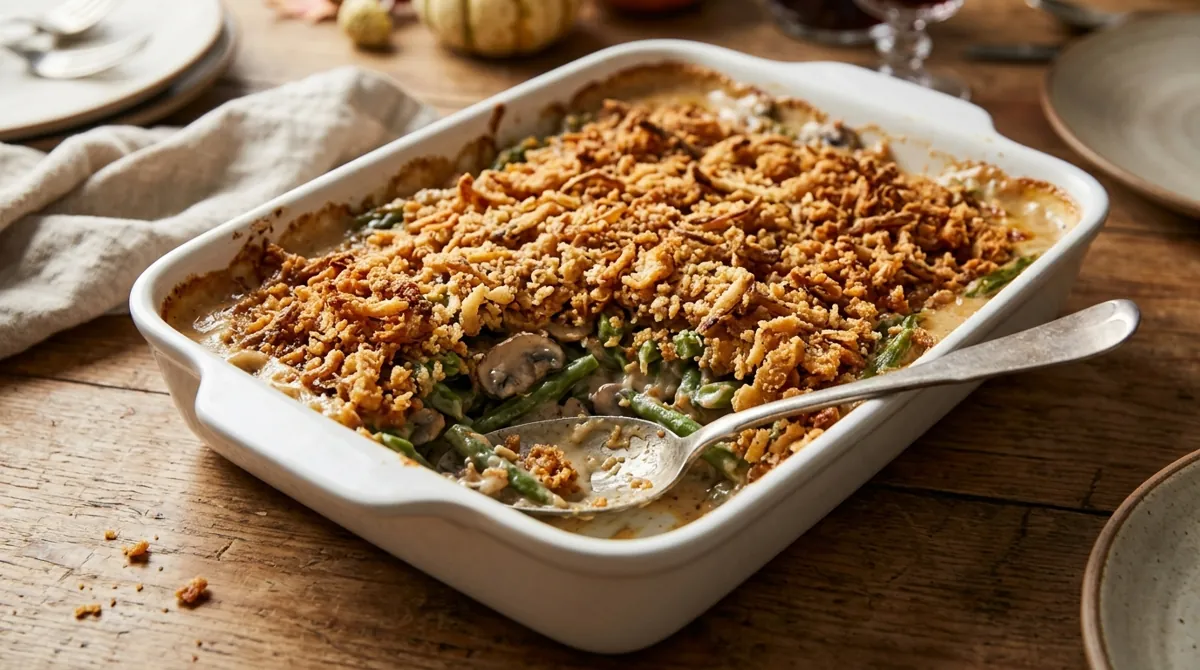
Green Bean Casserole from Scratch
The 1955 test-kitchen classic rebuilt from scratch: blanched fresh green beans in a homemade mushroom cream sauce, under buttered bread crumbs and crispy fried onions, baked hot until bubbling.
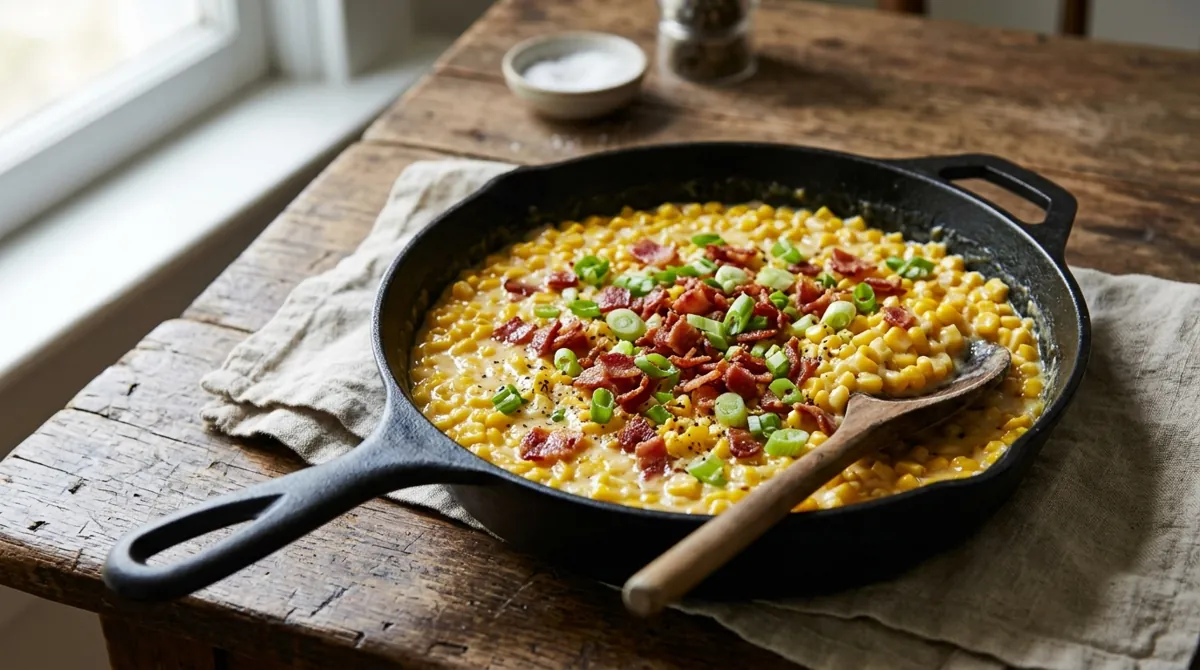
Skillet Creamed Corn with Bacon
Corn cut off the cob and the cobs scraped for their milky juice, cooked fast in bacon fat with shallots, then bubbled with a little cream and cayenne and finished with crisp bacon and scallions.
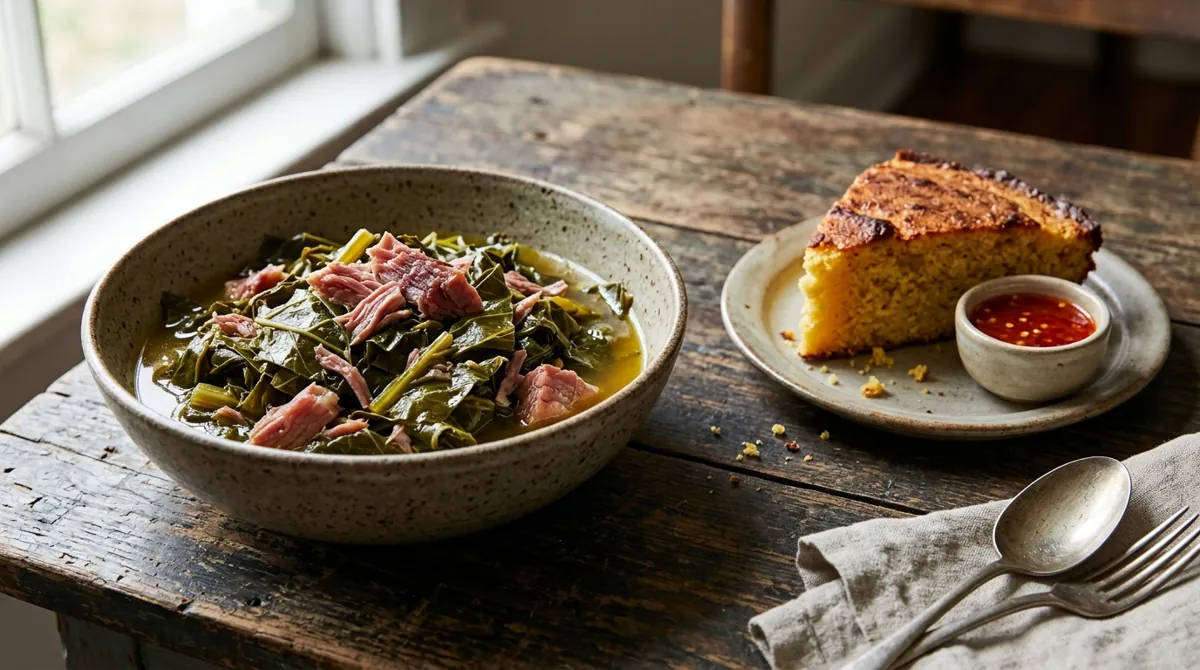
Southern Collard Greens with Ham Hocks
Collard greens braised low and slow in the oven with smoked ham hocks, onion and a pinch of sugar and chile until silky, then served in their own smoky broth, the pot likker, with hot sauce on the side.
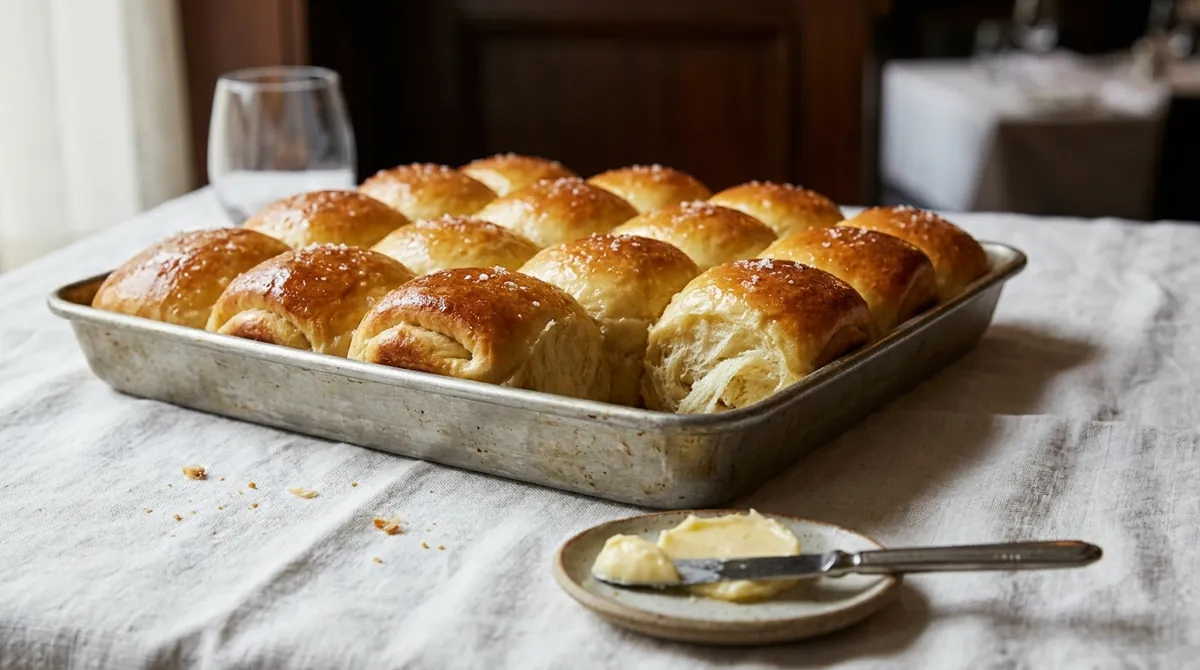
Parker House Rolls
Soft, buttery pull-apart dinner rolls from the Boston hotel that made them famous: an egg and milk dough, folded over a brush of melted butter so each roll has a lip, baked golden and brushed again.
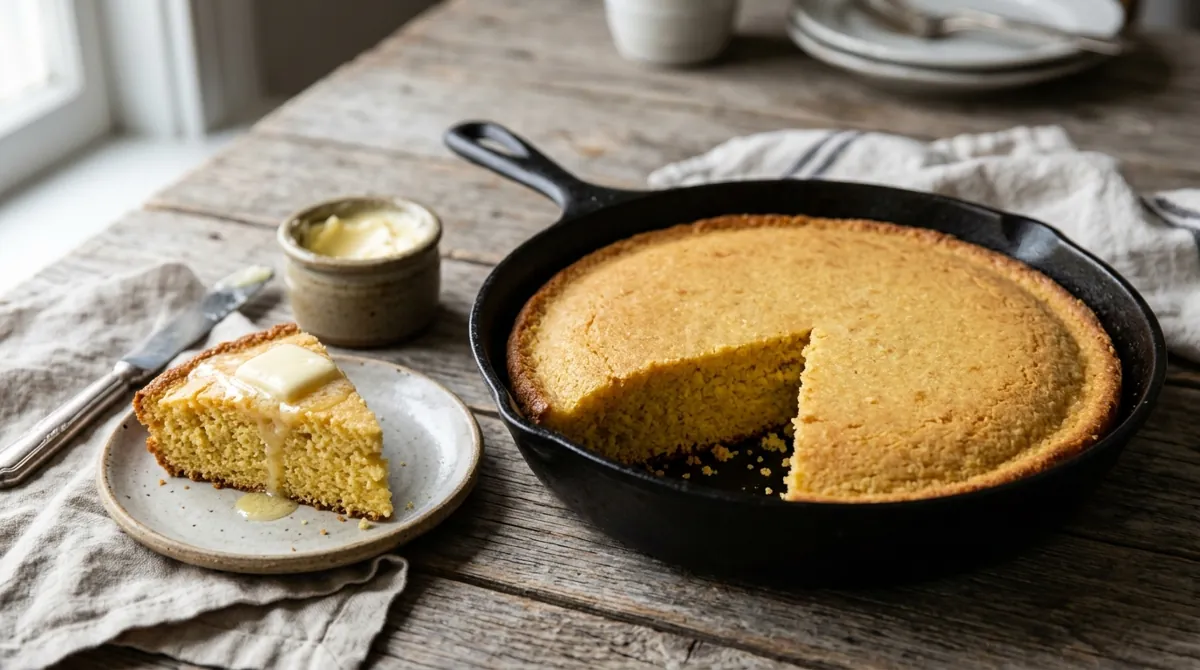
Southern Skillet Cornbread (No Sugar)
Whole cornmeal, buttermilk and one egg poured into a smoking-hot cast-iron skillet of bacon fat, so it sizzles into a crisp, brown crust. No sugar, a little flour, and ready in 45 minutes.
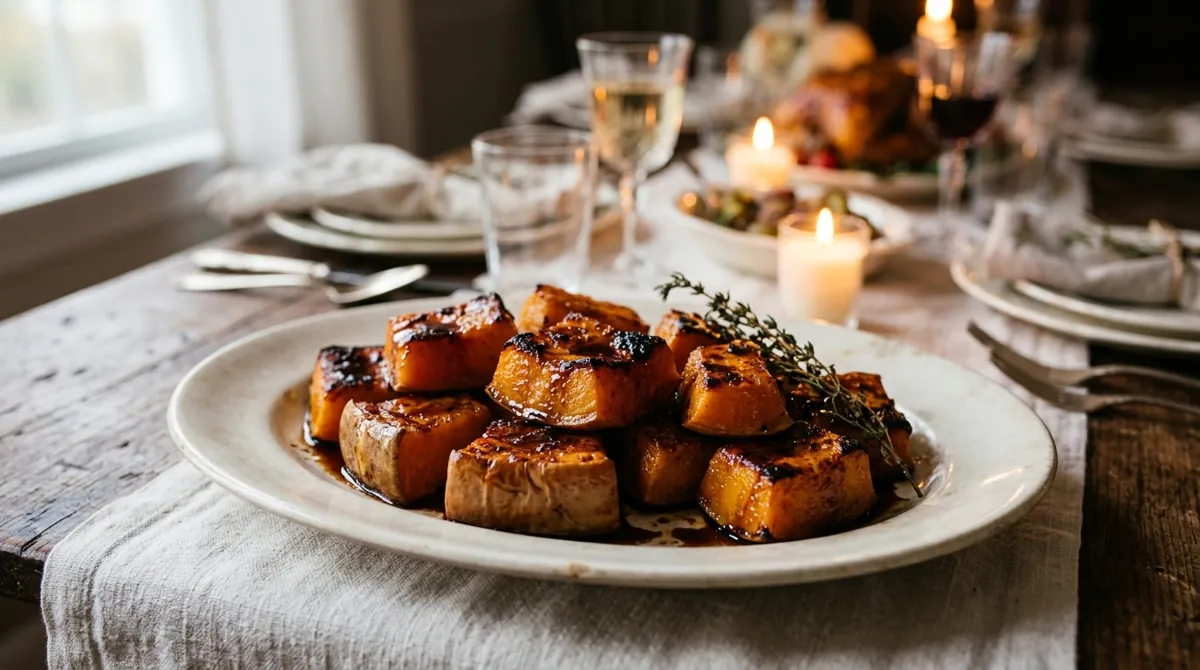
Molasses-Baked Winter Squash (Boston Cooking-School, 1896)
The squash on an 1896 Boston Thanksgiving menu: two-inch squares of butternut baked in their skins with salt, pepper and a little molasses and melted butter on each piece, covered first, then uncovered until glazed.
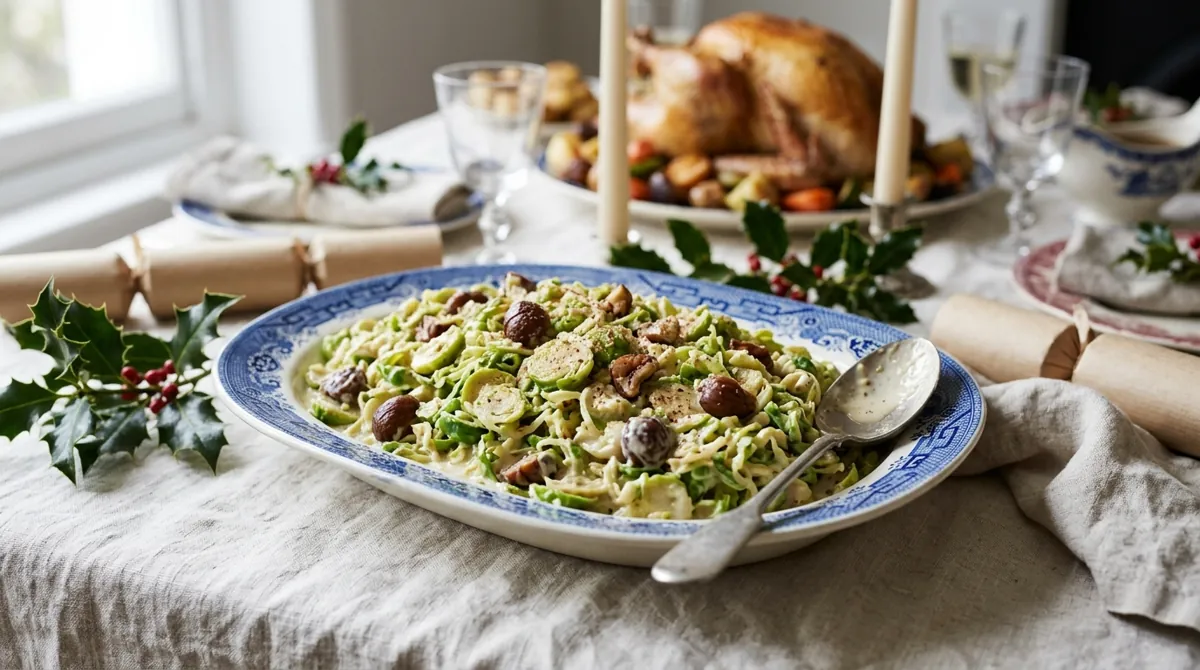
British Creamed Brussels Sprouts with Chestnuts
The Christmas-dinner sprout the British way: shredded sprouts stir-fried in butter with shallots and crumbled chestnuts, steamed tender, then turned in a little double cream with nutmeg and a squeeze of lemon.
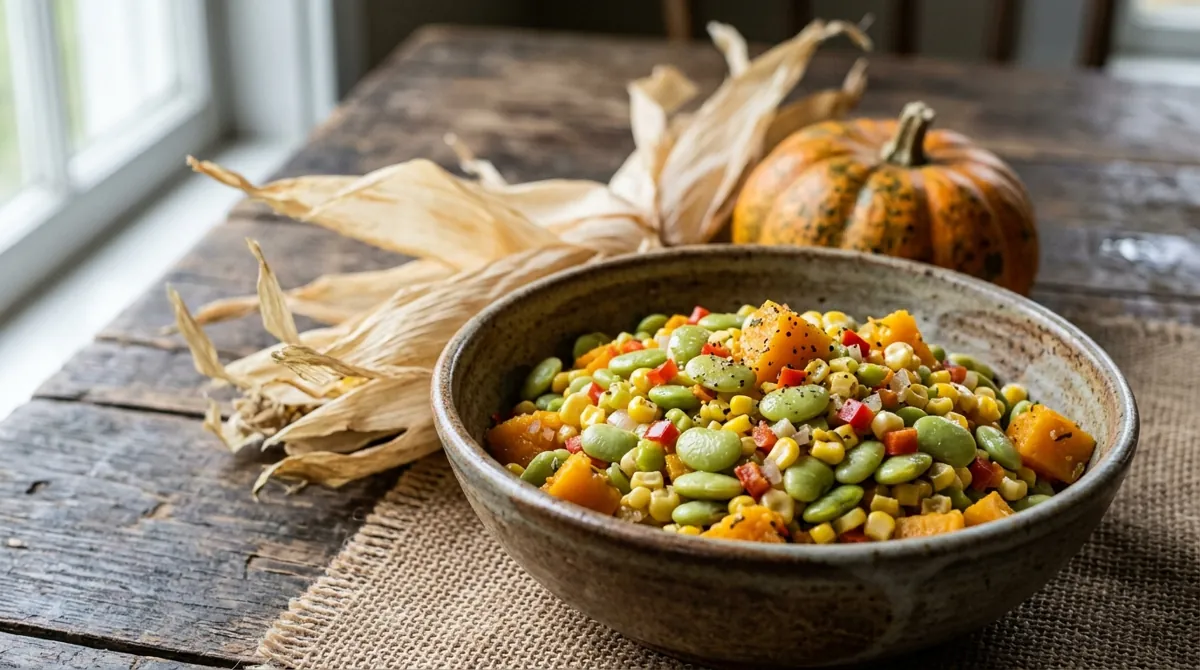
Three Sisters Succotash
Corn, beans and squash, the Three Sisters of Native American farming, simmered together in a little stock with onion and sweet pepper. No butter, no cream: the dish New England learned from the Narragansett and Wampanoag, before Yankee cooks changed it.
Meatballs of the World

Italian-American Meatballs
Big, tender meatballs braised for an hour in red sauce over spaghetti. The one most Americans grew up with.

Pallottine (Abruzzo Meatballs)
Tiny meatballs, smaller than a marble, tossed right through square spaghetti alla chitarra. No bread at all.

Swedish Meatballs (Köttbullar)
Small, soft meatballs browned in butter, in a cream sauce made from the same pan, with lingonberry jam on the plate.

Danish Frikadeller
Pork meatballs shaped with a spoon and fried slowly in butter, crusty outside and soft in the middle.

Königsberger Klopse
German meatballs that are never fried: poached, then served in a creamy white sauce with capers.

Spanish Albóndigas in Almond Saffron Sauce
The tapas bar classic: small meatballs in a golden sauce thickened with fried almonds and bread.

Mexican Albóndigas with Chipotle and Mint
Soft meatballs with rice and fresh mint inside, simmered in a smoky tomato and chipotle broth.

Izgara Köfte (Turkish Grilled Meatballs)
Small, flat meatballs kneaded hard, rested cold, and charred on a hot grill pan.

Lion's Head Meatballs
Big, soft pork meatballs, stirred into a sticky paste, fried to set, then braised in a savory sauce.

Chicken Tsukune
Japan's chicken meatball: kneaded sticky, grilled on skewers, glazed with sweet soy tare, dipped in egg yolk.