
Jellied Cranberry Sauce, Canned Style
A smooth, sliceable cranberry jelly cooked in cranberry juice, strained, and set in a clean can so it slides out with the ridges. Inspired by Ocean Spray's canned jellied cranberry sauce. Not official.
 Edited by JP Lambiase
Change the estimate
Swaps change the price only: cook any meat to its own safe temperature. Where these numbers come from
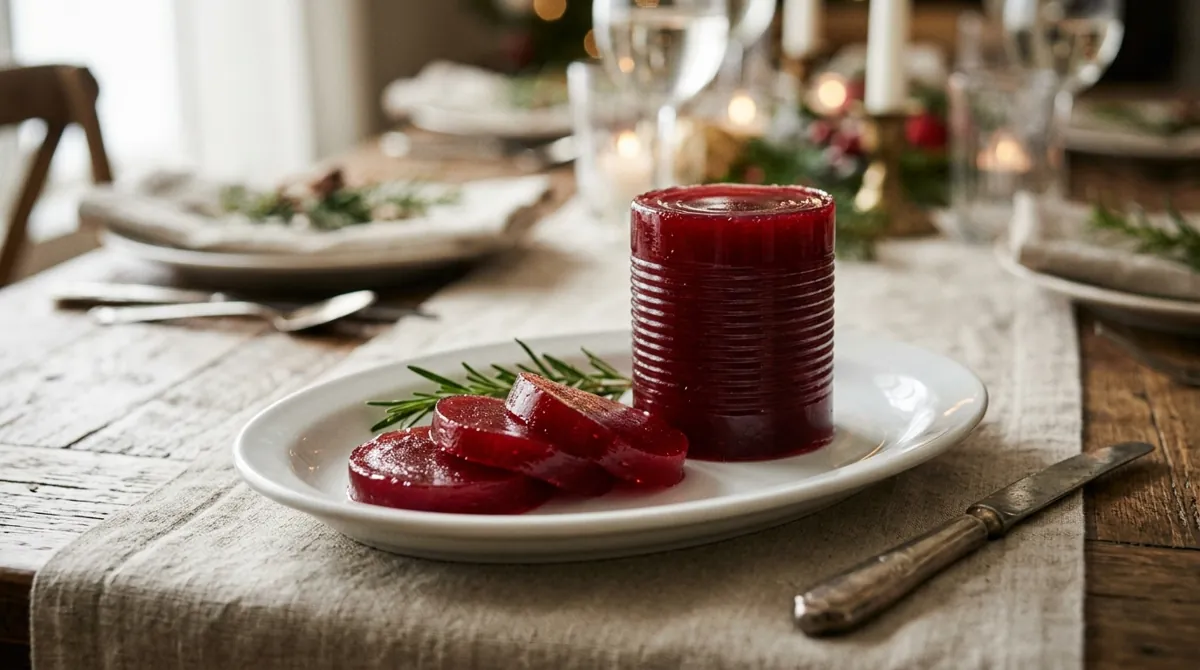
Not an official recipe: nothing here claims to be the commercial formula. Cranberries are native to North America. The Cape Cod Cranberry Growers' Association says Wampanoag people harvested wild cranberries, which it calls sasumuneash, for food and medicine, and dried some for pemmican, a mix of berries, dried meat and fat. The University of Kansas American Indian Health and Diet Project adds that berries were eaten fresh or dried, boiled into sauce or mixed with maple syrup. In 1672 the English traveler John Josselyn wrote that "the Indians and English use them much, boyling them with Sugar for Sauce to eat with their Meat" (New-England's Rarities Discovered, Project Gutenberg:). The canned sauce came much later. Wikipedia credits Marcus Urann, a lawyer turned cranberry grower, with testing cranberry sauce in his packing house in 1912 and selling it in Massachusetts; in 1930 he became president of a new growers' cooperative, which first sold canned cranberry sauce nationally in 1941. Search results tie his first cannery to Hanson, Massachusetts. America's Test Kitchen, which reverse-engineered the can in 2021, dates the jellied sauce to 1930 instead, so the year the log appeared is DISPUTED. Molded cranberry jelly itself is older than any can: the 1906 printing of Fannie Farmer's Boston Cooking-School Cook Book tells you to sieve boiled cranberries, add sugar and "turn into a mould".
🇺🇸 This one is American
A smooth, sliceable cranberry jelly cooked in cranberry juice, strained, and set in a clean can so it slides out with the ridges. Inspired by Ocean Spray's canned jellied cranberry sauce. Not official.
🇺🇸 The original
The original is succotash: corn and beans cooked together, the Three Sisters of Native American farming with squash beside them. See the Three Sisters Succotash recipe.
📖 Origin story: Why Is Canned Cranberry Sauce a Ridged Log? A Short History → 📖 Origin story: Who Invented Green Bean Casserole? →
Why it works the kitchen science
Juice instead of water
Cooking the berries in sweetened cranberry juice doubles the cranberry flavor, and the long boil pulls enough of the berries' own pectin out to set a firm, sliceable jelly with no gelatin (ATK).
A narrow pan and a timer
The pan size controls how much water boils away, so a pan wider than 9 inches over-reduces the sauce and sets it too hard (ATK).
🧰 You'll need 6 items
Everything the steps call for. Tick off what you have before you start.
Pans and pots
Tools
Step by step
- Step 1
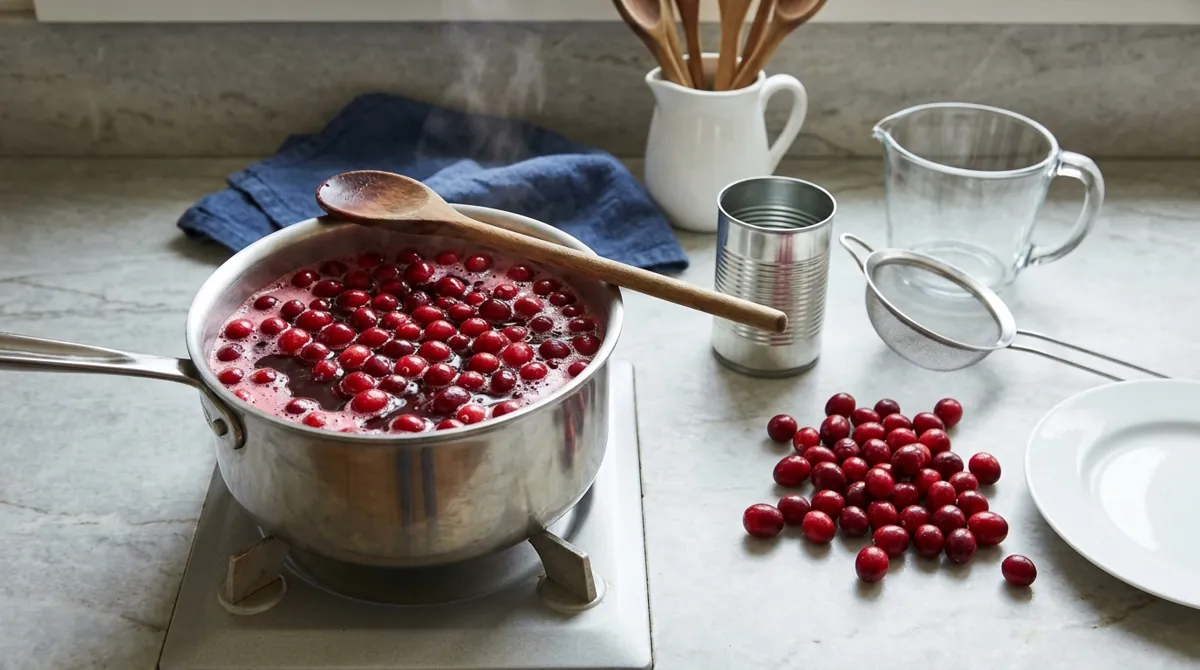
Put the cranberry juice, cranberries, sugar and salt in a saucepan no wider than 9 inches across. Bring to a boil over medium-high heat, stirring until the sugar dissolves, about 5 minutes.
- Step 2
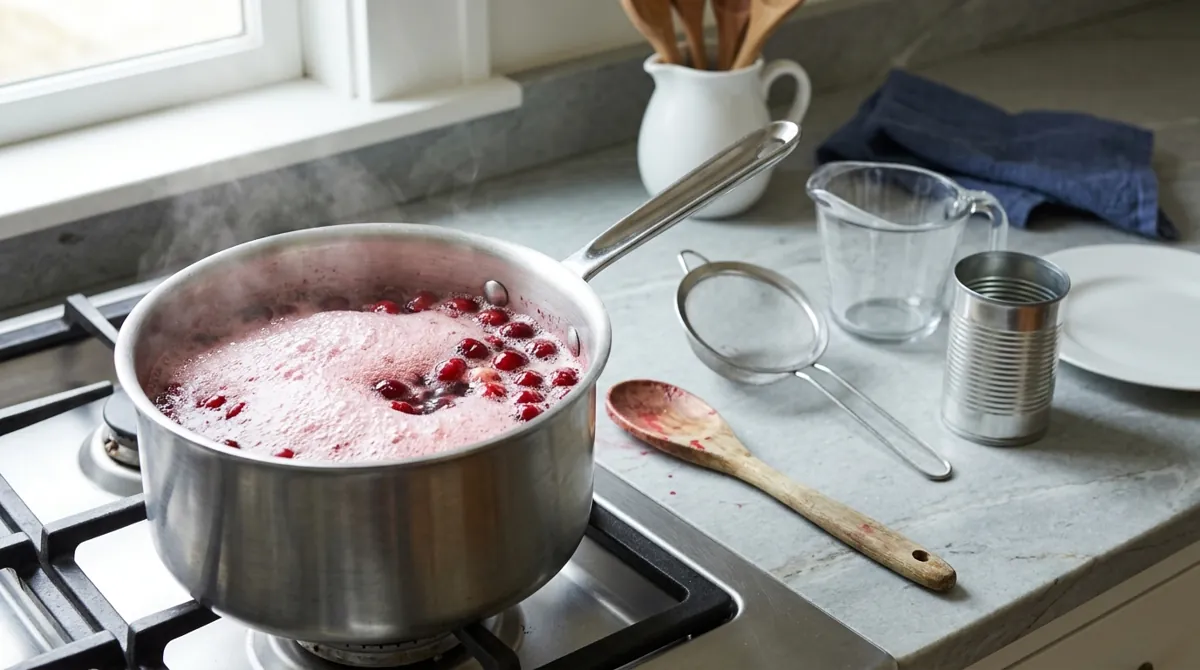
Boil 10 minutes, turning the heat down a little if the foam climbs toward the rim.
- Step 3
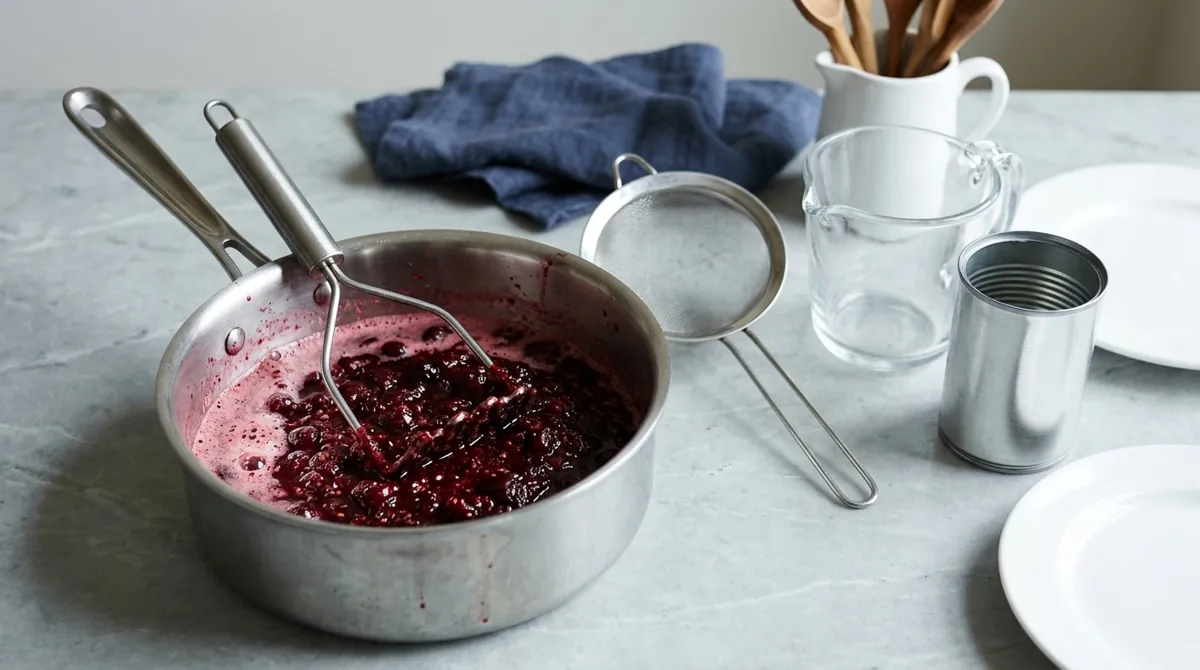
Mash the berries with a potato masher, then keep boiling, stirring often, 15 minutes more, until the foam settles and the liquid is slightly thickened.
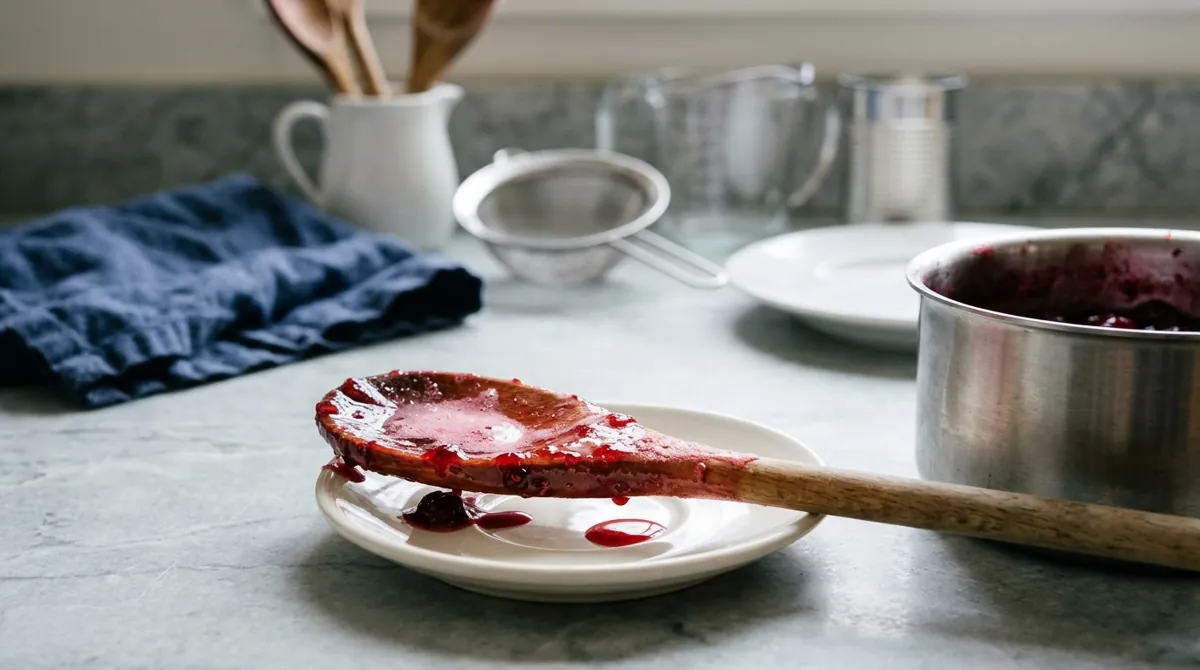
✓ What it should look like - Step 4
Pour through a fine-mesh strainer set over a 4-cup measuring cup and press the pulp with a spoon until only about 1/4 cup of skins and seeds is left. You want about 2 3/4 cups of liquid; if you have more, boil it down a few minutes. Scrape the underside of the strainer into the cup, throw away the solids and stir in the vanilla.
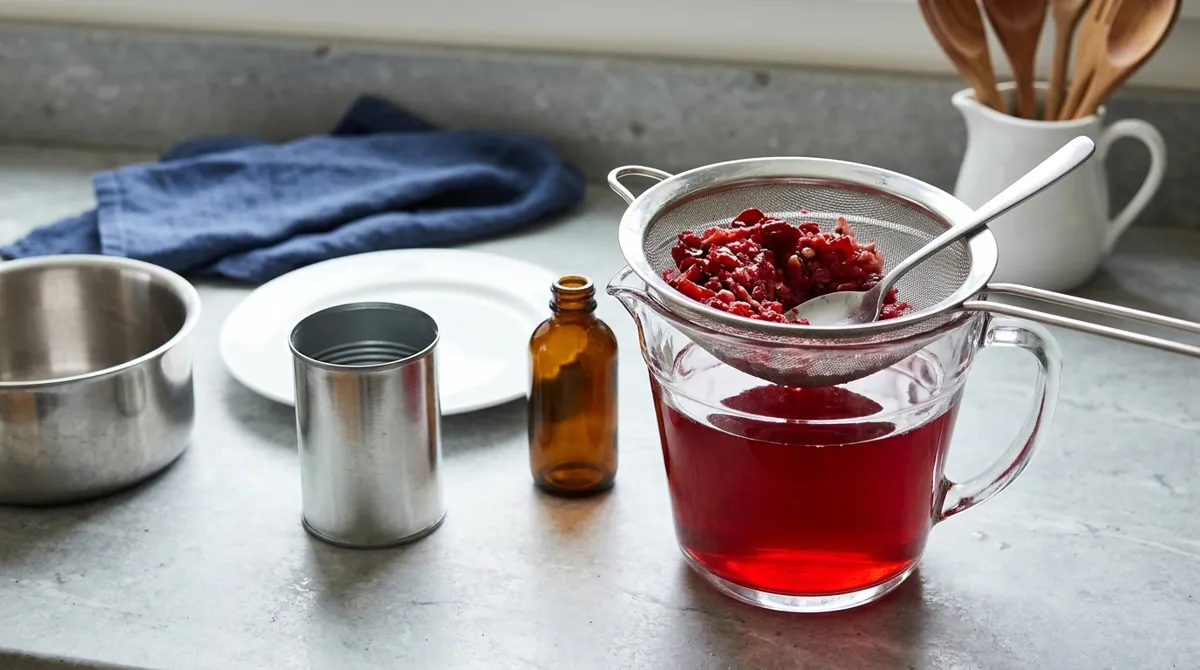
- Step 5
Pour into a clean, empty 15-ounce can (label removed) or a 3-cup mold, with any extra in a small bowl. Cool at room temperature at least 1 hour, then cover tightly and refrigerate at least 4 hours, until firm.
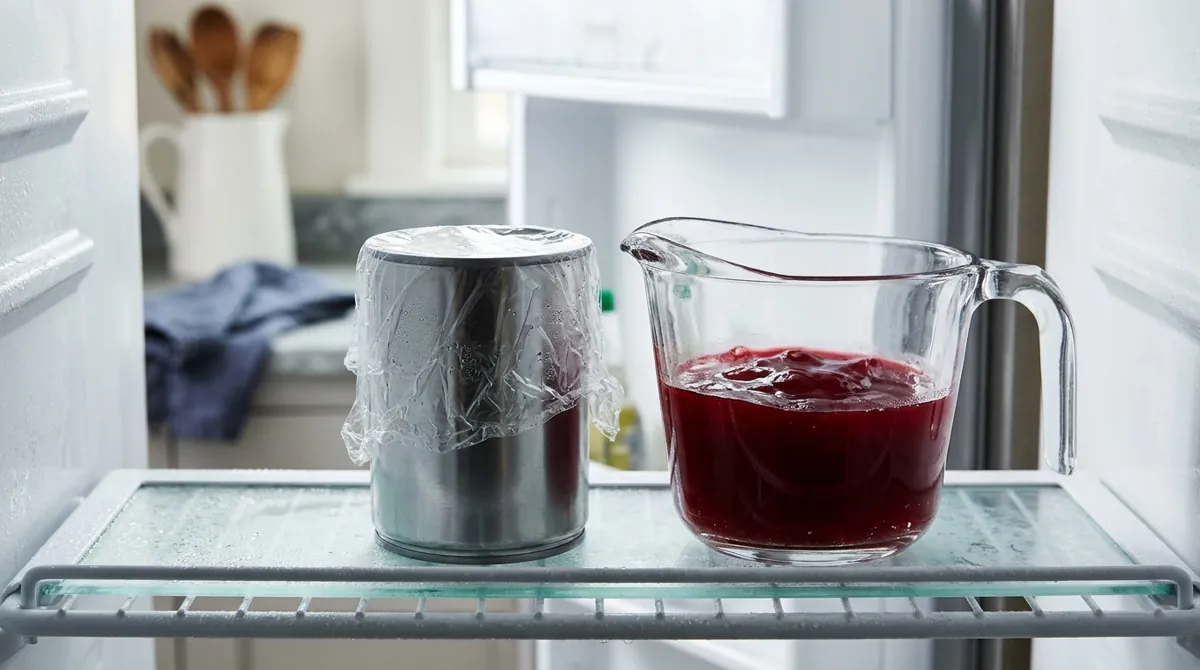
- Step 6
To serve, pull the jelly gently away from the edges with your fingers, set a plate over the top, flip and give one sharp shake. Slice into rounds.
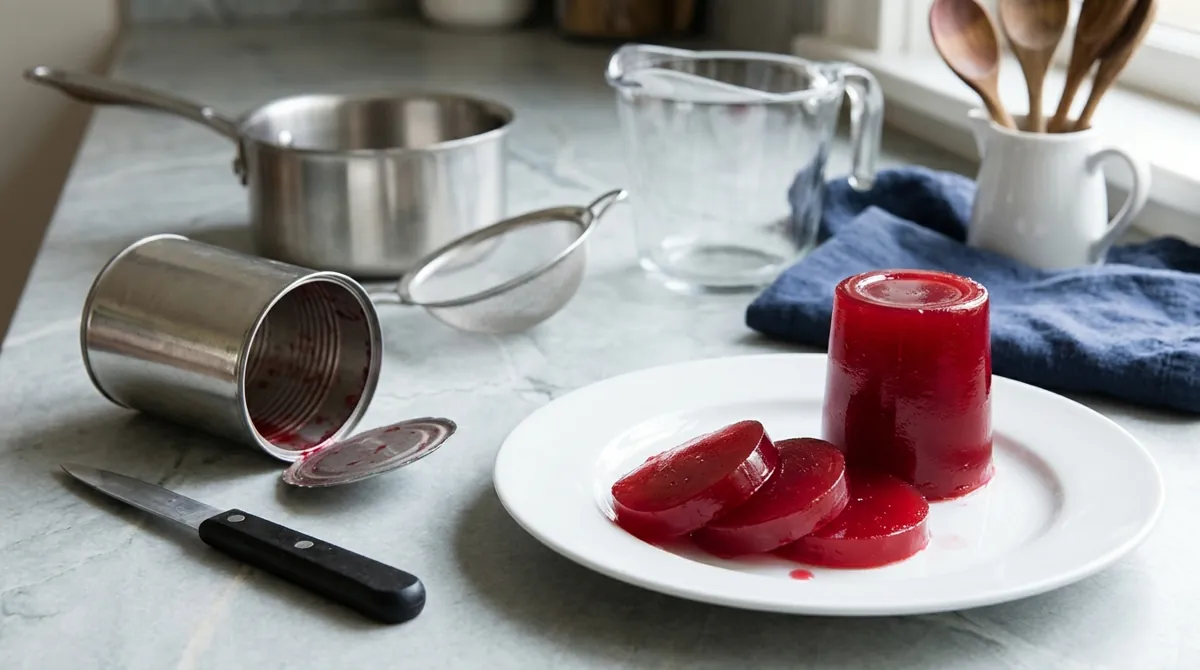
Jellied Cranberry Sauce, Canned Style
Serves 12 · about 2 3/4 cups (one 15-ounce can plus a small extra mold) · 50 min total
Sauce
- 4 cups sweetened cranberry juice cocktail (not unsweetened juice)
- 1 (12-ounce) bag fresh or frozen cranberries (about 3 cups)
- 1 1/3 cups sugar
- 1/4 tsp table salt
- 1/4 tsp vanilla extract
Equipment: Saucepan, Chef's knife and cutting board, Measuring cups and spoons, Mixing bowls, Fine-mesh strainer, Potato masher or ricer
Method
- Put the cranberry juice, cranberries, sugar and salt in a saucepan no wider than 9 inches across. Bring to a boil over medium-high heat, stirring until the sugar dissolves, about 5 minutes.
- Boil 10 minutes, turning the heat down a little if the foam climbs toward the rim.
- Mash the berries with a potato masher, then keep boiling, stirring often, 15 minutes more, until the foam settles and the liquid is slightly thickened.
- Pour through a fine-mesh strainer set over a 4-cup measuring cup and press the pulp with a spoon until only about 1/4 cup of skins and seeds is left. You want about 2 3/4 cups of liquid; if you have more, boil it down a few minutes. Scrape the underside of the strainer into the cup, throw away the solids and stir in the vanilla.
- Pour into a clean, empty 15-ounce can (label removed) or a 3-cup mold, with any extra in a small bowl. Cool at room temperature at least 1 hour, then cover tightly and refrigerate at least 4 hours, until firm.
- To serve, pull the jelly gently away from the edges with your fingers, set a plate over the top, flip and give one sharp shake. Slice into rounds.
Adapted from America's Test Kitchen (Cook's Illustrated), "Jellied Cranberry Sauce" by Adam Ried (September 28, 2021), as written for 12. ATK's companion article by Rebecca Hays (October 7, 2021) explains the method. Inspired by, not official. America's Test Kitchen. Ingredient list follows the source; the method is in our own words.
Tips
- Make-ahead: this is the easiest Wednesday job on the table. ATK says the jelly keeps, covered, up to 4 days in the refrigerator, so it can even be made the weekend before.
- Empty tomato paste cans make single-serving logs; a glass bowl works if you don't want to unmold at all (ATK article).
- Unsweetened cranberry juice will not work here (ATK).
- Frozen berries go straight in; no need to thaw.
The rules people argue about
What the sources agree on, what they don't, and what is just a good story.
- The canned log was invented in 1912. Disputed: Marcus Urann's sauce dates to 1912 (Wikipedia), but sources disagree on when the jellied log arrived: national sale in 1941 (Wikipedia, citing the Smithsonian), 1930 (ATK's 2021 article), and 1939 in one search summary.
- Urann was the first to can cranberry sauce. Disputed wording: Wikipedia calls him "the first commercial producer or inventor of canned cranberry sauce"; a search summary calls it a common attribution, not a fully documented fact.
- The ridges on the log come from the can. Folklore: widely said and plainly visible, but we found no source that explains it; ATK simply molds its jelly in a can.
- Jellied cranberry sauce needs gelatin. Documented false for this recipe: cranberries carry their own pectin, and a long boil sets the jelly (ATK).
- Molded cranberry jelly is older than canned sauce. Documented: Fannie Farmer's cookbook (copyright from 1896; the Gutenberg text is the 1906 printing) gives a cranberry jelly turned into a mold, and puts "Cranberry Jelly" beside the roast turkey on its Thanksgiving menu.
- Cranberries were served at the first Thanksgiving in 1621. Disputed: Wikipedia says no primary source mentions cranberries at the 1621 meal and that, according to Plimoth Plantation, a sauce was unlikely because sugar was scarce; one search result says the fruit was "undoubtedly present".
Every other Thanksgiving side
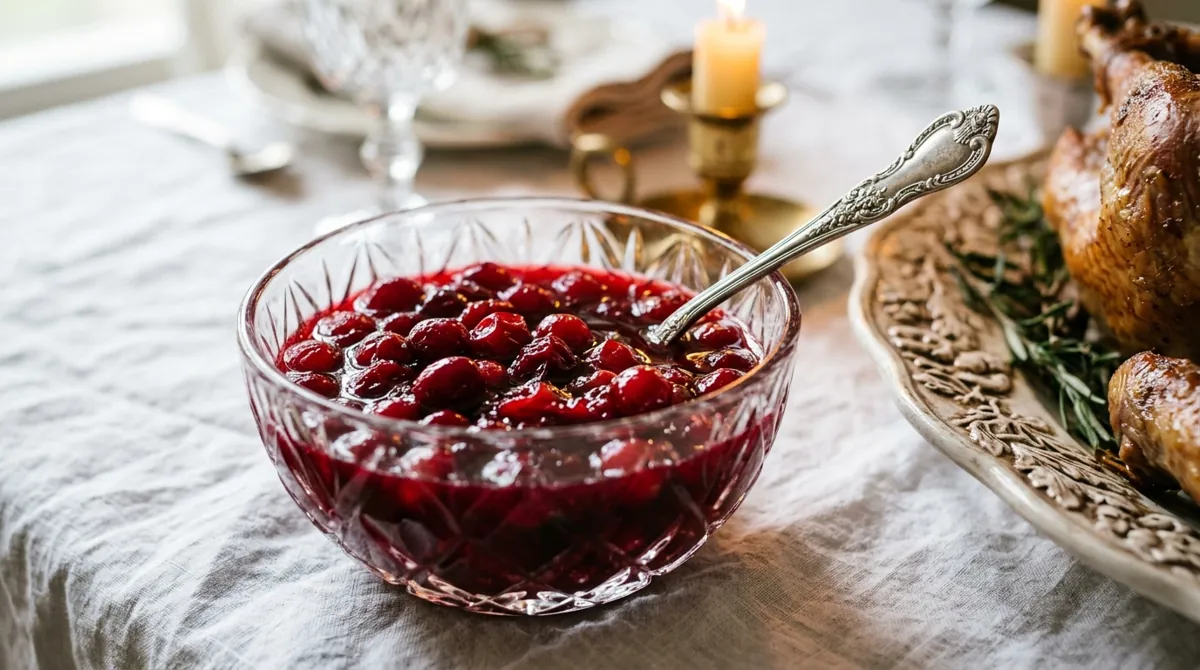
Whole-Berry Cranberry Sauce (Boston Cooking-School, 1896)
The old New England stovetop sauce: one bag of cranberries boiled ten minutes in sugar syrup until most of the berries pop, then cooled until it sets loose and glossy.
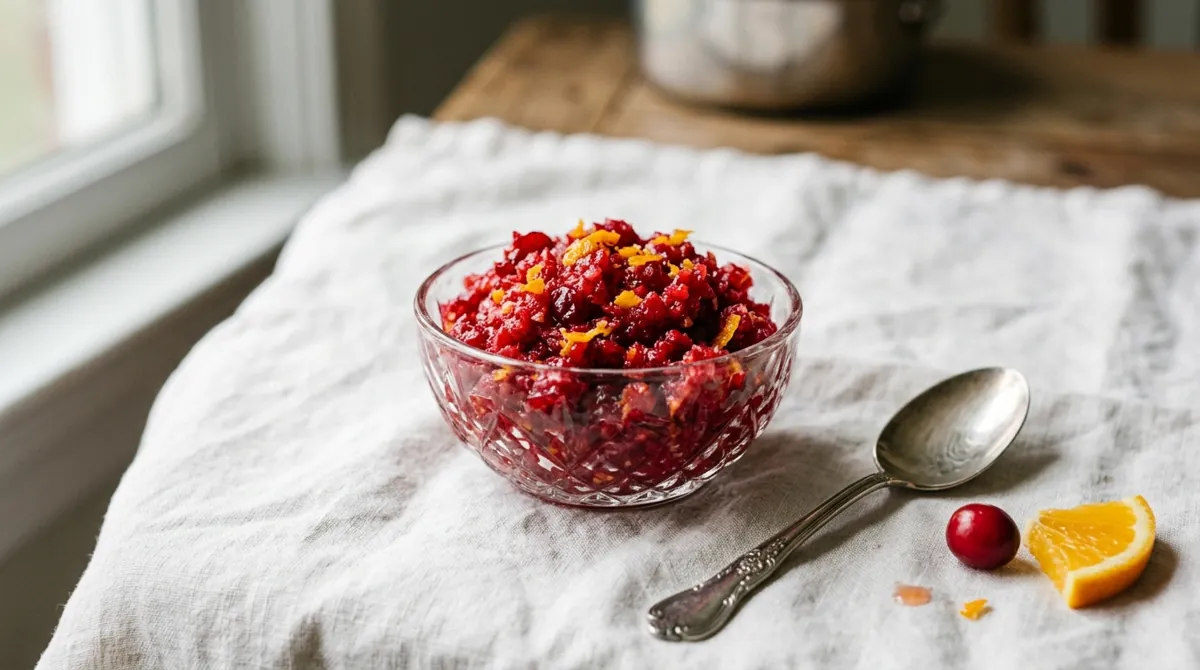
Raw Cranberry-Orange Relish (the Grinder Classic)
No stove at all: raw cranberries, a whole unpeeled orange, an apple and sugar ground coarse and left to sit a day, the way families once cranked it through a meat grinder clamped to the table.
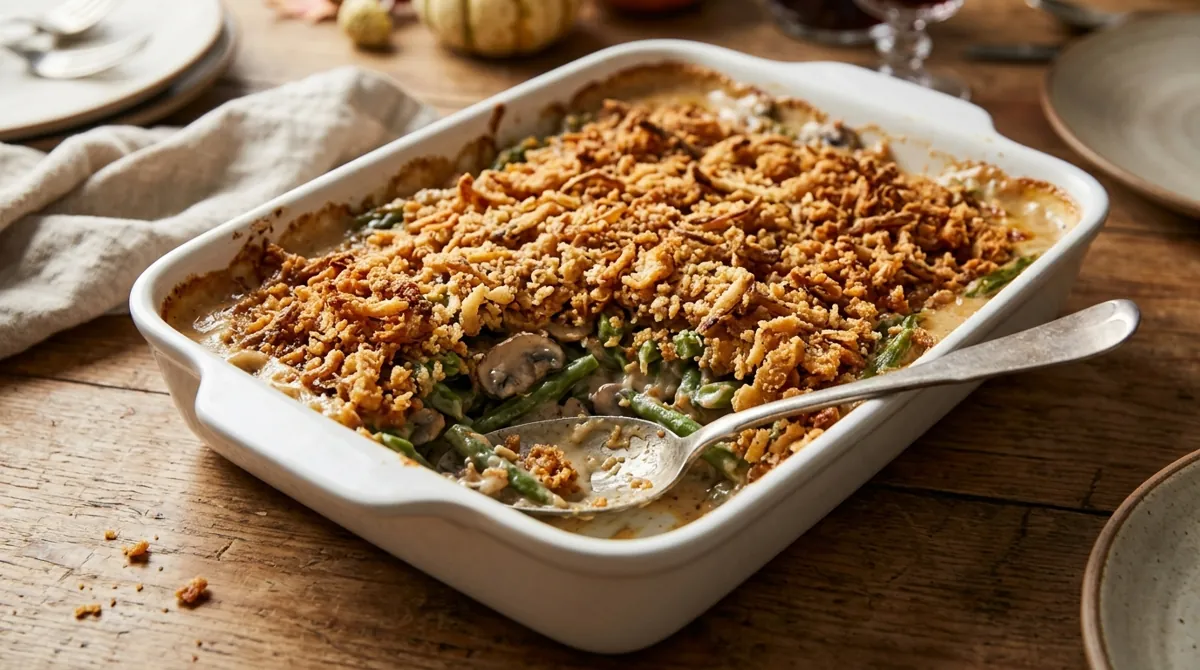
Green Bean Casserole from Scratch
The 1955 test-kitchen classic rebuilt from scratch: blanched fresh green beans in a homemade mushroom cream sauce, under buttered bread crumbs and crispy fried onions, baked hot until bubbling.
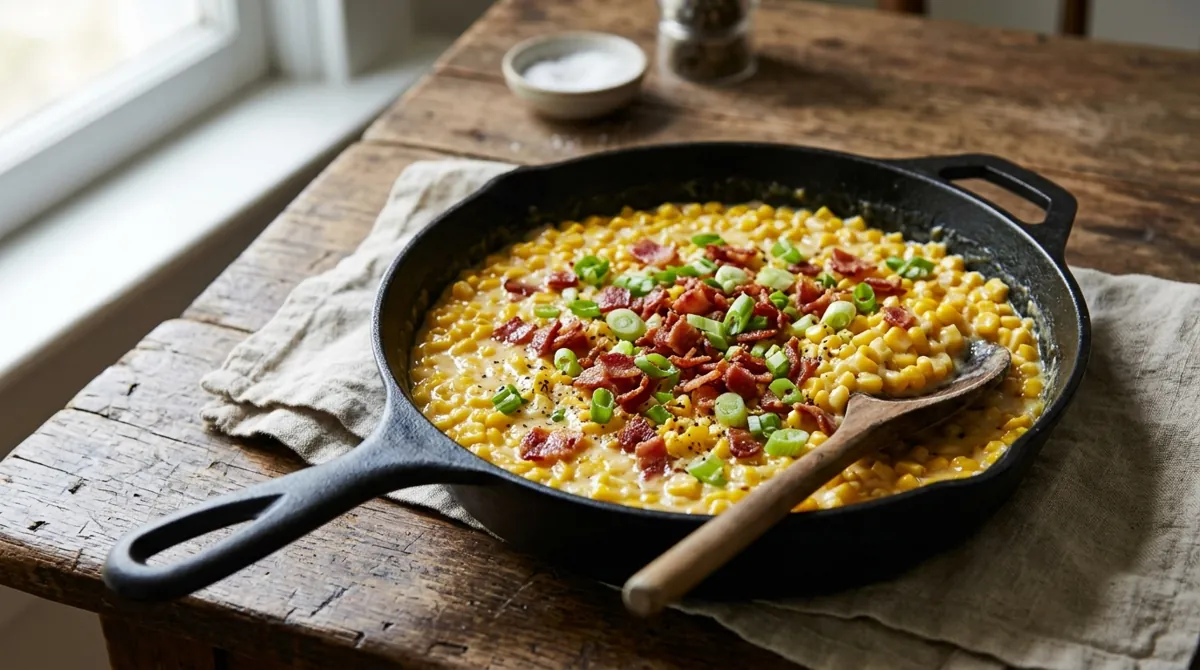
Skillet Creamed Corn with Bacon
Corn cut off the cob and the cobs scraped for their milky juice, cooked fast in bacon fat with shallots, then bubbled with a little cream and cayenne and finished with crisp bacon and scallions.
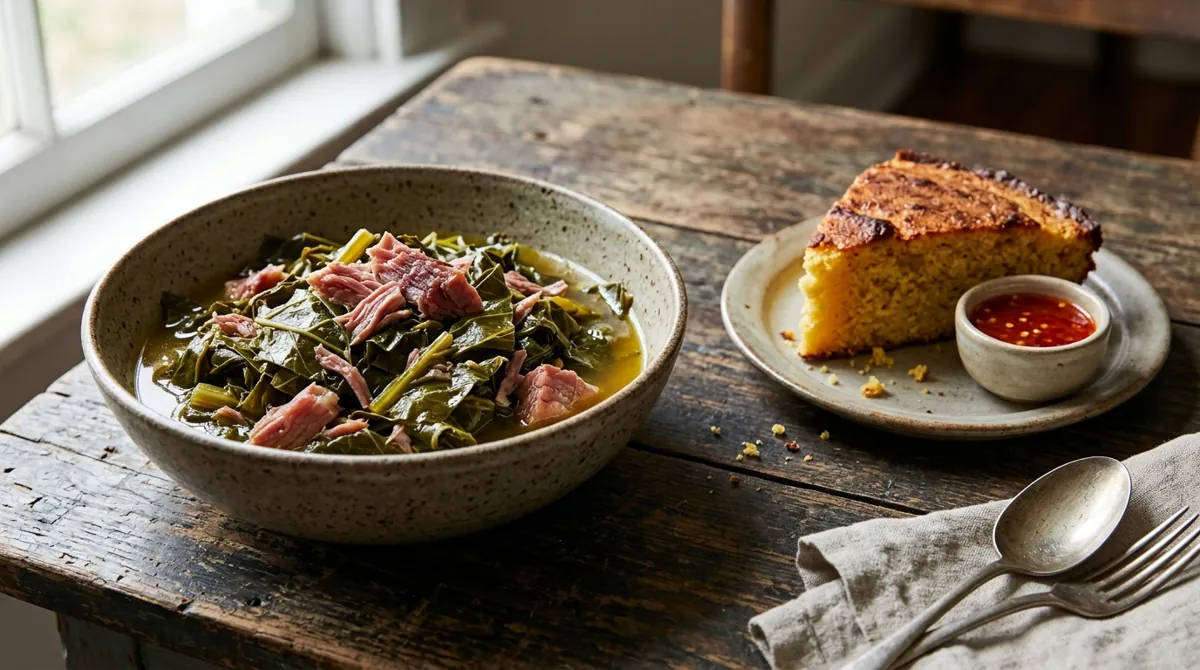
Southern Collard Greens with Ham Hocks
Collard greens braised low and slow in the oven with smoked ham hocks, onion and a pinch of sugar and chile until silky, then served in their own smoky broth, the pot likker, with hot sauce on the side.
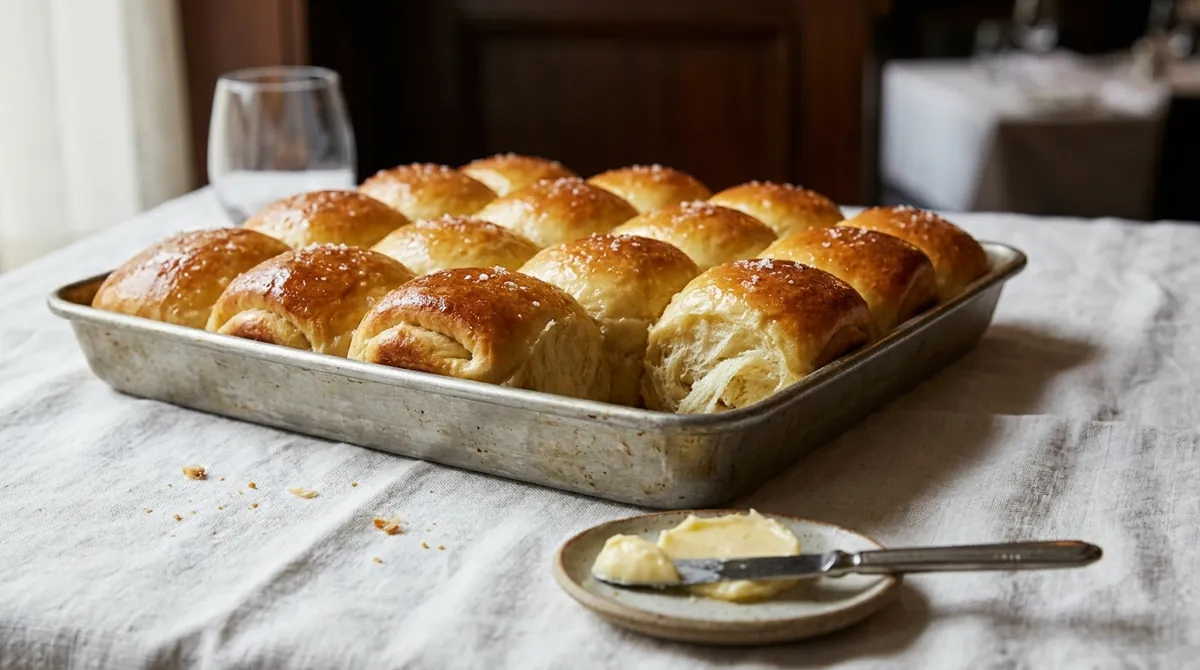
Parker House Rolls
Soft, buttery pull-apart dinner rolls from the Boston hotel that made them famous: an egg and milk dough, folded over a brush of melted butter so each roll has a lip, baked golden and brushed again.
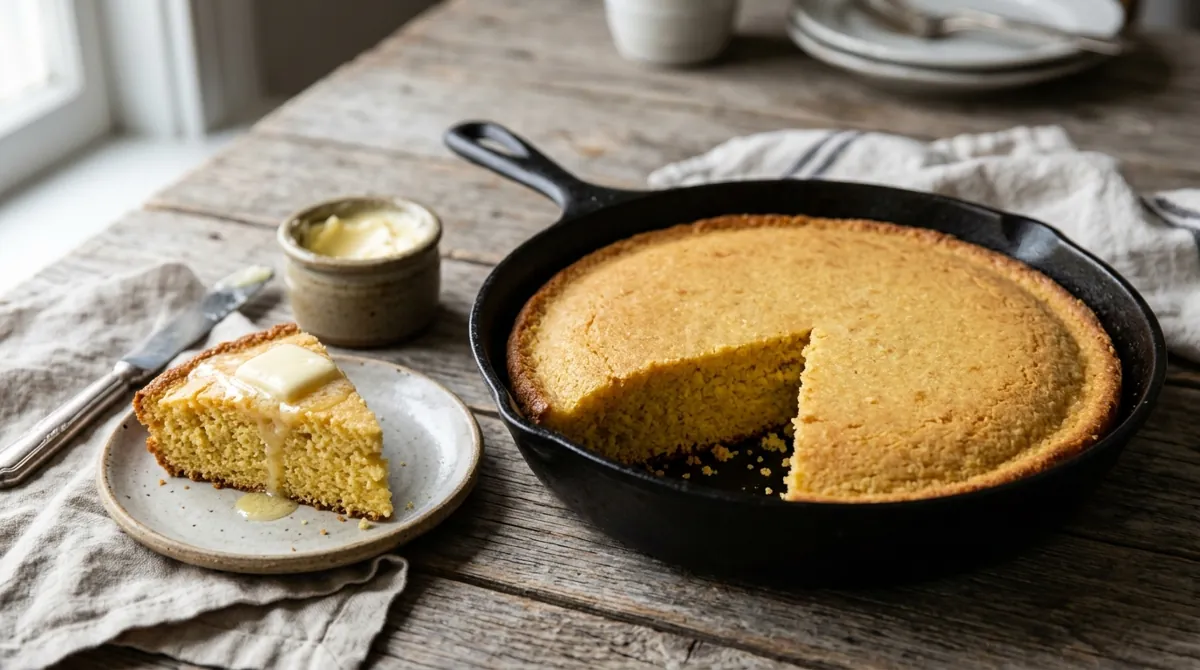
Southern Skillet Cornbread (No Sugar)
Whole cornmeal, buttermilk and one egg poured into a smoking-hot cast-iron skillet of bacon fat, so it sizzles into a crisp, brown crust. No sugar, a little flour, and ready in 45 minutes.
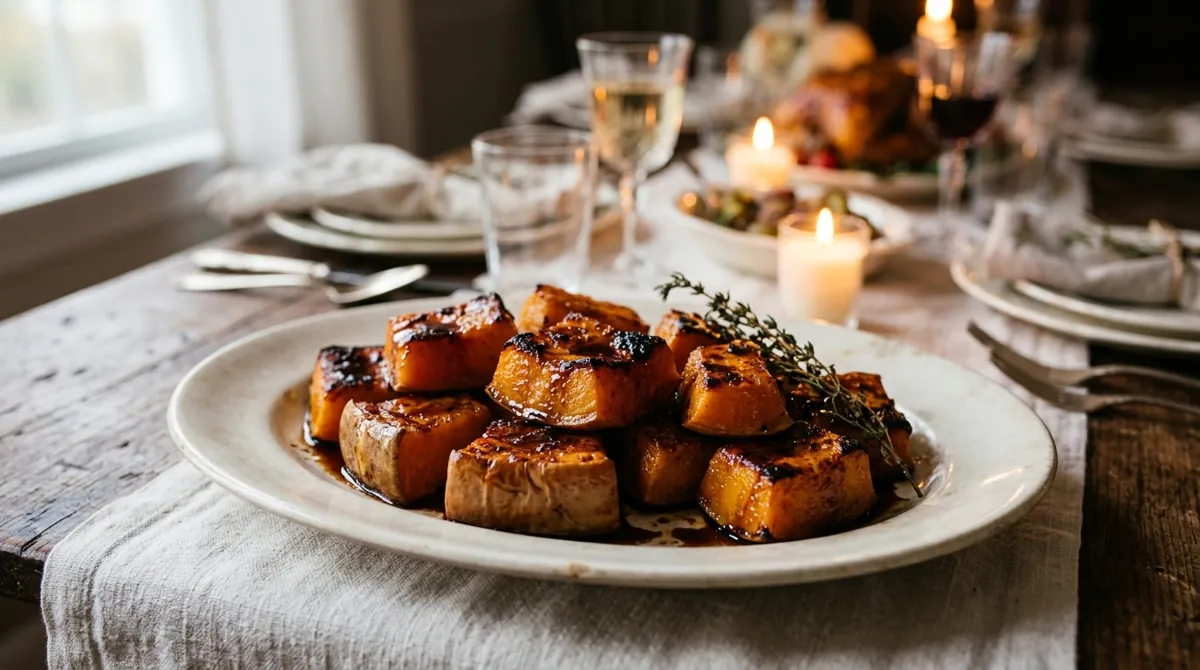
Molasses-Baked Winter Squash (Boston Cooking-School, 1896)
The squash on an 1896 Boston Thanksgiving menu: two-inch squares of butternut baked in their skins with salt, pepper and a little molasses and melted butter on each piece, covered first, then uncovered until glazed.
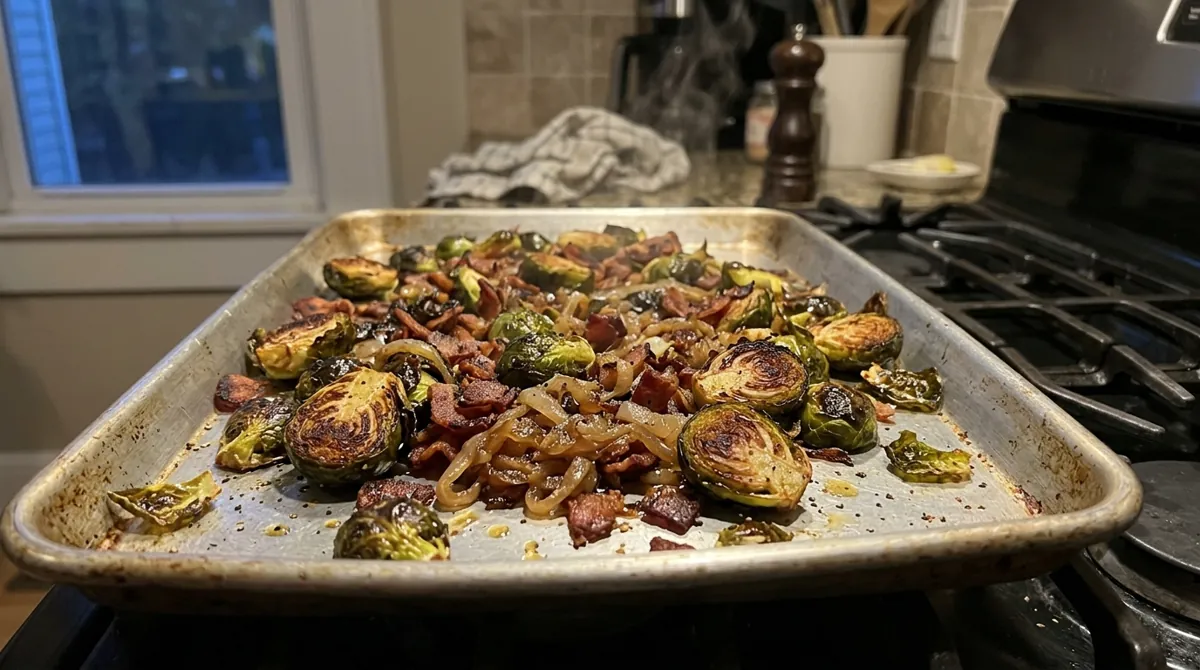
Sheet-Pan Brussels Sprouts with Bacon and Onion
One pan, one very hot oven: bacon and sliced onion get a head start, then halved Brussels sprouts go in cut side down and roast until deep golden and crisp at the edges. About 50 minutes, most of it hands-off.
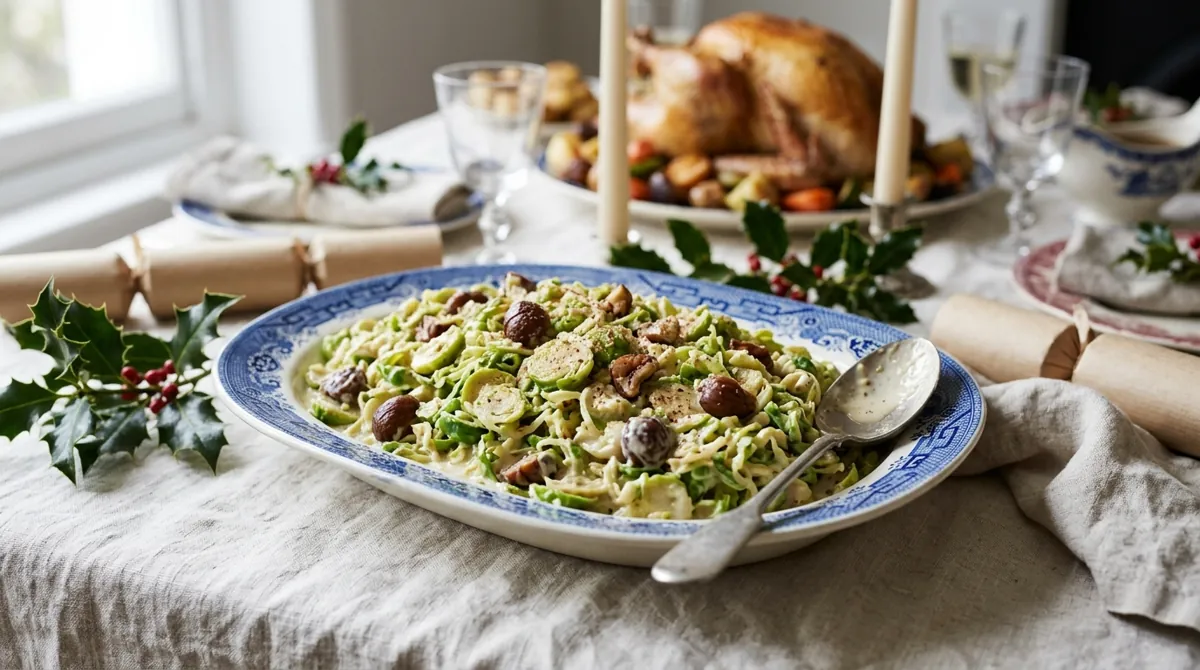
British Creamed Brussels Sprouts with Chestnuts
The Christmas-dinner sprout the British way: shredded sprouts stir-fried in butter with shallots and crumbled chestnuts, steamed tender, then turned in a little double cream with nutmeg and a squeeze of lemon.
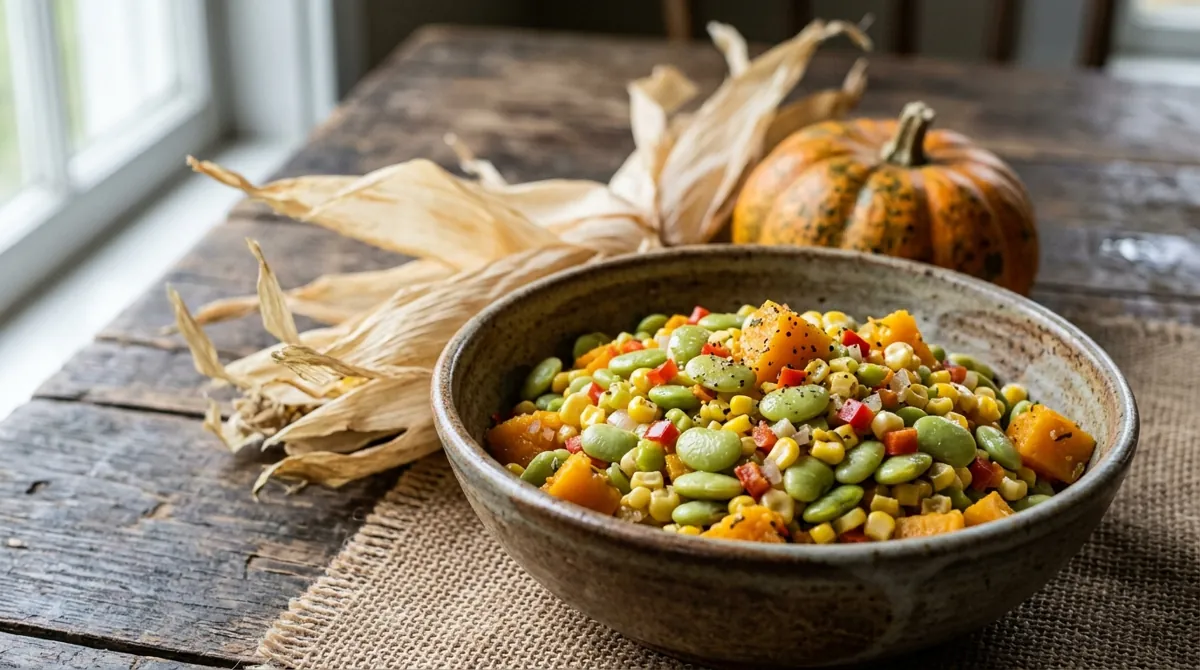
Three Sisters Succotash
Corn, beans and squash, the Three Sisters of Native American farming, simmered together in a little stock with onion and sweet pepper. No butter, no cream: the dish New England learned from the Narragansett and Wampanoag, before Yankee cooks changed it.
Meatballs of the World

Italian-American Meatballs
Big, tender meatballs braised for an hour in red sauce over spaghetti. The one most Americans grew up with.

Pallottine (Abruzzo Meatballs)
Tiny meatballs, smaller than a marble, tossed right through square spaghetti alla chitarra. No bread at all.

Swedish Meatballs (Köttbullar)
Small, soft meatballs browned in butter, in a cream sauce made from the same pan, with lingonberry jam on the plate.

Danish Frikadeller
Pork meatballs shaped with a spoon and fried slowly in butter, crusty outside and soft in the middle.

Königsberger Klopse
German meatballs that are never fried: poached, then served in a creamy white sauce with capers.

Spanish Albóndigas in Almond Saffron Sauce
The tapas bar classic: small meatballs in a golden sauce thickened with fried almonds and bread.

Mexican Albóndigas with Chipotle and Mint
Soft meatballs with rice and fresh mint inside, simmered in a smoky tomato and chipotle broth.

Izgara Köfte (Turkish Grilled Meatballs)
Small, flat meatballs kneaded hard, rested cold, and charred on a hot grill pan.

Lion's Head Meatballs
Big, soft pork meatballs, stirred into a sticky paste, fried to set, then braised in a savory sauce.

Chicken Tsukune
Japan's chicken meatball: kneaded sticky, grilled on skewers, glazed with sweet soy tare, dipped in egg yolk.