
Stargazy Pie, Inspired by Tinned Fish Reviews
The famous Cornish fish pie with whole sardines whose heads poke up through the crust, over a creamy filling of white fish, bacon, onion and hard-boiled egg in a mustard and parsley sauce, baked under a buttery shortcrust lid.
🍳Cook alongOne move at a time, with real timers
 Edited by JP Lambiase
Change the estimate
Swaps change the price only: cook any meat to its own safe temperature. Where these numbers come from
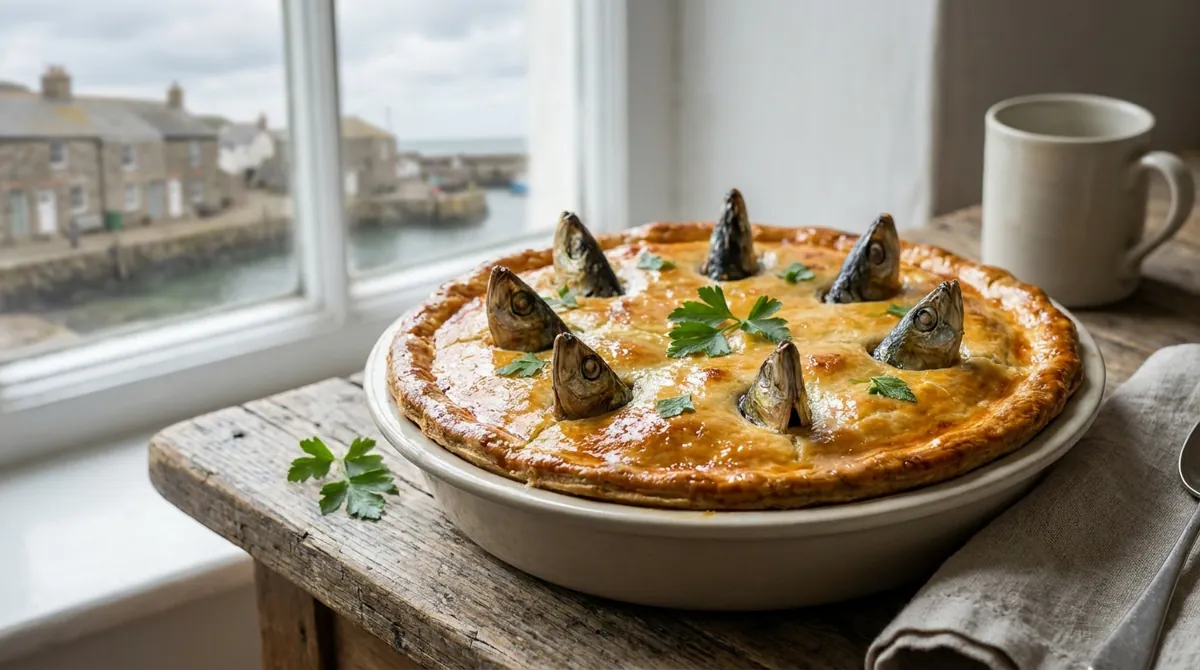
Stargazy pie is a Cornish fish pie from the fishing village of Mousehole, in the far southwest of England. Its trademark is the fish: whole pilchards (sardines) are baked in the pie with their heads sticking up through the crust, so they look as if they are gazing at the stars (Wikipedia:). The pie is traditionally eaten on Tom Bawcock's Eve, December 23, the night Mousehole celebrates its famous fisherman (Wikipedia:). Since 1963 the festival has been held together with the village's Christmas lights, called the Mousehole Illuminations (Wikipedia:).
The legend goes like this. One winter was so stormy that no boats could leave the harbor, and the village faced hunger as Christmas came near. On December 23, a fisherman named Tom Bawcock went out anyway and caught enough fish to feed everyone. The whole catch, said to include seven kinds of fish, was baked into a pie, and the heads were left poking through the crust to show that there was fish inside (Wikipedia, Stargazy pie). The story spread far beyond Cornwall through Antonia Barber's children's book The Mousehole Cat (Wikipedia:). It is a legend, not a recorded event. The first written description of the festival is Robert Morton Nance's in the journal Old Cornwall in 1927, and Nance himself doubted that Tom Bawcock was a real person (Wikipedia, Tom Bawcock's Eve and Stargazy pie; Countryfile:). Printed accounts of the pie itself do not appear before the 1800s (Wikipedia, Stargazy pie).
"Pilchard" and "sardine" are two names for small, oily fish of the herring family, and the names are used loosely. In the UK a sardine is treated as a young pilchard, and one common rule calls fish under about 6 inches sardines (Wikipedia:). Mackerel or herring are common substitutes, and the filling is usually a mix of fish, egg and a creamy sauce under a pastry lid (Wikipedia, Stargazy pie).
A Tinned Fish Reviews video of stargazy pie passed about 1 million views within a week of posting in late October 2026. You can watch their version above. This page is our own take, built from the standard idea of a fish pie: a creamy sauce, a cooked-through filling and a crisp lid, with the sardines laid in a ring so their heads come up through the crust.
Watch Tinned Fish Reviews's original video
Tinned Fish Reviews on YouTube
Americanized is not affiliated with or endorsed by Tinned Fish Reviews. Our recipe is written independently; watch their original video above.
Why it works the kitchen science
A thick, mustardy sauce
The sauce is cooked and thickened before it goes in, so the pie stays creamy instead of watery as the fish gives off juice, and the mustard and lemon cut through the oily sardines.
Two oven stages
15 minutes at 400°F sets and browns the pastry, then 375°F finishes the fish gently, so the crust is crisp and the fish is cooked through without drying out.
🧰 You'll need 13 items
Everything the steps call for. Tick off what you have before you start.
Appliances
Pans and pots
Tools
Supplies
Step by step
- Step 1
Make the pastry: whisk the flour and salt in a bowl. Rub in the cold butter with your fingertips until it looks like coarse crumbs with some pea-size bits. Stir in 4 tbsp ice water, adding the fifth only if it will not come together. Press into a disk, wrap and refrigerate 30 minutes. Heat the oven to 400°F with a rack in the lower third.
- Step 2
Hard-boil the eggs: cover 3 eggs with cold water in a saucepan, bring to a boil over high heat, cover, remove from the heat and let stand 12 minutes. Cool in ice water 5 minutes, then peel and slice. Rinse the sardines and pat them dry; ask your fishmonger to scale and gut them, or scrape off the scales under cold running water and slit the belly to remove the insides. Leave the heads and tails on. Check the cod for pin bones.
- Step 3
Cook the bacon in a 10-inch skillet over medium heat 6 to 8 minutes, until crisp. Lift it out and pour off all but 1 tsp of the fat. Add the onion and cook over medium-low heat 6 to 8 minutes, until soft but not browned.
- Step 4
Make the sauce: melt the butter in a medium saucepan over medium heat. Whisk in the flour and cook 1 minute, without browning. Slowly whisk in the milk and cream, then simmer over medium-low heat 4 to 5 minutes, stirring, until thick enough to coat the back of a spoon. Off the heat, stir in the mustard, parsley, lemon juice, salt and pepper. Let it cool 10 minutes so it does not melt the pastry.
- Step 5
Assemble: roll the pastry on a floured counter to an 11-inch round, about 1/8 inch thick, and keep it chilled on a baking sheet. Scatter the cod, bacon, onion and sliced eggs in a deep 9-inch pie dish (about 2 inches deep), pour over the sauce and stir lightly. Lay the sardines on top like the spokes of a wheel, heads at the edge of the dish and tails toward the center.
- Step 6
Brush the dish rim with the egg glaze and drape the pastry over the top, pressing it to the rim and trimming the extra. Cut a 1-inch slit over the neck of each sardine and ease each head up through its slit so it points to the sky. Cut a small steam vent in the center and brush the crust with glaze.
- Step 7
Bake 15 minutes at 400°F, then lower the oven to 375°F and bake 30 to 35 minutes more, until the crust is deep golden and the filling bubbles at the slits. Slide an instant-read thermometer through the vent into the center of the filling: the fish must read at least 145°F. Tent loosely with foil if the crust or the heads brown too fast.
- Step 8
Rest the pie 10 minutes. Serve warm with peas, boiled potatoes or crusty bread, and lemon wedges. Warn guests that sardines have fine bones (see Tips).
Stargazy Pie, Inspired by Tinned Fish Reviews
Serves 6 · one 9-inch deep pie · 1 hr 50 min total
Shortcrust lid (or use store-bought, see Tips)
- 1 1/2 cups (190 g) all-purpose flour
- 1/2 tsp salt
- 8 tbsp (113 g) cold unsalted butter, cut in cubes
- 4 to 5 tbsp ice water
Fish and filling
- 8 fresh sardines, 6 to 7 inches long (about 1 lb or 450 g), scaled and gutted, heads and tails left on
- 12 oz (340 g) skinless cod or haddock fillet, cut in 1-inch chunks
- 4 slices bacon (about 4 oz raw), chopped
- 1 medium onion (about 4 oz), finely chopped
- 3 large eggs, hard-boiled, peeled and sliced
Mustard and parsley cream sauce
- 3 tbsp (42 g) unsalted butter
- 3 tbsp (24 g) all-purpose flour
- 1 cup (244 g) whole milk
- 1/2 cup (119 g) heavy cream
- 2 tbsp (30 g) Dijon mustard
- 1/4 cup chopped fresh parsley
- 1 tbsp lemon juice
- 1/2 tsp salt and a few grinds of black pepper
To finish
- 1 egg beaten with 1 tsp milk, for the glaze (about half is used)
Equipment: Oven, Kitchen scale, 9-inch pie plate, Rimmed baking sheet, Medium saucepan, 10-inch skillet, Instant-read thermometer, Chef's knife and cutting board, Measuring cups and spoons, Mixing bowls, Whisk, Pastry brush, Aluminum foil
Method
- Make the pastry: whisk the flour and salt in a bowl. Rub in the cold butter with your fingertips until it looks like coarse crumbs with some pea-size bits. Stir in 4 tbsp ice water, adding the fifth only if it will not come together. Press into a disk, wrap and refrigerate 30 minutes. Heat the oven to 400°F with a rack in the lower third.
- Hard-boil the eggs: cover 3 eggs with cold water in a saucepan, bring to a boil over high heat, cover, remove from the heat and let stand 12 minutes. Cool in ice water 5 minutes, then peel and slice. Rinse the sardines and pat them dry; ask your fishmonger to scale and gut them, or scrape off the scales under cold running water and slit the belly to remove the insides. Leave the heads and tails on. Check the cod for pin bones.
- Cook the bacon in a 10-inch skillet over medium heat 6 to 8 minutes, until crisp. Lift it out and pour off all but 1 tsp of the fat. Add the onion and cook over medium-low heat 6 to 8 minutes, until soft but not browned.
- Make the sauce: melt the butter in a medium saucepan over medium heat. Whisk in the flour and cook 1 minute, without browning. Slowly whisk in the milk and cream, then simmer over medium-low heat 4 to 5 minutes, stirring, until thick enough to coat the back of a spoon. Off the heat, stir in the mustard, parsley, lemon juice, salt and pepper. Let it cool 10 minutes so it does not melt the pastry.
- Assemble: roll the pastry on a floured counter to an 11-inch round, about 1/8 inch thick, and keep it chilled on a baking sheet. Scatter the cod, bacon, onion and sliced eggs in a deep 9-inch pie dish (about 2 inches deep), pour over the sauce and stir lightly. Lay the sardines on top like the spokes of a wheel, heads at the edge of the dish and tails toward the center.
- Brush the dish rim with the egg glaze and drape the pastry over the top, pressing it to the rim and trimming the extra. Cut a 1-inch slit over the neck of each sardine and ease each head up through its slit so it points to the sky. Cut a small steam vent in the center and brush the crust with glaze.
- Bake 15 minutes at 400°F, then lower the oven to 375°F and bake 30 to 35 minutes more, until the crust is deep golden and the filling bubbles at the slits. Slide an instant-read thermometer through the vent into the center of the filling: the fish must read at least 145°F. Tent loosely with foil if the crust or the heads brown too fast.
- Rest the pie 10 minutes. Serve warm with peas, boiled potatoes or crusty bread, and lemon wedges. Warn guests that sardines have fine bones (see Tips).
Our own recipe, written from general technique for shortcrust pastry, white sauce and fish pies, and checked against the descriptions of the traditional pie in Wikipedia and Countryfile (links above). It is not Tinned Fish Reviews' recipe. The 400°F and 375°F oven stages, the filling, the sauce amounts, the pastry amounts and every time are ours. The food-safety numbers come from the FDA's safe minimum internal temperature chart: fin fish to 145°F, or until the flesh is opaque and separates easily with a fork.
Tips
- Sardines have fine bones, and they are edible. They soften as the fish bakes, but the backbone of a bigger fresh fish can stay firm. Tell guests, or lift out the backbone before baking: slit the belly open, press the fish flat, and pull the backbone free, leaving the head and tail attached.
- Fresh sardines are the real thing, but mackerel or small herring work if you cannot find them (Wikipedia names both as common substitutes). Do not use canned sardines for the heads-up look, because tinned fish is already cooked and is too soft to stand.
- Store-bought is fine: use one 9-inch pie crust, or about 9 oz of thawed puff pastry rolled to 11 inches, and bake it the same way. Puff pastry rises more, so cut the slits a little larger.
- If your sardines are small, use 10 or 12 and trim the filling a little so the dish is not overfull.
- Make the sauce and filling a day ahead, keep them refrigerated, and assemble the pie just before baking. Leftover pie keeps in the refrigerator 2 days; reheat covered at 350°F for 20 minutes, until hot all the way through.
- Eggs are hard-boiled before they go in, so they are fully cooked. The fish is done at 145°F, so use the thermometer.
The rules people argue about
What the sources agree on, what they don't, and what is just a good story.
- Tom Bawcock was a real fisherman who saved the village. Folklore: Wikipedia calls him a legendary 16th-century fisherman, and Robert Morton Nance doubted he existed (Wikipedia, Countryfile).
- The first pie held seven kinds of fish. Folklore: this is part of the legend as Wikipedia tells it; no record of the first pie exists.
- The pie was invented on the night of the storm. Disputed: Wikipedia says it is unclear when the pie joined the festival, and it notes that Antonia Barber's book lists the pie as a Mousehole staple before Bawcock's trip. Printed accounts of the pie do not appear before the 1800s.
- The festival was invented by a pub landlord in the 1950s. Disputed: Wikipedia calls this a rumor that Nance's 1927 description undermines, and Countryfile says the Ship Inn's landlord Tom Mitchell revived the celebration in the 1950s. "Revived" is the safer word than "invented".
- Real stargazy pie uses pilchards. Documented as the traditional choice, with mackerel or herring common substitutes (Wikipedia).
- The heads stick up so the fish oil can run down into the pie and keep it moist. Folklore: Wikipedia gives this as the reason for the arrangement, but we found no test of it. The other story is that the heads show there is fish inside.
- You can eat sardine bones. Disputed: food writers agree that the bones in canned sardines, which are pressure-cooked, are soft and edible. For fresh fish baked at home the bones may stay firmer, and we found no official source, so we say they are fine bones and tell guests.
- Fish is safe at 145°F. Documented: the FDA's chart lists 145°F, or flesh that is opaque and separates easily with a fork.
More viral recipes
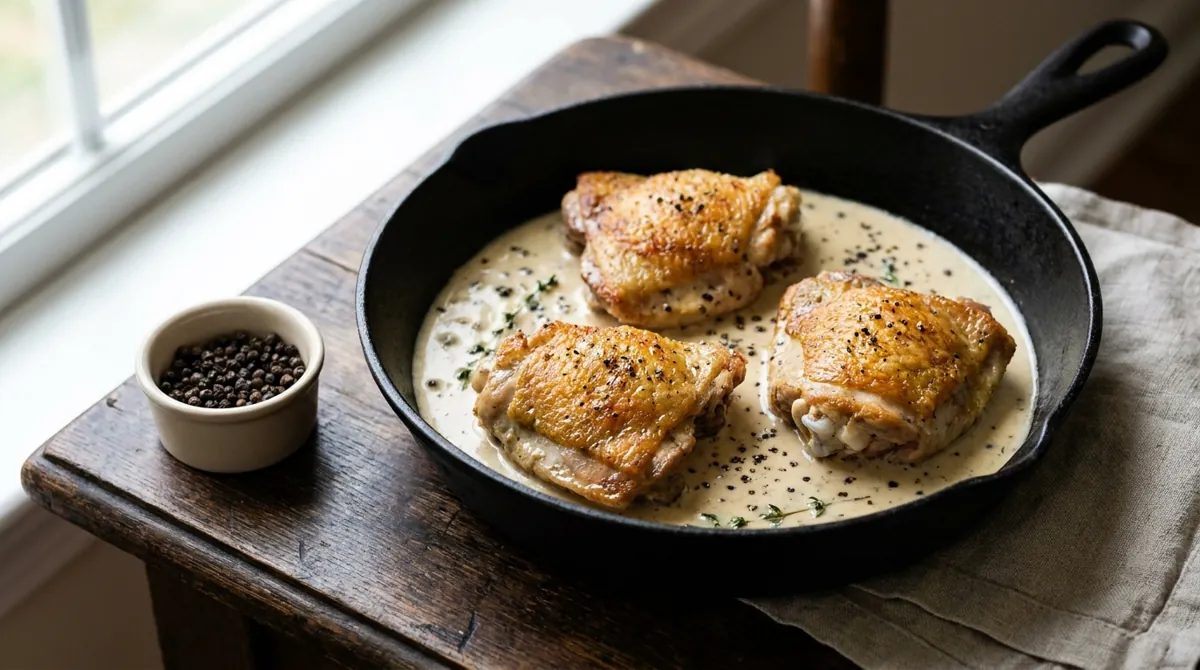
Chicken au Poivre, Inspired by Coco Larkin Cooks
Bone-in chicken thighs seared until the skin is crisp, then served in the classic bistro pan sauce: coarsely crushed black peppercorns, shallot, a splash of brandy, stock, cream and a spoonful of Dijon.
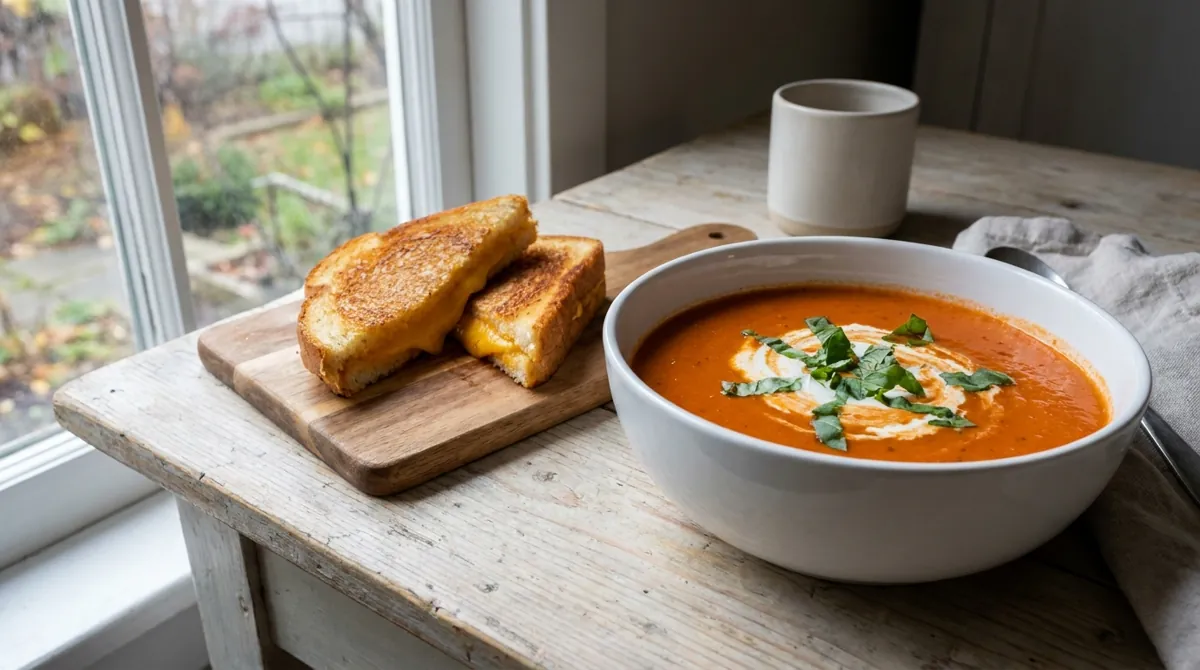
Creamy Tomato Soup, Inspired by Hamish Cooks Stuff
A classic stovetop tomato soup from canned whole tomatoes, onion, garlic, butter and a little tomato paste, simmered in stock, blended smooth and finished with a splash of cream, with grilled cheese for dunking.
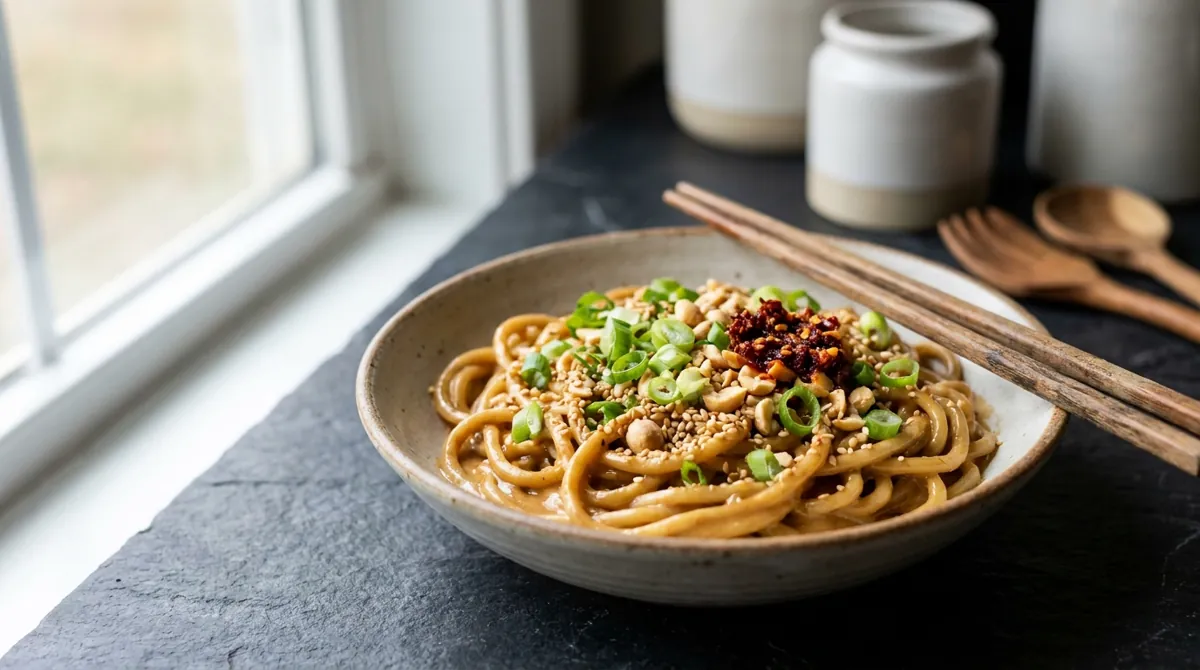
Peanut Noodles, Inspired by howiener
The cold sesame-peanut noodles of New York Chinese takeout: chewy noodles tossed in a creamy peanut, soy and sesame-oil sauce, loosened with warm water and topped with scallions, chopped peanuts and sesame seeds.
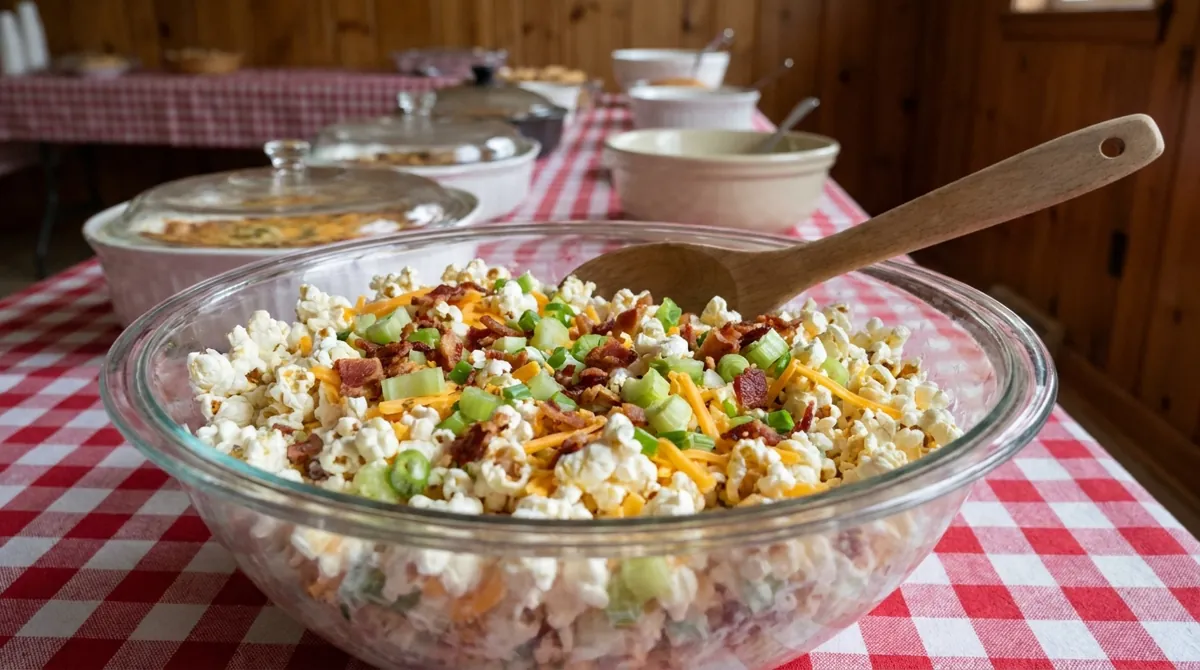
Popcorn Salad, Inspired by Wick'd Confections
The potluck salad that makes people ask "wait, popcorn?": fresh plain popcorn tossed at the last minute with a creamy mayonnaise dressing, crisp bacon, celery, sharp cheddar and green onion.

Frosted Sugared Cranberries, Inspired by Ashley Markle Treats
Fresh cranberries soaked in a cooled sugar syrup, rolled in sugar and left to dry until they sparkle like frost, tart and crunchy with a sweet crust, for snacking, cocktails and holiday desserts.
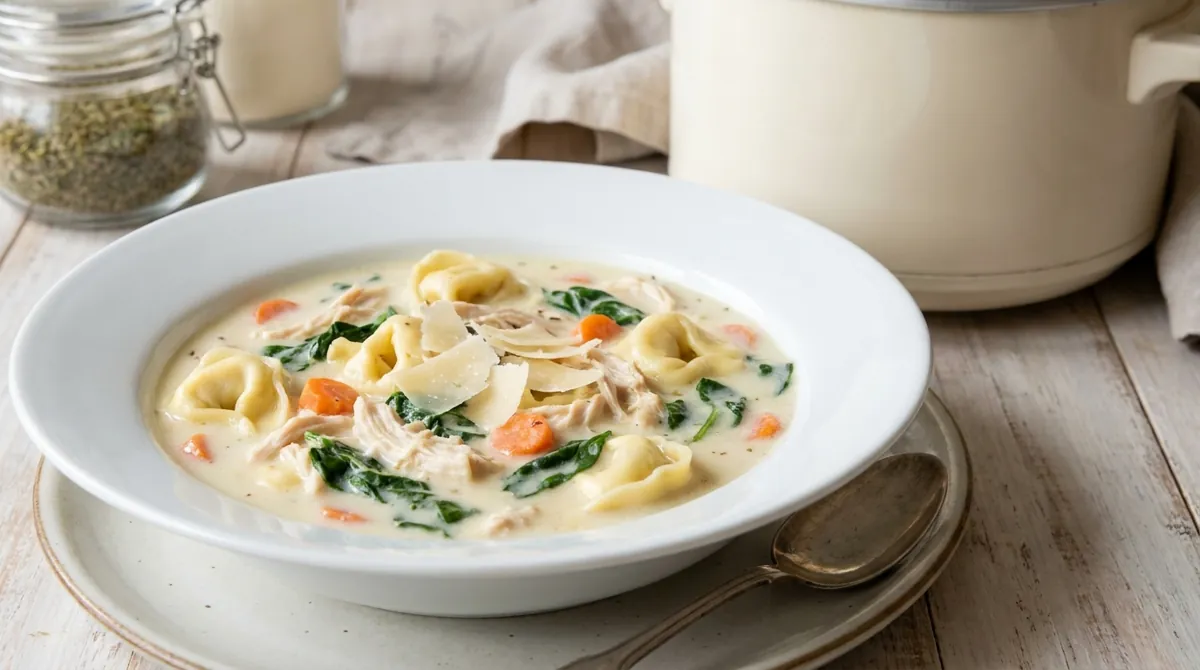
Slow Cooker Chicken Alfredo Tortellini Soup, Inspired by itsmeghankay
A creamy Alfredo-style chicken soup: chicken breasts cooked slowly in a vegetable broth until they shred, then finished with cream cheese, cream, Parmesan, cheese tortellini and baby spinach.
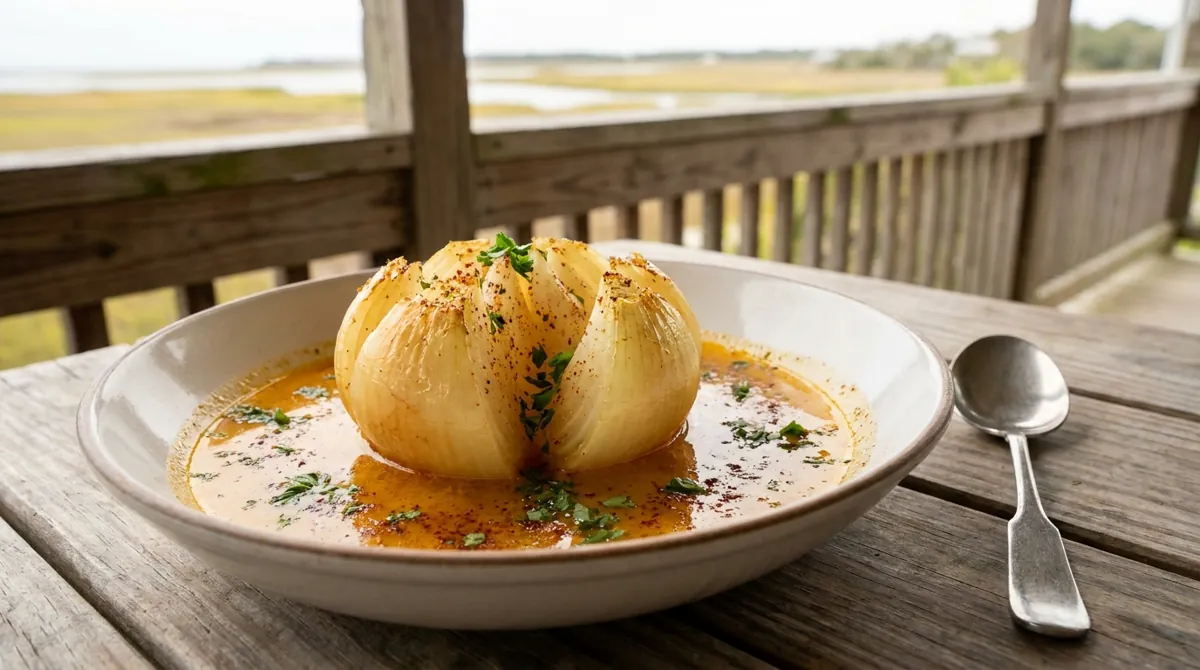
Onion Boil, Inspired by gracekellyanneats
Whole onions cut in a cross and simmered until tender in a garlicky butter broth seasoned like a seafood boil, then served in bowls with the reduced broth spooned over the top.
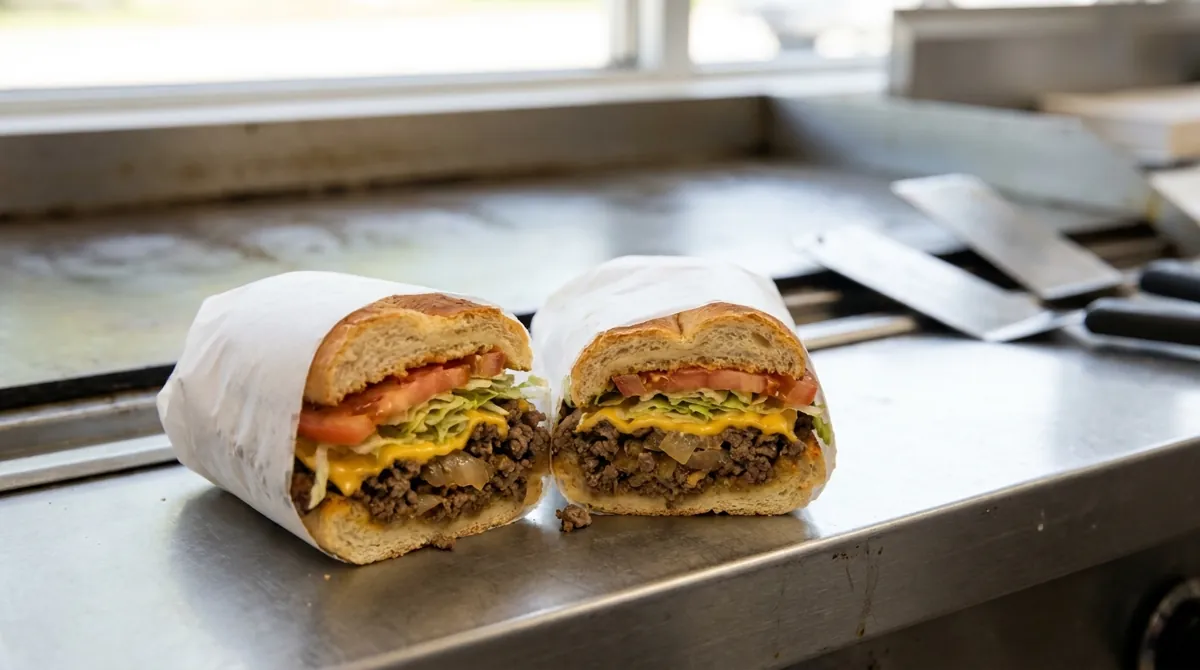
Chopped Cheese, Inspired by bigmcooking
The New York bodega sandwich: ground beef and onion cooked on a hot griddle, chopped together with a metal spatula, melted under American cheese and piled onto a toasted hero roll with lettuce, tomato and mayonnaise.
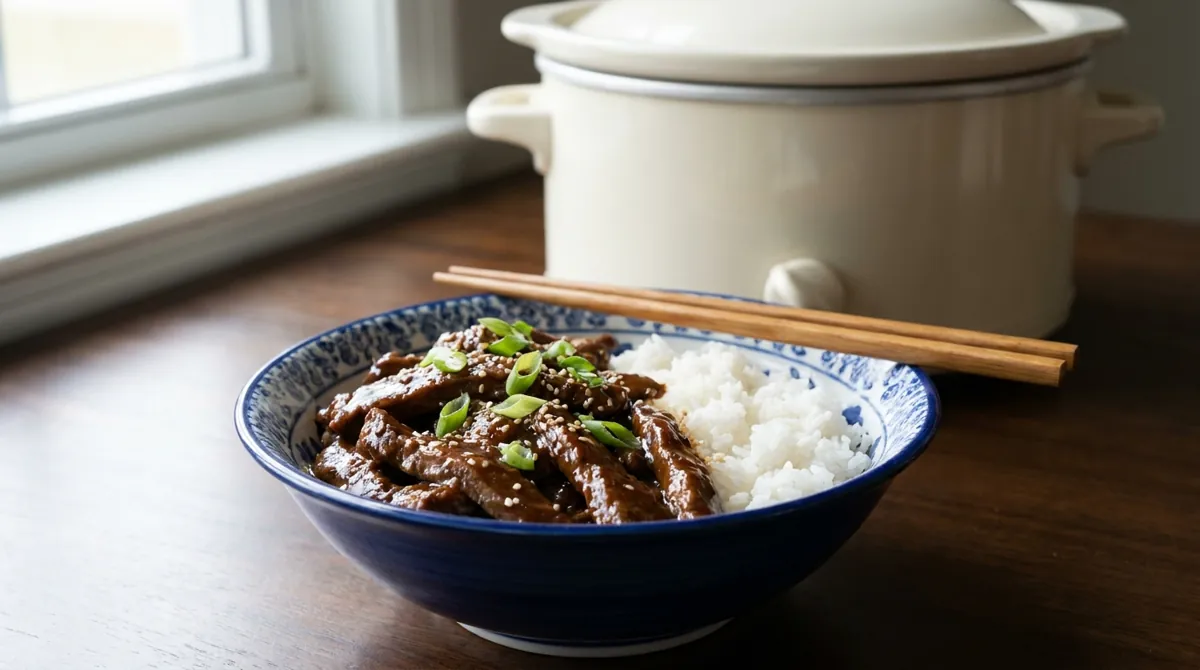
Slow Cooker Mongolian Beef, Inspired by twincitiesmama
Thin strips of flank steak simmered low and slow in a sweet, savory sauce of soy sauce, brown sugar, garlic and ginger, thickened at the end until it clings to every strip, then served over rice.
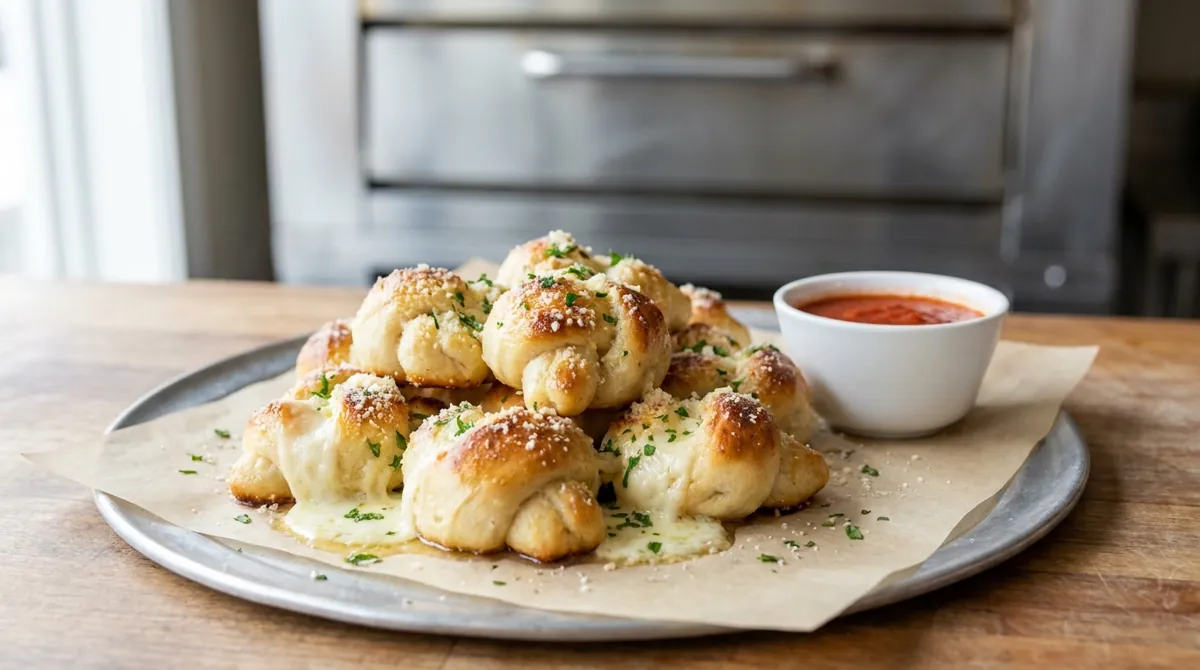
Cheesy Garlic Knots, Inspired by elizabeth_wu
Soft, chewy yeast dough tied into knots, baked until golden, then brushed with garlic butter and finished with melted mozzarella and Parmesan: the pizza-shop side dish you eat while waiting for the pie.
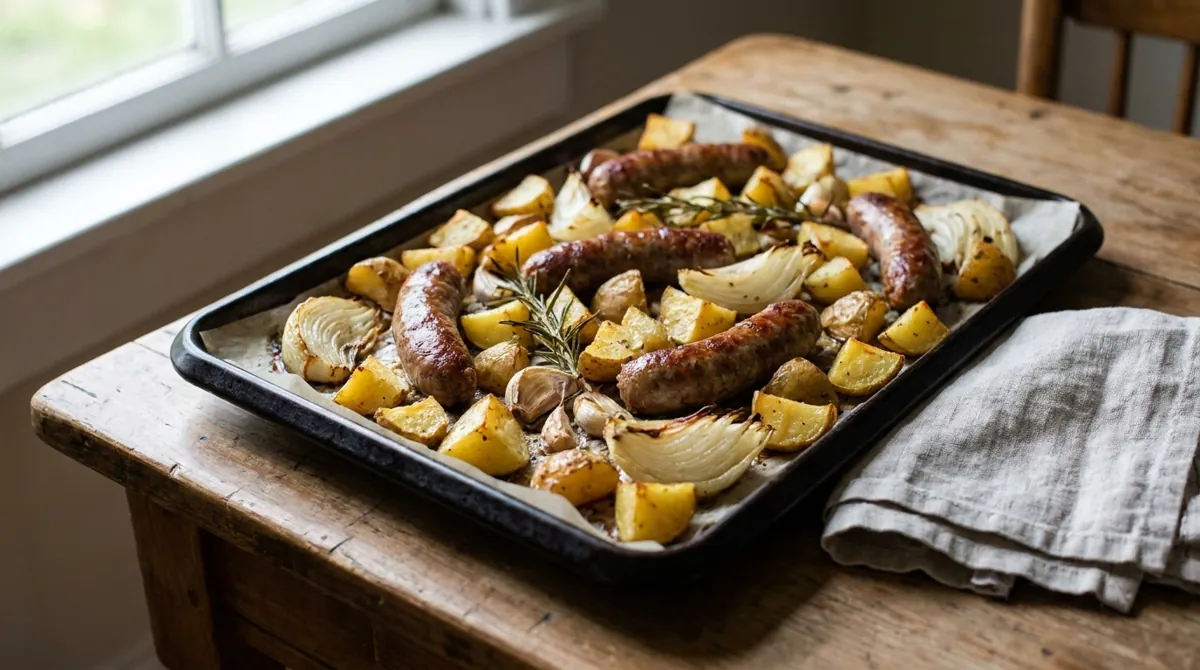
Crispy Italian Sausage and Potatoes, Inspired by giovannisiracusaa
Italian sausage links and 1-inch potato pieces roasted together on one hot pan with onion, garlic and rosemary until the potatoes are crisp at the edges and the sausage is browned and cooked through.
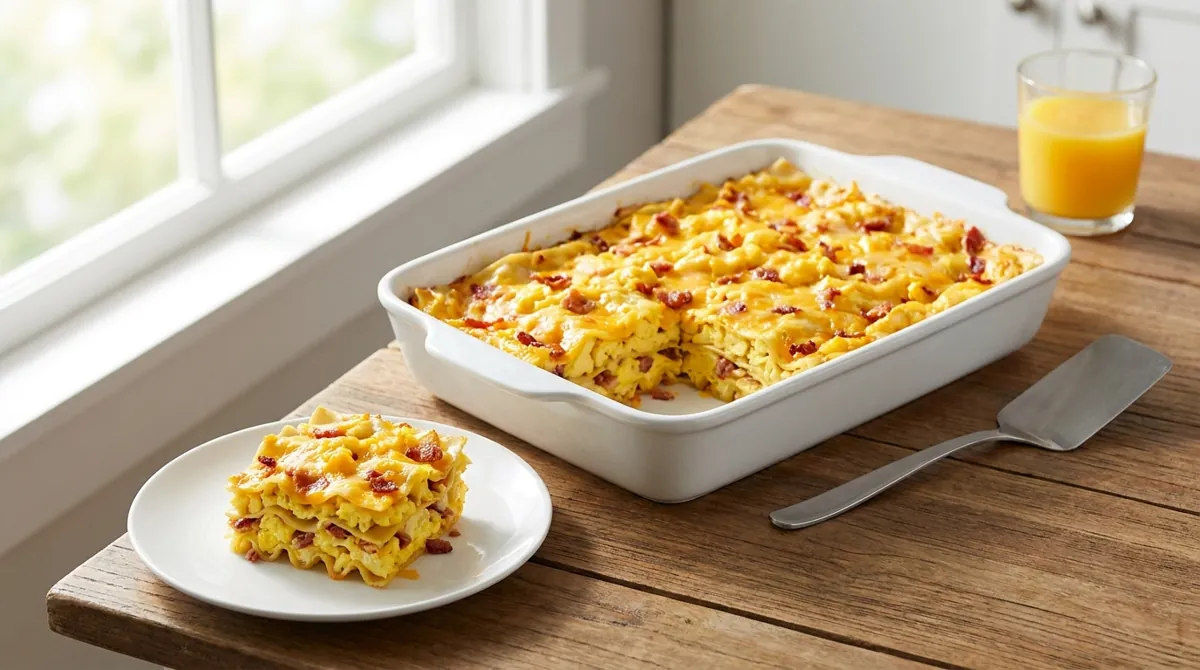
Breakfast Lasagna, Inspired by Micah Stewart
A brunch casserole built like a lasagna: layers of tender noodles, crisp bacon and onion, soft scrambled eggs and a sharp cheddar cream sauce, baked until bubbling and cut into squares.
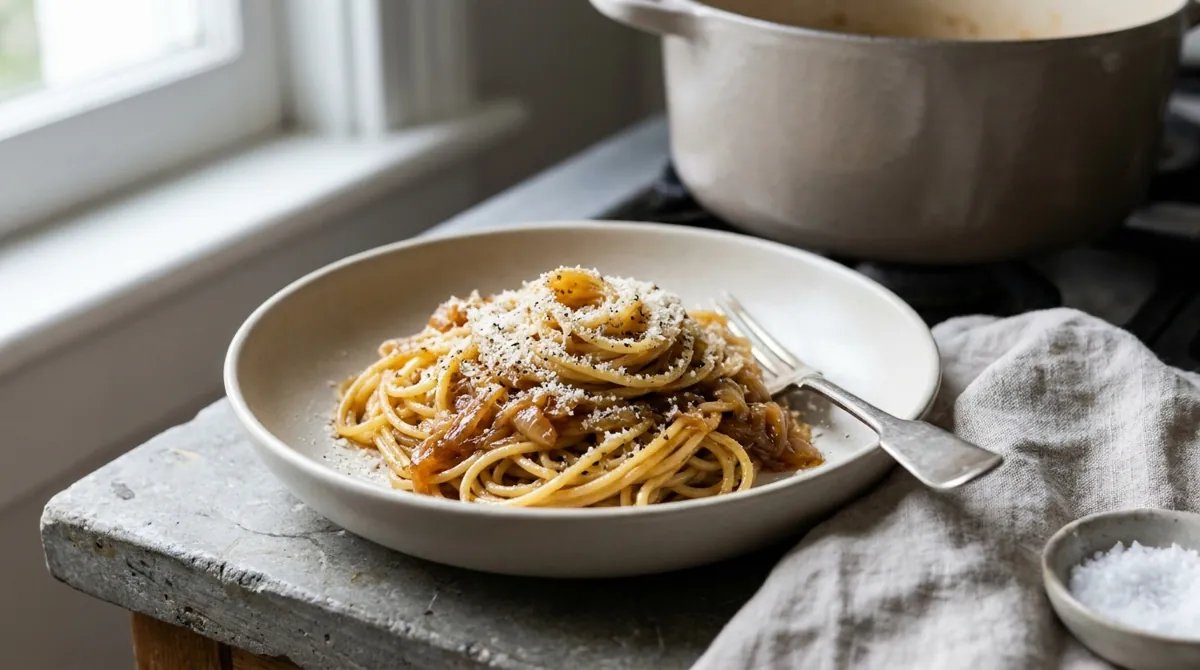
Caramelized Onion Pasta, Inspired by Low Carb Love
Spaghetti tossed in a glossy sauce of slowly browned onions, chicken stock, a little butter and a handful of grated Parmesan: a simple pasta with one slow, patient step.
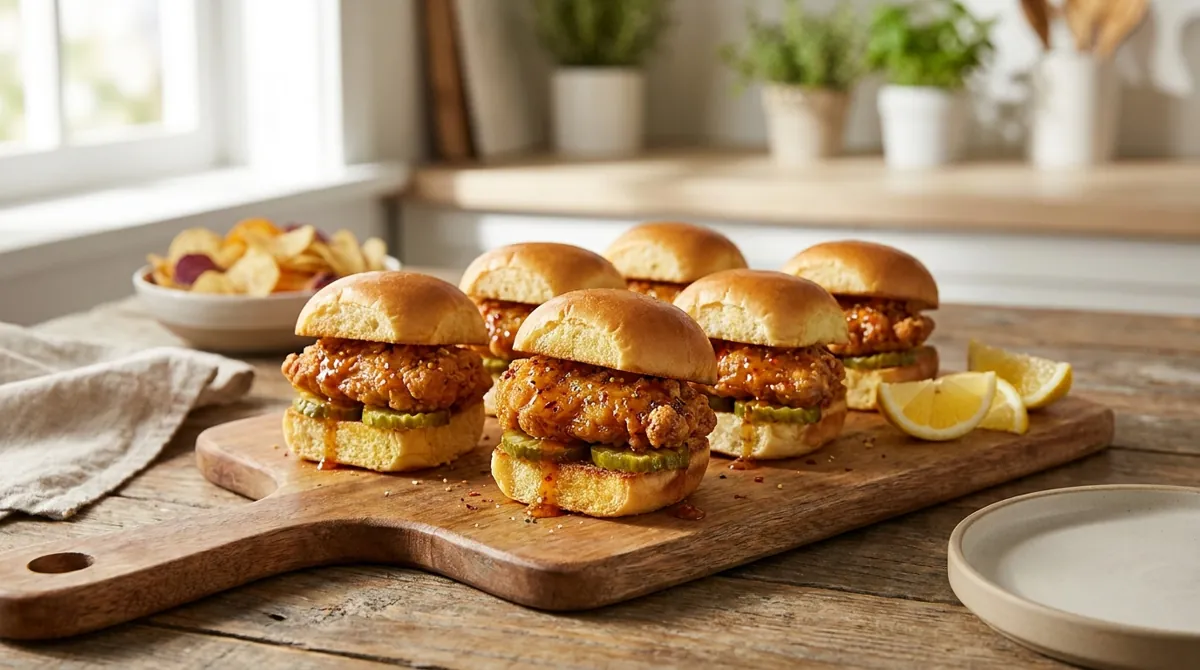
Hot Honey Lemon Pepper Chicken Sliders, Inspired by prestigecooking
Crisp pan-fried chicken thighs on soft toasted slider rolls, tossed in lemon pepper butter and drizzled with chile-spiked honey, with lemony mayonnaise and pickle chips: a game-day tray of twelve.
Meatballs of the World

Italian-American Meatballs
Big, tender meatballs braised for an hour in red sauce over spaghetti. The one most Americans grew up with.

Pallottine (Abruzzo Meatballs)
Tiny meatballs, smaller than a marble, tossed right through square spaghetti alla chitarra. No bread at all.

Swedish Meatballs (Köttbullar)
Small, soft meatballs browned in butter, in a cream sauce made from the same pan, with lingonberry jam on the plate.

Danish Frikadeller
Pork meatballs shaped with a spoon and fried slowly in butter, crusty outside and soft in the middle.

Königsberger Klopse
German meatballs that are never fried: poached, then served in a creamy white sauce with capers.

Spanish Albóndigas in Almond Saffron Sauce
The tapas bar classic: small meatballs in a golden sauce thickened with fried almonds and bread.

Mexican Albóndigas with Chipotle and Mint
Soft meatballs with rice and fresh mint inside, simmered in a smoky tomato and chipotle broth.

Izgara Köfte (Turkish Grilled Meatballs)
Small, flat meatballs kneaded hard, rested cold, and charred on a hot grill pan.

Lion's Head Meatballs
Big, soft pork meatballs, stirred into a sticky paste, fried to set, then braised in a savory sauce.

Chicken Tsukune
Japan's chicken meatball: kneaded sticky, grilled on skewers, glazed with sweet soy tare, dipped in egg yolk.