
Tuna Noodle Casserole (From Scratch)
The canned-soup-era weeknight bake rebuilt from the pantry: egg noodles, canned tuna and peas in a quick mushroom and onion cream sauce, under a buttery crumb top.
 Edited by JP Lambiase
Change the estimate
Swaps change the price only: cook any meat to its own safe temperature. Where these numbers come from
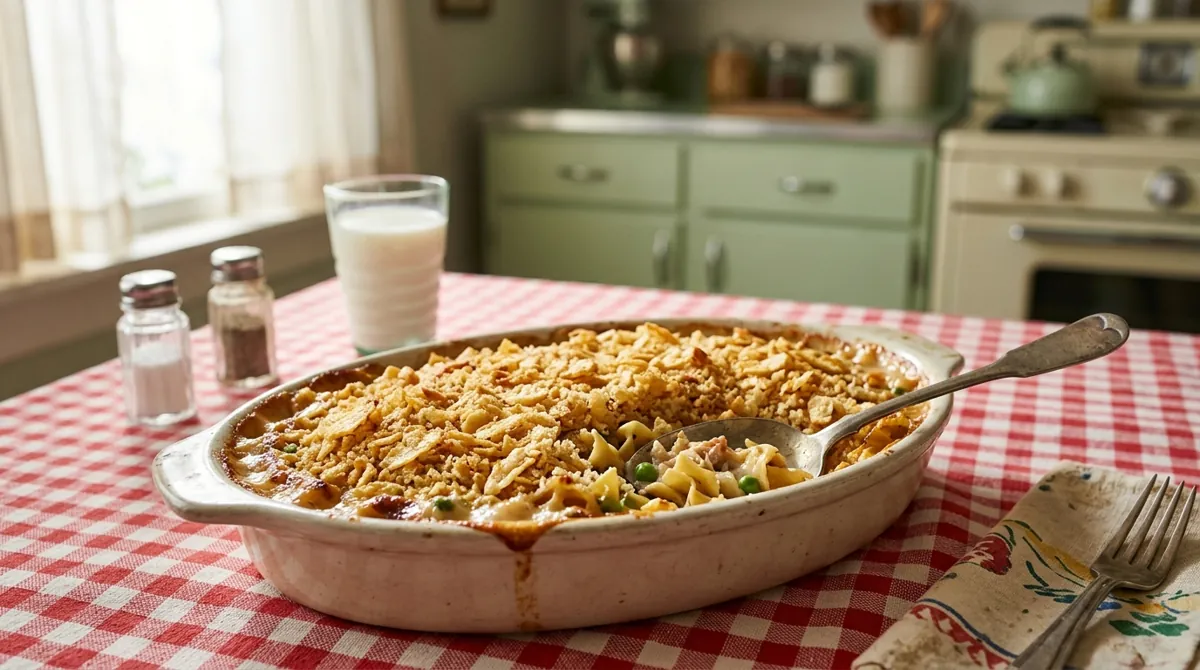
Tuna casserole is canned tuna and pasta or rice baked in a sauce. In North America that usually means egg noodles and cream of mushroom soup, sometimes with peas, under breadcrumbs, crushed potato chips or corn flakes (Wikipedia:). Wikipedia says casseroles took off in American homes in the 1950s because their ingredients were cheap and easy to find at the supermarket, that the soup company Campbell's published a canned-soup recipe book with a tuna casserole in 1952, and that the dish became the one to carry to potlucks, especially in the Midwest, or to a family that was sick or grieving.
The binder came first. Campbell's began canning cream of mushroom soup in 1934; home cooks were already using canned soup as a casserole sauce, and the company started printing its own recipes for it in 1941 (Wikipedia, Cream of mushroom soup:). Campbell's Kitchen's classic version still runs on one can of condensed soup, half a cup of milk, two cans of tuna, peas and buttered breadcrumbs (Food Network:). In 2012 USA Today's founding food editor, Ellen Brown, told NPR that the original was "overcooked egg noodles and a few cans of tuna with a can of cream of mushroom soup", topped with crushed potato chips, and that friends who tasted her remake wanted it to remind them of the school-lunch version.
It is not only American. Wikipedia says Finland bakes *tonnikalapastavuoka*, usually with tomato and mozzarella, as one of its most popular school meals, and Australia calls it tuna mornay, after the cheesy white sauce.
🇺🇸 This one is American
The canned-soup-era weeknight bake rebuilt from the pantry: egg noodles, canned tuna and peas in a quick mushroom and onion cream sauce, under a buttery crumb top.
🇬🇧 The original
Britain's shepherd's pie is lamb under a mashed potato crust, and the beef version is properly called cottage pie. See the British Shepherd's Pie (Lamb, with a Cottage Pie Option) recipe.
Why it works the kitchen science
Underdone noodles
Pulling the noodles 2 minutes early lets them finish in the oven by drinking up some of the sauce, so they end tender instead of mushy.
A thin white sauce
3 1/2 cups of milk to 1/4 cup flour looks loose in the pan, but the noodles soak up the extra while it bakes, which keeps the casserole creamy rather than stiff.
🧰 You'll need 7 items
Everything the steps call for. Tick off what you have before you start.
Appliances
Pans and pots
Tools
Step by step
- Step 1
Heat the oven to 400°F and butter a 9x13-inch baking dish. Boil the noodles in well-salted water 2 minutes less than the package says (about 5 to 6 minutes), drain and set aside.
- Step 2
Melt 4 tbsp butter in a large, deep skillet over medium heat. Cook the onion and celery 4 minutes, until softening. Add the mushrooms and cook 3 minutes more, until soft.
- Step 3
Sprinkle in the flour and stir 1 minute. Whisk in the warm milk a little at a time, then cook 4 to 5 minutes, whisking, until it thickens enough to coat a spoon. Season with the salt and pepper.
- Step 4
Take the pan off the heat. Stir in the tuna, frozen peas and drained noodles until everything is coated, and spread it in the baking dish.
- Step 5
Stir the melted butter into the breadcrumbs (and parsley) and scatter over the top.
- Step 6
Bake 25 to 30 minutes, until the top is golden, the edges bubble and the center reads 165°F. Rest 5 minutes before serving.
Tuna Noodle Casserole (From Scratch)
Serves 8 · one 9x13-inch pan · 1 hr total
Noodles
- 12 oz (340 g) wide egg noodles
- Salt, for the pasta water
Sauce (replaces 2 cans of condensed cream of mushroom soup)
- 4 tbsp (56 g) butter
- 1 medium onion (150 g), diced
- 2 ribs celery (80 g), diced
- 6 oz (170 g) white mushrooms, finely chopped
- 1/4 cup (31 g) all-purpose flour
- 3 1/2 cups (854 g) whole milk, warmed
- 1 1/2 tsp kosher salt
- 1/2 tsp black pepper
Filling
- Four 5-oz cans light tuna in water, well drained (about 1 lb / 452 g drained)
- 1 1/2 cups (200 g) frozen peas, not thawed
Topping
- 2 tbsp (28 g) butter, melted, plus more for the dish
- 3/4 cup (80 g) plain dry breadcrumbs
- 2 tbsp chopped parsley, optional
Equipment: Oven, 9x13-inch baking dish, Deep skillet, Instant-read thermometer, Chef's knife and cutting board, Measuring cups and spoons, Whisk
Method
- Heat the oven to 400°F and butter a 9x13-inch baking dish. Boil the noodles in well-salted water 2 minutes less than the package says (about 5 to 6 minutes), drain and set aside.
- Melt 4 tbsp butter in a large, deep skillet over medium heat. Cook the onion and celery 4 minutes, until softening. Add the mushrooms and cook 3 minutes more, until soft.
- Sprinkle in the flour and stir 1 minute. Whisk in the warm milk a little at a time, then cook 4 to 5 minutes, whisking, until it thickens enough to coat a spoon. Season with the salt and pepper.
- Take the pan off the heat. Stir in the tuna, frozen peas and drained noodles until everything is coated, and spread it in the baking dish.
- Stir the melted butter into the breadcrumbs (and parsley) and scatter over the top.
- Bake 25 to 30 minutes, until the top is golden, the edges bubble and the center reads 165°F. Rest 5 minutes before serving.
Adapted from Ree Drummond, "Tuna Noodle Casserole", Food Network Magazine, 8 to 10 servings. We keep her method and 400°F bake for a 9x13: 12 oz wide egg noodles, onion and mushrooms softened in butter, a flour-thickened milk sauce, tuna stirred in, a buttered crumb top, 25 to 30 minutes. Our changes for budget and kids: four 5-oz cans of light tuna instead of three 6.4-oz pouches of albacore, more milk instead of her 1/2 cup dry sherry, celery and frozen peas added (the peas are in the Campbell's Kitchen classic), plain breadcrumbs with 2 tbsp butter instead of panko with 4, and no red bell pepper. The 165°F check is ours. Estimated cost: about $13.19 for the pan, about $1.65 a serving (canned light tuna at our estimate of $1.29 per 5-oz can). Food Network. Ingredient list follows the source; the method is in our own words.
Tips
- Canned shortcut: skip the flour and milk and stir 2 cans (10.5 oz each) condensed cream of mushroom or cream of celery soup with 1 cup milk into the softened vegetables (Campbell's Kitchen uses 1 can and 1/2 cup milk for 4 servings).
- Crunchier top: use 1 1/2 cups crushed potato chips or corn flakes instead of the breadcrumbs.
- Make ahead: assemble through step 4, cover and refrigerate up to 24 hours (house rule); add the crumbs just before baking and bake 35 to 40 minutes, to 165°F. To freeze, follow Kentucky Extension's advice and keep the crumbs separate; use within 3 months.
- Leftovers keep 3 to 4 days refrigerated (FSIS, cooked casseroles); reheat to 165°F.
- Light tuna is cheaper than albacore and works fine here; drain it well or the sauce goes watery.
The rules people argue about
What the sources agree on, what they don't, and what is just a good story.
- Tuna casserole was invented by the soup company in the 1950s. Disputed: Wikipedia says Campbell's printed a tuna casserole in a 1952 canned-soup cookbook, but its cream of mushroom soup article says home cooks were already making casseroles with canned soup before Campbell's started publishing its own recipes in 1941. Nobody we read names an inventor.
- The original topping is crushed potato chips. Disputed: Ellen Brown (NPR, 2012) remembers chips; the Campbell's Kitchen classic uses buttered breadcrumbs; Wikipedia lists breadcrumbs, fried onions, chips and corn flakes.
- Cream of mushroom, never cream of celery. Folklore: the Campbell's Kitchen classic is written with cream of celery and lists mushroom as the swap.
- Tuna casserole is a school lunch. Documented for Finland, where Wikipedia calls it one of the most popular school meals; for the US, only Ellen Brown's school-lunch memory (NPR).
Every other casserole
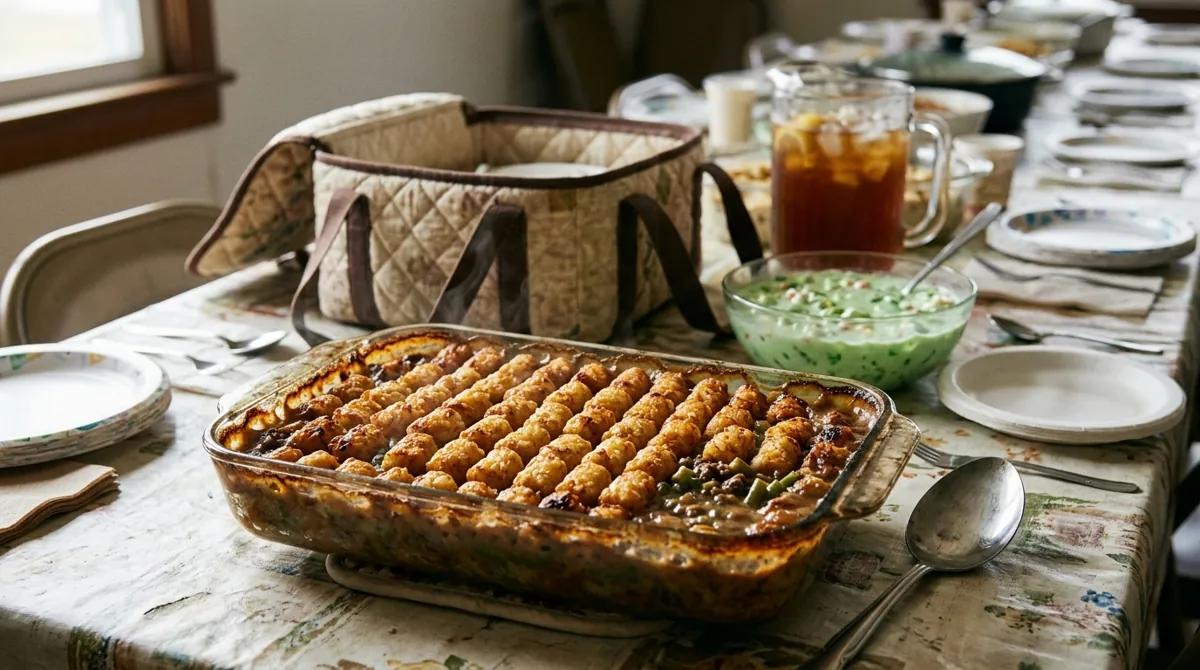
Minnesota Tot Hotdish (Ground Beef, Green Beans and Potato Tots)
The Upper Midwest church-supper classic: browned ground beef and green beans folded into a from-scratch creamy sauce, covered edge to edge with frozen potato tots and baked hot until they crisp.
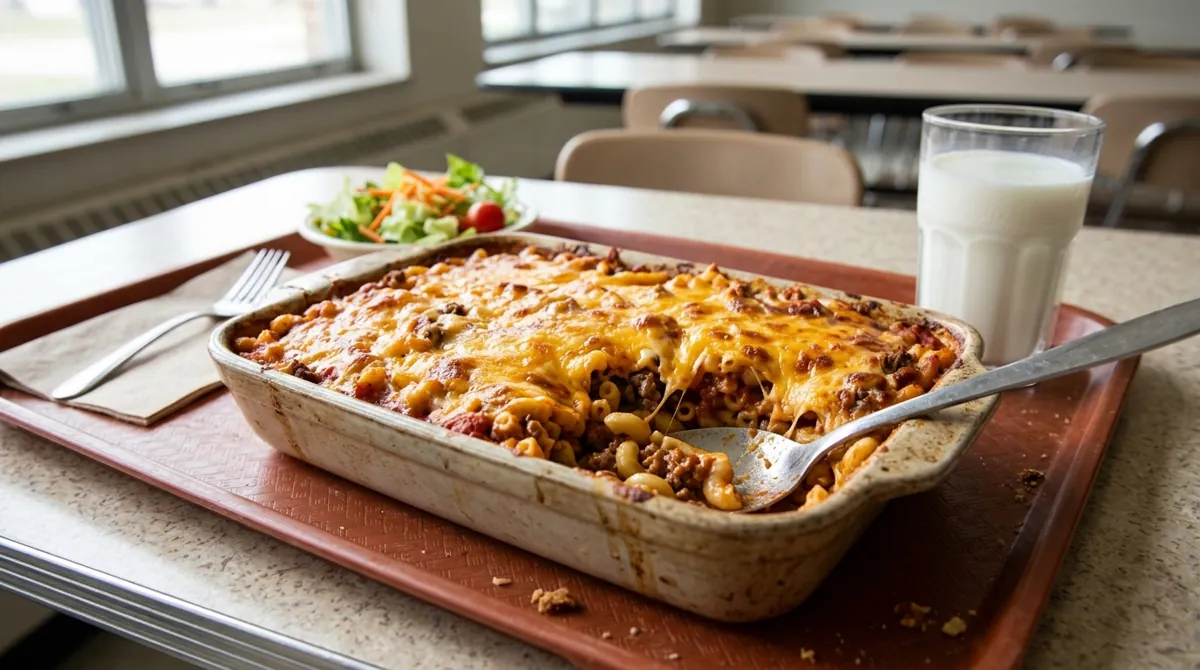
Johnny Marzetti (Ohio Beef and Cheddar Pasta Bake)
Columbus, Ohio's signature casserole: corkscrew pasta, ground beef, mushrooms and hand-crushed tomatoes stirred with sharp cheddar and baked under more cheddar until browned and bubbling.
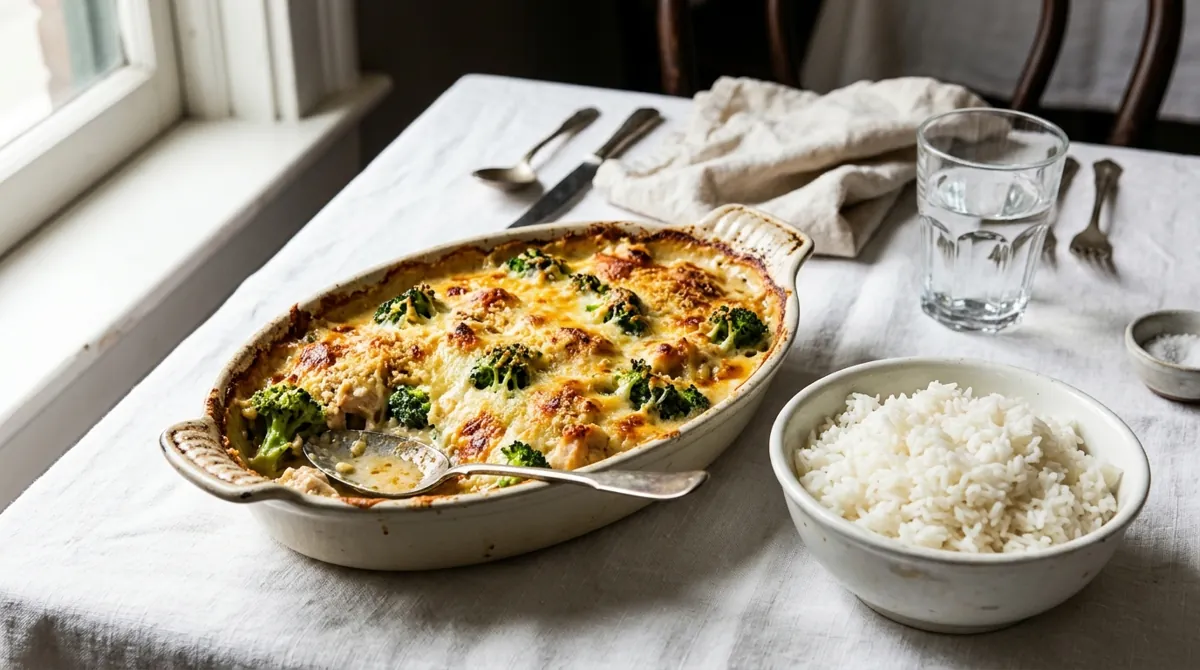
Chicken Divan (Chicken and Broccoli in Cheese Sauce)
A New York hotel restaurant's secret dish turned into a family casserole: poached chicken and broccoli under a cheddar and Parmesan cheese sauce made with the poaching broth, baked golden and served over rice.
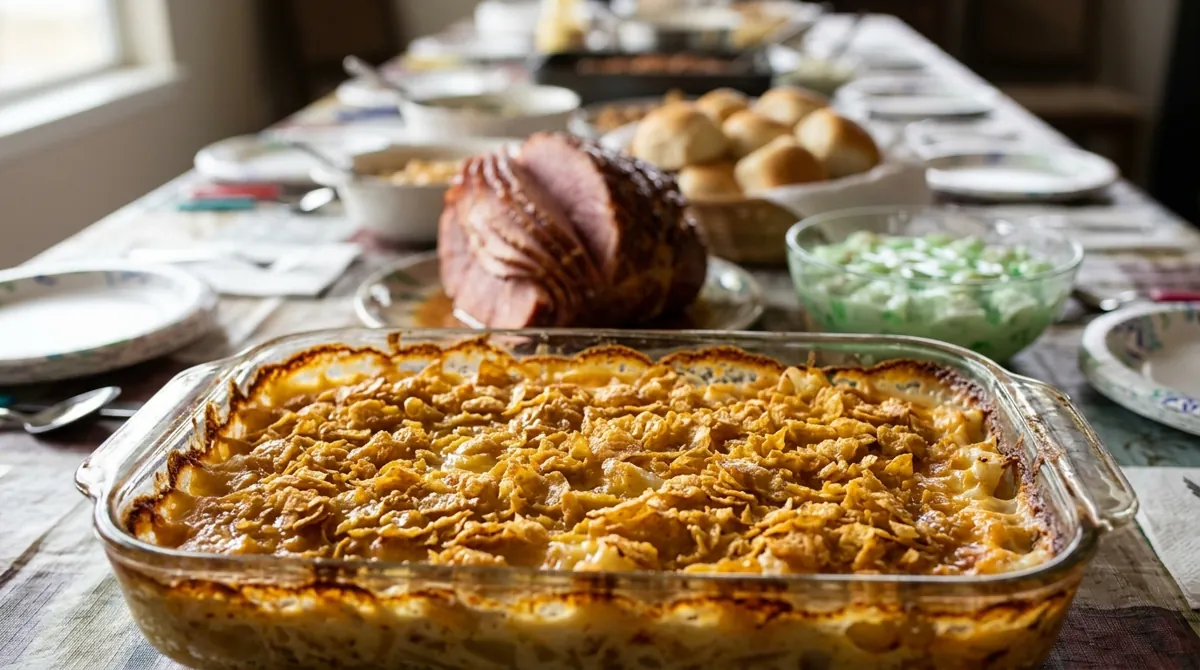
Utah Funeral Potatoes (Cheesy Potato Casserole with Corn Flake Crust)
The Utah potluck and after-funeral classic: shredded potatoes in a creamy sour cream and cheddar sauce under a buttery corn flake crust, enough for a crowd of twelve.
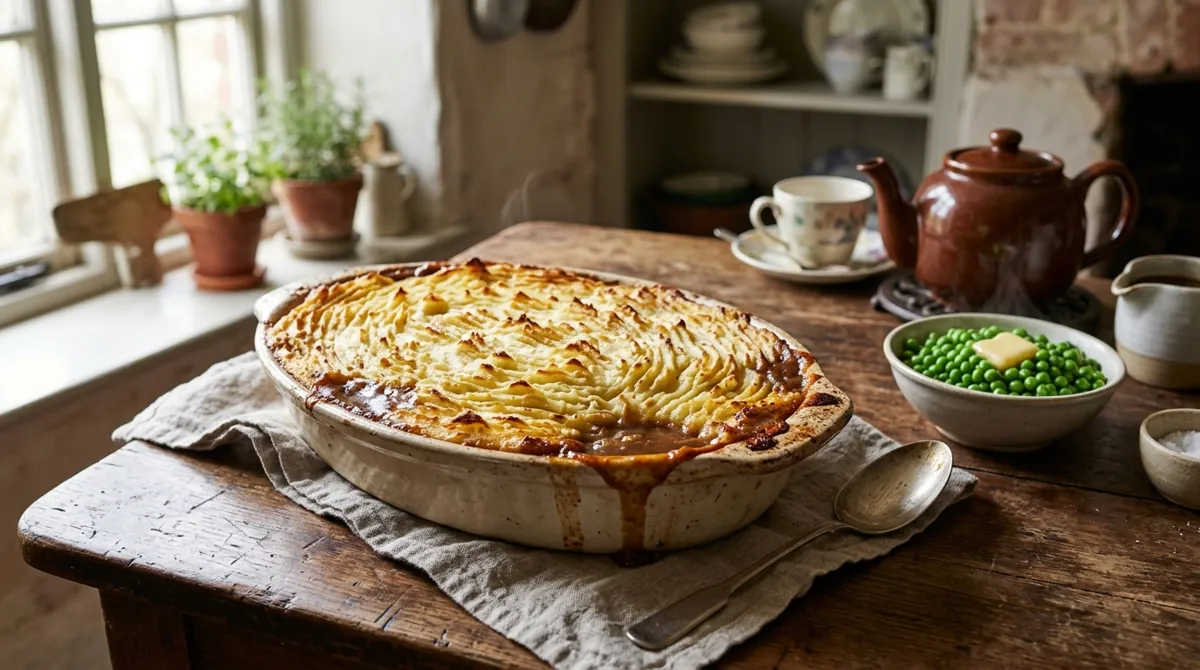
British Shepherd's Pie (Lamb, with a Cottage Pie Option)
Britain's potato-roofed pie: ground lamb, onion and carrot simmered in beef broth with tomato paste and Worcestershire, topped with buttery mash raked with a fork and baked until the ridges brown.
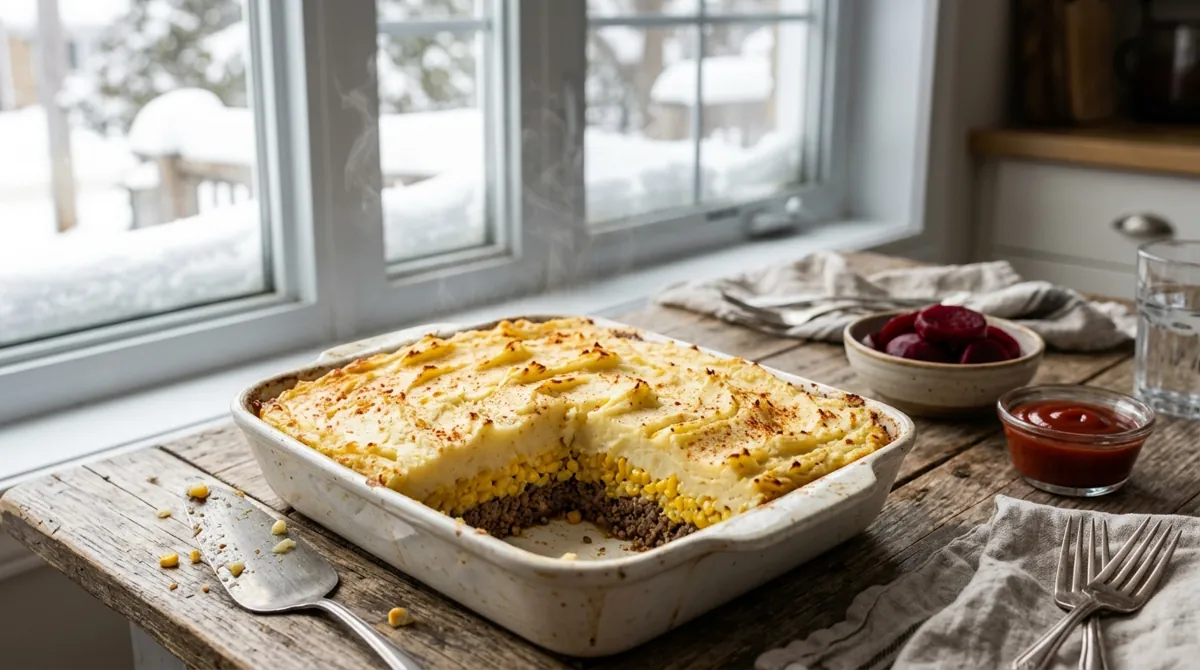
Pâté Chinois (Quebec Beef, Corn and Potato Pie)
Quebec's three-layer supper pie, "steak, blé d'Inde, patates": seasoned ground beef, a stripe of kernel corn and cream-style corn, then buttery mashed potatoes dusted with paprika and baked golden.
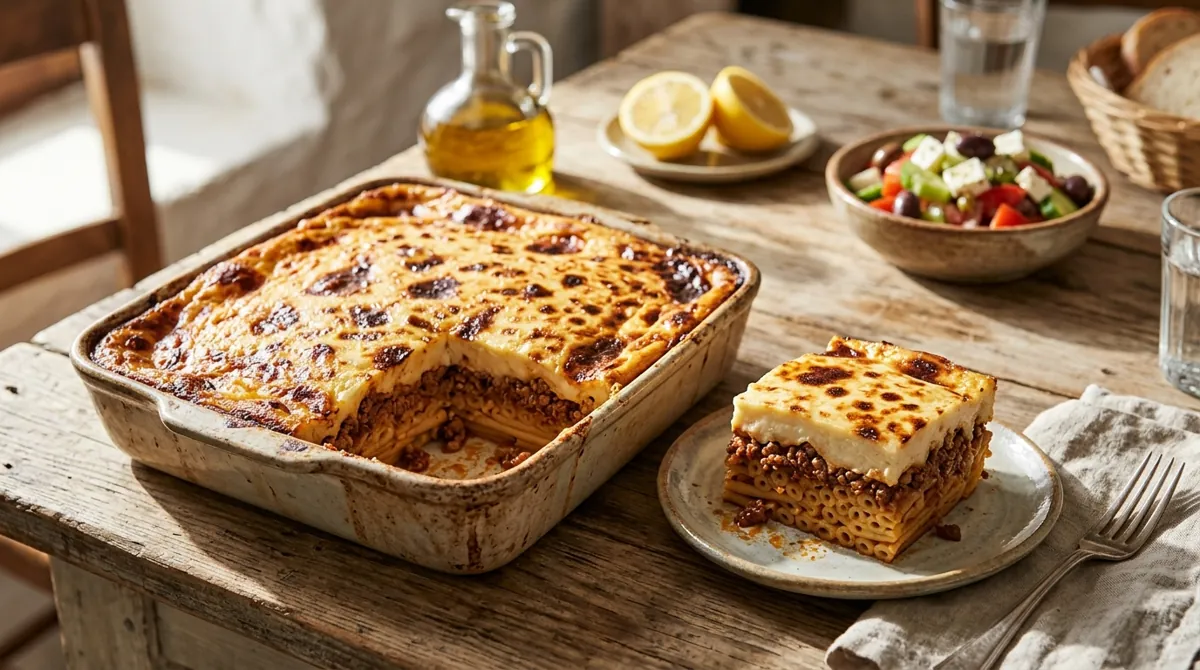
Greek Pastitsio (Baked Pasta with Meat Sauce and Béchamel)
Greece's tall pasta bake: tube pasta and a cinnamon and clove-scented beef and tomato sauce in layers under a thick, cheese-enriched béchamel that bakes into a golden, custardy cap.
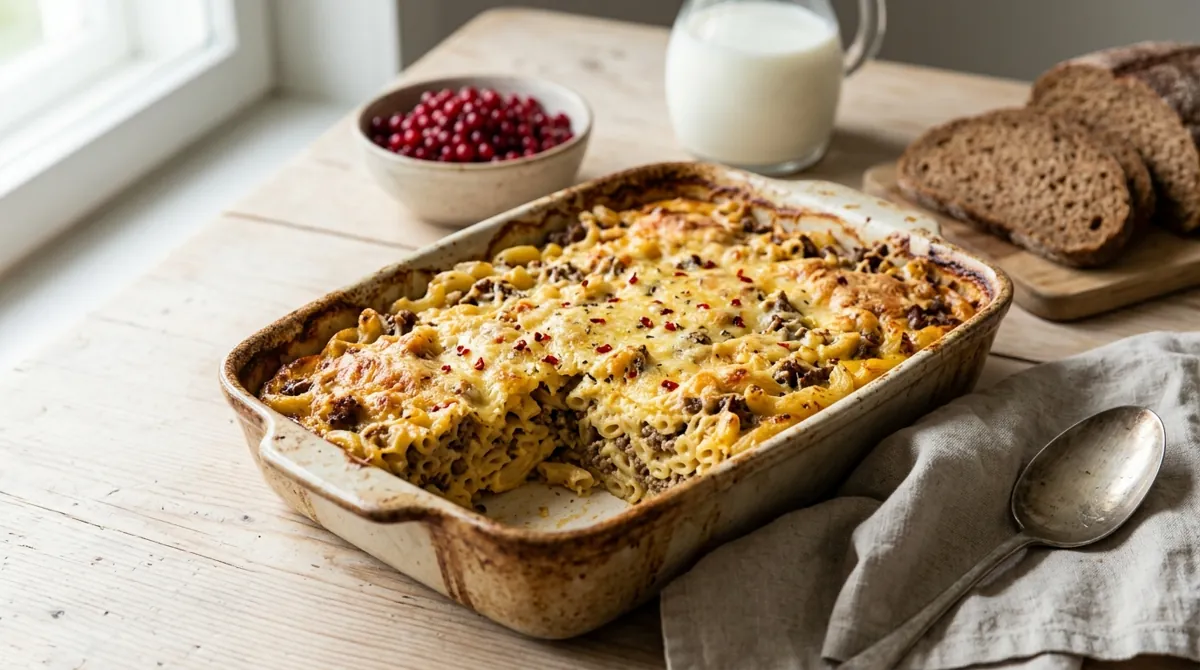
Finnish Makaronilaatikko (Macaroni and Beef Custard Bake)
Finland's everyday macaroni casserole: elbows and browned ground beef baked in a milk and egg custard under Swiss cheese until set and golden, served the Finnish way with ketchup or lingonberries.
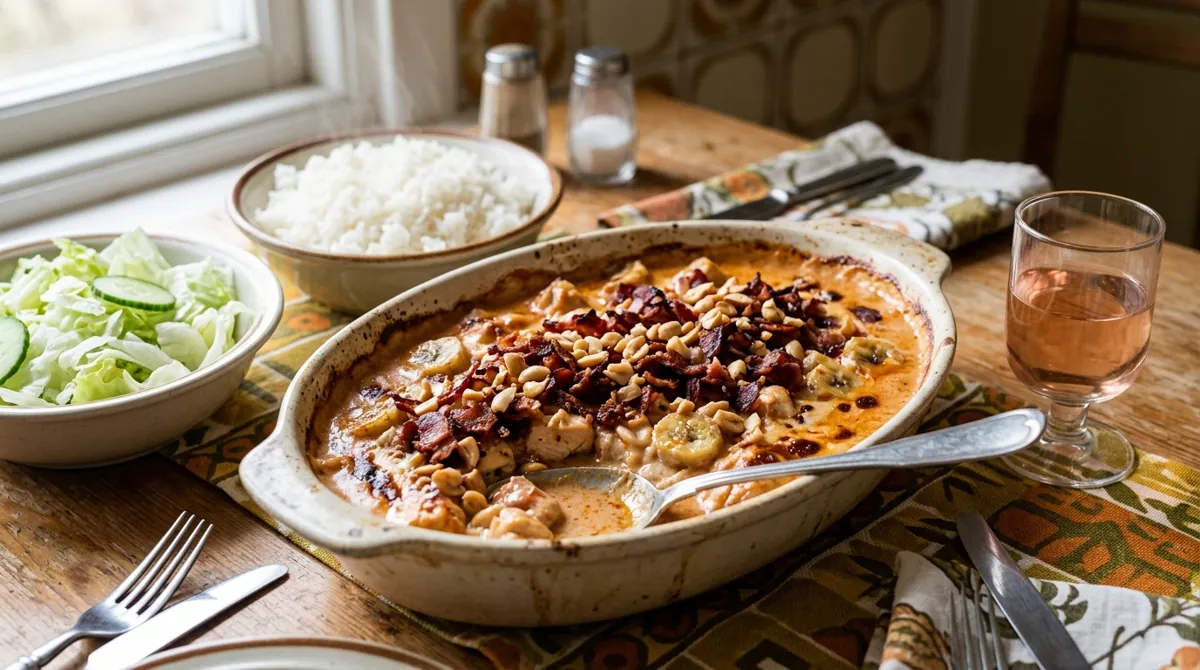
Swedish Flying Jacob (Chicken, Banana and Peanut Casserole)
Sweden's famous 1976 party casserole: chicken and bananas baked under whipped cream mixed with ketchup-style chili sauce, then showered with crisp bacon and salted peanuts and served over rice.
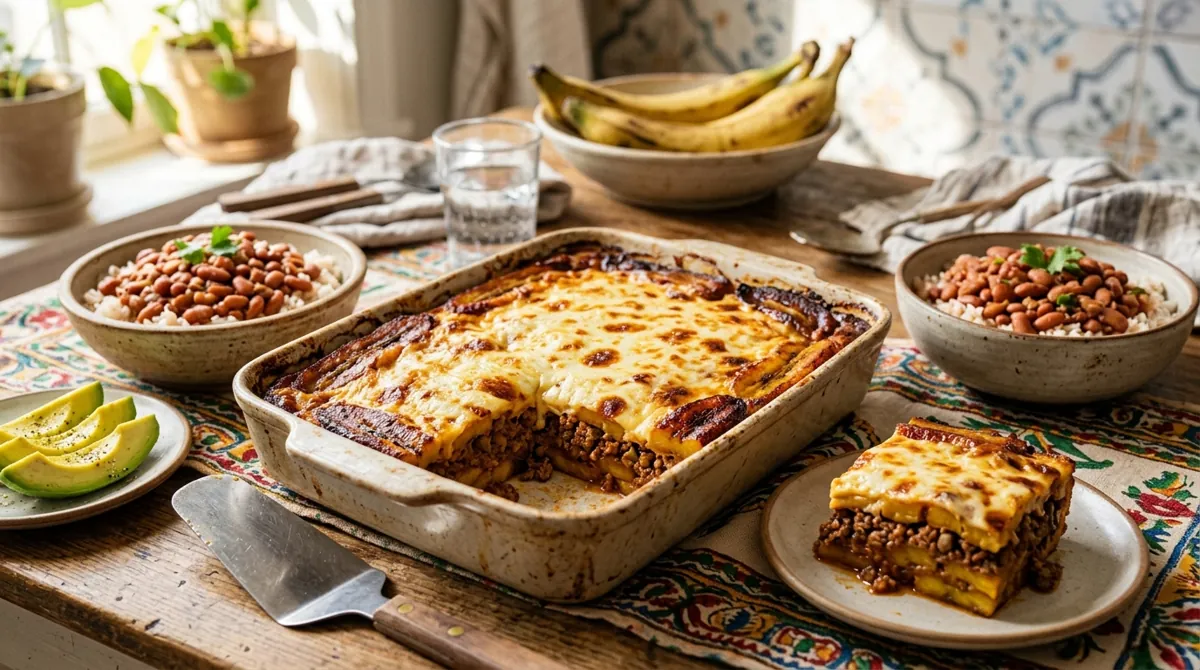
Puerto Rican Pastelón (Sweet Plantain and Picadillo Bake)
Puerto Rico's "big cake": strips of very ripe plantain, oven-roasted until caramelized, layered like lasagna noodles with a beef picadillo of olives, capers and tomato, bound with beaten egg and melted mozzarella.
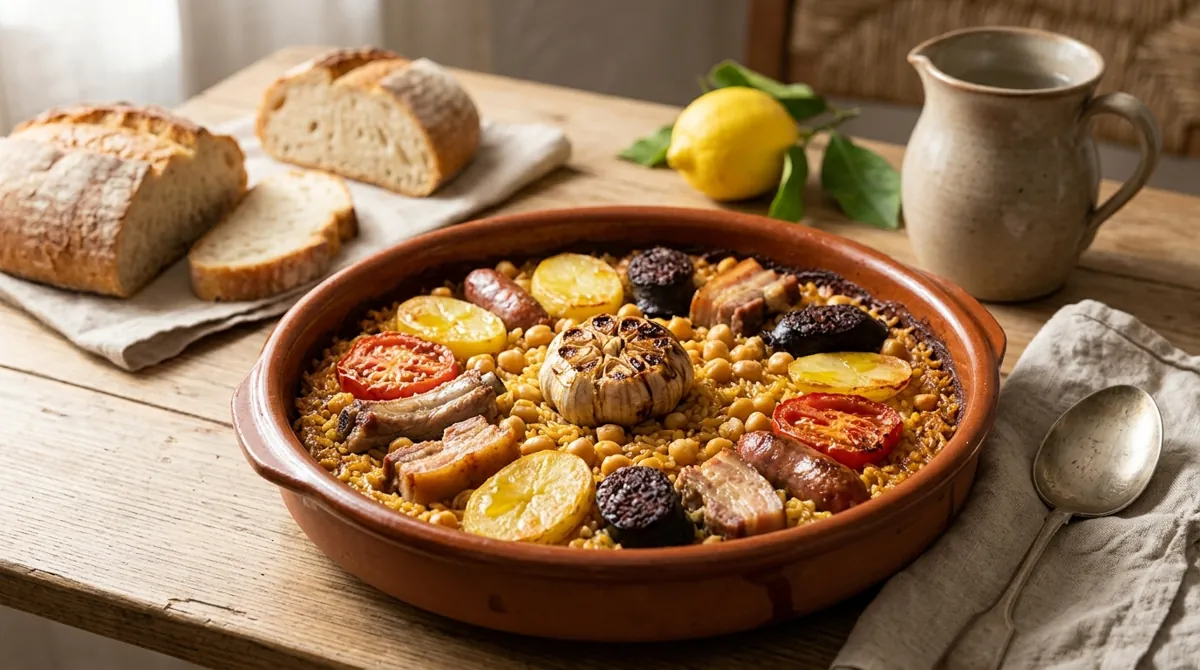
Valencian Arroz al Horno (Oven-Baked Rice with Pork, Chickpeas and Potatoes)
Valencia's Sunday-leftover rice: pork ribs, bacon, chorizo, chickpeas and potato slices browned, then baked with short rice and hot broth around a whole head of garlic and halved tomatoes until the top turns crisp.
Meatballs of the World

Italian-American Meatballs
Big, tender meatballs braised for an hour in red sauce over spaghetti. The one most Americans grew up with.

Pallottine (Abruzzo Meatballs)
Tiny meatballs, smaller than a marble, tossed right through square spaghetti alla chitarra. No bread at all.

Swedish Meatballs (Köttbullar)
Small, soft meatballs browned in butter, in a cream sauce made from the same pan, with lingonberry jam on the plate.

Danish Frikadeller
Pork meatballs shaped with a spoon and fried slowly in butter, crusty outside and soft in the middle.

Königsberger Klopse
German meatballs that are never fried: poached, then served in a creamy white sauce with capers.

Spanish Albóndigas in Almond Saffron Sauce
The tapas bar classic: small meatballs in a golden sauce thickened with fried almonds and bread.

Mexican Albóndigas with Chipotle and Mint
Soft meatballs with rice and fresh mint inside, simmered in a smoky tomato and chipotle broth.

Izgara Köfte (Turkish Grilled Meatballs)
Small, flat meatballs kneaded hard, rested cold, and charred on a hot grill pan.

Lion's Head Meatballs
Big, soft pork meatballs, stirred into a sticky paste, fried to set, then braised in a savory sauce.

Chicken Tsukune
Japan's chicken meatball: kneaded sticky, grilled on skewers, glazed with sweet soy tare, dipped in egg yolk.