
Valencian Arroz al Horno (Oven-Baked Rice with Pork, Chickpeas and Potatoes)
Valencia's Sunday-leftover rice: pork ribs, bacon, chorizo, chickpeas and potato slices browned, then baked with short rice and hot broth around a whole head of garlic and halved tomatoes until the top turns crisp.
 Edited by JP Lambiase
Change the estimate
Swaps change the price only: cook any meat to its own safe temperature. Where these numbers come from
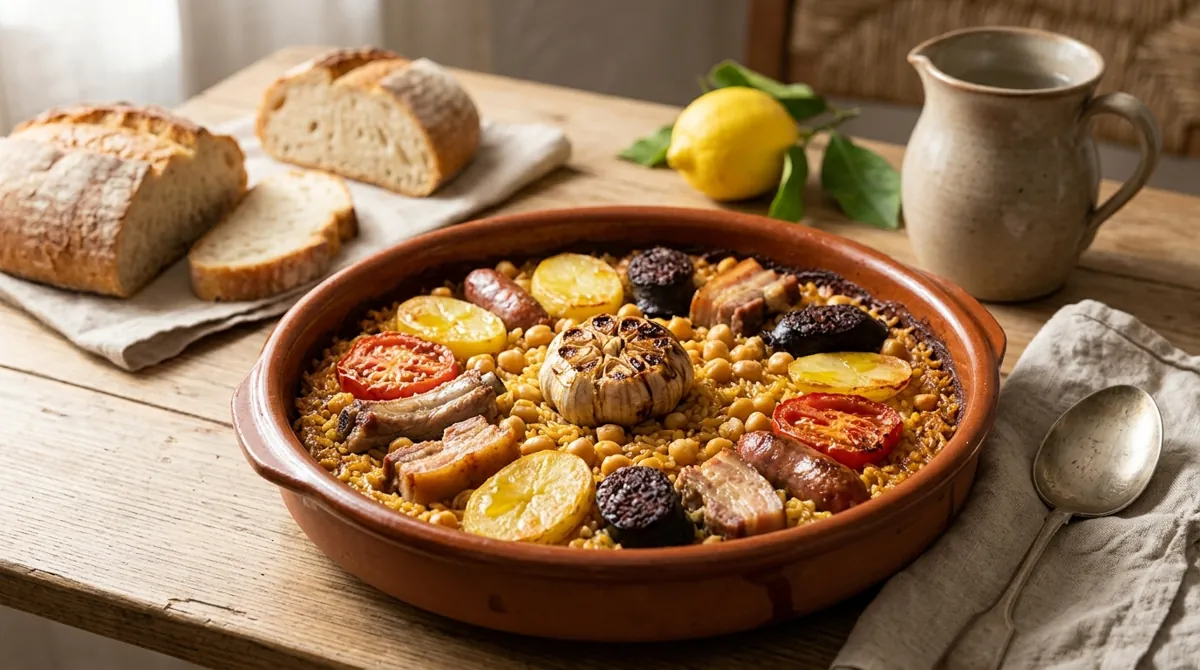
*Arroz al horno*, *arròs al forn* in Valencian, is a typical dish of the Valencian Community, cooked in the oven in a flat clay dish, the *cassola* (Spanish Wikipedia:). Spanish Wikipedia says it began as a way to use what was left of the *cocido*, the Sunday stew: the broth, the chickpeas and the pork, sausages and meatballs cooked in it, with potatoes, tomato and a whole head of garlic crowning the dish. Because homes once had no ovens, it was also called *arròs passejat*, "walked rice", for the trip to the nearest bread baker's oven, a custom still seen in some towns.
The Valencian tourism board calls it one of the region's best-kept secrets, with as many versions as homes; its fixed points are the oven and the flat clay dish, and its canonical ingredients are sausage, chickpeas, pork ribs, pork belly, a head of garlic, tomato and potato. It notes that Xàtiva is famous for it, that Torrent calls its version *rossejat* and adds sweet almond meatballs, and that Vilafamés bakes it in half a pumpkin (Turisme Comunitat Valenciana:). Directo al Paladar adds that cooks took the dish to the village baker, who baked it "a cambio de la voluntad", for whatever you chose to give, and that it is very common in Alicante. It is the Spanish cousin of the American chicken and rice bake: one pan of rice cooked in broth in the oven, with the meat already in it.
Why it works the kitchen science
Two to one, and no stirring
Exactly twice as much broth as rice by volume is absorbed completely in a hot oven, and leaving it alone lets the top dry into the crisp crust the dish is known for.
Fry the rice first
Coating the grains in the pork fat before the broth goes in seals the outside, so they cook through without bursting into risotto.
🧰 You'll need 6 items
Everything the steps call for. Tick off what you have before you start.
Appliances
Pans and pots
Tools
Step by step
- Step 1
Heat the oven to 475°F with a rack in the middle. Bring the broth to a simmer with the paprika and saffron, taste and salt it well (the rice takes its seasoning from the broth), and keep it hot over low heat.
- Step 2
Heat the oil in a large skillet over medium-high heat. Brown the potato slices 2 to 3 minutes per side and set aside on a plate.
- Step 3
In the same oil, brown the rib pieces 8 to 10 minutes, turning, until well colored. Add the bacon and chorizo and cook 3 minutes more.
- Step 4
Stir in the rice and chickpeas and cook 1 to 2 minutes, until the rice is coated in the fat. Spread everything evenly in a 9x13-inch metal pan or a 13-inch shallow clay dish.
- Step 5
Set the garlic head in the center, lay the potato slices over the top and add the tomato halves, cut side up. Pour in the 5 cups of hot broth and do not stir again.
- Step 6
Bake 25 to 30 minutes, until the rice is tender, the broth is absorbed and the top is browned and crisp in spots; the center should read 165°F.
- Step 7
Cover with a clean kitchen towel and rest 5 minutes. Squeeze the soft garlic cloves over portions at the table.
Valencian Arroz al Horno (Oven-Baked Rice with Pork, Chickpeas and Potatoes)
Serves 8 · one 9x13-inch metal pan or a 13-inch shallow clay dish · 1 hr 20 min total
Broth
- 5 cups (1,200 g) chicken broth
- 1 tsp sweet paprika
- Pinch of saffron, optional
- Salt, to taste
Meats and vegetables
- 3 tbsp (40 g) olive oil
- 1 lb (454 g) potatoes, peeled and cut in 1/4-inch slices
- 1 1/2 lb (680 g) pork spareribs, cut across the bone into 1 1/2-inch pieces (ask the meat counter)
- 4 oz (113 g) thick-cut bacon, cut in 1-inch pieces
- 6 oz (170 g) Spanish-style cured chorizo, sliced (or fresh chorizo in chunks)
- One 15.5-oz can chickpeas, drained and rinsed (about 1 1/2 cups / 240 g)
- 2 medium tomatoes (240 g), halved crosswise
- 1 whole head of garlic, loose outer papery skin rubbed off
Rice
- 2 1/2 cups (500 g) medium-grain or short-grain rice (Spanish bomba or Calrose)
Equipment: Oven, 9x13-inch pan, Large skillet, Instant-read thermometer, Chef's knife and cutting board, Measuring cups and spoons
Method
- Heat the oven to 475°F with a rack in the middle. Bring the broth to a simmer with the paprika and saffron, taste and salt it well (the rice takes its seasoning from the broth), and keep it hot over low heat.
- Heat the oil in a large skillet over medium-high heat. Brown the potato slices 2 to 3 minutes per side and set aside on a plate.
- In the same oil, brown the rib pieces 8 to 10 minutes, turning, until well colored. Add the bacon and chorizo and cook 3 minutes more.
- Stir in the rice and chickpeas and cook 1 to 2 minutes, until the rice is coated in the fat. Spread everything evenly in a 9x13-inch metal pan or a 13-inch shallow clay dish.
- Set the garlic head in the center, lay the potato slices over the top and add the tomato halves, cut side up. Pour in the 5 cups of hot broth and do not stir again.
- Bake 25 to 30 minutes, until the rice is tender, the broth is absorbed and the top is browned and crisp in spots; the center should read 165°F.
- Cover with a clean kitchen towel and rest 5 minutes. Squeeze the soft garlic cloves over portions at the table.
Adapted from Directo al Paladar, "Receta tradicional de arroz al horno" (by "minue", first published March 6, 2014), 4 servings. We follow its method: hot broth; potato slices browned briefly and set aside; pork ribs and pork belly browned, blood sausage browned briefly, rice and chickpeas stirred in the fat; potato slices, a whole garlic head in the center and a halved tomato on top; exactly 2 parts broth to 1 part rice; a very hot oven (250°C, about 480°F; we use 475°F) and a short rest under a towel. Our changes for 8 and for US shops: 1 1/2 lb ribs, bacon for fresh pork belly, chorizo for the blood sausage (*morcilla* is the Tips option), canned chickpeas and chicken broth instead of leftover cocido broth, two tomatoes, and 25 to 30 minutes for the bigger pan. The 165°F check is ours. Estimated cost: about $18.15 for the pan, about $2.27 a serving (spareribs priced at the table's general pork rate). Directo al Paladar. Ingredient list follows the source; the method is in our own words.
All sources (3)
Tips
- With morcilla: use 2 links (about 7 oz) Spanish blood sausage in place of half the chorizo; brown them briefly with the bacon. The site's table prices blood sausage at $8.99 a pound, which adds about $0.40 a serving.
- After a pot roast or soup: use leftover broth and leftover cooked meat, the dish's origin; brown the cooked meat 3 minutes instead of 10.
- Clay dishes: a cold clay cassola can crack in a hot oven; heat it gradually or use a metal pan.
- Make ahead: this one is best right out of the oven. Kentucky Extension advises against freezing casseroles made with uncooked rice before baking. Refrigerate leftovers within 2 hours in shallow containers, eat within 3 to 4 days and reheat to 165°F with a splash of broth.
The rules people argue about
What the sources agree on, what they don't, and what is just a good story.
- It was made from the Sunday cocido's leftovers. Documented (Spanish Wikipedia; Turisme Comunitat Valenciana; Directo al Paladar).
- It was called "walked rice" because it went to the baker's oven. Documented (Spanish Wikipedia; Turisme Comunitat Valenciana).
- The broth must be exactly twice the rice. Folklore as a law, though Directo al Paladar insists on it; real cassolas vary with the dish and the rice.
- A whole garlic head in the center is mandatory. Folklore: Turisme Comunitat Valenciana lists it among the canonical ingredients but says there are as many versions as homes.
- It belongs to Valencia, not Alicante. Folklore: both are in the Valencian Community; Directo al Paladar calls it very common in Alicante and the tourism board names towns from Xàtiva to Torrent.
Every other casserole
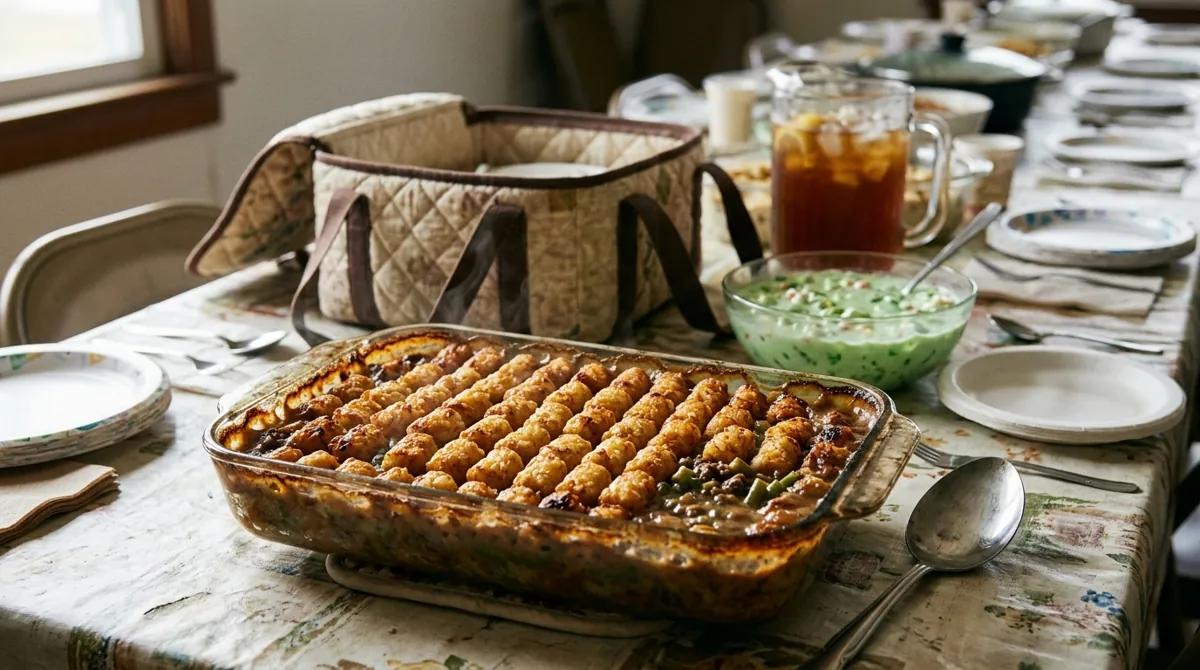
Minnesota Tot Hotdish (Ground Beef, Green Beans and Potato Tots)
The Upper Midwest church-supper classic: browned ground beef and green beans folded into a from-scratch creamy sauce, covered edge to edge with frozen potato tots and baked hot until they crisp.
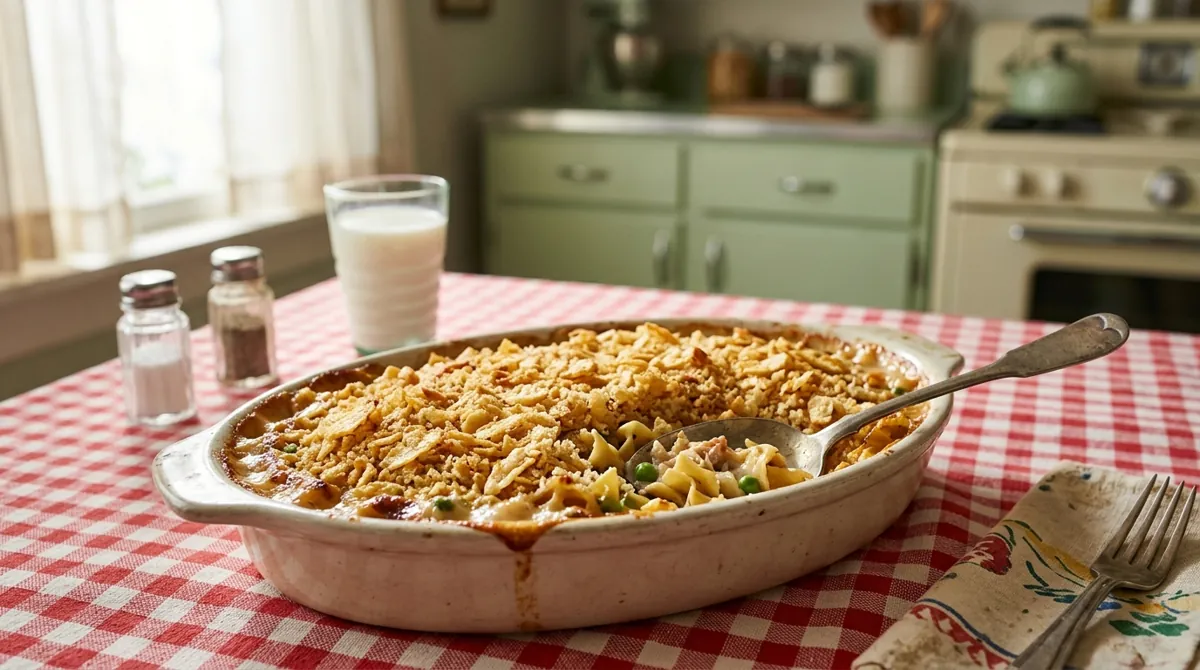
Tuna Noodle Casserole (From Scratch)
The canned-soup-era weeknight bake rebuilt from the pantry: egg noodles, canned tuna and peas in a quick mushroom and onion cream sauce, under a buttery crumb top.
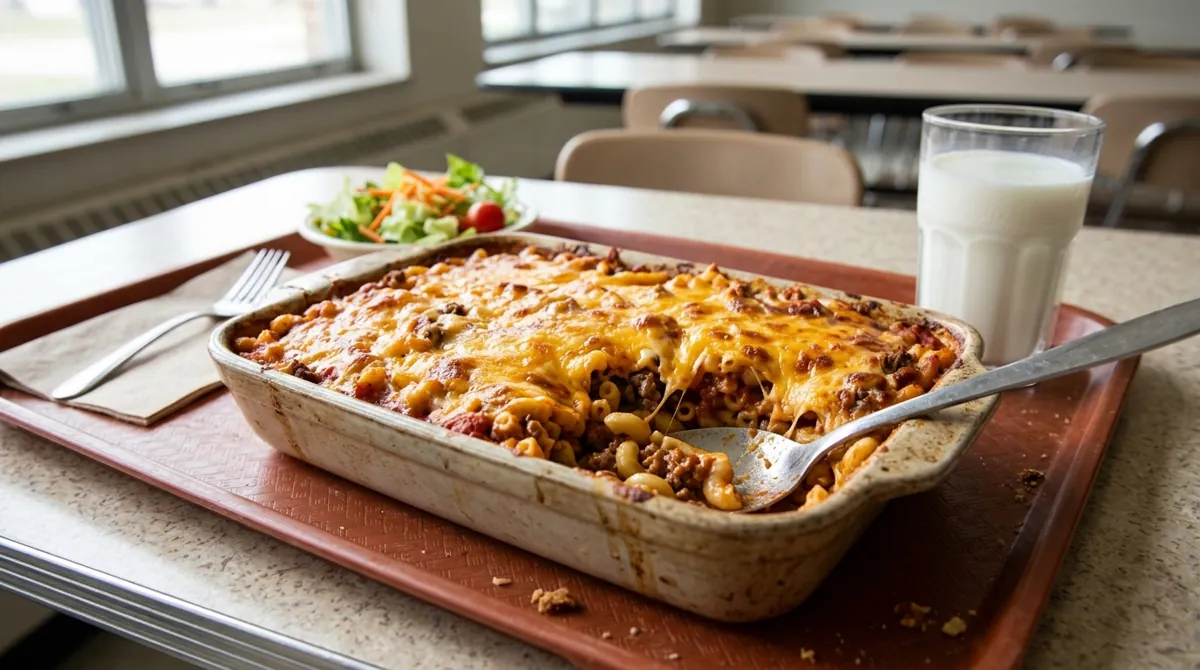
Johnny Marzetti (Ohio Beef and Cheddar Pasta Bake)
Columbus, Ohio's signature casserole: corkscrew pasta, ground beef, mushrooms and hand-crushed tomatoes stirred with sharp cheddar and baked under more cheddar until browned and bubbling.
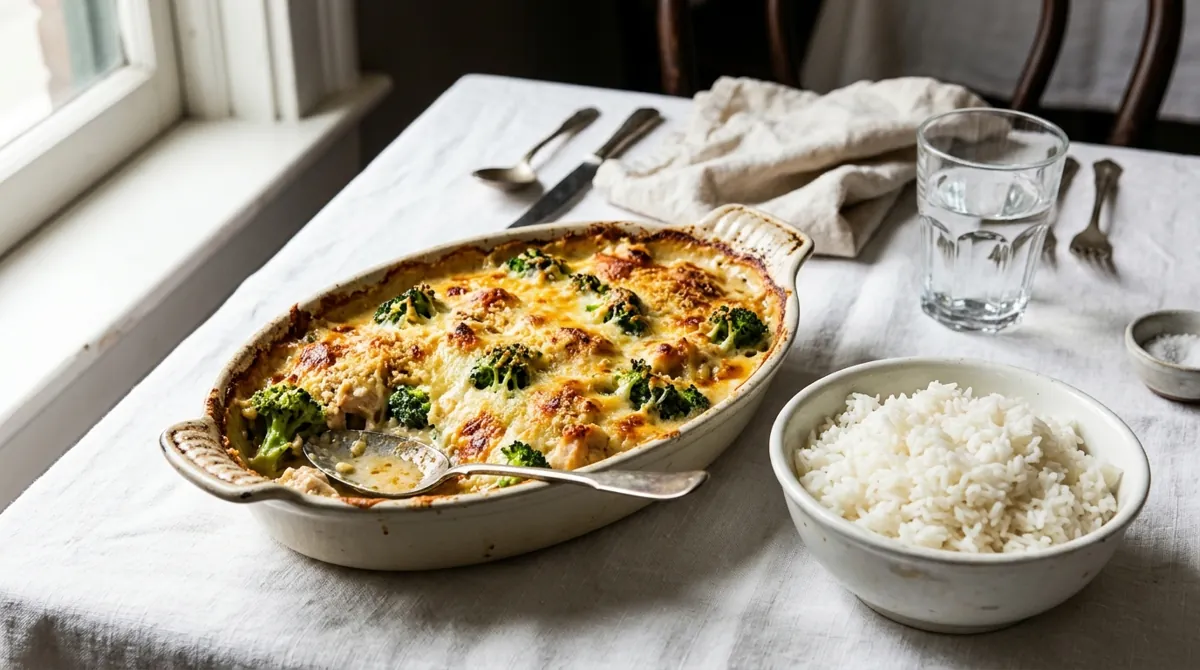
Chicken Divan (Chicken and Broccoli in Cheese Sauce)
A New York hotel restaurant's secret dish turned into a family casserole: poached chicken and broccoli under a cheddar and Parmesan cheese sauce made with the poaching broth, baked golden and served over rice.
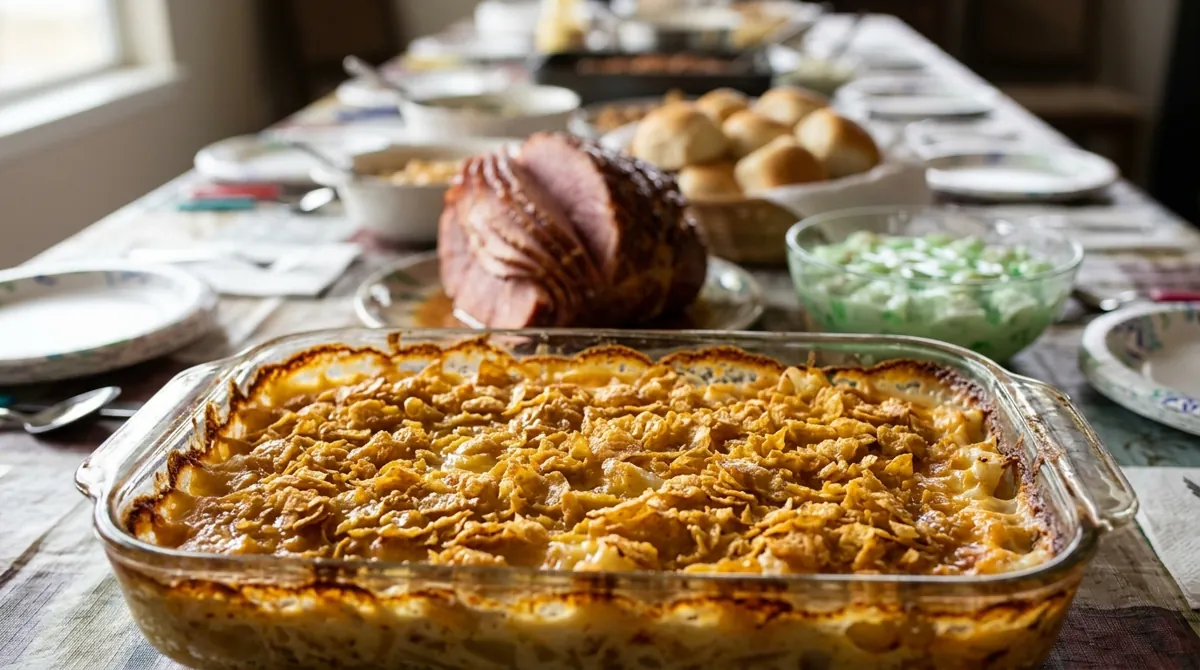
Utah Funeral Potatoes (Cheesy Potato Casserole with Corn Flake Crust)
The Utah potluck and after-funeral classic: shredded potatoes in a creamy sour cream and cheddar sauce under a buttery corn flake crust, enough for a crowd of twelve.
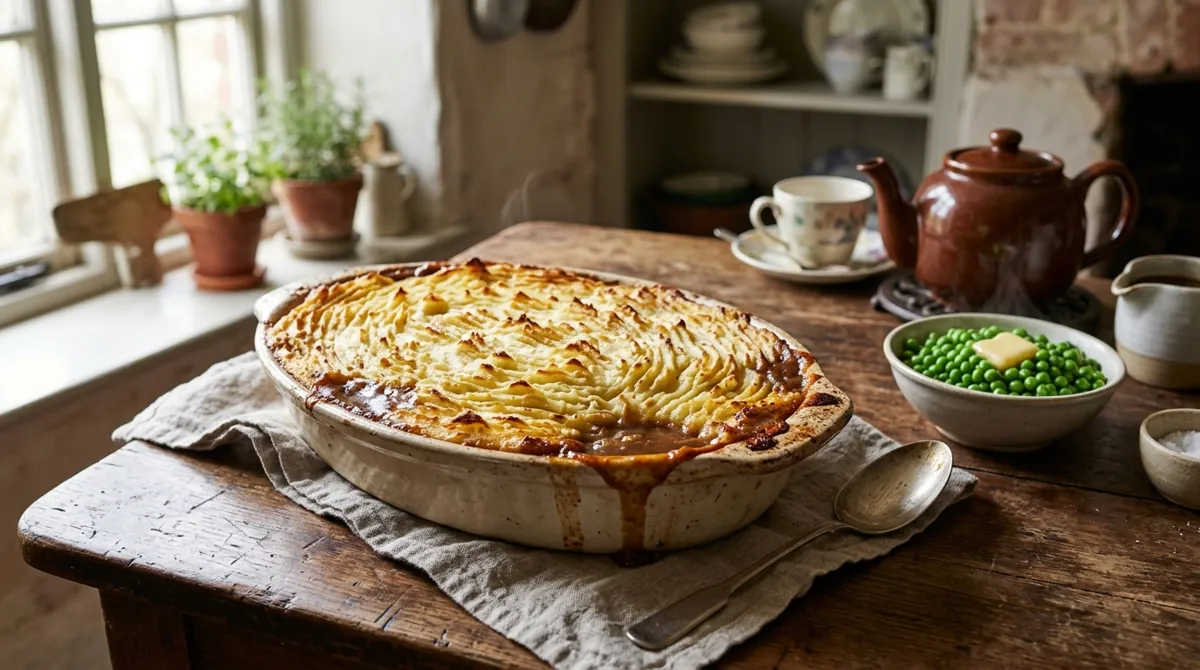
British Shepherd's Pie (Lamb, with a Cottage Pie Option)
Britain's potato-roofed pie: ground lamb, onion and carrot simmered in beef broth with tomato paste and Worcestershire, topped with buttery mash raked with a fork and baked until the ridges brown.
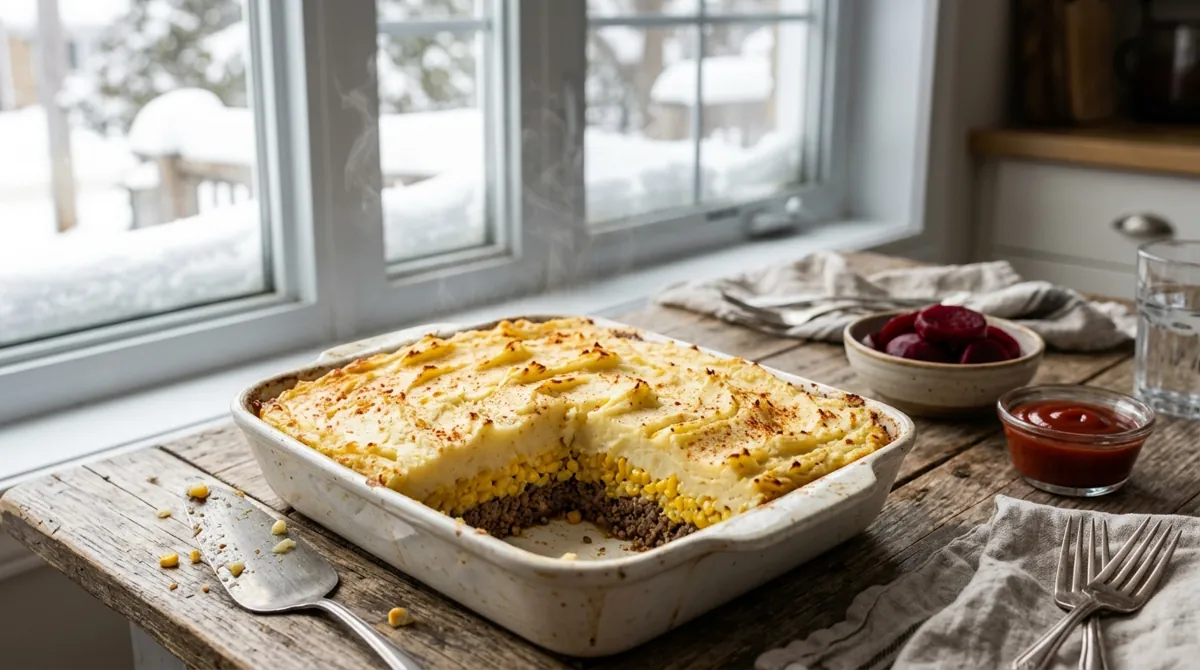
Pâté Chinois (Quebec Beef, Corn and Potato Pie)
Quebec's three-layer supper pie, "steak, blé d'Inde, patates": seasoned ground beef, a stripe of kernel corn and cream-style corn, then buttery mashed potatoes dusted with paprika and baked golden.
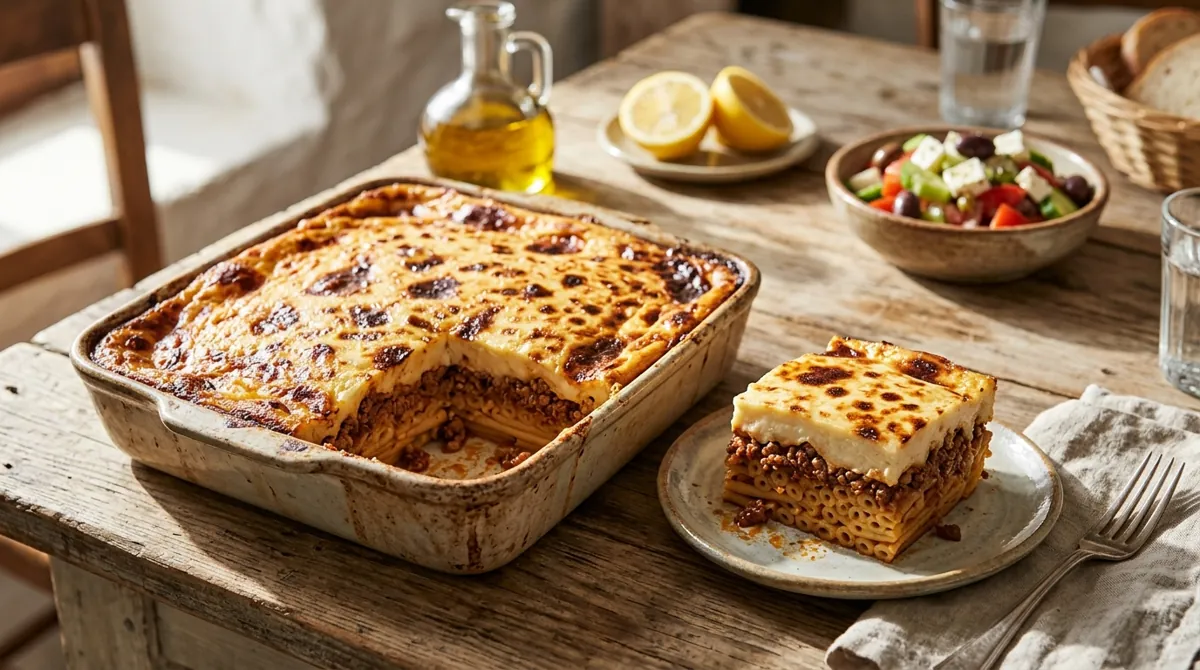
Greek Pastitsio (Baked Pasta with Meat Sauce and Béchamel)
Greece's tall pasta bake: tube pasta and a cinnamon and clove-scented beef and tomato sauce in layers under a thick, cheese-enriched béchamel that bakes into a golden, custardy cap.
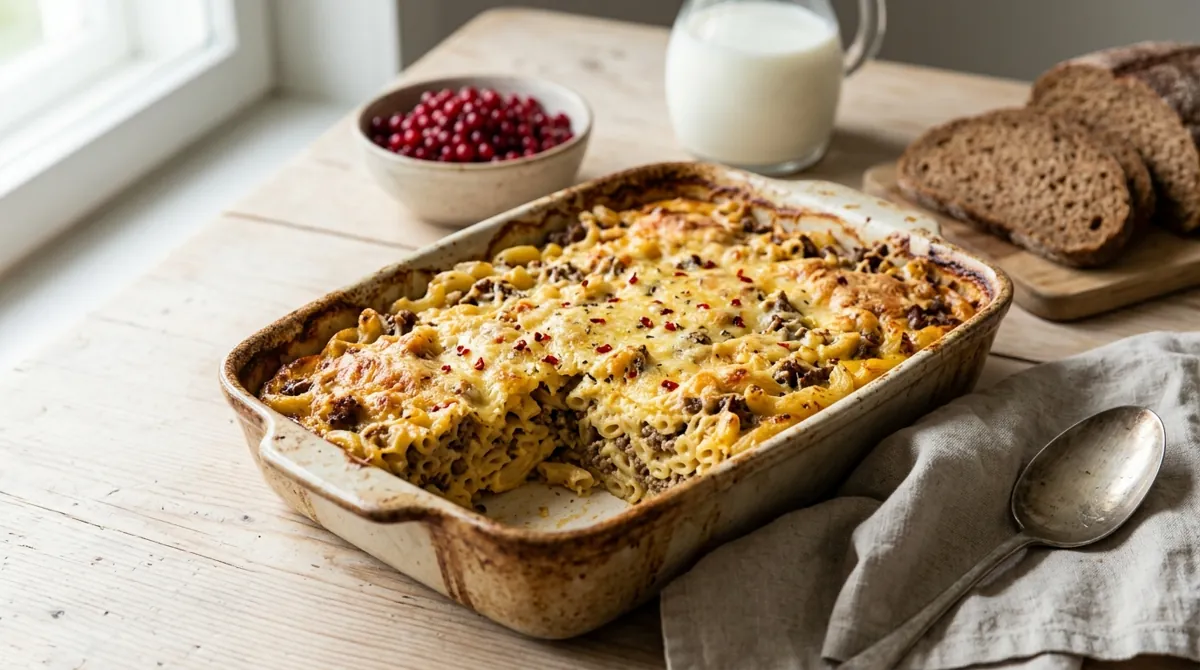
Finnish Makaronilaatikko (Macaroni and Beef Custard Bake)
Finland's everyday macaroni casserole: elbows and browned ground beef baked in a milk and egg custard under Swiss cheese until set and golden, served the Finnish way with ketchup or lingonberries.
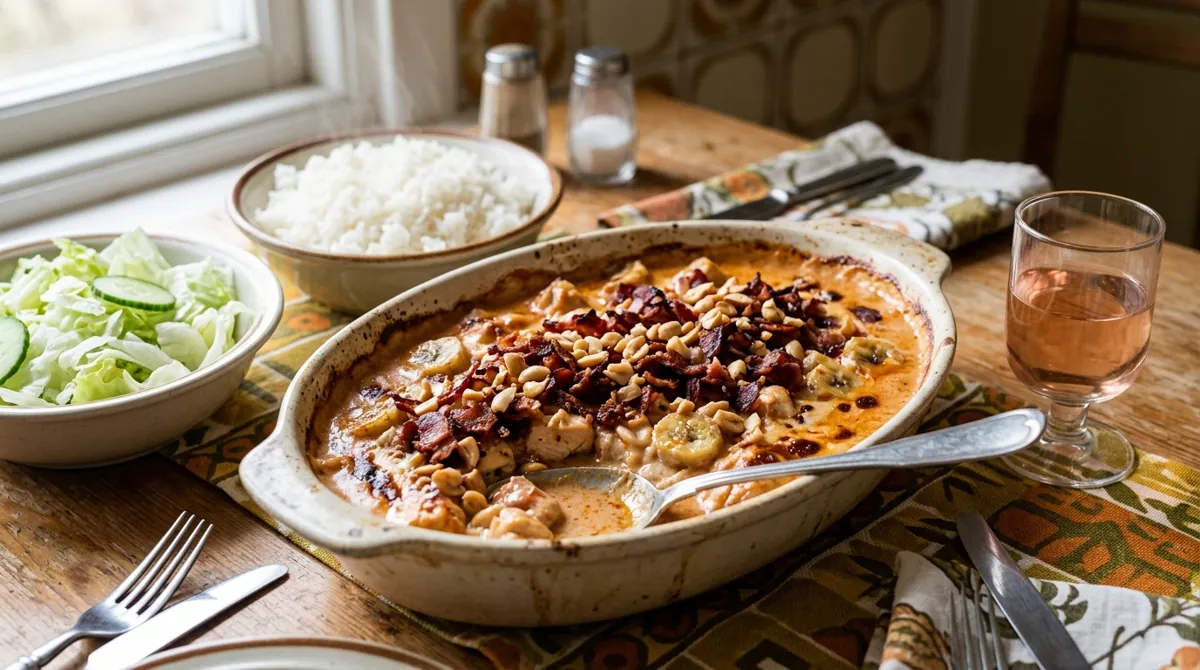
Swedish Flying Jacob (Chicken, Banana and Peanut Casserole)
Sweden's famous 1976 party casserole: chicken and bananas baked under whipped cream mixed with ketchup-style chili sauce, then showered with crisp bacon and salted peanuts and served over rice.
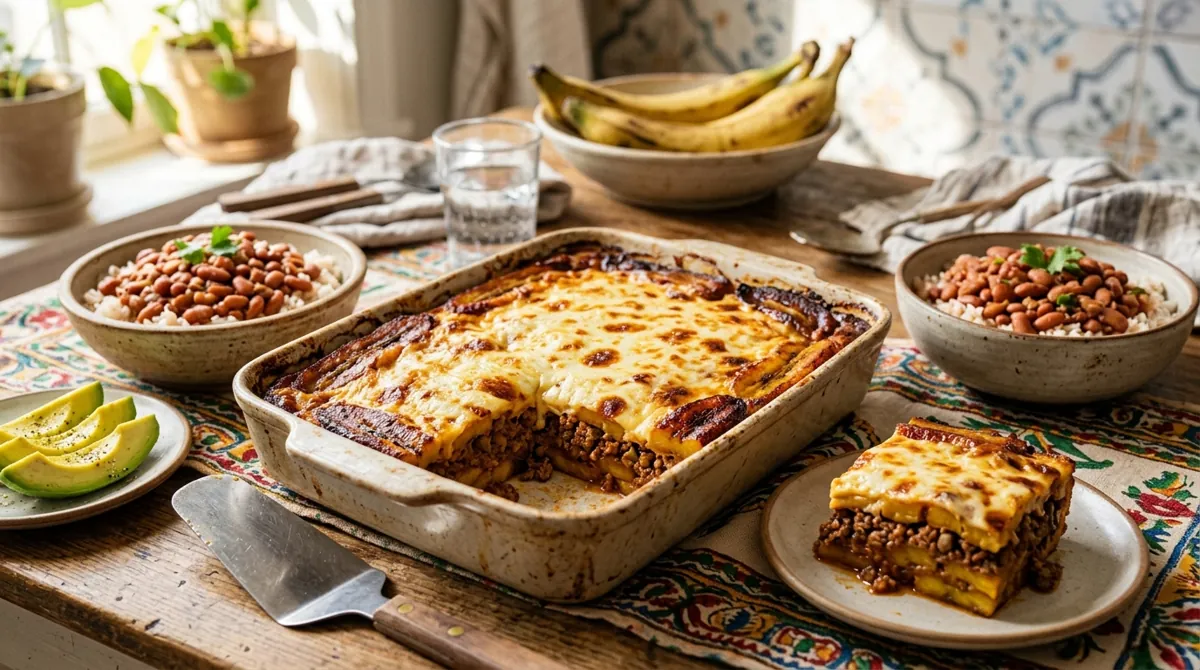
Puerto Rican Pastelón (Sweet Plantain and Picadillo Bake)
Puerto Rico's "big cake": strips of very ripe plantain, oven-roasted until caramelized, layered like lasagna noodles with a beef picadillo of olives, capers and tomato, bound with beaten egg and melted mozzarella.
Meatballs of the World

Italian-American Meatballs
Big, tender meatballs braised for an hour in red sauce over spaghetti. The one most Americans grew up with.

Pallottine (Abruzzo Meatballs)
Tiny meatballs, smaller than a marble, tossed right through square spaghetti alla chitarra. No bread at all.

Swedish Meatballs (Köttbullar)
Small, soft meatballs browned in butter, in a cream sauce made from the same pan, with lingonberry jam on the plate.

Danish Frikadeller
Pork meatballs shaped with a spoon and fried slowly in butter, crusty outside and soft in the middle.

Königsberger Klopse
German meatballs that are never fried: poached, then served in a creamy white sauce with capers.

Spanish Albóndigas in Almond Saffron Sauce
The tapas bar classic: small meatballs in a golden sauce thickened with fried almonds and bread.

Mexican Albóndigas with Chipotle and Mint
Soft meatballs with rice and fresh mint inside, simmered in a smoky tomato and chipotle broth.

Izgara Köfte (Turkish Grilled Meatballs)
Small, flat meatballs kneaded hard, rested cold, and charred on a hot grill pan.

Lion's Head Meatballs
Big, soft pork meatballs, stirred into a sticky paste, fried to set, then braised in a savory sauce.

Chicken Tsukune
Japan's chicken meatball: kneaded sticky, grilled on skewers, glazed with sweet soy tare, dipped in egg yolk.