
📜 Origin story
Why Is Canned Cranberry Sauce a Ridged Log? A Short History
The wobbly, ridged cylinder is one of the most recognizable foods on the Thanksgiving table. Its shape is an accident of packaging, and its history starts on a Massachusetts bog.
 By Americanized · Edited by JP Lambiase · October 20, 2026
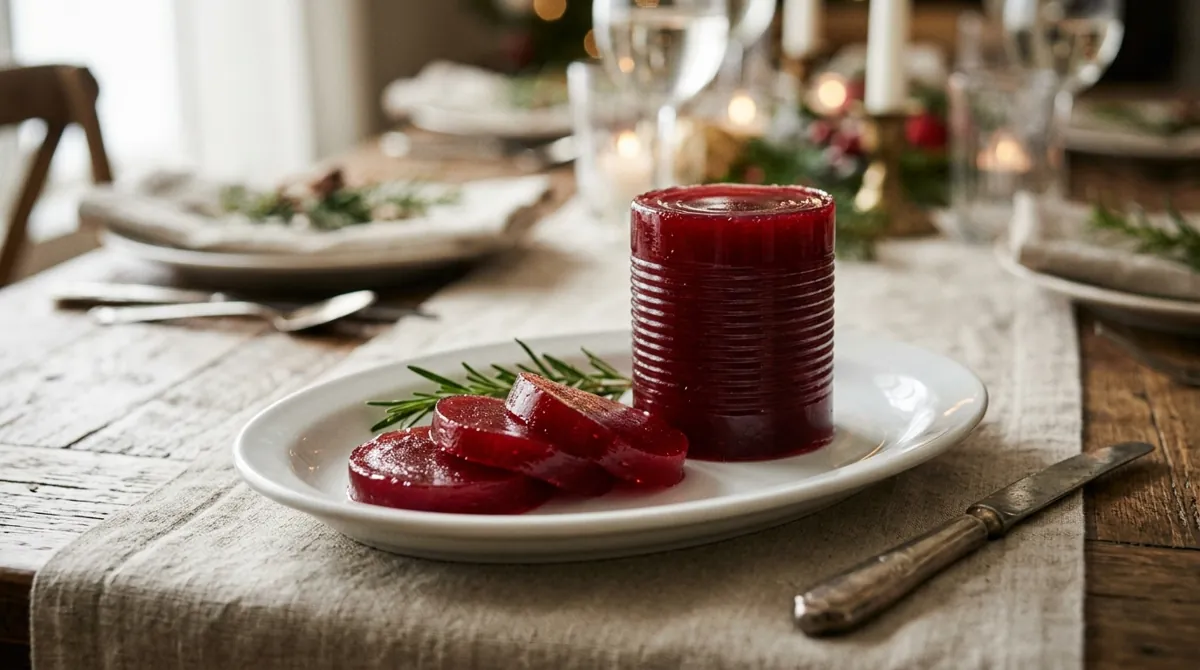
The ridges are the inside of the can. Jellied sauce is canned hot and sets in the can, so it slides out wearing the can's ribs, which are there to make the can stronger. Marcus Urann, credited with the first commercial canned cranberry sauce, started canning it in 1912; the jellied log went national around 1941.
Why the log has ridges
The usual explanation is the simple one. Farmers' Almanac says the sauce is canned hot so it sets inside the tin, which makes the ridges the shape of the can's walls, and the Portland Press Herald calls them can-molded grooves. Cranberries are loaded with natural pectin, America's Test Kitchen notes, so a long boil sets a firm, sliceable jelly with no gelatin.
The ribs exist for the can's sake, not the sauce's. Chowhound explains that ribbed walls make a can stronger, help it handle the heat of processing and help it resist dents.
Why the label looks upside down
Ocean Spray, the grower cooperative whose sauce holds more than 70 percent of the canned market by Adweek's count, labels the can so the rounded end sits on top. A company spokesperson told Adweek, as Fox Business reported in 2021, that the space this leaves in the can reduces the vacuum created by the sauce's own weight, so the log slides out whole.
When the can arrived
Cranberry sauce is far older than the can. In 1672 the English traveler John Josselyn wrote that Native people and English colonists in New England boiled cranberries with sugar into a sauce for meat. Native peoples ate cranberries first; both they and the English boiled them into sauces by the 1600s. In 1796 Amelia Simmons's American Cookery served roast turkey with cranberry sauce, and Fannie Farmer's Boston Cooking-School Cook Book, first published in 1896, turns sieved cranberries into a molded jelly.
Canning came with Marcus Urann, a lawyer turned cranberry grower. The Portland Press Herald says he set up a cooking and canning operation at his bog in Hanson, Massachusetts, in 1912, and co-founded the cooperative that became Ocean Spray in 1930. Dates for the jellied log itself vary: America's Test Kitchen says it debuted in 1930, while Wikipedia, citing the Smithsonian, puts national sales in 1941. The fair version: Urann started canning cranberry sauce in 1912; the jellied log went national around 1941.
Jellied vs whole berry
The can won the sales race long ago. In 2006 the Christian Science Monitor, compiling the cooperative's figures, reported that 75 percent of annual cranberry sales were in jellied form and that 74 percent of Americans served store-bought sauce at Thanksgiving. The company told the Portland Press Herald it sold 85 million cans in 2024.
Whole-berry sauce is the home cook's side of the divide, and it is old too. Fannie Farmer boils three cups of cranberries in sugar syrup for ten minutes, until most of the berries pop. Our 1896 whole-berry sauce follows her, our canned-style jellied sauce sets in a clean can, ridges and all, and the raw cranberry-orange relish skips the stove. All three are in our Thanksgiving sides.
Questions people ask
Does canned jellied cranberry sauce have gelatin in it?
No. The Portland Press Herald lists its ingredients as cranberries, water, high fructose corn syrup and corn syrup. The cranberries' own pectin sets it.
How do you get cranberry sauce out of the can in one piece?
Open the can, then gently pull the jelly away from the edge, set a plate over the top, flip and give one sharp shake. The space left in the can is there to help the log let go.
Was cranberry sauce served at the first Thanksgiving?
Nobody wrote down cranberries in 1621. Wikipedia notes that no primary source mentions them at the meal, and that Plimoth Plantation thought a sauce unlikely because sugar was scarce.
Parts of this history are disputed. Where sources disagree, we say so.
Sources
- Tim Cebula, Portland Press Herald, "Canned cranberry sauce was invented by a Mainer" (via Bangor Daily News), December 22, 2025
- Farmers' Almanac, "Jellied Cranberry Sauce: A Side Dish of Nostalgia"
- Hilary Wheelan Remley, "What's With The Ribbed Marks On Canned Goods?", Chowhound, November 15, 2023
- Michael Hollan, "Why Ocean Spray cranberry sauce is canned upside down," Fox Business, November 24, 2021
- America's Test Kitchen, "We Reverse-Engineered Canned Cranberry Sauce," October 7, 2021
- "It's tart and grows in sand, yet Americans love the cranberry," The Christian Science Monitor, November 20, 2006
- Wikipedia, "Cranberry sauce" and "Marcus Urann"
- John Josselyn, "New-England's Rarities Discovered" (1672), Project Gutenberg
- Amelia Simmons, "American Cookery" (1796), Project Gutenberg
- Fannie Merritt Farmer, "The Boston Cooking-School Cook Book" (1906 printing), Project Gutenberg
More food facts
Cook it
Jellied Cranberry Sauce, Canned Style
A smooth, sliceable cranberry jelly cooked in cranberry juice, strained, and set in a clean can so it slides out with the ridges. Inspired by Ocean Spray's canned jellied cranberry sauce. Not official.
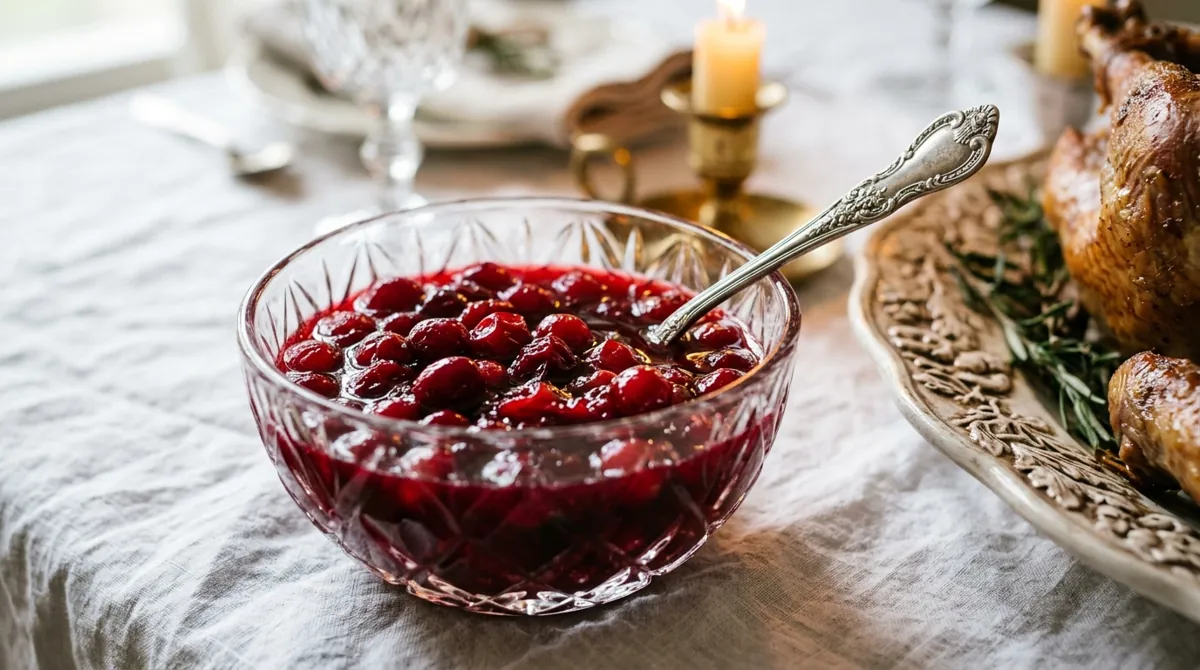
Whole-Berry Cranberry Sauce (Boston Cooking-School, 1896)
The old New England stovetop sauce: one bag of cranberries boiled ten minutes in sugar syrup until most of the berries pop, then cooled until it sets loose and glossy.
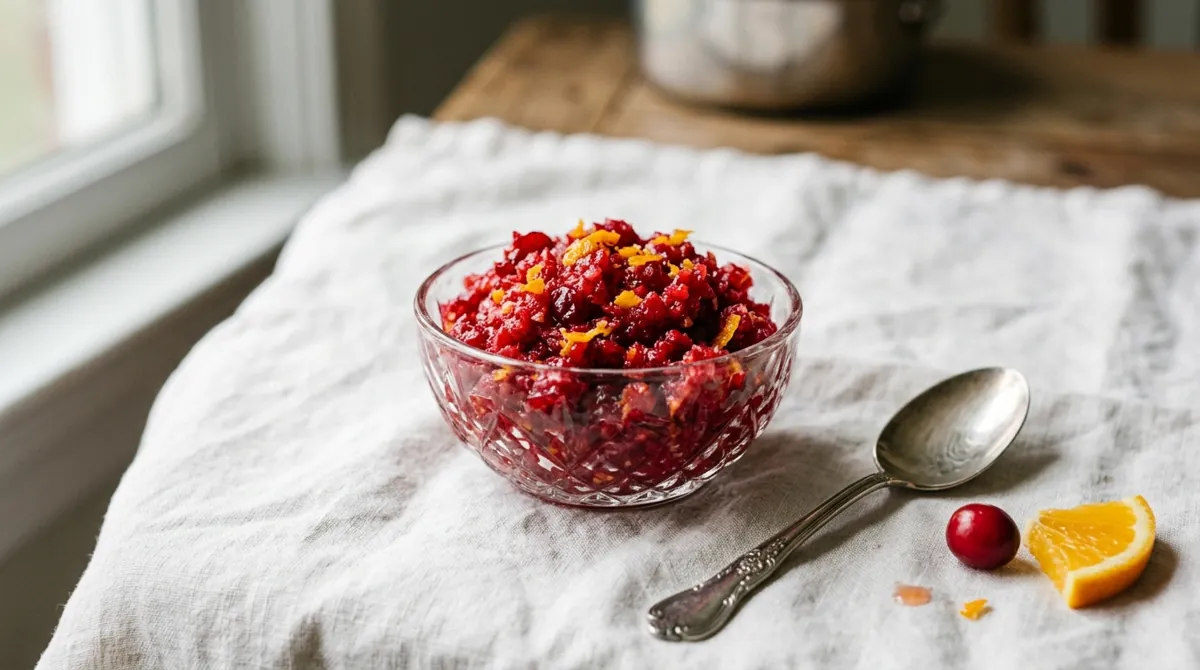
Raw Cranberry-Orange Relish (the Grinder Classic)
No stove at all: raw cranberries, a whole unpeeled orange, an apple and sugar ground coarse and left to sit a day, the way families once cranked it through a meat grinder clamped to the table.
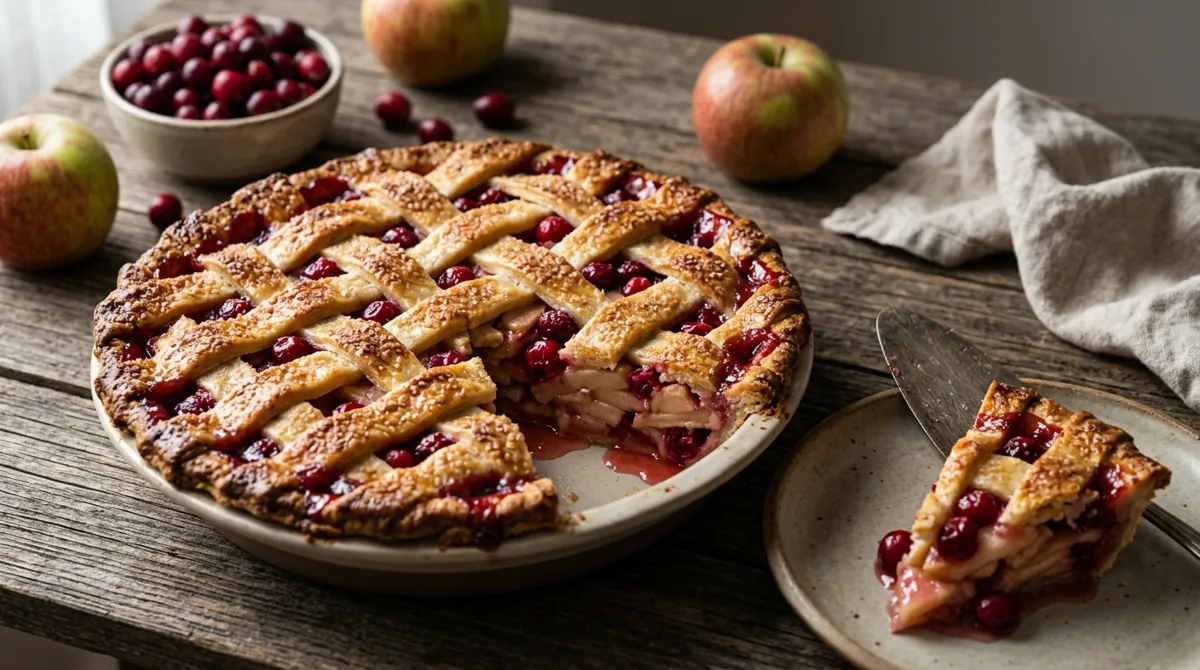
Apple Cranberry Lattice Pie
A Thanksgiving fruit pie in two layers: cinnamon apples on a bed of pecans, topped with cranberries cooked down with sugar, orange juice and zest, under a golden lattice.
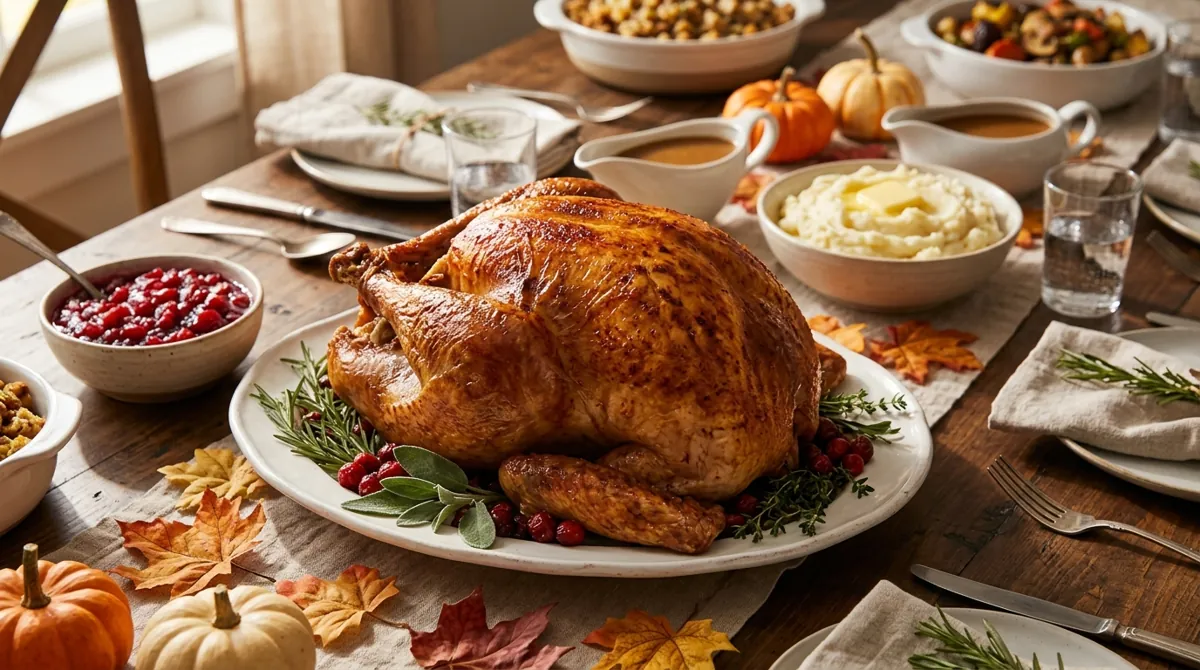
Classic Roast Thanksgiving Turkey
The plain American centerpiece: a buttered, salted and peppered turkey roasted breast side down first, flipped, and finished breast side up until the thermometer reads 165°F. No basting, no fuss.