
🧐 What's wrong with this picture?
Fettuccine Alfredo in Rome: No Cream, No Chicken, No Garlic
Look at a typical American plate of Alfredo and almost everything on it, from the cream to the chicken, is missing in Rome. What's left is three ingredients and a lot of tossing.
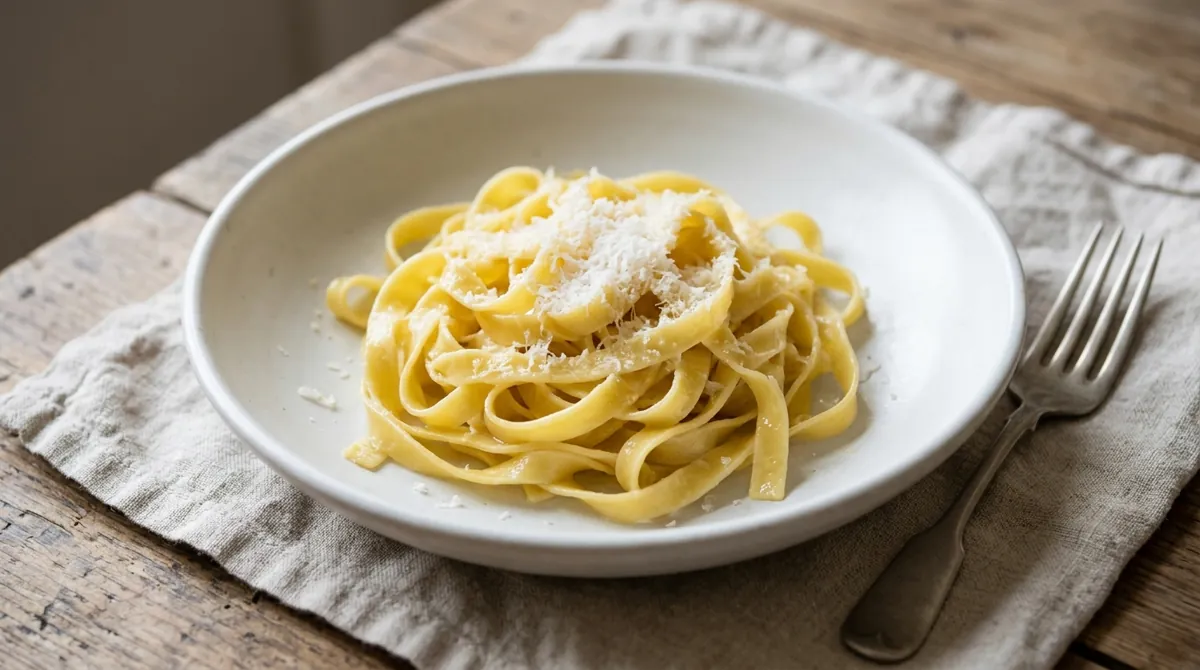
In Rome, fettuccine Alfredo has no cream, no chicken and no garlic. It is fresh egg fettuccine, softened butter and finely grated aged Parmigiano Reggiano, tossed with a little of the pasta's cooking water until the butter and cheese form a smooth, glossy sauce. The cream, garlic and sliced chicken are American additions.
What's wrong with this plate
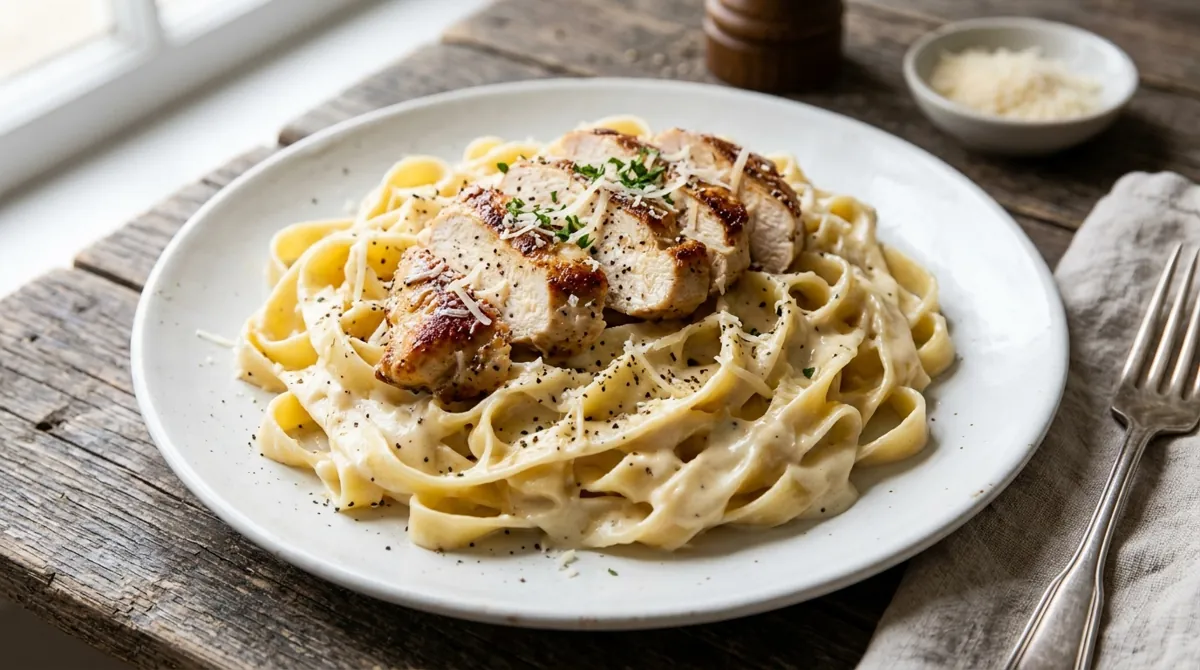
Picture the usual American plate: fettuccine under a thick white sauce, a hit of garlic and fanned slices of grilled chicken on top. That is the Alfredo on most Italian-American menus, and it is our own American Fettuccine Alfredo, which uses a cup and a half of heavy cream.
It is not what Rome serves. The recipe published by Rome's official tourism site lists fresh fettuccine, butter, Parmigiano Reggiano and pasta water, and nothing else. No cream, no garlic, no chicken, not even black pepper.
The Roman method, step by step
Rome's tourism board gives the proportions for four people: 400 grams of very thin fresh egg fettuccine, 160 grams of softened unsalted butter and about 70 grams of 24-month Parmigiano Reggiano per person. That is a lot of cheese, grated very fine so it melts instead of clumping.
The pasta cooks for less than a minute. It is never drained in a colander. Instead it is lifted straight from the pot onto the butter, still dripping, and the cheese goes on top with a little more cooking water.
Then comes the tossing, done at the table with a large fork and spoon. Milk Street describes the server at Alfredo alla Scrofa working the noodles for several minutes until the butter, cheese and water turn creamy. Il Vero Alfredo, the family's other restaurant, uses thicker fettuccine and a younger, 16-month cheese, but tosses it the same way.
How it gets creamy without cream
The secret is the pasta water. Boiling fresh pasta sheds starch into the pot, and that starch helps butterfat and water stay mixed instead of separating. Constant tossing breaks the butter into tiny droplets, which is what makes the sauce look glossy.
Heat is the enemy. A 2025 study in the journal Physics of Fluids, on the similar Roman dish cacio e pepe, found that too much heat makes cheese proteins clump together, and that starch helps keep the sauce smooth. It is one reason the Roman method finishes the sauce on a platter, off the stove.
Our Roman Fettuccine Alfredo follows the same idea at home: softened butter in a wide pan, the pasta moved over with tongs and a ladle of cloudy water, and the cheese added a little at a time.
Why the American plate looks so different
Cream changes the job. It is already an emulsion, so a cream sauce barely needs pasta water or tossing, holds its shape on a buffet line and reheats well. TODAY, interviewing the New York chef Shea Gallante, also points out that cream is easier to find than top-quality Parmesan and stretches the cost of the dish.
Garlic and chicken came along with it, turning a small, rich first course into a full dinner. Neither is wrong, exactly. They just make a different dish, which is the whole argument in our American vs Roman Alfredo debate.
Questions people ask
Can I make Roman Alfredo with dried pasta?
Yes, though fresh egg fettuccine is traditional and cooks in a couple of minutes. With dried pasta, pull it a minute before the package time and save plenty of the cooking water, since it carries the starch the sauce needs.
Why did my butter and cheese sauce turn greasy or clumpy?
Usually the pan was too hot, the pasta sat too long before tossing, or there was too little starchy water. Take the pan off the heat, add a splash of pasta water and keep tossing until it comes back together.
Is Roman fettuccine Alfredo served with pepper or parsley?
Not in the recipe from Rome's tourism board or in the tableside versions Milk Street describes. It is just pasta, butter, cheese and the cooking water.
Sources
- Turismo Roma (Rome's official tourism site), "Fettuccine Alfredo" recipe
- Milk Street, "The Search for the Real Fettuccine Alfredo"
- AIP Publishing, "A scientific method for flawless cacio e pepe" (on Bartolucci et al., Physics of Fluids, 2025)
- TODAY, "The original fettuccine Alfredo recipe doesn't have any cream"
- Il Vero Alfredo, "Our History"
More food facts
Cook it
Roman Fettuccine Alfredo (Fettuccine al Burro)
Fresh pasta, butter and Parmigiano. No cream, no garlic, no chicken, and somehow creamier than ours.
American Fettuccine Alfredo
Cream, butter, garlic, a mountain of Parmesan and sliced chicken. The Alfredo on almost every Italian-American menu.
White Chicken Lasagna (Alfredo-Style)
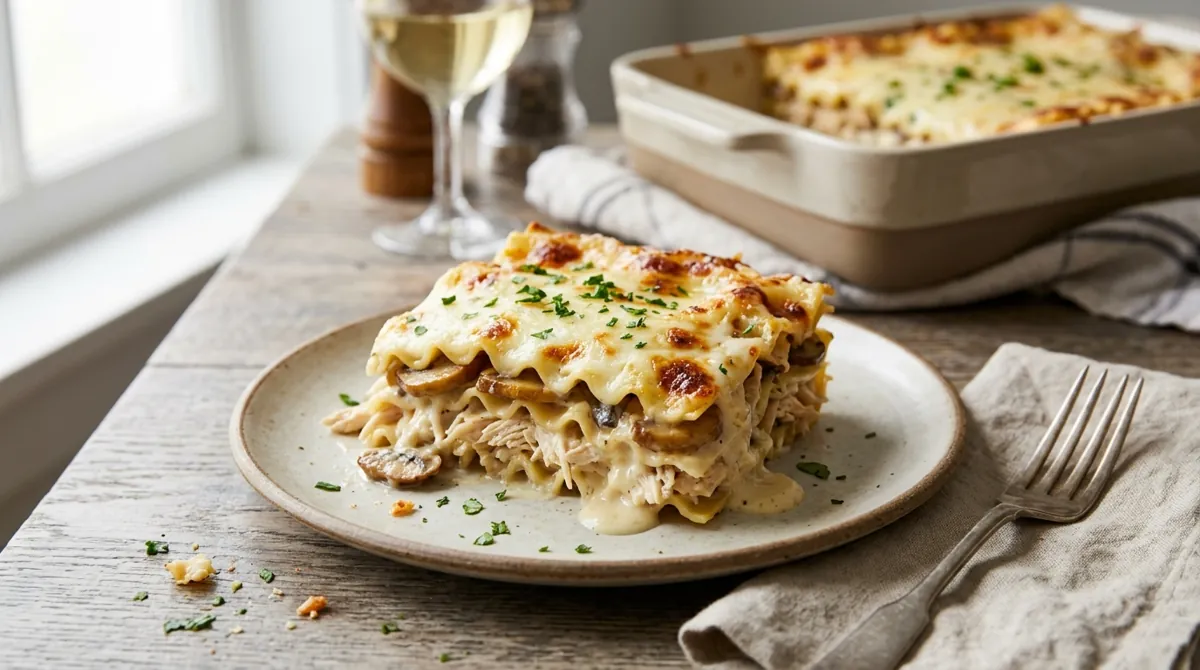
A tomato-free lasagna of tender poached chicken and golden mushrooms in a garlicky Parmesan white sauce, under a lid of melted mozzarella.
Shrimp Scampi with Linguine
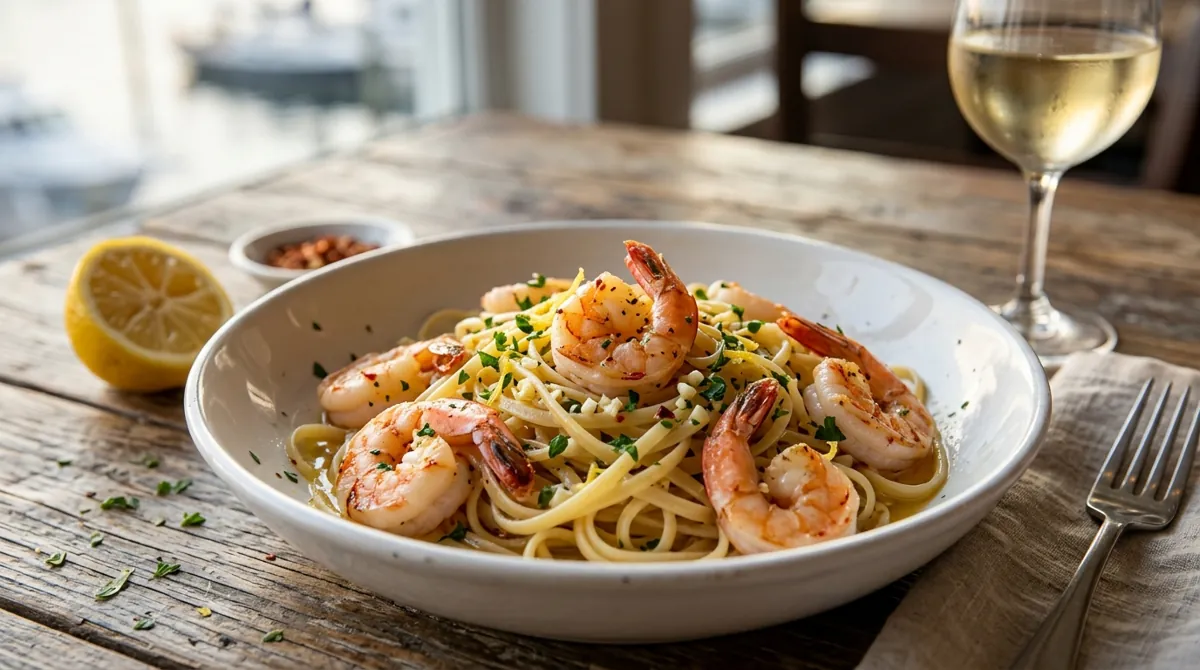
Shrimp quickly brined and seared, then tossed back into linguine with a silky sauce of olive oil, a lot of garlic, chile, dry vermouth, butter and lemon, finished with parsley.