
⚖️ What's the difference?
New York vs Basque Cheesecake: What's the Difference?
One is tall, pale and creamy on a graham crust. The other is crustless, blackened on top and soft enough to puddle on the plate.
 By Americanized · Edited by JP Lambiase · November 2, 2026
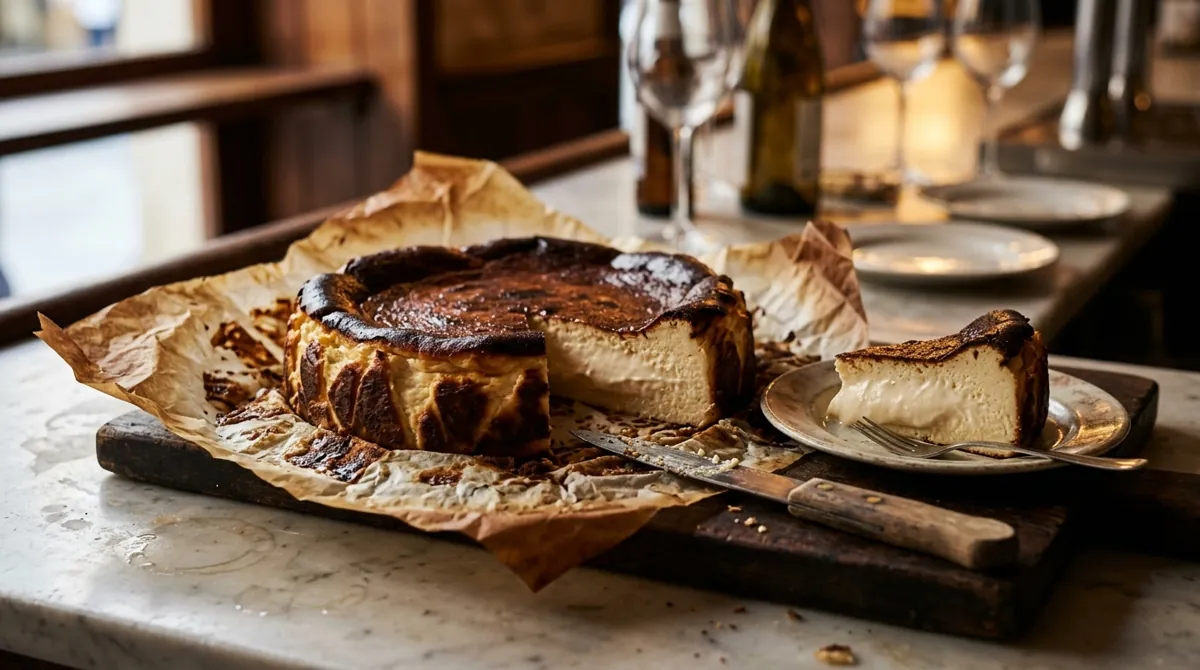
New York cheesecake is a dense, smooth, pale cake, classically on a graham cracker crust, baked with a short blast of high heat and then a long low bake. Basque cheesecake has no crust and is baked at uncommonly high heat without a water bath, which gives a deeply caramelized top and a soft, custardy center.
| New York | Basque | |
|---|---|---|
| Origin | New York City, early 1900s, no single inventor | La Viña, San Sebastián, around 1990 |
| Crust | Graham cracker, pastry or sponge base | None |
| Filling | Cream cheese, eggs, sugar, often sour cream | Cream cheese, eggs, sugar, cream, flour |
| How it's baked | Short 500°F blast, then a long low bake | Uncommonly high heat, no water bath |
| Top | Pale and smooth | Deeply caramelized, nearly black |
| Texture | Dense, rich and smooth | Soft, custardy center with firmer edges |
Where each one came from
New York cheesecake has no single documented inventor. It took shape in the early 1900s as New York bakers and restaurants started using American cream cheese. Deli owner Arnold Reuben is often credited with popularizing the style in the late 1920s, though that is hard to prove, and Lindy's (opened 1921) and Junior's (1950, with a thin sponge base) made it famous.
Basque cheesecake is much younger. Santiago Rivera, chef-owner of La Viña in San Sebastián, Spain, is usually credited with creating it, around 1990 by most accounts, after he took over the bar his family opened in 1959. Dates vary a little between sources. Rivera himself has said the name "burnt" is marketing, and at La Viña it is simply tarta de queso, cheesecake.
Crust and filling
America's Test Kitchen's New York-style cake sits on a graham cracker crust and uses 2 1/2 pounds of cream cheese, sour cream, six whole eggs plus two yolks, lemon juice and vanilla. Our New York cheesecake follows the same rich, tangy path with a graham crust, though a sponge or pastry base is also traditional in famous versions.
Basque cheesecake has no crust, and La Viña's version is short: cream cheese, eggs, sugar, heavy cream and flour, with no vanilla or citrus, according to America's Test Kitchen. Rivera has said the recipe is flexible, and Taste reports the original uses a saltier Spanish cream cheese. Our Basque burnt cheesecake is stirred together by hand and poured into crumpled parchment.
Heat is the real difference
The classic New York method starts hot and finishes gentle. The ATK recipe bakes at 500°F for 10 minutes, drops to 200°F for about an hour and a half, and pulls the cake when the center reads about 150°F. Then it chills at least 3 hours, which sets the dense, smooth slice.
Basque cheesecake stays hot the whole time. ATK says Rivera baked at an uncommonly high temperature and skipped the water bath. Our version runs at 410°F until the top is nearly black and the center still trembles. ATK calls "burnt" a curious exaggeration: the top is deeply caramelized, not charred, with firmer edges and a soft, spoonable middle.
How they eat and keep
A New York slice is tall, firm and even, the smooth, pale cheesecake most Americans expect. A Basque wedge can puddle on the plate like a soft triple-crème cheese, Taste writes, and pastry chef Bea Vo says it breaks all the usual cheesecake rules.
ATK keeps its New York cake up to 4 days, wrapped in the refrigerator, and we cover storage in how long cheesecake lasts. If neither style suits, our Japanese souffle cheesecake is a third path, and you can pick a side in the New York vs Basque cheesecake debate.
Questions people ask
Why is Basque cheesecake burnt on purpose?
The dark top is the point: Taste explains that the high heat caramelizes the milk solids. Rivera himself has called the "burnt" label marketing, and ATK says the cake is caramelized rather than truly burnt.
Does Basque cheesecake need a crust or water bath?
No. ATK says La Viña's cake has no crust and was baked at high heat without a water bath.
Can you use Philadelphia cream cheese in Basque cheesecake?
Yes. Taste reports the original uses a saltier Spanish cream cheese or sometimes Philadelphia, and that Rivera considers the recipe adaptable, so you can add salt, vanilla or lemon zest to taste.
Parts of this history are disputed. Where sources disagree, we say so.
Sources
More food facts
Cook it
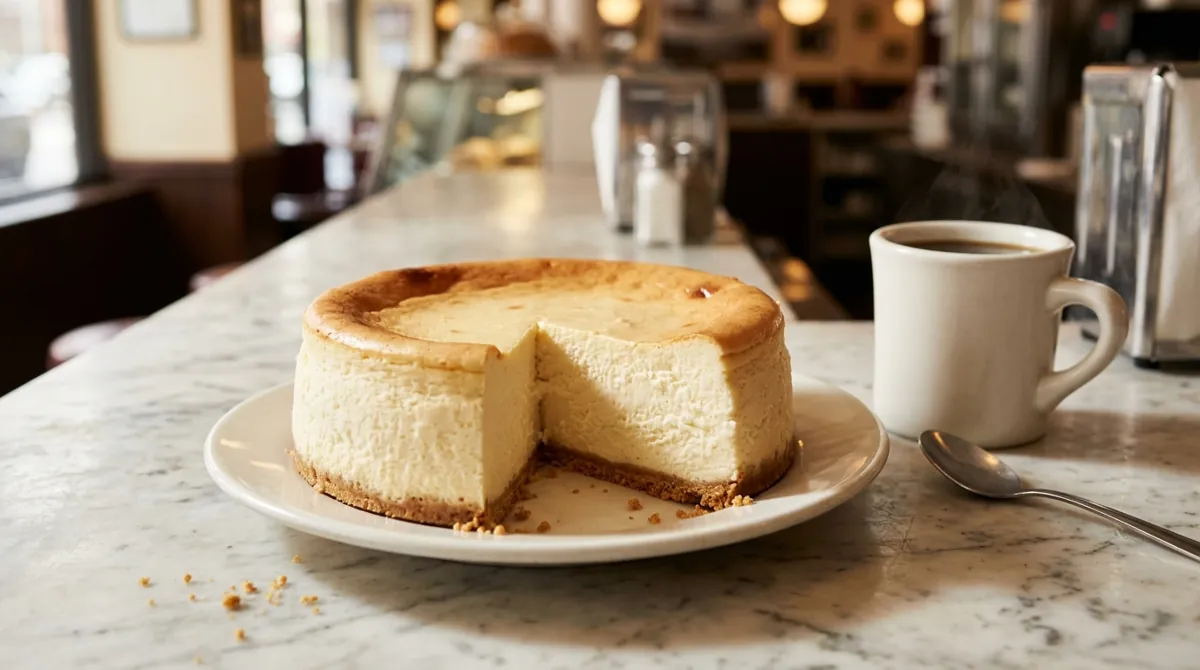
New York Cheesecake (Lindy's-Style, Graham Crust)
Two and a half pounds of cream cheese beaten with sugar, sour cream, lemon, vanilla and eight eggs over a graham cracker crust, blasted at 500°F for 10 minutes, then baked low at 200°F until the center reads 150°F for a tall, dense, creamy cake.
Basque Burnt Cheesecake (San Sebastián Style)
No crust and no water bath: cream cheese, eggs, sugar, a spoonful of flour and cream stirred together by hand, poured into a crumpled parchment-lined pan and baked hot at 410°F until the top is nearly black and the center still trembles.
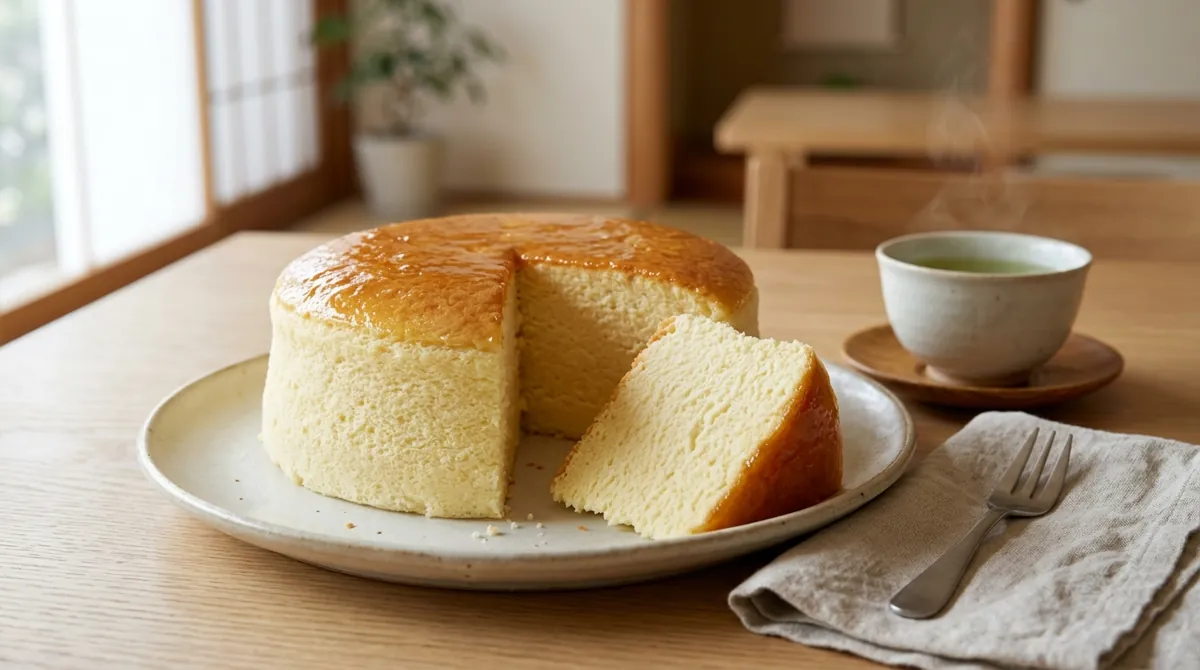
Japanese Soufflé Cheesecake (Cotton Cheesecake)
Cream cheese, butter and cream melted together, enriched with yolks and cake flour, folded into a firm meringue and baked slowly in a water bath at 320°F, then cooled in the oven so the tall, wobbly, cottony cake doesn't crack, with an apricot glaze.
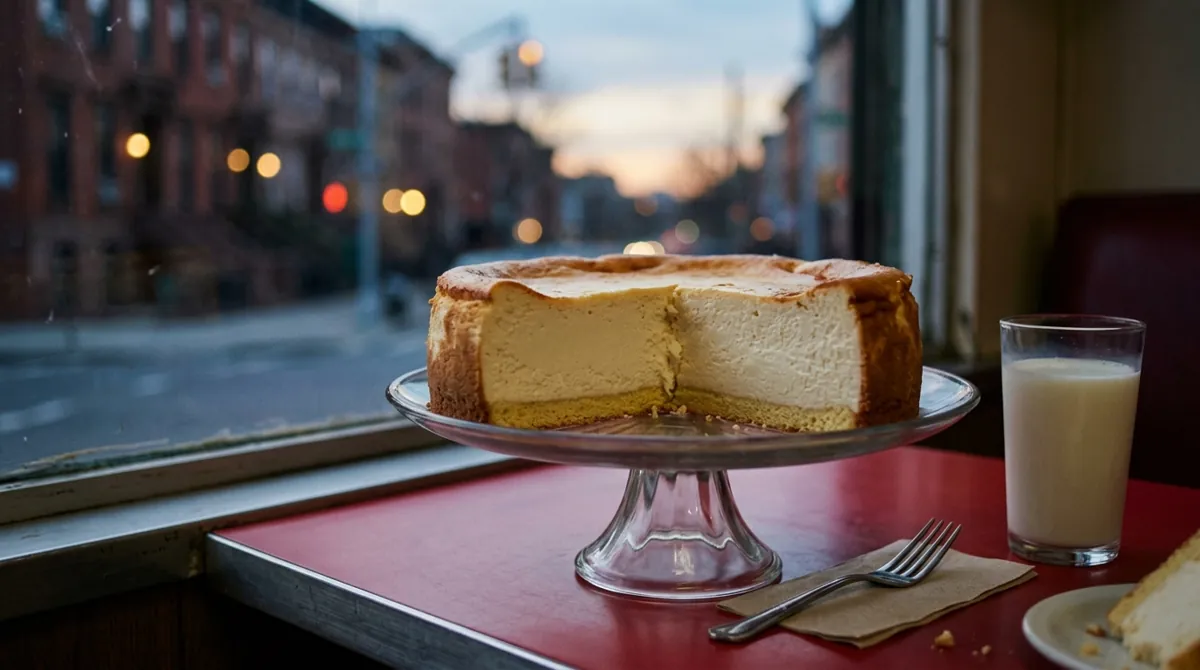
Brooklyn Sponge-Crust Cheesecake (Junior's Style)
A thin, golden sponge cake baked in the springform as the crust, covered with two pounds of cream cheese beaten with sugar, cornstarch, vanilla, eggs and heavy cream, and baked in a water bath at 350°F until the top is lightly tanned and the center still jiggles.