
📖 Food facts
Rösti vs Hash Browns: What's the Difference?
Boiled or raw, one cake or a scatter. Switzerland's farm breakfast and America's diner side look alike on the plate, but they start from different potatoes.
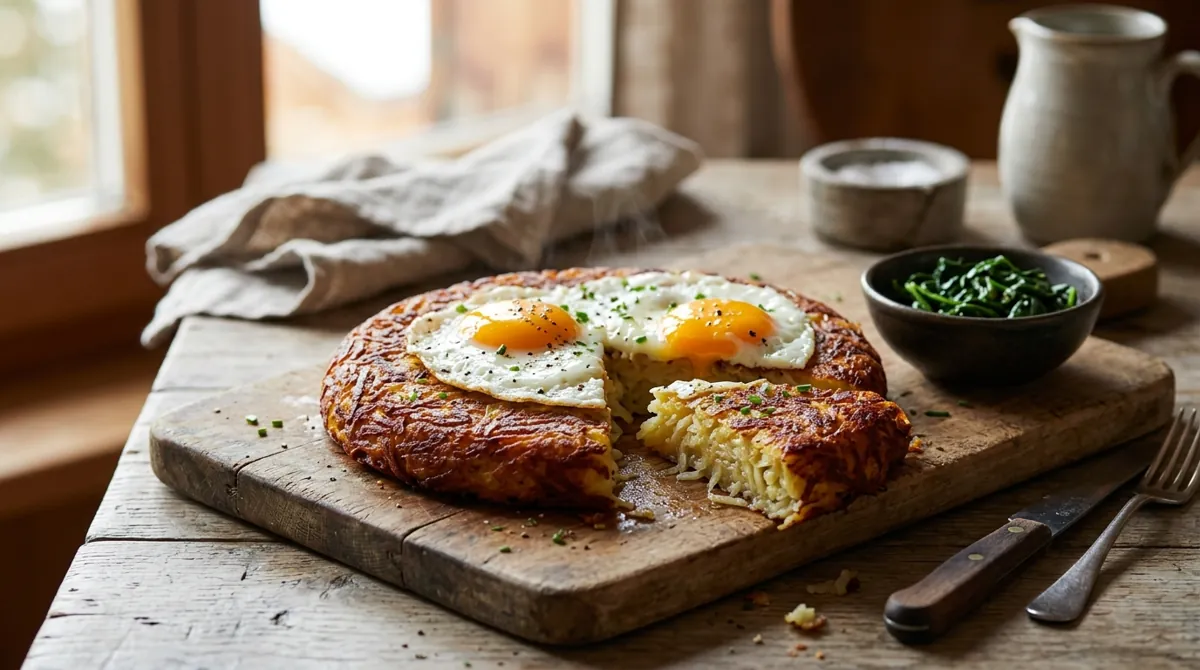
Rösti is Swiss: grated potatoes, usually boiled the day before, pressed into one thick cake and fried slowly in butter until both sides have a deep crust. American hash browns are usually raw shredded potatoes, squeezed dry and cooked faster on a hot griddle or skillet, then served as loose shreds, a pressed round or a patty.
One cake vs a scatter
The difference starts before the stove. Swissmilk, the Swiss dairy farmers' recipe site, begins its classic rösti with potatoes boiled in their skins the day before. They are grated, salted, pressed into a single cake in clarified butter, turned with a plate or lid and finished with flakes of butter.
Not every Swiss cook boils first. Writing for The Local, Helena Bachmann grates raw potatoes for hers, so the fair rule is that rösti is usually made from boiled potatoes, not always. Our Swiss rösti follows Swissmilk: day-old potatoes, close to half an hour of slow frying and one confident flip.
Hash browns go the other way. America's Test Kitchen's classic version grates raw russets, squeezes them very dry, scatters them into butter that is just starting to brown and presses them flat, then cooks the first side 7 to 8 minutes. ATK found that high-starch russets held together and browned best. Our diner hash browns use that method.
Where rösti comes from
Rösti is usually traced to farm kitchens in German-speaking Switzerland, where, Bachmann writes, it was a cheap, simple meal for people working the fields. The canton of Bern gets most of the credit: the usual story makes it a farmers' breakfast there, and the dish is often called röstis bernois in French.
It is so tied to German-speaking Switzerland that the informal line between the German- and French-speaking regions is nicknamed the Röstigraben, the rösti ditch. Bachmann notes that much of the divide rests on stereotypes. Rösti is a national favorite now: in 2022 the Swiss Farmers' Union fried a 13-square-meter rösti in front of the parliament building in Bern, swissinfo reported.
Where hash browns come from
American hash browns began much closer to rösti than most people expect: they were a way to use up cold boiled potatoes. The word researcher Barry Popik found "hashed brown potatoes" in an 1887 Brooklyn newspaper item about Maria Parloa's cooking class. Fannie Farmer's Boston Cooking-School Cook Book chops two cups of cold boiled potatoes, cooks them in salt pork fat, lets them brown underneath and folds them like an omelet.
You will also see an 1835 Minnesota recipe called the first. We could not find it, and the earliest uses we could check date from the late 1880s, so the safe statement is that hash browns were in American cookbooks by the late 1800s. Popik's earliest "hash browns" is from 1911. Today the term covers shredded or chopped potatoes, cooked loose on a diner griddle or formed into a patty.
Why squeezing out the water matters
Grated raw potato carries a lot of water, and ATK names the two classic hash brown failures: a cake that falls apart when you flip it, and an outside that burns before the inside cooks. That is why most recipes start by wringing the shreds in a dish towel.
ATK's Better Hash Browns go further. The shreds get a quick rinse in salt water, which keeps them from graying and lowers the temperature at which their starch sets, then a wring and a turn in the microwave to drive off more water and start the starch gelling, so they hold together before they reach the pan.
Rösti made from boiled potatoes skips most of that, since the potato is already cooked and only needs to brown. Pick a side in our rösti vs hash browns debate, or see the whole family in our potato pancakes hub.
Questions people ask
Is rösti just a Swiss hash brown?
Close, but not the same. Rösti is one thick cake, usually from boiled potatoes, fried slowly in butter. Hash browns are usually raw shreds cooked faster and served loose, as a round or as patties.
Which potatoes work best?
For hash browns, ATK found high-starch russets browned best and tasted the most of potato. Swissmilk does not name a variety for rösti; our version uses all-purpose or waxy potatoes such as Yukon Gold, which stay in firm shreds after boiling.
What is the Röstigraben?
It is a joking nickname for the language divide between German-speaking and French-speaking Switzerland, borrowed from the dish. It is not an official border, and swissinfo describes it as the line between the German-speaking north and the French-speaking southwest.
Parts of this history are disputed. Where sources disagree, we say so.
Sources
- Swissmilk, "Rösti" (recipe SM2024_DIVE_74)
- Helena Bachmann, "What is Swiss rösti and how do you make it?", The Local Switzerland, September 20, 2022
- Tony Jackman, "Lekker Brekker Monday: Rösti, the Swiss farmers' breakfast," Daily Maverick, August 5, 2024
- Julie Hunt, "Crossing the Röstigraben," swissinfo.ch, May 8, 2007
- swissinfo.ch, "Farmers cook record 13-square-metre rösti," September 19, 2022
- Barry Popik, "Hashbrowns (Hash Brown Potatoes; Hashed Brown Potatoes; Hash Browns)," The Big Apple
- Fannie Merritt Farmer, The Boston Cooking-School Cook Book (1910 revised edition of the 1896 book), Project Gutenberg
- America's Test Kitchen, "Classic Hash Browns"
- Andrea Geary, "Better Hash Browns," America's Test Kitchen (Cook's Illustrated, March/April 2017)
More food facts
Cook it
Swiss Rösti
Potatoes boiled in their skins the day before, coarsely grated and fried slowly in clarified butter into one thick golden cake, flipped with a plate the Swiss way.
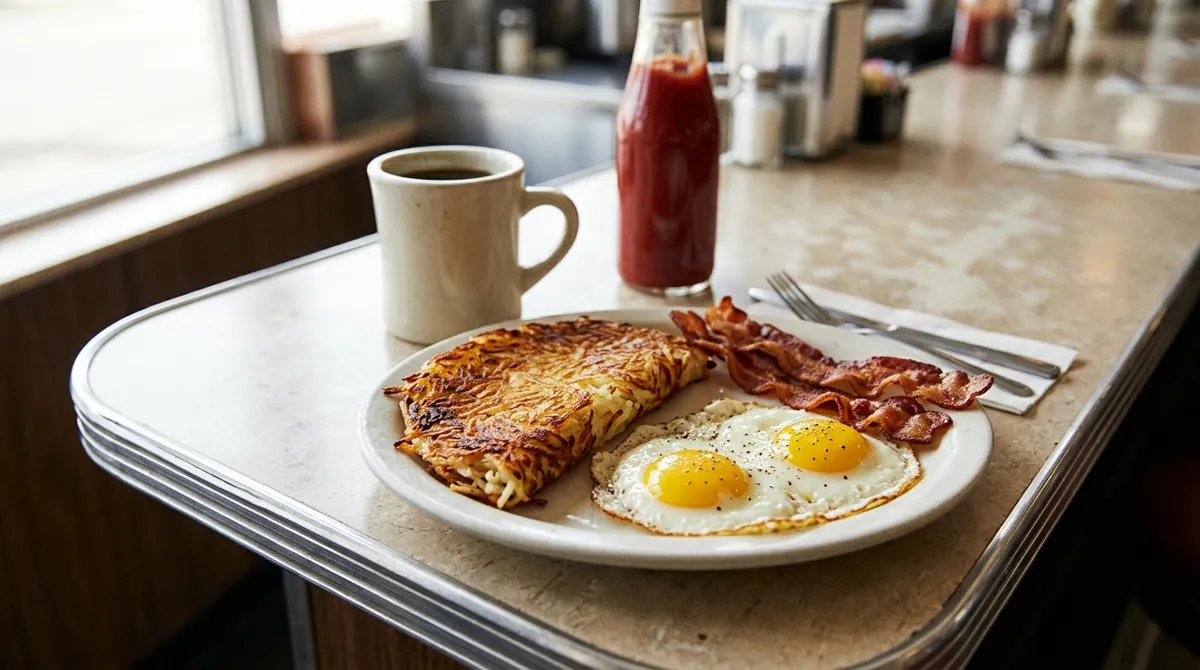
Diner Hash Browns
Shredded russets squeezed dry, pressed flat in browned butter and cooked until dark golden and crisp on both sides, then folded and cut into wedges, the American diner way.
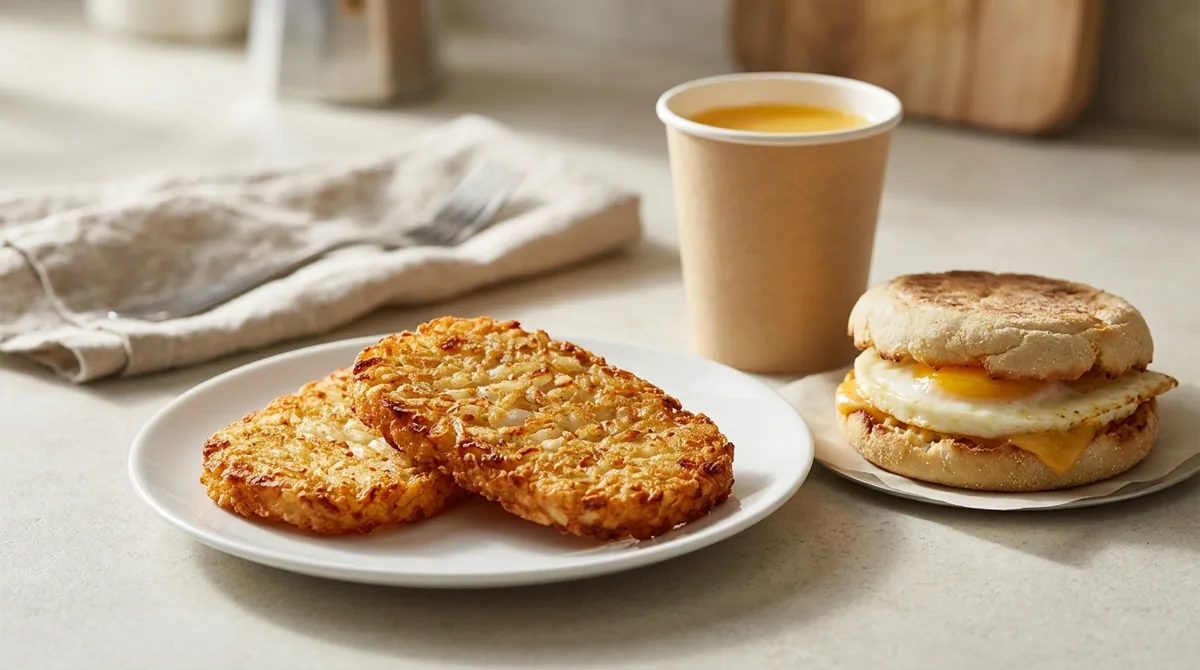
Make-Ahead Hash Brown Patties
Shredded Yukon Golds rinsed in salt water, wrung dry, microwaved until they bind, pressed into oval patties, chilled and pan-fried crisp, like the freezer-aisle patty, from scratch.
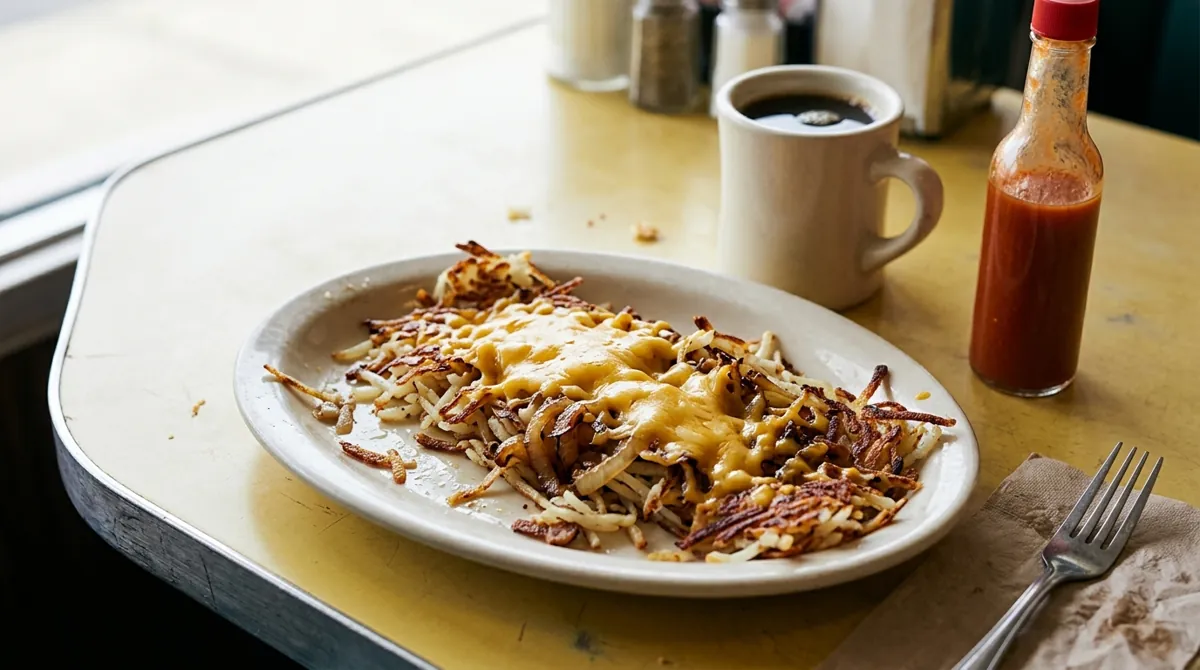
Scattered, Smothered and Covered Hash Browns, Inspired by Waffle House
Thin, crisp shredded hash browns scattered across a hot buttered pan, smothered with soft sautéed onions and covered with melted American cheese. Inspired by, not official.
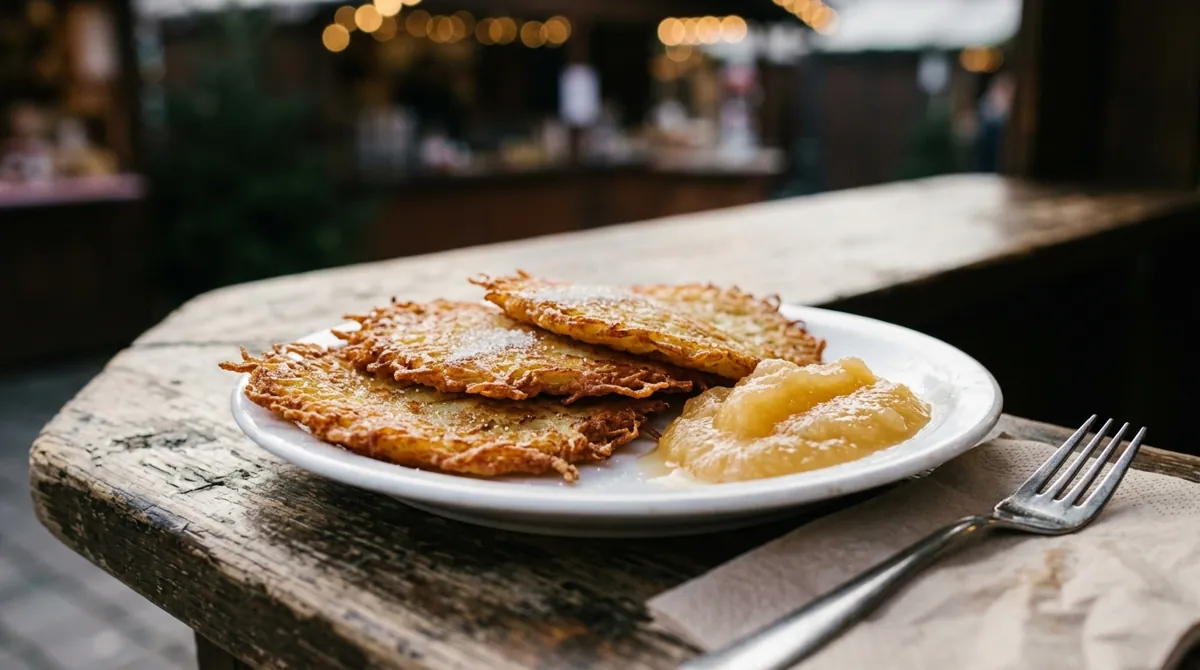
Rhineland Reibekuchen with Applesauce
Finely grated potatoes and onion with egg and a little flour, fried in clarified butter into thin, crisp German potato pancakes, sprinkled with sugar and served with warm homemade applesauce.