
💡 One tip
Why You Salt Ground Meat First for Meatballs That Hold Together
Meatballs that crumble in the pan usually have a salt problem, not a binder problem. Here is what salt does to ground meat, and the one place you should not use the trick.

Work the salt into the ground meat before adding anything else. Salt dissolves some of the meat's own proteins, mainly myosin, into a sticky paste that glues the bits together and sets firm when cooked. That is why meatballs, frikadeller and sausage hold their shape. The same effect makes a burger dense and springy, so salt burgers on the outside instead.
What salt does to ground meat
Muscle is mostly bundles of protein, and one of the most important is myosin. In plain meat it stays locked in the fibers. Add salt and work it in, and the salt dissolves into the meat's own moisture and makes myosin soluble, so it seeps out and coats every piece.
America's Test Kitchen describes the result as a sticky gel that binds the meat together. When it heats up, that gel sets, the way egg white does, and the pieces stay fused. You can feel it happen: after a minute or two of mixing, salted meat turns tacky and clings to your hand.
More salt, firmer bite
Meat scientists measure this in sausage, where binding is the whole point. In a 2020 study of chicken breast sausages in the Journal of Animal Science and Technology, raising salt from 0.3 to 2.3 percent of the batch almost tripled hardness (about 6,350 to 16,900 grams of force) and cut the water that could be squeezed out from 30.6 to 20.3 percent.
So salt does two jobs at once: it holds the meat together and it holds water in. Working the meat matters too, which is why some recipes below knead or stir for minutes rather than seconds.
Frikadeller, köfte and lion's head all do it
Denmark's official recipe for frikadeller opens the method by stirring salt into the minced pork, before the onion, flour, egg or milk. Our Danish frikadeller follow the same order, with about 1 1/2 teaspoons of salt per pound. USDA puts a teaspoon of table salt at 6 grams, so that is 9 grams in 454, or about 2 percent.
Other cuisines lean on the same chemistry and add work on top. Lion's head meatballs are stirred in one direction for about ten minutes until the pork turns into a paste, and Turkish köfte are kneaded until firm and tacky. Japanese hambagu is kneaded with the salt so a soft, bread-filled patty holds together. Browse the rest in Meatballs of the World.
The exception: a tender burger
You will often hear this tip for patties too, and that needs a footnote. America's Test Kitchen salted burger meat three ways and found the batch mixed with salt came out so dense and springy it resembled sausage. Only patties salted on the surface right before cooking stayed uniformly tender.
That is why our backyard cheeseburger gets its salt on the outside just before it hits the grill. Rule of thumb: if the patty has bread, egg or onion in it and needs to hold together, salt the mix first. If it is plain beef and you want it loose and juicy, salt the outside last.
Questions people ask
How long should I mix the meat after adding salt?
Until it feels tacky and starts to stick to your hand or the spoon, often a minute or two by hand. Recipes built for a springy bite, like lion's head meatballs, go much longer, about ten minutes.
Can I salt the meat ahead of time?
Yes, for meatballs. Resting the salted mix in the fridge gives the salt time to work, and our frikadeller rest at least 30 minutes. For a tender burger, Test Kitchen found that even 30 minutes of surface salting made the outside dry and springy.
Does kosher salt work the same as table salt?
It does the same chemistry, but a teaspoon weighs less because the crystals are bigger, so measure by weight or taste a small fried test piece. Our frikadeller recipe tells you to fry a tiny piece and check the salt before cooking the batch.
Sources
- America's Test Kitchen (Cook's Illustrated), When to Salt Burgers
- Choi and Chin, Journal of Animal Science and Technology (2020), Physicochemical and textural properties of chicken breast sausages with salt and sodium tripolyphosphate
- Denmark.dk (official website of Denmark), Danish meat balls (frikadeller)
- USDA FoodData Central, Salt, table (FDC 173468), via the FDC API
More food facts
Cook it
Danish Frikadeller
Pork meatballs shaped with a spoon and fried slowly in butter, crusty outside and soft in the middle.

Lion's Head Meatballs
Big, soft pork meatballs, stirred into a sticky paste, fried to set, then braised in a savory sauce.
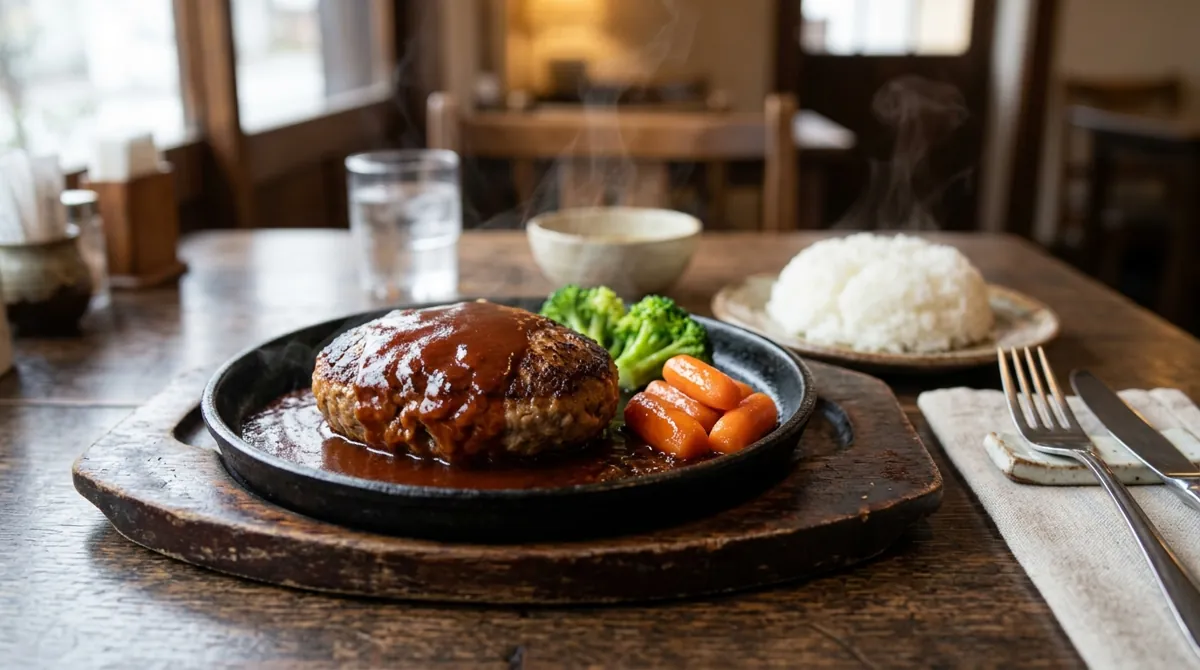
Japanese Hambagu (Hamburg Steak with Red Wine Sauce)
Tender oval patties of beef and pork bound with panko, milk and sautéed onion, steamed in red wine and finished with a glossy pan sauce of butter, ketchup and tonkatsu sauce.

Izgara Köfte (Turkish Grilled Meatballs)
Small, flat meatballs kneaded hard, rested cold, and charred on a hot grill pan.
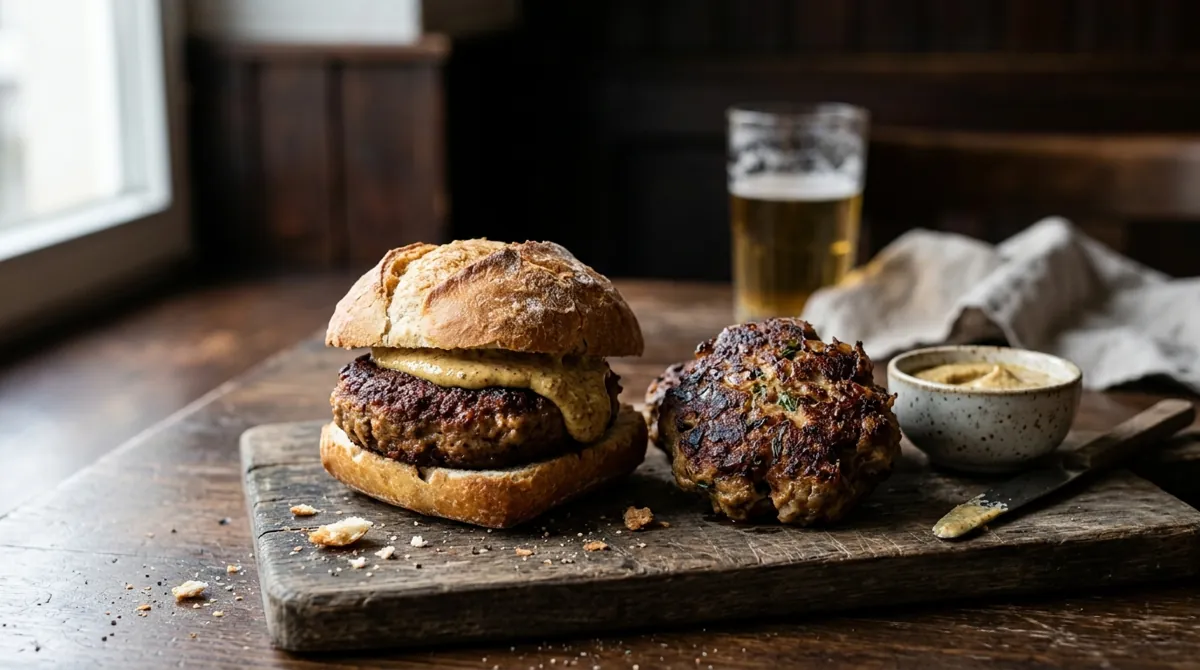
German Frikadellen (Hamburg-Style Meat Patties)
Germany's pan-fried meat patties, made with half beef and half pork, a stale roll soaked in milk, sweated onion and parsley, then fried slowly to a deep brown crust and served with mustard.
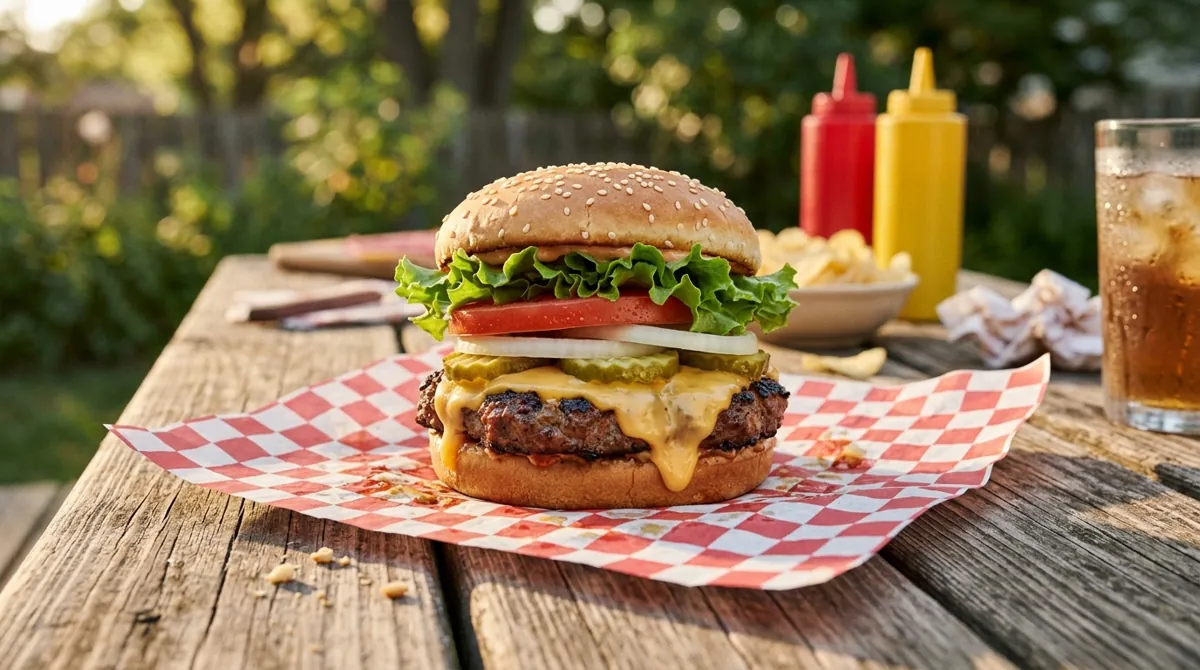
The Classic Backyard Grilled Cheeseburger
Thick, juicy patties of 85 percent lean beef with a dent in the center so they grill flat, topped with American cheese and stacked on soft buns with lettuce, tomato, onion, pickles, ketchup and mustard.