
🔬 Myth check
Was Tarte Tatin Really a Mistake? The Tatin Sisters' Story, Checked
Everyone knows the story of the flustered cook who flipped a ruined apple tart. The paper trail says the tart was real, the sisters were real, and the accident was added later.
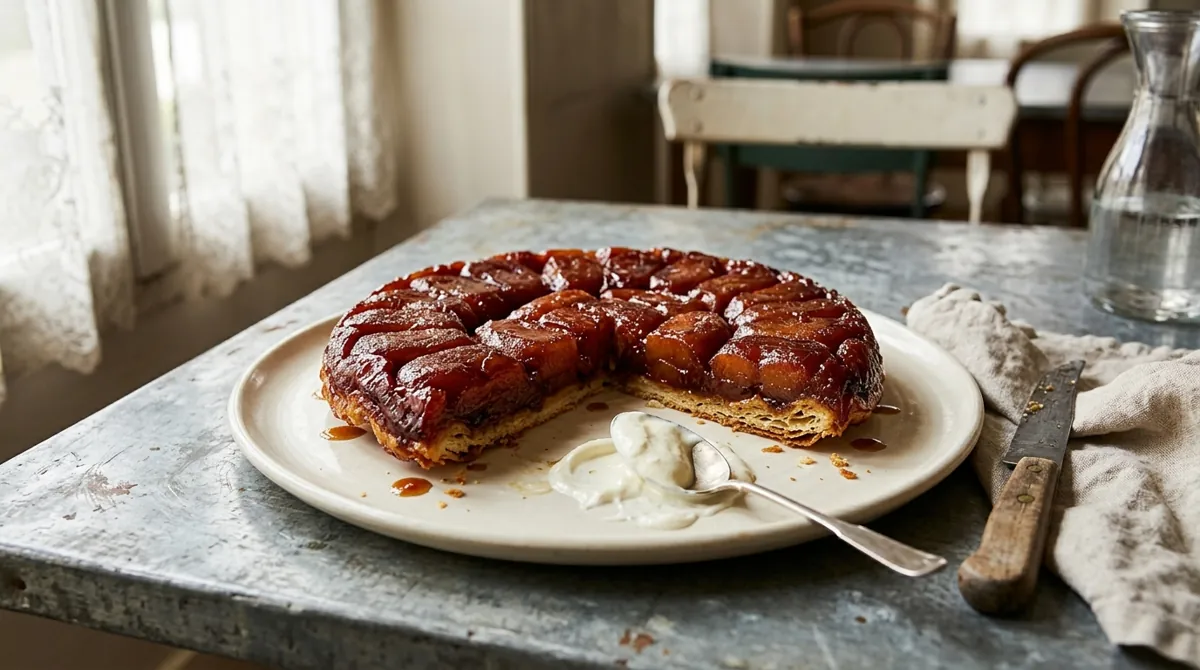
Probably not. The famous story, that Stéphanie Tatin rescued overcooked apples by throwing pastry on top and flipping the tart, was spread by a magazine in 1927, after both sisters had died, and French food historians treat it as invented. Apples baked in butter and sugar under a lid were already a local dish; the sisters' hotel made the upside-down version famous.
The story everyone tells
The Hôtel Tatin stood across from the railway station in Lamotte-Beuvron, a small town in the Sologne about 105 miles south of Paris, where Parisian hunters came to shoot and eat. It was run by two sisters: Stéphanie, called Fanny (1838 to 1917), who cooked, and Caroline (1847 to 1911), who looked after the guests.
The legend says that one busy day Stéphanie left apples cooking in butter and sugar too long. To save them she laid the pastry on top, baked it and served the tart upside down, and the guests loved it. A second version has her dropping a tart and quietly flipping it back into the oven.
Where the accident story comes from
The sisters never wrote down or published their recipe, and as far as historians can tell they never called it tarte Tatin. The earliest printed mention found by the local historian Henri Delétang is a short piece by Gabriel Hanotaux in the Paris paper Le Journal on December 18, 1899, praising Mademoiselle Tatin's tart without describing it.
A first recipe appeared only in 1921, printed by the poet Paul Besnard after both sisters had died. The clumsy-cook story turned up after that: according to the food historian Kilien Stengel of the University of Tours, the magazine Le Bon Gîte et la Bonne Table spread the invented tale in 1927 to amuse its readers, and the critic Curnonsky embroidered it for journalists. So the accident is not part of the early record at all.
The tart is older than the sisters
Besnard's 1921 recipe layers butter, a thick bed of sugar and apple quarters in a copper pan, covers them with thin pastry and bakes it over embers under a four de campagne, a lidded pan that takes hot coals on top. Then the tart is flipped onto a plate. Stengel, following Delétang, points to an 1834 French recipe for pommes au beurre, apples cooked with butter and sugar under the same kind of lid, as the obvious ancestor; the only real change is the pastry and the flip.
Other explanations agree that the idea was regional rather than a one-day accident. Some writers say the sisters were improving the tarte solognote, the Sologne's own upside-down apple tart. A handwritten recipe kept by a family friend, Marie Souchon, credits the cook of a local count, though Slate notes the notebook cannot be dated.
How Paris made it famous
The sisters sold the hotel in 1906. Curnonsky wrote it up in his 1926 La France gastronomique, and that, Slate writes, is what carried it to Paris.
Maxim's took it from there. Its owner Louis Vaudable liked to say he got the recipe by working undercover as the hotel's gardener, but he was born in 1902, only four years before the sisters sold up, so few people take that seriously. Stengel finds it listed as a Maxim's specialty from 1952, and a 1964 magazine recalled it becoming the fashionable dessert of Paris bistros about ten years earlier.
Our tarte Tatin cooks the apples and the caramel separately so the flip works every time. It sits in our apple pie hub next to another dessert that puts the crust in an odd place, the New England apple pandowdy.
Questions people ask
Who invented tarte Tatin?
Nobody can name one person. The Tatin sisters' hotel in Lamotte-Beuvron made the upside-down apple tart famous around 1900, but similar apple dishes cooked under a lid were already known in the region, and one old manuscript credits a local count's cook.
Why is tarte Tatin baked upside down?
The apples cook in butter and sugar against the hot pan, where they caramelize, while the pastry bakes on top like a lid. Turning it out puts the caramelized apples on top and the pastry underneath.
Is the Hôtel Tatin still open?
The building across from the Lamotte-Beuvron station still stands and, after a renovation, operates as La Maison Tatin, which serves the tart. Lamotte-Beuvron also holds tarte Tatin competitions and set a record with a 308 kg tart in 2019, Stengel reports.
Parts of this history are disputed. Where sources disagree, we say so.
Sources
- Kilien Stengel (University of Tours, IEHCA), "Façon Tatin : du geste à la créativité, un outil de transmission," Éditions L'Harmattan
- Lucie de la Héronnière, "La vraie recette de la tarte Tatin," Slate.fr, Nov 9, 2014 (read via the Internet Archive)
- Tony Jackman, "The strange case of the tarte Tatin," Daily Maverick, Nov 26, 2021
- La Maison Tatin, Lamotte-Beuvron (official site)
- Wikipedia, "Tarte Tatin" (used as a lead to sources)
More food facts
Cook it
Tarte Tatin (French Upside-Down Apple Tart)
Apple quarters packed in a skillet and softened in butter, covered with a light amber caramel cooked to 355°F, topped with a chilled disk of butter pastry, baked at 350°F until the edges bubble thick and syrupy, then flipped onto a platter.
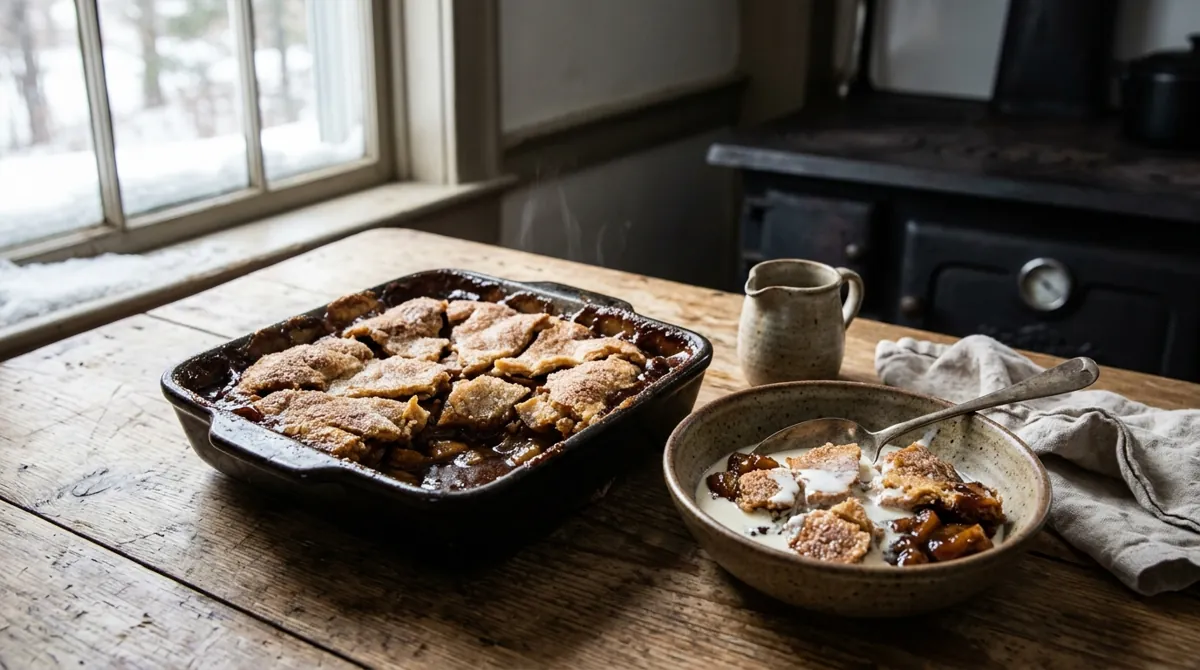
Apple Pandowdy (Old New England Pan Dowdy)
Apples with sugar, cinnamon and nutmeg, molasses and butter baked between two crusts in a square pan at 425°F, then the top crust is slashed and pushed down into the juices in rough chunks, "dowdied", so it turns half crisp, half pudding.
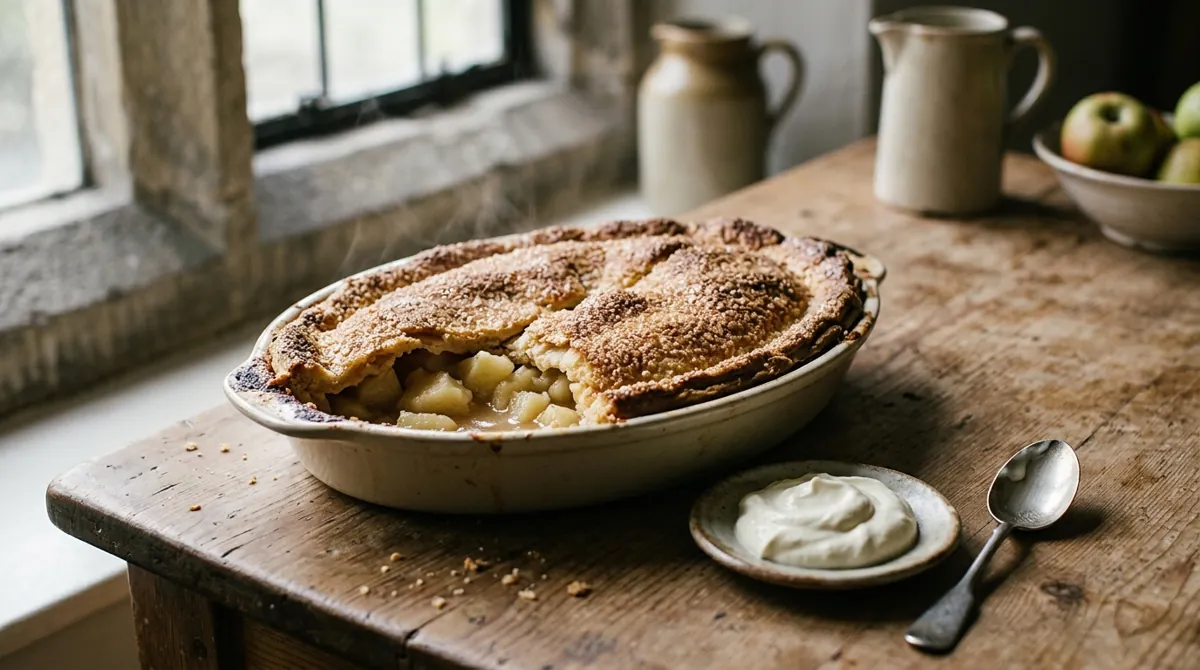
English Apple Pie (Cooking Apples Under a Pastry Lid)
Chunks of tart cooking apples with honey, cinnamon and mixed spice piled into a deep pie dish under a single lid of butter shortcrust, glazed with egg and baked hot at 400°F until golden and bubbling.
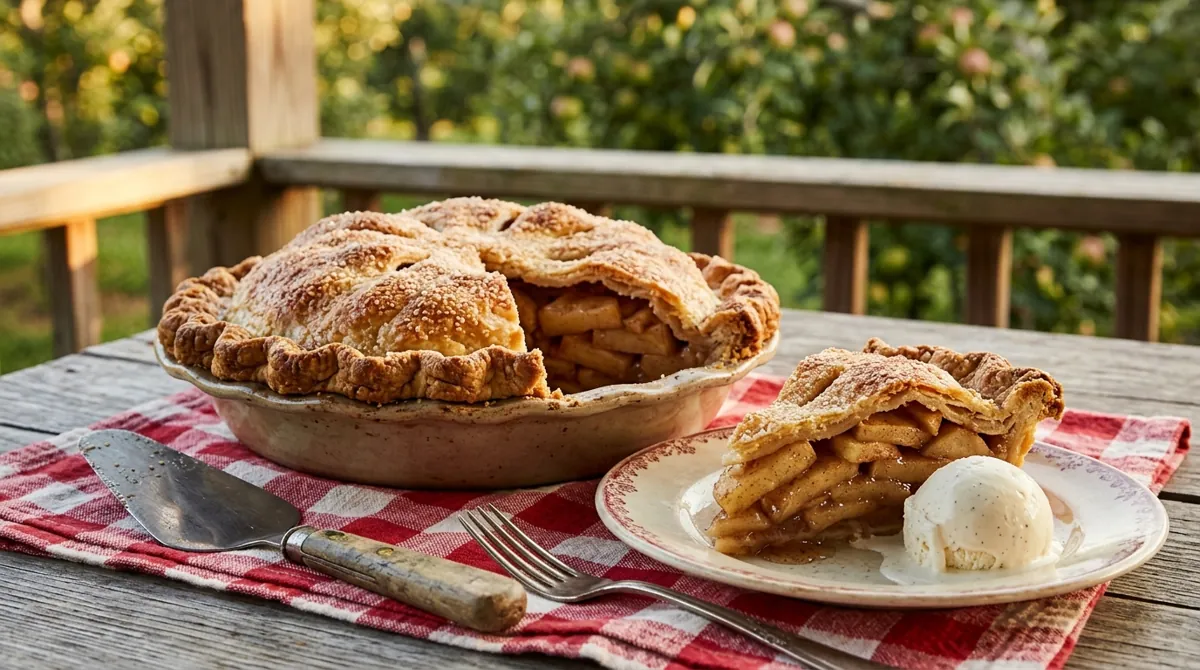
Classic American Apple Pie (Double Crust)
Eight cups of thin-sliced apples tossed with sugar, cinnamon, nutmeg and allspice, thickened with flour and cornstarch and dotted with butter, sealed between two flaky butter and shortening crusts, baked at 425°F and then 375°F until the filling bubbles hard through the vents.
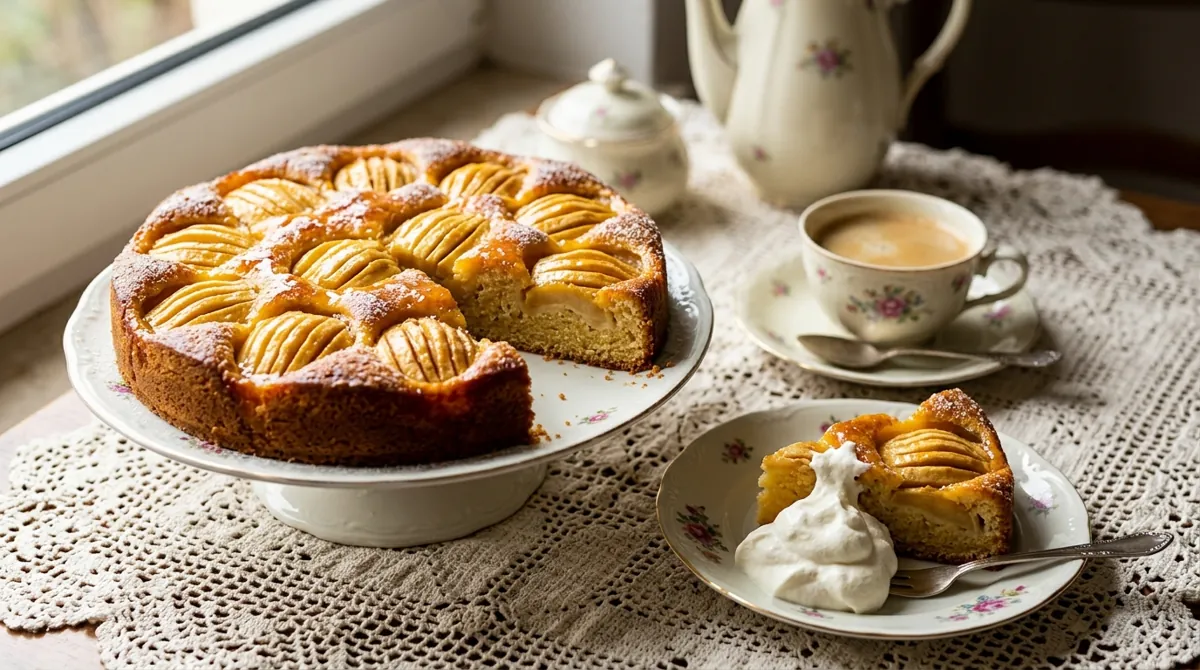
Versunkener Apfelkuchen (German Sunken Apple Cake)
A buttery vanilla and lemon batter spread in a springform, topped with a ring of peeled apple quarters scored on top so they fan open and sink as the cake rises around them, baked at 350°F for about 45 minutes and brushed hot with apricot jam.