
🔬 Myth check
Was There Turkey at the First Thanksgiving?
Only two Plymouth colonists wrote about the 1621 harvest celebration, and neither put a turkey on the table in so many words. Here is what they did write.
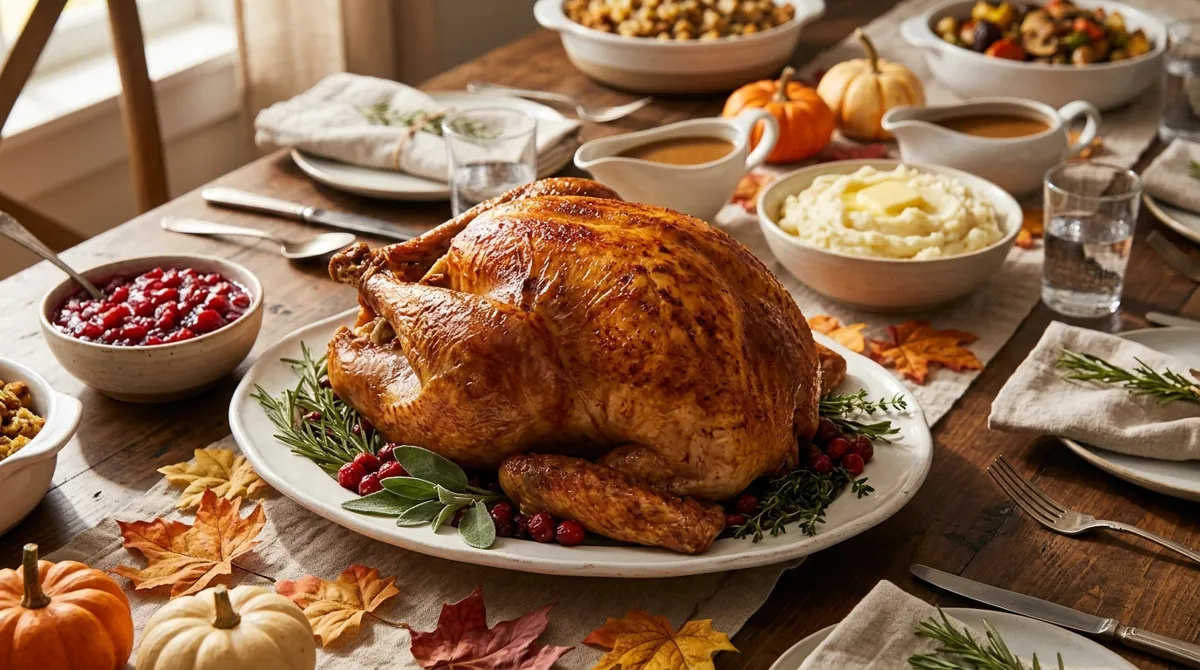
Maybe. The only eyewitness account of the 1621 Plymouth harvest feast, Edward Winslow's letter, names wildfowl and five deer brought by the Wampanoag. Turkey is never mentioned by name. William Bradford wrote that wild turkeys were plentiful that fall, so turkey may have been among the fowl. Pie almost certainly was not served.
What the 1621 letters actually say
Edward Winslow's letter of December 11, 1621, printed in London the next year in "Mourt's Relation," is the only eyewitness description. Pilgrim Hall Museum summarizes it: after the harvest, the governor sent four men fowling, and they brought back enough birds to feed the colony for almost a week.
Massasoit, the Wampanoag leader, arrived with about ninety men. The English feasted them for three days, and the Wampanoag went out and killed five deer, which they presented to the governor and other leaders. So the two foods on record are wildfowl and venison.
Where the turkey comes in
William Bradford, the colony's governor, wrote in "Of Plymouth Plantation" that there was a great store of wild turkeys that fall, and that the colonists took many of them. He was describing the season, though, not the feast itself.
That is why historians hedge. Plimoth Patuxet Museums calls turkey probable, since the birds were plentiful and the men went fowling. The fowl could just as easily have been ducks or geese. The fair version: they ate wildfowl and venison, and turkey may have been among the fowl.
No pie, and no potatoes
Plimoth Patuxet says pumpkin was very likely on the table in some form, but not as pie. The colony probably lacked enough butter and wheat flour for pastry, and it had no apples yet. Kathleen Curtin, the museum's food historian, told Archaeology magazine in 2006 that the colonists also had no oven. Potatoes had not yet entered the everyday English diet.
The custard pie came much later. For the dish Americans eventually built, see our classic pumpkin pie and the rest of our Thanksgiving recipes.
How turkey took over the holiday
Thanksgiving became national in the Civil War. The National Park Service notes that Sarah Josepha Hale, editor of Godey's Lady's Book, had campaigned for a national day for decades, beginning with essays in 1827. She wrote to Abraham Lincoln on September 28, 1863, and on October 3 he proclaimed a day of thanksgiving on the last Thursday of November.
Our classic roast Thanksgiving turkey is the bird that holiday settled on. Its ancestors were Mexican, not Pilgrim: a University of York study found that modern European turkeys descend from birds domesticated in Mexico, the line that later crossed back to North America. Mexico still cooks it its own way, as in our mole poblano with turkey. More versions are in our turkey hub.
Questions people ask
Did the Pilgrims call the 1621 feast Thanksgiving?
Not as far as anyone can tell. Kathleen Curtin of Plimoth Patuxet calls it a harvest celebration, not a thanksgiving of any sort, and says the 1621 event was first labeled "The First Thanksgiving" in 1841.
Where was the turkey first domesticated?
In Mexico and Central America, more than 2,000 years ago. Archaeologists at the University of York studied turkey remains from Mesoamerica dated from about 300 BC to 1500 AD, and ancient DNA ties European domestic turkeys to Mexican ancestors.
Who made Thanksgiving a national holiday?
Abraham Lincoln, by proclamation on October 3, 1863, after a long campaign by Sarah Josepha Hale. The National Park Service notes that Secretary of State William Seward wrote the proclamation's text.
Parts of this history are disputed. Where sources disagree, we say so.
Sources
- Pilgrim Hall Museum, "The First Thanksgiving"
- Plimoth Patuxet Museums, "What did they eat at the 1621 harvest celebration?"
- Archaeology magazine (Archaeological Institute of America), interview with Kathleen Curtin of Plimoth Plantation, November 21, 2006
- National Park Service, Lincoln Home, "Lincoln and Thanksgiving"
- University of York, "Study sheds new light on ancient human-turkey relationship" (2018, on Manin et al., Royal Society Open Science)
More food facts
Cook it
Classic Roast Thanksgiving Turkey
The plain American centerpiece: a buttered, salted and peppered turkey roasted breast side down first, flipped, and finished breast side up until the thermometer reads 165°F. No basting, no fuss.
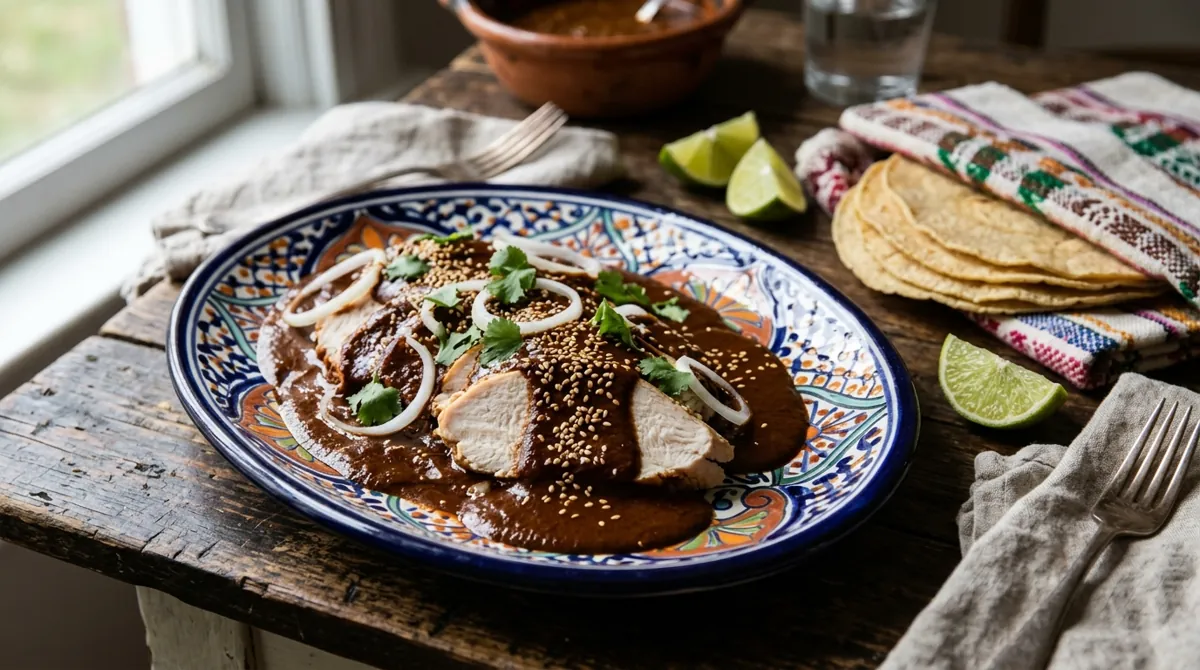
Mole Poblano with Turkey (Mole Poblano de Guajolote)
Poached turkey under Puebla's dark, glossy mole: three dried chiles, charred vegetables, nuts, seeds, fruit, spices and a little Mexican chocolate, simmered for two hours.
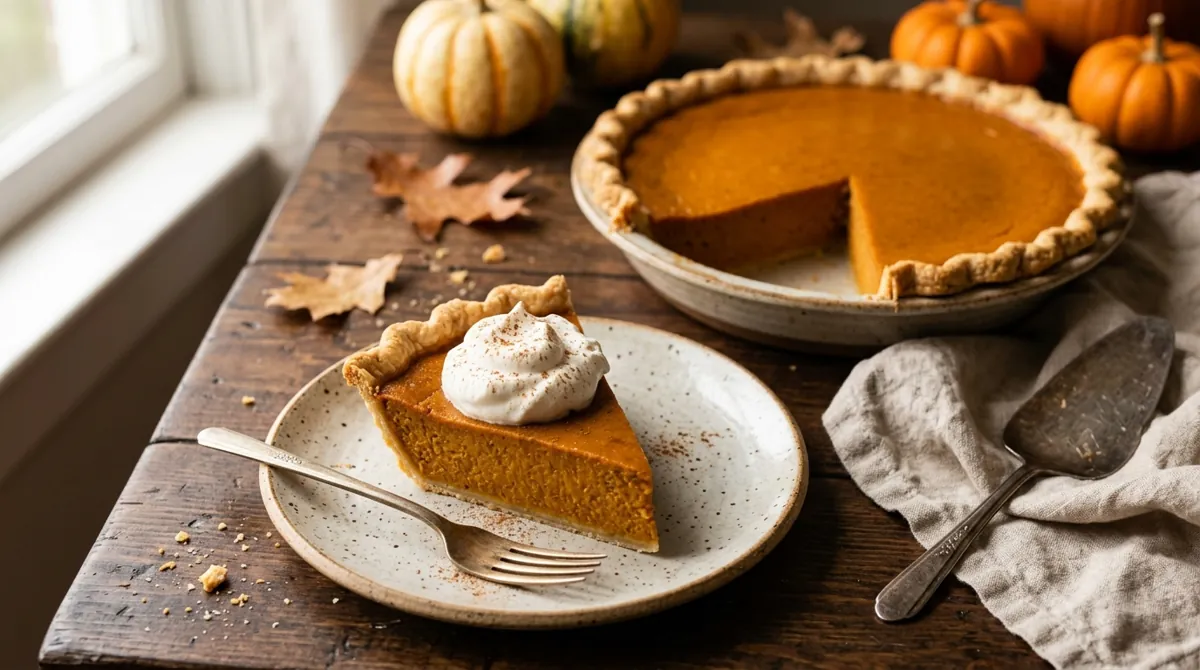
Classic American Pumpkin Pie
The Thanksgiving pie: a smooth custard of pumpkin puree, eggs, heavy cream, sugar, cinnamon, ginger and nutmeg in a par-baked all-butter crust, pulled from the oven while the center still wobbles.
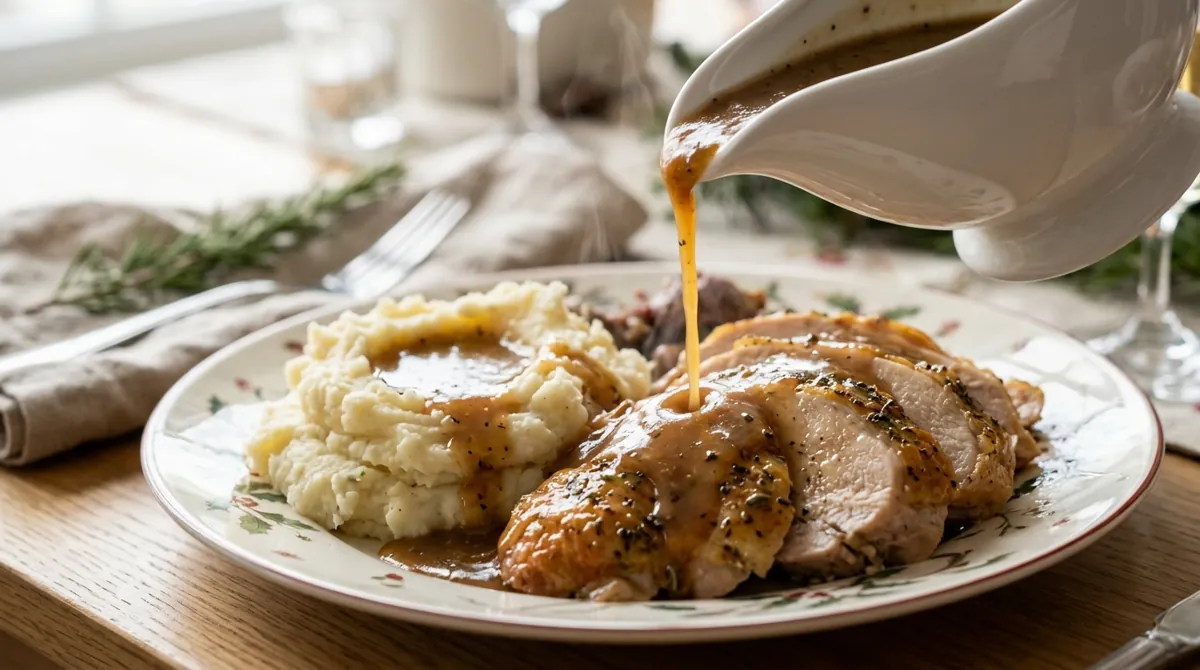
Turkey Giblet Pan Gravy
Real gravy from the bird: a giblet broth made while the turkey roasts, a nutty brown roux, and the roasting pan deglazed with white wine so every browned bit ends up in the sauce.
New England Sage Bread Stuffing
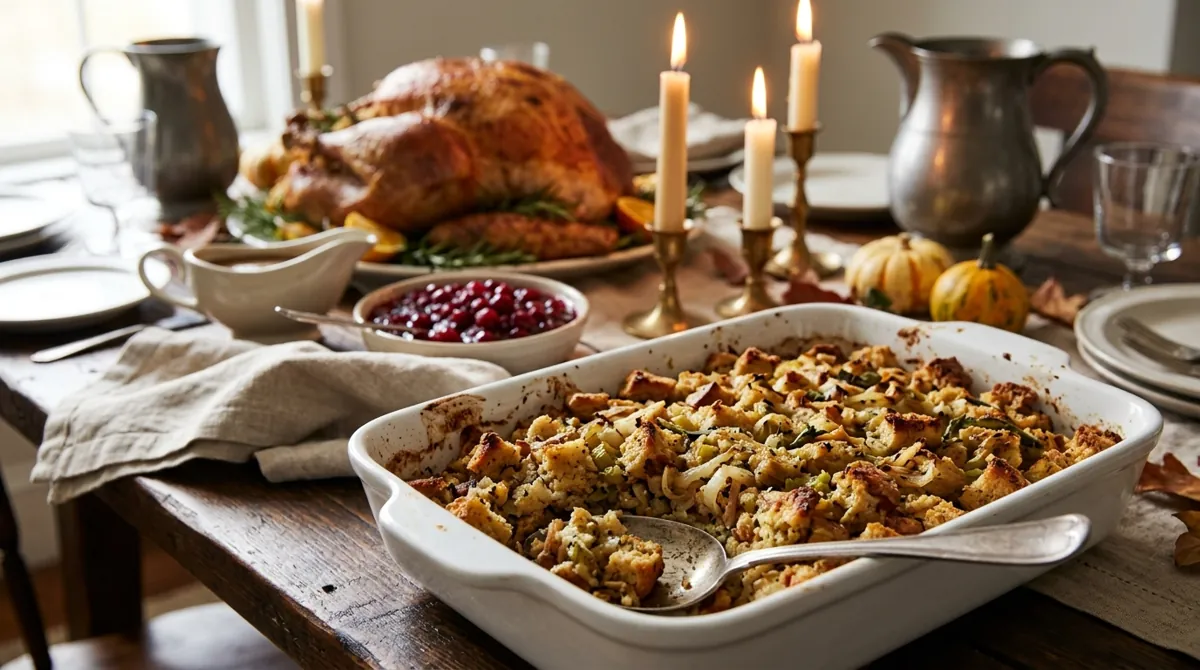
Dried French bread cubes tossed with onion and celery cooked in butter, sage, thyme, marjoram and parsley, chicken broth and eggs, baked covered until fragrant and then uncovered until a golden crust forms.