
Classic American Pumpkin Pie
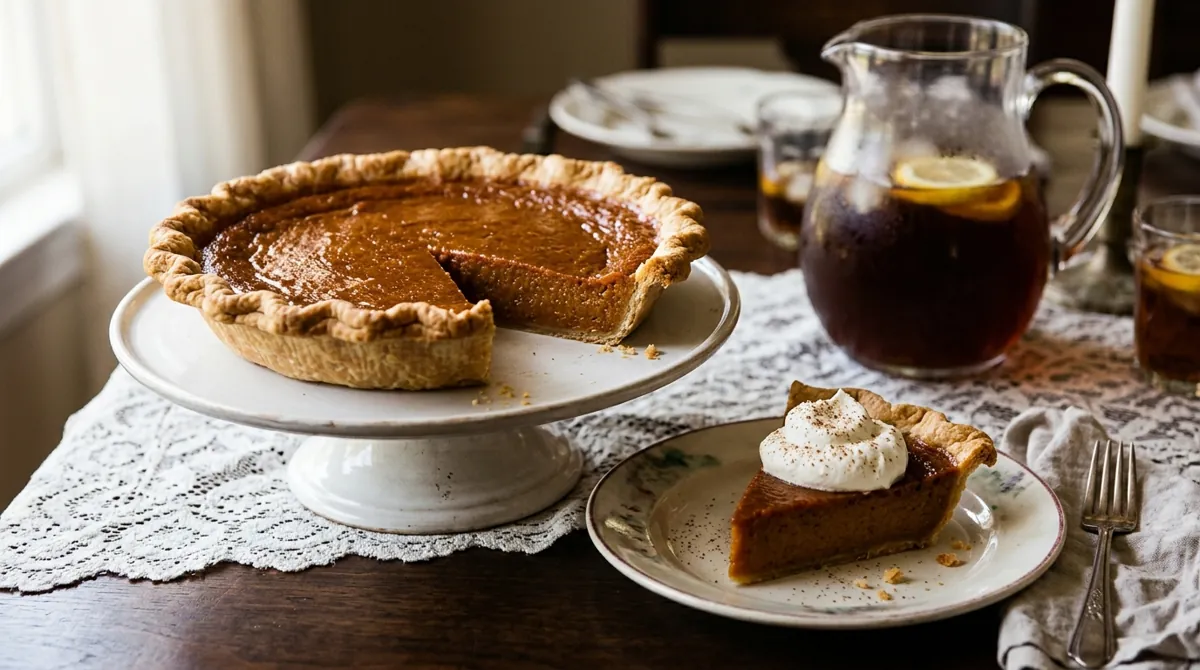
The Thanksgiving pie: a smooth custard of pumpkin puree, eggs, heavy cream, sugar, cinnamon, ginger and nutmeg in a par-baked all-butter crust, pulled from the oven while the center still wobbles.
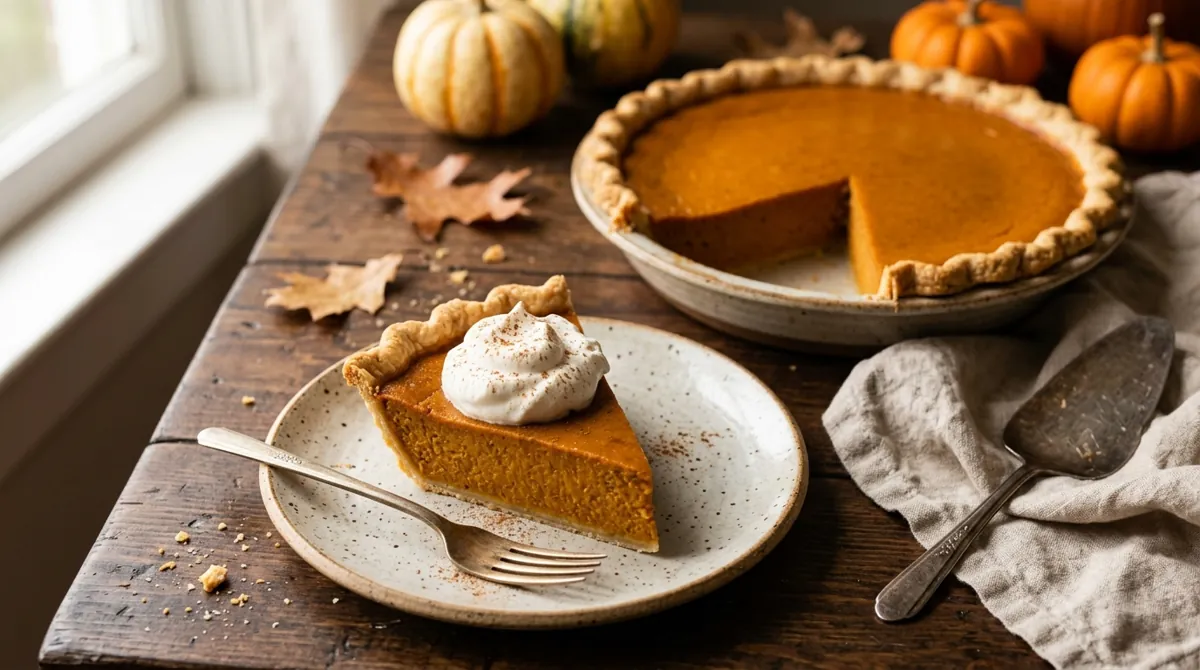
The custard pie is American. Wikipedia's pumpkin pie article says the first appearance of a modern, custard-style pumpkin pie was in Amelia Simmons's "American Cookery". The 1796 Hartford edition, now on Project Gutenberg, prints two "Pompkin" pies: one of stewed, strained pumpkin with cream, nine eggs, sugar, mace, nutmeg and ginger, latticed and baked three quarters of an hour; and a plainer one with milk, four eggs, molasses, allspice and ginger, baked an hour. Pumpkin pie was not at the 1621 harvest feast: the colonists had no ovens, butter or wheat flour for pastry, and stewed pumpkin was more likely (Wikipedia, "Myth of the First Thanksgiving":). It became a common Thanksgiving dish in the early 1800s (Wikipedia, citing Andrew F. Smith). The 20th century put it in a can. Food historian Sarah Wassberg Johnson writes that Libby's ran full-page magazine ads for a pumpkin pie made with evaporated milk in 1912, bought the Dickinson canning company in 1929, began printing a pie recipe on its canned-pumpkin label in the 1950s, and in 2019 switched that label recipe to sweetened condensed milk (The Food Historian, November 22, 2023:). One odd footnote: in 1947 the Truman administration's voluntary egg-saving campaign discouraged pumpkin pie at Thanksgiving, and Wikipedia says none was served at the White House that year.
🇺🇸 This one is American
The Thanksgiving pie: a smooth custard of pumpkin puree, eggs, heavy cream, sugar, cinnamon, ginger and nutmeg in a par-baked all-butter crust, pulled from the oven while the center still wobbles.
🇬🇧 The original
The English original is a lidded pie of sliced pumpkin layered with apples, herbs and spice, a 1600s recipe from Hannah Woolley. See the Pumpion Pie (Hannah Woolley's 17th-Century English Pumpkin Pie) recipe.
🗳️ Pumpkin pie or sweet potato pie? Vote: Pumpkin pie vs Sweet potato pie →
📖 Myth check: Is Canned Pumpkin Really Squash? →
Why it works the kitchen science
Par-bake the crust
Baking the empty shell first sets and dries the bottom, so the wet custard can't soak it into a soggy layer.
Hot start, gentler finish
15 minutes at 400°F sets the crust edge and the outer ring of custard; dropping to 350°F lets the center catch up slowly, so the eggs set smooth instead of tightening and cracking.
Step by step
- Step 1
Whisk the flour and salt, cut in the butter until it looks like coarse meal, then fold in the water until a shaggy dough holds together when squeezed (add more water a teaspoon at a time if it crumbles). Shape a 6-inch disk about 1 inch thick, wrap and refrigerate at least 30 minutes.
- Step 2
Heat the oven to 400°F with a rack in the lower third. Roll the dough to a 13-inch circle, fit it into a 9-inch pie plate, fold the edge under and crimp. Refrigerate 20 minutes.
- Step 3
Line the crust with parchment and fill it with pie weights or dried beans. Bake about 20 minutes, until the edges start to color. Lift out the parchment and weights.
- Step 4
While the crust bakes, whisk all the filling ingredients in a large bowl until smooth. Pour the filling into the hot crust.
- Step 5
Bake 15 minutes at 400°F, then lower the oven to 350°F and bake about 30 minutes more, until the edges are puffed and set, a ring about 4 inches across in the middle still jiggles when you nudge the pan, and the center reads 170°F to 175°F.
- Step 6
Cool on a rack at room temperature, undisturbed, about 3 hours; the center finishes setting as it cools. Serve with whipped cream, then refrigerate leftovers, covered, for up to 4 days.
Classic American Pumpkin Pie
Serves 8 · one 9-inch pie · 1 hr 35 min total
Crust
- 150 g (1 1/4 cups) all-purpose flour
- 1/2 tsp salt
- 113 g (1/2 cup) cold unsalted butter, cut into 1/2-inch dice
- 59 g (1/4 cup) cold water, plus more as needed
Filling
- 425 g (about 2 cups, one 15-oz can) pumpkin puree, not pie filling
- 3 large eggs
- 237 g (1 cup) heavy cream
- 198 g (1 cup) sugar
- 1 tsp ground cinnamon
- 1/2 tsp ground ginger
- 1/2 tsp ground nutmeg
- 1/2 tsp salt
Method
- Whisk the flour and salt, cut in the butter until it looks like coarse meal, then fold in the water until a shaggy dough holds together when squeezed (add more water a teaspoon at a time if it crumbles). Shape a 6-inch disk about 1 inch thick, wrap and refrigerate at least 30 minutes.
- Heat the oven to 400°F with a rack in the lower third. Roll the dough to a 13-inch circle, fit it into a 9-inch pie plate, fold the edge under and crimp. Refrigerate 20 minutes.
- Line the crust with parchment and fill it with pie weights or dried beans. Bake about 20 minutes, until the edges start to color. Lift out the parchment and weights.
- While the crust bakes, whisk all the filling ingredients in a large bowl until smooth. Pour the filling into the hot crust.
- Bake 15 minutes at 400°F, then lower the oven to 350°F and bake about 30 minutes more, until the edges are puffed and set, a ring about 4 inches across in the middle still jiggles when you nudge the pan, and the center reads 170°F to 175°F.
- Cool on a rack at room temperature, undisturbed, about 3 hours; the center finishes setting as it cools. Serve with whipped cream, then refrigerate leftovers, covered, for up to 4 days.
Adapted from King Arthur Baking's "Pumpkin Pie" class recipe (July 2025), as written for one 9-inch pie. King Arthur says the center should reach at least 170°F; our 170°F to 175°F pull range and the crack-prevention steps come from the baseline above. Serving count of 8 is ours. Libby's can-label recipe is told in the Story as history only and is not reproduced. King Arthur Baking. Ingredient list follows the source; the method is in our own words.
Tips
- King Arthur's blog suggests resting the mixed filling in the refrigerator overnight so the spices meld and the filling turns smoother (search result summary of).
- Check your oven with a separate oven thermometer; a hot oven is the most common cause of cracks (King Arthur).
- If the crust edge browns too fast, cover it with a foil ring or pie shield.
- Make it a day ahead: the pie slices more neatly cold.
The rules people argue about
What the sources agree on, what they don't, and what is just a good story.
- The Pilgrims ate pumpkin pie at the first Thanksgiving. Disputed: Wikipedia's pumpkin pie article repeats that they brought pumpkin pie recipes back after 1621, citing a pie company blog and an opinion piece; its "Myth of the First Thanksgiving" article and Plimoth Patuxet's reconstructions say there was no pie (no ovens, butter or wheat flour), and stewed pumpkin is more likely.
- Canned pumpkin is really squash. Disputed wording: Libby's uses only its Dickinson variety of Cucurbita moschata, the same species as butternut, and other brands may use other species (Wikipedia, citing FDA guidance CPG Sec 585.725). "Pumpkin" and "squash" are kitchen words, not botanical ones.
- The Libby's label recipe dates from 1929. Disputed: Tasting Table says the company began printing a pumpkin pie recipe on labels in 1929; The Food Historian says the label recipe began in the 1950s, and Libby's own centennial page (search results only) says "since 1950".
- Pull the pie at 175°F. Disputed: America's Test Kitchen says 175°F; King Arthur's PJ Hamel says at least 160°F, usually 170°F. Both agree the center should still wobble.
- Fresh pumpkin makes a better pie than canned. Folklore: canned puree is drier and more consistent; Taste of Home's test kitchen advises against homemade puree in its pumpkin loaf because it is often wetter.
- No pumpkin pie at the White House in 1947. Documented per Wikipedia, citing the New York Times and others, as part of a voluntary egg-saving campaign.
Every other pumpkin dessert
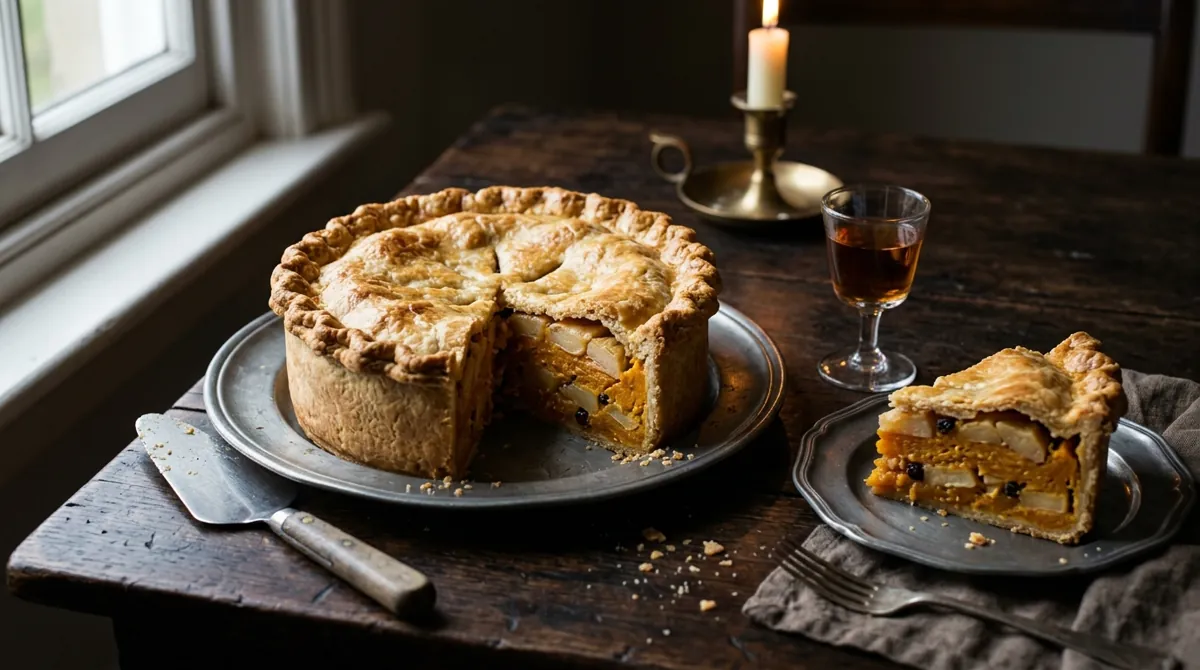
Pumpion Pie (Hannah Woolley's 17th-Century English Pumpkin Pie)
Before the custard there was this: slices of squash browned in butter and baked under a pastry lid with tart apples, raisins, currants, sugar, spice and a splash of sherry, adapted from a 1670s English recipe.
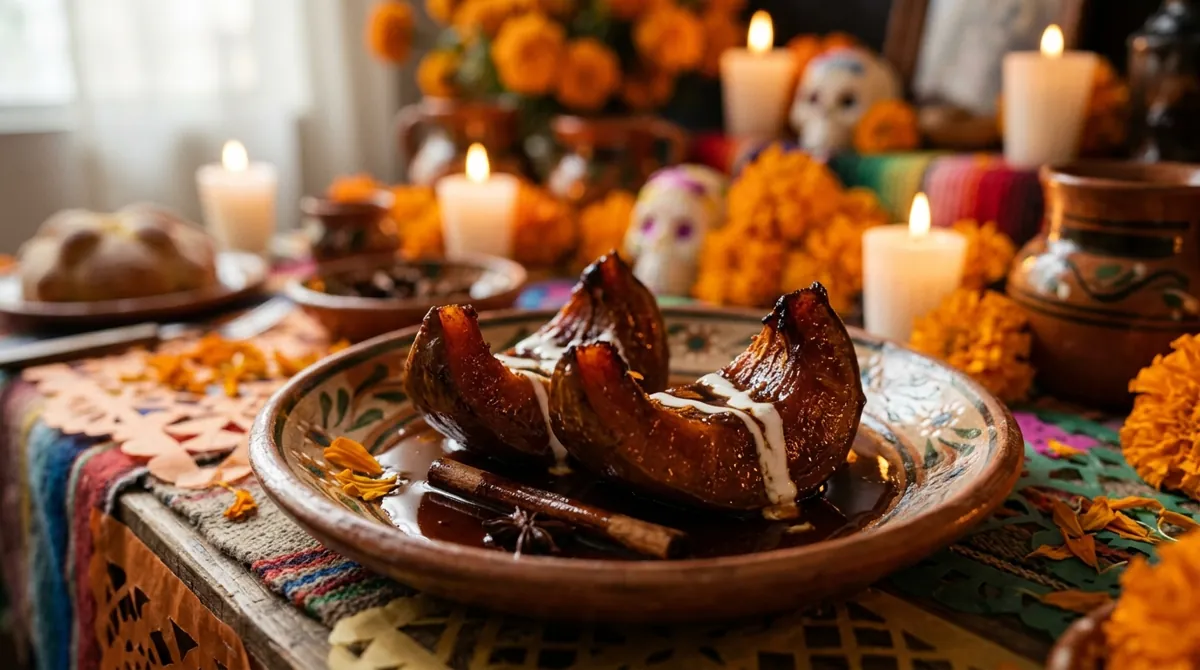
Calabaza en Tacha (Mexican Candied Pumpkin in Piloncillo)
Wedges of whole pumpkin, skin and all, simmered for two hours in a dark syrup of piloncillo, cinnamon and orange until they turn deep brown and glossy, the candied pumpkin of Mexico's Day of the Dead.
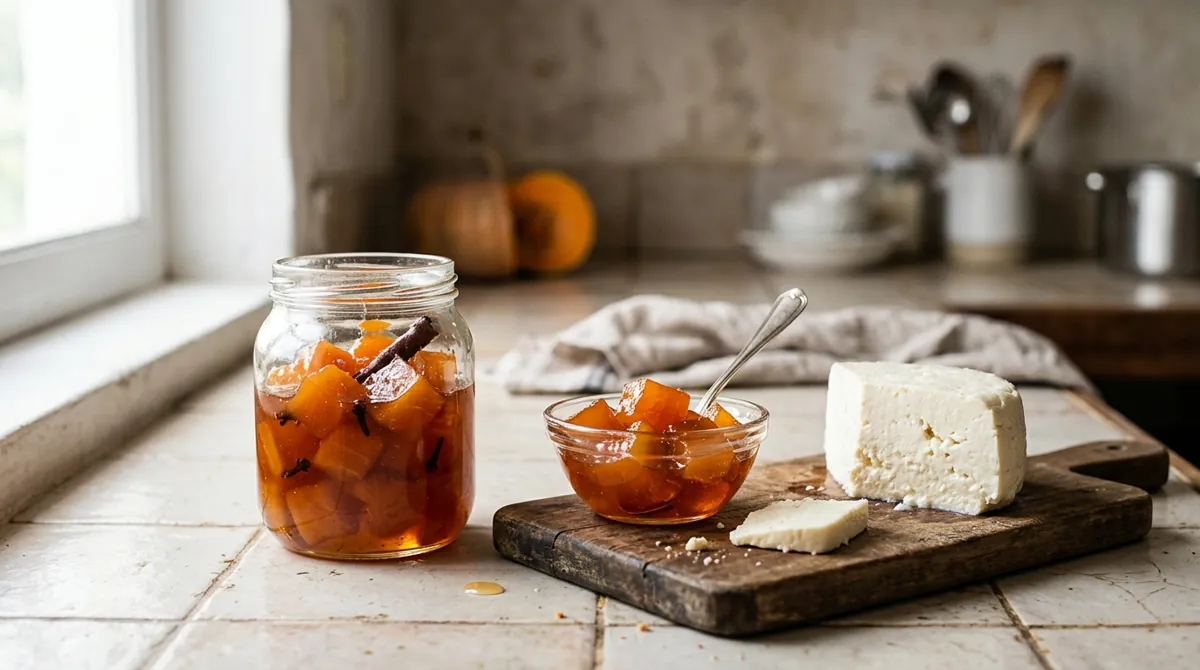
Doce de Abóbora em Calda (Brazilian Pumpkin Cubes in Syrup)
Neat cubes of pumpkin soaked briefly in limewater, then simmered for two hours in a light sugar syrup and left to steep overnight, so they turn glassy and sweet while staying firm, the Brazilian way.
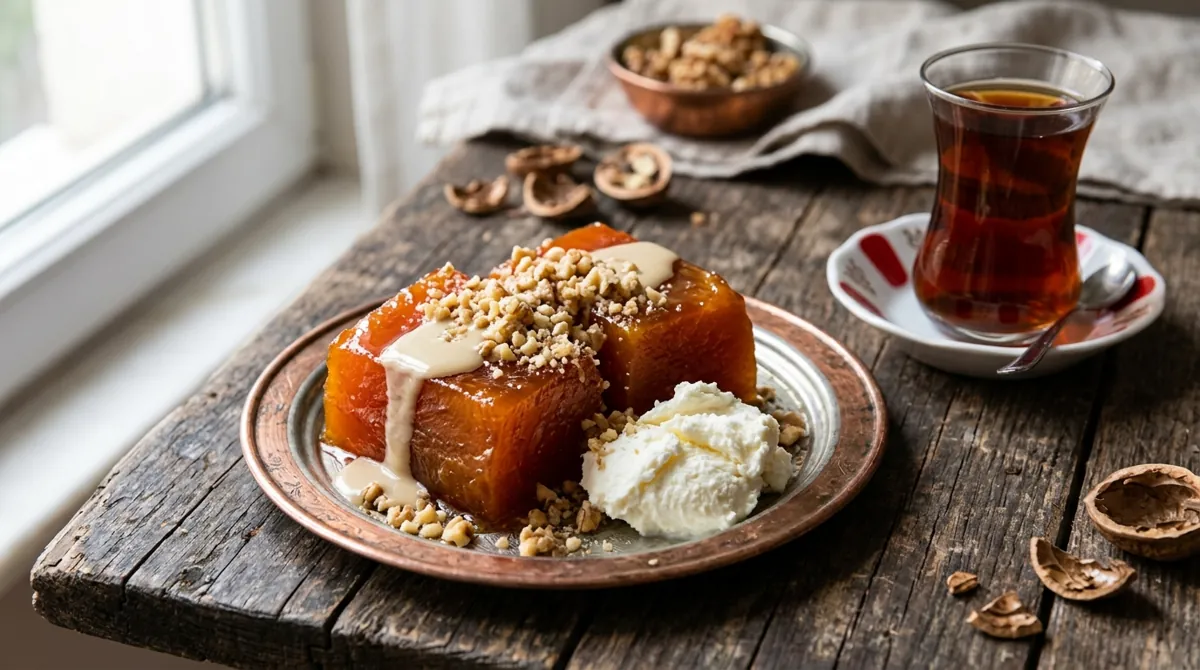
Kabak Tatlısı (Turkish Candied Pumpkin with Tahini and Walnuts)
Thick blocks of pumpkin layered with sugar and left overnight to make their own syrup, then baked until candied and served cool with crushed walnuts and a drizzle of tahini, no water added.
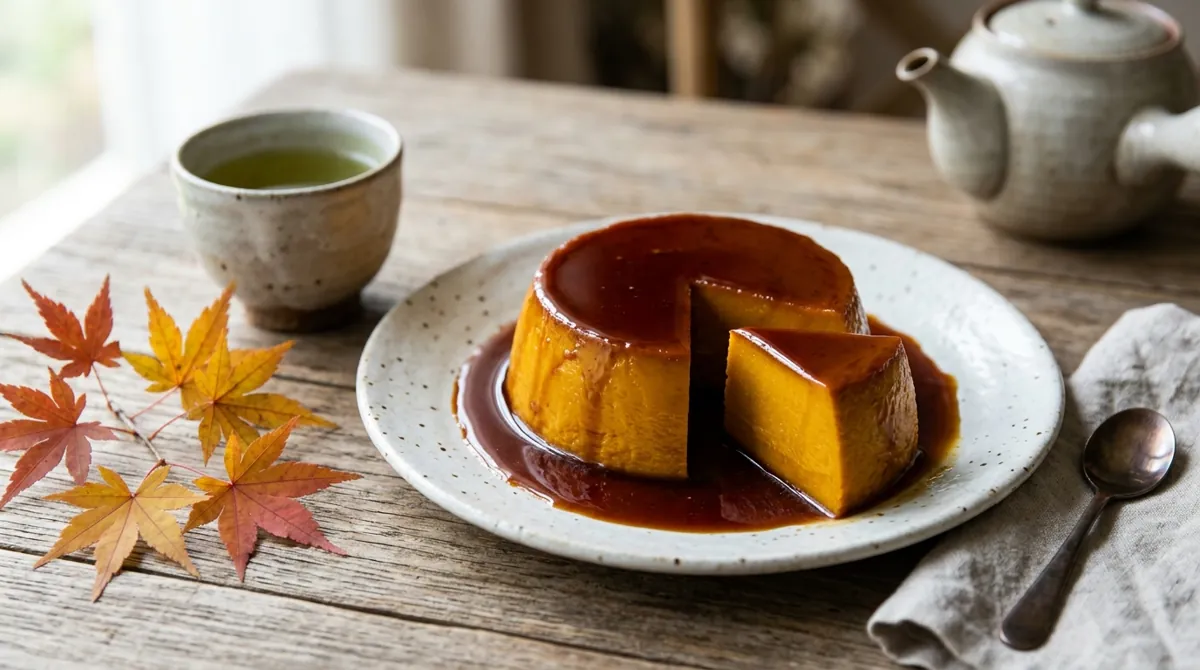
Kabocha Purin (Japanese Kabocha Pudding with Caramel)
Japan's custard pudding made with sieved kabocha squash, baked in a water bath over dark caramel, chilled and turned out so the caramel runs down the sides.
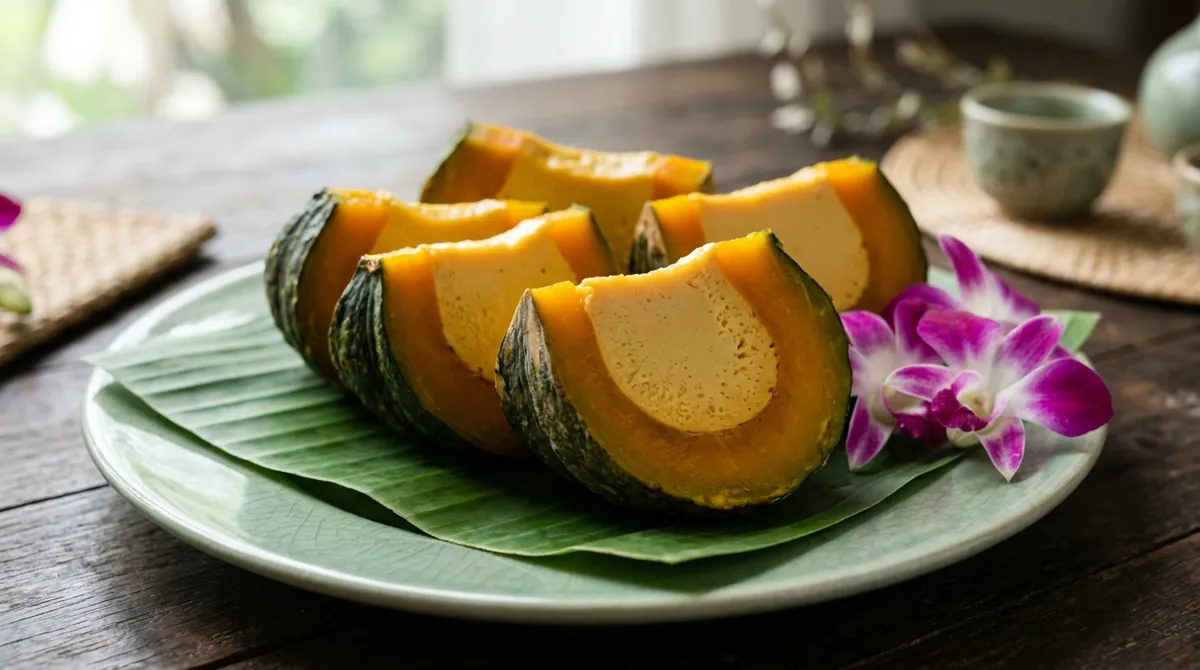
Sangkhaya Fak Thong (Thai Coconut Custard Steamed in a Whole Squash)
A small kabocha hollowed out, filled with coconut cream, palm sugar and egg custard scented with pandan, steamed until set, chilled and cut into wedges that show a yellow custard heart in an orange shell.
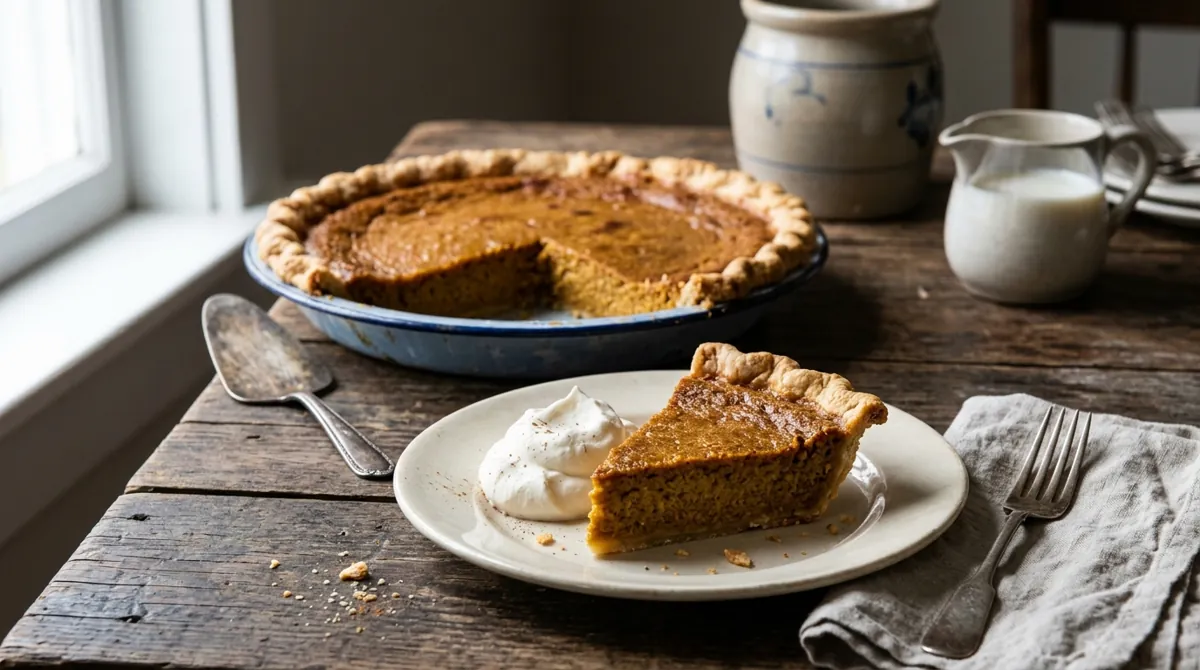
New England Squash Pie (Lydia Maria Child, 1832)
The old Yankee custard pie made with roasted winter squash instead of pumpkin, cooked with milk, sweetened with molasses and a little sugar, spiced with plenty of cinnamon and ginger, and baked in an open crust.
Southern Sweet Potato Pie
Silky sweet potato custard made with brown sugar, butter, sour cream, extra yolks, cinnamon, nutmeg and an optional splash of bourbon, baked in a crust lined with a thin layer of caramelized brown sugar.
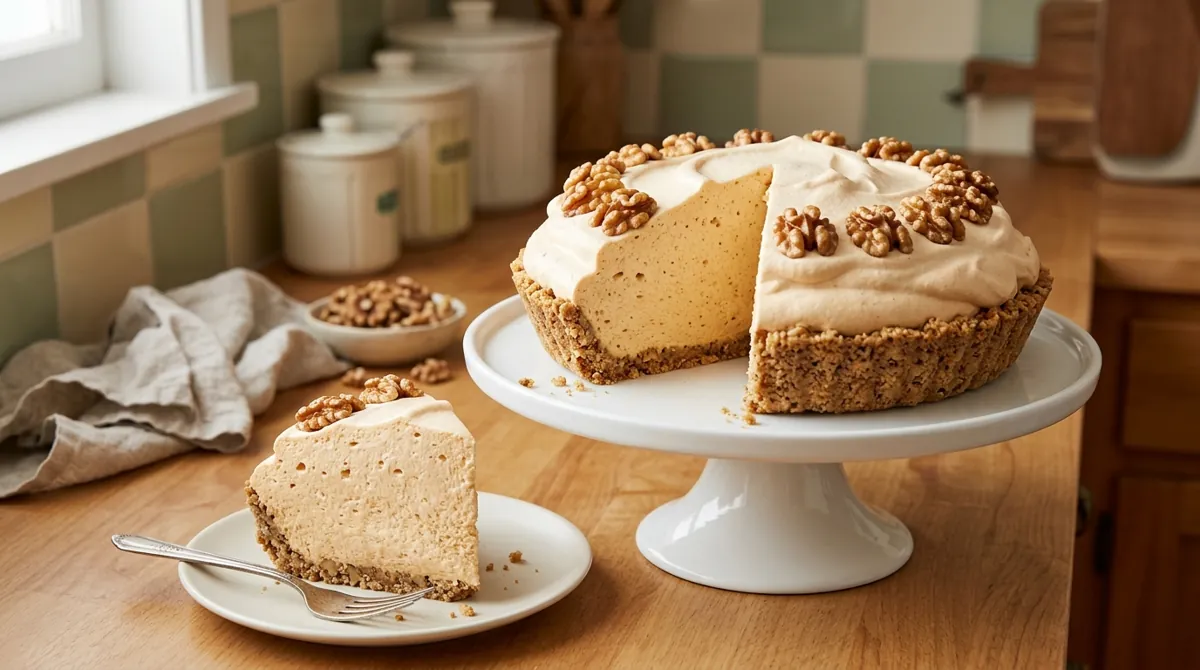
Pumpkin Chiffon Pie
All the spice of pumpkin pie in a light, mousse-like filling: a cooked pumpkin custard set with gelatin and folded with whipped cream, piled into a toasted walnut and graham cracker crust and chilled, no baking of the filling.
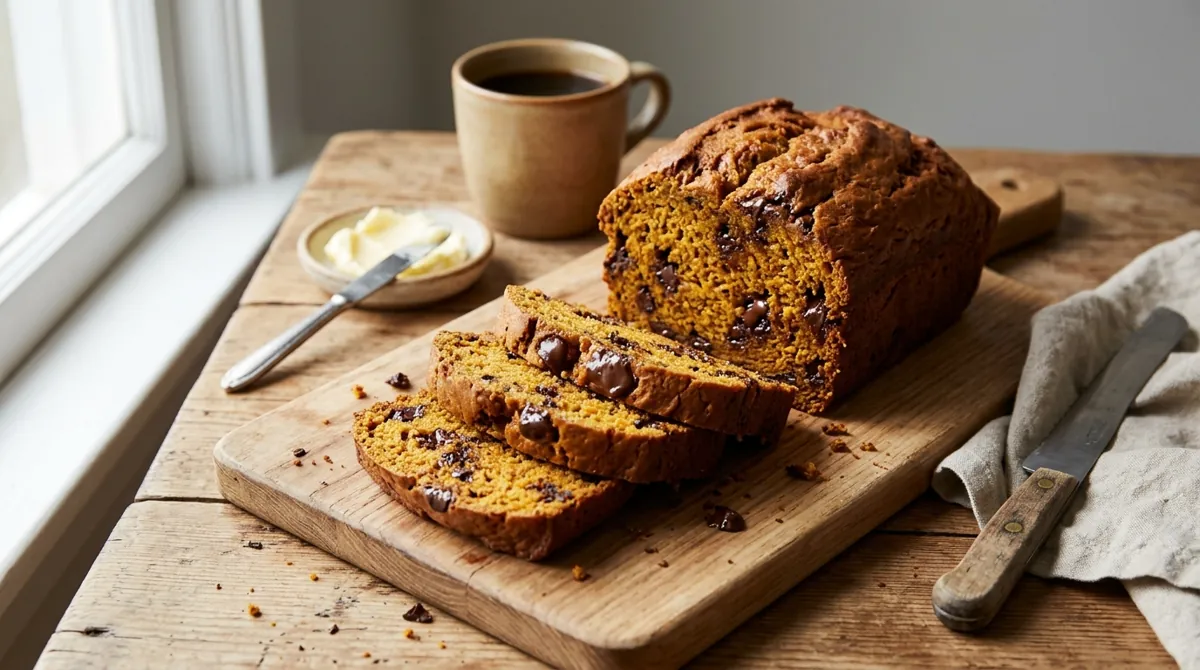
Pumpkin Bread (Chocolate Chip Quick Bread)
King Arthur's super-moist oil-based pumpkin quick bread, made with canned pumpkin, nutmeg and vanilla, studded with chocolate chips and baked in one loaf pan.
Crustless Pumpkin Pie Cups
Classic pumpkin pie filling baked without the crust in six ramekins in a water bath, so it is in the oven in 10 minutes and ready in about 45, with the silky texture of the pie and none of the rolling.
Spiced Pumpkin Loaf with Pepitas, Inspired by Starbucks
A tender, heavily spiced pumpkin loaf sweetened with sugar and honey, scented with cinnamon, nutmeg, cloves and ginger and topped with crunchy pepitas, in the style of the coffee-shop pumpkin loaf. Inspired by, not official.
Meatballs of the World

Italian-American Meatballs
Big, tender meatballs braised for an hour in red sauce over spaghetti. The one most Americans grew up with.

Pallottine (Abruzzo Meatballs)
Tiny meatballs, smaller than a marble, tossed right through square spaghetti alla chitarra. No bread at all.

Swedish Meatballs (Köttbullar)
Small, soft meatballs browned in butter, in a cream sauce made from the same pan, with lingonberry jam on the plate.

Danish Frikadeller
Pork meatballs shaped with a spoon and fried slowly in butter, crusty outside and soft in the middle.

Königsberger Klopse
German meatballs that are never fried: poached, then served in a creamy white sauce with capers.

Spanish Albóndigas in Almond Saffron Sauce
The tapas bar classic: small meatballs in a golden sauce thickened with fried almonds and bread.

Mexican Albóndigas with Chipotle and Mint
Soft meatballs with rice and fresh mint inside, simmered in a smoky tomato and chipotle broth.

Izgara Köfte (Turkish Grilled Meatballs)
Small, flat meatballs kneaded hard, rested cold, and charred on a hot grill pan.

Lion's Head Meatballs
Big, soft pork meatballs, stirred into a sticky paste, fried to set, then braised in a savory sauce.

Chicken Tsukune
Japan's chicken meatball: kneaded sticky, grilled on skewers, glazed with sweet soy tare, dipped in egg yolk.