
📜 Origin story
What Is a Tamalada? Why Families Make Tamales by the Dozen
Why Mexican and Mexican-American families make tamales by the hundred at Christmas: the work is too slow for one cook, and the gathering is the point.
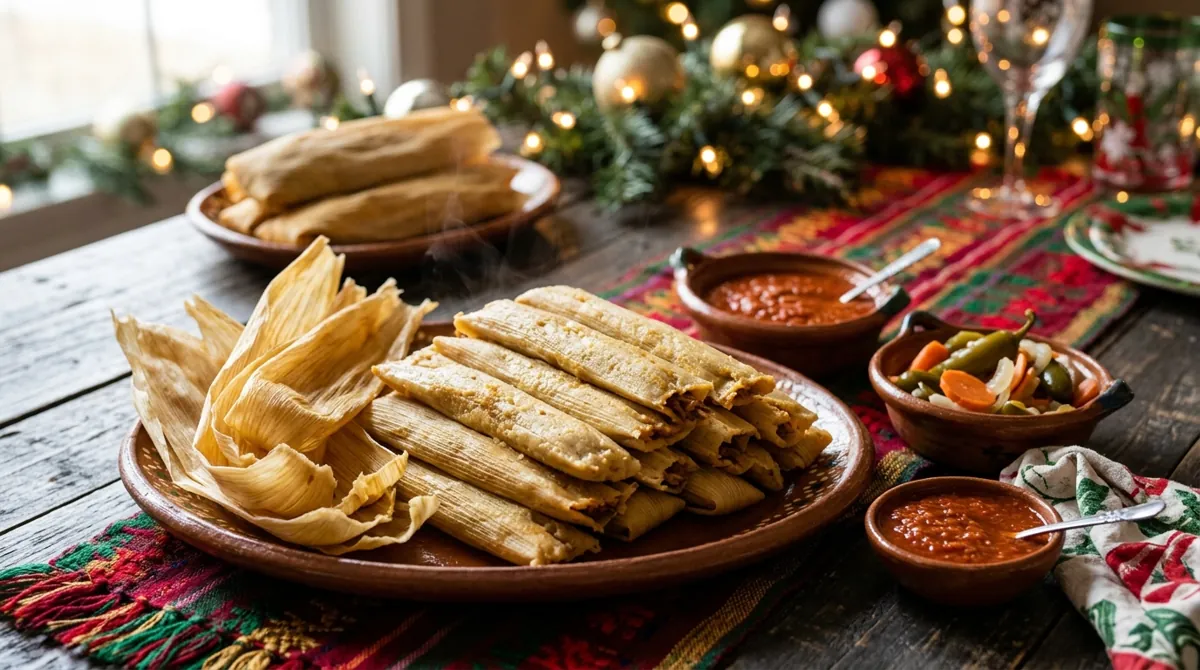
A tamalada is a tamale-making party. Family and friends gather, usually at Christmas or another holiday, and work as an assembly line: beating masa, spreading it on soaked corn husks, filling, folding and steaming dozens of tamales at once. Tamales take so much work that they suit a group, which is a big part of why they became holiday food.
How the assembly line works
In 2008 The Christian Science Monitor described a San Antonio tamalada that started with snacks, drinks and a turkey dinner before anyone touched the masa. Then the line formed: masa beaten with lard, spread on corn husks, filled with pork, garlic and chile, folded and wrapped, with plenty of gossip about relatives along the way.
The numbers get big. One cook told the Monitor that her grandmother's family made 40 dozen tamales in a single day and froze them for Christmas. Austin chefs interviewed by The Austin Chronicle described the same thing: weekends of dozens upon dozens, or work that began after Thanksgiving so the tamales were ready for Christmas Eve.
Why the holidays
The historian Pilar Zazueta, a lecturer at the University of Texas, told the Chronicle that tamales became tied to the holidays partly because making them is slow, social work that goes best with many hands. She added that tamaladas help families keep their knowledge, their identity and their ties to relatives abroad.
Christmas is not the only tamal day. In Mexico, Día de la Candelaria on February 2 is another, and custom says whoever finds the baby figure in the Rosca de Reyes owes the tamales, La Razón explains. Rajas, green, mole and sweet tamales are the most common, which is where our pink tamales de dulce come in.
For the savory batch, our red chile pork tamales follow Rick Bayless's central Mexican recipe: guajillo-simmered pork in light, lard-beaten masa, steamed about 1 1/4 hours.
An ancient food
The tamal is much older than Christmas. The word comes from the Nahuatl tamalli by way of Mexican Spanish, and English speakers turned the plural tamales into a new singular, tamale. Tamales are thousands of years old in Mesoamerica, though how many thousands is disputed.
One firm early sighting is in the San Bartolo murals of Guatemala, painted about 100 BC, where tamales appear as offerings, including a pot of them carried to the maize god, Archaeology magazine reports. Zazueta notes that in the Aztec world, unfilled tamales were served with a chocolate drink at a celebration for the god of rain.
The Texas tamalada
In Texas the tradition grew public as well as private. San Antonio's chili queens sold food in the city's plazas from the 1860s until the late 1930s, and when Stephen Crane visited in 1895 he listed tamales among the dishes, the historian Frank W. Jennings writes. Zazueta told the Chronicle that San Antonio and El Paso were among the first Texas cities with a commercial holiday tamale trade, with businesses selling to the public by the 1920s.
By 2008 one San Antonio restaurant, Mi Tierra, told the Monitor it sold roughly 250,000 tamales between early December and New Year's Day. Home cooks there like them stuffed generously; as one put it, nobody wants more dough than filling. Our San Antonio Christmas tamales roll them long and thin. See every style in our tamales hub and the rest of the holiday table in our Christmas recipes.
Questions people ask
How many tamales does a tamalada make?
It depends on the family, but dozens at the least. One San Antonio family described to The Christian Science Monitor made 40 dozen in a day and froze them for Christmas.
Is it tamal or tamale?
Tamal is the Spanish singular and tamales the plural. Tamale is an English form made from that plural, and it is the usual singular in the United States.
How long do tamales take to steam?
Rick Bayless steams his red chile pork tamales about 1 1/4 hours at a steady boil, then rests them about 15 minutes off the heat. Before the tamales go in, he drops a little masa into cold water: if it floats, the tamales should turn out light.
Parts of this history are disputed. Where sources disagree, we say so.
Sources
- Clare Leschin-Hoar, San Antonio holiday tamales feature with recipe, The Christian Science Monitor, December 10, 2008
- Emily Beyda, "A Brief History of Holiday Tamales," The Austin Chronicle, December 27, 2019
- La Razón de México, "Día de la Candelaria: ¿por qué comemos tamales el 2 de febrero?", February 1, 2020
- Zach Zorich, "Piecing Together Maya Creation Stories," Archaeology, November/December 2021
- Dictionary.com, "tamale"
- Frank W. Jennings, "San Antonio's Chili Queens," Journal of San Antonio (University of the Incarnate Word)
- Rick Bayless, "Red Chile Pork Tamales Steamed in Corn Husks"
More food facts
Cook it
San Antonio Christmas Tamales
Long, thin San Antonio tamales with more filling than masa: lean pork simmered with raisins, then cooked in a tomato, green chile and oregano sauce, rolled in husks like cigars for the Christmas tamalada.
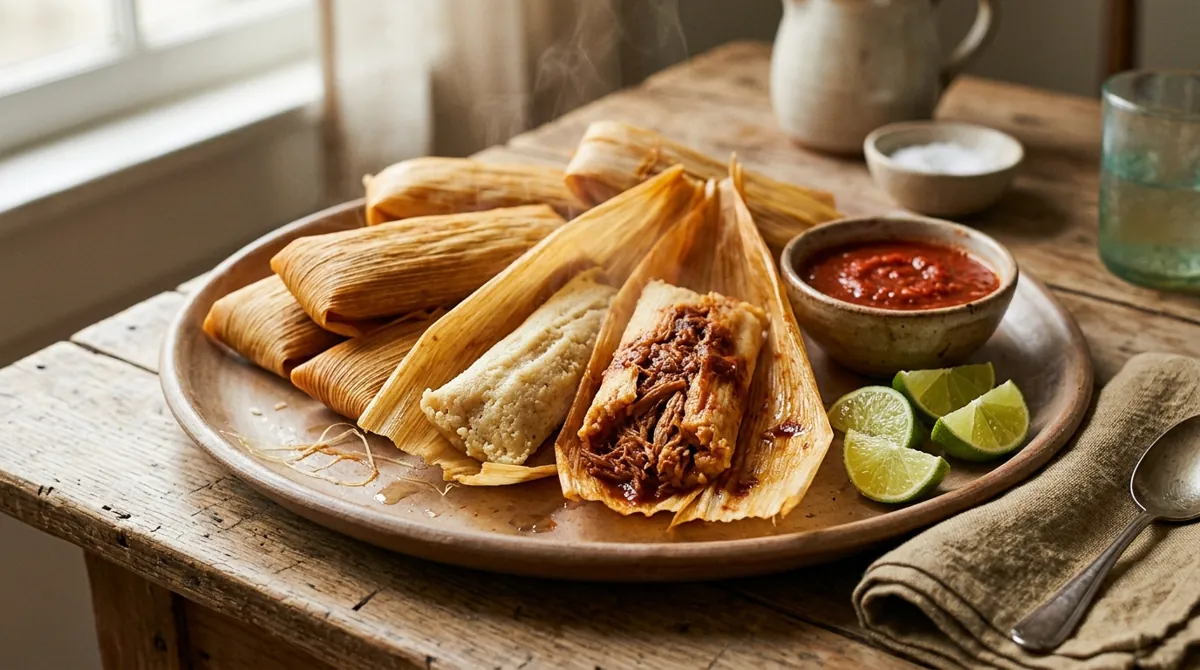
Red Chile Pork Tamales (Tamales Rojos de Puerco)
Pork shoulder simmered down in a smooth guajillo chile sauce, wrapped in light, fluffy lard-beaten masa and steamed upright in corn husks, the central Mexican way.
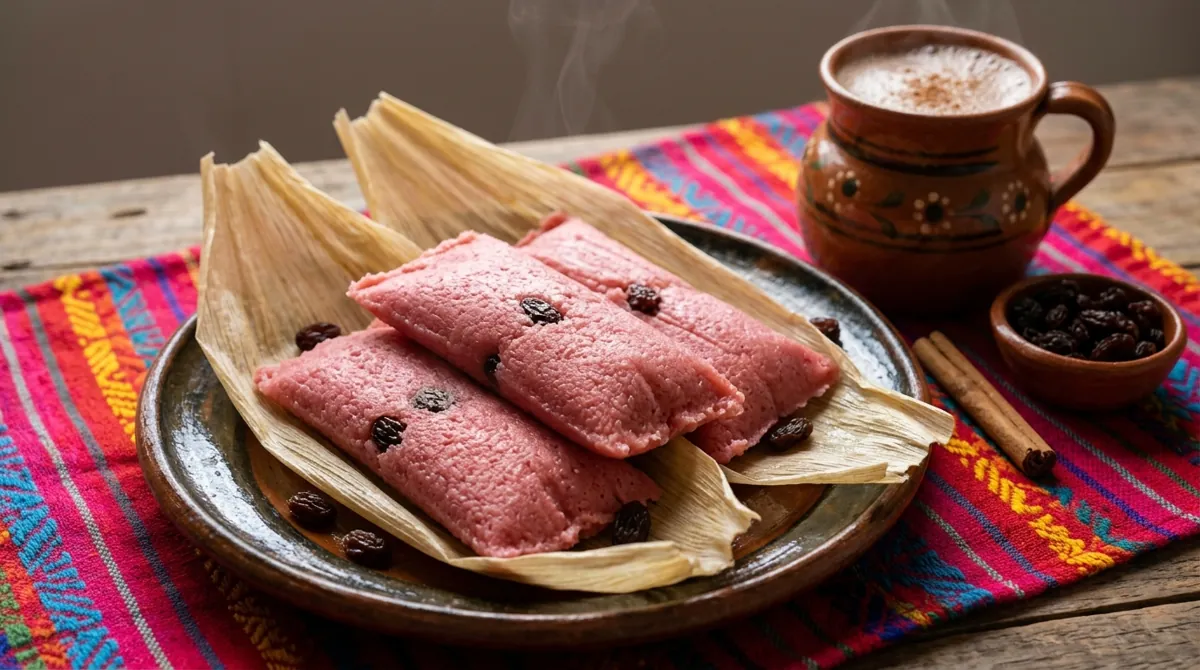
Pink Sweet Tamales (Tamales de Dulce)
Sweet masa beaten with whipped lard and sugar, tinted pale pink and studded with raisins, steamed in corn husks and eaten with hot atole or champurrado.
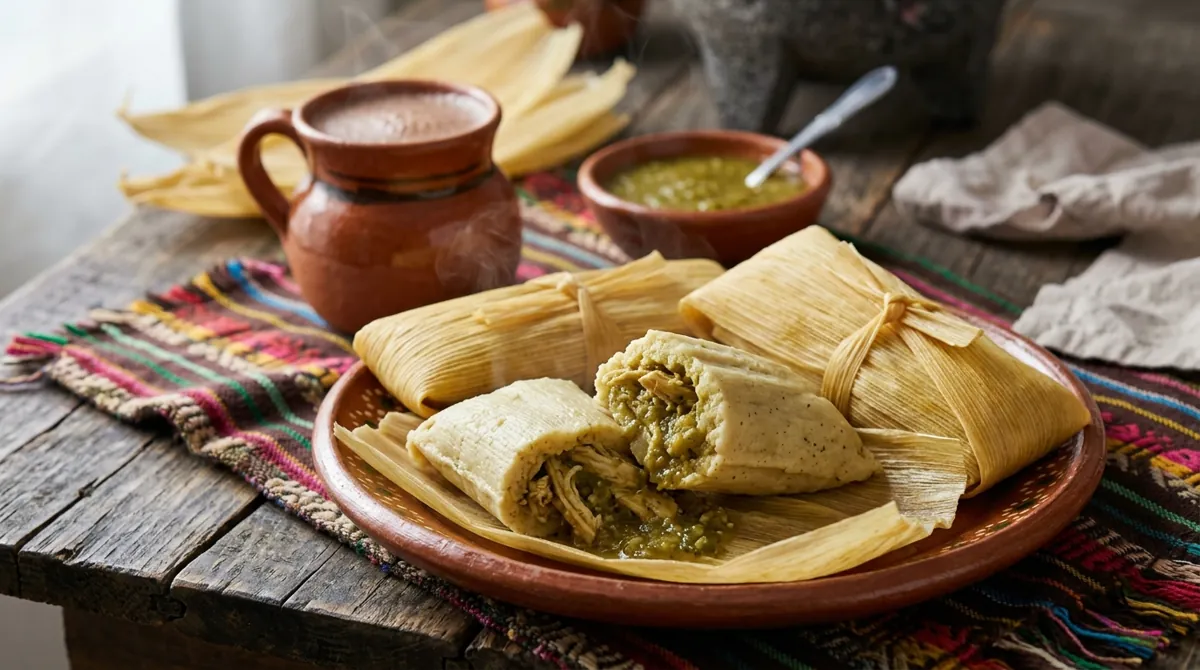
Green Chicken Tamales (Tamales Verdes de Pollo)
Shredded chicken in a tangy tomatillo and serrano salsa verde, tucked into masa beaten fluffy with lard and chicken broth and steamed in corn husks.
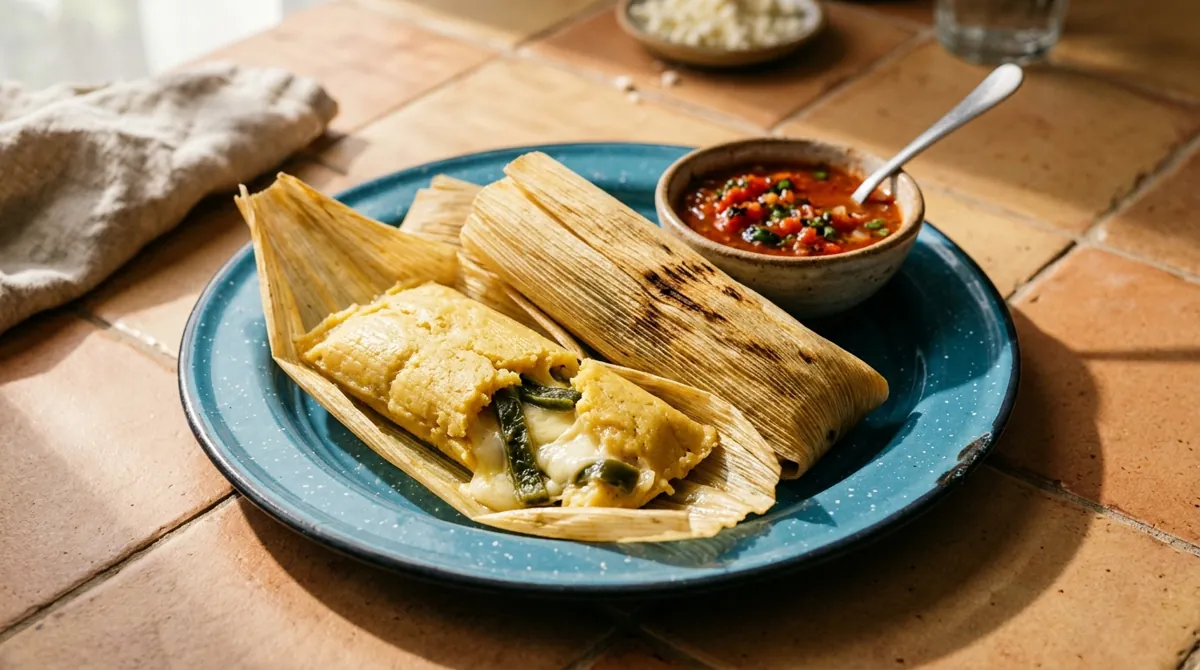
Rajas con Queso Tamales (Poblano and Cheese)
Strips of roasted poblano chile and melting cheese tucked into lard-beaten masa and steamed in corn husks, the vegetarian tamal at every tamalada.
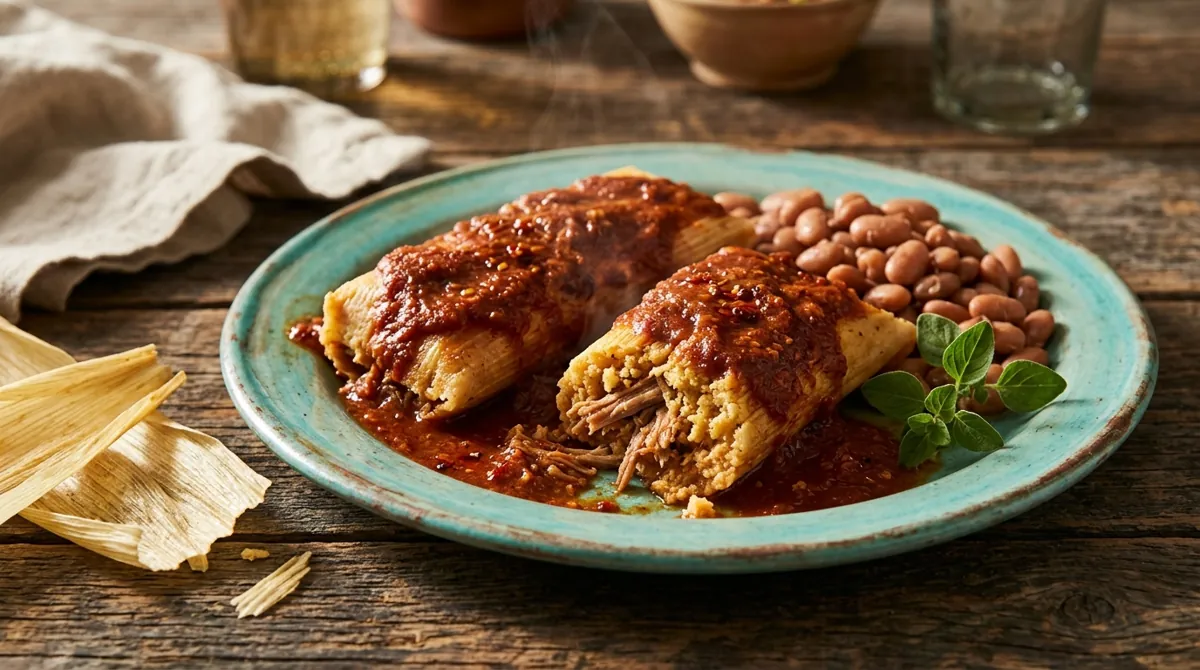
New Mexico Red Chile Pork Tamales
Slow-roasted pork shoulder in a New Mexico red chile sauce, with a little of the same sauce beaten into the masa, rolled in corn husks, steamed and served under more red chile.