
📜 Origin story
Peking Ravioli: Why Boston Gives Dumplings an Italian Name
Order dumplings at a Chinese restaurant around Boston and you may see them listed as Peking ravioli. The name traces back to one chef and one 1958 menu.
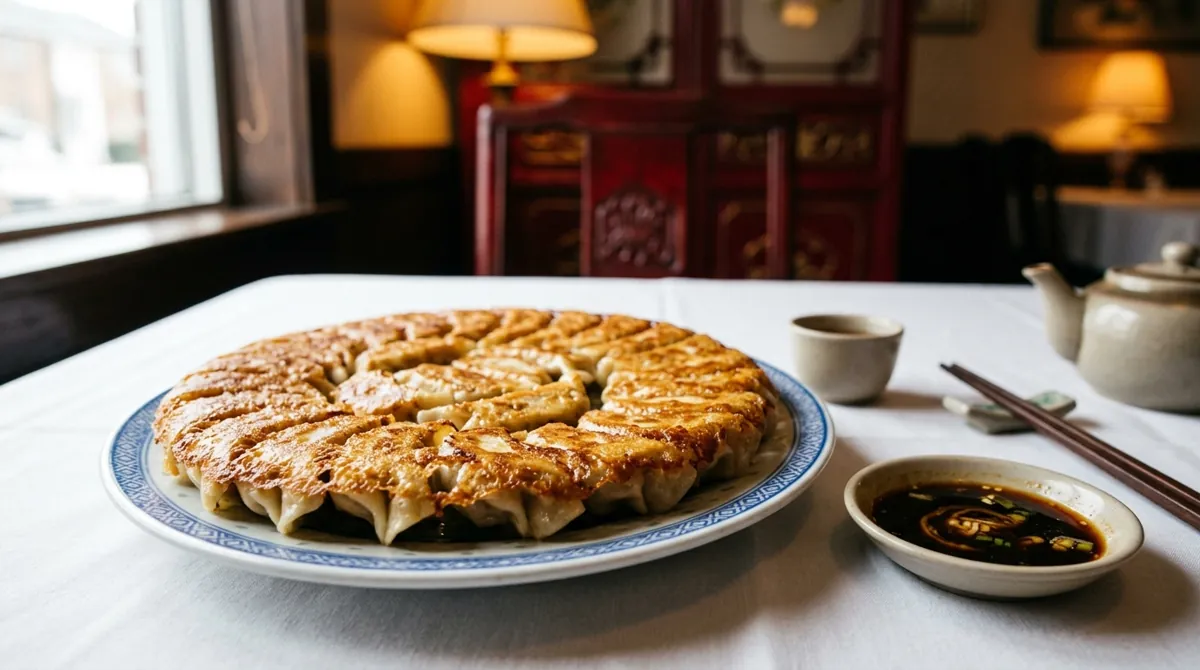
Peking ravioli is the Boston-area name for northern Chinese pork dumplings, usually pan-fried potstickers (guotie). Chef Joyce Chen is credited with coining it at the Joyce Chen Restaurant, which she opened in Cambridge, Massachusetts, in 1958. Ravioli told New Englanders the dumplings had a filling; Peking nodded to Beijing, where she was born.
The original: jiaozi
Jiaozi are crescent-shaped wheat dumplings, often filled with pork and cabbage and boiled or pan-fried. They are old. Archaeologists have recovered Tang dynasty (618 to 907) dumplings from the Astana tombs in Turpan, in China's dry northwest, and a 2012 study of their starch found they were made from wheat and millet flour.
Today jiaozi are a fixture of the Spring Festival reunion meal, especially in northern China, where families wrap them together on New Year's Eve. Our jiaozi are the boiled family version: hand-rolled wrappers, pork and napa cabbage.
1958: Joyce Chen comes to Cambridge
Joyce Chen was born in Beijing in 1917 and left Shanghai with her family in 1949, settling in Cambridge. In 1958 she opened the Joyce Chen Restaurant, bringing northern Chinese dishes that most Bostonians had never seen, potstickers among them.
According to Lucky Peach, Peking ravioli held the number 4 spot on her debut menu, described as crescents stuffed with meat and vegetables. In 1967 she took her cooking to public television with Joyce Chen Cooks, taped on the same WGBH set as Julia Child's The French Chef.
Why ravioli?
There are two explanations, and they fit together. WGBH says Chen chose the name to appeal to her first restaurant's large Italian clientele. Her son Stephen told Lucky Peach she worried that "dumpling" would suggest a thick, doughy American dumpling, and wanted a word that promised a filling inside.
Ravioli did that, and Peking was a nod to her hometown. The name spread as cooks who trained in her kitchens opened their own restaurants, and it is still on menus across the Boston area, sometimes shortened to ravs.
Same dumpling, new name, new pan
Our Peking Ravioli follows Chen's own printed recipe: pork and salted cabbage, steamed and fried in a skillet until the bottoms turn golden. It is the same family as jiaozi, gyoza, mandu and momo, and our dumplings collection puts 13 of them side by side.
Questions people ask
Is Peking ravioli the same as a potsticker?
Essentially, yes. Peking ravioli are pan-fried pork dumplings, the dish known in Mandarin as guotie and in English as potstickers. Chen's menu also offered them boiled or steamed.
Did Peking ravioli come from Italy?
No. Only the name borrows from Italian. The dumpling itself is northern Chinese, and the name was chosen in 1950s Cambridge to help American diners understand it.
Is Peking ravioli used outside Boston?
Rarely. Lucky Peach found that many Bostonians do not realize the term is local to the Boston area.
Sources
- Emily Balk, GBH (WGBH), "Joyce Chen's Sweet And Sour Pork And Peking Ravioli" (February 15, 2018)
- Leah Mennies, Lucky Peach, "The Story of Peking Ravioli" (February 25, 2015; Internet Archive copy)
- Kerri Lee Alexander, National Women's History Museum, "Joyce Chen" (2018)
- Barry Popik, "Peking Ravioli"
- Xinhua, "China's history of dumplings, from archaeological finds to modern tables" (February 2024, via chinakongzi.org)
- Tao Chen et al., "Archaeobotanical Study of Ancient Food and Cereal Remains at the Astana Cemeteries, Xinjiang, China," PLOS ONE (2012), via PubMed Central
More food facts
Cook it
Peking Ravioli (Boston Pan-Fried Pork Dumplings)
Joyce Chen's chiao-tzu: homemade wrappers around pork and salted napa cabbage with soy, sherry and sesame oil, steamed and fried in concentric rings, flipped out golden side up and dipped in soy sauce and rice vinegar.
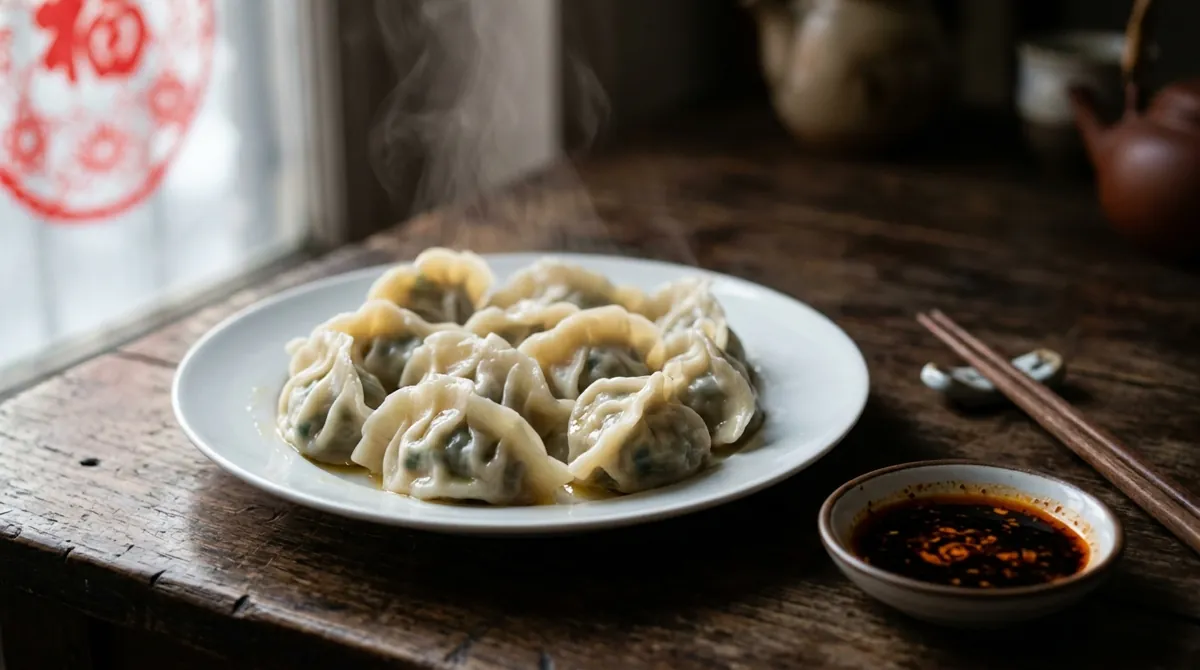
Jiaozi (Boiled Pork and Napa Cabbage Dumplings)
Hand-rolled wheat wrappers pleated around a silky filling of ground pork, blanched napa cabbage, Shaoxing wine and sesame oil, boiled in a big pot and served with black vinegar and soy sauce for dipping.
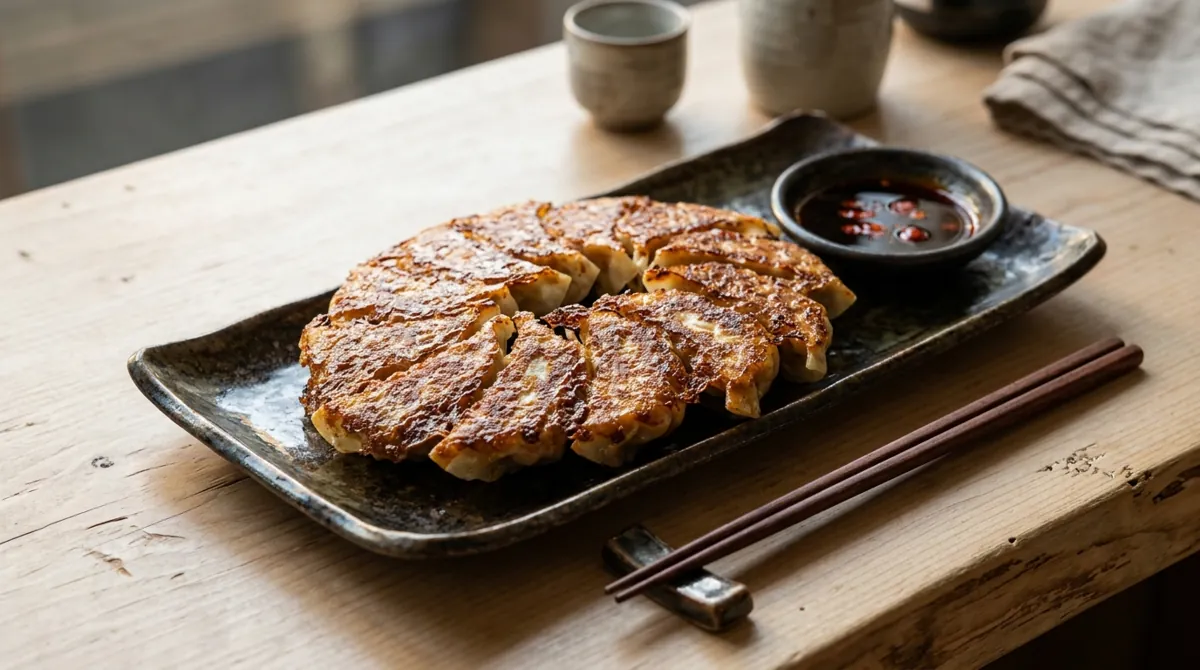
Gyoza (Japanese Pan-Fried Pork and Cabbage Dumplings)
Thin store-bought wrappers pleated around pork, salted cabbage, shiitake, garlic and ginger, browned on one side, steamed under a lid and crisped with sesame oil, with a soy, rice vinegar and chili oil dip.
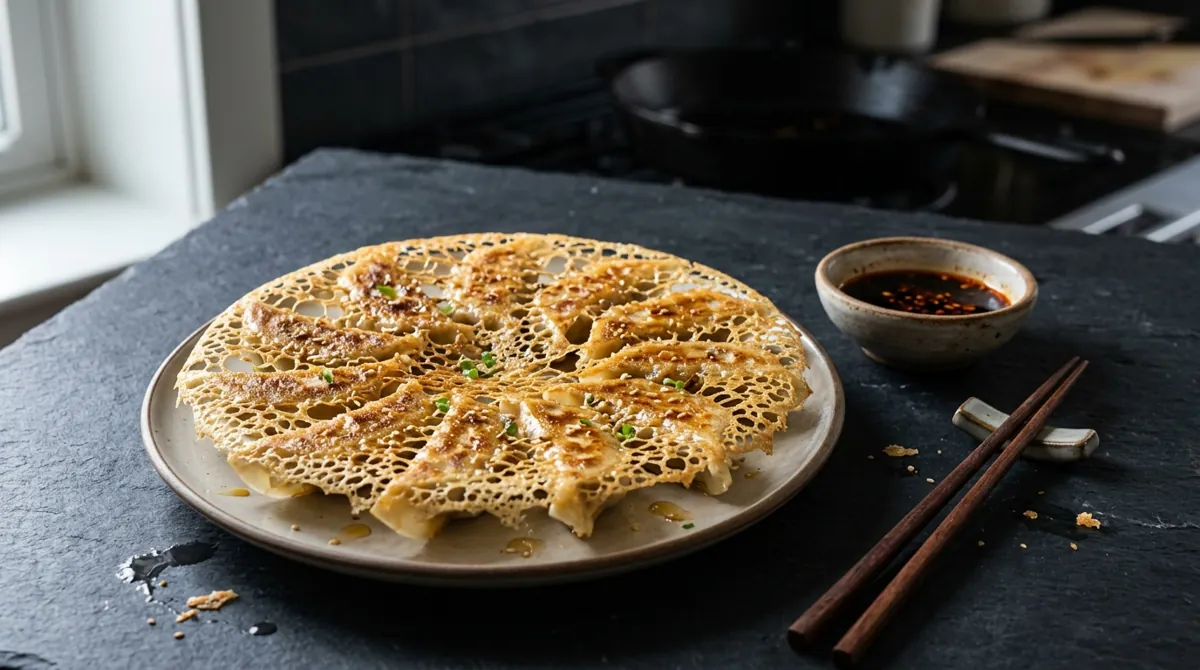
Crispy Lace Frozen Dumplings (Skillet Potstickers with a Golden Skirt)
A bag of frozen pork potstickers browned in a nonstick skillet, steamed under a thin flour-and-water slurry that fries into one lacy golden skirt, flipped onto a plate and served with soy sauce, sesame oil and chile flakes, in 25 minutes.
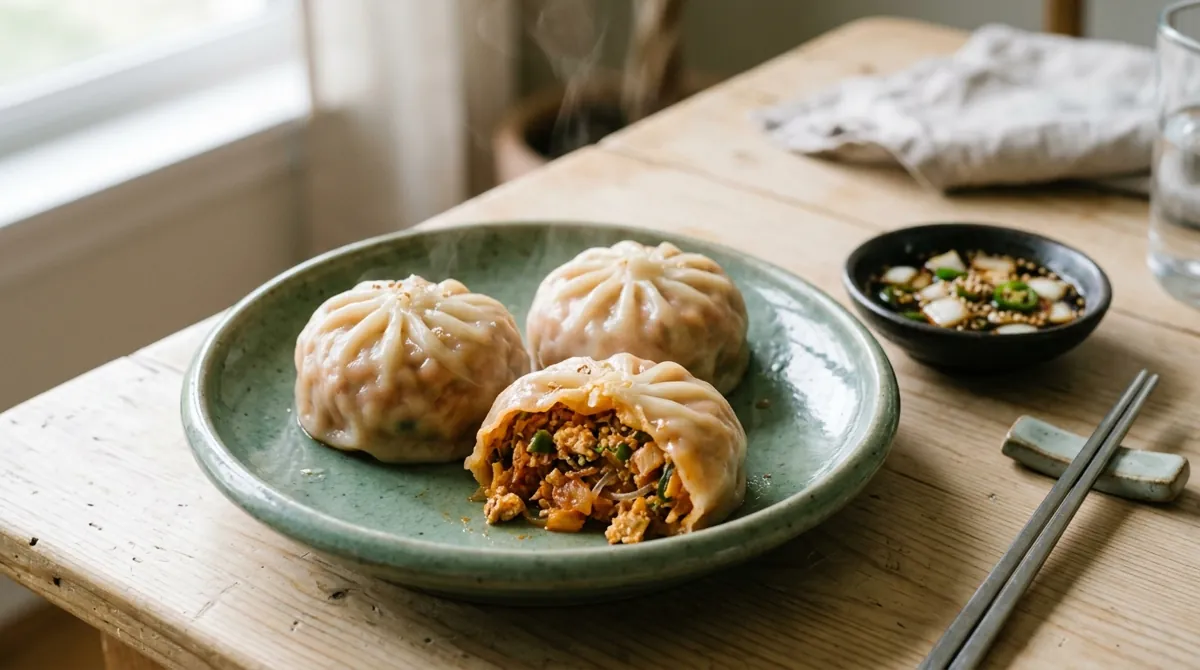
Kimchi Mandu (Korean King-Size Kimchi Dumplings)
Big homemade wrappers pleated around a juicy filling of seasoned ground beef, chopped kimchi, tofu, sweet potato glass noodles and garlic chives, steamed and served with a sharp soy, vinegar and chile dipping sauce.