
📜 Origin story
Why Do We Eat Ham at Christmas and Easter?
There is no single documented reason. There is a farm calendar, a lamb problem, and a set of Christmas hams around the world that are younger than their legends.
 By Americanized · Edited by JP Lambiase · October 20, 2026
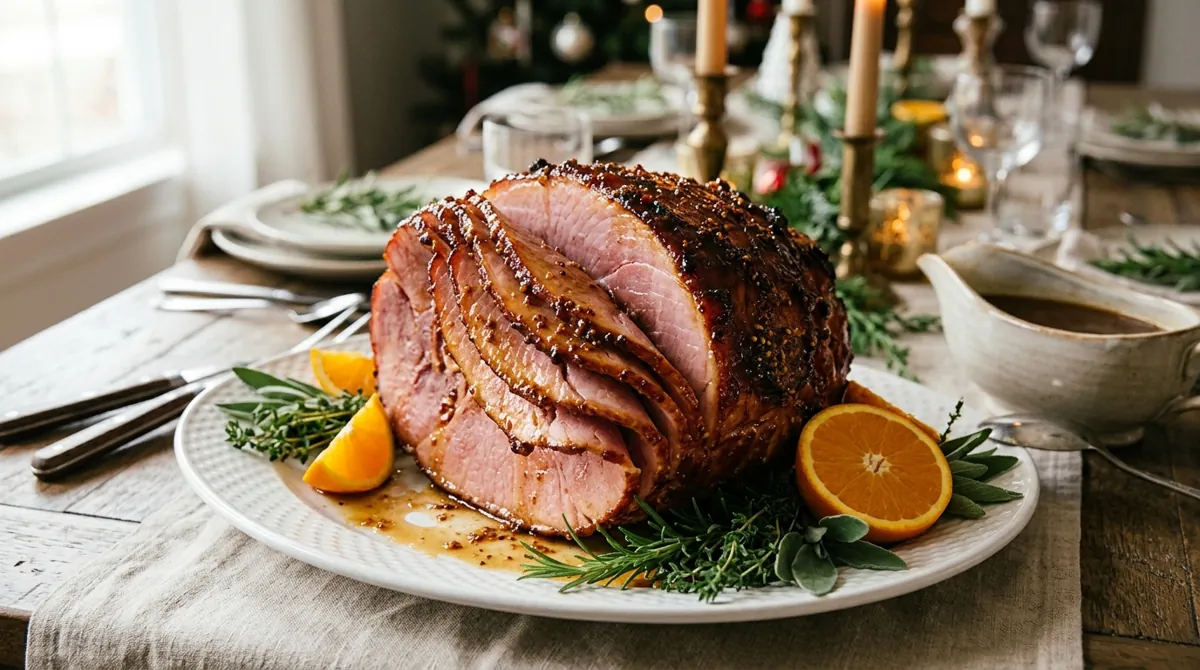
No one reason is documented. For Easter, historians point to a mix of the curing calendar and America's cool feelings about lamb: hogs killed in early winter were cured and smoked into hams that were ready by spring. Christmas ham traditions differ by country: Sweden's glazed ham, often tied to ancient boar sacrifices, is dated by one food historian to about 1870 to 1890.
Easter: a ham is ready in spring
Hogs were butchered once the weather turned cold. In the Great Smoky Mountains, the National Park Service says, this often happened around the end of November, because cold weather helped preserve the meat while the salt cure did its work through the winter.
Virginia curemaster Sam Edwards of Edwards Virginia Smokehouse told Garden & Gun in 2021 that hogs were harvested as early as December and went into cure in January and February, then into the smokehouse. By his calendar, the first edible hams were getting ready around Easter, which he says is why people, in Virginia at least, eat ham on Easter.
Easter: America never warmed to lamb
Much of the world eats lamb at Easter. In the same Garden & Gun piece, food historian Robert Moss said Americans never developed a strong taste for lamb and that wool production made lamb prices swing. Historian David Shields of the University of South Carolina said good sheep pasture was scarce in most of the South.
Those explanations do not cancel each other out. All of them can be true, and none is proven to be the reason.
Christmas: every country tells it differently
In Sweden the glazed ham anchors the julbord, the Christmas buffet. A popular story links it to ancient boar sacrifices, but Swedish Wikipedia calls that link highly unclear, and food historian Richard Tellström told SVT that the cold, lightly cured and glazed Christmas ham reached Swedish tables around 1870 to 1890. Call it a 19th-century tradition with older roots. Our Swedish julskinka is boiled, then crusted in egg, mustard and breadcrumbs.
In the Philippines, GMA News reports that Spanish colonizers brought ham because a preserved meat survived the long voyage, and that friars served it at Noche Buena, the feast after Christmas Eve Mass. The Freeman (Philstar) says the pineapple-glazed version is now the most popular Filipino hamon. In Britain and Ireland, cooked gammon joints are a Christmas regular.
Today's ham works for any holiday
Most holiday hams in American stores are fully cooked and spiral-sliced, so the season no longer matters. USDA FSIS says a cooked ham vacuum-packed in a federally inspected plant can be eaten cold, or reheated in an oven set no lower than 325°F to 140°F. Our brown sugar and mustard spiral ham glazes it at the end.
For the rest of the holiday table, see our Christmas recipes.
Questions people ask
Is Christmas ham a pagan tradition?
That is disputed. The boar-sacrifice story is popular in Sweden, but Swedish Wikipedia calls the link highly unclear, and historian Richard Tellström dates Sweden's glazed Christmas ham to about 1870 to 1890.
What is a fresh ham?
The same leg of pork without the cure. USDA FSIS says it must be labeled "fresh" and must be cooked to 145°F with a 3-minute rest. Cooked, it is grayish white and tastes like a pork roast.
How long does leftover ham keep?
USDA FSIS gives 3 to 5 days in the refrigerator for spiral-cut hams and leftovers from a home-cooked ham, and 1 to 2 months in the freezer for best quality. Reheat leftover ham to 165°F.
What do other countries eat at Easter?
Lamb is common in much of the world. In Austria, the Tiroler Tageszeitung reports, Vienna eats its Easter ham baked inside bread dough, while other regions serve it with sausages, eggs, horseradish and Easter bread.
Parts of this history are disputed. Where sources disagree, we say so.
Sources
- Kinsey Gidick, "Why Do Southerners Eat Ham on Easter?" Garden & Gun (March 24, 2021)
- National Park Service, Great Smoky Mountains, "Pigs" (history and culture)
- SVT Nyheter Uppsala, on the Christmas ham and the julbord (December 20, 2025)
- Swedish Wikipedia, "Julskinka"
- GMA News, "Why is ham considered the star of Noche Buena?" (December 11, 2022)
- Elena Peña, "Christmas ham," The Freeman (Philstar, December 14, 2018)
- Wikipedia, "Gammon (meat)"
- Tiroler Tageszeitung, regional Austrian Easter food (April 12, 2020)
- USDA FSIS, "Ham and Food Safety" (revised May 2012), Utah State University Extension copy
More food facts
Cook it
Brown Sugar and Mustard Glazed Spiral Ham
The American holiday centerpiece: a fully cooked spiral ham heated gently under foil, then brushed twice with a glaze of dark brown sugar, grainy mustard, cider vinegar and fresh orange until it is sticky and glossy.
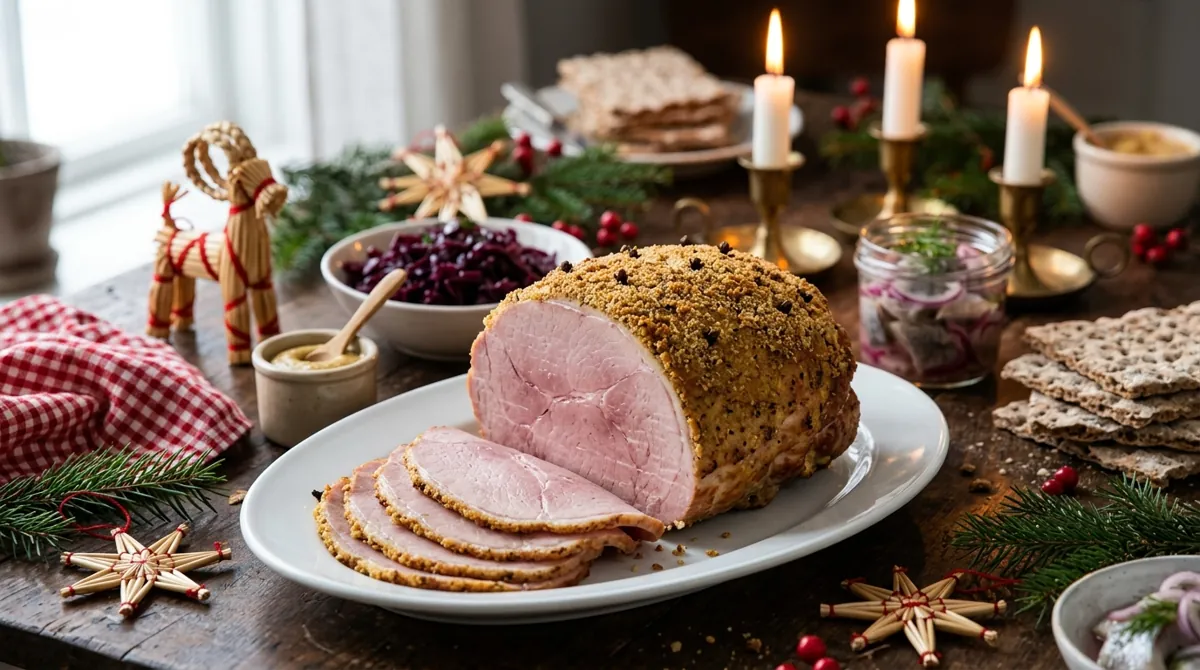
Swedish Christmas Ham with Mustard Crust (Julskinka)
Sweden's Christmas ham: a cured ham simmered gently until 158°F, cooled, then spread with egg, two mustards and sugar, dusted with breadcrumbs and baked hot into a golden crust, served cold on the julbord with the broth saved for dipping bread.
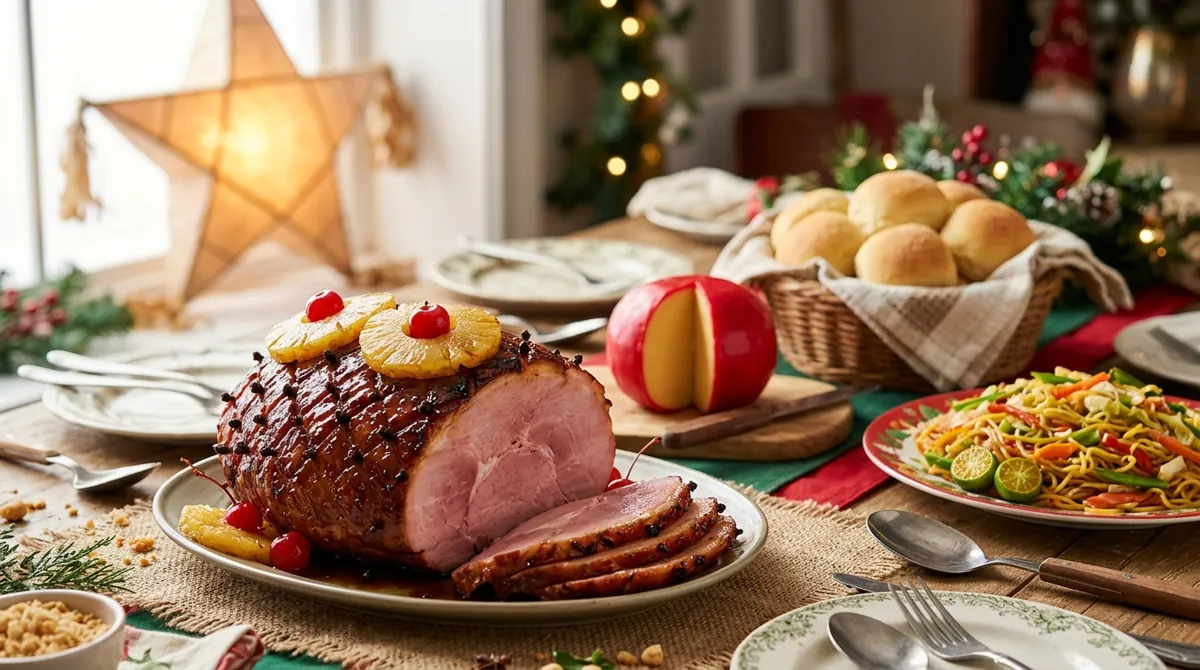
Filipino Christmas Ham with Pineapple Glaze (Hamon)
The Noche Buena ham: a bone-in ham poached for an hour in pineapple juice and brown sugar, scored, spread thickly with pineapple jam and baked hot until dark and glossy.
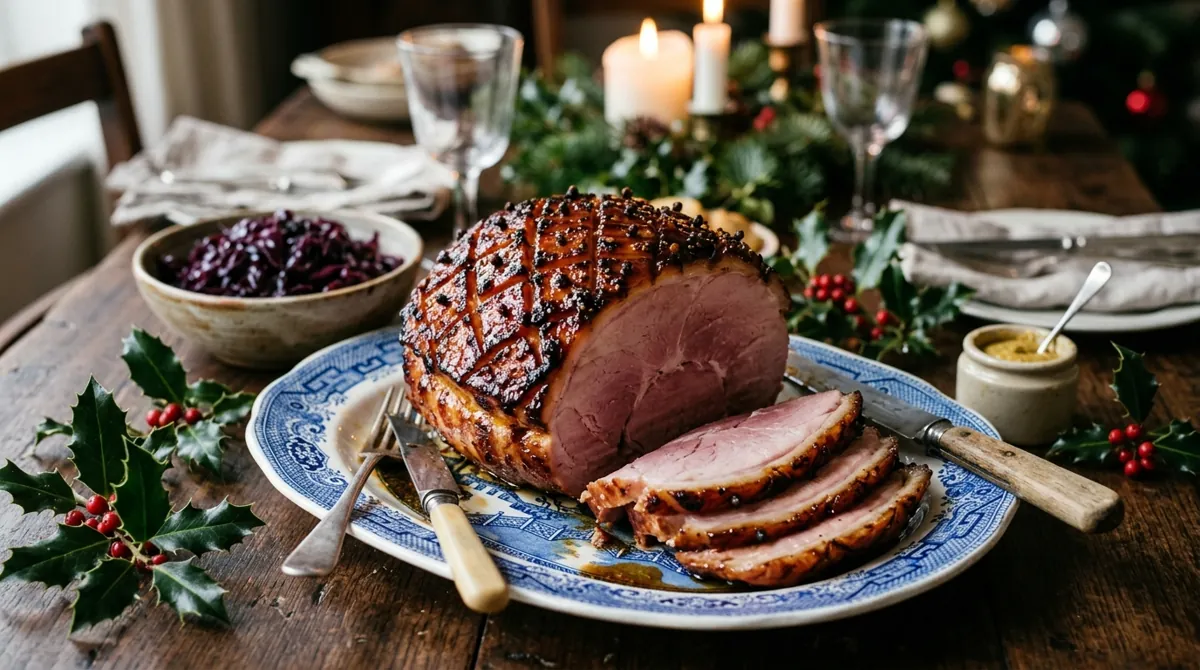
British Gammon Simmered in Cola with Treacle and Mustard Glaze
A mild-cure gammon joint simmered for over two hours in cola with an onion, then skinned, studded with cloves, painted with black treacle, patted with mustard powder and demerara sugar and blasted in a very hot oven.
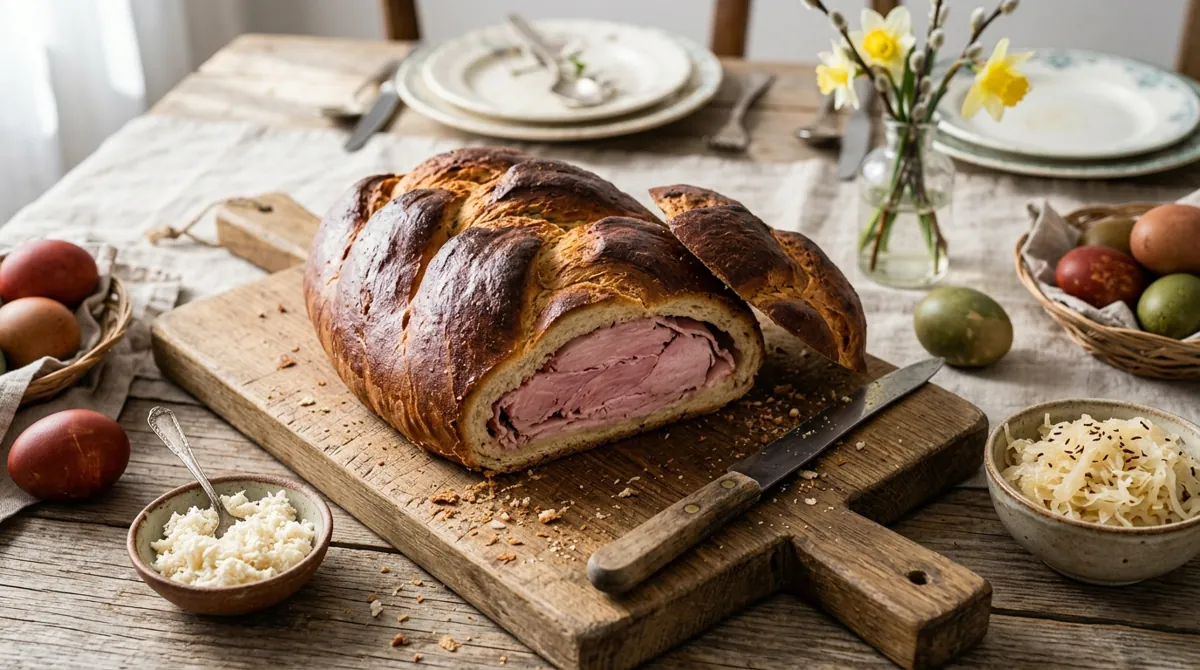
Ham Baked in Bread Dough (Schinken im Brotteig)
The Viennese Easter ham: a cured ham simmered with caraway, fennel and coriander, wrapped in a rye and wheat bread dough with a braided top, and baked until the crust is dark and the ham inside is steaming.
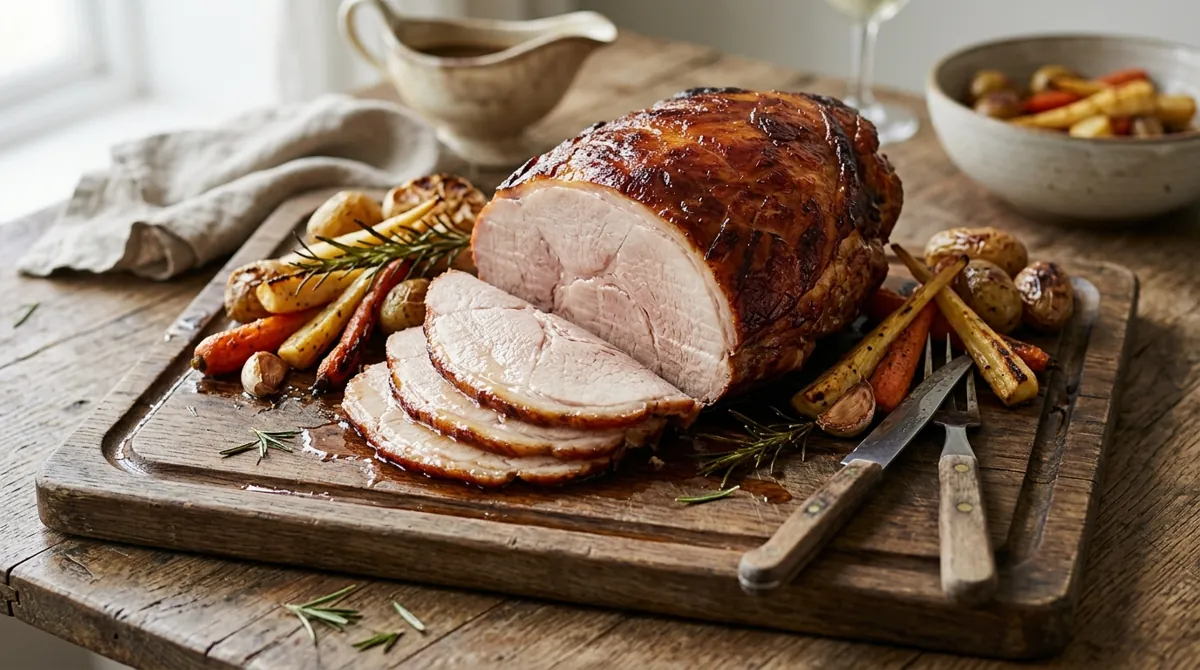
Slow-Roasted Fresh Ham
The leg before it becomes ham: an uncured, bone-in fresh ham salted overnight with brown sugar, rosemary and thyme, roasted slowly in an oven bag and finished with a maple, molasses and mustard glaze.