
🔪 Knife Skills · Lesson 2 of 5
The Classic Knife Cuts and Their Sizes: Julienne, Batonnet, Brunoise and Dice
Julienne, batonnet, brunoise, small, medium and large dice: the classic cuts with their exact sizes, drawn to scale.
🎬 Watch the lesson
Why it matters
Recipes say small dice or julienne because the size decides how fast a piece cooks. Pieces that match cook evenly; a mix of big and small chunks gives you some burnt and some raw in the same pan. The classic cuts are just agreed sizes, and once you know them, every recipe gets easier to read.
Sticks come first
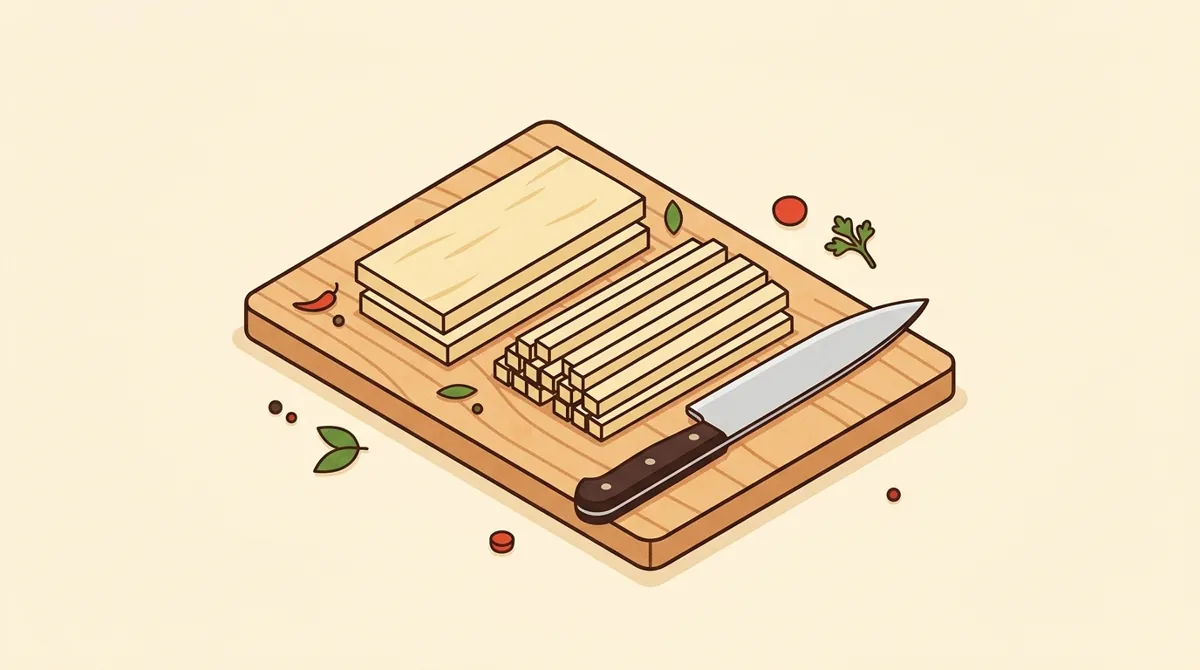
Most cuts start as sticks. A batonnet is about 1/4 by 1/4 inch and 2 to 2 1/2 inches long. A julienne, also called an allumette when it's a potato, is about 1/8 by 1/8 inch and 1 to 2 inches long. A fine julienne is half that again, about 1/16 inch thick.
Dice is a stick cut across
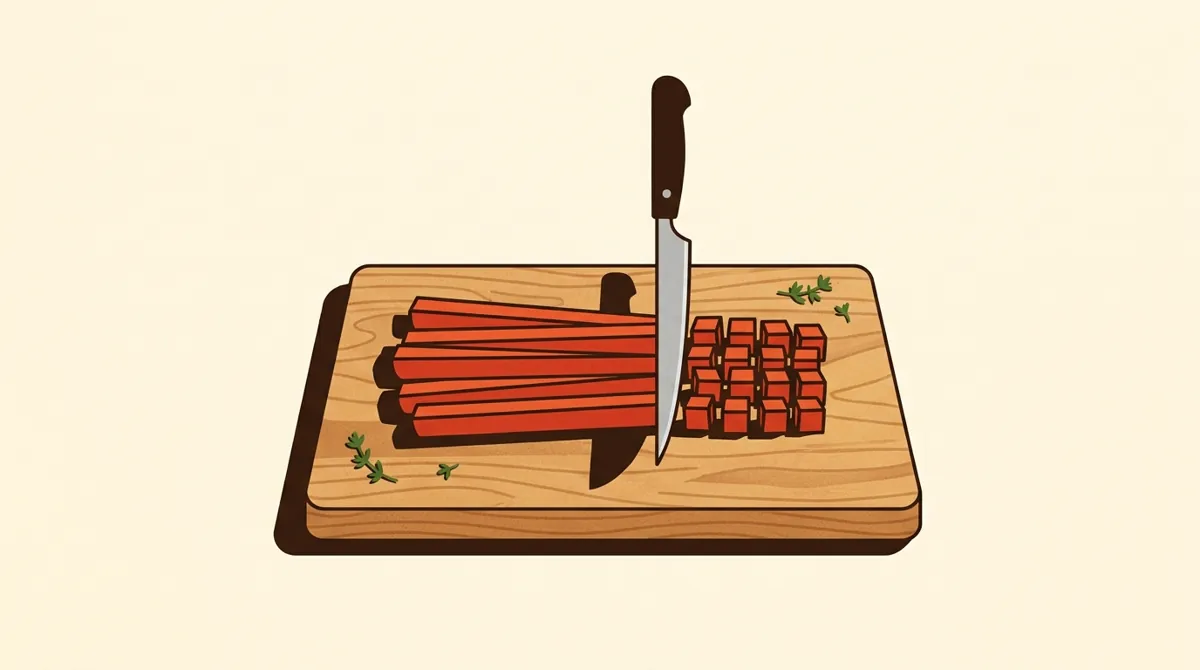
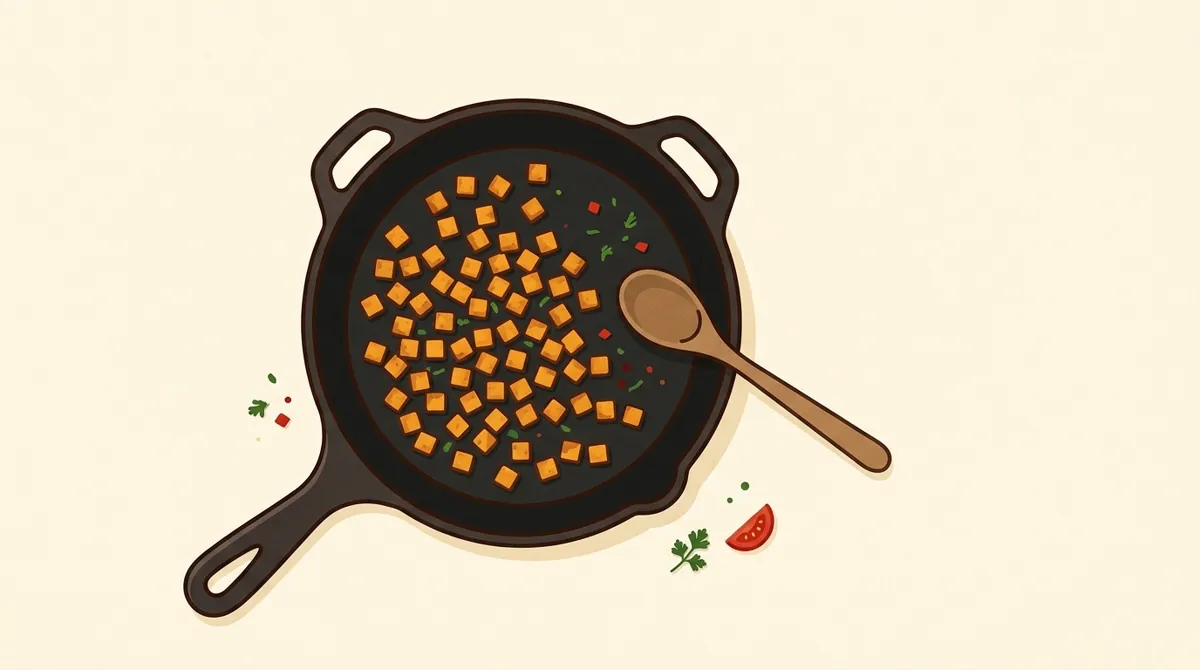
Line the sticks up and cut across them at the same width and you get cubes. Cut batonnet across and you get a small dice, about 1/4 inch. Cut julienne across and you get brunoise, about 1/8 inch. Fine julienne becomes fine brunoise, about 1/16 inch.
The everyday dice
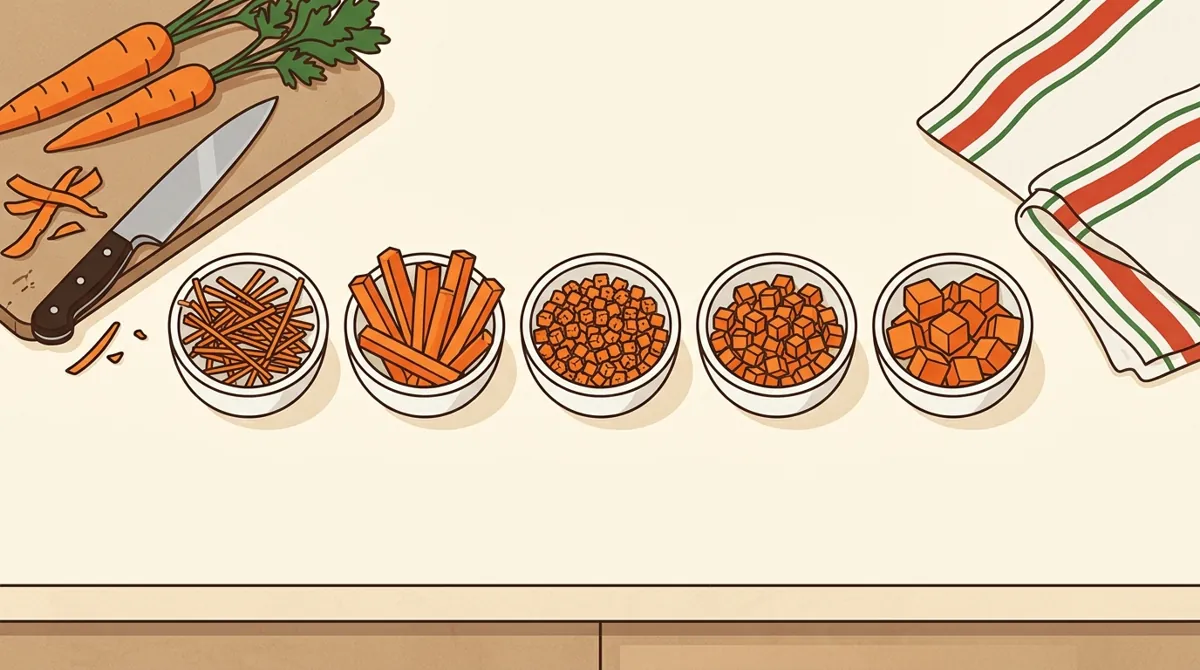
Medium dice is about 1/2 inch and large dice about 3/4 inch on each side. Medium is the usual size for soup vegetables and roasted potatoes; large is for stews and long braises that cook for hours.
Paysanne is a flat square
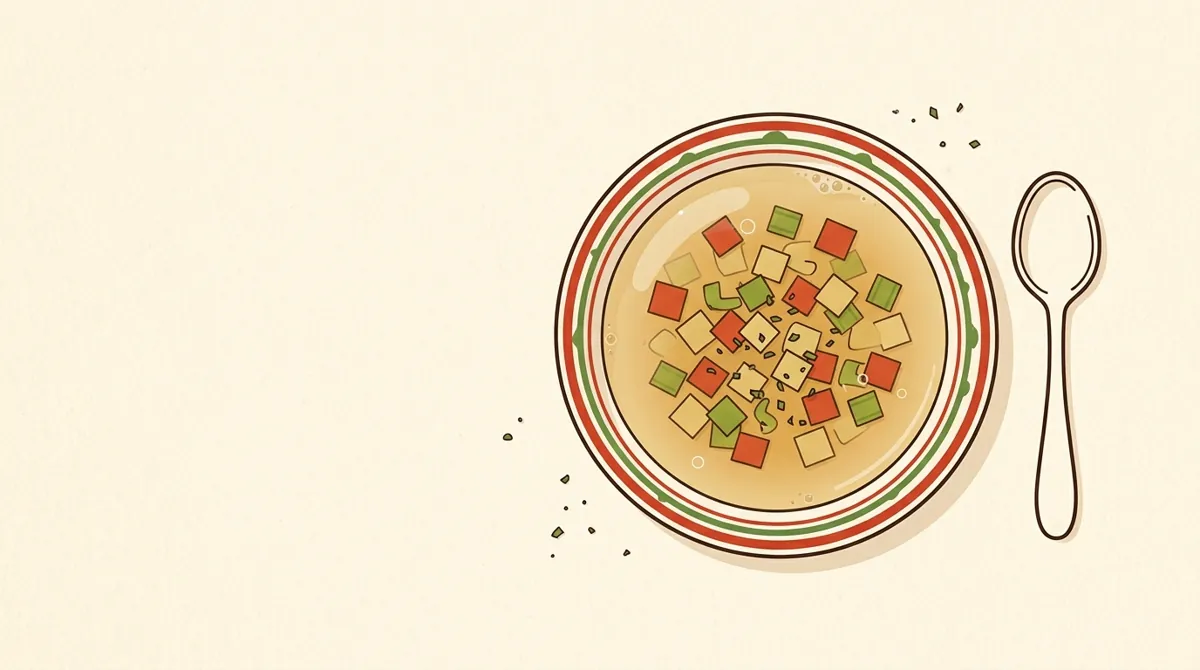
Paysanne pieces are about 1/2 by 1/2 inch and only 1/8 inch thick, thin tiles that cook quickly in soups. Cooks often cut them from rounded vegetables, so the edges don't have to be perfectly square.
Close counts
Every source gives these as approximate sizes. What matters is that the pieces in one pan match each other.
Step by step
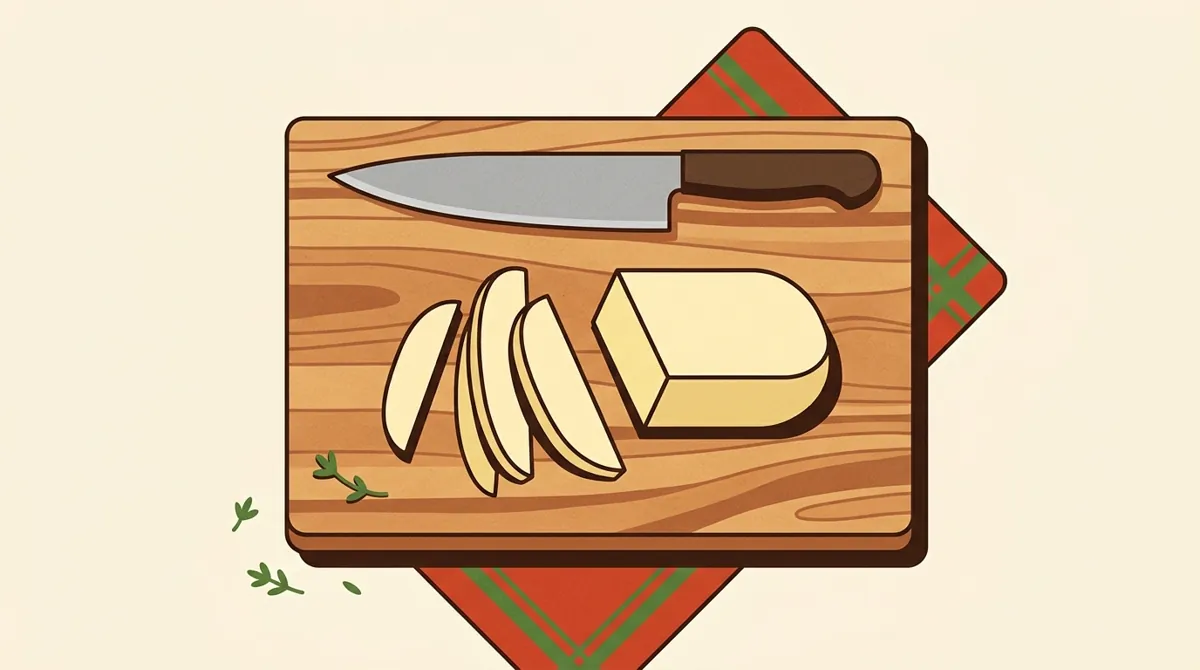
Square off the vegetable: trim the rounded sides so it sits flat and can't roll. Keep the trim for stock or soup.
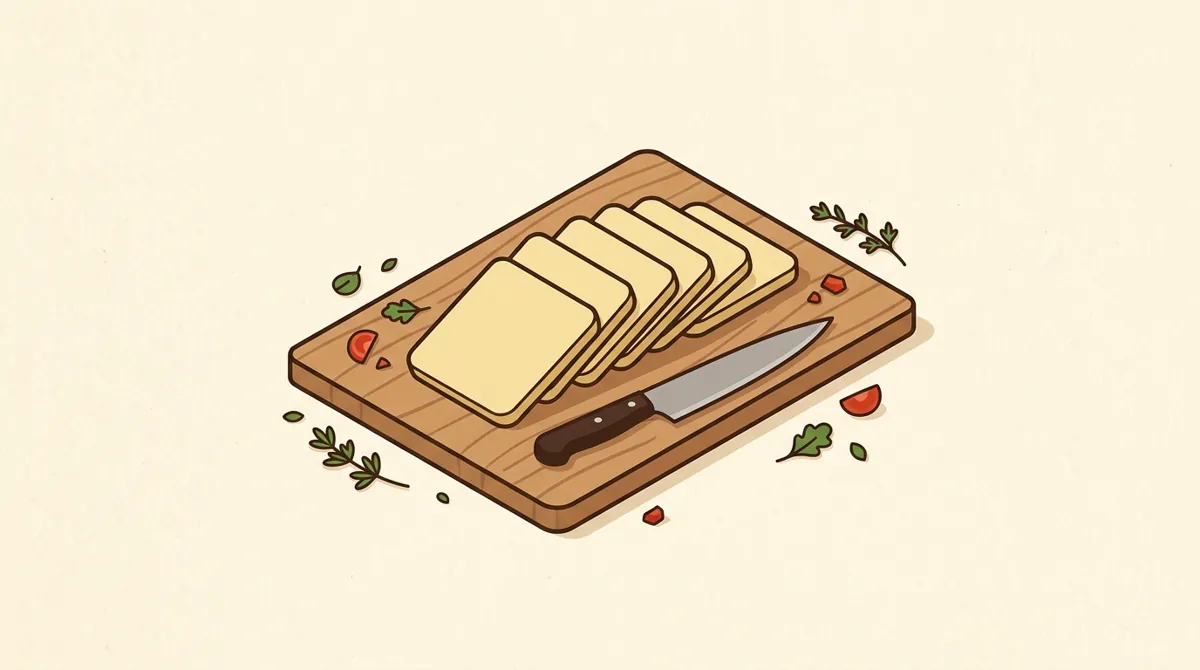
Cut the block into planks as thick as the cut you want: 1/4 inch for batonnet and small dice, 1/8 inch for julienne and brunoise.
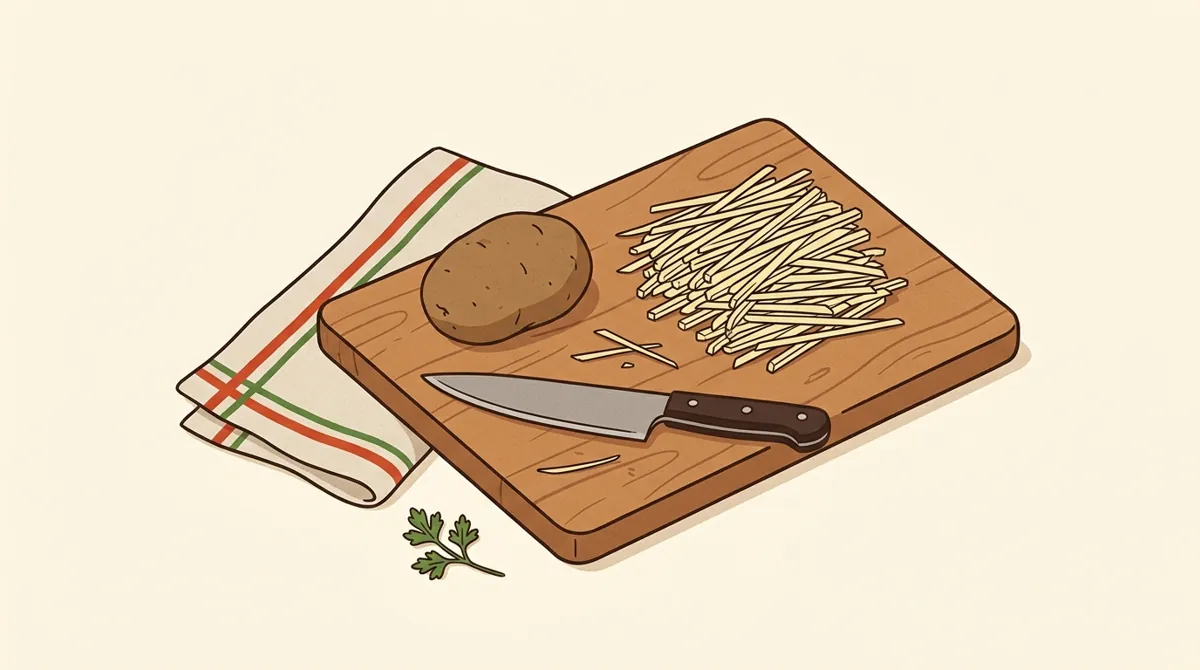
Stack two or three planks and cut them into sticks of the same width.
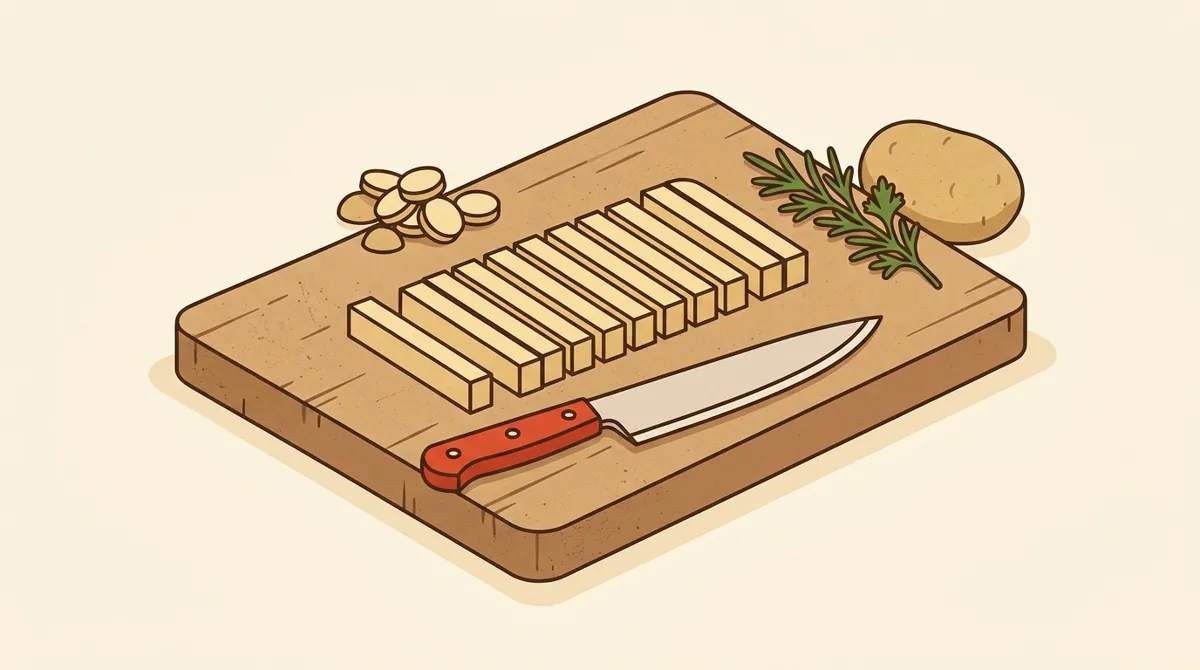
Trim the sticks to length: 2 to 2 1/2 inches for batonnet, 1 to 2 inches for julienne.
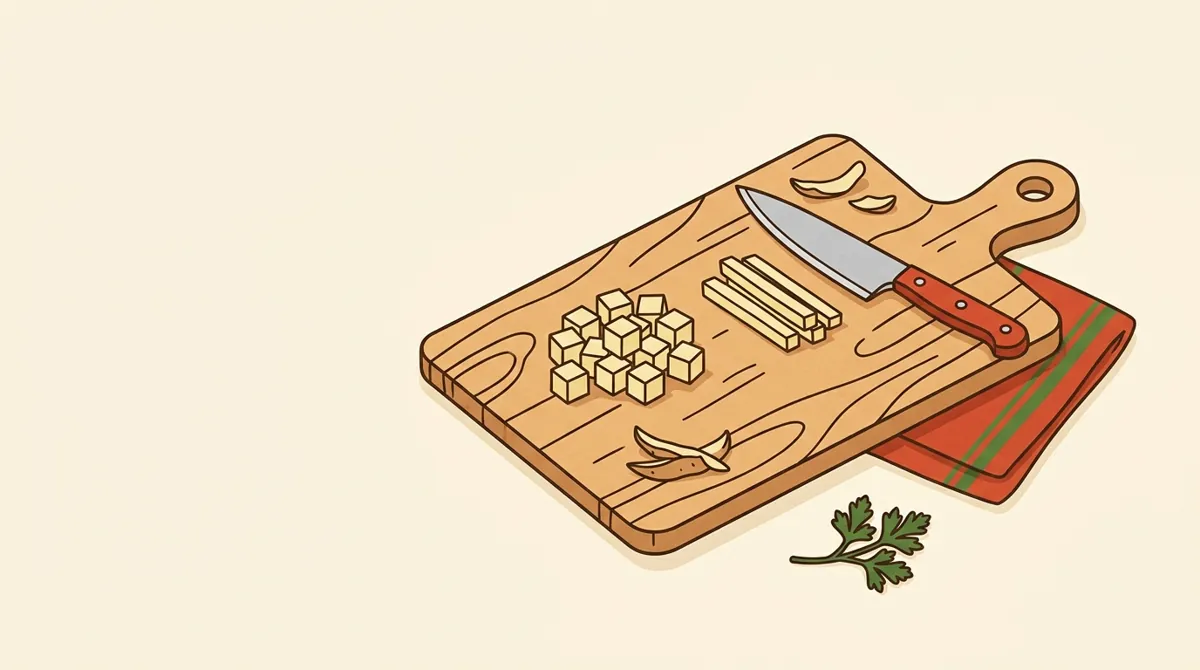
For dice, line up a bundle of sticks and cut across them at the same width as the sticks are thick.
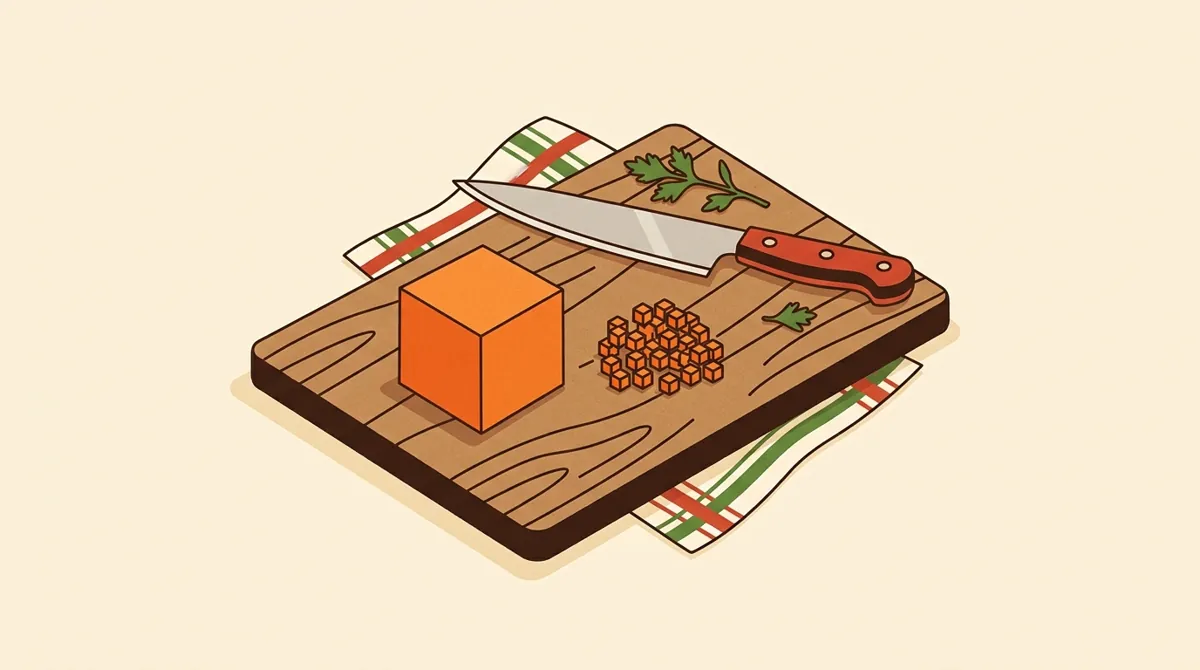
Check one piece against the chart. If it's off, adjust the plank thickness, not the last cut.
Common mistakes
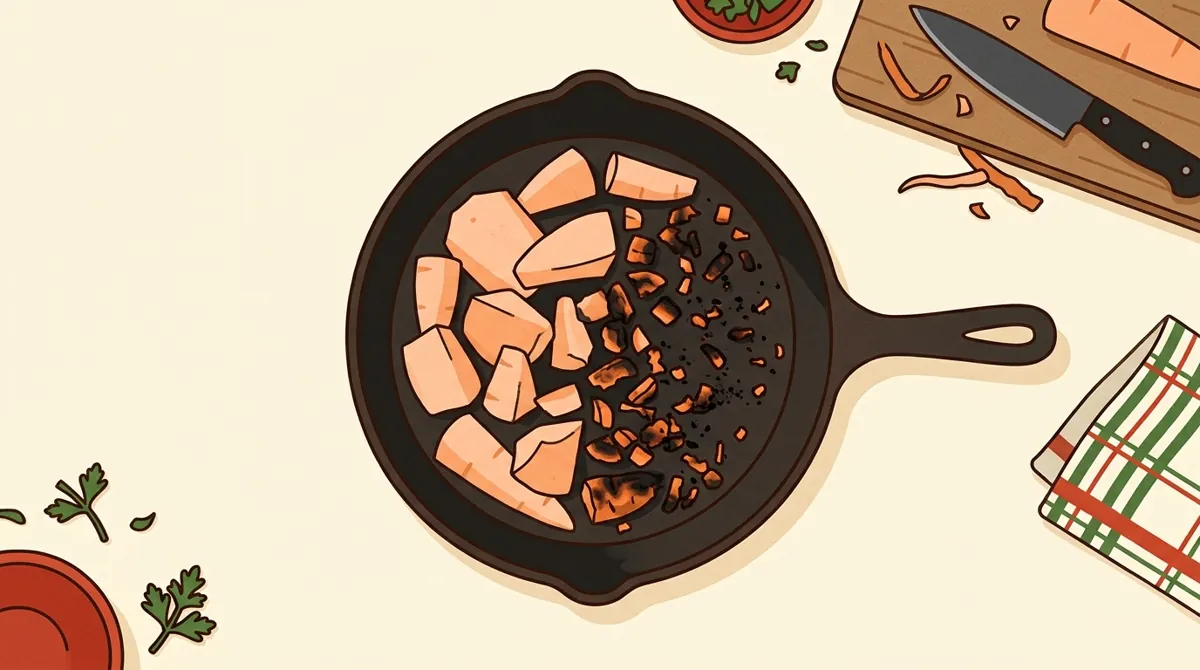
- Cutting a round vegetable without squaring it first: it rolls under the knife, so trim a flat side before anything else.
- Mixing sizes in one pan: the small pieces burn before the big ones cook, so cut everything for one pan to one size.
- Getting the planks wrong: the plank thickness sets every later cut, so slow down on that first step.
- Stacking too many planks: a tall stack slides apart, so stack two or three at most.
- Throwing away the trim: squared-off scraps are perfect for stock, soup or a sauce that gets blended.
🏋️ Try it tonight
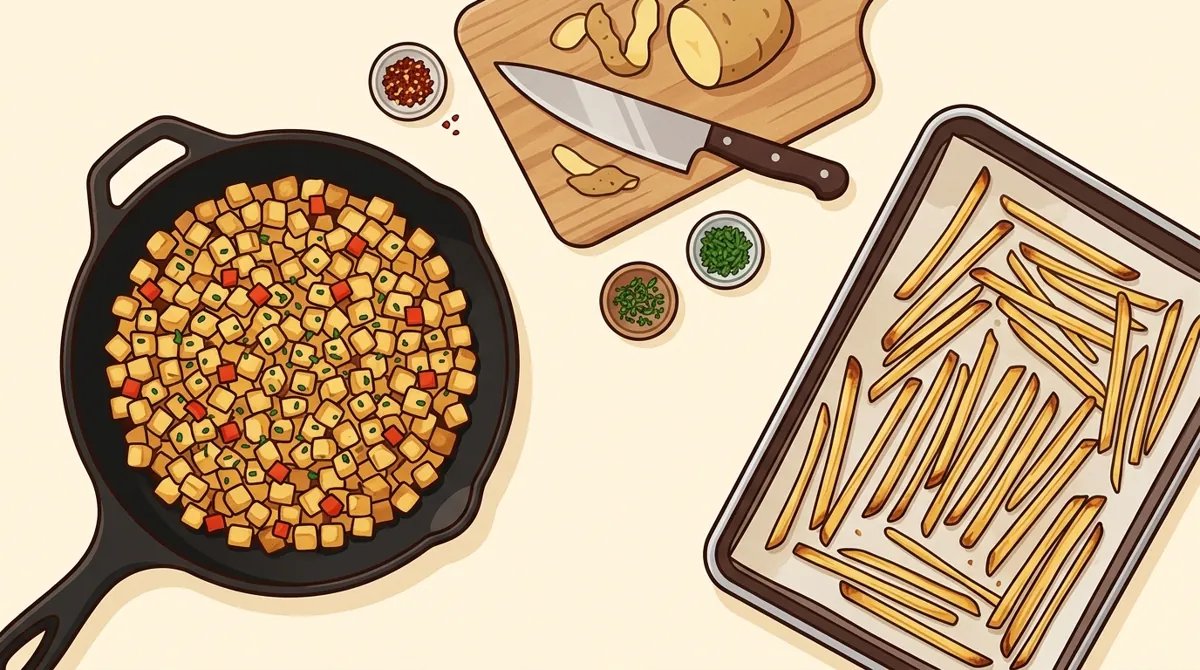
Take one large potato. Square it off, cut 1/4-inch planks, then 1/4-inch batonnet sticks, then cut half the sticks across into a small dice. Hold a few pieces against the chart on your screen to check them. Fry the dice in a little oil for a breakfast hash and roast the sticks as thin fries.
💡 Did you know?
A brunoise cube is 1/8 inch on each side, so it takes 216 of them to fill the space of one 3/4-inch large dice cube.
Use it tonight
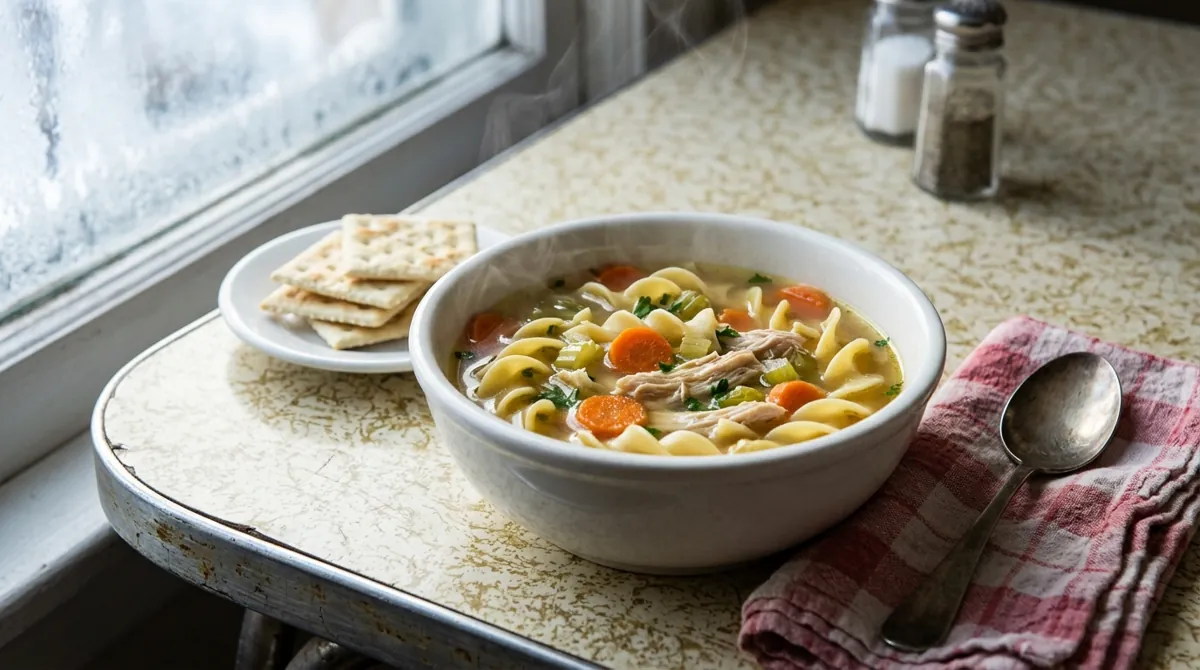
Classic American Chicken Noodle Soup
A rich homemade broth from browned chicken thighs with onion and bay, chicken breasts poached in it and shredded, then onion, carrot, celery and thyme simmered in the strained broth with wide egg noodles and finished with parsley.
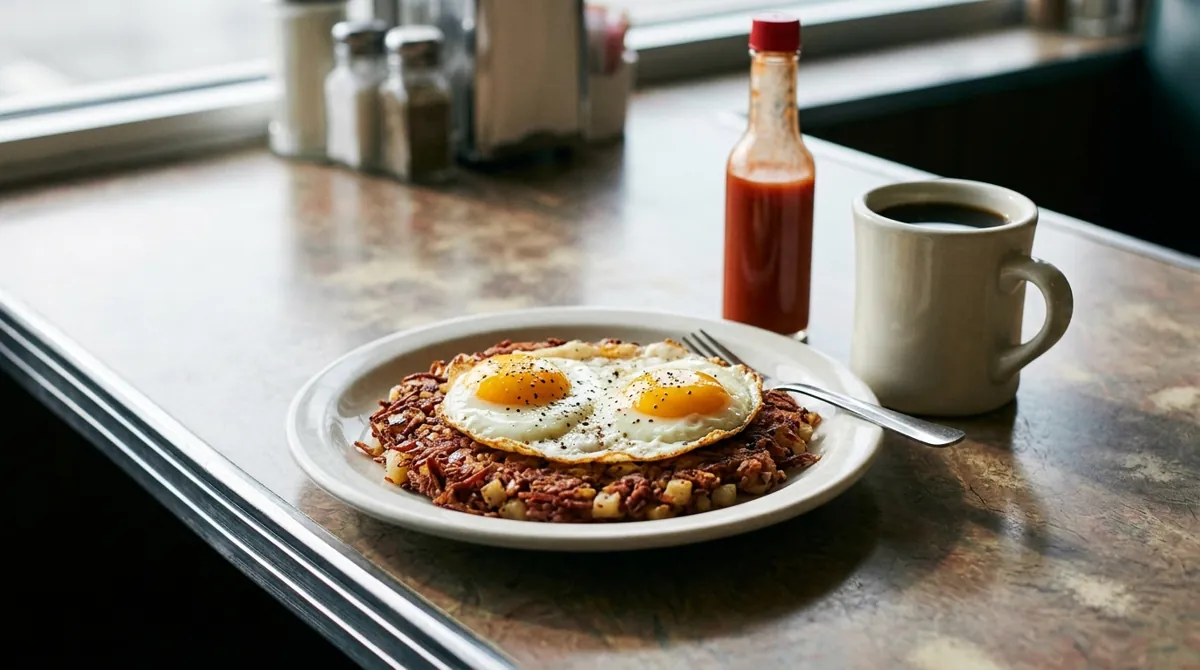
Diner Corned Beef Hash
Leftover corned beef and diced potatoes, steamed tender in one skillet, partly mashed so they hold together, then browned hard in butter on both sides and topped with fried eggs.
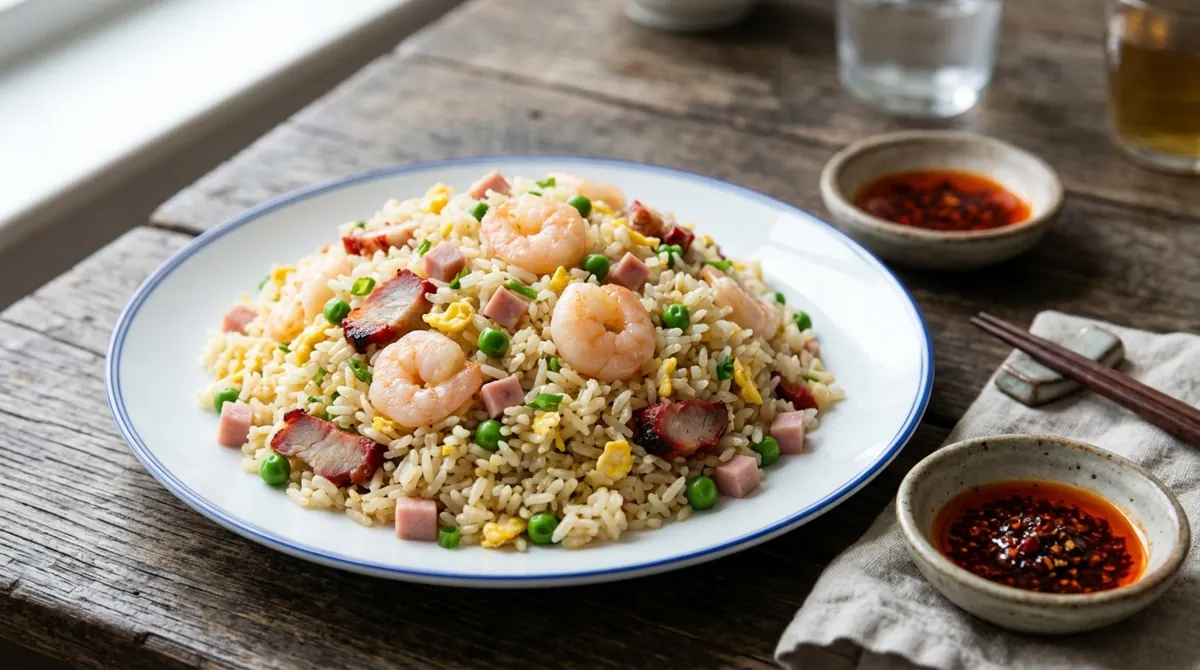
Yangzhou Fried Rice (Young Chow Fried Rice)
China's most famous fried rice: day-old rice stir-fried with egg, shrimp, ham, roast pork, onion and peas, seasoned with salt, a pinch of sugar and Shaoxing wine instead of soy sauce, and finished with crisp lettuce and scallions.