
American Diner French Toast
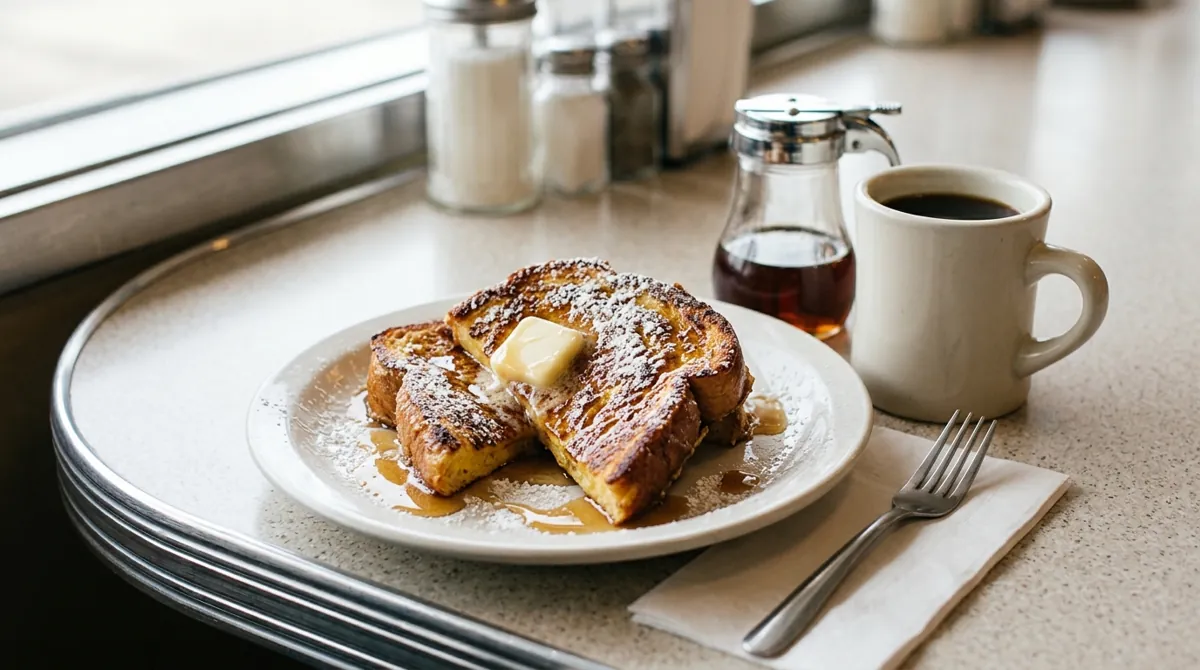
Day-old challah dipped in a light vanilla batter with a little flour, browned in butter in a cast-iron skillet, and served the American way with butter, powdered sugar and maple syrup.
The name is older than America. Lexicographer Grant Barrett quotes the Oxford English Dictionary's earliest citation, from Robert May's "The Accomplisht Cook" (1660): "French Toasts", French bread toasted on a gridiron and steeped in wine with sugar and orange juice, no egg involved. He also takes apart a popular American story that an Albany, New York, innkeeper named Joseph French invented it in 1724; he found no evidence, and the OED's citation is 64 years older.
What America added is breakfast. Wikipedia says French toast was popular in the railroad dining cars of the early and mid-20th century, that the Santa Fe was especially known for it, and that some railroads handed out recipes as promotion; in the United States it is commonly served with butter, powdered sugar and maple syrup (citing John Kelly in Classic Trains, 2001). In France, pain perdu is served as a dessert. The American diner serves it for breakfast.
🇺🇸 This one is American
Day-old challah dipped in a light vanilla batter with a little flour, browned in butter in a cast-iron skillet, and served the American way with butter, powdered sugar and maple syrup.
🇫🇷 The original
In France it's pain perdu, "lost bread": thick day-old brioche soaked in vanilla milk and eggs, browned in butter and caramelized in the oven, served as a dessert. See the Pain Perdu (French "Lost Bread") recipe.
Why it works the kitchen science
One egg per batch and a little flour
ATK found that more egg made the toast taste eggy and heavy, and that a thicker batter with flour browns evenly while letting just enough moisture into the center.
A preheated cast-iron pan
Five minutes on medium makes the skillet evenly hot, so the butter browns the batter fast and the outside crisps before the middle can turn soggy.
Step by step
- Step 1
Heat a 10- to 12-inch skillet, preferably cast iron, over medium heat for 5 minutes. Heat the oven to 200°F and set a wire rack on a baking sheet inside.
- Step 2
Lightly beat the eggs in a shallow dish. Whisk in the melted butter, then the milk and vanilla, then the sugar, flour and salt until smooth.
- Step 3
Soak a slice of challah about 40 seconds per side (30 seconds for sandwich bread). Don't let it get soggy. Let the extra batter drip off.
- Step 4
Swirl 1 tbsp butter into the hot skillet. Add 2 soaked slices and cook about 1 minute 45 seconds, until golden brown, then flip and cook about 1 minute more.
- Step 5
Check one slice: the center should be hot and set, 160°F. If not, lower the heat a little and give it 30 seconds more per side.
- Step 6
Move the slices to the rack in the oven to stay warm. Add 1 tbsp butter for each new batch and cook the rest.
- Step 7
Serve two slices per plate with a pat of butter, a dusting of powdered sugar and warm maple syrup.
American Diner French Toast
Serves 4 · 8 thick slices · 35 min total
Batter
- 2 large eggs
- 4 tbsp butter, melted
- 1 1/2 cups whole milk
- 4 tsp vanilla extract
- 1/4 cup sugar
- 2/3 cup all-purpose flour
- 1/2 tsp table salt
Bread and skillet
- 8 slices day-old challah, 3/4 inch thick (about 1 lb), or 12 to 16 slices sandwich bread
- About 4 tbsp butter, for the skillet
To serve
- 2 tbsp butter
- 1 tbsp powdered sugar
- 1/2 cup maple syrup, warmed
Method
- Heat a 10- to 12-inch skillet, preferably cast iron, over medium heat for 5 minutes. Heat the oven to 200°F and set a wire rack on a baking sheet inside.
- Lightly beat the eggs in a shallow dish. Whisk in the melted butter, then the milk and vanilla, then the sugar, flour and salt until smooth.
- Soak a slice of challah about 40 seconds per side (30 seconds for sandwich bread). Don't let it get soggy. Let the extra batter drip off.
- Swirl 1 tbsp butter into the hot skillet. Add 2 soaked slices and cook about 1 minute 45 seconds, until golden brown, then flip and cook about 1 minute more.
- Check one slice: the center should be hot and set, 160°F. If not, lower the heat a little and give it 30 seconds more per side.
- Move the slices to the rack in the oven to stay warm. Add 1 tbsp butter for each new batch and cook the rest.
- Serve two slices per plate with a pat of butter, a dusting of powdered sugar and warm maple syrup.
Adapted from America's Test Kitchen, "French Toast for Challah or Sandwich Bread" (August 21, 2007), doubled from 4 to 5 challah slices to 8 slices for 4 servings. The batter, soak times, skillet preheat and cooking times are ATK's. The 200°F warm oven, the 160°F check and the butter, sugar and syrup for serving are ours. America's Test Kitchen. Ingredient list follows the source; the method is in our own words.
All sources (3)
Tips
- ATK's flavor swaps: add 3/4 tsp cinnamon or 1/2 tsp nutmeg with the flour, or use almond extract instead of vanilla.
- Feeding a crowd: ATK suggests two skillets at once.
- No challah? Good presliced sandwich bread works; soak it a little less.
- Use tongs for challah and a spatula for sandwich bread (ATK).
The rules people argue about
What the sources agree on, what they don't, and what is just a good story.
- Joseph French of Albany invented it in 1724. Folklore: Grant Barrett found no evidence, and the OED cites "French Toasts" in 1660.
- It's called French because it uses French bread. Disputed: Robert May's 1660 recipe does call for French bread (OED via Barrett); Wordorigins.org suggests the name more likely comes from crediting fancy cooking to the French in general (search summary only).
- The more eggs, the richer. Disputed: ATK uses one egg for 4 to 5 slices to avoid an eggy taste; German Arme Ritter uses 5 eggs to 1/4 liter of milk (our Arme Ritter recipe).
- Railroads made it famous. Documented as popular in dining cars, the Santa Fe especially (Wikipedia citing Classic Trains); "made famous" is our shorthand.
- Use day-old bread. Documented (ATK).
Every other pancake and French toast
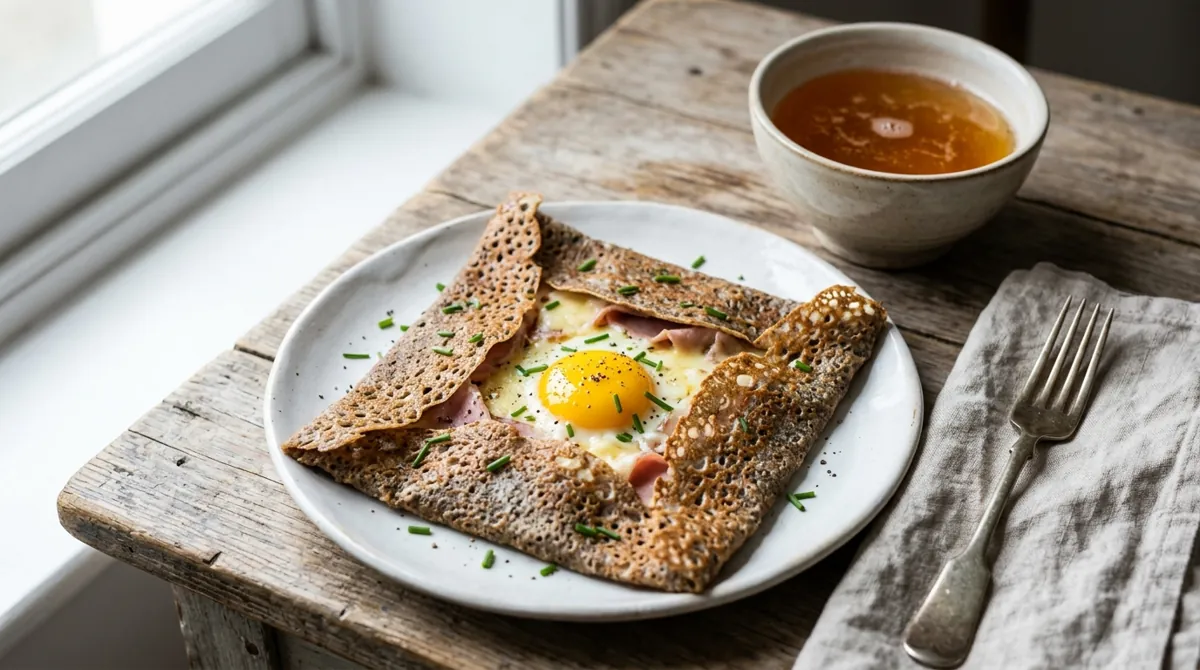
Breton Buckwheat Galette Complète
A thin, lacy buckwheat crêpe from Brittany, filled in the pan with Swiss cheese, ham and an egg, then folded into a square around the yolk.
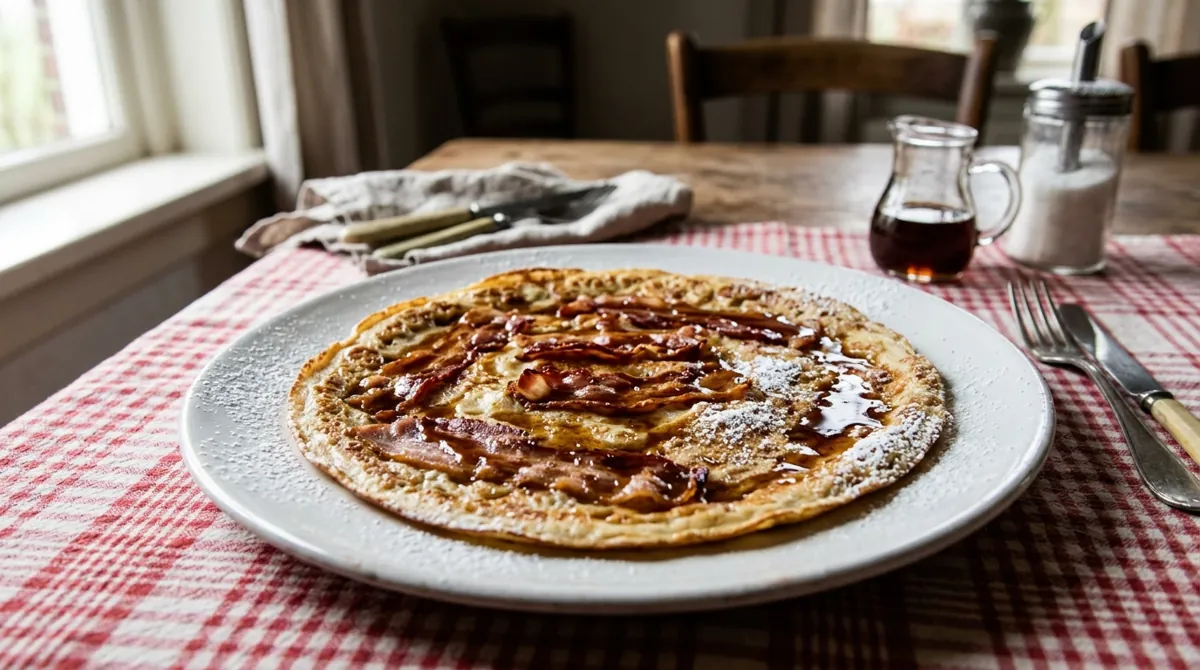
Dutch Pannenkoeken with Bacon (Spekpannenkoeken)
Plate-size Dutch pancakes, thinner than an American pancake and thicker than a crêpe, with strips of bacon baked right into the batter and dark syrup poured on top.
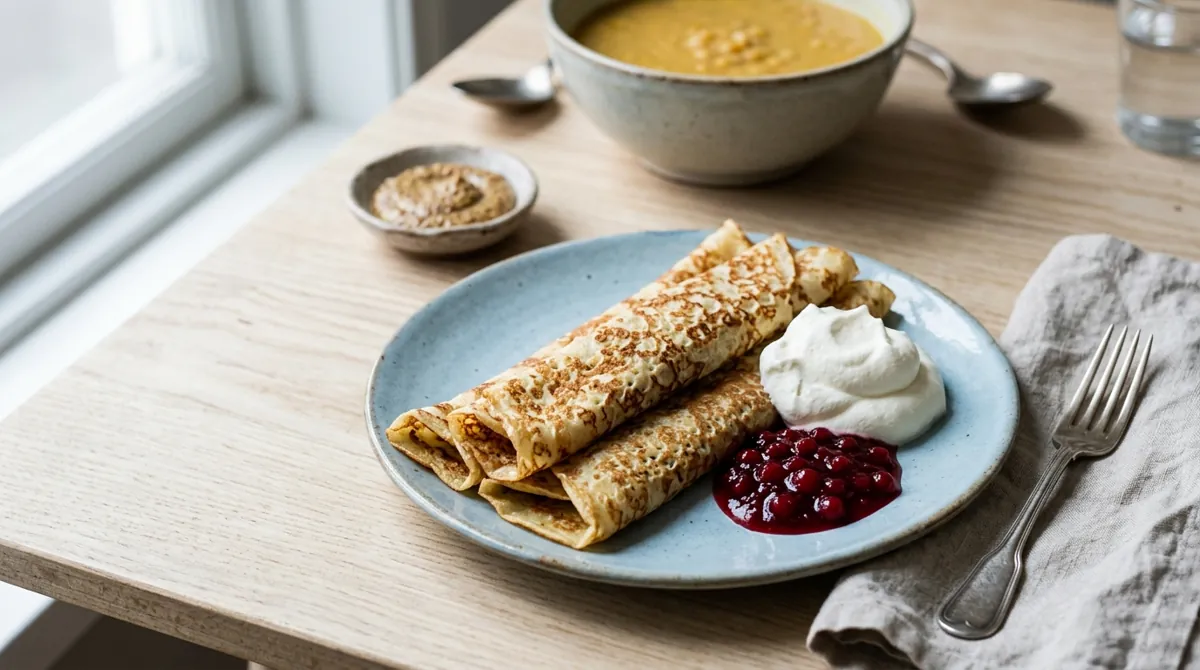
Swedish Pancakes (Pannkakor) with Lingonberry Jam and Cream
Thin, crisp-edged Swedish pancakes made from a simple milk, egg and flour batter, rolled or folded and served with lingonberry jam and whipped cream, Thursday-style.
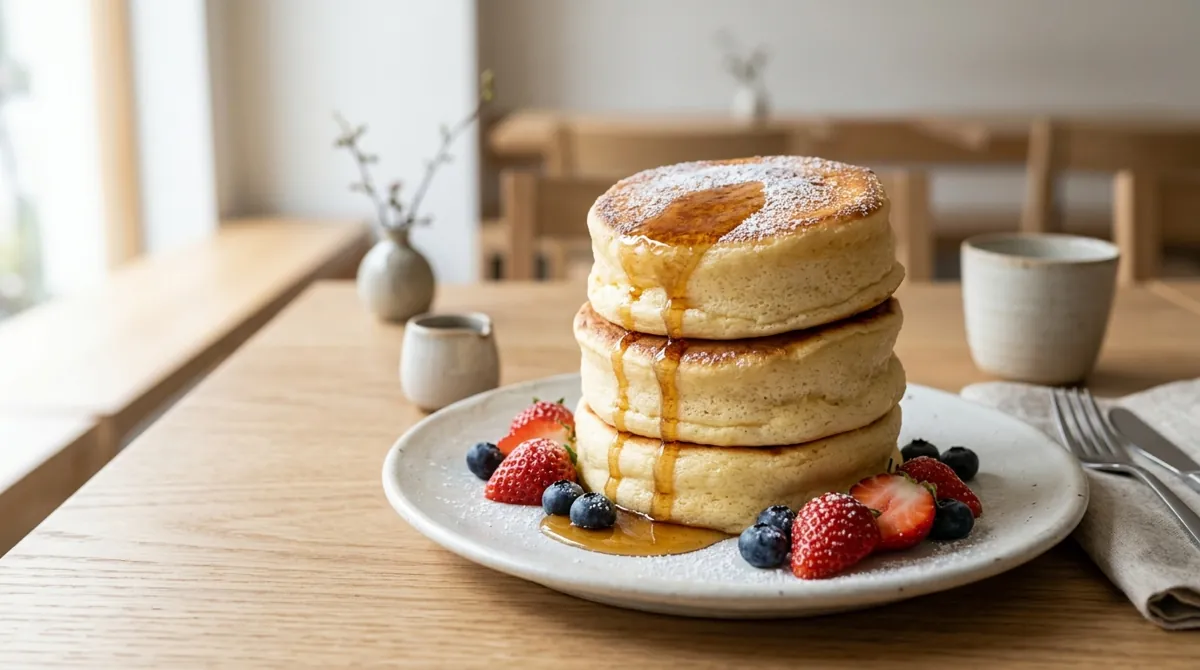
Japanese Soufflé Pancakes
Tall, wobbling pancakes made by folding a stiff meringue into a light yolk batter, then cooking them low and slow under a lid with a splash of water for steam.
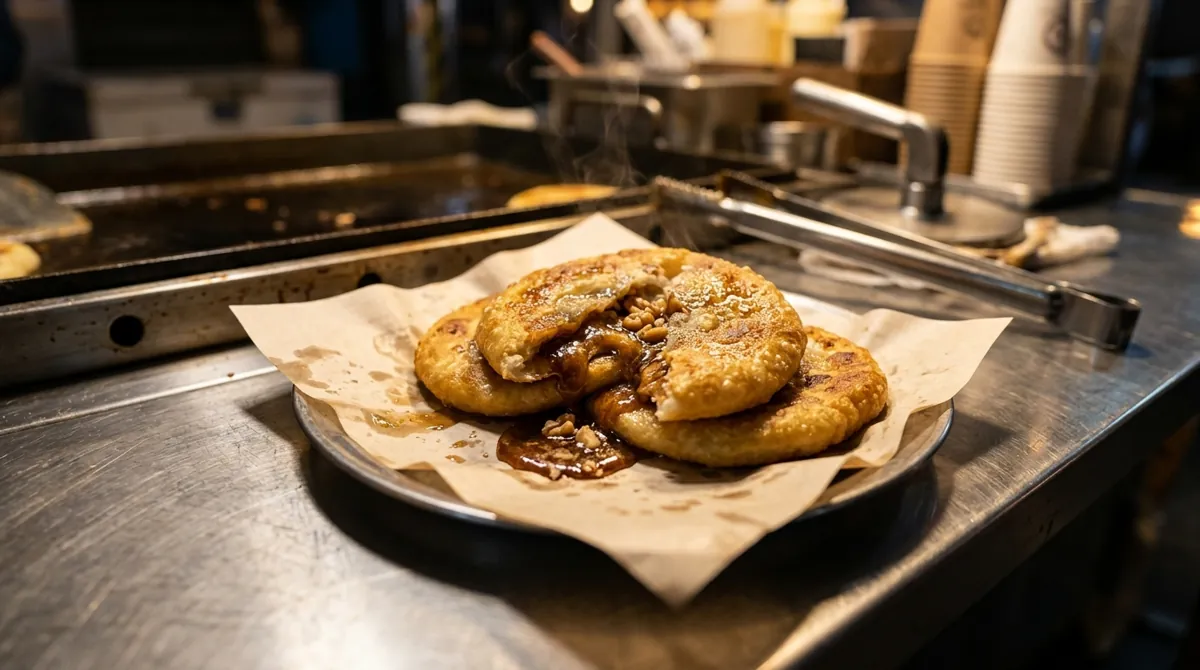
Korean Hotteok (Sweet Filled Pancakes)
A chewy yeasted dough made with sweet rice flour, wrapped around brown sugar, cinnamon and walnuts and pressed flat in an oiled pan until the filling melts into syrup.
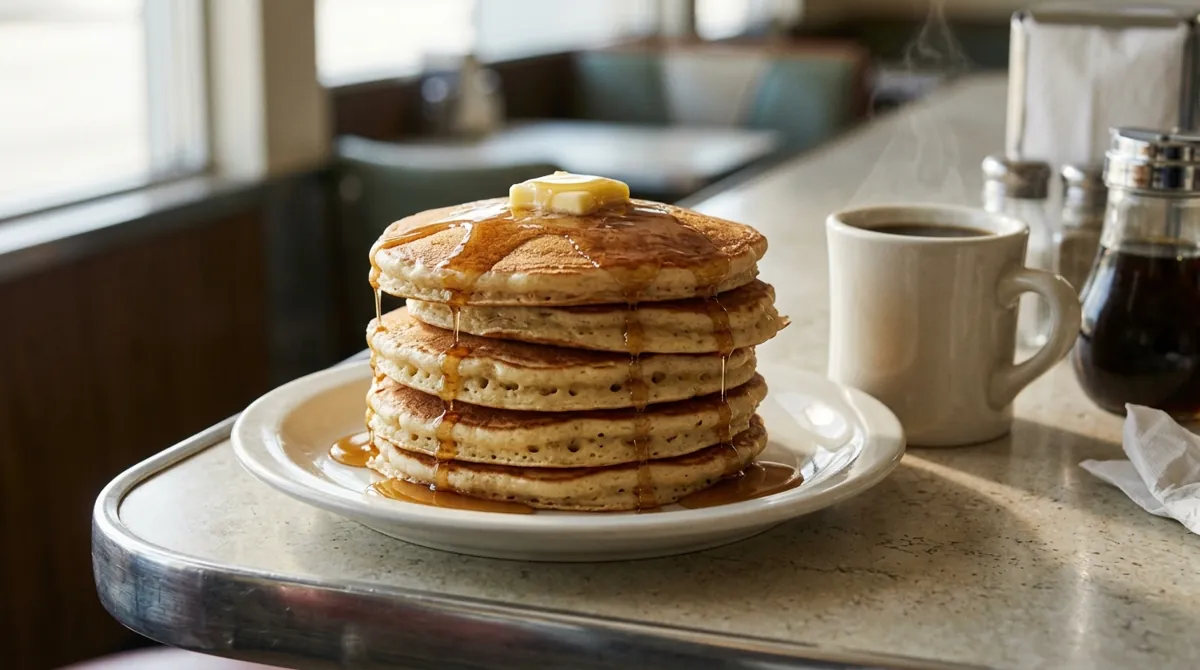
American Buttermilk Pancakes (The Diner Stack)
Fluffy, tangy buttermilk pancakes leavened with baking powder and baking soda, rested so the batter thickens, griddled at 350°F and stacked high with butter and maple syrup.
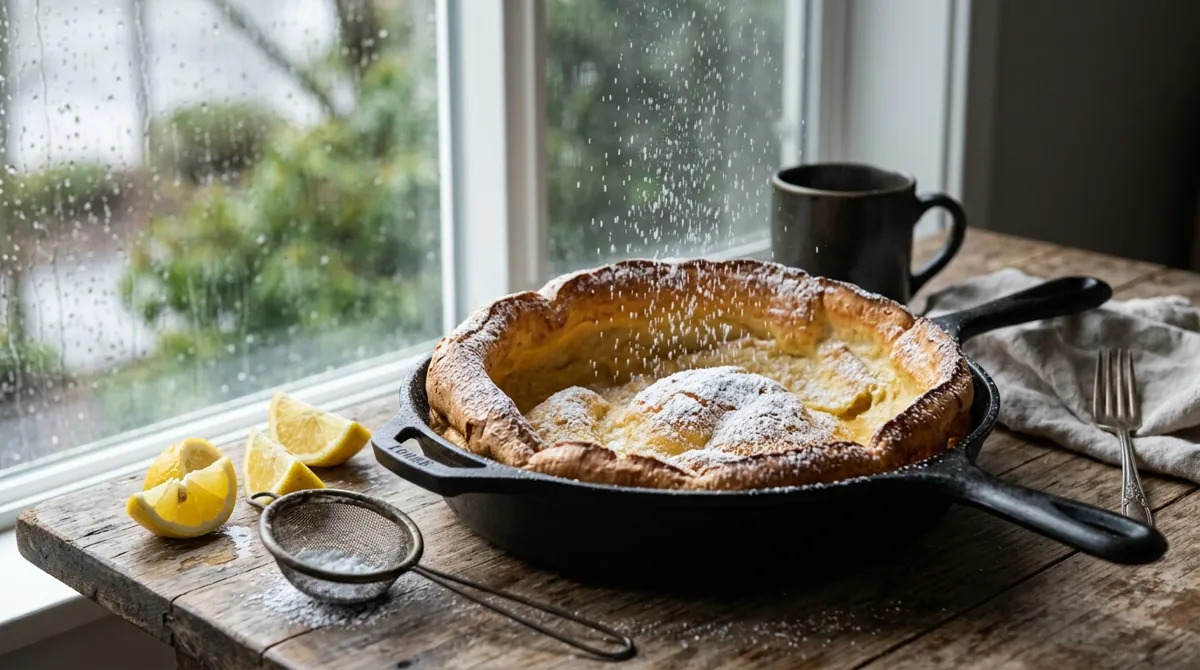
The Dutch Baby (Seattle Oven Pancake)
A blender batter of eggs, milk and flour poured into a skillet of sizzling butter and baked at 425°F until it puffs up high around the edges, served the original way with lemon and powdered sugar.
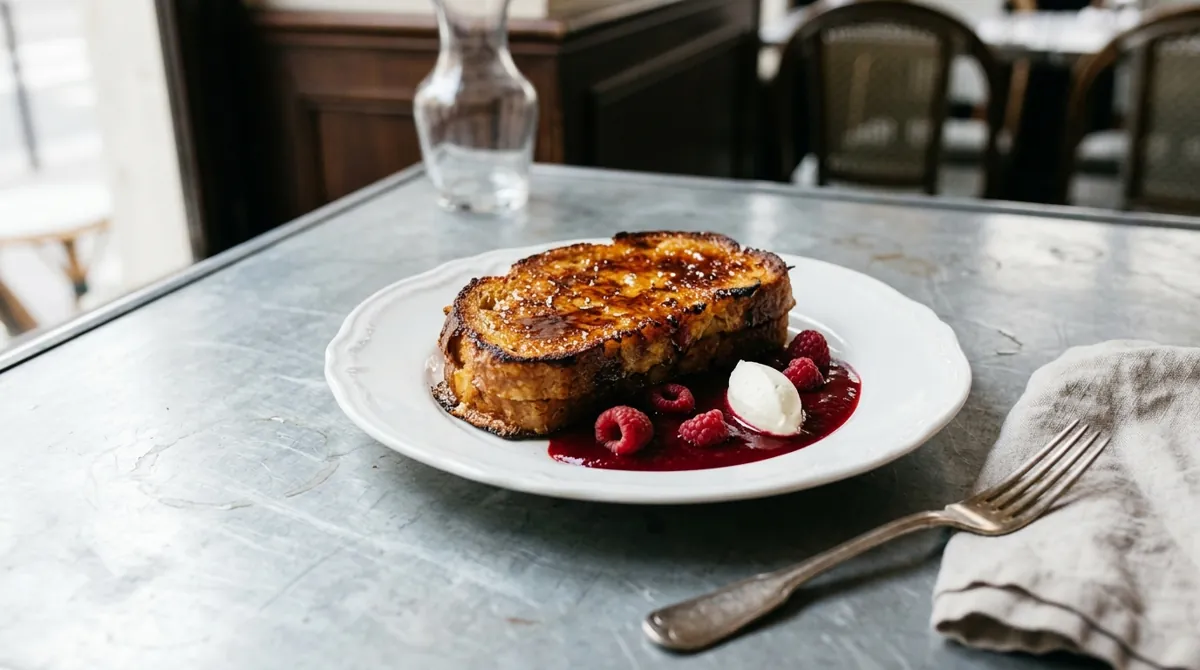
Pain Perdu (French "Lost Bread")
Thick slices of day-old brioche soaked in vanilla milk, eggs and sugar, browned in butter, then sugared and finished in a hot oven until the tops caramelize, served as a dessert the French way.
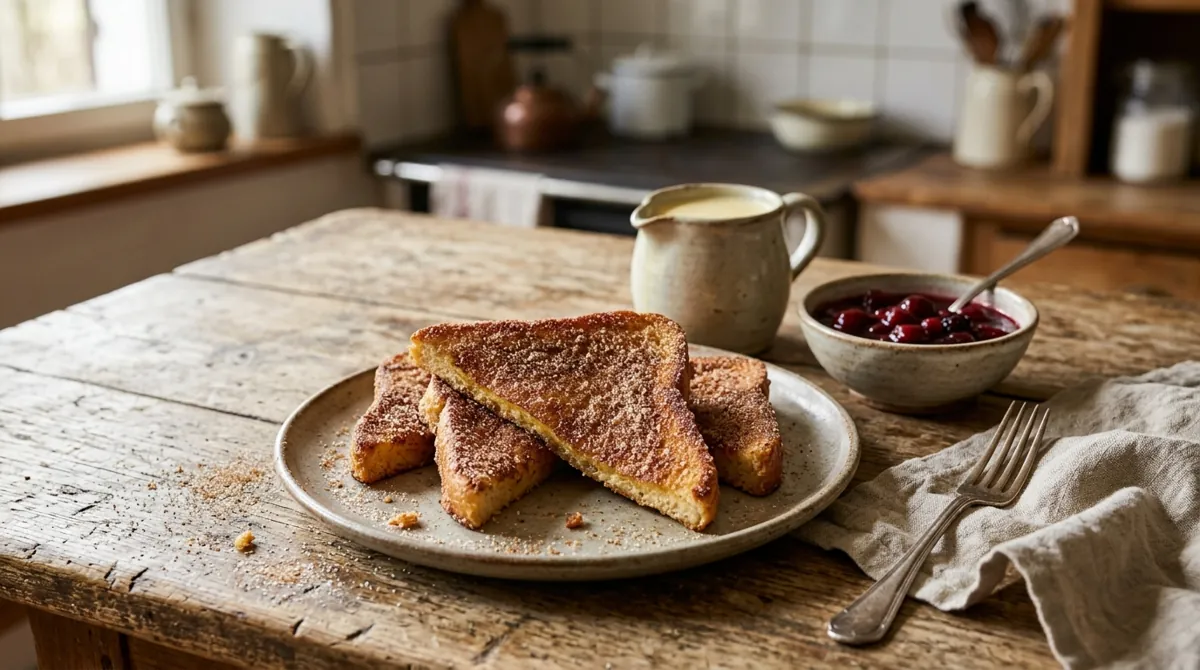
Arme Ritter (German "Poor Knights")
Day-old kaiser rolls halved, soaked in sweet egg milk, fried golden in clarified butter and rolled in cinnamon sugar, Germany's frugal French toast.
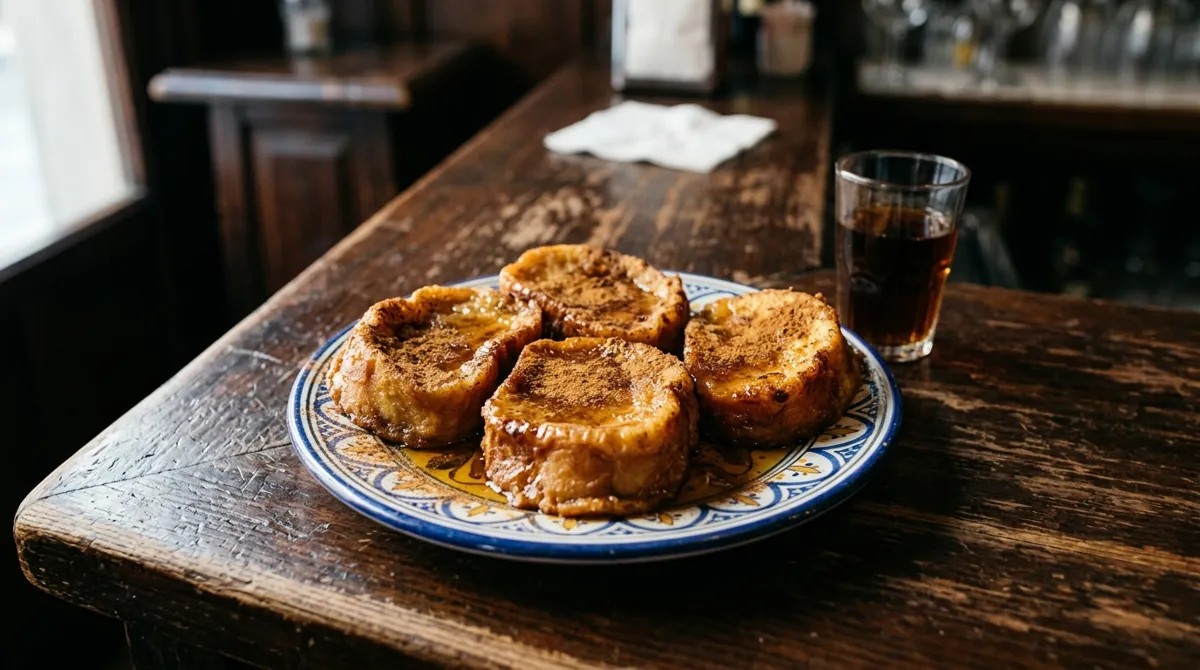
Torrijas (Madrid Holy Week French Toast)
Thick slices of day-old bread soaked in milk steeped with cinnamon and lemon peel, dipped in egg, fried in olive oil and drizzled with honey, the Lent and Holy Week sweet of Madrid.
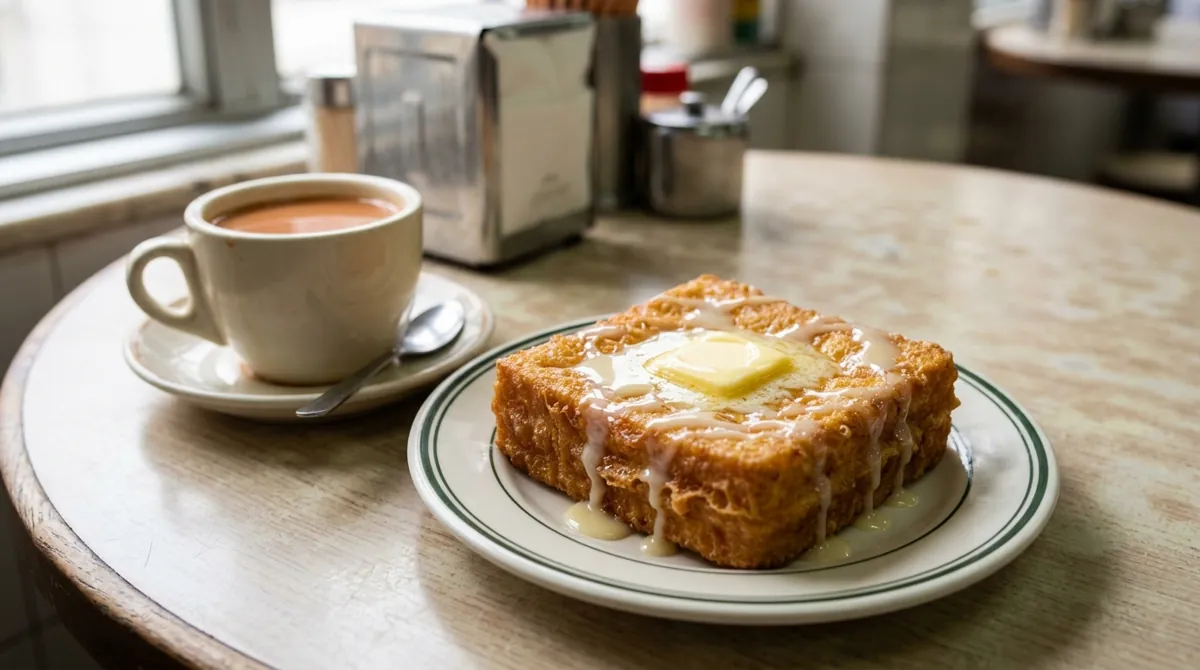
Hong Kong French Toast (Sai Do Si)
Thick white bread stuffed with peanut butter, dipped in egg and deep-fried until crunchy, then topped with a pat of butter and a drizzle of condensed milk, cha chaan teng style.
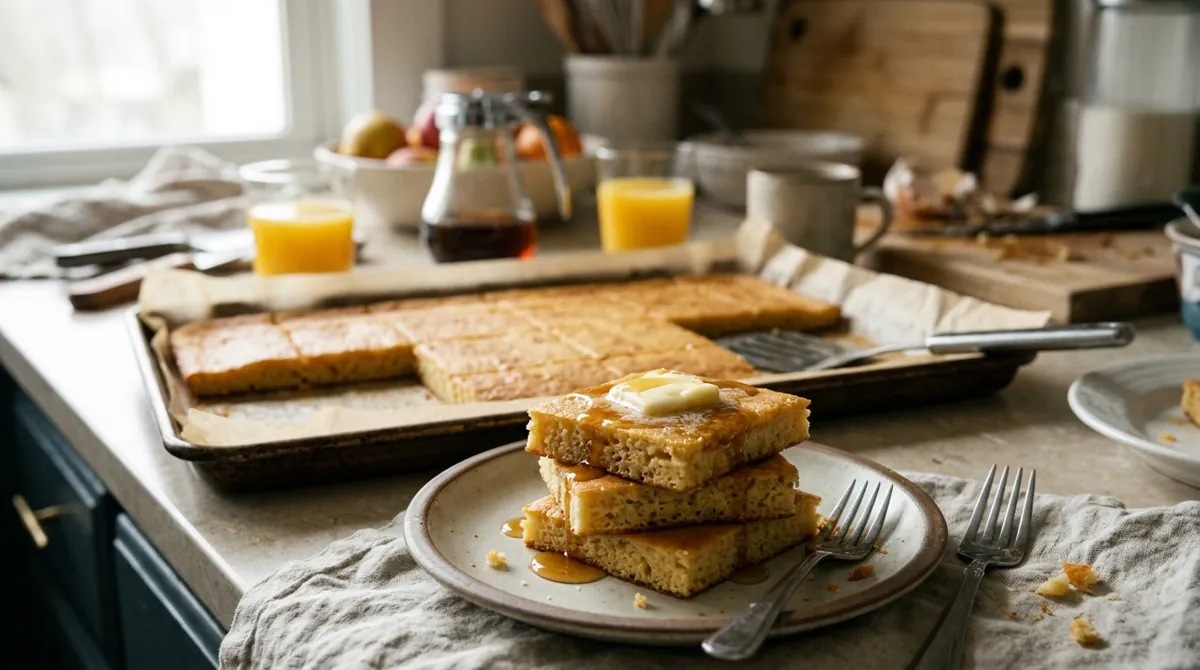
Sheet-Pan Pancakes
One big buttermilk-style pancake batter spread in a sheet pan and baked at 375°F for about 20 minutes, then cut into squares so everyone eats hot pancakes at the same time.
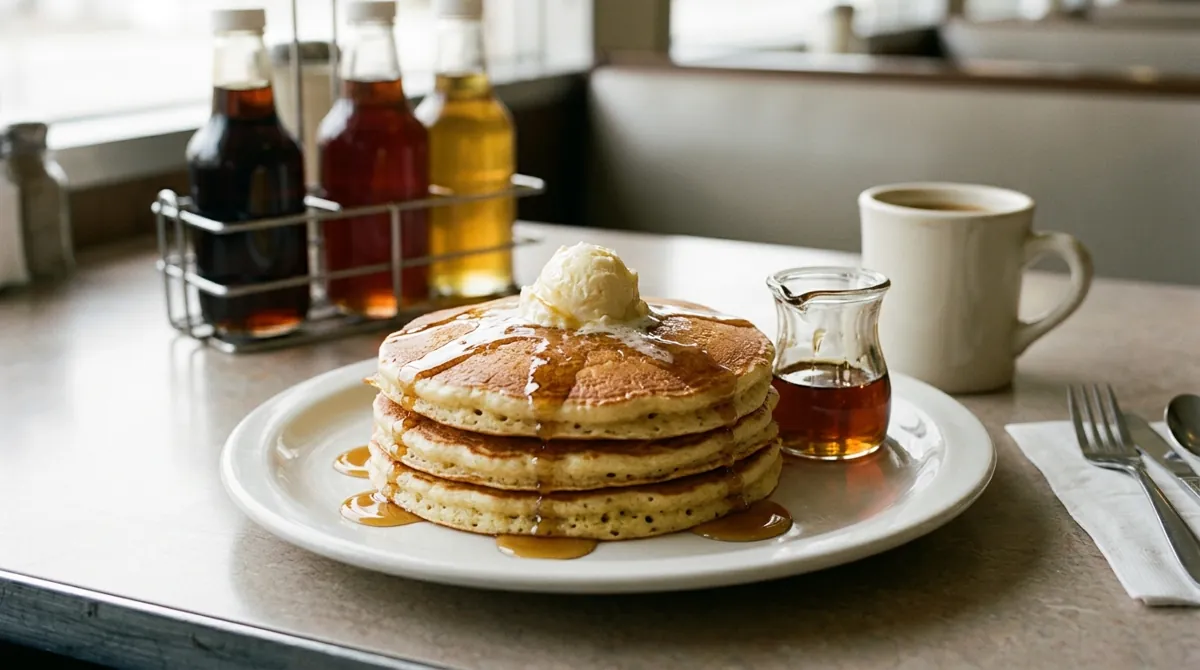
Diner-Style Buttermilk Pancakes, Inspired by IHOP
A blender batter of buttermilk, oil and a little sugar, raised with baking soda alone, griddled into tender 5-inch pancakes in the style of the all-day pancake house. Inspired by, not official.
Meatballs of the World

Italian-American Meatballs
Big, tender meatballs braised for an hour in red sauce over spaghetti. The one most Americans grew up with.

Pallottine (Abruzzo Meatballs)
Tiny meatballs, smaller than a marble, tossed right through square spaghetti alla chitarra. No bread at all.

Swedish Meatballs (Köttbullar)
Small, soft meatballs browned in butter, in a cream sauce made from the same pan, with lingonberry jam on the plate.

Danish Frikadeller
Pork meatballs shaped with a spoon and fried slowly in butter, crusty outside and soft in the middle.

Königsberger Klopse
German meatballs that are never fried: poached, then served in a creamy white sauce with capers.

Spanish Albóndigas in Almond Saffron Sauce
The tapas bar classic: small meatballs in a golden sauce thickened with fried almonds and bread.

Mexican Albóndigas with Chipotle and Mint
Soft meatballs with rice and fresh mint inside, simmered in a smoky tomato and chipotle broth.

Izgara Köfte (Turkish Grilled Meatballs)
Small, flat meatballs kneaded hard, rested cold, and charred on a hot grill pan.

Lion's Head Meatballs
Big, soft pork meatballs, stirred into a sticky paste, fried to set, then braised in a savory sauce.

Chicken Tsukune
Japan's chicken meatball: kneaded sticky, grilled on skewers, glazed with sweet soy tare, dipped in egg yolk.