
Beef Rendang
Chunks of beef chuck braised in coconut milk with a paste of shallots, ginger, galangal, lemongrass, chiles and lime leaves until every drop of liquid is gone and the meat fries, dark and caramelized, in the coconut fat.
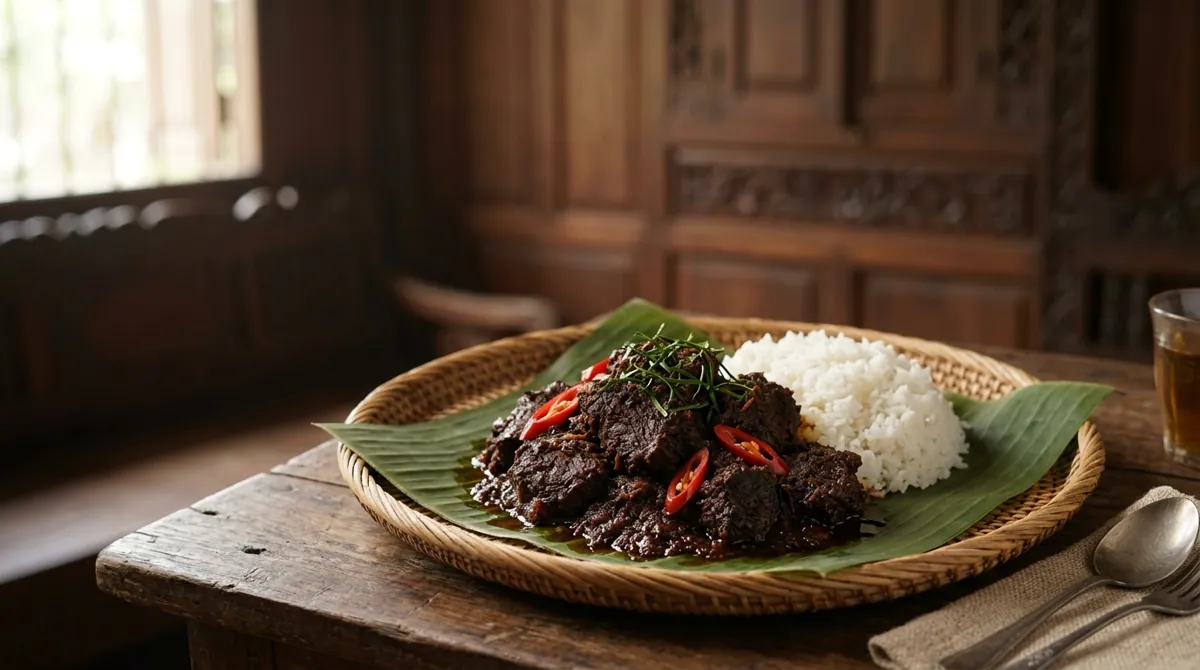
Rendang is both a dish and a method: America's Test Kitchen describes it as the Indonesian term for a famous West Sumatran dish and for a way of braising until the food becomes very concentrated. Indonesia's official tourism site says it comes from West Sumatra, was perfected by the Minangkabau people, was developed as a way to preserve meat, and is simmered over a low flame often 4 to 6 hours until it becomes a dry, caramelized coating that kept for weeks; it is served at weddings, community gatherings and both Eid holidays.
Wikipedia traces the earliest known reference to an early 16th-century Malay manuscript, the Hikayat Amir Hamzah, records that Minangkabau travelers carried rendang as provisions, and explains the wetter cousin, kalio, that is served before the liquid is fully gone. In 2011 a CNN reader poll ranked rendang the world's most delicious food. Ownership is DISPUTED between neighbors: Malaysia listed rendang as national heritage food in 2009, and Indonesia declared it a national dish in 2018. That same year a MasterChef UK judge said a contestant's rendang wasn't "crispy" enough, and Wikipedia reports a storm of reaction from Malaysians, Singaporeans and Indonesians.
Why it works the kitchen science
Cooking out the water first
Simmering the paste with a little coconut milk before the beef goes in drives off moisture early, so the long braise can end in a true fry instead of a stew.
Oven, then stove
The uncovered oven braise cooks the chuck evenly and unattended, and the stovetop finish lets you control the final caramelizing, which is where the dark color and deep flavor come from.
Step by step
- Step 1
Heat the oven to 300°F with a rack in the middle. Process the shallots, ginger, galangal, lemongrass, chiles, garlic, lime leaves, coriander, salt, cumin and turmeric in a food processor about 90 seconds, scraping the bowl as needed, until it forms a coarse paste.
- Step 2
Scrape the paste into a Dutch oven, stir in half a can of coconut milk and cook over medium heat, stirring often, 8 to 12 minutes, until the liquid is gone and the paste starts to stick to the pot.
- Step 3
Stir in the rest of the coconut milk and the beef, scraping up any browned bits. Bring to a boil over high heat, stirring often.
- Step 4
Move the pot, uncovered, to the oven and cook 1 hour. Stir, then cook 1 to 1 1/4 hours more, until the beef is just tender.
- Step 5
Return the pot to the stovetop over medium heat. Stir and scrape often, 10 to 15 minutes, until all the liquid has evaporated and the meat and paste sizzle in the fat, then keep stirring and scraping about 5 minutes more, until deep brown. Some pieces will shred.
- Step 6
Take the pot off the heat, spread the meat over the bottom and let it sit 5 minutes to loosen the browned bits. Stir and scrape everything together, pile it into a bowl, scatter lime leaf and chile on top and serve with rice.
Beef Rendang
Serves 6 · about 6 cups · 3 hr total
Spice paste
- 4 shallots, chopped
- 1/2 cup thinly sliced fresh ginger
- 1/2 cup thinly sliced galangal
- 2 lemongrass stalks, bottom 6 inches only, halved lengthwise and thinly sliced
- 5 to 10 Thai chiles, stemmed and thinly sliced, plus extra for serving
- 5 garlic cloves, smashed and peeled
- 5 makrut lime leaves, center rib removed, thinly sliced, plus extra for serving
- 1 tbsp ground coriander
- 1 1/2 tsp table salt
- 1 1/2 tsp ground cumin
- 1 tsp ground turmeric
Braise
- 2 (14-oz) cans full-fat coconut milk, divided
- 2 1/2 lb boneless beef chuck, trimmed and cut into 1 1/2-inch pieces
To serve
- Steamed white rice
Method
- Heat the oven to 300°F with a rack in the middle. Process the shallots, ginger, galangal, lemongrass, chiles, garlic, lime leaves, coriander, salt, cumin and turmeric in a food processor about 90 seconds, scraping the bowl as needed, until it forms a coarse paste.
- Scrape the paste into a Dutch oven, stir in half a can of coconut milk and cook over medium heat, stirring often, 8 to 12 minutes, until the liquid is gone and the paste starts to stick to the pot.
- Stir in the rest of the coconut milk and the beef, scraping up any browned bits. Bring to a boil over high heat, stirring often.
- Move the pot, uncovered, to the oven and cook 1 hour. Stir, then cook 1 to 1 1/4 hours more, until the beef is just tender.
- Return the pot to the stovetop over medium heat. Stir and scrape often, 10 to 15 minutes, until all the liquid has evaporated and the meat and paste sizzle in the fat, then keep stirring and scraping about 5 minutes more, until deep brown. Some pieces will shred.
- Take the pot off the heat, spread the meat over the bottom and let it sit 5 minutes to loosen the browned bits. Stir and scrape everything together, pile it into a bowl, scatter lime leaf and chile on top and serve with rice.
Adapted from America's Test Kitchen, "Beef Rendang" by Andrea Geary (published February 5, 2024), serves 6 to 8. The food-processor paste, cooking it first with half a can of coconut milk, the uncovered braise at 300°F for 2 to 2 1/4 hours, the stovetop finish until the beef fries and the 5-minute rest that loosens the fond are ATK's. We count it as 6 servings. ATK's oven braise is a home shortcut; the Indonesian tourism site describes 4 to 6 hours over a low flame. America's Test Kitchen. Ingredient list follows the source; the method is in our own words.
All sources (3)
Tips
- Use full-fat coconut milk; the fat is what the beef fries in at the end (ATK).
- Seed the chiles or use only 5 if you are sensitive to heat (ATK).
- Well-washed galangal and ginger don't need peeling (ATK).
- A flat-edged wooden spoon is the best tool for scraping the pot (ATK).
- Serve with rice, raw vegetables, sambal and prawn crackers (ATK).
The rules people argue about
What the sources agree on, what they don't, and what is just a good story.
- Rendang is Indonesian. Disputed: CNN's 2011 list called it Indonesian and Indonesia made it a national dish in 2018; Malaysia recognized it as national heritage food in 2009, and Wikipedia attributes it to Malay and Minangkabau cuisine (Wikipedia).
- Rendang should be crispy. Disputed: the MasterChef UK judge's 2018 remark drew wide criticism; rendang is cooked until dry and caramelized, and some eateries made crispy versions as a joke (Wikipedia).
- Kalio and rendang are the same. Documented as different stages: kalio is wetter, rendang is cooked until dry (Wikipedia; Indonesia's tourism site).
- Rendang keeps for weeks without a fridge. Documented as the tradition (Indonesia's tourism site: "for weeks"; Wikipedia: up to four weeks if cooked properly). We still refrigerate leftovers and reheat them to 165°F.
- Each ingredient carries a meaning. Documented as the Minangkabau philosophy described by Indonesia's tourism site (coconut milk for wisdom, chiles for patience, spices for unity).
Every other curry
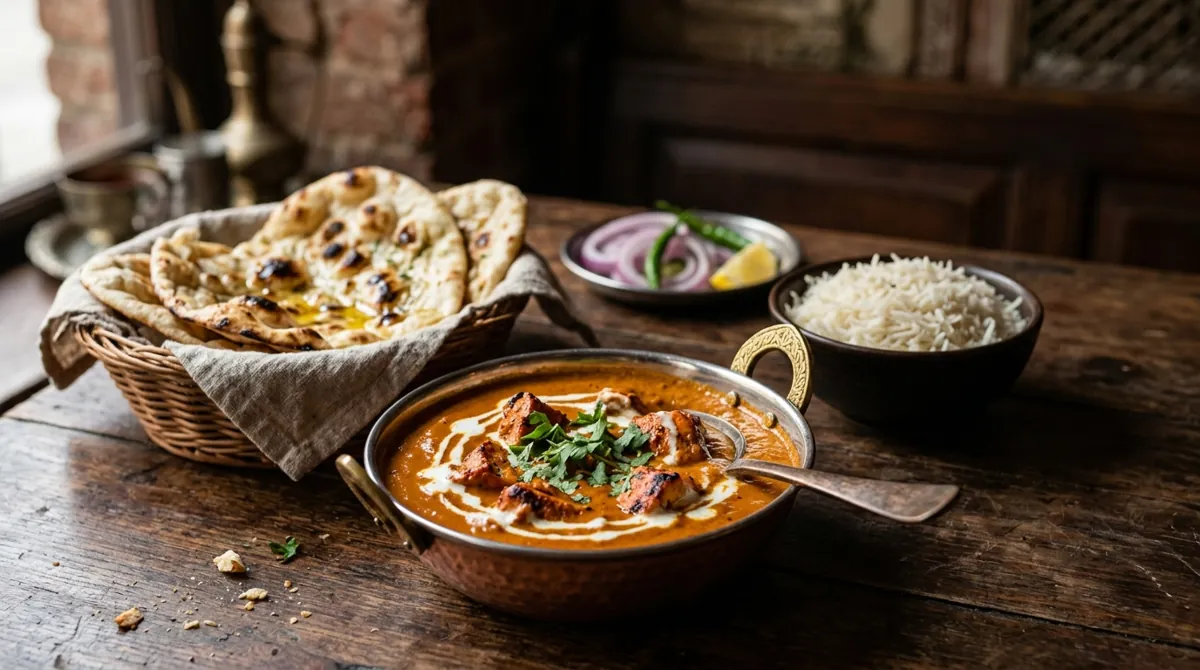
Indian Butter Chicken (Murgh Makhani)
Yogurt-coated chicken thighs broiled until charred at the edges, then folded into a smooth, gently spiced tomato sauce finished with cream and butter, the Delhi restaurant classic made with a home broiler instead of a tandoor.
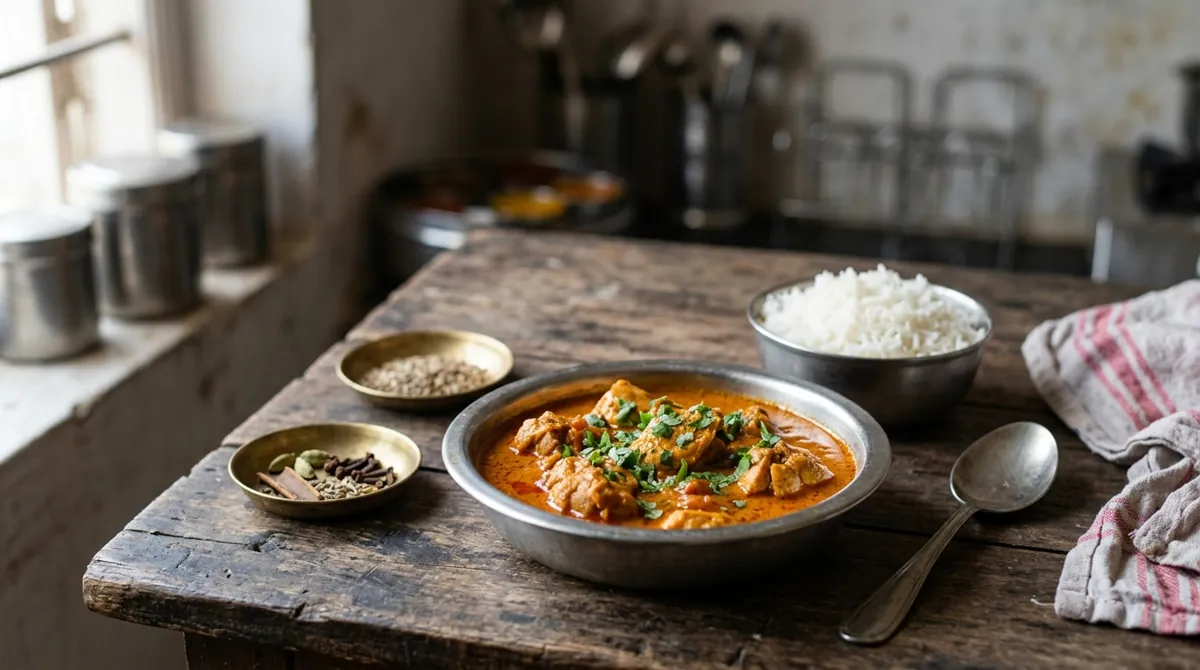
Home-Style Indian Chicken Curry (Tamatar Murghi)
Raghavan Iyer's everyday chicken curry: onion, garlic and ginger browned in a skillet, a spice blend you grind yourself, tomatoes and a splash of half-and-half blended into a velvety orange sauce, with chicken simmered in it until just done.
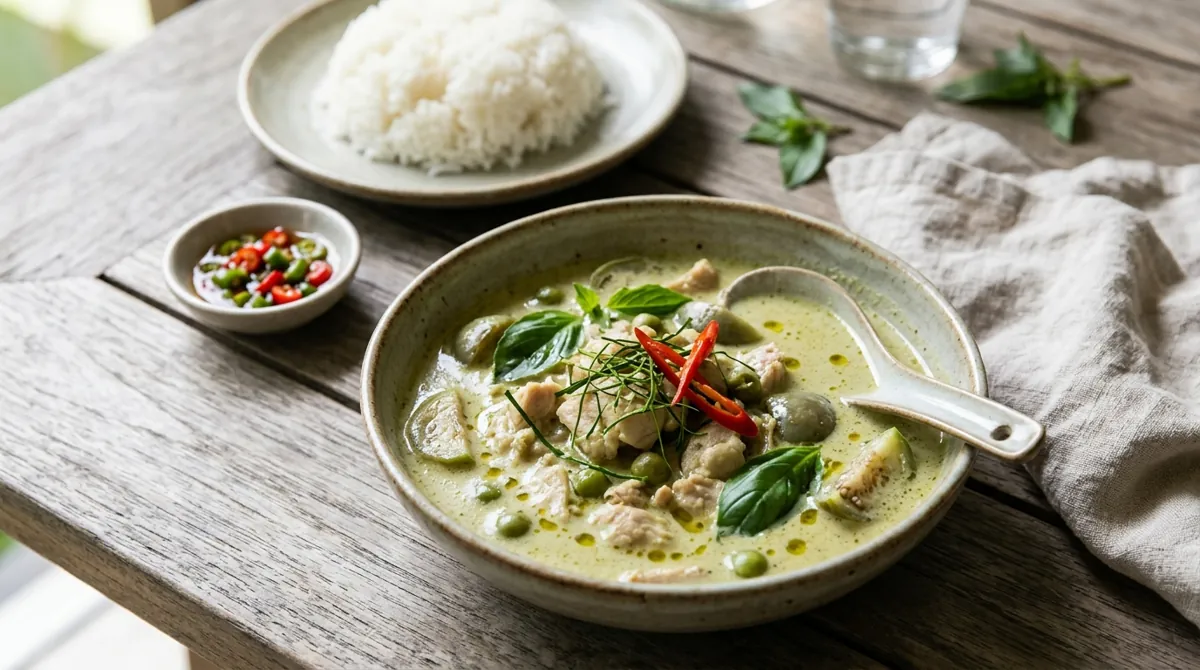
Thai Green Curry with Chicken (Gaeng Khiao Waan Gai)
Green curry paste fried in coconut cream until the oil breaks free, then simmered with chicken thighs, makrut lime leaves and crisp Thai eggplants and finished with a handful of Thai basil: savory and spicy first, only faintly sweet.
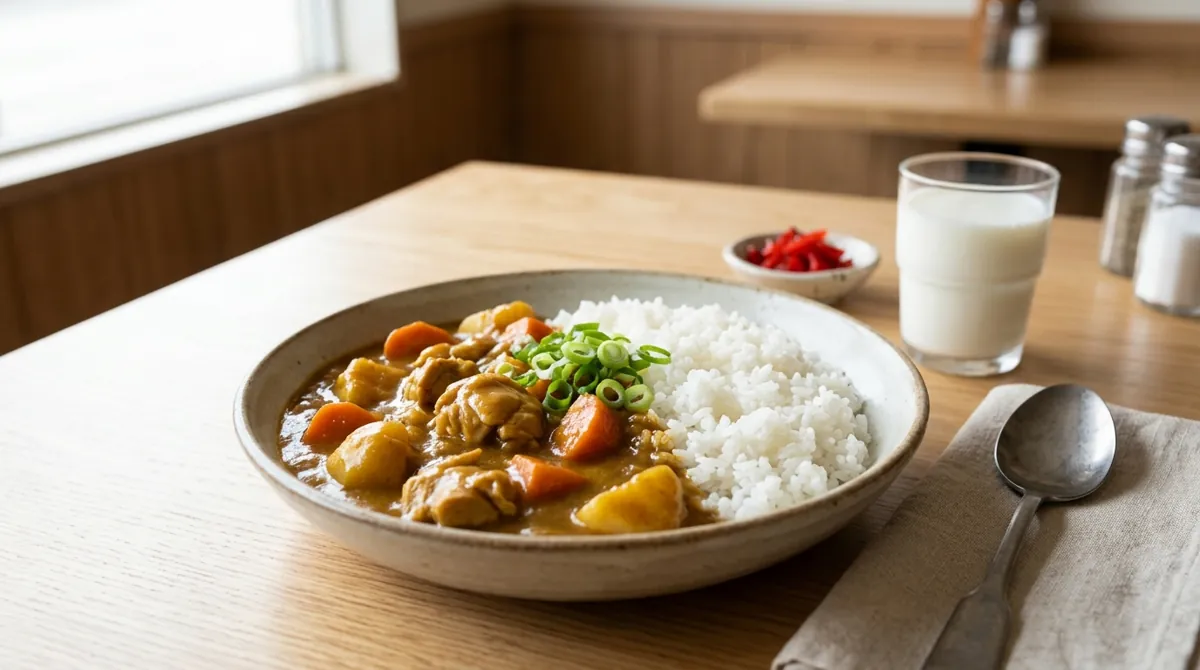
Japanese Curry Rice (Kare Raisu)
Chicken thighs, potatoes and carrots simmered in broth and thickened at the end with a homemade curry roux of butter, flour, warm spices and miso, served the Japanese way: rice on one side of the bowl, curry on the other.
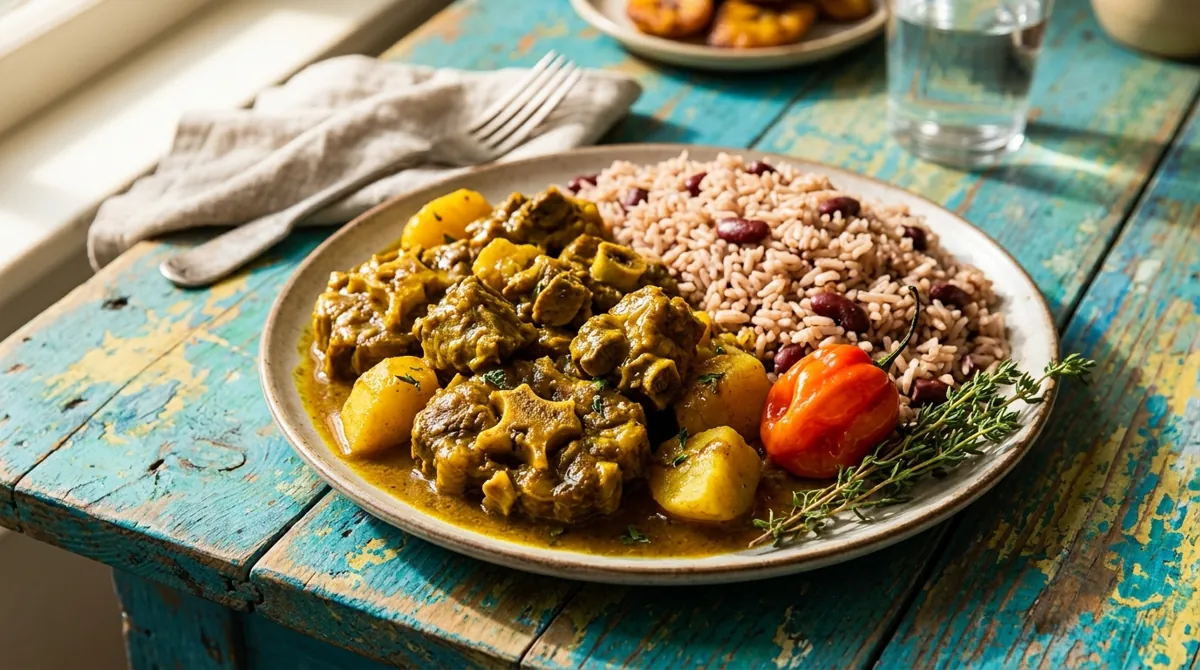
Jamaican Curry Goat
Bone-in goat marinated overnight in curry powder, allspice, thyme, garlic, ginger and scallions, browned and simmered for hours with a whole Scotch bonnet, then finished with potatoes until the meat falls from the bone.
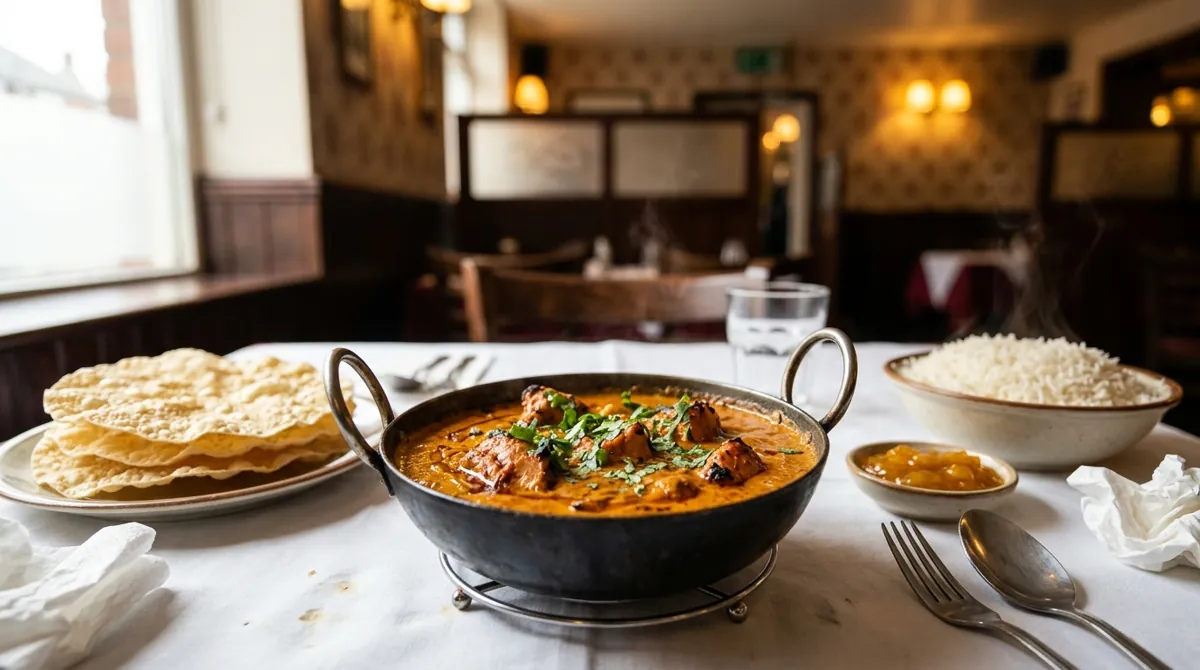
Chicken Tikka Masala
Spice-rubbed chicken breasts coated in garlicky yogurt and charred under the broiler, then cut up and stirred into a creamy, gently spiced tomato masala sauce: the British curry house favorite made at home.
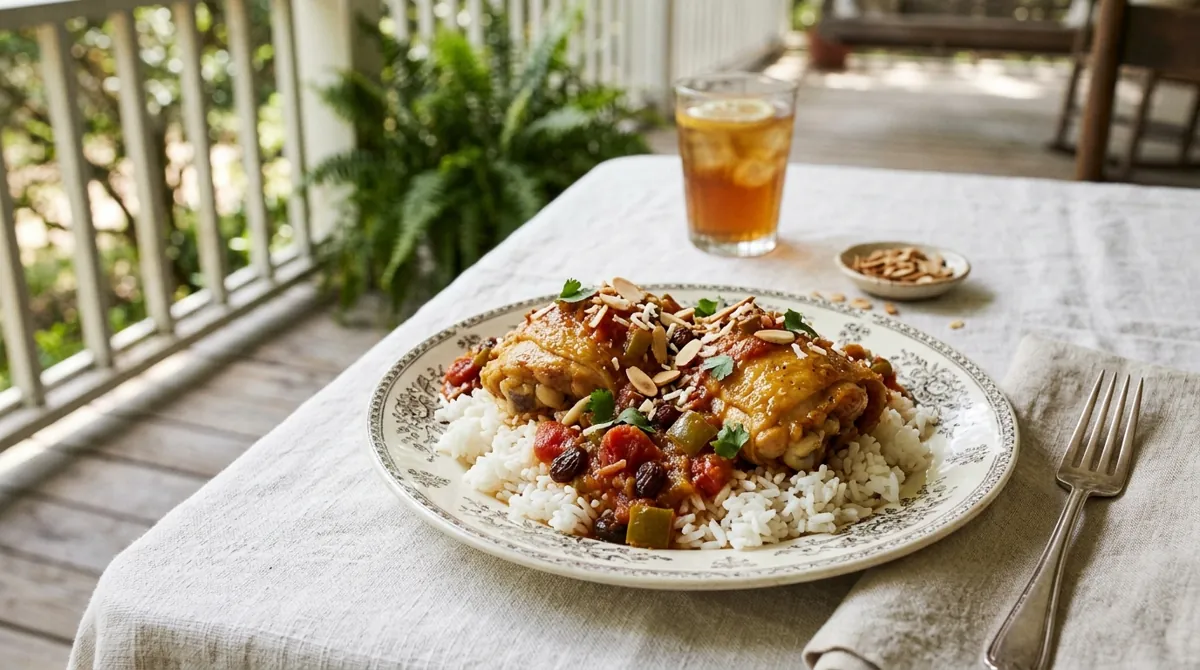
Country Captain Chicken
Curry-rubbed bone-in chicken thighs browned in bacon fat and baked in a sweet-sour curried tomato sauce with green peppers and raisins, then topped with almonds and coconut toasted with cumin and coriander seeds.
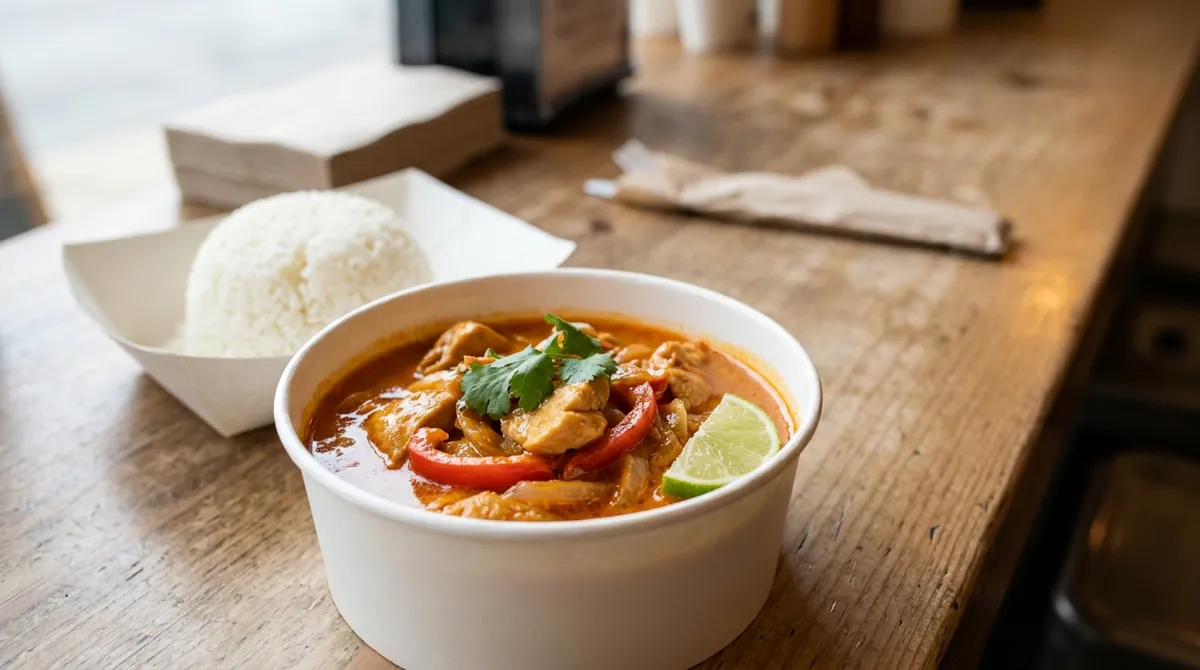
Takeout-Style Red Curry Chicken
Chicken thighs glazed with fish sauce and brown sugar and seared hard, red peppers and onion charred in the same skillet, then everything simmered briefly in red curry paste and a can of coconut milk with lime: the Thai restaurant order Americans know, in 30 minutes.
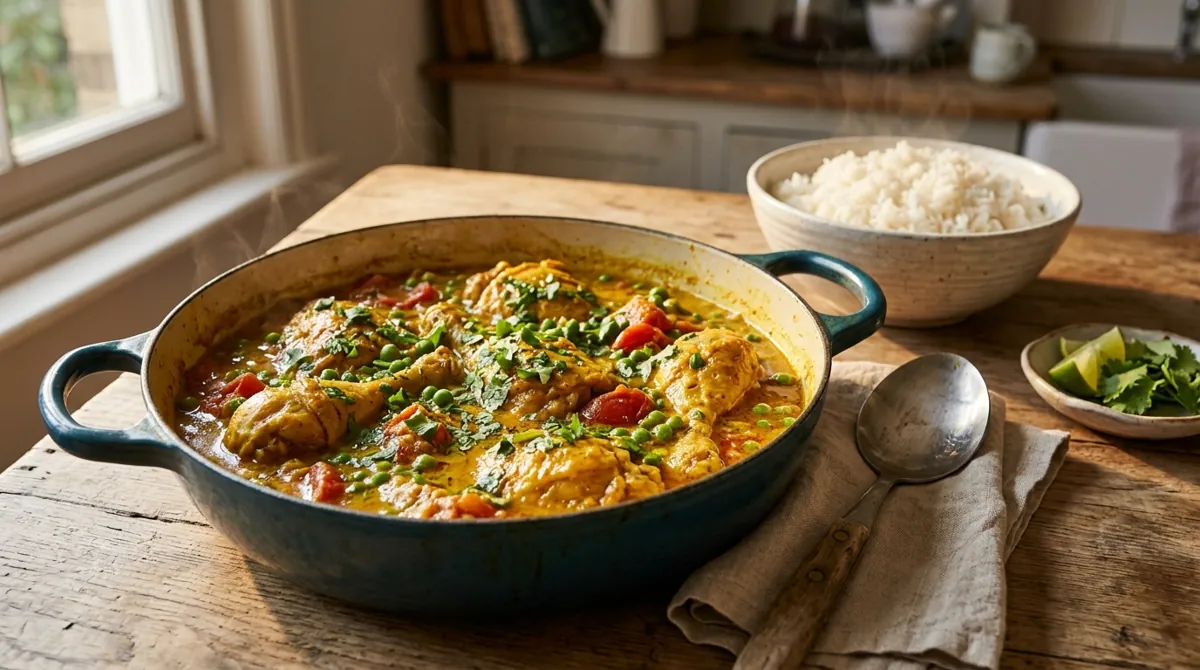
One-Pot Chicken Curry with Coconut Milk and Peas
Bone-in chicken browned in a Dutch oven, then braised in a curry-powder base of onion, garlic, jalapeño, ginger and tomato paste, and finished with coconut milk, butter, fresh tomatoes and peas: the American home cook's curry, all in one pot.
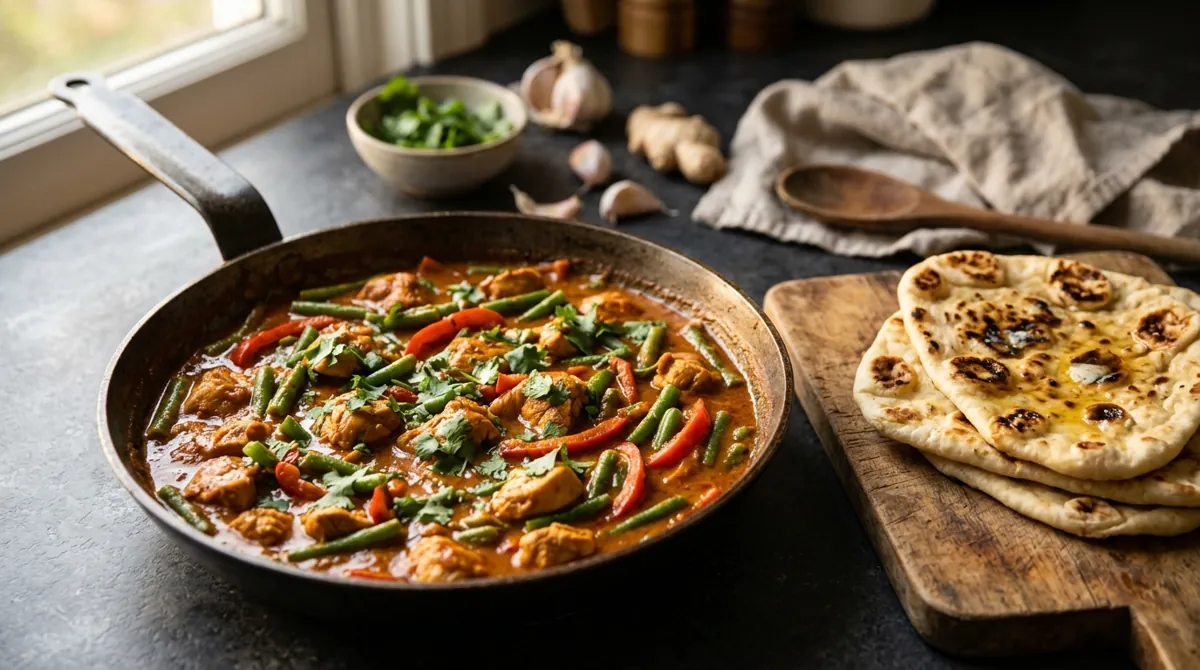
30-Minute Chicken Curry with Green Beans
Browned chunks of chicken thigh, green beans and red pepper simmered in a quick sauce of curry powder, garlic, canned tomato sauce and broth, one skillet and done in 30 minutes.
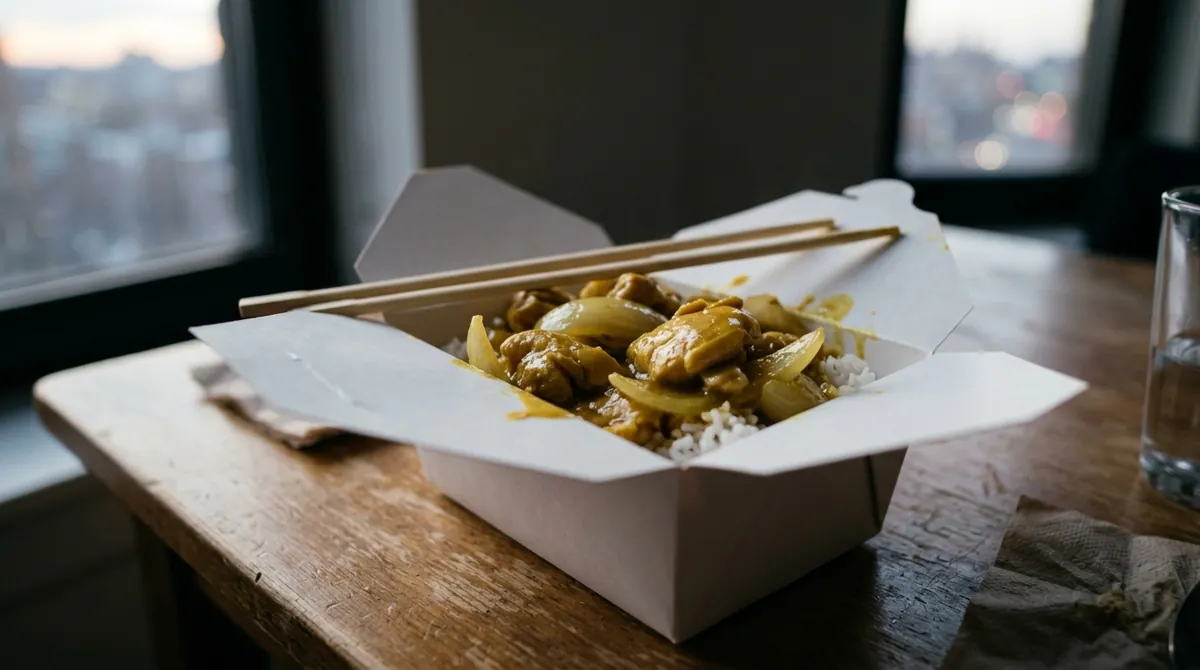
Takeout-Style Chinese Chicken Curry
A takeout-style copycat from no particular restaurant: velvety stir-fried chicken and soft onion wedges in a glossy, bright yellow curry sauce thickened with cornstarch, ready in 20 minutes to spoon over rice.
Meatballs of the World

Italian-American Meatballs
Big, tender meatballs braised for an hour in red sauce over spaghetti. The one most Americans grew up with.

Pallottine (Abruzzo Meatballs)
Tiny meatballs, smaller than a marble, tossed right through square spaghetti alla chitarra. No bread at all.

Swedish Meatballs (Köttbullar)
Small, soft meatballs browned in butter, in a cream sauce made from the same pan, with lingonberry jam on the plate.

Danish Frikadeller
Pork meatballs shaped with a spoon and fried slowly in butter, crusty outside and soft in the middle.

Königsberger Klopse
German meatballs that are never fried: poached, then served in a creamy white sauce with capers.

Spanish Albóndigas in Almond Saffron Sauce
The tapas bar classic: small meatballs in a golden sauce thickened with fried almonds and bread.

Mexican Albóndigas with Chipotle and Mint
Soft meatballs with rice and fresh mint inside, simmered in a smoky tomato and chipotle broth.

Izgara Köfte (Turkish Grilled Meatballs)
Small, flat meatballs kneaded hard, rested cold, and charred on a hot grill pan.

Lion's Head Meatballs
Big, soft pork meatballs, stirred into a sticky paste, fried to set, then braised in a savory sauce.

Chicken Tsukune
Japan's chicken meatball: kneaded sticky, grilled on skewers, glazed with sweet soy tare, dipped in egg yolk.