
Home-Style Indian Chicken Curry (Tamatar Murghi)
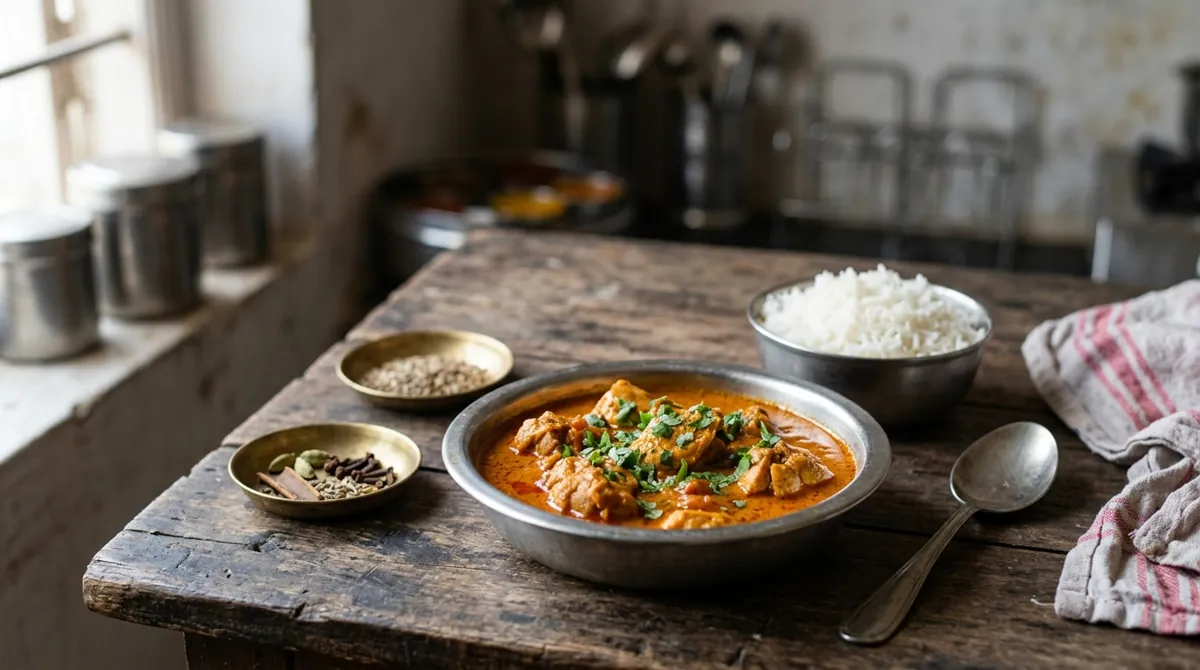
Raghavan Iyer's everyday chicken curry: onion, garlic and ginger browned in a skillet, a spice blend you grind yourself, tomatoes and a splash of half-and-half blended into a velvety orange sauce, with chicken simmered in it until just done.
In India, "curry" is not one dish. Serious Eats contributor Denise D'silva Sankhé writes that each region, home and religion has its own versions, and that for Indians a curry is fish, meat or vegetables in plenty of gravy for the rice. The English word itself is usually traced to the Tamil kari, a spiced dish eaten with rice, possibly by way of Portuguese or Dutch traders; Hannah Glasse's "The Art of Cookery Made Plain and Easy" (1747) printed "Currey the India Way", the first known English use (Wikipedia:). Serious Eats' guide to curry powder quotes Madhur Jaffrey calling the term "curry" degrading and saying "the British are responsible for" curry powder, a turmeric-heavy blend British cookbooks leaned on by the 1850s.
Tamatar murghi means tomato chicken. This version is from Raghavan Iyer's "Indian Cooking Unfolded" (Workman, 2013), reprinted by Serious Eats, which calls it a good template: fresh onion, ginger and garlic, a warm blend similar to a Madras curry powder that you grind yourself, tomatoes and a little half-and-half, blended smooth. It is the home-cooked counterpart to the restaurant butter chicken.
🇮🇳 The original
Raghavan Iyer's everyday chicken curry: onion, garlic and ginger browned in a skillet, a spice blend you grind yourself, tomatoes and a splash of half-and-half blended into a velvety orange sauce, with chicken simmered in it until just done.
🇺🇸 The American version
American home cooks made it a one-pot dinner: curry powder from a jar, a can of coconut milk for the sauce and frozen peas stirred in at the end. See the One-Pot Chicken Curry with Coconut Milk and Peas recipe.
Why it works the kitchen science
Roasting the spices in the onion
10 seconds in the hot oil and aromatics is enough to wake up the ground blend before the tomatoes cool the pan, so the spices taste toasted, not raw.
Blending the sauce
Pureeing the onion, ginger, tomatoes and half-and-half turns a chunky base into a smooth, clinging sauce that coats lean chicken breast.
Step by step
- Step 1
Make the blend: grind the coriander, cumin, mustard seeds, peppercorns, cloves and chiles in a spice grinder until as fine as ground black pepper, about 30 seconds. Stir in the turmeric. Measure out 2 tsp and store the rest airtight, away from light and heat, up to 3 months.
- Step 2
Heat the oil in a 12-inch skillet over medium-high heat until it shimmers, about 2 minutes. Add the onion, garlic and ginger and stir-fry 4 to 5 minutes, until the onion is light caramel brown at the edges.
- Step 3
Sprinkle in the 2 tsp blend and stir for 10 seconds, until the smell changes. Add the tomatoes, lower the heat to medium-low and simmer uncovered, stirring now and then, 5 to 7 minutes, until the tomatoes soften and small beads of oil appear at the edge.
- Step 4
Pour in the half-and-half and scrape the bottom of the pan. Transfer to a blender, vent the lid and cover it with a towel, and blend about 1 minute, until smooth and saffron orange.
- Step 5
Return the sauce to the skillet, stir in the chicken and salt, cover and simmer over medium-low heat, stirring occasionally, 12 to 15 minutes, until the largest cube reads 165°F. If the sauce is very thick, stir in water a little at a time, up to 1/4 cup.
- Step 6
Sprinkle with the cilantro and serve with rice.
Home-Style Indian Chicken Curry (Tamatar Murghi)
Serves 4 · about 5 cups · 40 min total
Raghavan's blend (makes more than you need; store the rest)
- 2 tbsp coriander seeds
- 1 tbsp cumin seeds
- 2 tsp black or yellow mustard seeds
- 1 tsp black peppercorns
- 1/2 tsp whole cloves
- 12 to 15 dried red chiles such as chiles de árbol, stems removed (use fewer for less heat)
- 1 tsp ground turmeric
Curry
- 2 tbsp canola oil
- 1 small onion, coarsely chopped
- 4 medium garlic cloves, coarsely chopped
- 4 thin coins of fresh ginger (each about the size of a quarter), unpeeled, coarsely chopped
- 2 tsp Raghavan's blend (or store-bought Madras curry powder)
- 1/2 cup canned diced tomatoes with their juice
- 1/2 cup half-and-half
- 1 1/2 lb boneless, skinless chicken breasts, cut into 2-inch cubes
- 1 tsp coarse kosher salt
- Up to 1/4 cup water, if needed
- 2 tbsp finely chopped fresh cilantro
Method
- Make the blend: grind the coriander, cumin, mustard seeds, peppercorns, cloves and chiles in a spice grinder until as fine as ground black pepper, about 30 seconds. Stir in the turmeric. Measure out 2 tsp and store the rest airtight, away from light and heat, up to 3 months.
- Heat the oil in a 12-inch skillet over medium-high heat until it shimmers, about 2 minutes. Add the onion, garlic and ginger and stir-fry 4 to 5 minutes, until the onion is light caramel brown at the edges.
- Sprinkle in the 2 tsp blend and stir for 10 seconds, until the smell changes. Add the tomatoes, lower the heat to medium-low and simmer uncovered, stirring now and then, 5 to 7 minutes, until the tomatoes soften and small beads of oil appear at the edge.
- Pour in the half-and-half and scrape the bottom of the pan. Transfer to a blender, vent the lid and cover it with a towel, and blend about 1 minute, until smooth and saffron orange.
- Return the sauce to the skillet, stir in the chicken and salt, cover and simmer over medium-low heat, stirring occasionally, 12 to 15 minutes, until the largest cube reads 165°F. If the sauce is very thick, stir in water a little at a time, up to 1/4 cup.
- Sprinkle with the cilantro and serve with rice.
Adapted from Raghavan Iyer, "Ultimate Chicken Curry (Tamatar Murghi)", from "Indian Cooking Unfolded" (Workman, 2013), reprinted with permission by Serious Eats and introduced by Kate Williams (updated March 3, 2025), serves 4. The spice blend, the 4 to 5 minute browning, the 10-second spice roast, the 5 to 7 minute tomato simmer, blending with half-and-half and the 12 to 15 minute covered simmer are Iyer's. He judges the chicken by color and clear juices; the 165°F check is ours. Thinning the sauce with up to 1/4 cup water is Serious Eats' tweak. Serious Eats. Ingredient list follows the source; the method is in our own words.
Tips
- Dried chiles vary a lot in heat; Serious Eats readers report anything from too mild to nearly inedible. Start with 4 or 5 chiles in the blend.
- Iyer suggests pork, turkey, tofu or potatoes in place of chicken; bone-in chicken works too but takes longer (Serious Eats).
- A coffee grinder used only for spices works for the blend.
- Don't let the chicken boil hard; a gentle simmer keeps breast meat tender.
The rules people argue about
What the sources agree on, what they don't, and what is just a good story.
- "Curry" is an Indian word for a dish. Disputed: Wikipedia traces it to the Tamil kari through Portuguese or Dutch; Madhur Jaffrey, quoted by Serious Eats, calls the umbrella term degrading, because Indian cooks name dishes individually.
- Curry powder is Indian. Disputed: Madhur Jaffrey says the British are responsible for its creation (via Serious Eats); Indian spice blends (masalas) are much older, and Iyer's blend shows a cook can grind a Madras-style one at home.
- Indian curries need cream. Folklore: this curry uses 1/2 cup half-and-half for four people; restaurant curries abroad often use far more.
- You must grind whole spices. Folklore: Iyer lists store-bought Madras curry powder as the alternative.
Every other curry
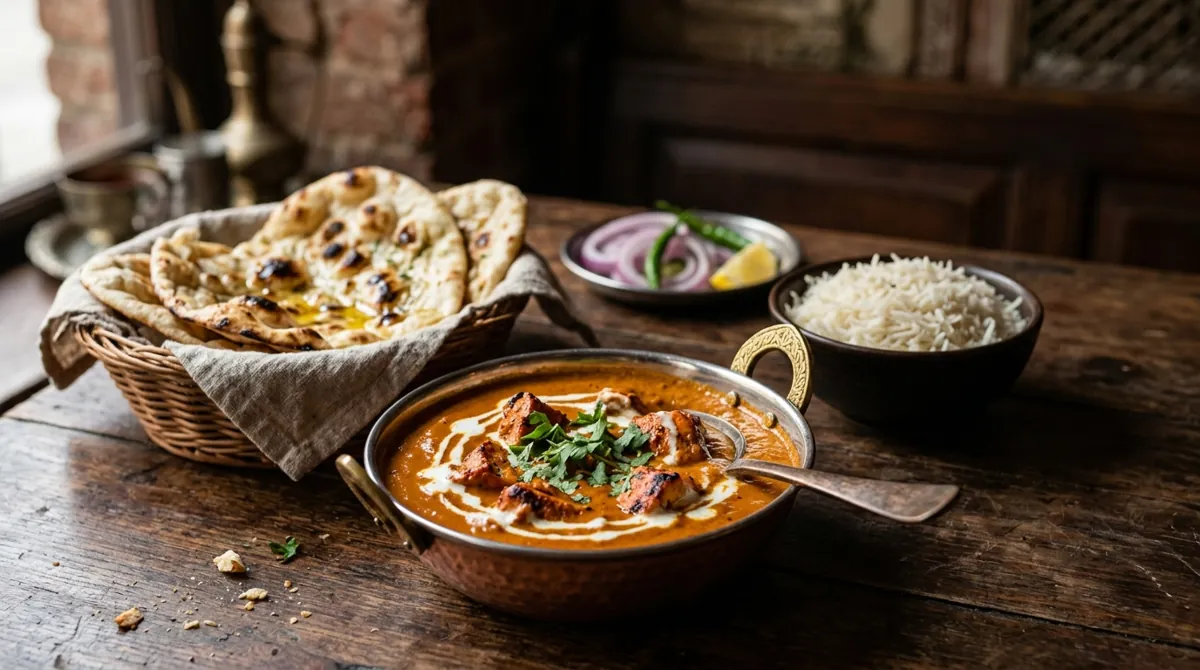
Indian Butter Chicken (Murgh Makhani)
Yogurt-coated chicken thighs broiled until charred at the edges, then folded into a smooth, gently spiced tomato sauce finished with cream and butter, the Delhi restaurant classic made with a home broiler instead of a tandoor.
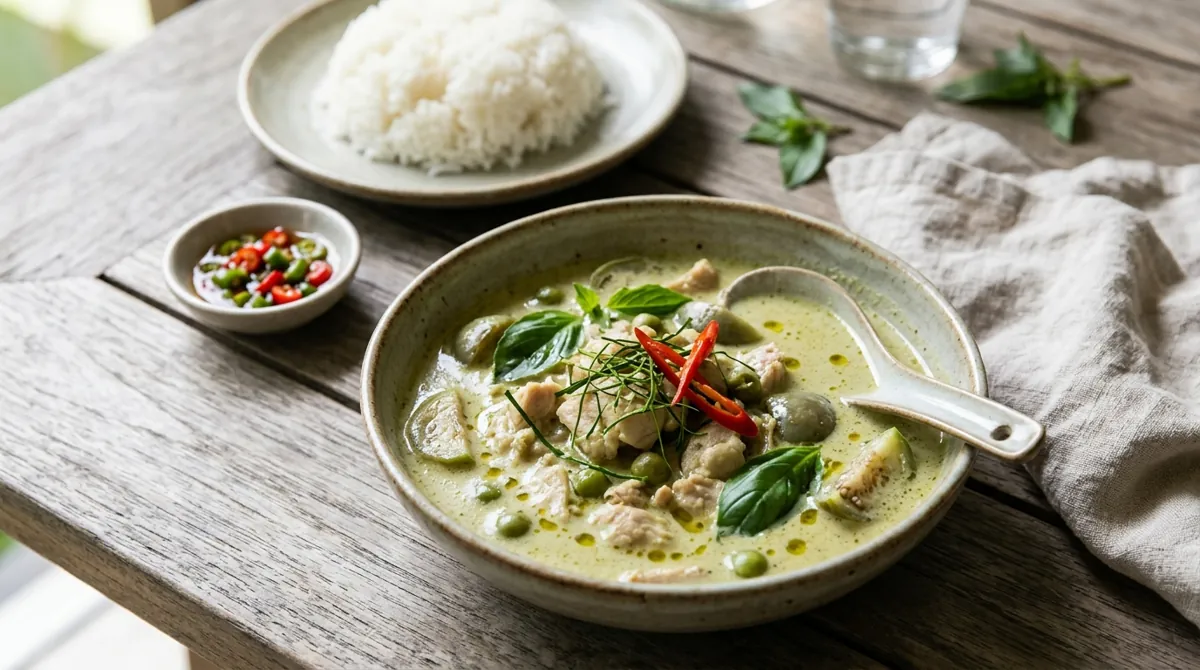
Thai Green Curry with Chicken (Gaeng Khiao Waan Gai)
Green curry paste fried in coconut cream until the oil breaks free, then simmered with chicken thighs, makrut lime leaves and crisp Thai eggplants and finished with a handful of Thai basil: savory and spicy first, only faintly sweet.
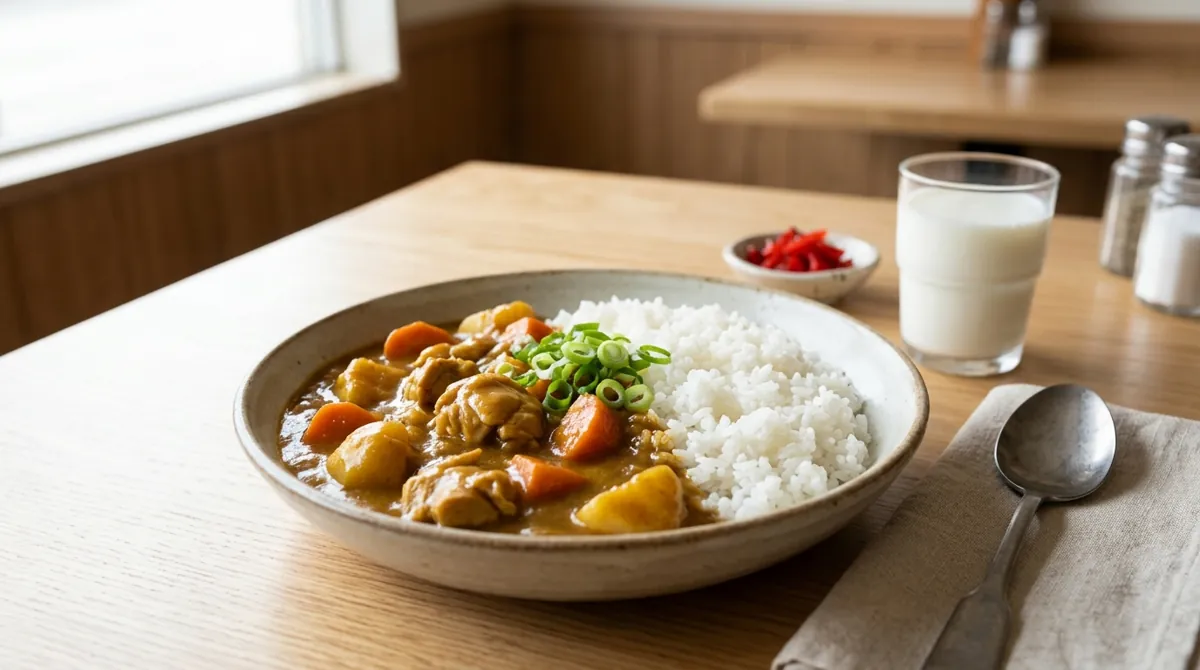
Japanese Curry Rice (Kare Raisu)
Chicken thighs, potatoes and carrots simmered in broth and thickened at the end with a homemade curry roux of butter, flour, warm spices and miso, served the Japanese way: rice on one side of the bowl, curry on the other.
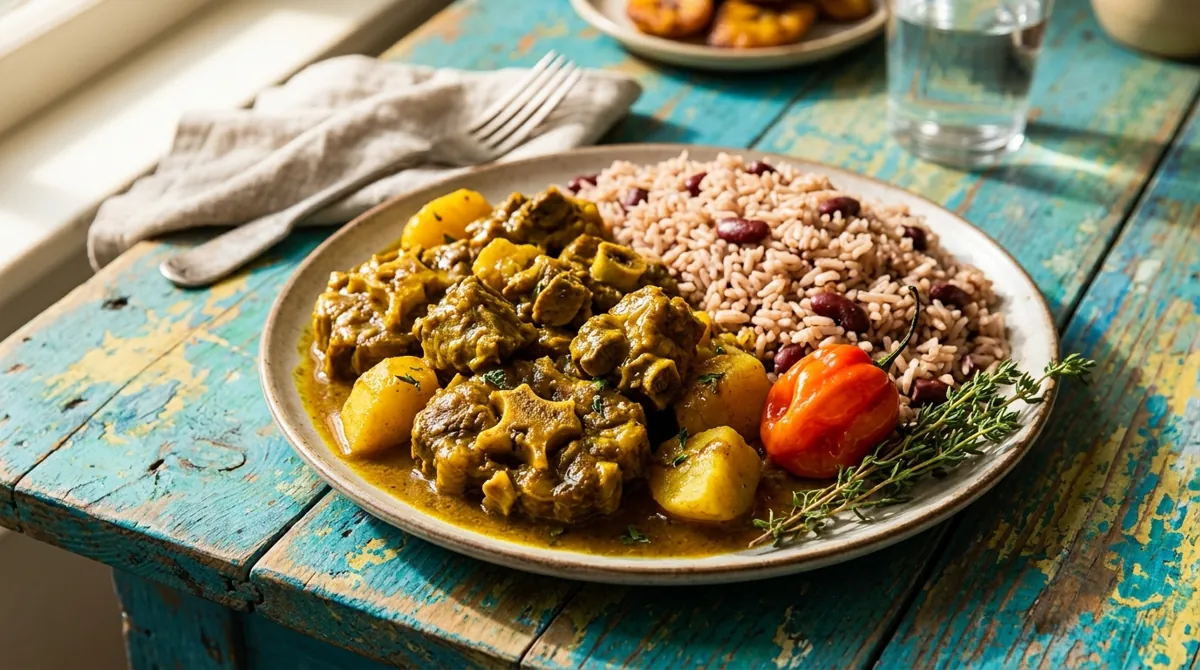
Jamaican Curry Goat
Bone-in goat marinated overnight in curry powder, allspice, thyme, garlic, ginger and scallions, browned and simmered for hours with a whole Scotch bonnet, then finished with potatoes until the meat falls from the bone.
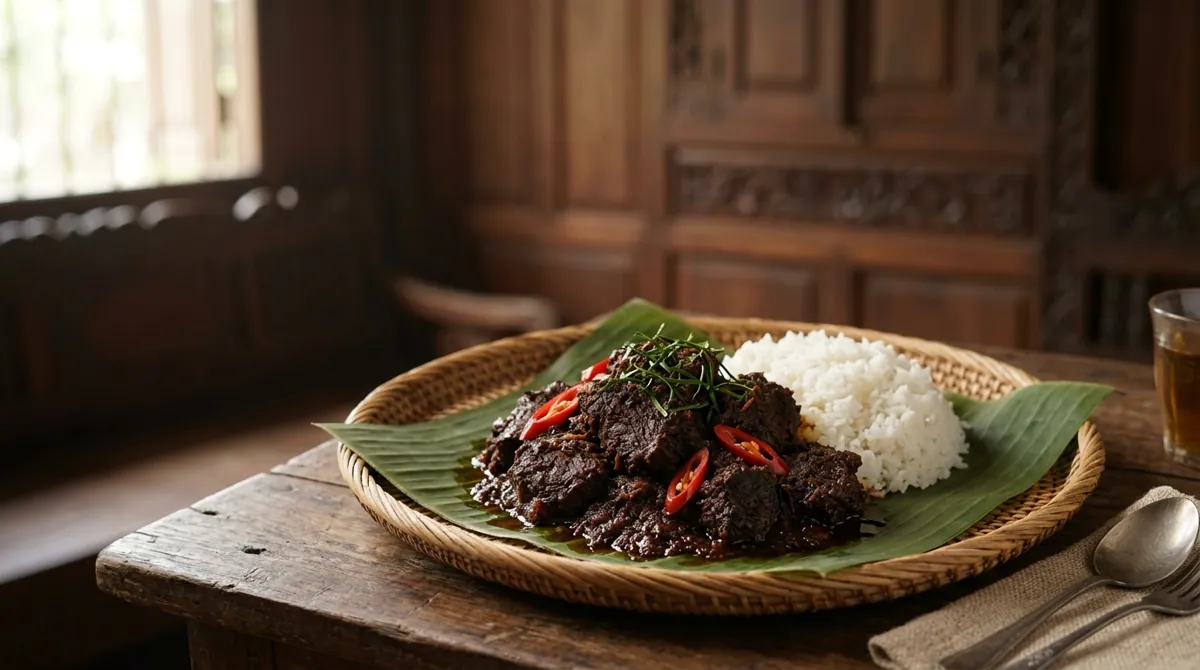
Beef Rendang
Chunks of beef chuck braised in coconut milk with a paste of shallots, ginger, galangal, lemongrass, chiles and lime leaves until every drop of liquid is gone and the meat fries, dark and caramelized, in the coconut fat.
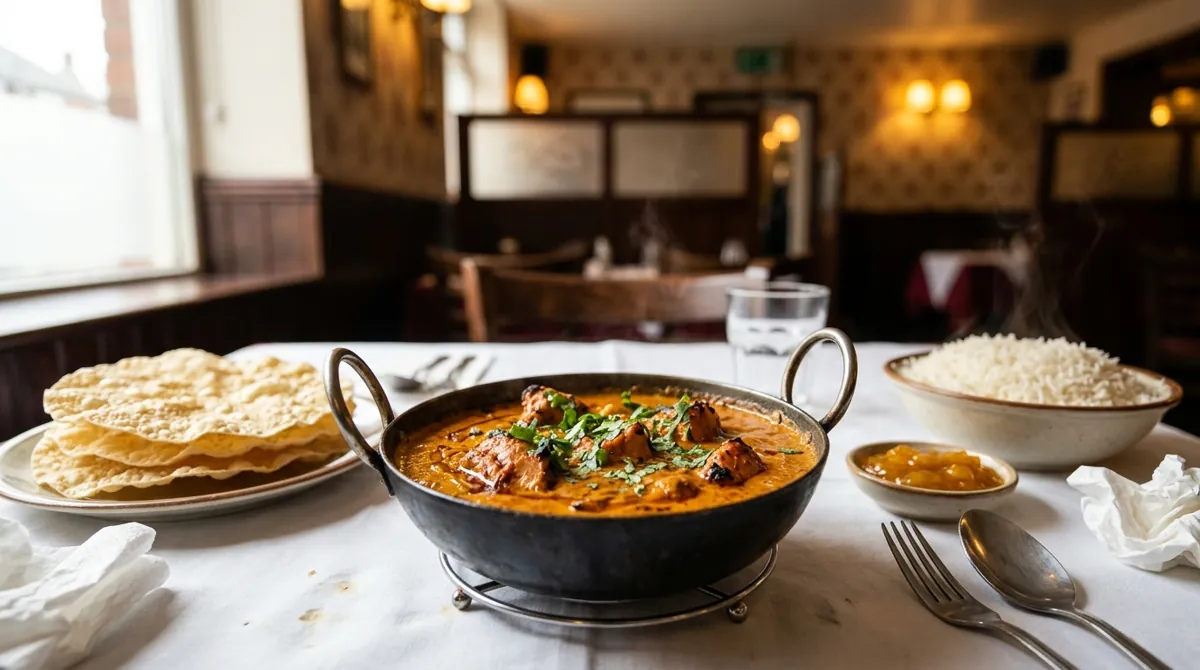
Chicken Tikka Masala
Spice-rubbed chicken breasts coated in garlicky yogurt and charred under the broiler, then cut up and stirred into a creamy, gently spiced tomato masala sauce: the British curry house favorite made at home.
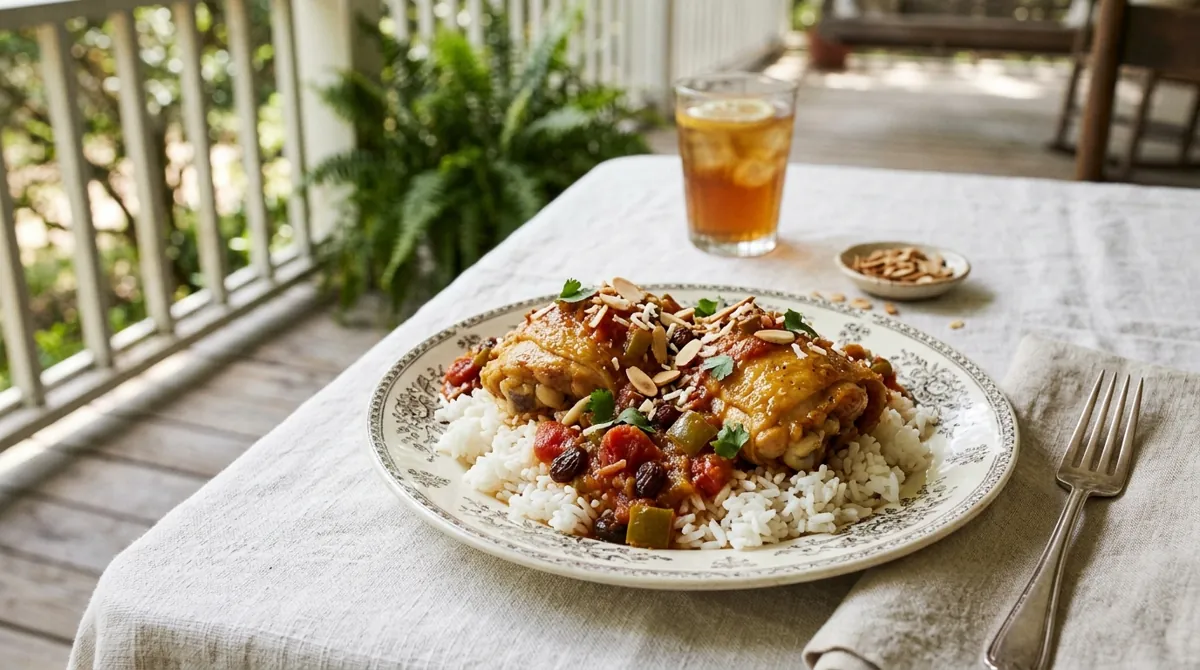
Country Captain Chicken
Curry-rubbed bone-in chicken thighs browned in bacon fat and baked in a sweet-sour curried tomato sauce with green peppers and raisins, then topped with almonds and coconut toasted with cumin and coriander seeds.
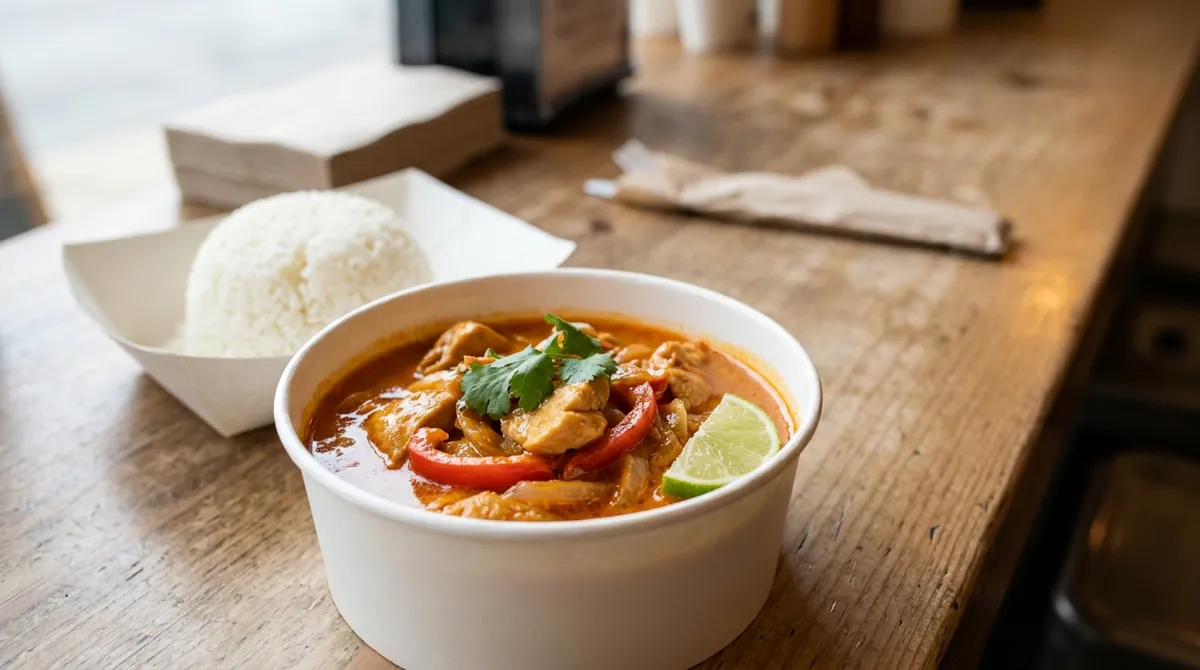
Takeout-Style Red Curry Chicken
Chicken thighs glazed with fish sauce and brown sugar and seared hard, red peppers and onion charred in the same skillet, then everything simmered briefly in red curry paste and a can of coconut milk with lime: the Thai restaurant order Americans know, in 30 minutes.
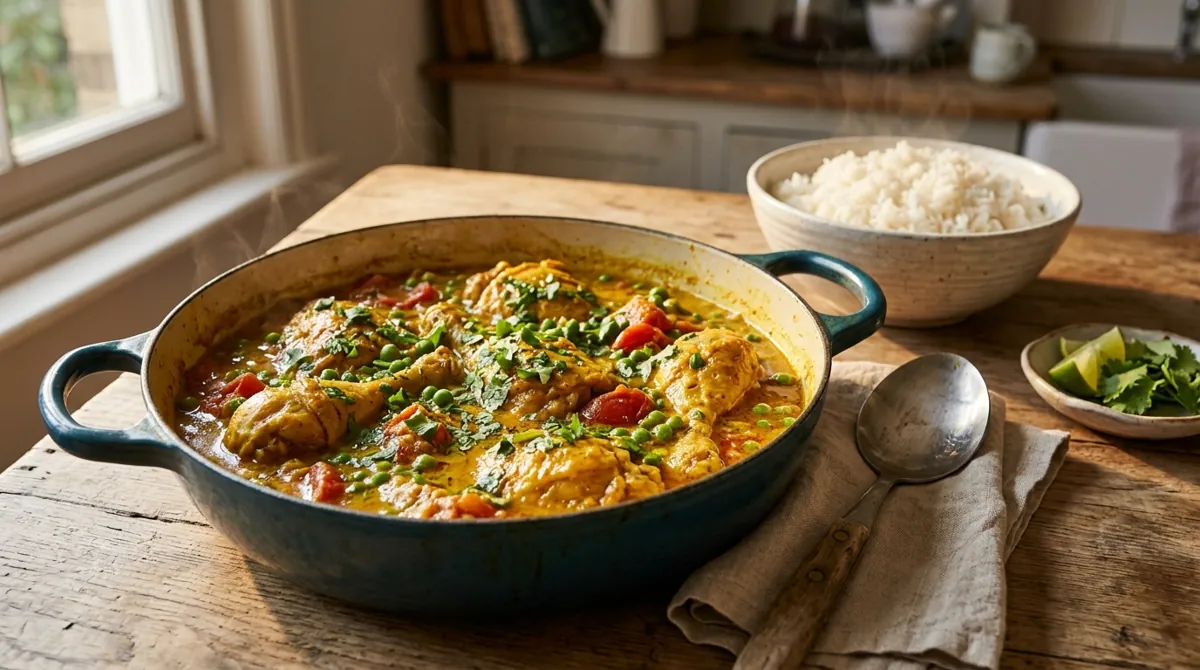
One-Pot Chicken Curry with Coconut Milk and Peas
Bone-in chicken browned in a Dutch oven, then braised in a curry-powder base of onion, garlic, jalapeño, ginger and tomato paste, and finished with coconut milk, butter, fresh tomatoes and peas: the American home cook's curry, all in one pot.
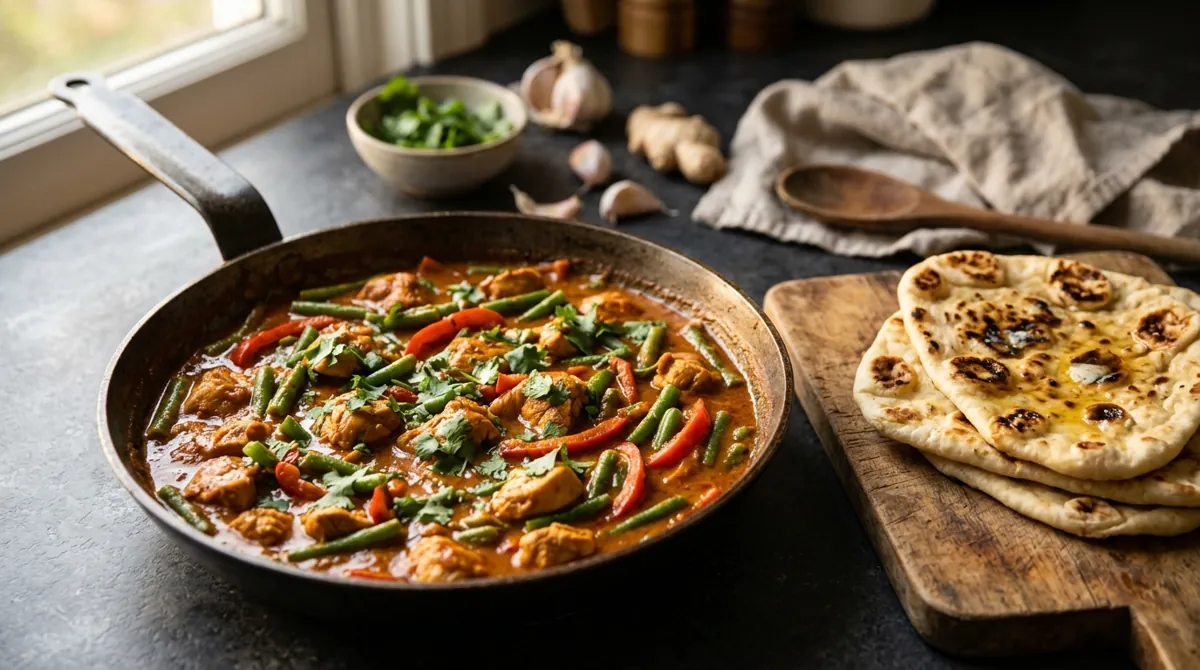
30-Minute Chicken Curry with Green Beans
Browned chunks of chicken thigh, green beans and red pepper simmered in a quick sauce of curry powder, garlic, canned tomato sauce and broth, one skillet and done in 30 minutes.
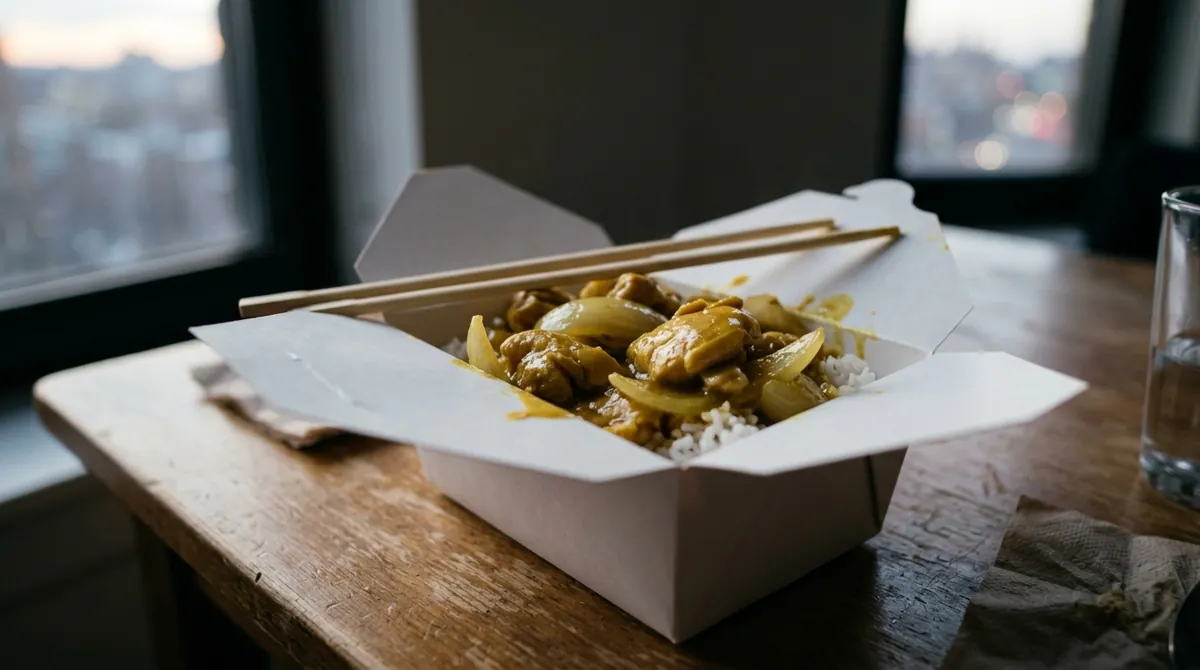
Takeout-Style Chinese Chicken Curry
A takeout-style copycat from no particular restaurant: velvety stir-fried chicken and soft onion wedges in a glossy, bright yellow curry sauce thickened with cornstarch, ready in 20 minutes to spoon over rice.
Meatballs of the World

Italian-American Meatballs
Big, tender meatballs braised for an hour in red sauce over spaghetti. The one most Americans grew up with.

Pallottine (Abruzzo Meatballs)
Tiny meatballs, smaller than a marble, tossed right through square spaghetti alla chitarra. No bread at all.

Swedish Meatballs (Köttbullar)
Small, soft meatballs browned in butter, in a cream sauce made from the same pan, with lingonberry jam on the plate.

Danish Frikadeller
Pork meatballs shaped with a spoon and fried slowly in butter, crusty outside and soft in the middle.

Königsberger Klopse
German meatballs that are never fried: poached, then served in a creamy white sauce with capers.

Spanish Albóndigas in Almond Saffron Sauce
The tapas bar classic: small meatballs in a golden sauce thickened with fried almonds and bread.

Mexican Albóndigas with Chipotle and Mint
Soft meatballs with rice and fresh mint inside, simmered in a smoky tomato and chipotle broth.

Izgara Köfte (Turkish Grilled Meatballs)
Small, flat meatballs kneaded hard, rested cold, and charred on a hot grill pan.

Lion's Head Meatballs
Big, soft pork meatballs, stirred into a sticky paste, fried to set, then braised in a savory sauce.

Chicken Tsukune
Japan's chicken meatball: kneaded sticky, grilled on skewers, glazed with sweet soy tare, dipped in egg yolk.