
Pumpion Pie (Hannah Woolley's 17th-Century English Pumpkin Pie)
Before the custard there was this: slices of squash browned in butter and baked under a pastry lid with tart apples, raisins, currants, sugar, spice and a splash of sherry, adapted from a 1670s English recipe.
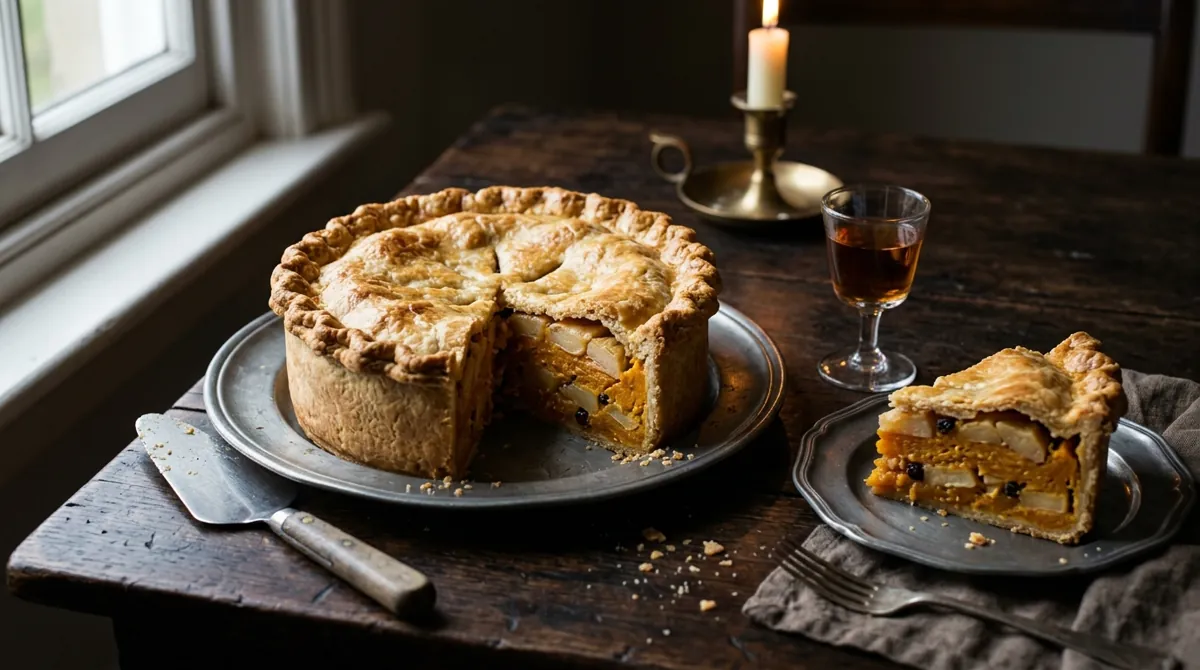
Pumpkins are American plants, and Europeans met them only after the late 1400s. The Folger Shakespeare Library's Amanda Herbert traces the English word "pumpion" to the Old French "pompon", and notes its first English mention in "The Grete Herball" (London, 1526) and Falstaff being called a "watery pumpion" in "The Merry Wives of Windsor" (Folger, November 14, 2017:). In London, pumpkins were costly and exotic. Hannah Woolley, who made a living writing cookbooks and teaching cooking in her London kitchen, printed "To make a Pumpion Pie" in "The Queen-Like Closet": peel and slice the pumpkin, dip the slices in egg beaten with herbs, fry them, then layer them in a pie with butter, raisins, currants, sugar and sack (a sweet fortified wine) over a bottom layer of sharp apples, and butter the pie when it comes out of the oven. The Folger dates Woolley's pumpkin recipes to as early as 1672. Wikipedia's pumpkin pie article describes 17th-century English pumpkin pies the same way, sliced and fried pumpkin baked in a crust with butter, sugar and raisins. There is no custard yet; that comes later, in America (our Classic American Pumpkin Pie recipe).
🇬🇧 The original
Before the custard there was this: slices of squash browned in butter and baked under a pastry lid with tart apples, raisins, currants, sugar, spice and a splash of sherry, adapted from a 1670s English recipe.
🇺🇸 The American version
America mashed the pumpkin into a spiced custard with eggs and milk and baked it in an open crust: the Thanksgiving pie. See the Classic American Pumpkin Pie recipe.
Why it works the kitchen science
Brown the squash first
A few minutes in butter drives off surface water and starts the softening, so the squash finishes at the same time as the apples instead of staying crunchy (the job Woolley's fried, egg-dipped slices did).
Sharp apples and dried fruit
The apples' acid and the raisins' and currants' sweetness give the mild squash something to lean on, which is why the pie tastes more like fruit pie than pumpkin pie.
Step by step
- Step 1
Whisk the flour and salt, cut in the butter until it looks like coarse meal, then add the water a little at a time until the dough holds when squeezed. Divide it in two, flatten each half into a 6-inch disk, wrap and refrigerate at least 1 hour.
- Step 2
Heat the oven to 425°F with a rack in the lower third. Melt 1 tbsp of the butter in a large skillet over medium heat and cook the squash slices about 10 minutes, turning once, until lightly browned and just starting to soften.
- Step 3
In a large bowl, toss the squash, apples, raisins and currants with the sugar, cinnamon, nutmeg, cloves and sherry.
- Step 4
Roll one disk to a 13-inch circle and fit it into a 9-inch pie plate. Spread in the filling and dot it with the remaining 2 tbsp butter. Roll the second disk, lay it over the top, trim, crimp the edges together and cut four vents.
- Step 5
Bake at 425°F for 15 minutes, then lower the oven to 375°F and bake 50 to 60 minutes more, turning the pie halfway, until the crust is deep golden and the squash is tender when you push a skewer through a vent.
- Step 6
Cool on a rack at least 2 hours before slicing so the juices settle. Serve warm or at room temperature.
Pumpion Pie (Hannah Woolley's 17th-Century English Pumpkin Pie)
Serves 8 · one 9-inch double-crust pie · 2 hr 5 min total
Pastry (two crusts)
- 300 g (2 1/2 cups) all-purpose flour
- 1 tsp salt
- 226 g (1 cup) cold unsalted butter, cut into 1/2-inch dice
- About 1/2 cup (118 g) cold water
Filling
- 2 cups peeled butternut squash or sugar pumpkin (about 10 oz), cut into pieces about 3 by 1 by 1/4 inch
- 2 cups peeled tart apples (about 2 medium), cut the same size
- 3 tbsp butter, divided
- 1/4 cup raisins
- 1/4 cup dried currants
- 1/4 cup sugar
- 1/2 tsp ground cinnamon
- 1/2 tsp ground nutmeg
- 1/4 tsp ground cloves
- 3 tbsp dry oloroso sherry
Method
- Whisk the flour and salt, cut in the butter until it looks like coarse meal, then add the water a little at a time until the dough holds when squeezed. Divide it in two, flatten each half into a 6-inch disk, wrap and refrigerate at least 1 hour.
- Heat the oven to 425°F with a rack in the lower third. Melt 1 tbsp of the butter in a large skillet over medium heat and cook the squash slices about 10 minutes, turning once, until lightly browned and just starting to soften.
- In a large bowl, toss the squash, apples, raisins and currants with the sugar, cinnamon, nutmeg, cloves and sherry.
- Roll one disk to a 13-inch circle and fit it into a 9-inch pie plate. Spread in the filling and dot it with the remaining 2 tbsp butter. Roll the second disk, lay it over the top, trim, crimp the edges together and cut four vents.
- Bake at 425°F for 15 minutes, then lower the oven to 375°F and bake 50 to 60 minutes more, turning the pie halfway, until the crust is deep golden and the squash is tender when you push a skewer through a vent.
- Cool on a rack at least 2 hours before slicing so the juices settle. Serve warm or at room temperature.
Adapted from the modern version of Woolley's "Pumpion Pie" published with Amanda Herbert's post on the Folger Shakespeare Library's Shakespeare and Beyond blog (November 14, 2017), as written for one 9-inch pie. The Folger version uses butternut squash or a sugar pumpkin, drops Woolley's egg-and-herb dip, uses cinnamon, nutmeg and cloves in place of her herbs, and swaps dry oloroso sherry for sack. It calls for two unbaked crusts without giving a recipe; ours is King Arthur's single-crust formula doubled. The serving count is ours. Folger Shakespeare Library. Ingredient list follows the source; the method is in our own words.
All sources (3)
Tips
- For Woolley's historic version, dip the squash slices in beaten egg mixed with finely chopped herbs before frying them. Herbert suggests thyme, rosemary or marjoram, based on another Woolley pumpkin recipe.
- Woolley put the apples on the bottom and the pumpkin on top; layering it that way makes for a striking cut slice.
- No sherry? Apple cider works; it will be sweeter (our suggestion).
- Store leftovers covered in the refrigerator for up to 3 days (our guideline for a fruit pie with no custard).
The rules people argue about
What the sources agree on, what they don't, and what is just a good story.
- Pumpkin pie is English, not American. Documented in part: Wikipedia and the Folger show English pumpkin pies in print in the 17th century, but those were sliced-pumpkin pies, not the smooth custard pie Americans mean today.
- Woolley's is the first pumpkin pie recipe. Disputed: the Folger calls it one of the earliest known, dating Woolley's pumpkin recipes to about 1672; Wikipedia's pumpkin pie article says pumpkin reached Tudor England by way of France and was quickly used as pie filling, so earlier unprinted or French versions may exist.
- "Pumpion" means pumpkin. Documented (Folger: from Old French "pompon", meaning a melon).
- Pumpkins were cheap peasant food. Folklore for Woolley's London: the Folger says pumpkins were expensive and exotic in metropolitan Britain, though common in the American colonies.
Every other pumpkin dessert
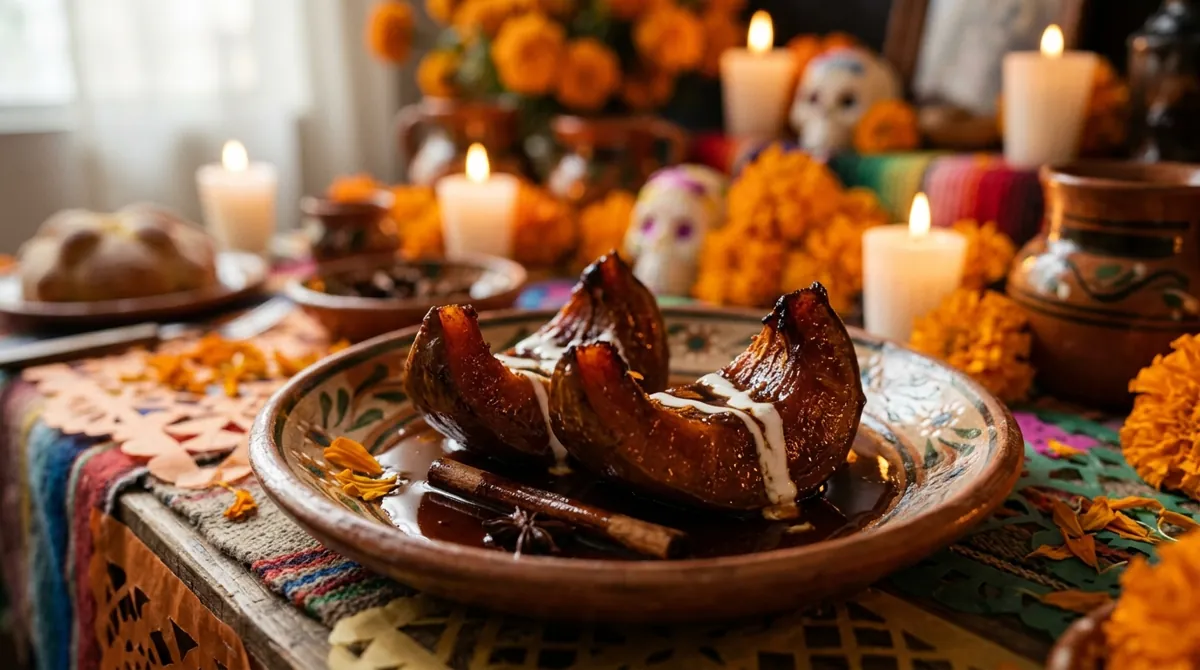
Calabaza en Tacha (Mexican Candied Pumpkin in Piloncillo)
Wedges of whole pumpkin, skin and all, simmered for two hours in a dark syrup of piloncillo, cinnamon and orange until they turn deep brown and glossy, the candied pumpkin of Mexico's Day of the Dead.
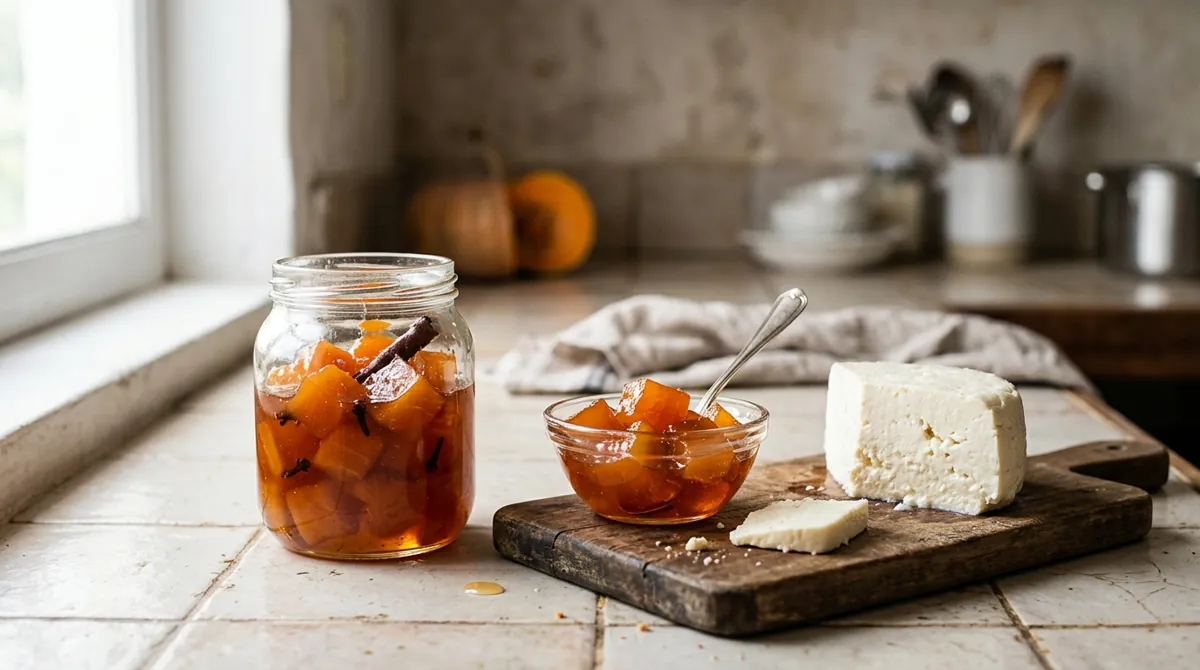
Doce de Abóbora em Calda (Brazilian Pumpkin Cubes in Syrup)
Neat cubes of pumpkin soaked briefly in limewater, then simmered for two hours in a light sugar syrup and left to steep overnight, so they turn glassy and sweet while staying firm, the Brazilian way.
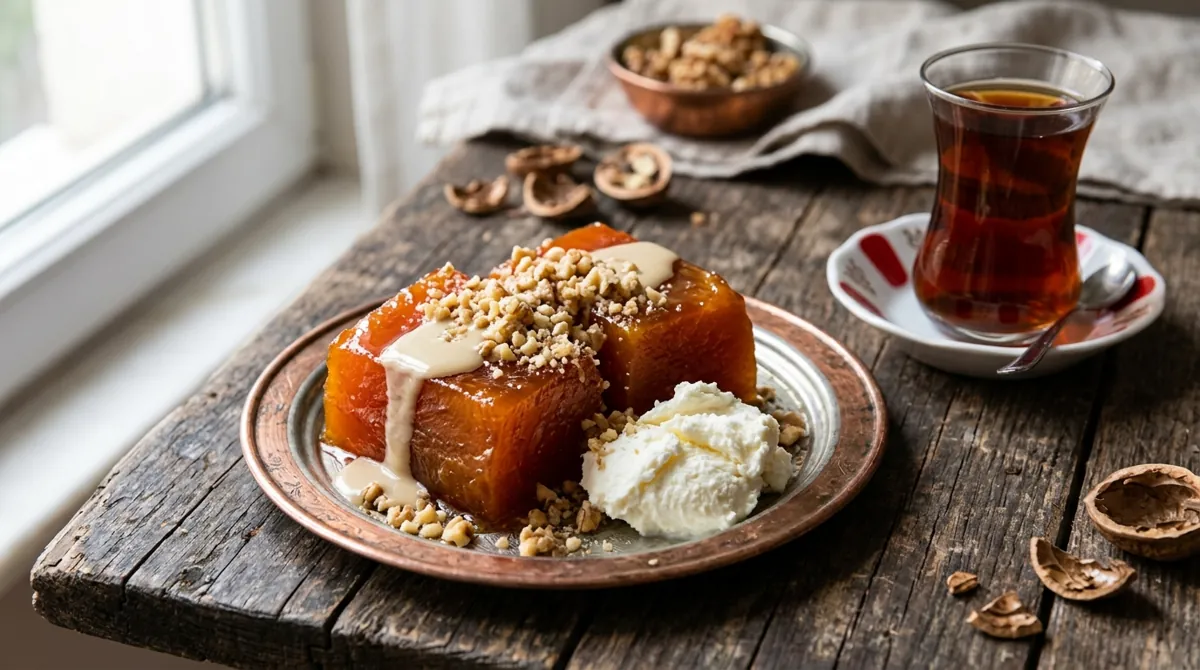
Kabak Tatlısı (Turkish Candied Pumpkin with Tahini and Walnuts)
Thick blocks of pumpkin layered with sugar and left overnight to make their own syrup, then baked until candied and served cool with crushed walnuts and a drizzle of tahini, no water added.
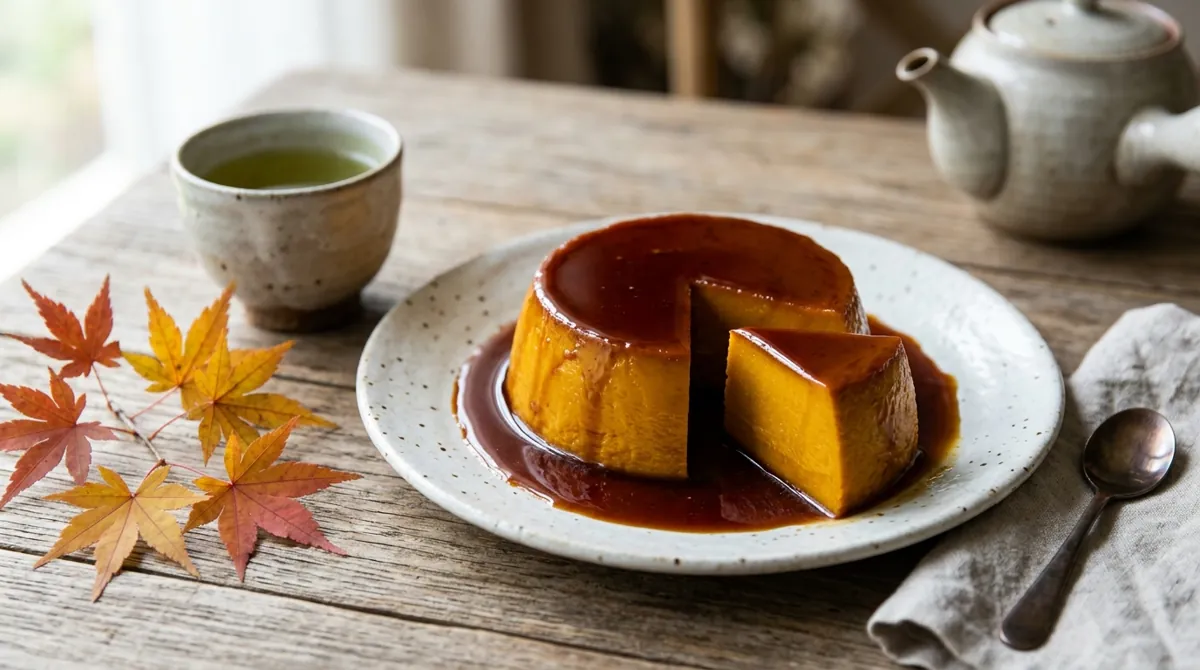
Kabocha Purin (Japanese Kabocha Pudding with Caramel)
Japan's custard pudding made with sieved kabocha squash, baked in a water bath over dark caramel, chilled and turned out so the caramel runs down the sides.
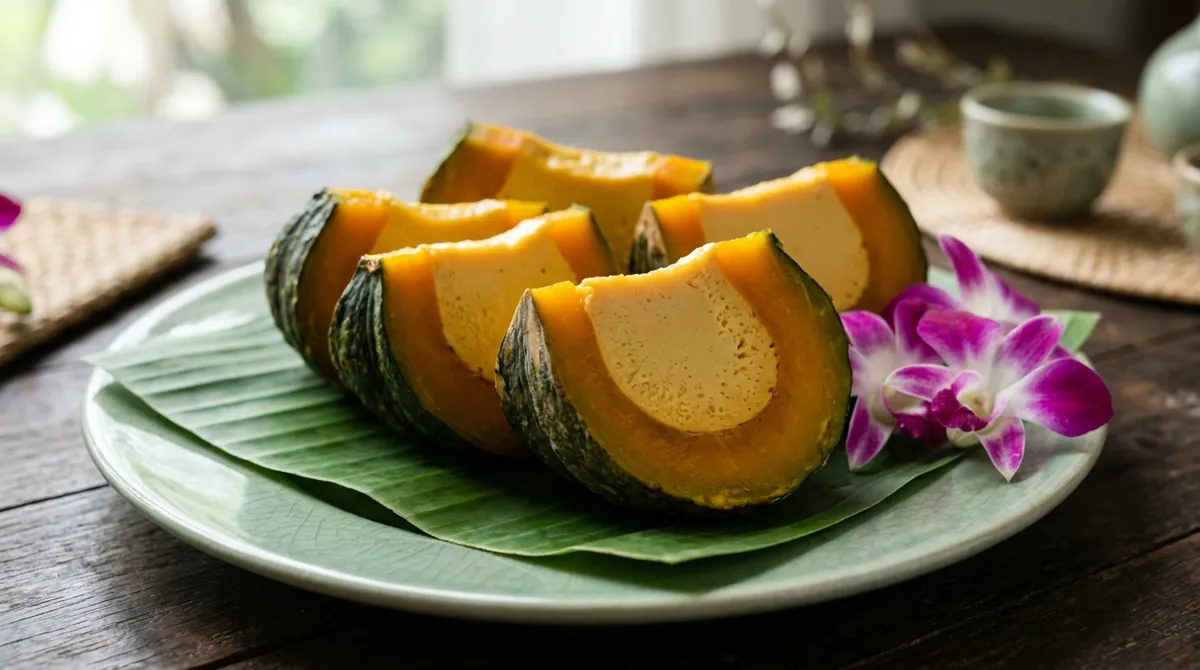
Sangkhaya Fak Thong (Thai Coconut Custard Steamed in a Whole Squash)
A small kabocha hollowed out, filled with coconut cream, palm sugar and egg custard scented with pandan, steamed until set, chilled and cut into wedges that show a yellow custard heart in an orange shell.
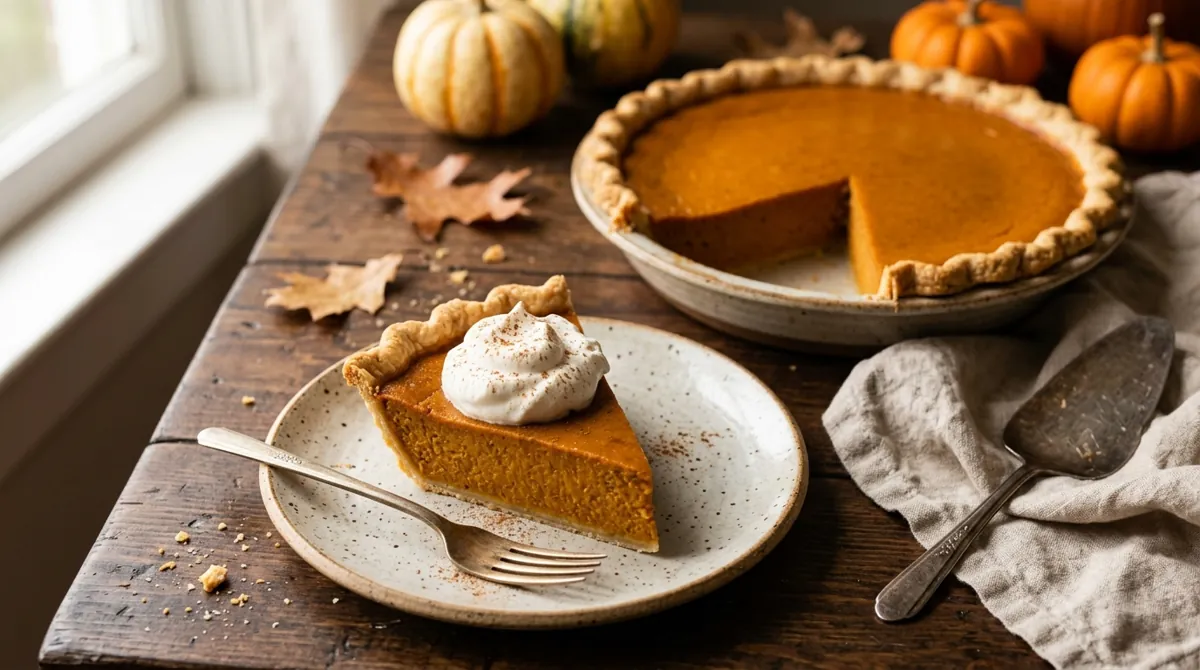
Classic American Pumpkin Pie
The Thanksgiving pie: a smooth custard of pumpkin puree, eggs, heavy cream, sugar, cinnamon, ginger and nutmeg in a par-baked all-butter crust, pulled from the oven while the center still wobbles.
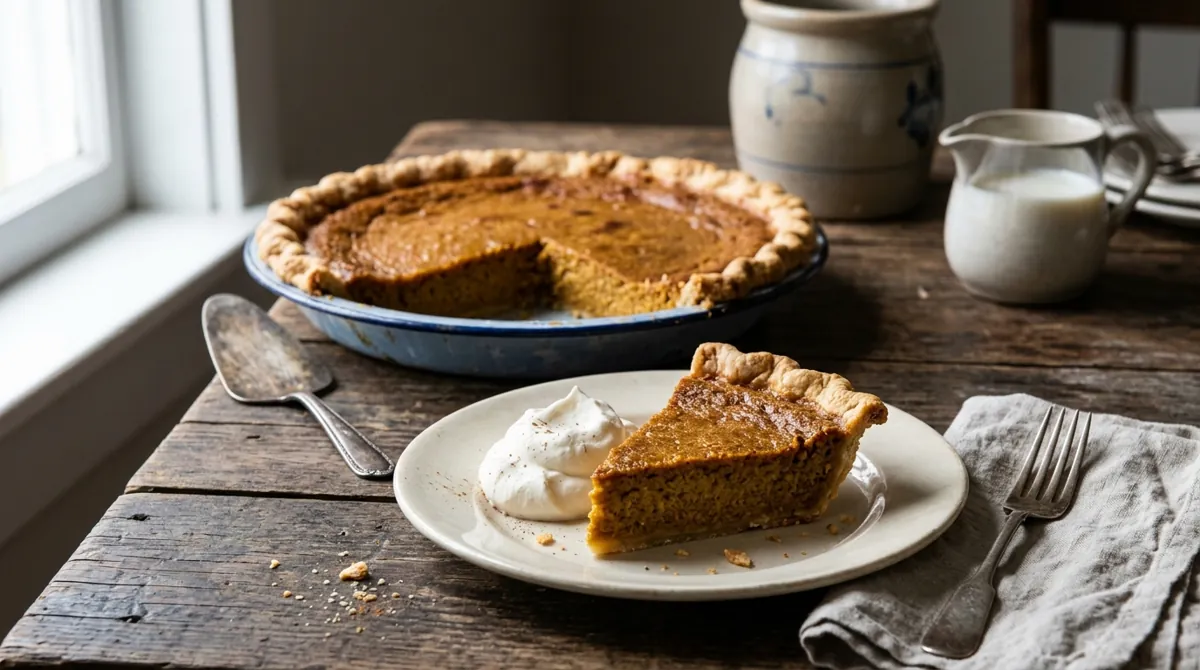
New England Squash Pie (Lydia Maria Child, 1832)
The old Yankee custard pie made with roasted winter squash instead of pumpkin, cooked with milk, sweetened with molasses and a little sugar, spiced with plenty of cinnamon and ginger, and baked in an open crust.
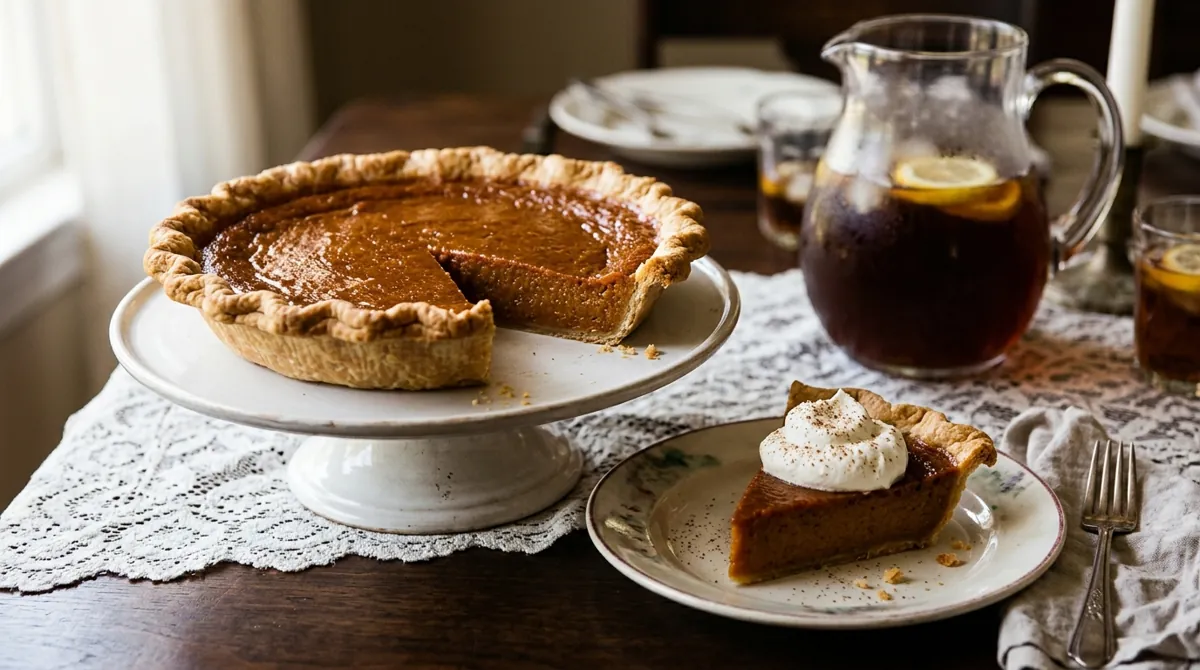
Southern Sweet Potato Pie
Silky sweet potato custard made with brown sugar, butter, sour cream, extra yolks, cinnamon, nutmeg and an optional splash of bourbon, baked in a crust lined with a thin layer of caramelized brown sugar.
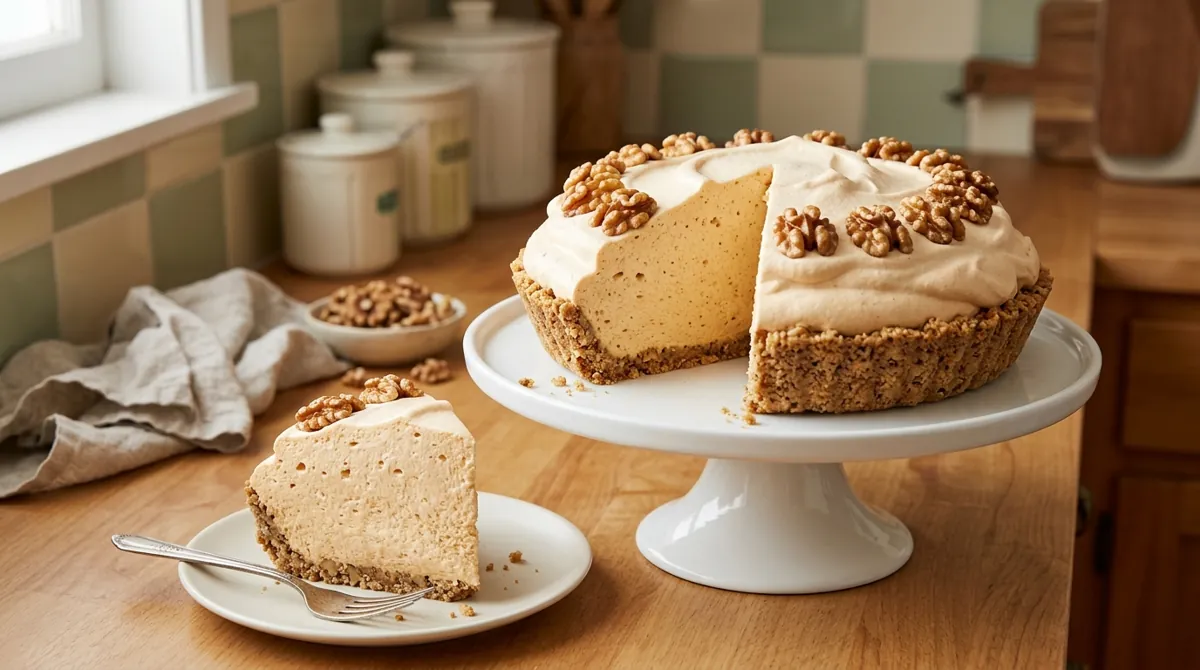
Pumpkin Chiffon Pie
All the spice of pumpkin pie in a light, mousse-like filling: a cooked pumpkin custard set with gelatin and folded with whipped cream, piled into a toasted walnut and graham cracker crust and chilled, no baking of the filling.
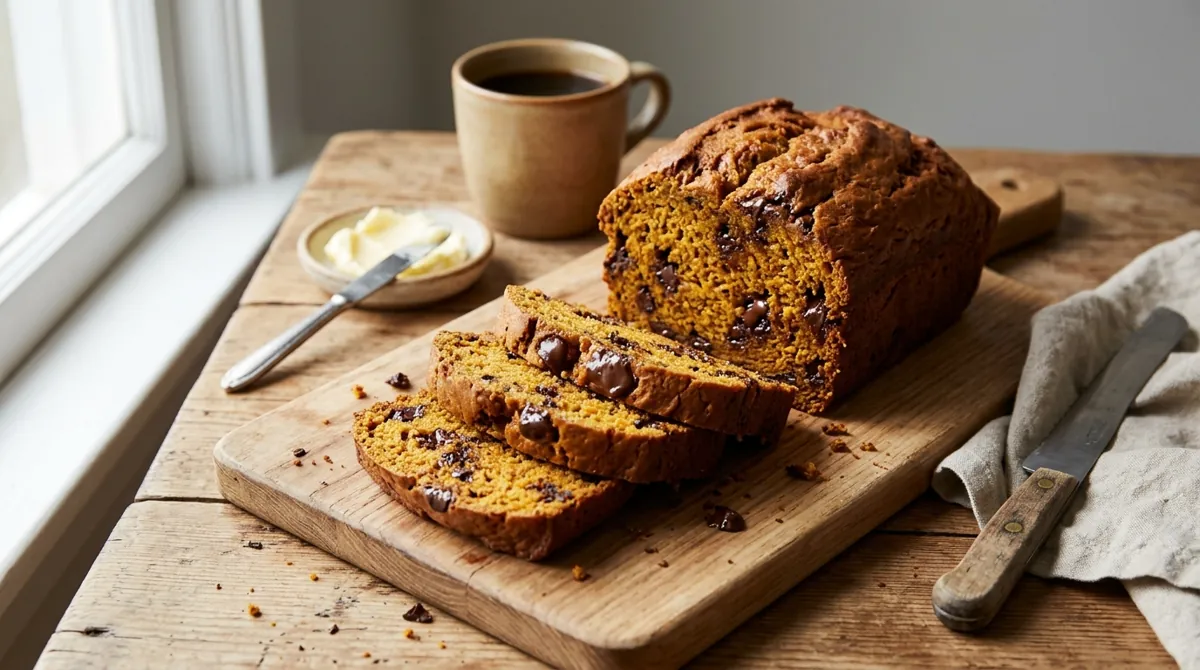
Pumpkin Bread (Chocolate Chip Quick Bread)
King Arthur's super-moist oil-based pumpkin quick bread, made with canned pumpkin, nutmeg and vanilla, studded with chocolate chips and baked in one loaf pan.
Crustless Pumpkin Pie Cups
Classic pumpkin pie filling baked without the crust in six ramekins in a water bath, so it is in the oven in 10 minutes and ready in about 45, with the silky texture of the pie and none of the rolling.
Spiced Pumpkin Loaf with Pepitas, Inspired by Starbucks
A tender, heavily spiced pumpkin loaf sweetened with sugar and honey, scented with cinnamon, nutmeg, cloves and ginger and topped with crunchy pepitas, in the style of the coffee-shop pumpkin loaf. Inspired by, not official.
Meatballs of the World

Italian-American Meatballs
Big, tender meatballs braised for an hour in red sauce over spaghetti. The one most Americans grew up with.

Pallottine (Abruzzo Meatballs)
Tiny meatballs, smaller than a marble, tossed right through square spaghetti alla chitarra. No bread at all.

Swedish Meatballs (Köttbullar)
Small, soft meatballs browned in butter, in a cream sauce made from the same pan, with lingonberry jam on the plate.

Danish Frikadeller
Pork meatballs shaped with a spoon and fried slowly in butter, crusty outside and soft in the middle.

Königsberger Klopse
German meatballs that are never fried: poached, then served in a creamy white sauce with capers.

Spanish Albóndigas in Almond Saffron Sauce
The tapas bar classic: small meatballs in a golden sauce thickened with fried almonds and bread.

Mexican Albóndigas with Chipotle and Mint
Soft meatballs with rice and fresh mint inside, simmered in a smoky tomato and chipotle broth.

Izgara Köfte (Turkish Grilled Meatballs)
Small, flat meatballs kneaded hard, rested cold, and charred on a hot grill pan.

Lion's Head Meatballs
Big, soft pork meatballs, stirred into a sticky paste, fried to set, then braised in a savory sauce.

Chicken Tsukune
Japan's chicken meatball: kneaded sticky, grilled on skewers, glazed with sweet soy tare, dipped in egg yolk.