
📖 Food facts
Stuffing vs Dressing: What's the Difference?
Same holiday side, two names. One camp says it depends on where you cook it. The other says it depends on where you grew up. The second camp has the better evidence.
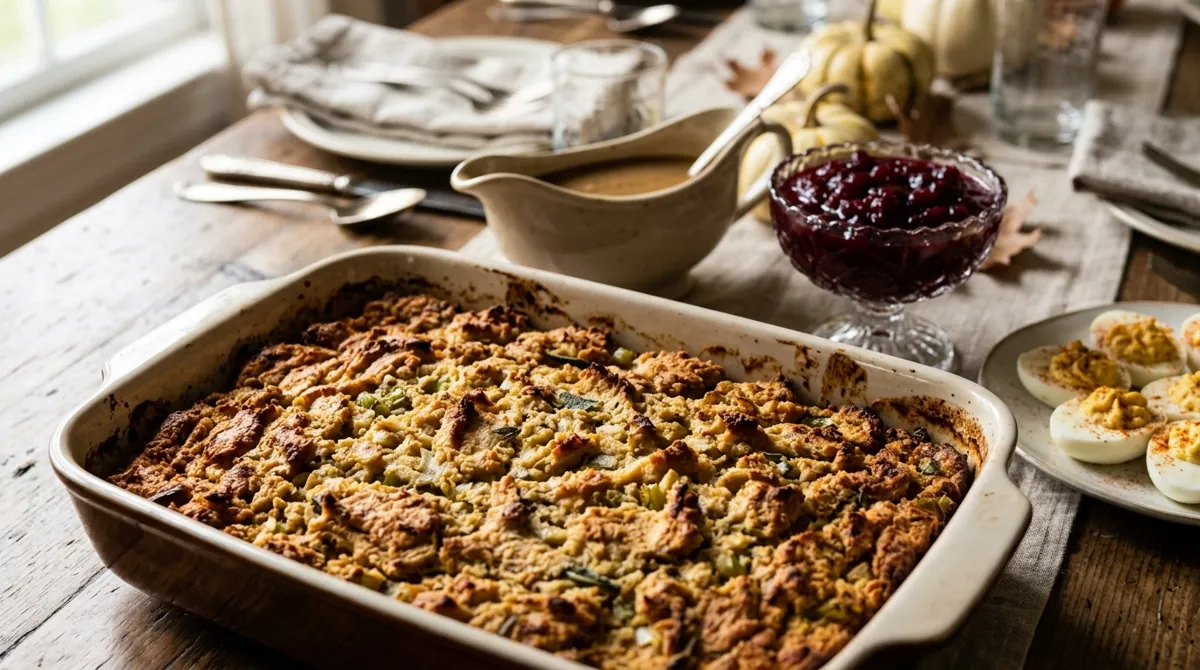
Mostly geography. Southerners usually call it dressing, while most of the rest of the country says stuffing, and many people use either word whether it baked inside the turkey or in a separate dish. A popular rule says stuffing goes in the bird and dressing is baked beside it, but everyday usage does not follow that rule consistently.
The map, not the method
A survey by Mrs. Cubbison's, a Los Angeles stuffing maker, reported in 2012 that Southerners say dressing while people in the East, Midwest and West say stuffing. The same survey found most people bake it in a casserole dish no matter what they call it: 70 percent of Southerners and 60 percent of Northeasterners, against 58 percent of Westerners and 45 percent of Midwesterners who prefer it in the bird.
So a New Englander's pan of sage bread stuffing is still stuffing, even though it never went near the turkey.
What the old cookbooks called it
Amelia Simmons's "American Cookery" (Hartford, 1796), the first cookbook by an American author, gives recipes "To stuff a Turkey" with grated wheat bread, butter, salt pork, eggs and herbs. She uses "dressing" in its older sense of preparing food: the book's full title promises "the art of dressing viands, fish, poultry and vegetables."
Today even the USDA mixes the words. An FSIS food safety article written for the holiday talks about stuffing the bird, then about "preparing the dressing as a side dish" when it is baked separately.
Why the South kept dressing
Southern dressing is usually built on cornbread, and its history runs through two lines. Culinary historian Toni Tipton-Martin traces it to kusha, a West African dish of steamed or boiled millet or sorghum, which became kush in America, made with corn mush or crumbled cornbread, The Takeout reports. Historian Michael Twitty found kush recipes in the Federal Writers' Project slave narratives.
South Carolina's tourism office quotes Twitty calling kush the "grandmother" of Southern cornbread dressing. English bread-and-herb stuffings are the other root. Our Southern cornbread dressing is baked in a pan, the Southern way, and South Carolina's office notes that Lowcountry cooks often add oysters, a habit New Orleans shares in our oyster dressing.
Bread vs cornbread
The bigger difference is often the base, not the name. Celery and onion top the ingredient list everywhere, the Mrs. Cubbison's survey found. Northern stuffings usually start from dried white bread with sage, as ours does, while Southern dressings use crumbled cornbread, and South Carolina's tourism office notes that most Southern cooks make it with white cornmeal.
Pick a side in our stuffing vs cornbread dressing matchup, or browse every version in the stuffing hub.
Questions people ask
Is dressing always cooked outside the turkey?
No. Some cooks use that rule, but surveys show the name tracks region more than method. Plenty of Southerners bake dressing in a pan and call it dressing, and plenty of Northerners bake stuffing in a pan and call it stuffing.
Is one safer than the other?
Baking it in a dish is the method USDA prefers. If it goes in the bird, USDA says the center of the stuffing must reach 165°F, checked with a food thermometer.
Can I mix it the night before?
USDA says no for uncooked stuffing. Prepare the wet and dry ingredients separately ahead and chill them, then mix just before baking, or freeze the mixed stuffing right away and bake it from frozen to 165°F.
Parts of this history are disputed. Where sources disagree, we say so.
Sources
- Carolina Country (Family Features), "Do you call it dressing or stuffing?", November 2012
- Amelia Simmons, "American Cookery" (Hartford, 1796), Project Gutenberg
- Archie Magoulas, USDA FSIS, "You've Got the Right Stuff(ing)! Tips to Handle Stuffing With Care" (hosted by University of Wisconsin Extension, Dunn County)
- Aimee Levitt, "The Black history of cornbread dressing," The Takeout, November 22, 2019
- Discover South Carolina (South Carolina Department of Parks, Recreation and Tourism), "Dressing vs. Stuffing: It's No Contest in South Carolina"
More food facts
Cook it
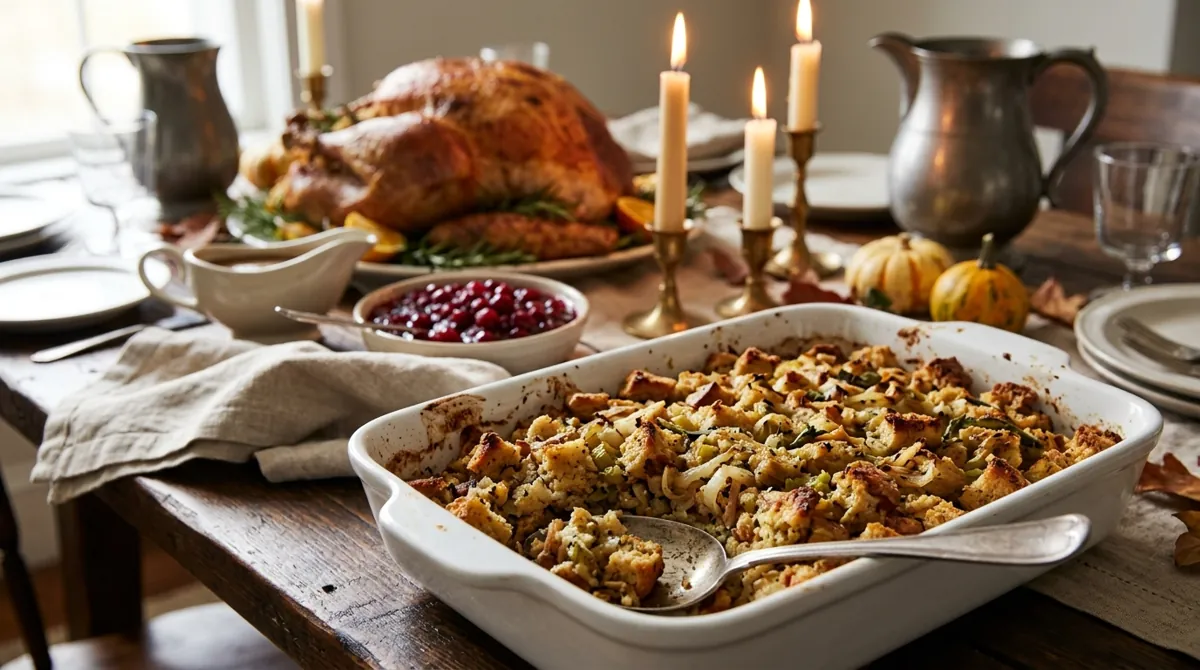
New England Sage Bread Stuffing
Dried French bread cubes tossed with onion and celery cooked in butter, sage, thyme, marjoram and parsley, chicken broth and eggs, baked covered until fragrant and then uncovered until a golden crust forms.
Southern Cornbread Dressing
A pan of cornbread baked, crumbled while hot and mixed with sausage, onion, bell pepper and celery, poultry seasoning, broth, milk and eggs, then baked in ridges with butter brushed on top until crisp outside and almost creamy inside.
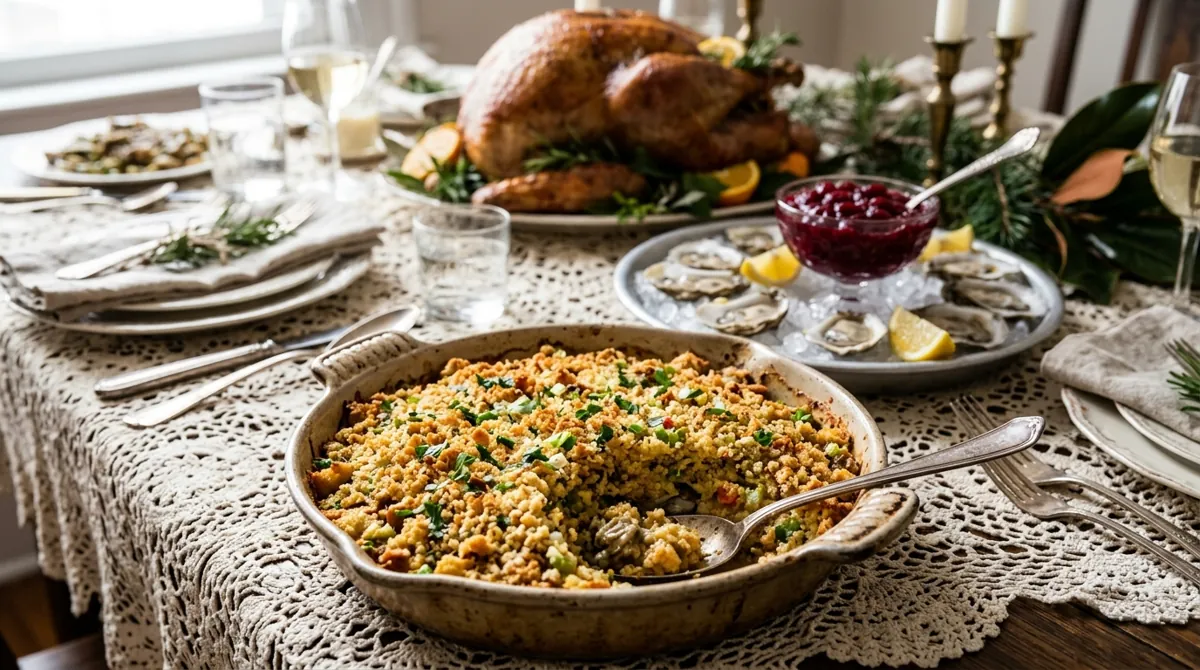
New Orleans Oyster Dressing (Leah Chase)
Leah Chase's holiday dressing: day-old bread soaked in oyster liquor, browned ground beef and the Creole trinity cooked in butter, chopped Gulf oysters, thyme and cayenne, bound with egg and baked under seasoned bread crumbs.
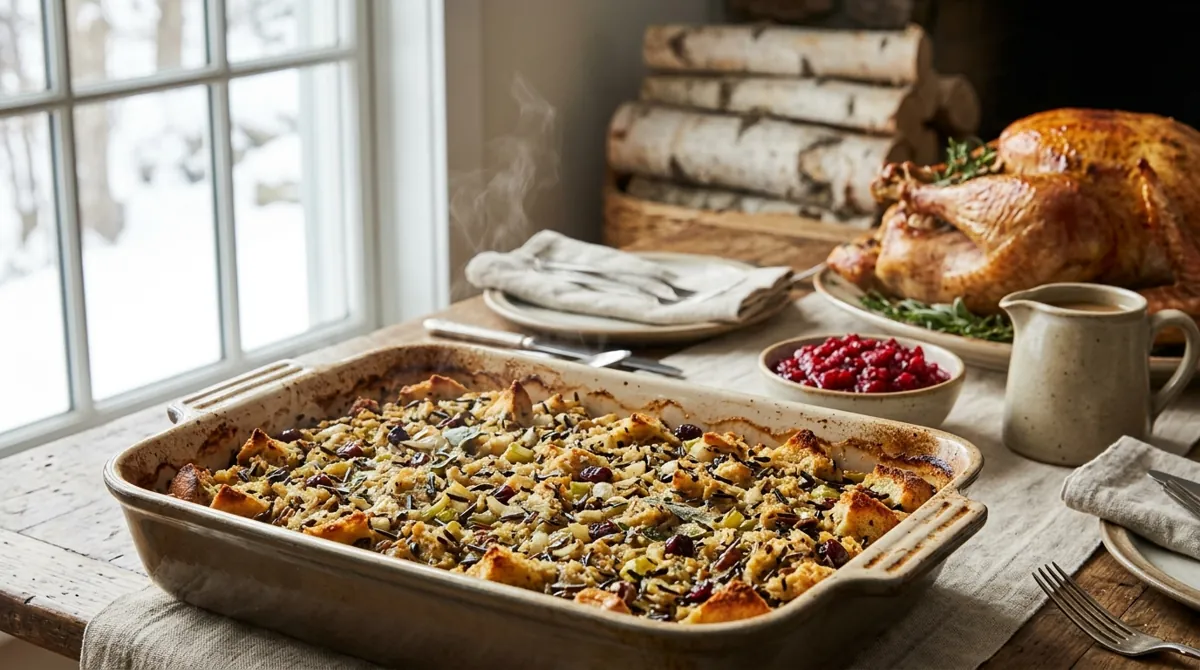
Wild Rice Dressing (Minnesota)
Nutty wild rice cooked in broth, mixed with toasted bread crumbs, onion, celery, garlic, sage and thyme and a light custard of cream, eggs and the rice's own cooking liquid, baked covered until set.
Sage and Onion Stuffing (Mrs Beeton, 1861)
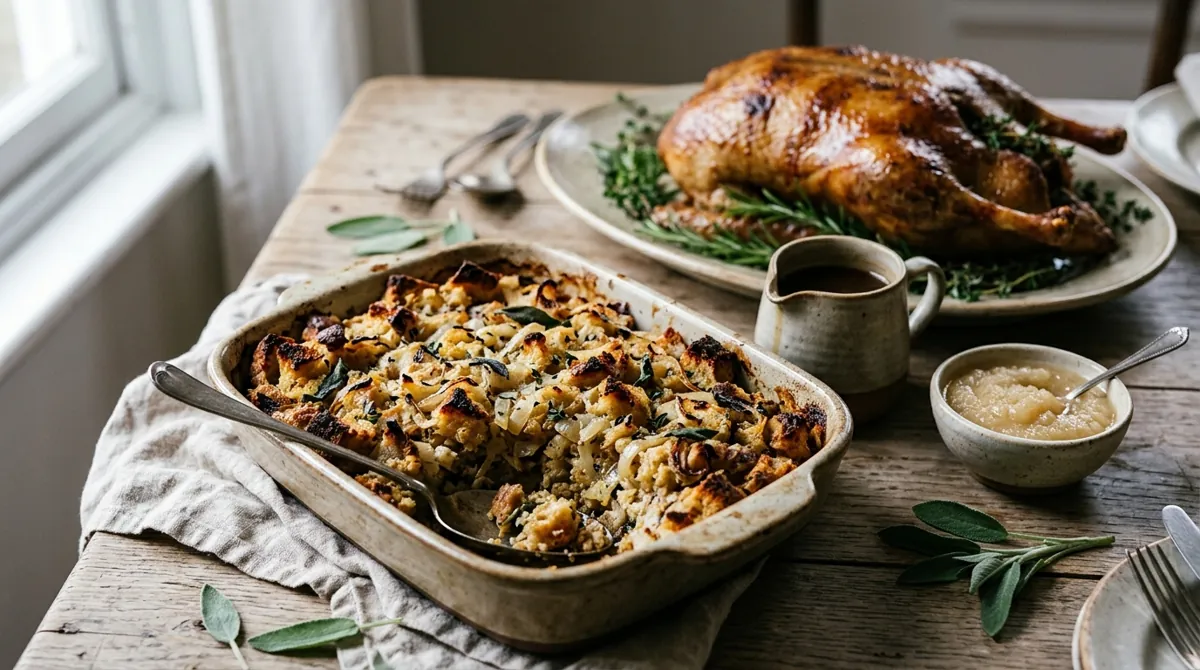
The Victorian English stuffing for goose, duck and pork: onions simmered until mild, chopped fine with fresh sage, worked together with bread crumbs, butter and an egg yolk, and baked in its own dish until crisp on top.