
📖 Food facts
Canadian Thanksgiving vs American Thanksgiving: What's Different?
Same turkey, different month. Canada's Thanksgiving has its own date, its own origin story and a dessert map that changes by province.
 By Americanized · Edited by JP Lambiase · October 18, 2026
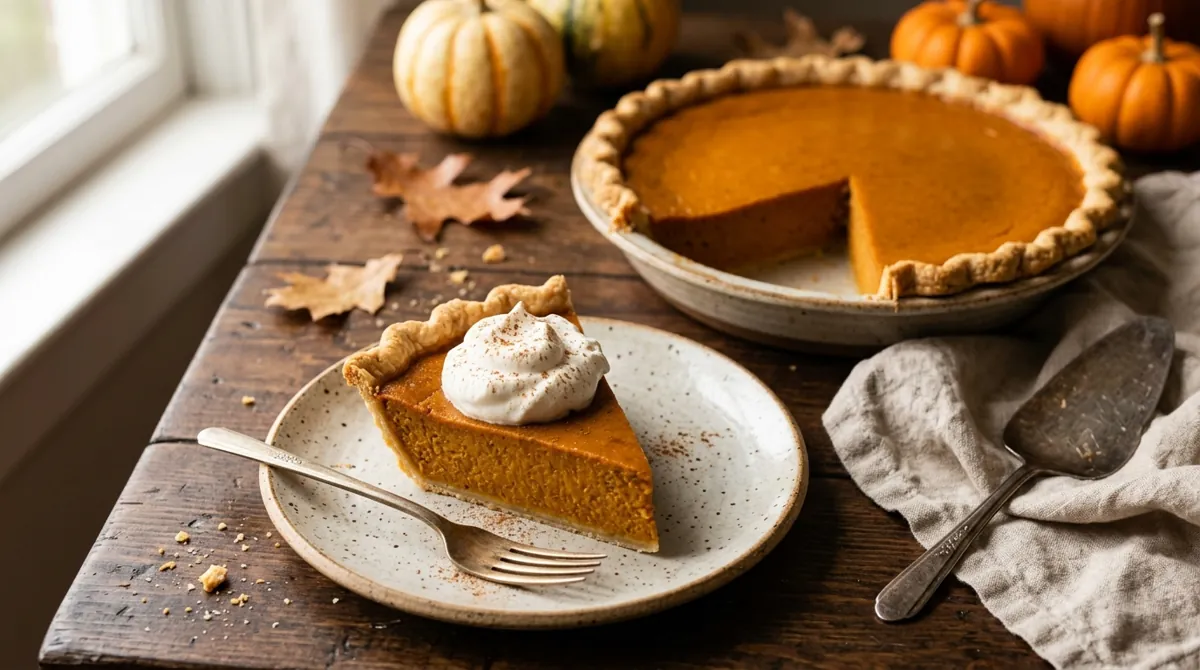
Canadian Thanksgiving falls on the second Monday of October, fixed by a proclamation in January 1957. American Thanksgiving is the fourth Thursday of November, fixed by Congress in 1941. The dinners look alike (turkey, stuffing, pumpkin pie), but Canada traces its holiday to explorers and Loyalists rather than the Pilgrims, and regional dishes vary a lot.
The date: a Monday in October
Canada's first annual national Thanksgiving was held on November 6, 1879, The Canadian Encyclopedia says. After that, Parliament set the date year by year. It landed as late as December 6 and sometimes matched the American holiday, though the third Monday of October was the most popular choice.
From 1921 to 1931, Thanksgiving shared a day with Armistice Day, the Monday of the week of November 11. In 1931 November 11 became Remembrance Day on its own, and Thanksgiving drifted back to October. On January 31, 1957, the second Monday of October was proclaimed a day of general thanksgiving for the harvest.
Not everyone loved the change. CBC News notes that the harvest usually isn't all in by then, and that E.C. Drury, a farmer and former Ontario premier, complained the towns had taken a farmers' holiday to get a long weekend in good weather.
A different origin story
Canada does not start with Plymouth. The Canadian Encyclopedia credits the English explorer Martin Frobisher and his crew with a thanksgiving ceremony in 1578, eating salt beef, biscuits and mushy peas after arriving safely in what is now Nunavut. CBC News puts that ceremony in present-day Newfoundland and Labrador instead, so even the location is disputed. Some also argue it was not a true Thanksgiving, since it gave thanks for a safe voyage rather than a harvest.
The turkey, squash and pumpkin feast reached Nova Scotia in the 1750s, and Loyalists who left the American colonies during the Revolution carried the custom to other parts of the country, the encyclopedia says.
What's on the table
The core dinner will look familiar: roast turkey, stuffing and pie, much like our classic roast Thanksgiving turkey with New England sage bread stuffing. The regional swaps are where it gets interesting.
According to The Canadian Encyclopedia, Newfoundlanders often pick Jiggs dinner, a salt meat stew, over turkey, with scalloped potatoes instead of mashed and cranberry sauce in place of gravy. In Western Canada, ham sometimes joins or replaces the turkey, and Brussels sprouts are a popular side. Many Ukrainian Canadians serve perogies and cabbage rolls, and many Indigenous families serve bannock.
Dessert splits the country. Pumpkin pie is a staple in most places, but Quebec and Atlantic Canada lean toward apple pie or apple crisp. Ontarians love butter tarts, and the West favors Nanaimo bars. Our classic pumpkin pie and classic apple pie cover the two big camps.
Other differences
Canadian Thanksgiving is a statutory holiday in most of Canada, but The Canadian Encyclopedia and CBC News both say it is not one in Prince Edward Island, New Brunswick or Nova Scotia. In Quebec it is called Action de grâce and is celebrated less widely than elsewhere.
The American date has its own history. The National Archives explains that Franklin Roosevelt moved Thanksgiving a week earlier in 1939, leaving the country with two competing dates, until Congress fixed it on the fourth Thursday of November in 1941. For what the Pilgrims actually ate, see was there turkey at the first Thanksgiving.
Questions people ask
When is Canadian Thanksgiving?
The second Monday of October. That date was fixed by a proclamation on January 31, 1957, after decades of the day moving around the calendar.
Do Canadians eat turkey at Thanksgiving?
Turkey is the usual centerpiece, with stuffing and pumpkin pie. The Canadian Encyclopedia notes regional swaps, though: Jiggs dinner in Newfoundland, ham in the West, and apple pie or apple crisp in Quebec and Atlantic Canada.
Is Canadian Thanksgiving older than American Thanksgiving?
By one count, yes. The Canadian Encyclopedia credits Martin Frobisher's crew with a thanksgiving ceremony in 1578, which CBC News notes was 43 years before the Pilgrims' 1621 harvest feast. Some argue it does not count, because it gave thanks for safe passage rather than for a harvest.
Parts of this history are disputed. Where sources disagree, we say so.
Sources
- The Canadian Encyclopedia, "Thanksgiving in Canada" (David Mills, Andrew McIntosh, Laura Neilson Bonikowsky; updated by Celine Cooper; last edited October 10, 2025)
- Peter Hadzipetros, CBC News, Canadian Thanksgiving history explainer, October 8, 2009
- U.S. National Archives, Center for Legislative Archives, "Congress Establishes Thanksgiving"
More food facts
Cook it
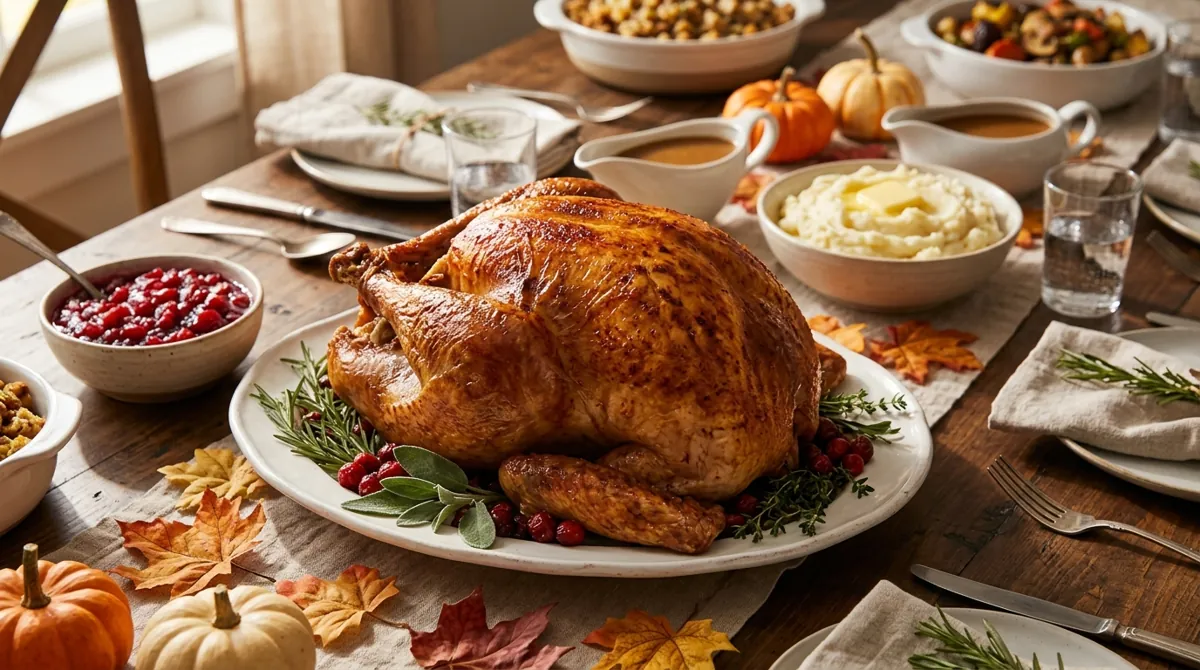
Classic Roast Thanksgiving Turkey
The plain American centerpiece: a buttered, salted and peppered turkey roasted breast side down first, flipped, and finished breast side up until the thermometer reads 165°F. No basting, no fuss.
Classic American Pumpkin Pie
The Thanksgiving pie: a smooth custard of pumpkin puree, eggs, heavy cream, sugar, cinnamon, ginger and nutmeg in a par-baked all-butter crust, pulled from the oven while the center still wobbles.
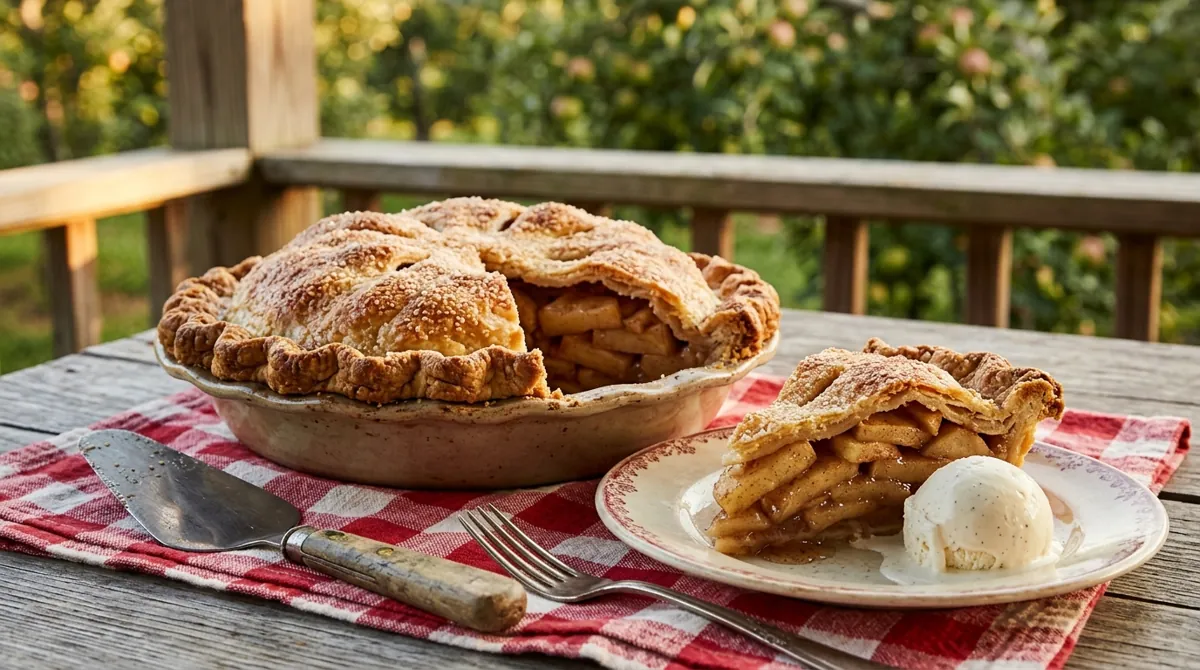
Classic American Apple Pie (Double Crust)
Eight cups of thin-sliced apples tossed with sugar, cinnamon, nutmeg and allspice, thickened with flour and cornstarch and dotted with butter, sealed between two flaky butter and shortening crusts, baked at 425°F and then 375°F until the filling bubbles hard through the vents.
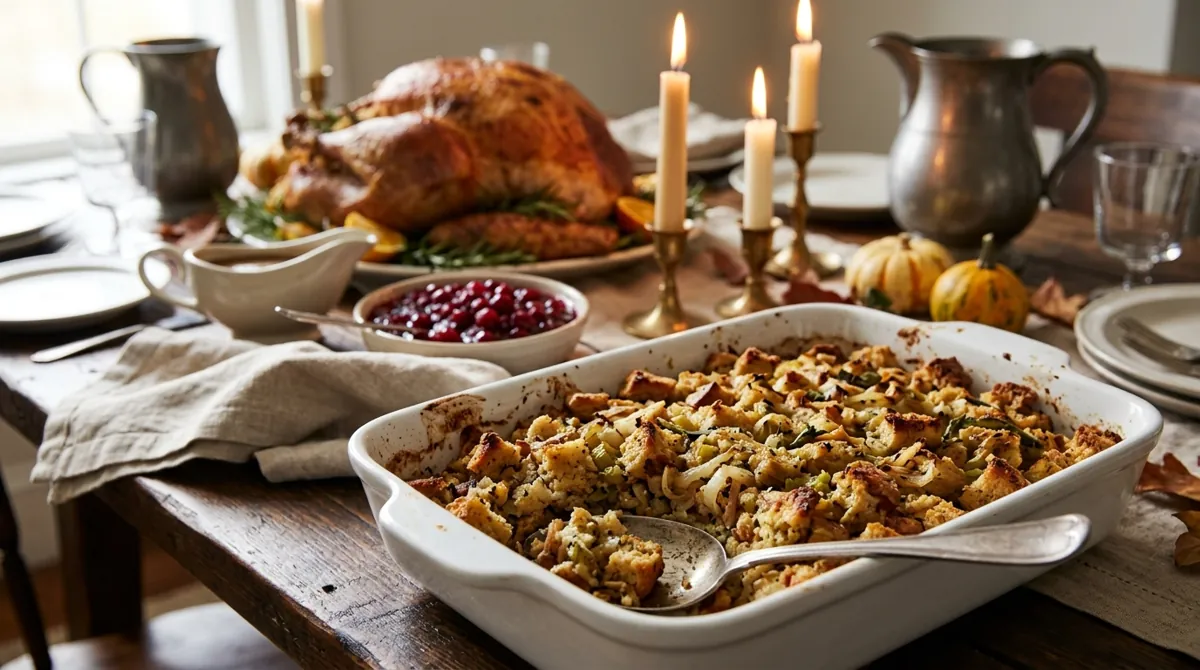
New England Sage Bread Stuffing
Dried French bread cubes tossed with onion and celery cooked in butter, sage, thyme, marjoram and parsley, chicken broth and eggs, baked covered until fragrant and then uncovered until a golden crust forms.
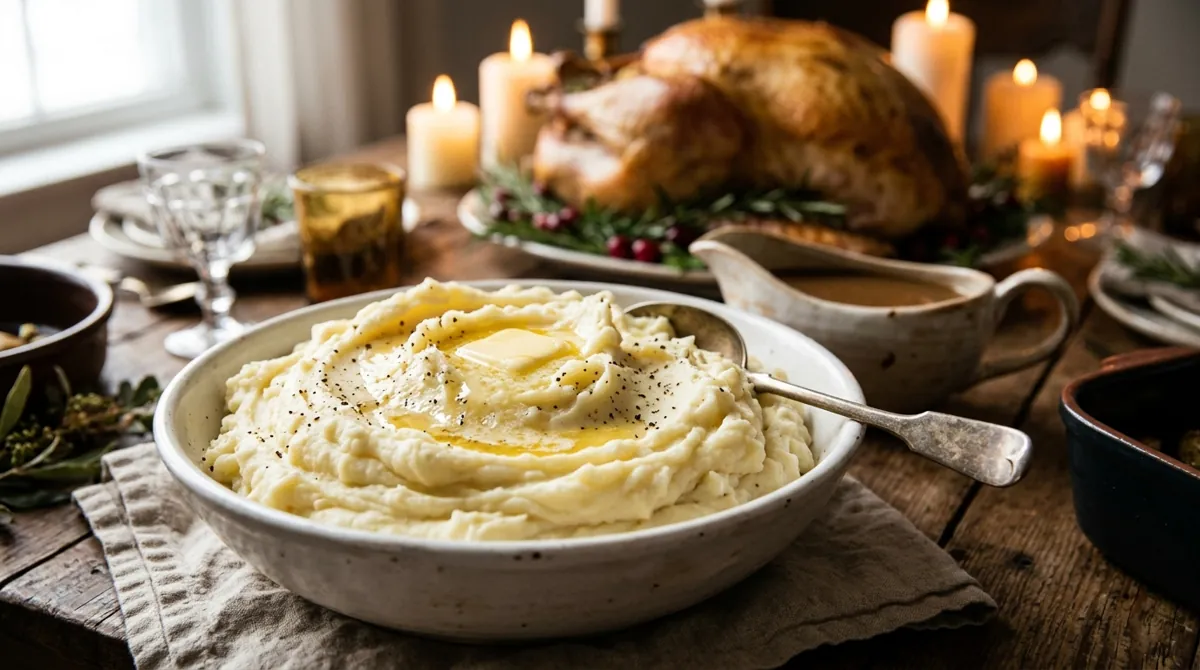
Classic American Mashed Potatoes
Whole russets simmered in their skins, peeled hot and riced, then stirred with melted butter first and warm half-and-half second for a fluffy, creamy holiday mash.
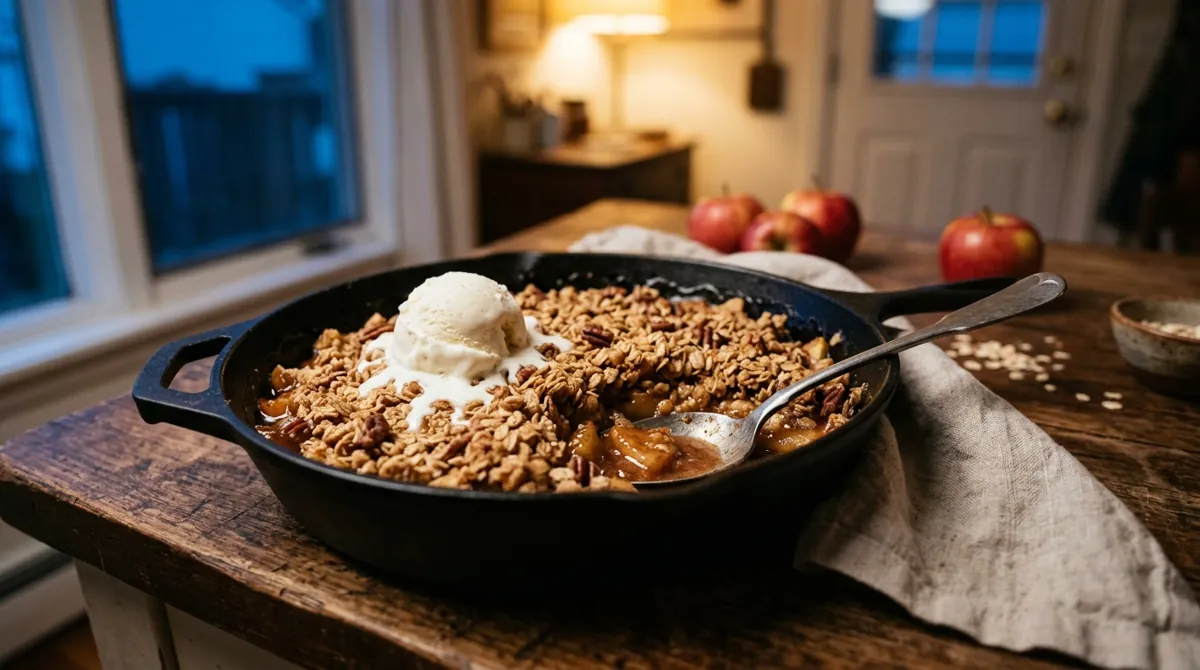
Skillet Apple Crisp (One-Pan, About an Hour)
Apple wedges sautéed in butter in one ovensafe skillet and coated with reduced cider, covered with a pecan, oat and brown sugar crumble made with melted butter, and baked hot at 450°F for 15 to 20 minutes until the fruit is tender and the top deep golden.