
Montreal Smoked Meat
Montreal's answer to pastrami: a whole brisket dry-cured for a week, soaked, crusted with pepper, coriander and dill, smoked low, steamed in foil until tender and piled on rye with yellow mustard.
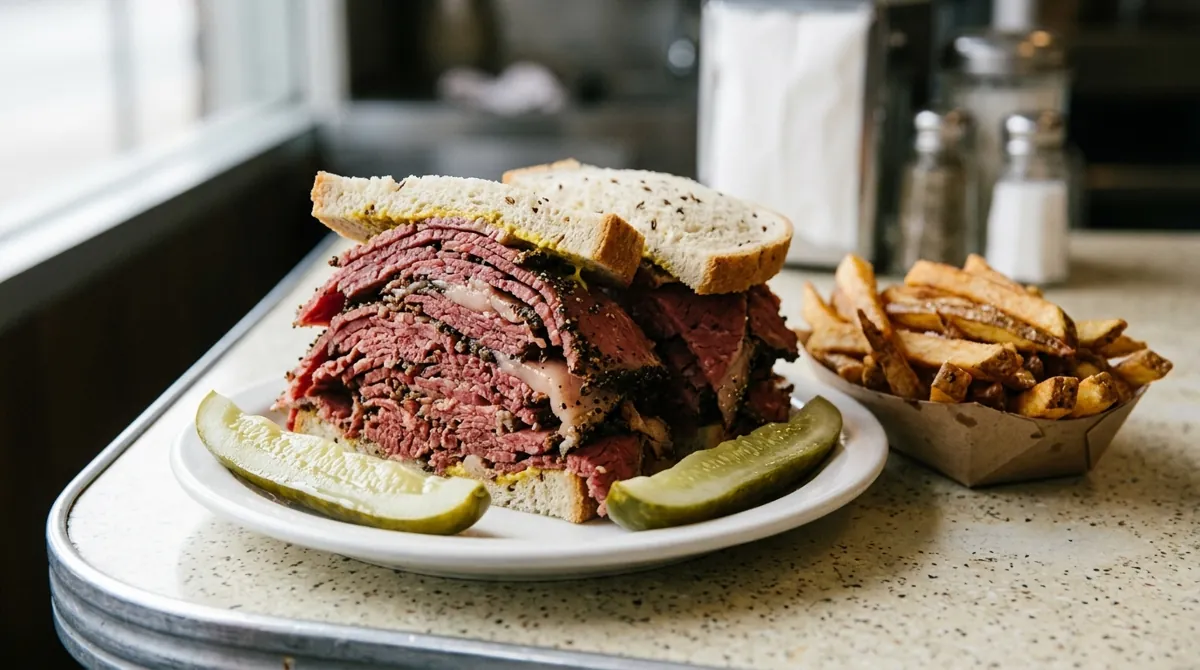
Montreal smoked meat is brisket that is dry-cured with salt and spices for about a week, hot-smoked and then steamed, and it is hand-sliced to order and served on light rye with yellow mustard; customers choose lean, medium or fat. Who made it first is DISPUTED and, in Wikipedia's words, likely unresolvable: Benjamin Kravitz, who founded Ben's De Luxe in 1910 and whose family says he used a curing method from Lithuania; Herman Rees Roth, who may have sold a smoked meat sandwich in 1908 (historian Eiran Harris, via David Sax's "Save the Deli", 2010); and earlier Romanian Jewish butchers. After Quebec's language law, Bill 101 (1977), the government language office told delis to call it "boeuf mariné"; the delis fought back, and the term "smoked meat" won legal recognition in 1987 (Wikipedia, citing the Montreal Gazette and Ottawa Citizen). Serious Eats writer Leah Colins says that before her first trip, almost everyone told her to try the smoked meat at Schwartz's.
📖 : Corned Beef vs Pastrami: What's the Difference? →
Why it works the kitchen science
Cure, then soak
Seven days in a dry cure lets the salt and nitrite reach the middle so the meat is pink and firm all through, and the long soak pulls back enough salt to make it edible (Serious Eats).
Smoke, then steam
Smoke flavors the meat while it is cool enough to take it, and wrapping it in foil at 170°F stops the stall and steams the collagen into gelatin, the same job a Montreal deli's steamer does.
Step by step
- Step 1
Mix the salt, pepper, coriander, curing salt, sugar, bay leaf and cloves. Rub the cure over every surface of the brisket, put it in a 2-gallon zip-top bag (or a covered tray) and refrigerate at 32 to 40°F for 7 days, flipping it once a day.
- Step 2
Rinse off as much cure as you can under cold running water. Cover the brisket with cold water and soak 2 hours, changing the water every 30 minutes, then refill with fresh water and soak it overnight in the refrigerator. Rinse and pat dry.
- Step 3
Mix the rub ingredients and press all of it onto the brisket.
- Step 4
Heat a smoker to 225 to 275°F and add 3 or 4 wood chunks about 3 inches across. Smoke the brisket fat side up until the thickest part reads 170°F, 6 to 10 hours.
- Step 5
Wrap the brisket airtight in a double layer of foil, put it back fat side up and cook until it reads 195 to 200°F, 3 to 6 hours more.
- Step 6
Move the wrapped brisket to an empty insulated cooler, close it and rest 2 to 3 hours.
- Step 7
Slice against the grain about 1/4 inch thick (some shreds are normal) and pile the meat on rye spread with yellow mustard.
Montreal Smoked Meat
Serves 12 · 1 whole brisket, sliced (about 12 sandwiches) · 15 hr total
Cure
- 3/4 cup (108 g) Diamond Crystal kosher salt (or the same weight of table salt)
- 3 tbsp (21 g) freshly ground black pepper
- 3 tbsp (18 g) ground coriander
- 1 tbsp (22 g) pink curing salt #1 (Prague Powder #1)
- 1 tbsp (13 g) sugar
- 1 tsp ground bay leaf
- 1 tsp ground cloves
- 1 (10 to 12 lb) whole beef brisket, fat cap trimmed to 1/4 inch
Spice rub
- 3 tbsp (27 g) coarsely ground black pepper
- 1 tbsp (6 g) ground coriander
- 1 tbsp (7 g) paprika
- 1 tbsp (10 g) garlic powder
- 1 tbsp (10 g) onion powder
- 1 tsp dried dill weed
- 1 tsp ground mustard
- 1 tsp celery seed
- 1 tsp crushed red pepper flakes
To serve
- 24 slices light rye bread
- Yellow mustard
Method
- Mix the salt, pepper, coriander, curing salt, sugar, bay leaf and cloves. Rub the cure over every surface of the brisket, put it in a 2-gallon zip-top bag (or a covered tray) and refrigerate at 32 to 40°F for 7 days, flipping it once a day.
- Rinse off as much cure as you can under cold running water. Cover the brisket with cold water and soak 2 hours, changing the water every 30 minutes, then refill with fresh water and soak it overnight in the refrigerator. Rinse and pat dry.
- Mix the rub ingredients and press all of it onto the brisket.
- Heat a smoker to 225 to 275°F and add 3 or 4 wood chunks about 3 inches across. Smoke the brisket fat side up until the thickest part reads 170°F, 6 to 10 hours.
- Wrap the brisket airtight in a double layer of foil, put it back fat side up and cook until it reads 195 to 200°F, 3 to 6 hours more.
- Move the wrapped brisket to an empty insulated cooler, close it and rest 2 to 3 hours.
- Slice against the grain about 1/4 inch thick (some shreds are normal) and pile the meat on rye spread with yellow mustard.
Adapted from Serious Eats, "Montreal Smoked Meat Sandwich" by Leah Colins (updated March 14, 2024), as written for a 10 to 12 lb whole brisket; we call it 12 servings. We give the smoker method; the charcoal-snake method is in the Tips. Serious Eats weighs its tablespoon of curing salt at 22 g; we keep that weight. Its curing salt dose works out to under half of USDA's dry-cure limit (our arithmetic; see Food safety baseline). The 32 to 40°F curing temperature is from Mississippi State University Extension. Serious Eats. Ingredient list follows the source; the method is in our own words.
All sources (2)
Tips
- No smoker: Serious Eats' charcoal-snake method on a 22-inch kettle grill smokes to 170°F in 4 to 6 hours, then 2 to 4 hours wrapped to 195 to 200°F.
- Order it "medium" in Montreal: Wikipedia calls it the most popular cut.
- Cooked brisket keeps 2 weeks refrigerated airtight according to Serious Eats; USDA FSIS's general advice for cooked corned beef is 3 to 4 days, so freeze extra.
The rules people argue about
What the sources agree on, what they don't, and what is just a good story.
- Who made it first. Disputed: Benjamin Kravitz (Ben's, 1910), Herman Rees Roth (possibly 1908), Itzak Rudman (said to be 1902) or Aaron Sanft (a Romanian butcher from 1884) (all via Wikipedia).
- Smoked meat is just pastrami. Disputed: Serious Eats calls the process almost identical; Wikipedia says smoked meat uses brisket while New York pastrami usually uses navel, and smoked meat carries more coriander, garlic and mustard seed.
- Montreal bans wood smoking, so delis use electric smokers. Folklore: Serious Eats and AmazingRibs both say so; we did not find the city rule itself.
- Never use a slicing machine. Documented as Montreal practice (Wikipedia): a slicer breaks up the tender meat.
- The name had to be French. Documented: Quebec's language office ordered "boeuf mariné" after 1977; "smoked meat" won recognition in 1987 (Wikipedia).
Every other corned beef
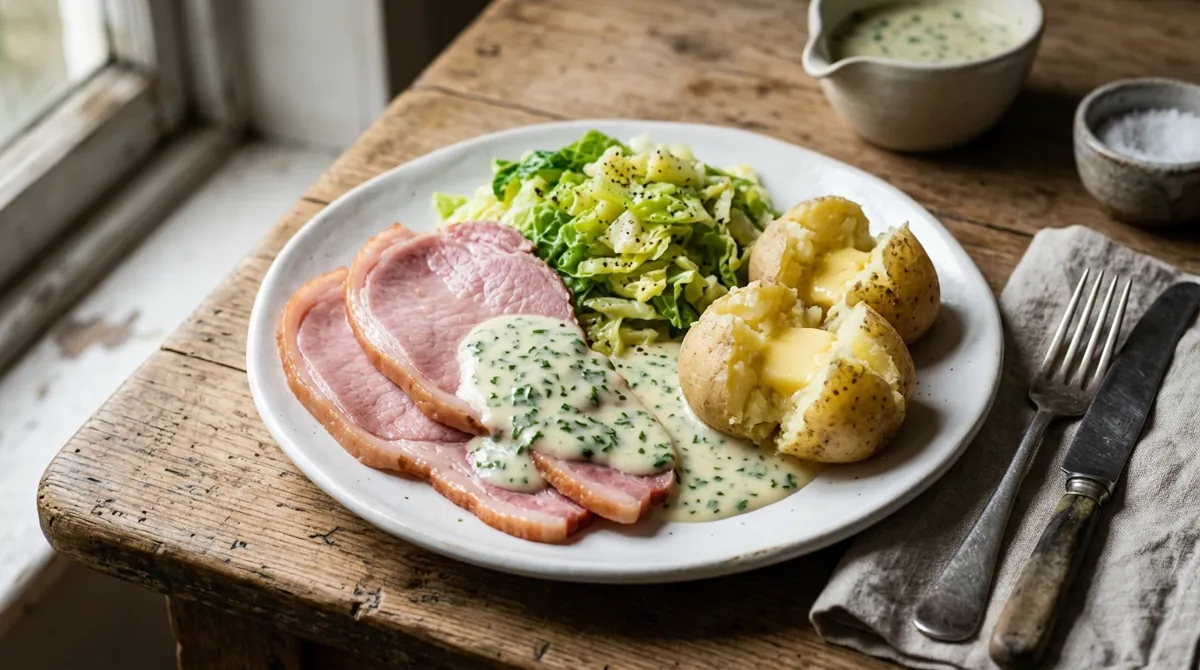
Irish Bacon and Cabbage with Parsley Sauce
The real Irish dinner behind America's corned beef and cabbage: a cured bacon joint simmered in a big pot, cabbage cooked in the salty bacon water, and a white sauce full of parsley.
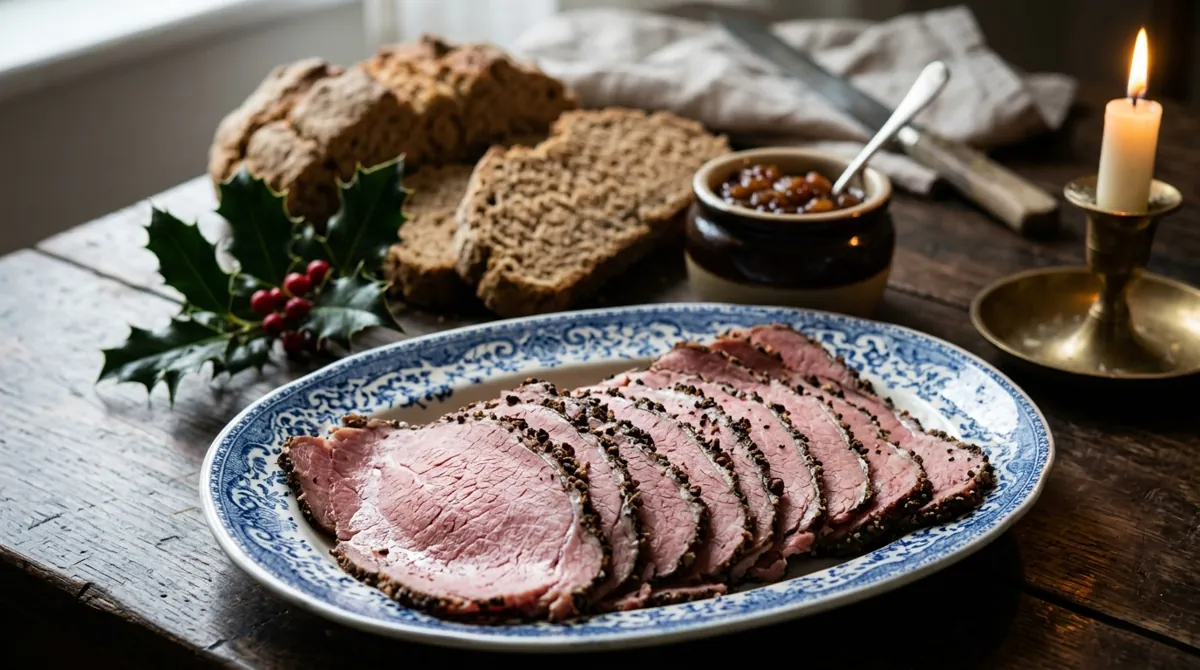
Cork Spiced Beef
Cork's Christmas beef: a corned joint marinated for a week in allspice, brown sugar and three peppers, simmered gently, cooled in its liquid and sliced thin.
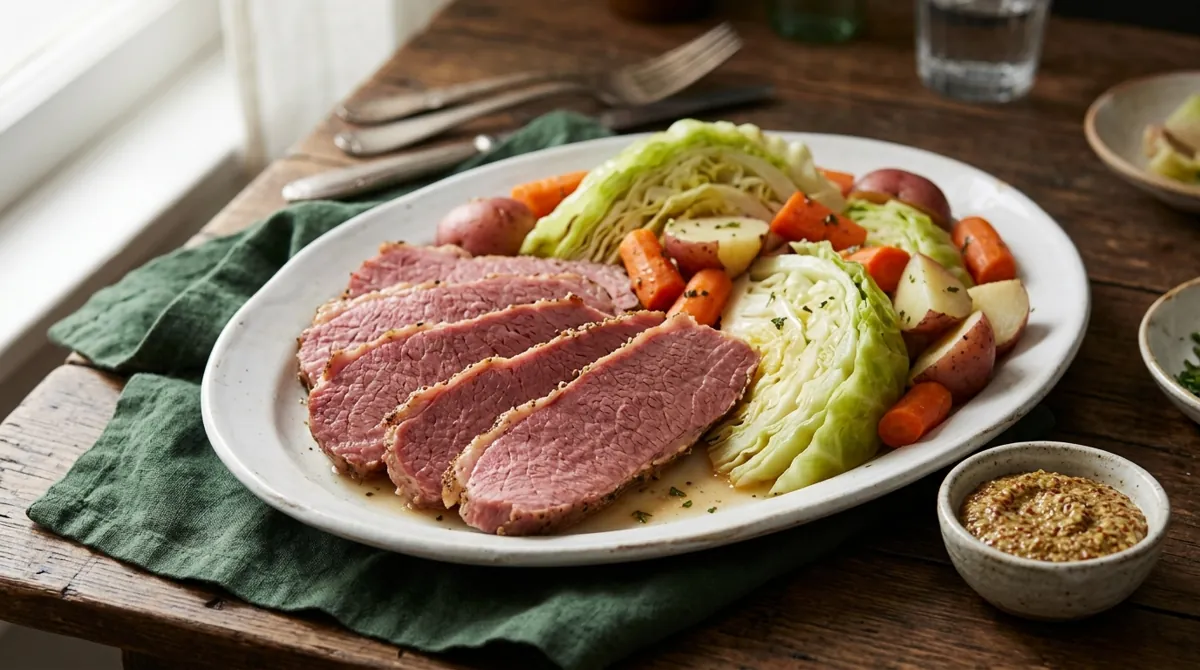
Corned Beef and Cabbage
The Irish-American St. Patrick's Day dinner: flat-cut corned beef braised low and slow in the oven, then cabbage wedges, carrots and red potatoes simmered in the strained, buttered cooking liquid.
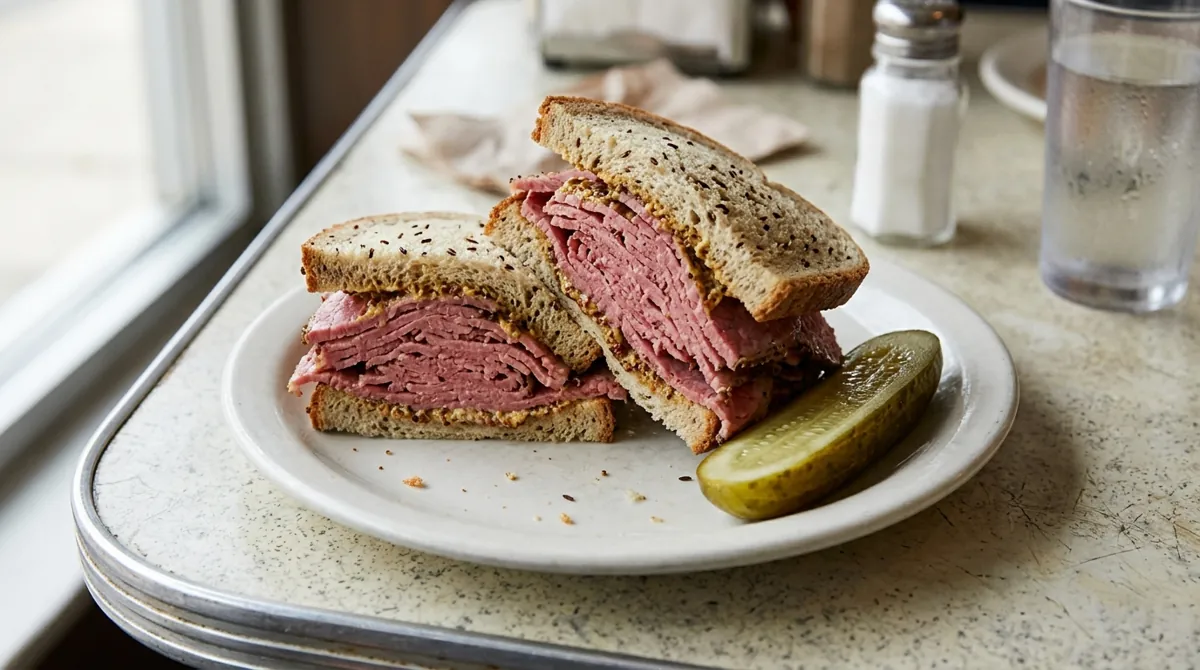
Homemade Deli Corned Beef on Rye
Cure your own brisket for six days in a salt, sugar and pink curing salt brine, simmer it in a low oven, then slice it thin, steam it and pile it on rye with deli mustard.
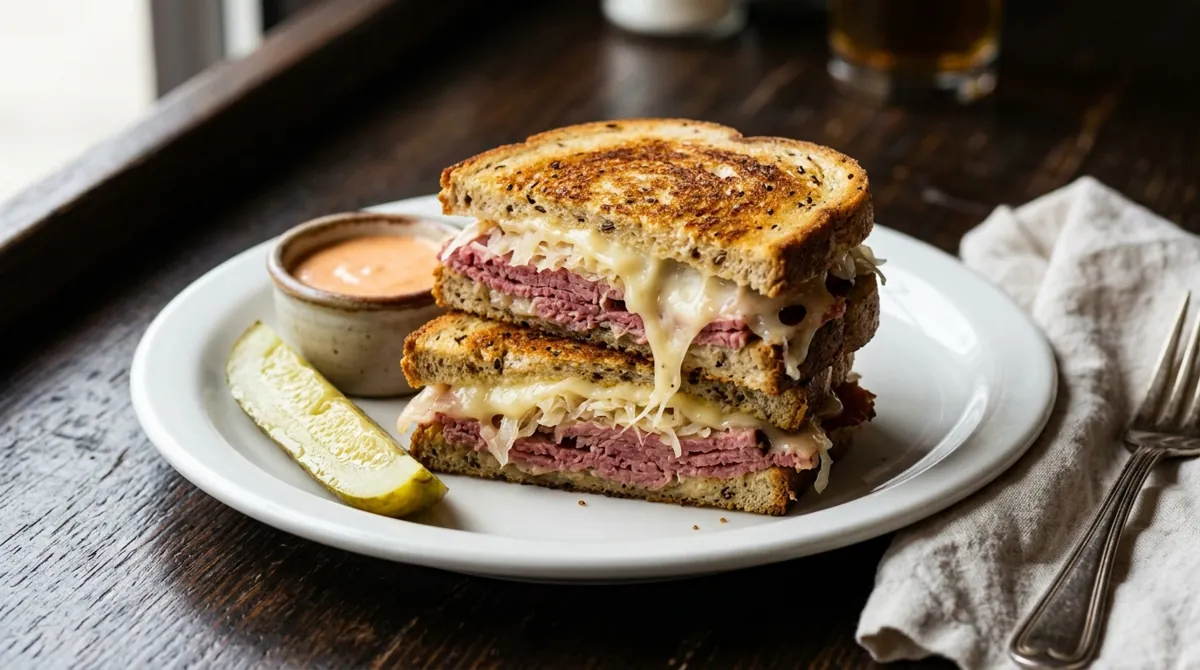
Reuben Sandwich
Corned beef, Swiss cheese and quick-cooked sauerkraut on rye with a Russian-style dressing, griddled in butter until the bread is golden and the cheese melts.
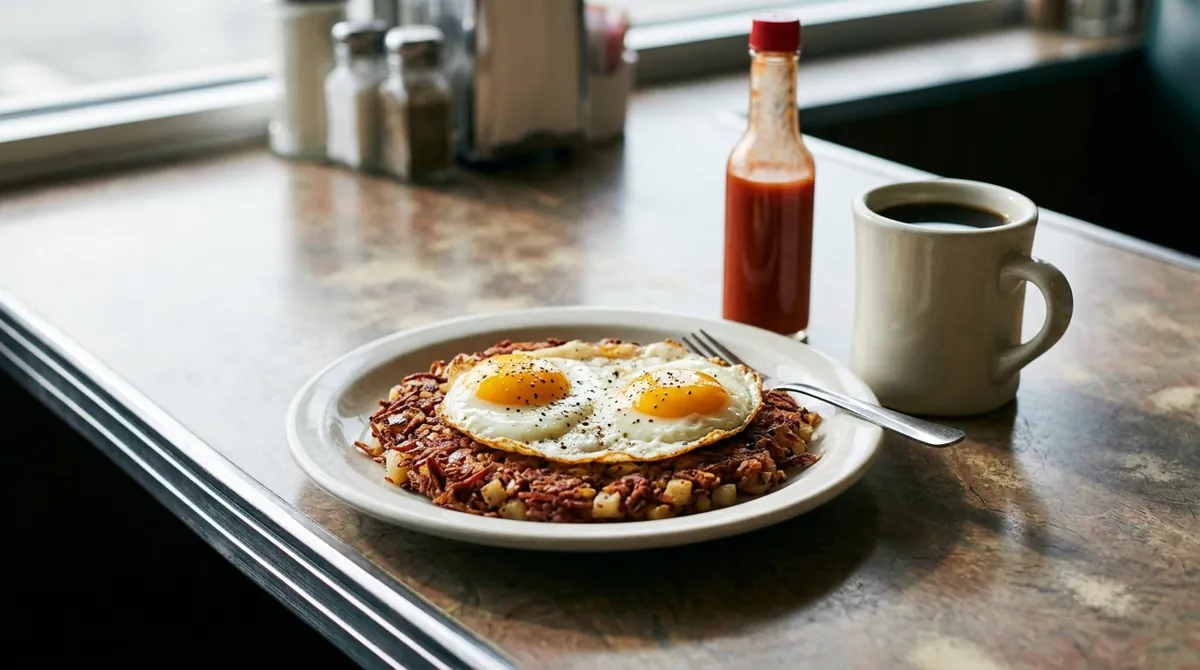
Diner Corned Beef Hash
Leftover corned beef and diced potatoes, steamed tender in one skillet, partly mashed so they hold together, then browned hard in butter on both sides and topped with fried eggs.
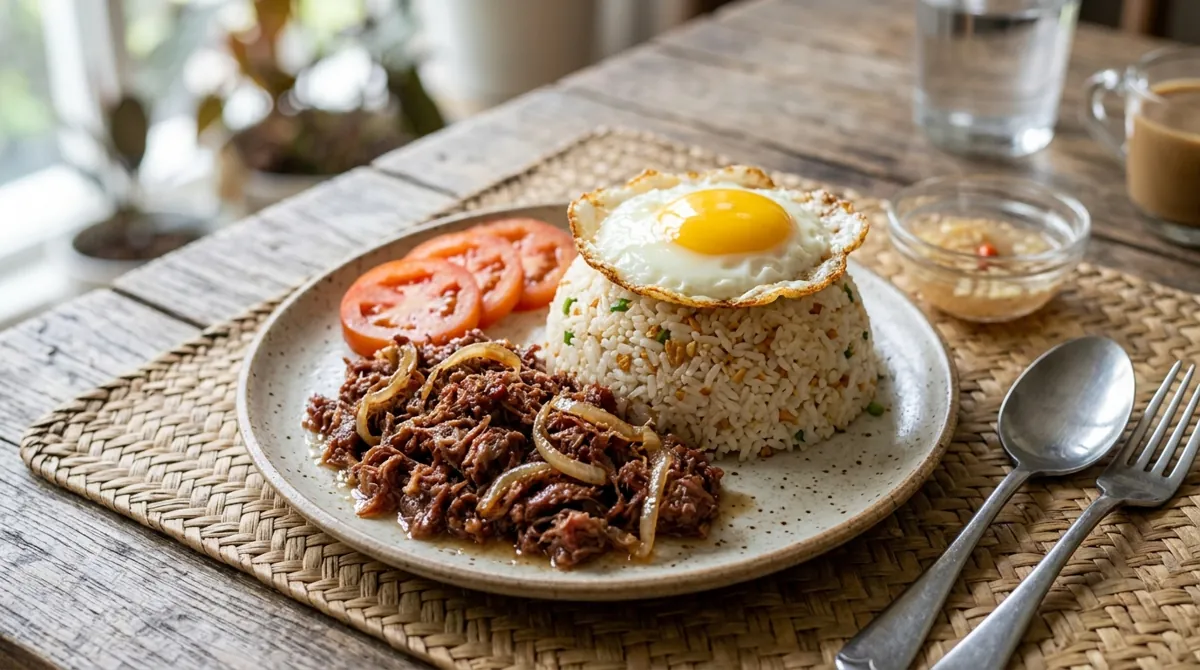
Filipino Corned Beef Silog (Corned Beef, Garlic Rice and Egg)
The Filipino breakfast plate: tinned corned beef fried with browned garlic and onion, a mound of crisp garlic fried rice and a sunny-side-up egg.
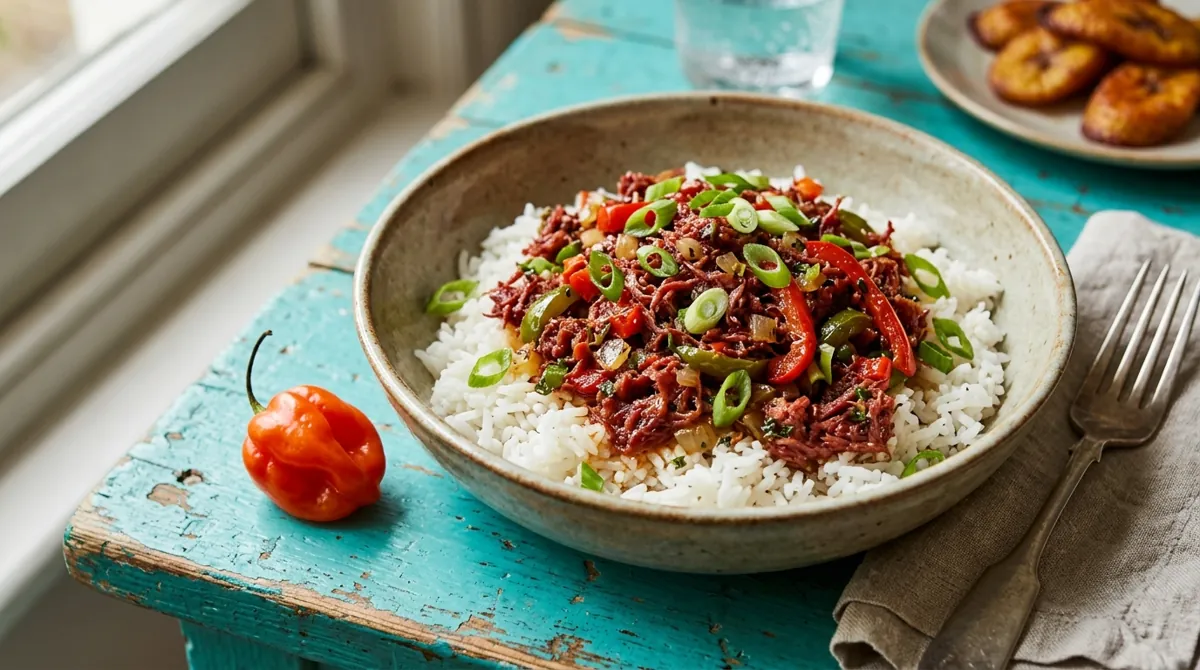
Jamaican-Style Bully Beef
Tinned corned beef simmered with onion, tomatoes, sweet peppers, thyme, ketchup and a whole Scotch bonnet into a quick, peppery stew for rice.
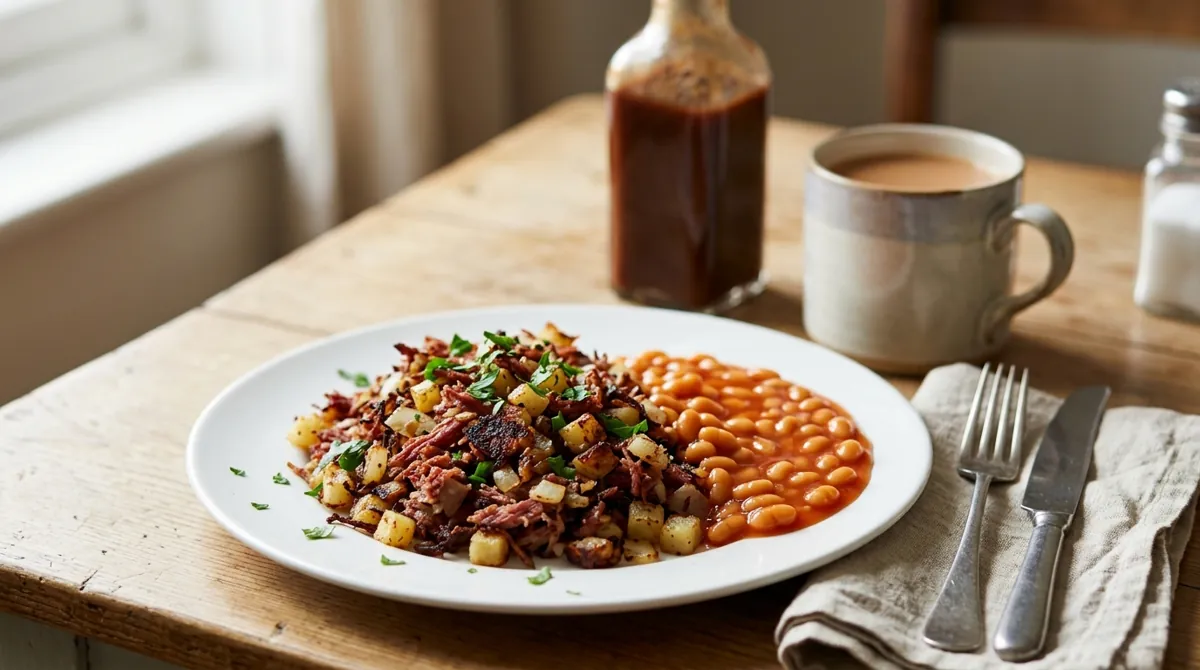
British Corned Beef Hash
The British storecupboard supper: parboiled potatoes and cubes of tinned corned beef fried with onion, pressed into a crust, splashed with Worcestershire sauce and served with baked beans.
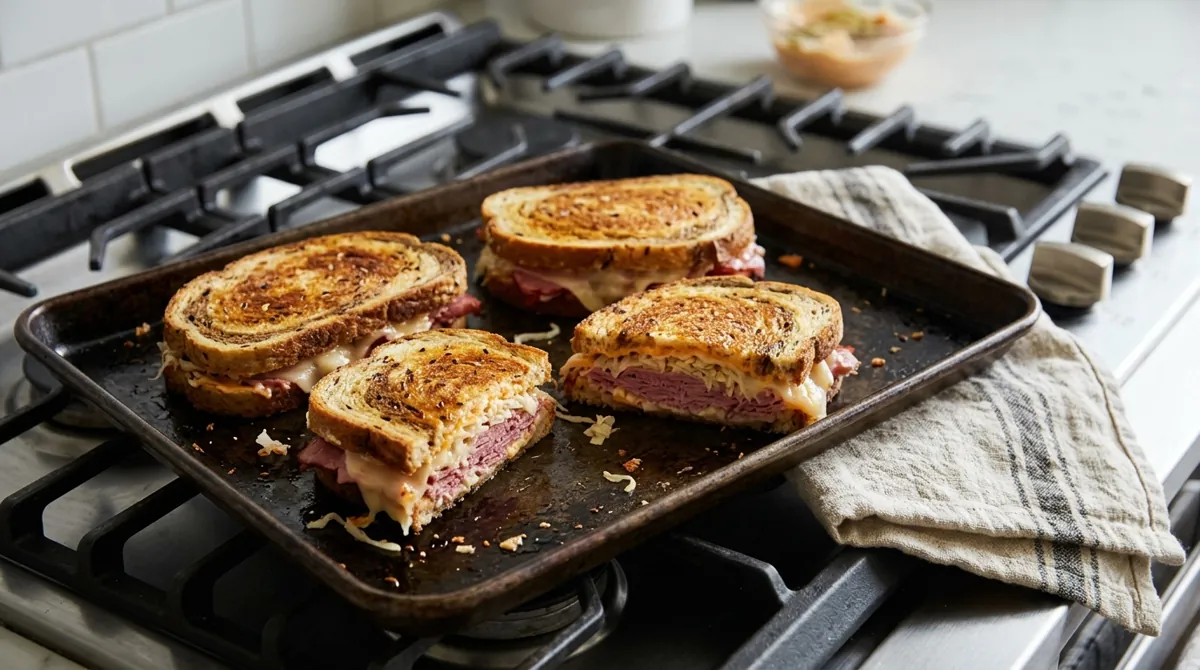
Sheet-Pan Reubens
Four Reubens at once in 30 minutes: quick sweet-and-sour cabbage instead of sauerkraut, a mayo-mustard spread, deli corned beef and Swiss on rye, baked on a preheated sheet pan so they toast without flipping.
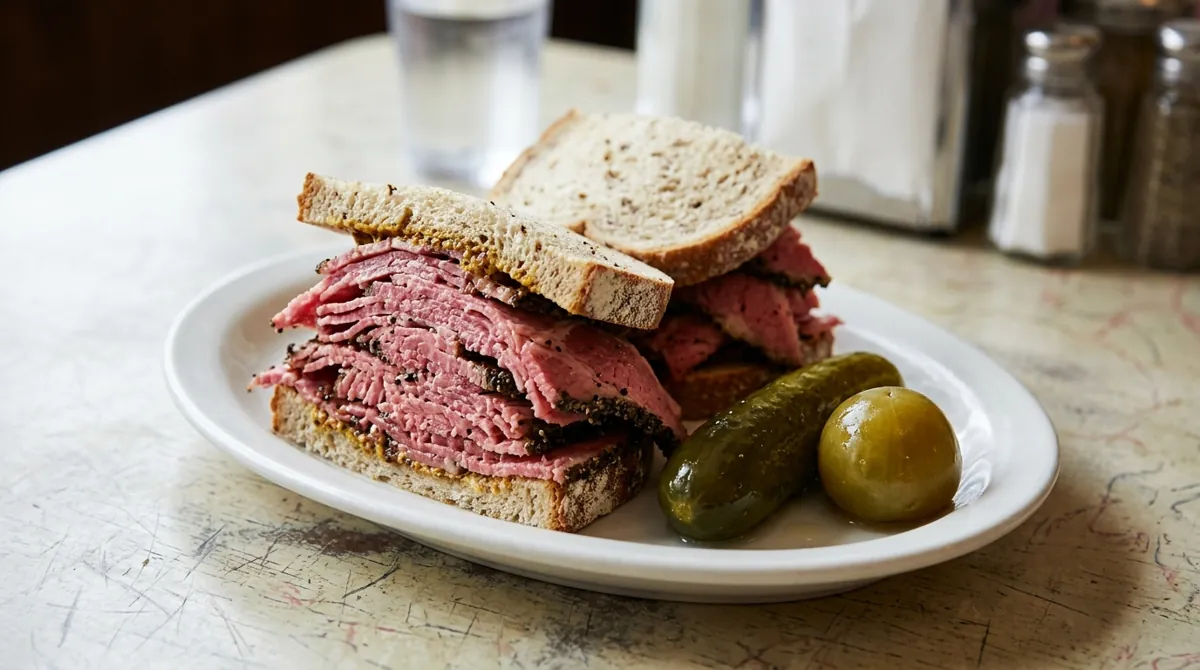
Pastrami on Rye, Inspired by Katz's
Inspired by, not official: store-bought corned beef soaked to pull out salt, crusted with cracked black pepper and coriander, smoked low, finished in foil to 203°F and hand-sliced onto rye with mustard, the way Katz's Delicatessen serves it.
Meatballs of the World

Italian-American Meatballs
Big, tender meatballs braised for an hour in red sauce over spaghetti. The one most Americans grew up with.

Pallottine (Abruzzo Meatballs)
Tiny meatballs, smaller than a marble, tossed right through square spaghetti alla chitarra. No bread at all.

Swedish Meatballs (Köttbullar)
Small, soft meatballs browned in butter, in a cream sauce made from the same pan, with lingonberry jam on the plate.

Danish Frikadeller
Pork meatballs shaped with a spoon and fried slowly in butter, crusty outside and soft in the middle.

Königsberger Klopse
German meatballs that are never fried: poached, then served in a creamy white sauce with capers.

Spanish Albóndigas in Almond Saffron Sauce
The tapas bar classic: small meatballs in a golden sauce thickened with fried almonds and bread.

Mexican Albóndigas with Chipotle and Mint
Soft meatballs with rice and fresh mint inside, simmered in a smoky tomato and chipotle broth.

Izgara Köfte (Turkish Grilled Meatballs)
Small, flat meatballs kneaded hard, rested cold, and charred on a hot grill pan.

Lion's Head Meatballs
Big, soft pork meatballs, stirred into a sticky paste, fried to set, then braised in a savory sauce.

Chicken Tsukune
Japan's chicken meatball: kneaded sticky, grilled on skewers, glazed with sweet soy tare, dipped in egg yolk.