
📖 Food facts
How to Reheat Tamales, Even From Frozen
Steam is how tamales were cooked, and it is still the best way to bring them back. The other methods work too, with a thermometer to check.
 By Americanized · Edited by JP Lambiase · October 19, 2026
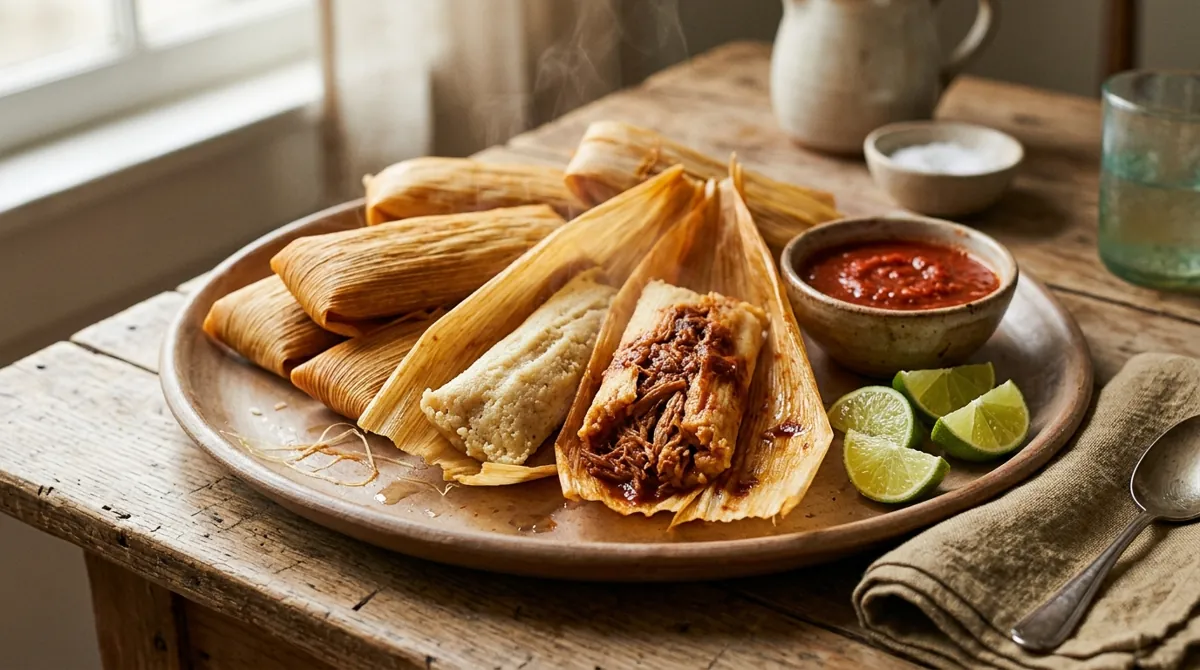
Steam them: stand the tamales in a covered steamer over simmering water for about 15 to 20 minutes from the refrigerator, or about 45 minutes from frozen, until the center reaches 165°F. For a few at a time, microwave them under damp paper towels; for a crisp outside, brown them husked in a skillet. Cooked tamales keep 3 to 4 days in the refrigerator.
Steaming: the best way
Set the steamer up as if you were cooking them: an inch or two of water under the rack, the tamales standing on their folded ends, a lid on top. Times vary by source. Pati Jinich reheats refrigerated tamales about 20 minutes and frozen ones about 45. America's Test Kitchen (ATK) re-steams a big batch 15 to 20 minutes, and Taste of Home adds about 10 minutes for frozen tamales. Because the times differ, go by the thermometer.
USDA's Food Safety and Inspection Service (FSIS) says reheated tamales should reach 165°F. Taste of Home pushes an instant-read thermometer through the husk into the center. Reheating is no step down: Rick Bayless lets freshly steamed tamales cool completely and re-steams them about 15 minutes for the best texture.
Oven and skillet
For the oven, Taste of Home wraps each tamale tightly in a few layers of foil and bakes them at 425°F for 20 minutes, turning them halfway. Food Network instead sprinkles them with water on a sheet pan, covers the pan with foil and heats them at 350°F for about 10 minutes. Either way, the foil holds in the moisture that keeps the masa from drying out.
The skillet gives a crisp outside. Tasting Table takes the husks off, warms about a teaspoon of oil in a nonstick pan over medium heat and cooks the tamales covered for about 10 minutes, turning them every 2 to 3 minutes. Thaw frozen tamales first for this one, and check the center.
Microwave: fast, with care
ATK's method for up to 6 tamales: set them on a large plate with 1 tablespoon of water, cover them with damp paper towels, wrap the plate in plastic wrap and microwave at 50 percent power until hot throughout, about 4 minutes. For a single tamale, Food Network wraps it in a wet paper towel and microwaves it 30 seconds to 1 minute.
FSIS warns that microwaves leave cold spots. Check the temperature in several places and let the tamales rest a minute before the final reading.
From frozen, and how long they keep
FSIS's tamalada guidance: refrigerate any tamales not eaten within 2 hours, keep them up to 4 days, and on the fourth day eat, discard or freeze them. FSIS's general leftovers advice says 3 to 4 days, and Food Network says up to 5, so we go with 3 to 4. Frozen tamales stay safe indefinitely, but the quality windows differ: FSIS says within 6 months, ATK 3 months and a Pacific Northwest Extension guide 1 to 2 months. For the best texture, aim for the shortest.
Food Network prefers thawing frozen tamales overnight in the refrigerator. FSIS says reheating leftovers straight from frozen is safe, just slower. If you are timing a whole Christmas Eve, our Christmas dinner planner can count back from dinner. For a big batch to freeze, see what a tamalada is and our tamales hub.
Questions people ask
What temperature should reheated tamales reach?
165°F in the center, according to FSIS. Push an instant-read thermometer through the husk into the middle of one of the larger tamales.
Do you take the husk off before reheating?
Leave it on for steaming, the oven and the microwave, because it holds in moisture. Take it off for the skillet so the masa can brown.
Can I reheat tamales in a slow cooker?
FSIS does not recommend reheating leftovers in a slow cooker. Reheat them on the stove, in the oven or in the microwave to 165°F, then hold them in a preheated slow cooker at 140°F or above.
Can you refreeze tamales?
FSIS says leftovers thawed in the refrigerator can be refrozen, and so can any left over after reheating to 165°F.
Sources
- Jesus Garcia, "Keep Your Traditions Safe at Your Next Tamalada", USDA FSIS Food Safety Blog (December 5, 2024; Internet Archive copy, September 2, 2025)
- USDA FSIS, "Leftovers and Food Safety" (Internet Archive copy, October 8, 2026)
- USDA FSIS, "Slow Cookers and Food Safety" (Internet Archive copy, October 8, 2026)
- Pati Jinich, "Chicken in Green Salsa Tamal"
- America's Test Kitchen, "Tamales" (March 29, 2018)
- Rick Bayless, "Basic Tamal Dough"
- Kim Bussing and Melissa Gaman, "How to Reheat Tamales", Taste of Home (updated December 18, 2025)
- Layla Khoury-Hanold, "How to Reheat Tamales", Food Network (November 11, 2024)
- Haldan Kirsch, "How To Reheat Tamales 6 Ways", Tasting Table (updated December 6, 2023)
- C. Raab and N. Oehler, "Freezing Convenience Foods" (PNW 296), Pacific Northwest Extension (revised 2002, reviewed 2012), as hosted by UC ANR
More food facts
Cook it
Red Chile Pork Tamales (Tamales Rojos de Puerco)
Pork shoulder simmered down in a smooth guajillo chile sauce, wrapped in light, fluffy lard-beaten masa and steamed upright in corn husks, the central Mexican way.
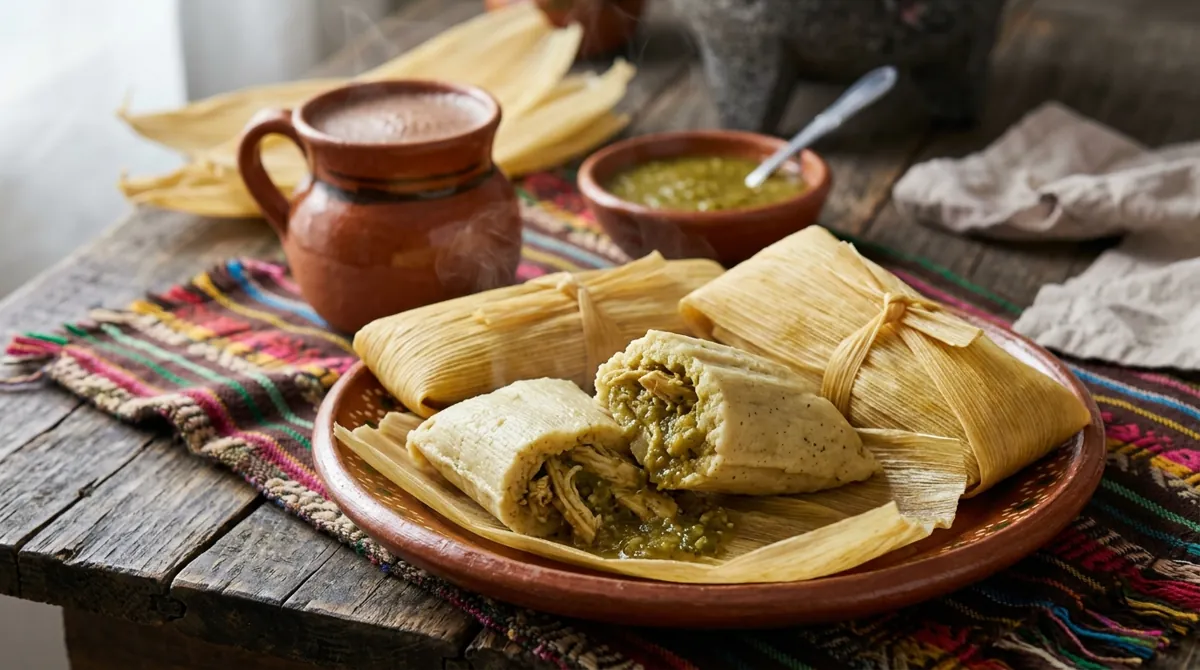
Green Chicken Tamales (Tamales Verdes de Pollo)
Shredded chicken in a tangy tomatillo and serrano salsa verde, tucked into masa beaten fluffy with lard and chicken broth and steamed in corn husks.
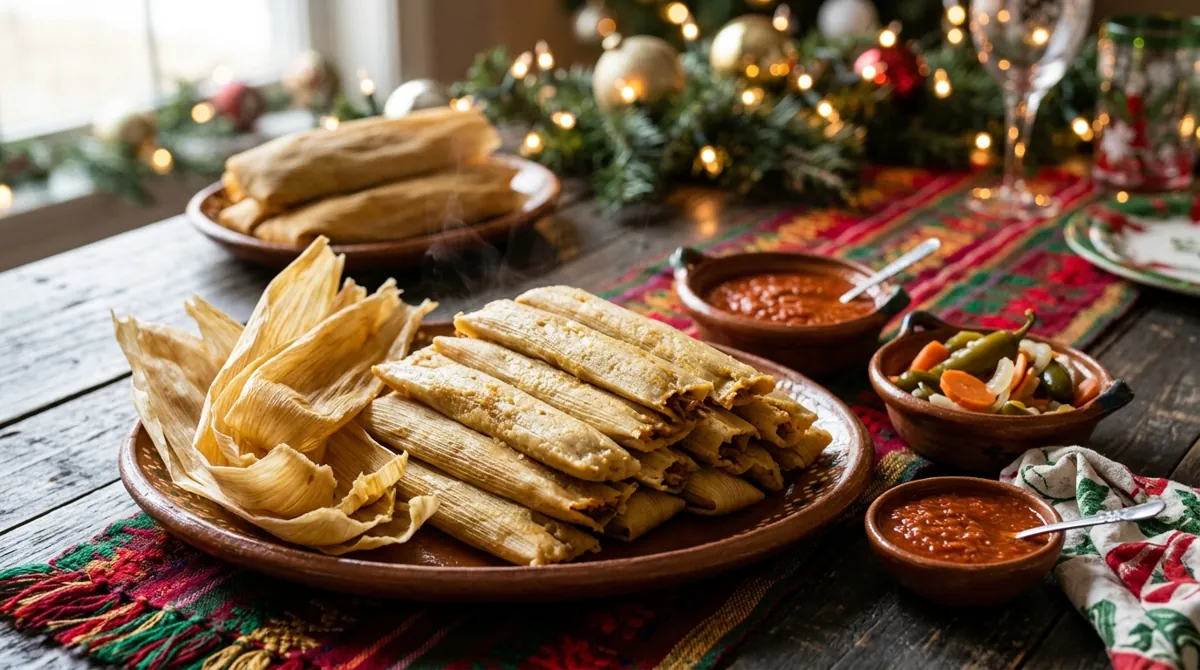
San Antonio Christmas Tamales
Long, thin San Antonio tamales with more filling than masa: lean pork simmered with raisins, then cooked in a tomato, green chile and oregano sauce, rolled in husks like cigars for the Christmas tamalada.
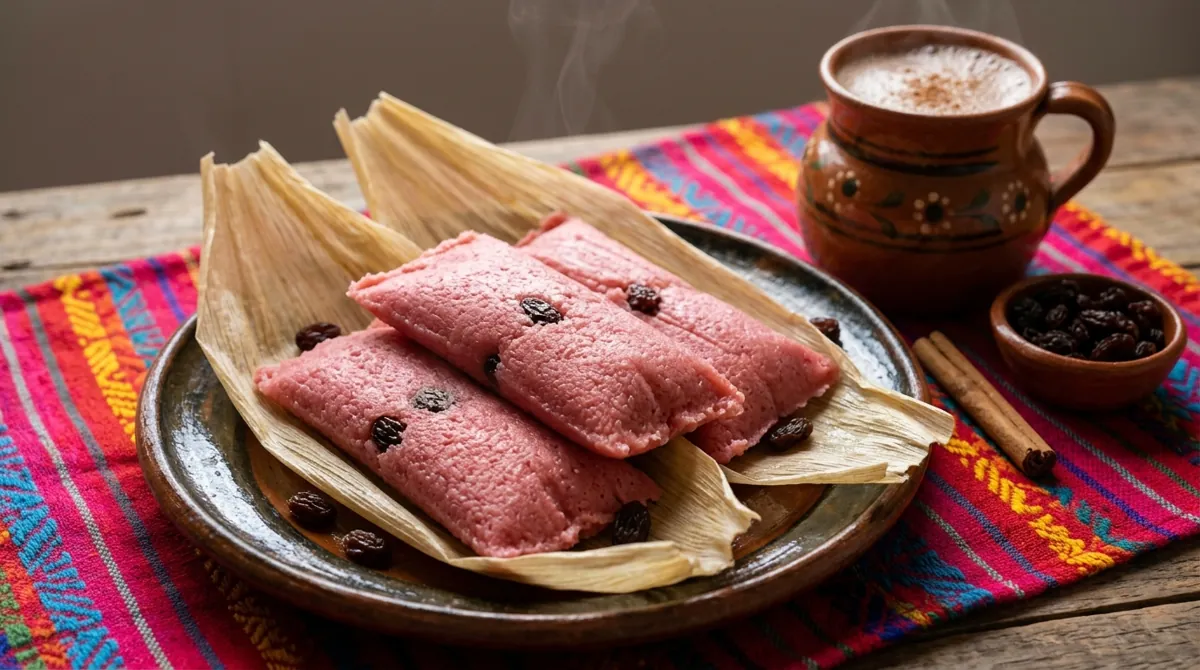
Pink Sweet Tamales (Tamales de Dulce)
Sweet masa beaten with whipped lard and sugar, tinted pale pink and studded with raisins, steamed in corn husks and eaten with hot atole or champurrado.
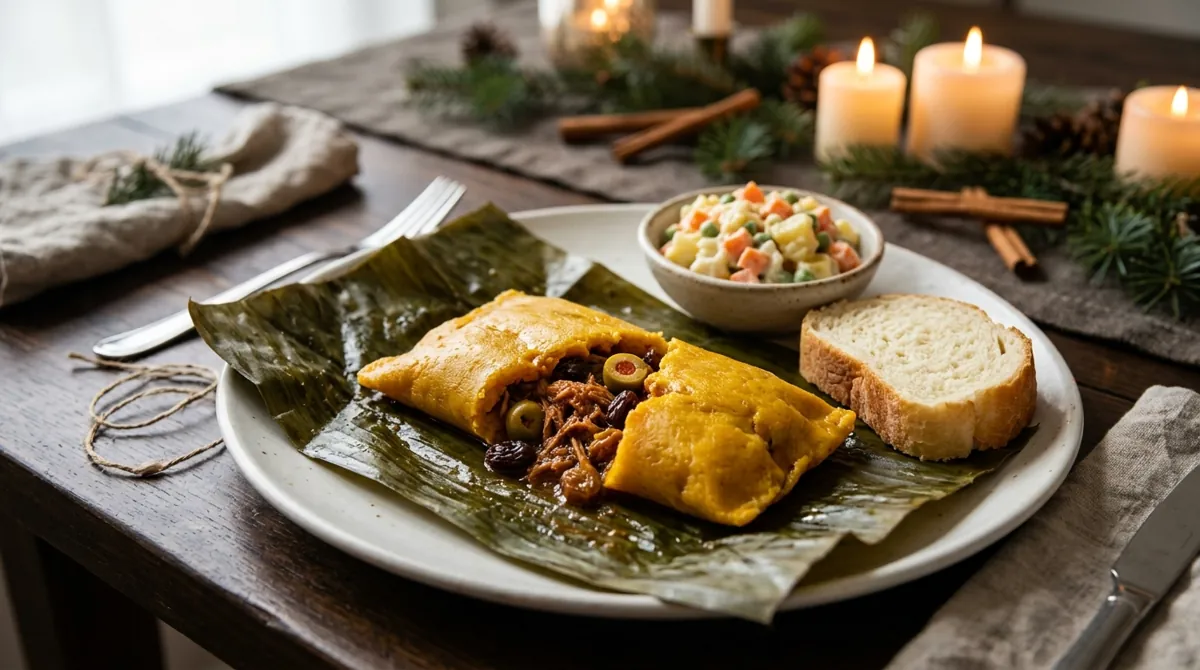
Venezuelan Hallacas
Venezuela's Christmas tamal: achiote-gold corn dough around a beef and pork stew with olives, raisins, capers, peppers and chicken, wrapped in banana leaves like a gift and boiled.