
📖 Food facts
How to Tell When Tamales Are Done
One test settles it: unwrap a tamal and see whether the husk lets go. Here is how long that usually takes, and how to keep the pot from running dry.
 By Americanized · Edited by JP Lambiase · October 19, 2026
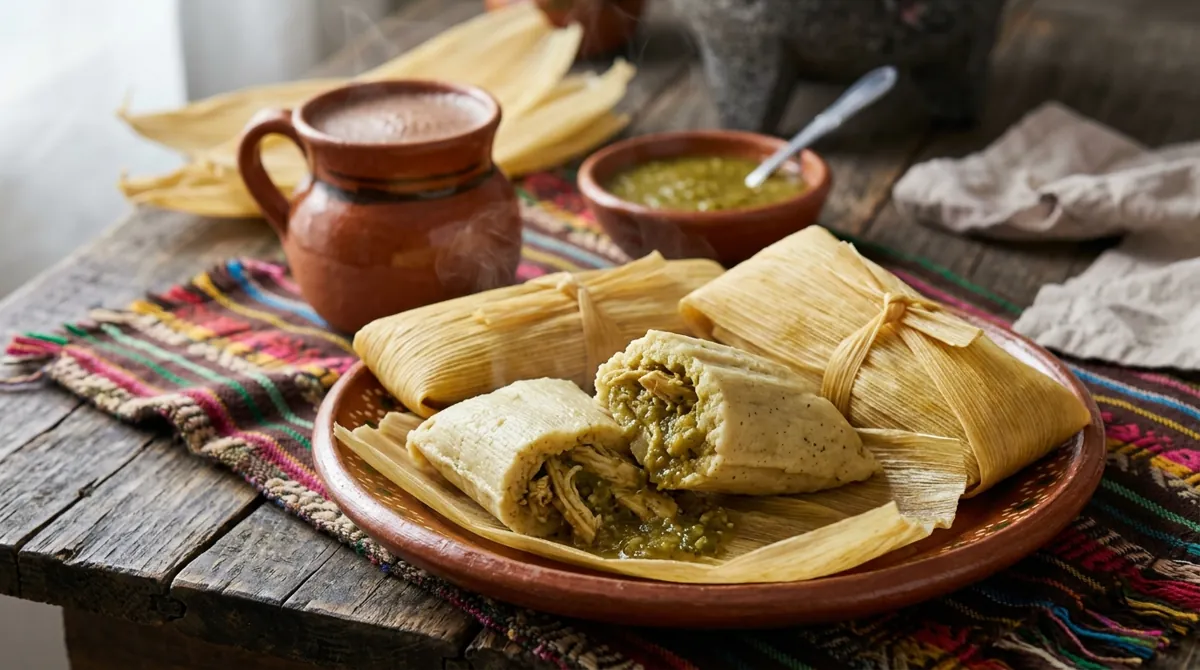
Lift one tamal out with tongs and unwrap it. It is done when the husk pulls away cleanly from the masa; if the masa sticks, steam about 10 minutes more and test again. Most husk-wrapped tamales take 50 minutes to 1 1/4 hours, and they firm up as they rest 10 to 15 minutes off the heat.
The husk test
Every source we checked uses the same test. Rick Bayless steams, pulls one tamal out with tongs and unwraps it: if the corn husk pulls away cleanly, they are done. If the masa still sticks to the husk, he puts it back and steams another 10 minutes or so. America's Test Kitchen (ATK) and Pati Jinich describe the same sign, tamales that come easily free from their husks.
Raw masa clings to the husk, and cooked masa lets go. For filled tamales there is a second check: USDA's Food Safety and Inspection Service (FSIS) says steamed tamales should reach 165°F inside, whatever the meat or poultry in the filling. An instant-read thermometer in the center of a tamal answers that in seconds.
How long tamales steam
Jinich steams her green chicken tamales 50 minutes to an hour. Bayless gives his green chile chicken tamales about an hour and his basic tamales about 1 1/4 hours over constant medium heat, and ATK's take about an hour. In our own recipes, green chicken tamales steam 50 to 60 minutes, red chile pork tamales about 1 1/4 hours and San Antonio Christmas tamales 1 1/2 hours.
Treat the clock as the time to start testing, not the time to stop. Our kitchen timers can set the first check for you.
Keep the water topped up
Bayless fills the bottom of the steamer with at least an inch of water, brings it to a boil, then lowers the heat to a steady, gently rolling boil. He watches that the water doesn't boil away and pours in boiling water whenever more is needed, which keeps the steam steady. Cold water would stop the steaming until it heated back up.
His trick for a pot you can't see into: drop a coin in the water. It rattles while there is water and goes quiet when the pot is about to run dry. Bayless also lines the rack with leftover husks, leaving small gaps so condensed steam can drain, and stands the tamales on their folded ends without packing them tightly, because they need room to expand.
Why they firm up as they rest
Straight out of the steamer, the masa is soft. Bayless turns off the heat and lets the tamales stand 10 to 15 minutes so the masa can firm up, and Jinich says tamales firm up as they set, staying warm in the covered pot. A tamal that seems a little soft at the first test may simply need that rest, so judge it by the husk, not by how firm it feels.
Jinich says finished tamales stay warm in the steamer for about 2 hours. That fits the FSIS rule: refrigerate any tamales not eaten within 2 hours. For a family batch, see what a tamalada is.
Questions people ask
What if the husk still sticks after the full time?
Keep steaming. Bayless returns the test tamal to the pot and steams about 10 minutes more before testing again. Check the water level while the lid is off.
Should tamales stand up or lie flat in the steamer?
Bayless stands them on their folded bottoms with the open ends up, and fills empty spaces with loosely wadded foil so they don't fall over.
What internal temperature should tamales reach?
165°F, according to FSIS, no matter which meat or poultry is in the filling. Cook raw meat for the filling to its own safe temperature first.
Do tamales get firmer as they cool?
Yes. Bayless rests them 10 to 15 minutes off the heat for the masa to firm up, and Jinich notes that tamales firm up as they set.
Sources
- Rick Bayless, "Green Chile Chicken Tamales"
- Rick Bayless, "Basic Tamal Dough"
- Pati Jinich, "Chicken in Green Salsa Tamal"
- America's Test Kitchen, "Tamales" (March 29, 2018)
- Jesus Garcia, "Keep Your Traditions Safe at Your Next Tamalada", USDA FSIS Food Safety Blog (December 5, 2024; Internet Archive copy, September 2, 2025)
More food facts
Cook it
Green Chicken Tamales (Tamales Verdes de Pollo)
Shredded chicken in a tangy tomatillo and serrano salsa verde, tucked into masa beaten fluffy with lard and chicken broth and steamed in corn husks.
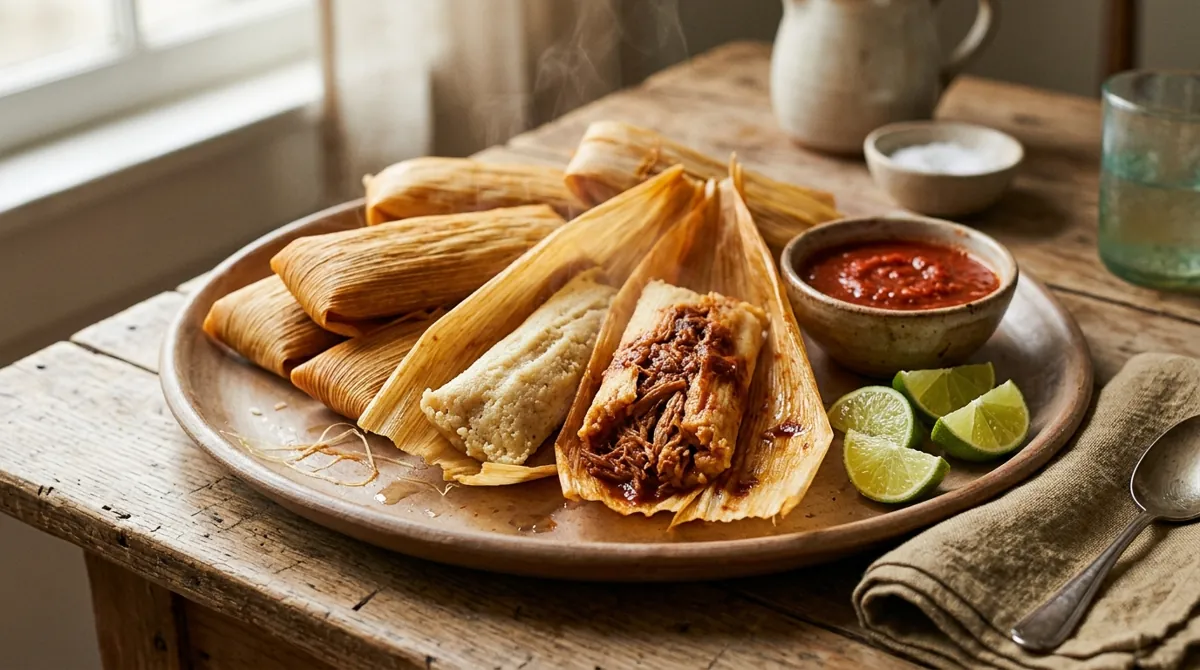
Red Chile Pork Tamales (Tamales Rojos de Puerco)
Pork shoulder simmered down in a smooth guajillo chile sauce, wrapped in light, fluffy lard-beaten masa and steamed upright in corn husks, the central Mexican way.
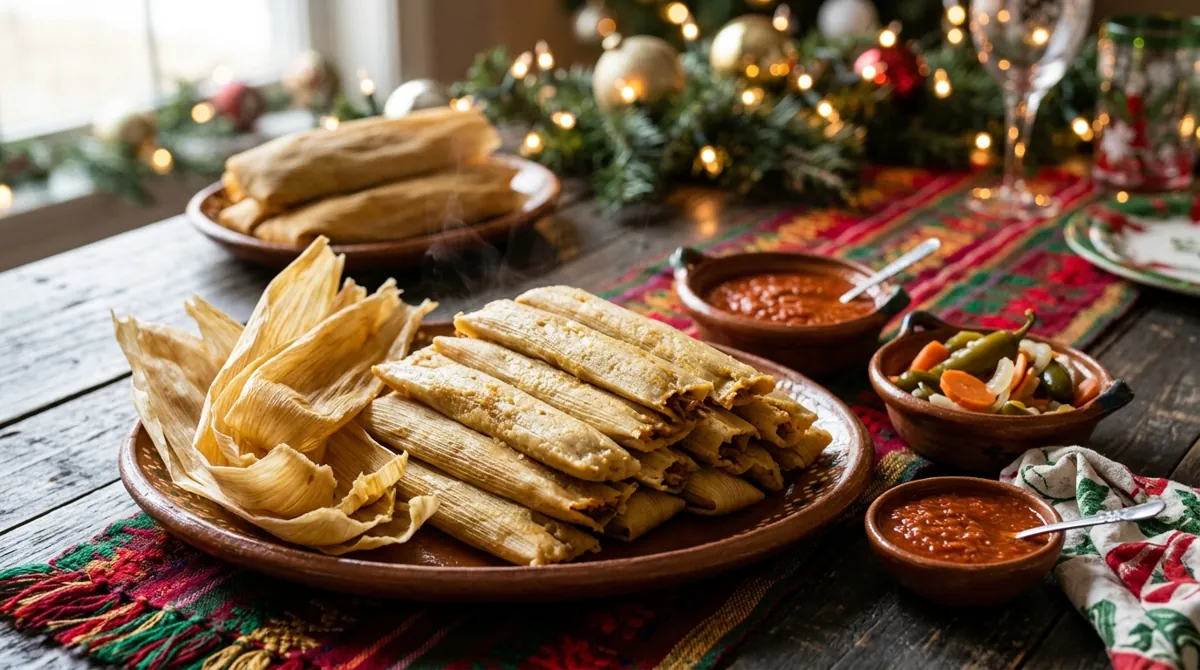
San Antonio Christmas Tamales
Long, thin San Antonio tamales with more filling than masa: lean pork simmered with raisins, then cooked in a tomato, green chile and oregano sauce, rolled in husks like cigars for the Christmas tamalada.
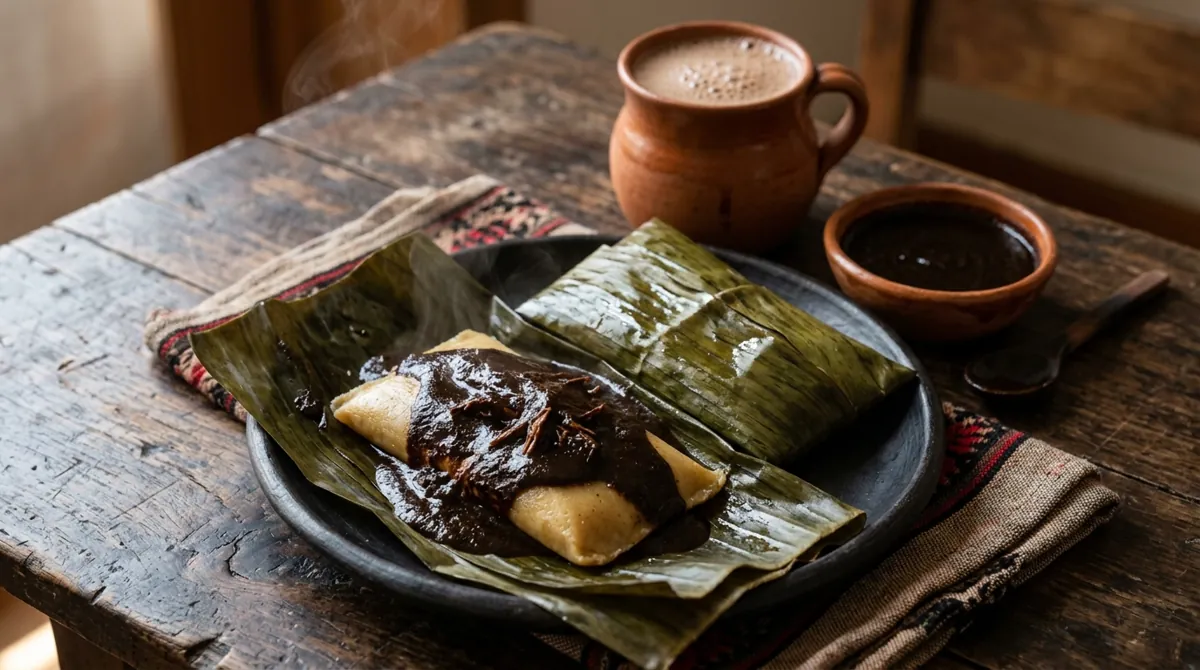
Oaxacan Black Mole Tamales in Banana Leaves
Smooth lard-beaten masa, shredded pork and chicken and a spoonful of glossy mole negro, folded into square banana-leaf packets and steamed for an hour and a half.
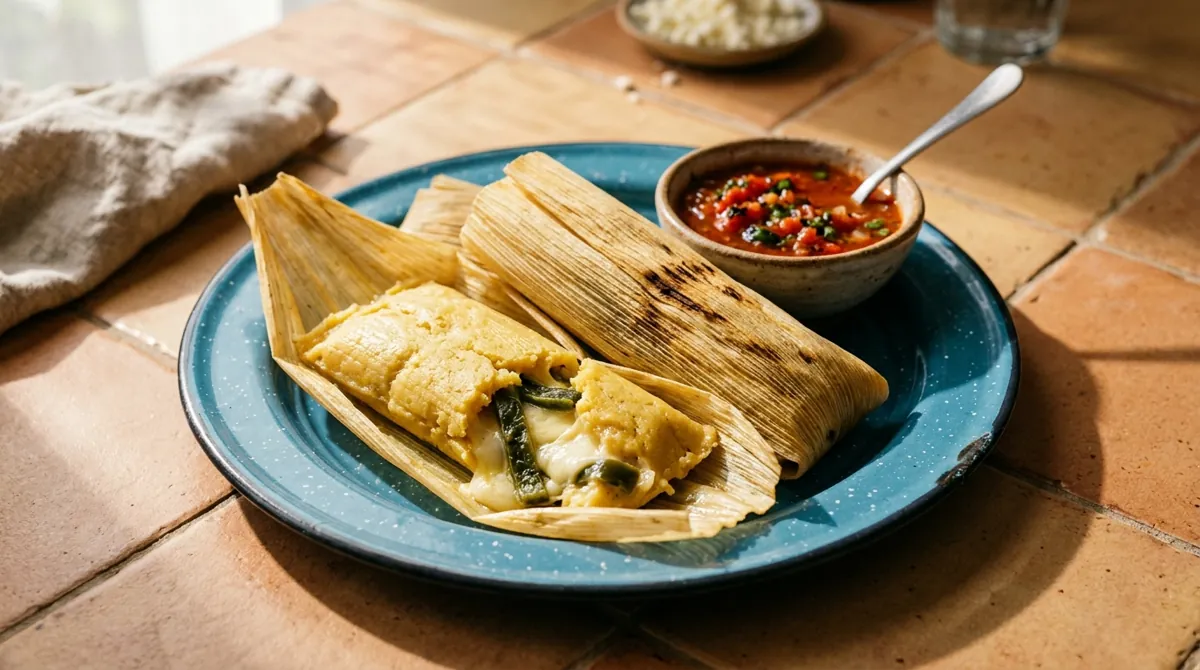
Rajas con Queso Tamales (Poblano and Cheese)
Strips of roasted poblano chile and melting cheese tucked into lard-beaten masa and steamed in corn husks, the vegetarian tamal at every tamalada.