
🔬 Myth check
Why Is Red Velvet Cake Red? Cocoa, Beets or Food Coloring
Beets, cocoa chemistry or a bottle of food coloring? A little of the first two, and mostly the third.
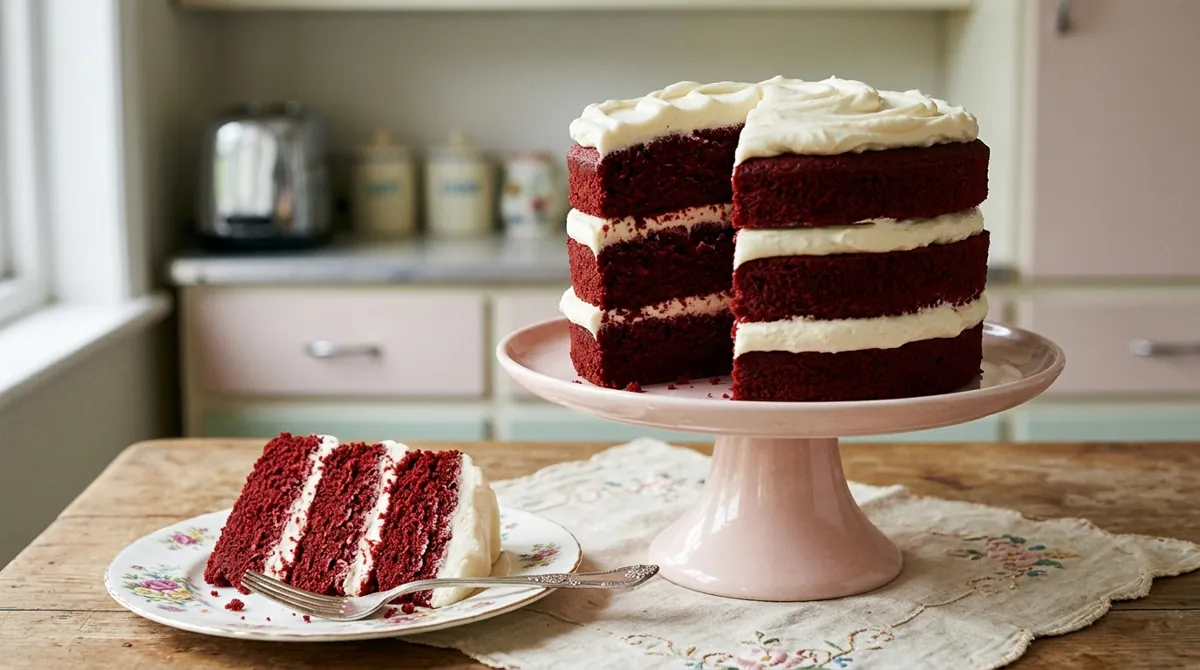
Mostly food coloring. Early velvet cocoa cakes made with buttermilk baked up a reddish brown, because of how the cocoa of the day reacted with acidic ingredients. The bright red came in the 1940s, when a Texas company, Adams Extract, promoted red velvet with its red food coloring and free recipe cards. Beets show up in some old recipes, but they are not why it is red today.
Velvet came first, then cocoa
In the 1800s, a velvet cake simply meant one with a soft, fine crumb, pastry chef and historian Stella Parks told The Splendid Table. Around 1911, that idea merged with devil's food cake into a velvet cocoa cake, made with cocoa powder instead of chocolate. As it moved south, it was often made with buttermilk.
That is why red velvet still tastes like a cousin of our devil's food cake: less cocoa, more tang. Parks says "red devil" was an early name that set the lighter cake apart from nearly black devil's food.
The cocoa chemistry, and its limits
The first red was really reddish brown. Parks explains that the cocoa of the time was unroasted and acidic, and with buttermilk it brought out a reddish-brown crumb; Texas Highways calls the older cakes a mahogany shade, said to come from cocoa reacting with vinegar or buttermilk. A 1930s food scientist described the color as red-brown, Parks says, but newspapers kept the red and dropped the brown.
Modern cocoa will not do the same trick. Parks says today's roasted cocoa does not produce the effect. Even the old natural version was more burgundy than fire-engine red.
A Texas bottle of red
The bright red was a marketing campaign. Adams Extract, founded in Michigan in 1888, moved to Austin, Texas, in 1922. In 1947, John G. Adams created the company's four-pack of red, blue, green and yellow food colors, and to sell it the company printed a red velvet recipe developed by his wife, Betty Adams, on cards handed out in stores, Texas Highways reports.
Parks points to a 1940s recipe calling for four ounces of red coloring as the moment red velvet took off. Texas Highways also notes that some earlier recipes used beets to deepen the color. Beets may have helped at times, but the vivid red that spread nationally came from dye.
The $100 recipe that never happened
You may have heard that a woman asked the Waldorf-Astoria for its red velvet recipe and got a bill for $100. Hoaxes.org traces that tale to a 1945 Time magazine item that named no hotel and no red cake. By 1949 the Waldorf was the villain and the recipe was a fudge cake; a 1964 version finally made it red velvet. King Arthur Baking says the story has no apparent truth.
The frosting is its own argument. King Arthur notes the traditional topping was a cooked flour icing, the kind often called ermine, while many bakers now prefer cream cheese. Our red velvet cake follows King Arthur's buttercream and gets its color from the bottle, not the cocoa. Weigh it against devil's food in our red velvet vs devil's food debate, or find it among our Valentine's Day recipes.
Questions people ask
Is red velvet just chocolate cake with food coloring?
Not quite. It uses only a little cocoa, plus buttermilk and often vinegar, so it tastes milder and tangier than a chocolate layer cake. The color, though, is almost all food coloring in modern recipes.
Can you make red velvet without food coloring?
You can, but expect a reddish-brown or burgundy cake rather than bright red. Natural cocoa and acidic buttermilk give a faint red tint, and some bakers add beets, but neither matches the color of dye.
Did the Waldorf-Astoria invent red velvet cake?
Nobody knows who invented it. The hotel has served it, but the famous $100 recipe story is an urban legend, and the cake's spread is usually credited to Adams Extract's recipe cards.
Parts of this history are disputed. Where sources disagree, we say so.
Sources
- Francis Lam, "The evolution of red velvet cake, an iconic American dessert" (interview with Stella Parks), The Splendid Table, October 6, 2017
- Heather Brand, "You Can Thank This Texas Company for Red Velvet Cake," Texas Highways, February 2022
- Museum of Hoaxes, "The Rip-Off Recipe Legend"
- King Arthur Baking, "Red Velvet Cake"
- Wikipedia, "Red velvet cake" and "Adams Extract" (used as leads to sources)
More food facts
Cook it
Red Velvet Cake
The burgundy-red, mildly chocolate layer cake with buttermilk and a touch of vinegar, stacked four layers high with a fluffy white frosting the 1950s way.
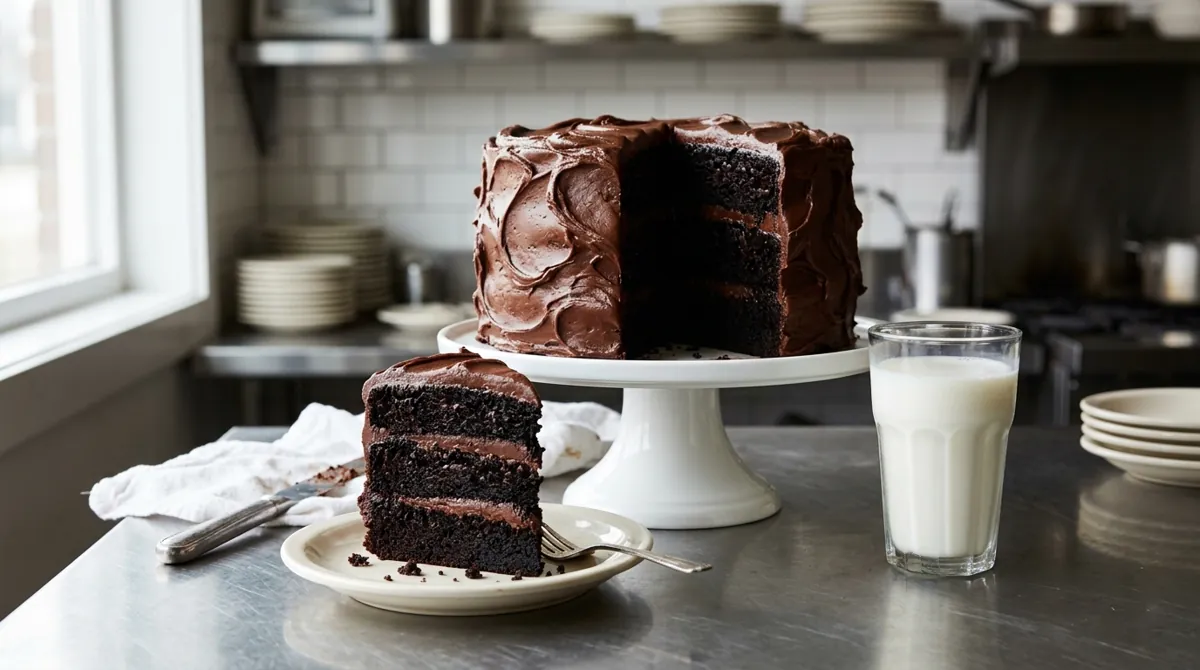
Devil's Food Cake
America's dark chocolate layer cake, the opposite of angel food: a dense, moist cocoa cake in two layers with a rich, fudgy chocolate frosting.
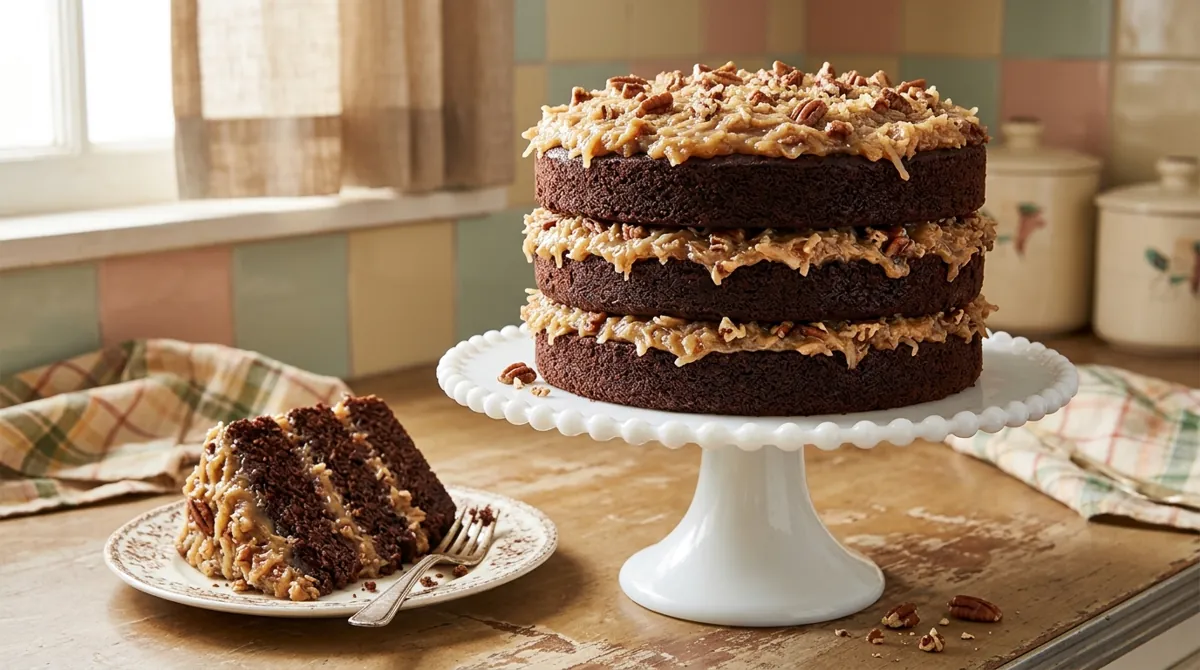
German Chocolate Cake (Coconut-Pecan Frosting)
Not from Germany at all: three light layers made with sweet baking chocolate and buttermilk, stacked with a cooked coconut-pecan custard frosting, the cake a 1957 Dallas newspaper recipe made famous.
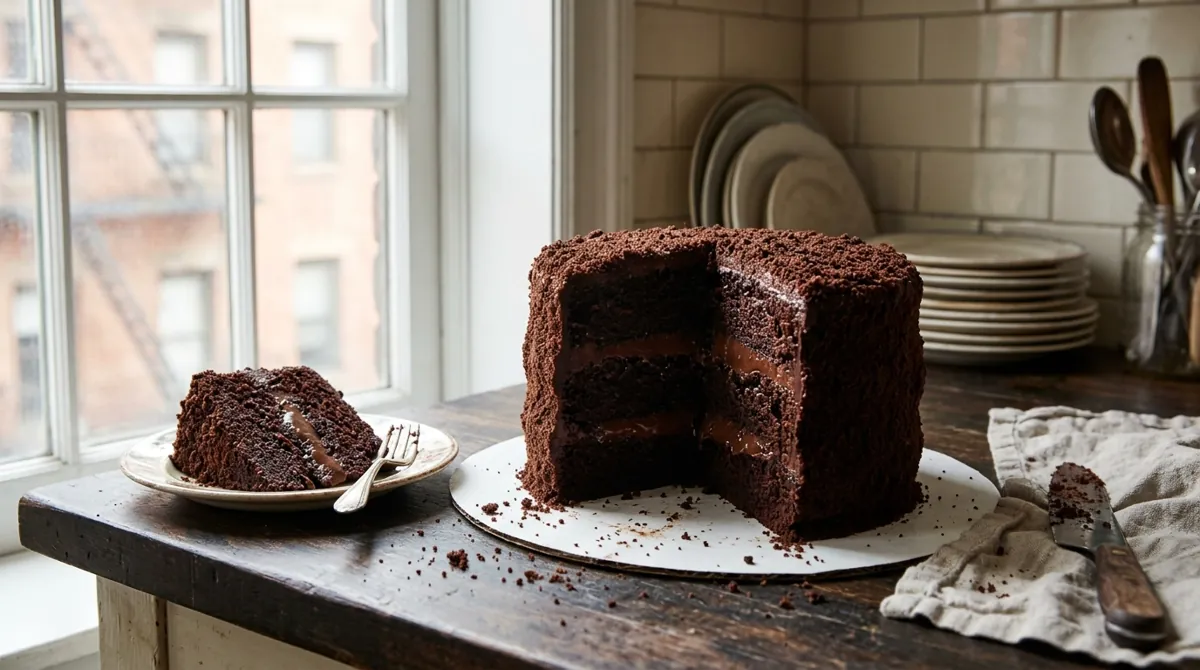
Brooklyn Blackout Cake (Inspired by Ebinger's, Not Official)
Inspired by, not official: a homage to the lost Ebinger's bakery's famous cake, with dark chocolate layers, a thick chocolate pudding filling, fudgy icing and a coat of chocolate cake crumbs.
Texas Sheet Cake
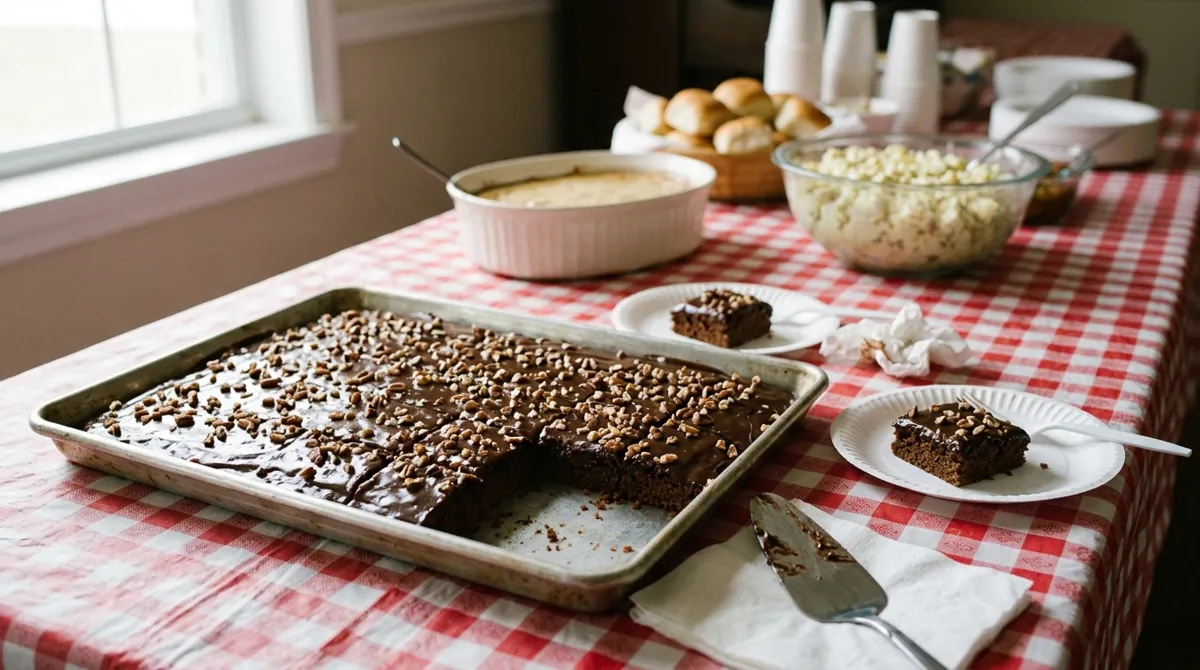
A big, thin chocolate buttermilk cake baked in a half-sheet pan and covered with a fudgy chocolate icing, the cake for church suppers, funerals and crowds.