
🧂 Seasoning and Flavor · Lesson 3 of 5
How to Balance Flavor and Fix a Dish That Tastes Off
Too salty, too sour, too spicy, too sweet or just flat? Learn how to taste a dish and exactly what to add to fix it.
- Flat or dull: salt first, then a splash of acid
- Too salty: water or unsalted stock, acid, a little sweetener
- Too sour: fat or a little sweetener
- Too spicy: a sweetener, a fat, or dairy
- Too sweet: acid, fresh herbs, a dash of cayenne
- Too bitter: salt or acid
- Always: add a little, stir, taste again
Why it matters
Most dishes that taste wrong are not ruined; one element is simply out of balance with the others. Home cooks tend to reach for more salt every time, when the fix is often a squeeze of lemon, a spoonful of butter or a pinch of sugar. Knowing which lever to pull turns tasting into a skill.
The levers you can pull
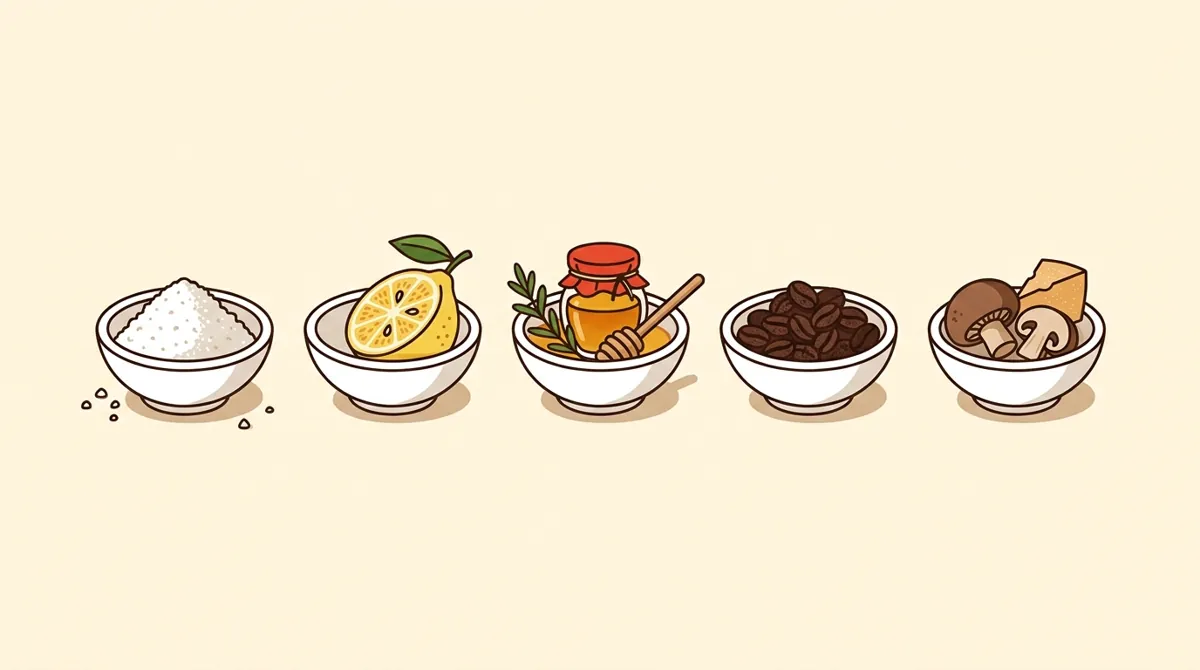
Your tongue senses five basic tastes: salty, sour, sweet, bitter and savory (umami). Fat is not officially a basic taste, though researchers debate it, but it changes how strong the others feel. Chile heat is not a taste either; it comes through the trigeminal nerve rather than the taste buds, which is why it behaves differently when you try to tone it down.
Flat usually means salt, then acid
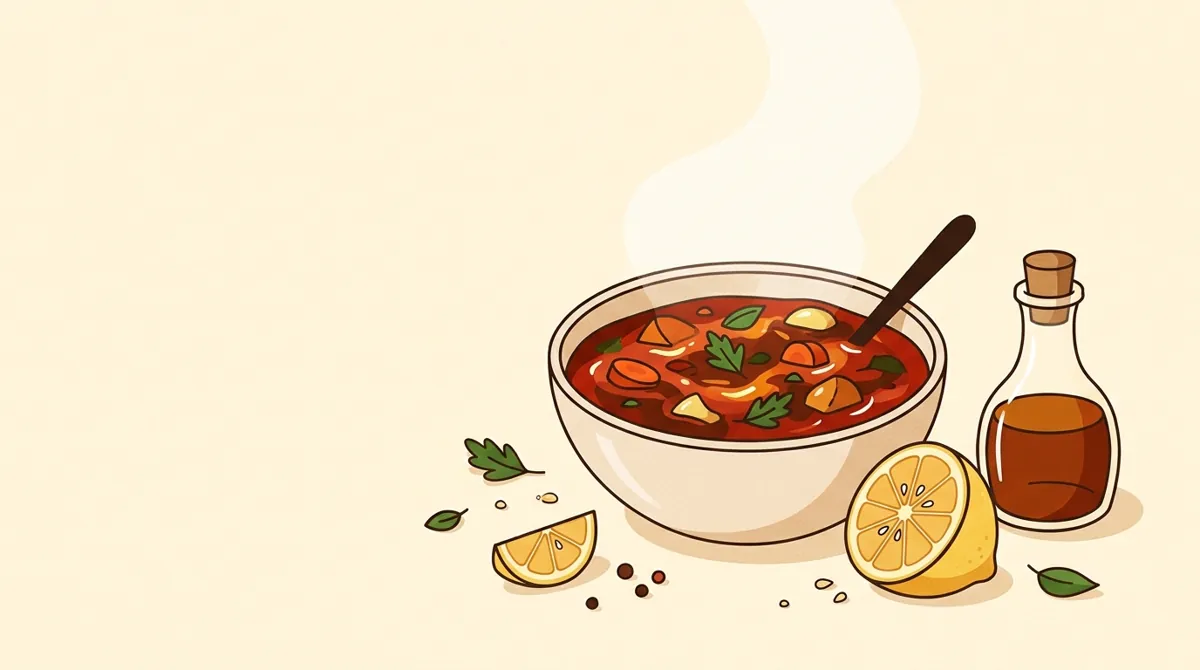
If a dish tastes dull, add salt first, because salt suppresses bitterness and lets sweetness and sourness come forward. If it still tastes heavy, finish with a splash of acid. America's Test Kitchen notes that as little as 1/8 teaspoon of lemon juice or vinegar can brighten a dish, and that a dash of acid can mean you need less salt.
Fat and sweetness soften sharp edges
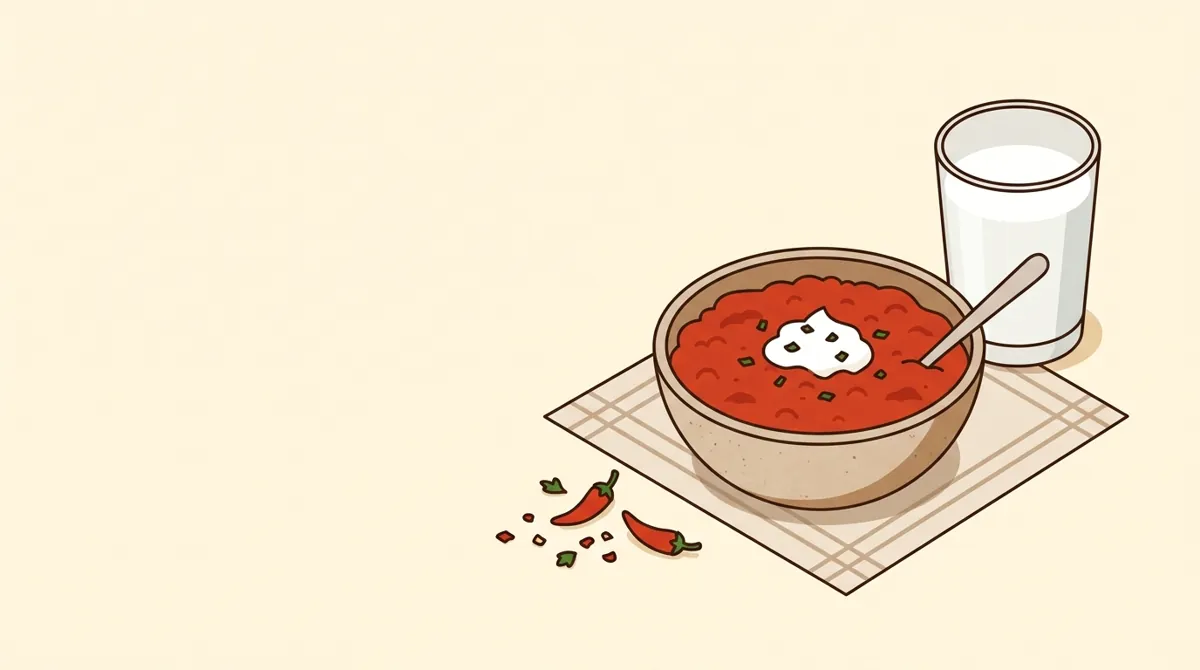
When a dish is too sour or too spicy, a fat such as butter, cream, sour cream, cheese or olive oil coats the tongue and blocks some of the sharpness. A sweetener like sugar, honey or maple syrup offsets sourness and heat too. Capsaicin, the compound that makes chiles hot, barely dissolves in water, so a glass of water does little, while the casein in milk helps relieve the burn.
Too salty: dilute, then balance
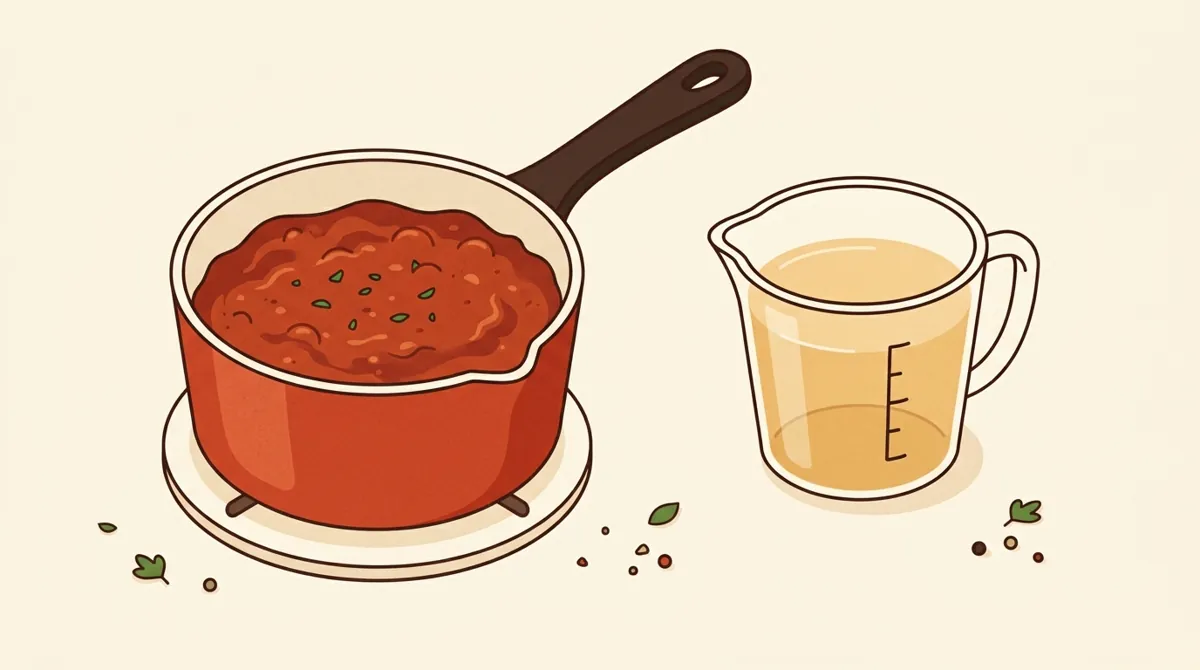
If a soup or sauce tastes salty because it reduced too far, add a little water or unsalted stock. Acid, such as vinegar, lemon or lime juice or unsalted canned tomatoes, and a little sweetener can also take the edge off. Prevention is easier: season a dish that will simmer for hours lightly at the start.
Add a little, then taste again
America's Test Kitchen's rule for every fix is to start with a very small amount. You can always add more, but you cannot take it back, and overcorrecting simply swaps one problem for another.
Step by step
Take a small spoonful and taste it on its own, not with bread or rice.
Name what is wrong in one word: salty, sour, spicy, sweet, bitter or flat.
Pick one fix from the chart and add a very small amount.
Stir it in fully, wait a moment, and taste again with a clean spoon.
Repeat in small steps until the dish tastes balanced, changing only one thing at a time.
Finish with a splash of acid or fresh herbs at the very end if the dish still tastes heavy.
Common mistakes
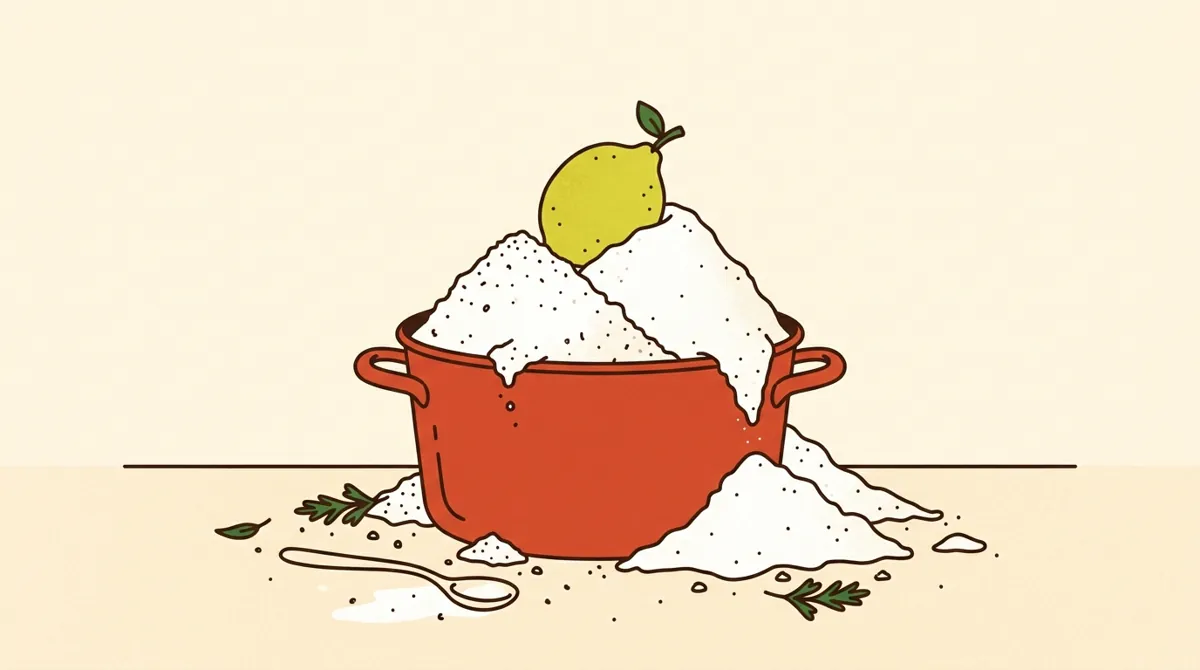
- Reaching for salt every time: if a dish tastes heavy rather than bland, try a splash of lemon juice or vinegar first.
- Drinking water to put out chile heat: capsaicin barely dissolves in water, so reach for milk or yogurt, and fix the pot with fat or a little sweetener.
- Adding a big spoonful of the fix at once: add a little, stir, taste and repeat.
- Seasoning a long-simmered stew fully at the start: it reduces and concentrates, so season lightly and correct at the end.
- Changing three things at once: fix one element at a time so you know which one worked.
🏋️ Try it tonight
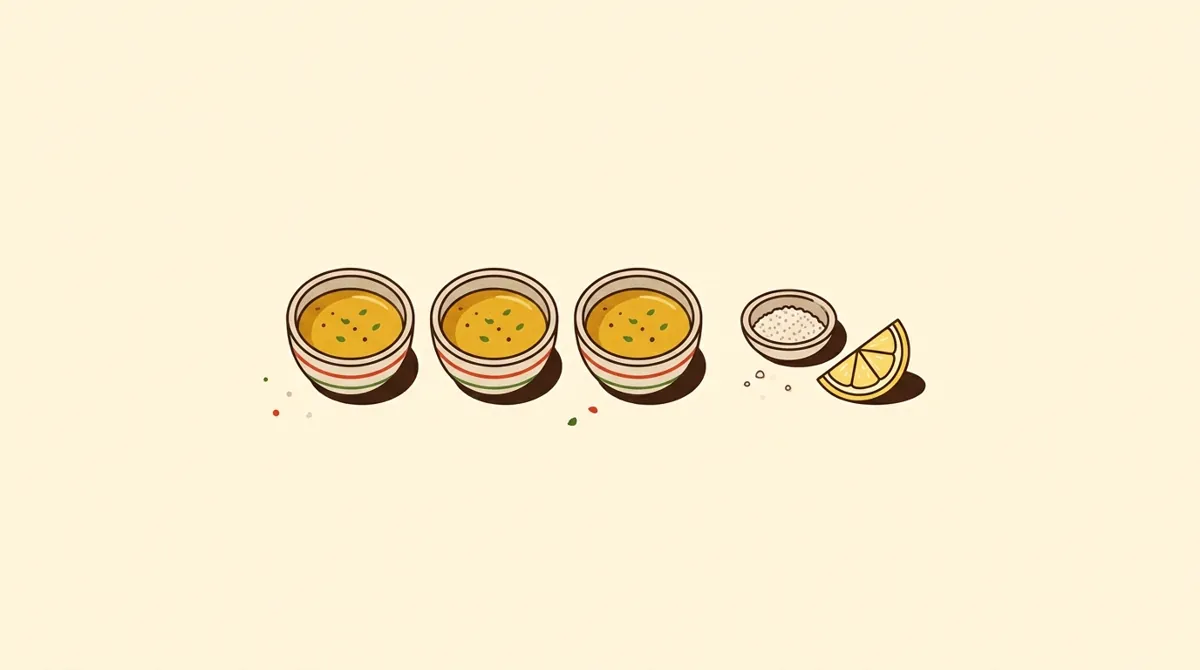
Heat 1 cup of unsalted chicken stock and pour it into three small cups. Leave the first plain, stir a small pinch of salt into the second, and add the same pinch of salt plus a few drops of lemon juice to the third. Taste them in order. You will taste flat, seasoned and bright, and learn what each lever does.
💡 Did you know?
According to Cook's Illustrated, as little as 1/8 teaspoon of acid can brighten a whole dish, and with that dash you may need less salt.
Use it tonight
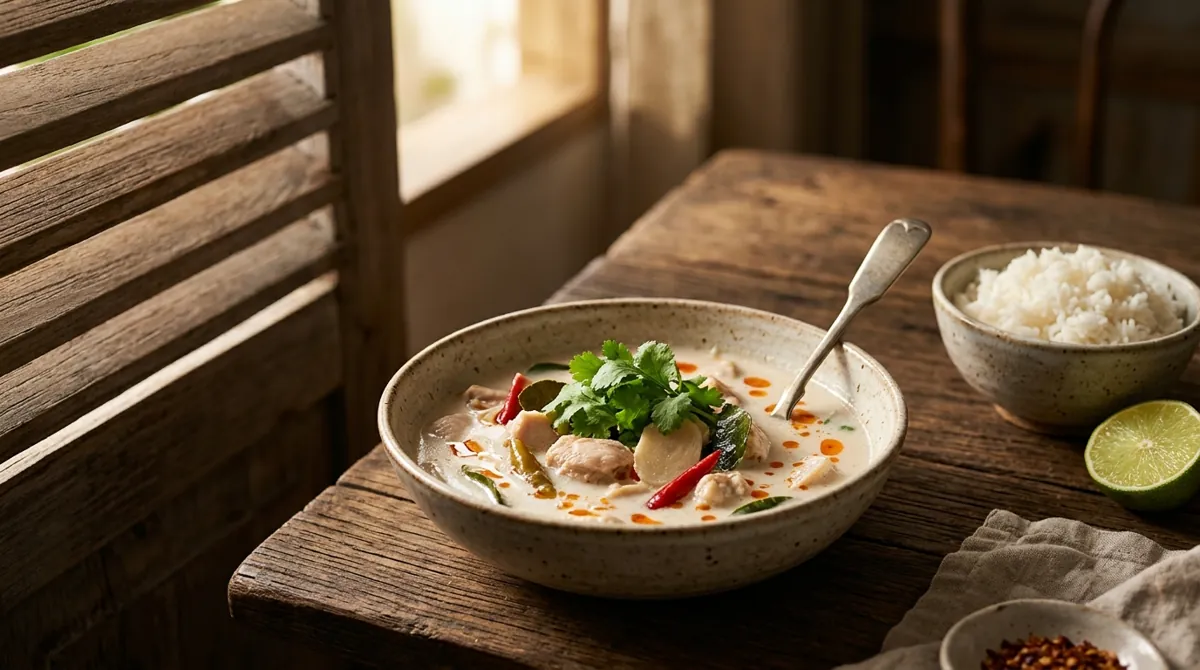
Tom Kha Gai (Thai Chicken Soup with Coconut and Galangal)
Boneless chicken thighs simmered in stock with sliced galangal, lemongrass, shallots and fish sauce, then a pounded galangal infusion, makrut lime leaves, Thai chiles and coconut cream stirred in off the heat, seasoned with equal parts fish sauce and lime juice.
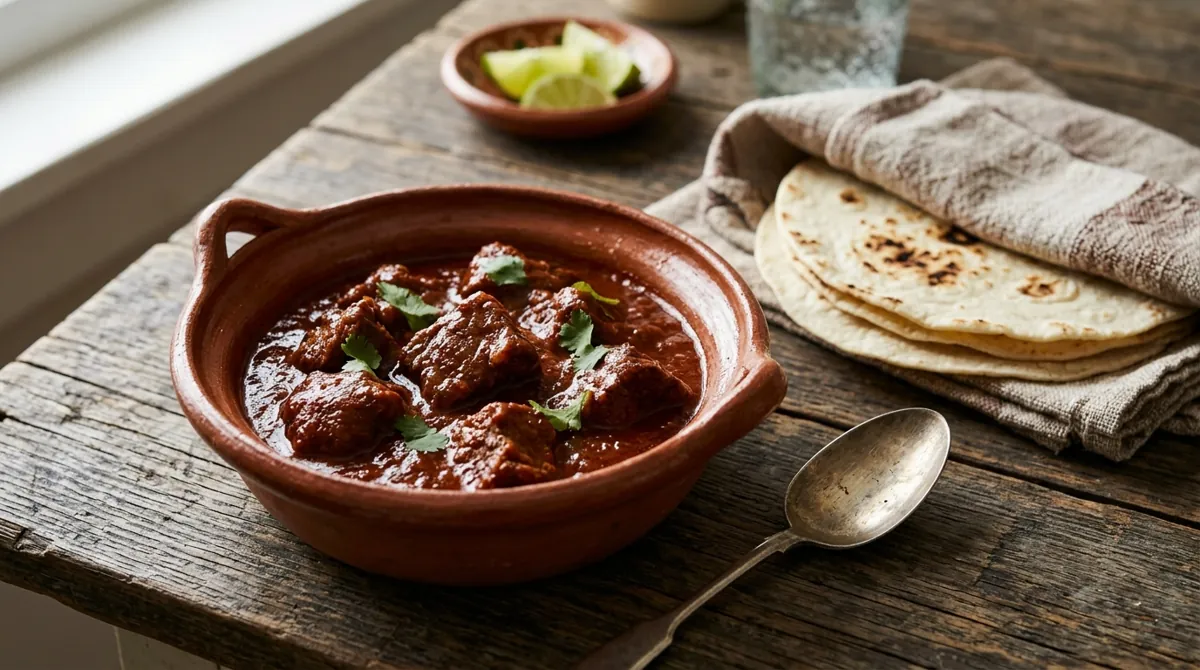
Chile Colorado (Northern Mexican Red Chile Beef)
Beef and potatoes stewed in a smooth guajillo chile sauce thickened with a little flour, the Chihuahua way, and spooned into warm flour tortillas.
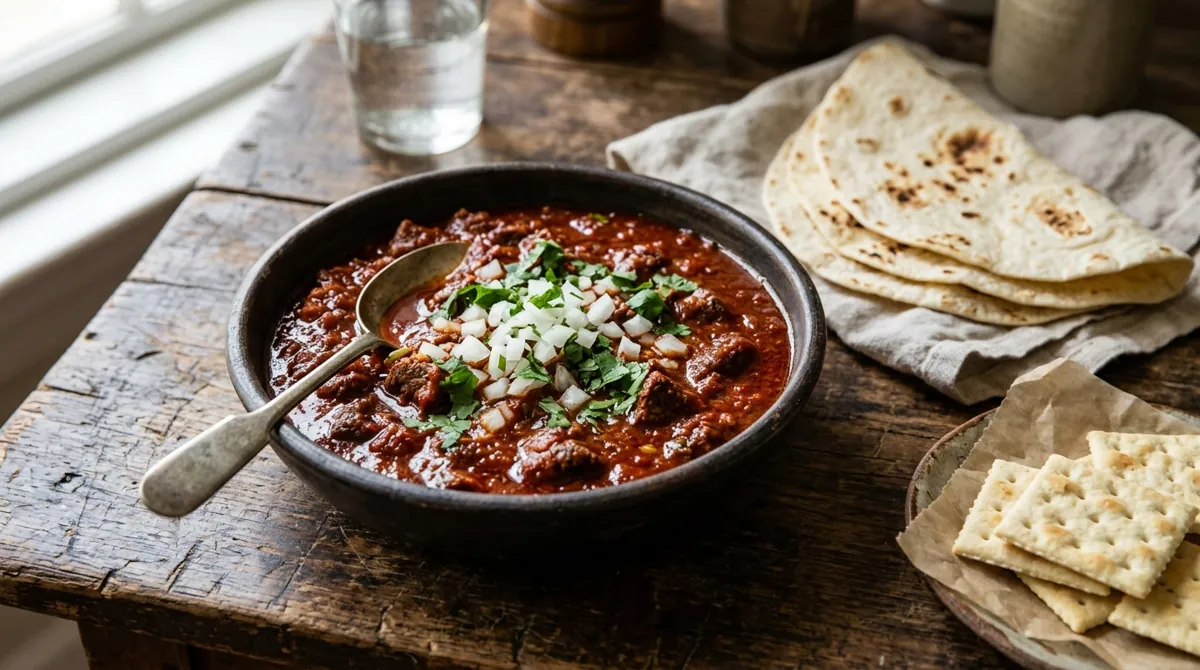
Texas Bowl of Red (San Antonio Chili con Carne)
Big cubes of beef chuck braised for three hours in a purée of toasted whole dried chiles, with no beans and no tomatoes.
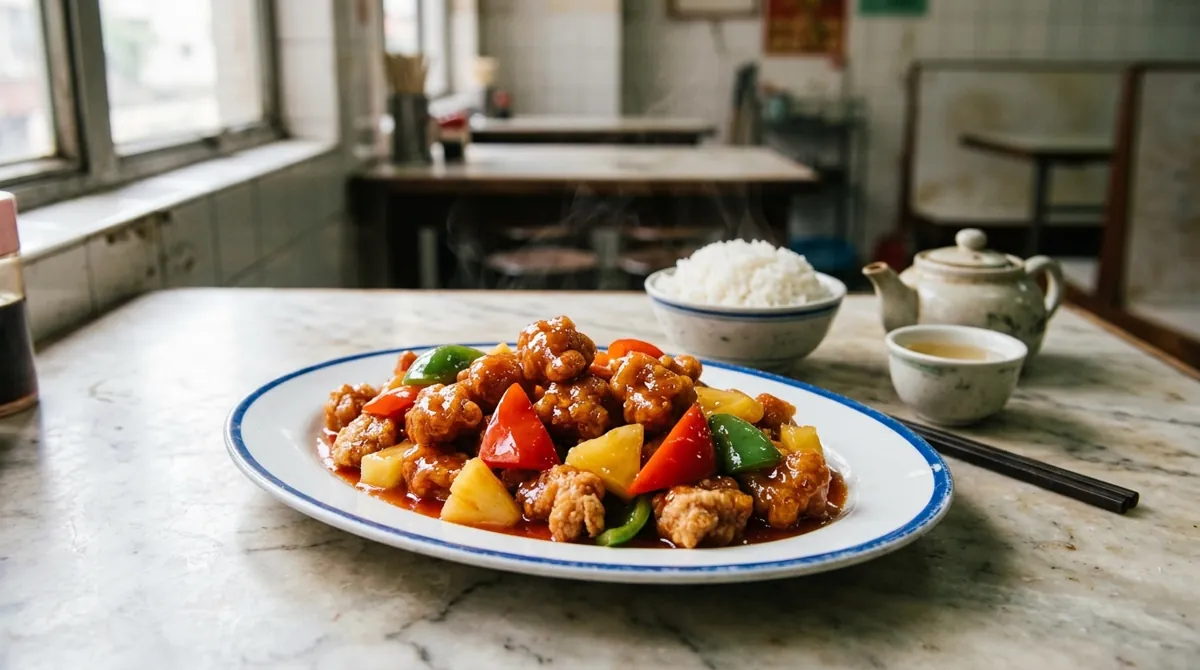
Gu Lou Yuk (Cantonese Sweet and Sour Pork)
Bite-size pork shoulder marinated with soy and egg, dry-coated in flour and cornstarch and fried twice until crunchy, then tossed in a glossy ketchup, brown sugar and vinegar sauce with a few peppers, onion and pineapple.
Sources
- Is Your Dish Too Salty? Sweet? Sour? Spicy? Here's How to Fix It (America's Test Kitchen)
- Seasoning Fixes (America's Test Kitchen)
- Put Down the Salt and Season Your Food with Vinegar (America's Test Kitchen)
- This Ingredient Makes Every Cocktail Pop (America's Test Kitchen)
- Taste (Wikipedia)
- Capsaicin (Wikipedia)