
🥣 Stocks and Sauces · Lesson 2 of 5
How to Make a Roux: White, Blond, Brown and Dark
Equal parts flour and fat, cooked from white to dark. How long each takes, why dark roux thickens less and how to add liquid without lumps.
- White: about 1 minute, 100% thickening
- Blond: about 3 minutes, 86%
- Peanut butter: about 5 minutes, 74%
- Milk chocolate: 8 to 14 minutes over medium-high
- Dark, old copper penny: about 20 minutes over medium, about 25%
- Per cup of liquid: thin 1 tbsp each, medium 2, thick 3, very thick 4
Why it matters
Roux, flour cooked in fat, thickens gravy, mac and cheese sauce and gumbo. Home cooks usually go wrong twice: they cook it to the wrong color for the job, then pour in liquid at the wrong temperature and spend the next ten minutes fighting lumps. The color you stop at decides both the flavor and how much the roux will thicken.
Equal parts flour and fat
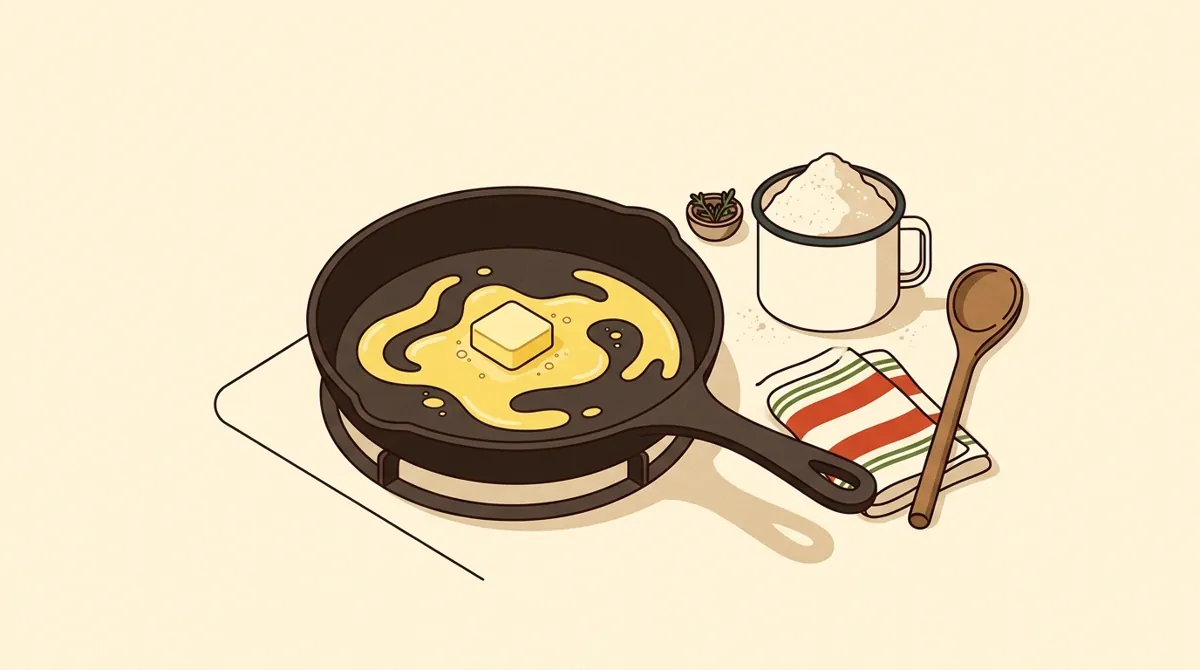
A roux is typically equal parts flour and fat by weight. Escoffier used 8 ounces of clarified butter to 9 ounces of flour for every kind of roux, white to brown. Home recipes usually measure by the spoon, equal tablespoons of butter and flour, and that works well for everyday sauces.
Four colors, four jobs
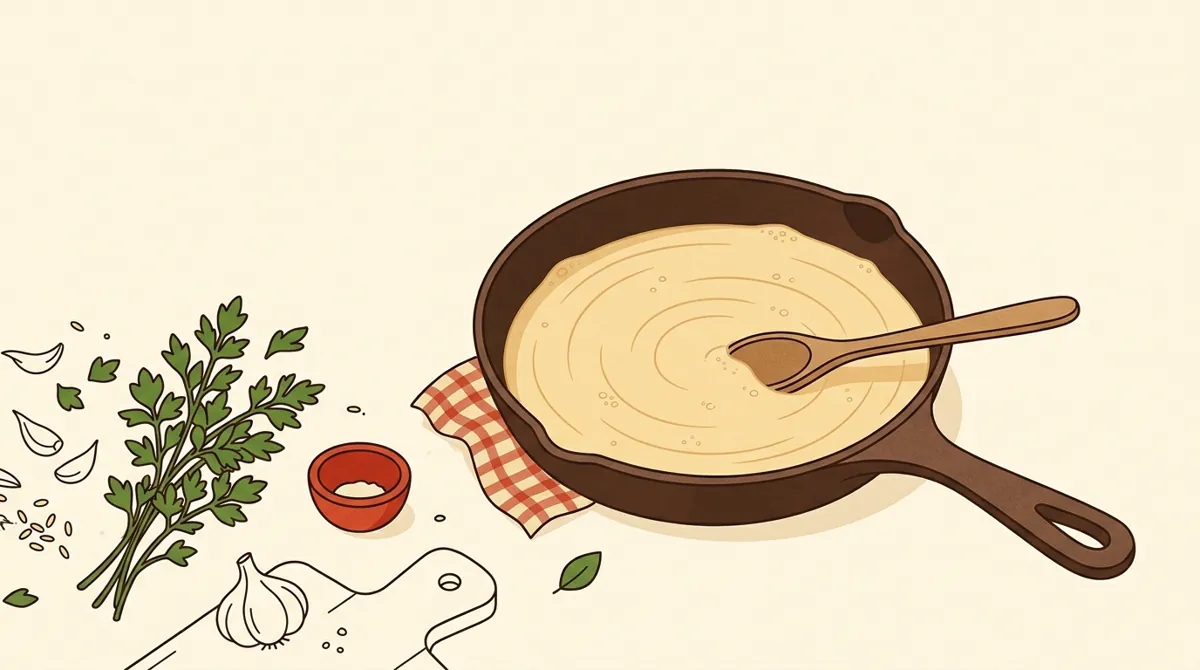
White roux cooks a minute to a few minutes, just long enough to lose the raw flour taste; it is for béchamel and white sauces. Blond roux, Escoffier's pale roux, takes around 3 minutes, is just starting to color and is used for velouté. Peanut butter brown, around 5 minutes, smells like toasted hazelnuts, and dark roux, milk chocolate to dark chocolate, takes 8 to 20 minutes or more and is the base of gumbo. Times depend entirely on your heat, so cook to color, not the clock.
Darker roux thickens less
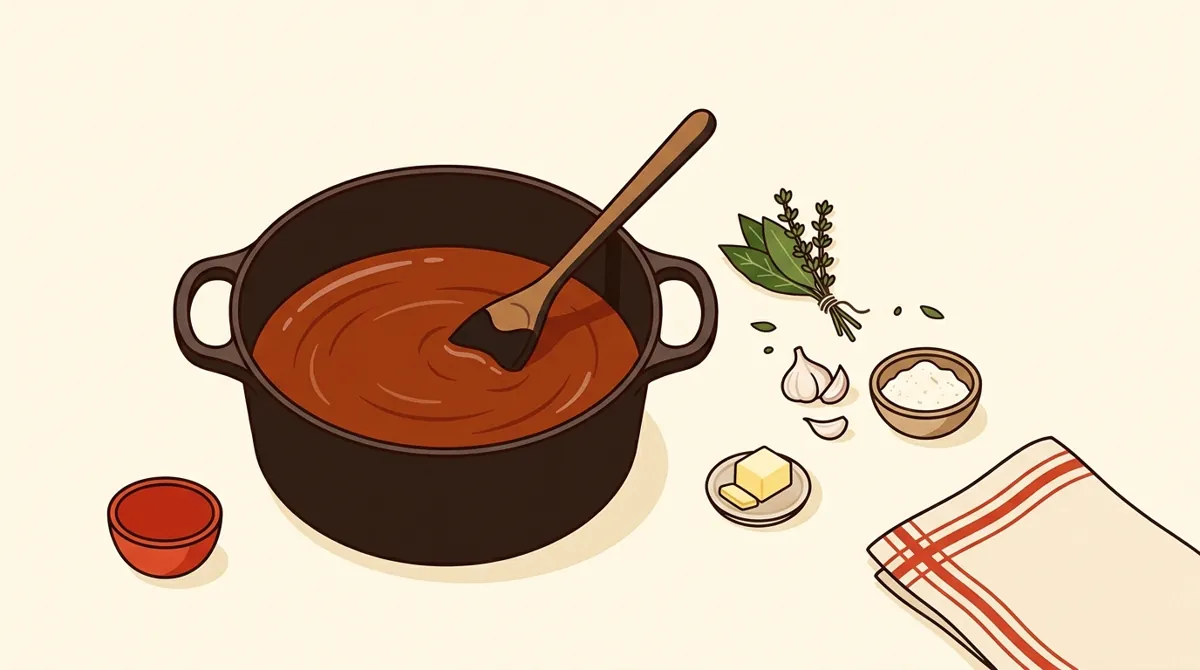
Heat breaks the starch chains in flour into smaller pieces that thicken less. In America's Test Kitchen's viscometer test, a blond roux had 14 percent less thickening power than a white roux, and a peanut butter roux 26 percent less. A chocolate-colored roux has only about one quarter the thickening power of a white one, so dark roux is mostly there for flavor.
One side cool, one side hot
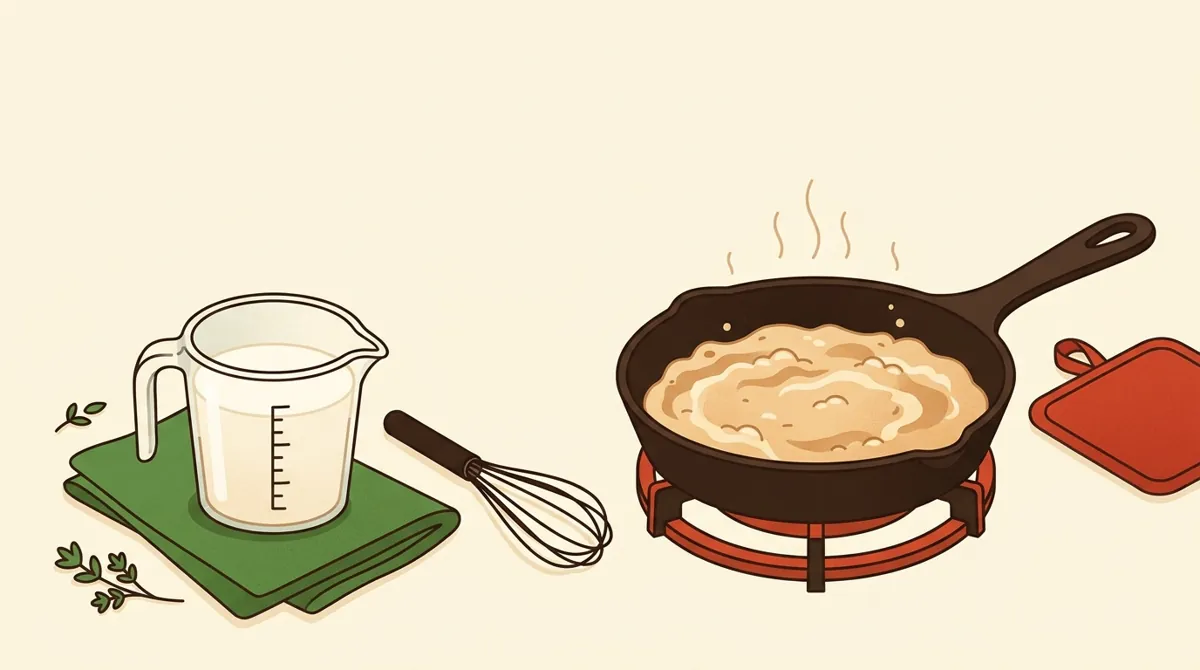
America's Test Kitchen made the same white sauce with cold, room temperature and just-boiling milk: the cold and room temperature batches were smooth, the hot one lumpy. Cool liquid gives the fat-coated starch granules time to spread out before they swell. Escoffier did the reverse, pouring boiling milk onto a roux that had cooled almost completely; either way, one side is cool, and the liquid goes in gradually while you whisk.
How much roux per cup of liquid
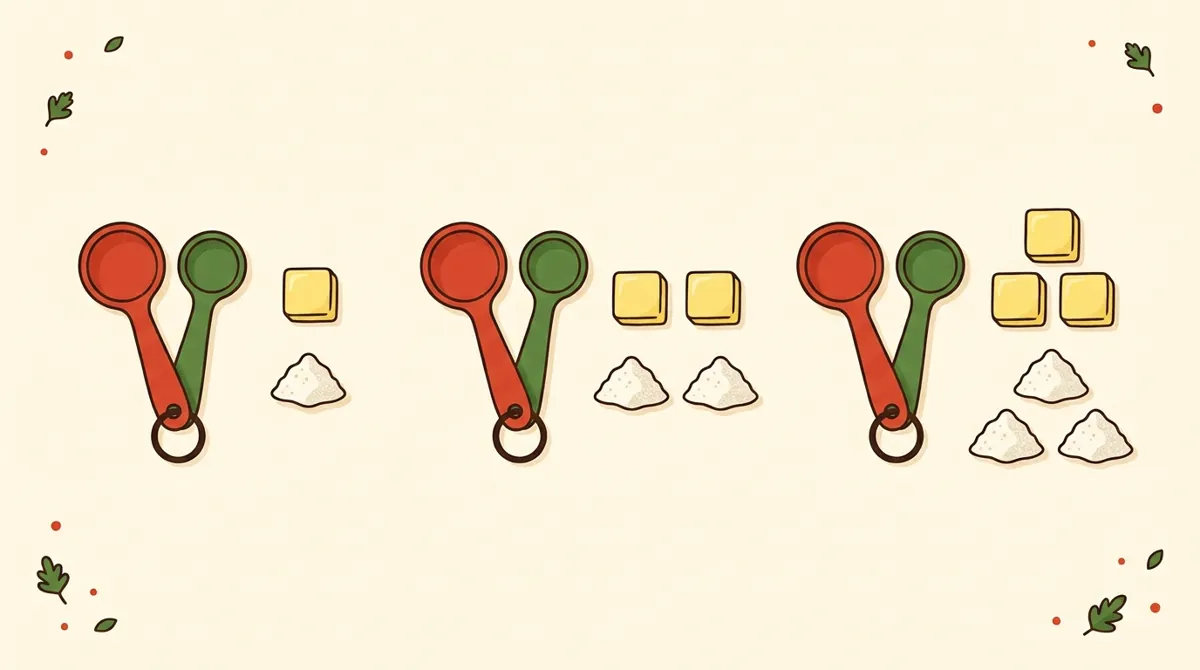
A university food science lab manual uses, per cup of milk: 1 tablespoon each of butter and flour for a thin sauce (cream soup), 2 for medium (casserole base, cheese sauce), 3 for thick (soufflé) and 4 for very thick (croquettes). Those amounts assume a white roux; a darker roux needs more to reach the same thickness.
Step by step
Measure equal amounts of fat and flour: 2 tablespoons of each per cup of liquid for a medium sauce.
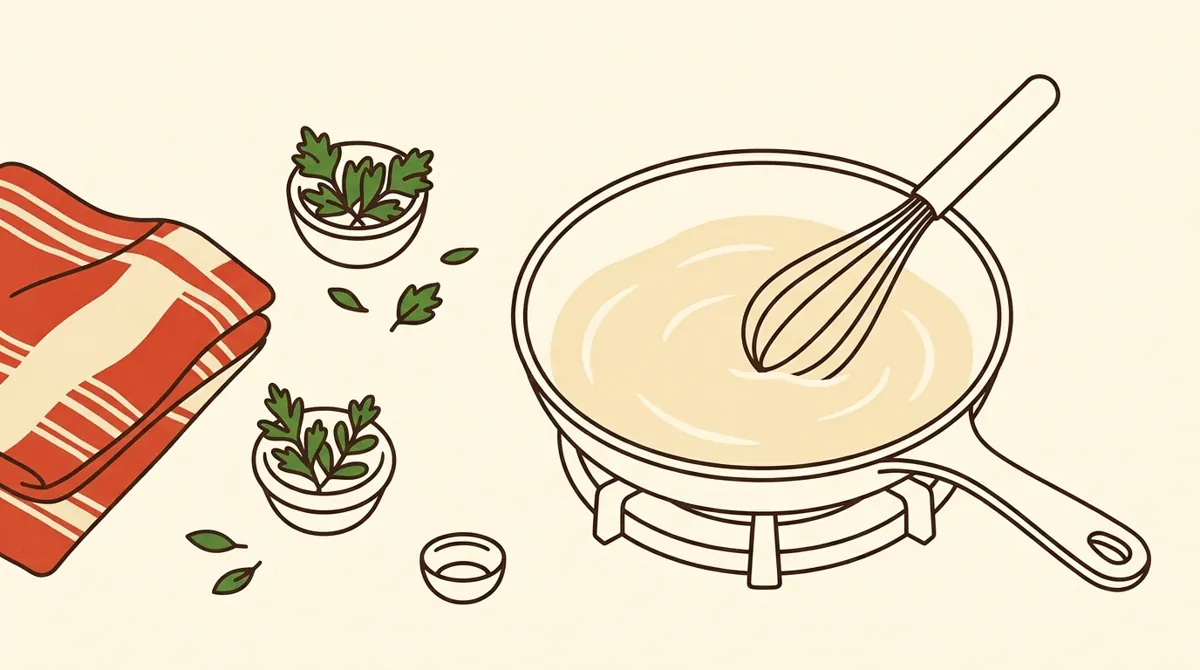
Melt the fat over medium heat and whisk in the flour until you have a smooth paste.
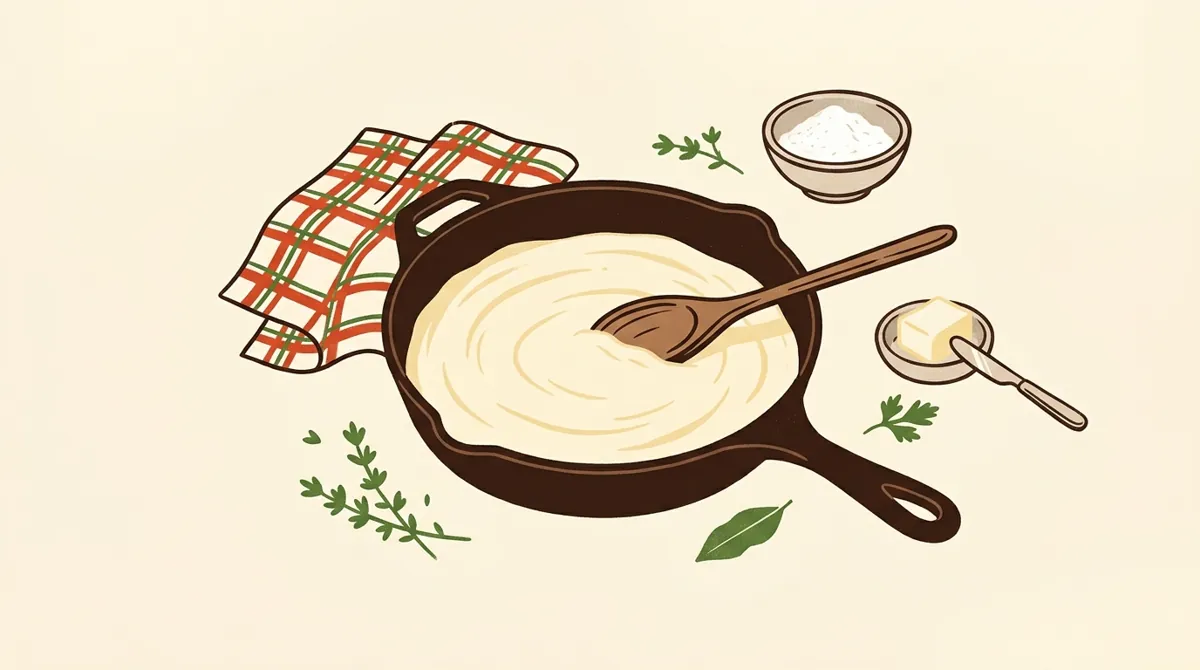
Keep stirring and cook it to the color you need: about 1 minute for white, 3 for blond, 5 for peanut butter brown, and 8 to 20 minutes or more for dark.
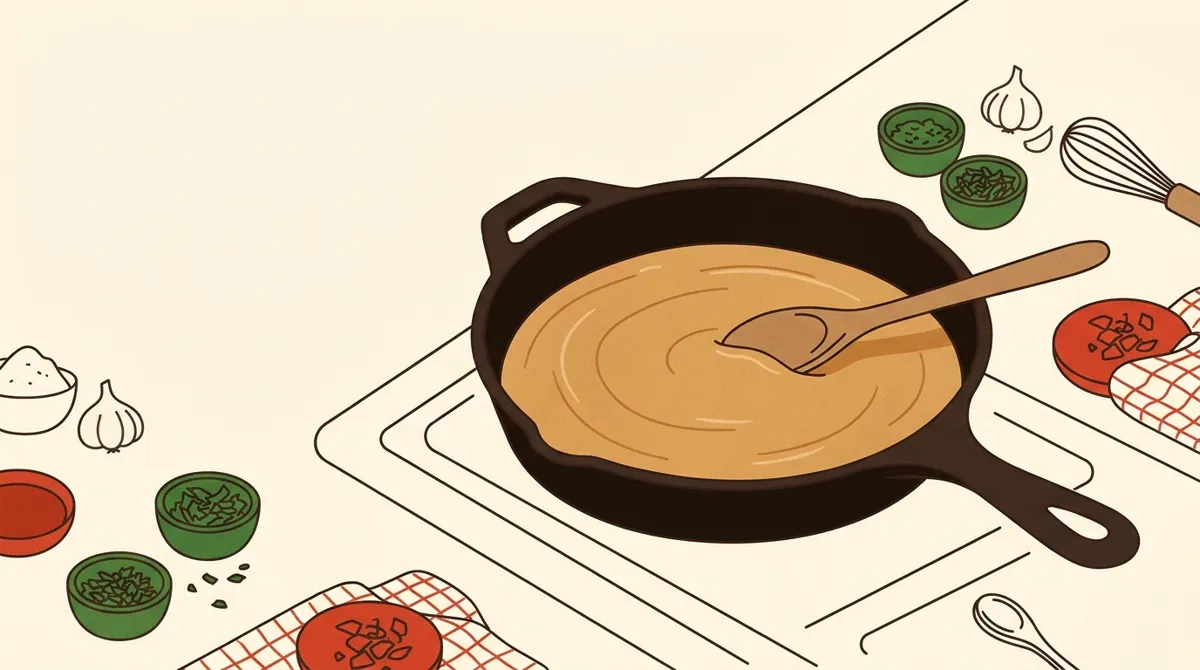
For a dark roux, stay at the stove and stir constantly; if it starts to smoke, pull the pan off the heat and keep stirring to cool it.
Add cold or room temperature liquid gradually, whisking constantly; if your liquid is hot, let the roux cool first.
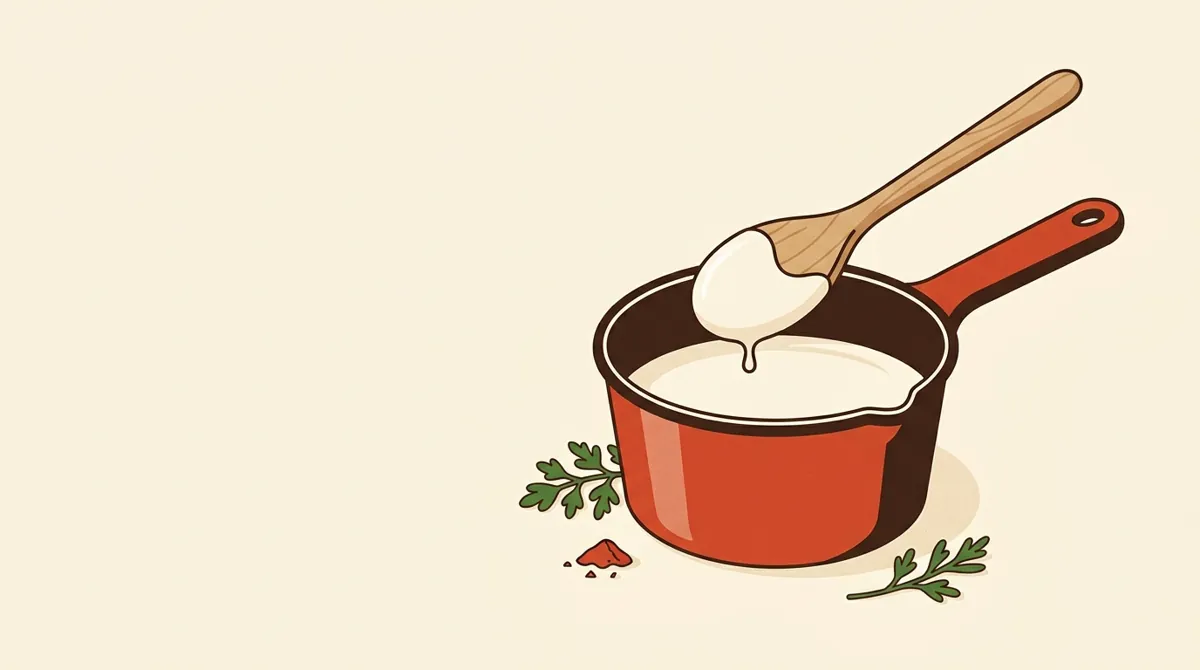
Bring the sauce to a boil while whisking and let it boil 1 minute if it will not be cooked further.
Taste and season once it has thickened.
Common mistakes
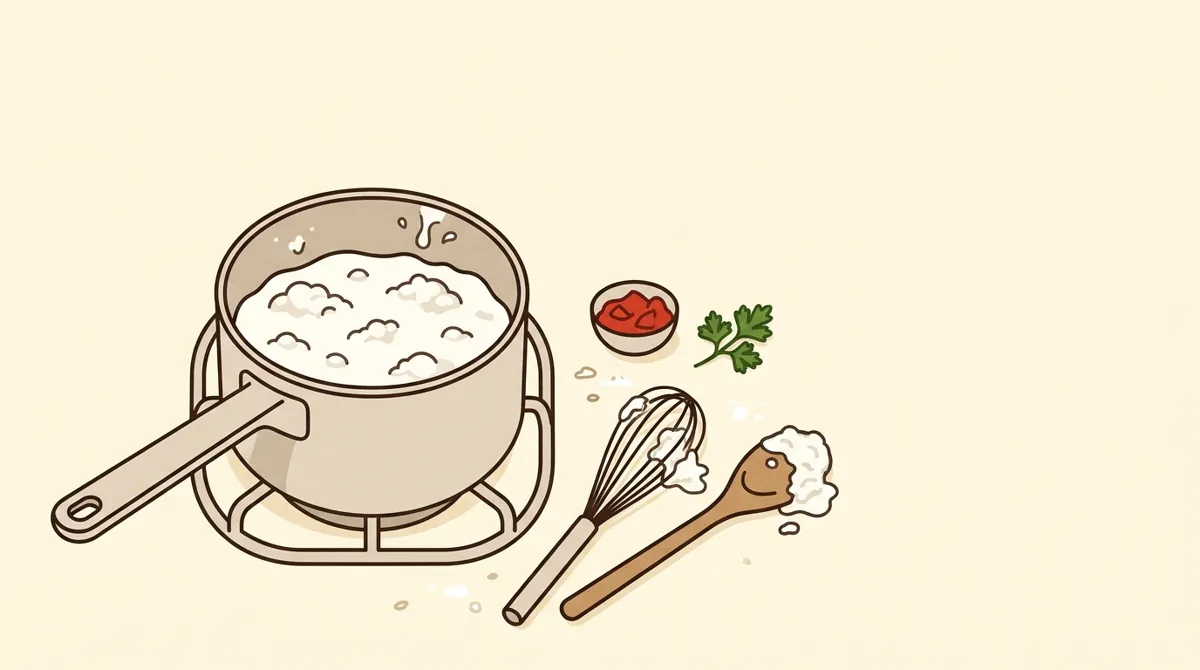
- Pouring boiling liquid into a hot roux: that is how lumps form, so make sure either the roux or the liquid is cool.
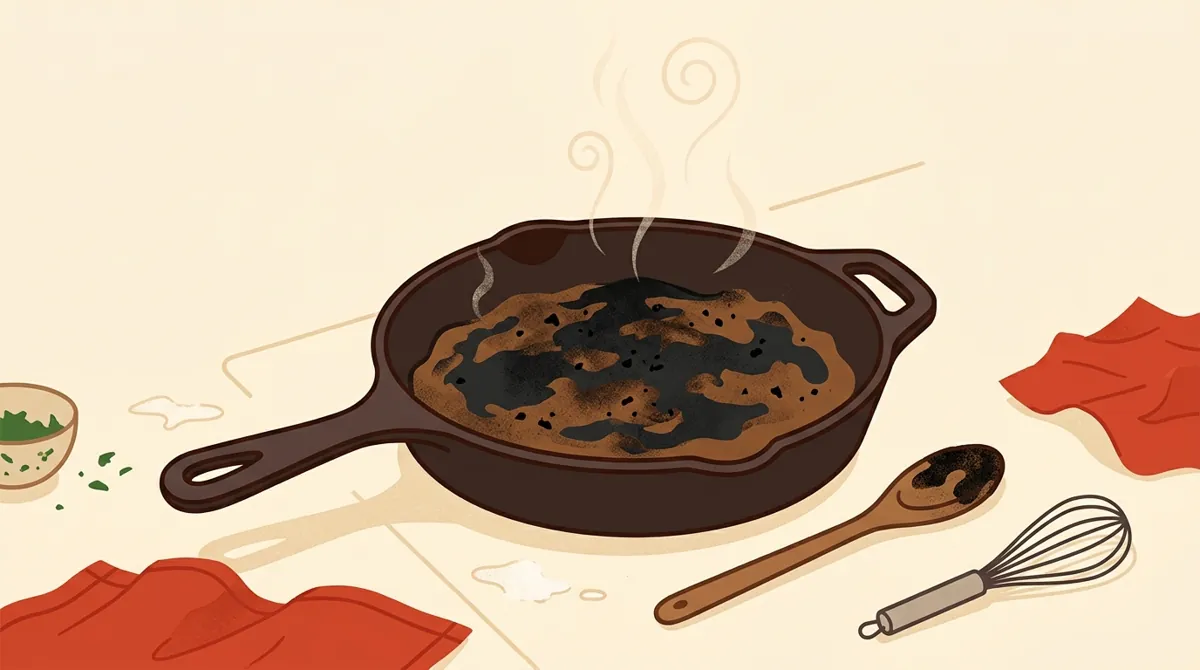
- Rushing a dark roux on high heat: Escoffier warned that scorched flour thickens poorly and leaves a bitterness nothing can remove, so lower the heat and keep stirring.
- Using the same amount of dark roux as white: a chocolate-colored roux thickens about a quarter as much, so plan for a thinner result or use more.
- Stopping a white roux too soon: give it at least a minute of cooking so the sauce does not taste of raw flour.
- Walking away from the pan: roux goes from brown to burned quickly, and burned specks mean starting over.
🏋️ Try it tonight
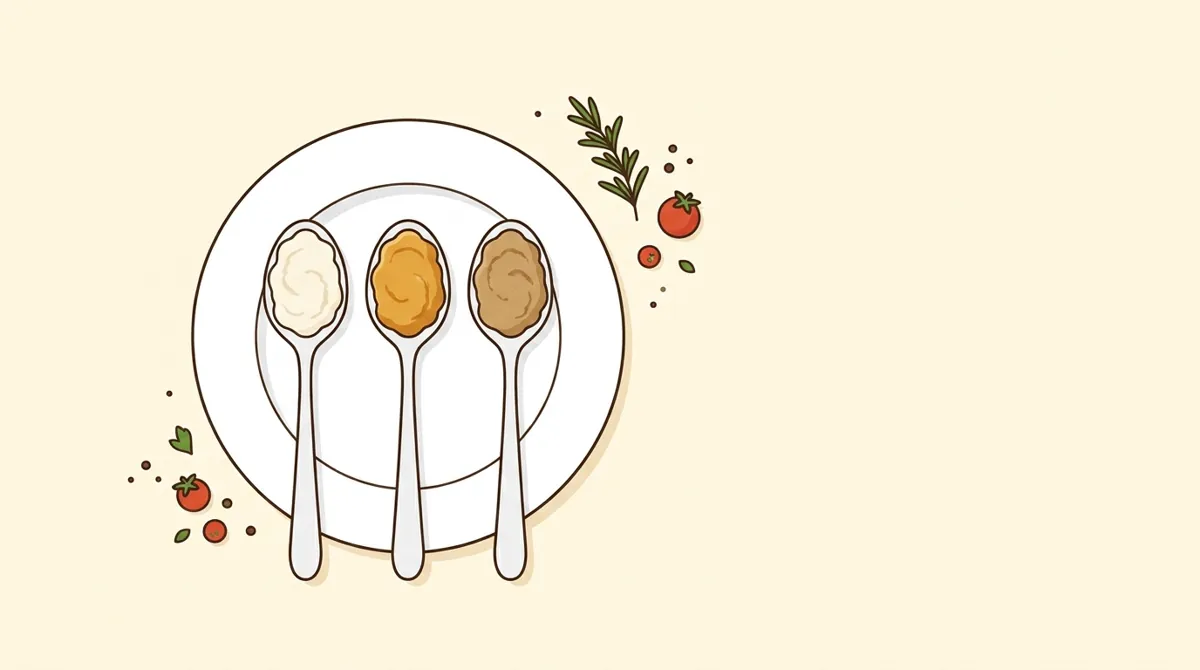
Melt 3 tablespoons of butter in a small skillet and whisk in 3 tablespoons of flour over medium-low heat. Drop a small spoonful onto a white plate at 1, 3 and 5 minutes and compare the colors and the smell, from raw to nutty. Then let the pan cool a minute, whisk in 1 cup of cold milk a splash at a time, bring it to a boil, and notice how smooth it stays.
💡 Did you know?
America's Test Kitchen measured that a roux cooked only 5 minutes, to the color of peanut butter, had already lost 26 percent of its thickening power.
Use it tonight
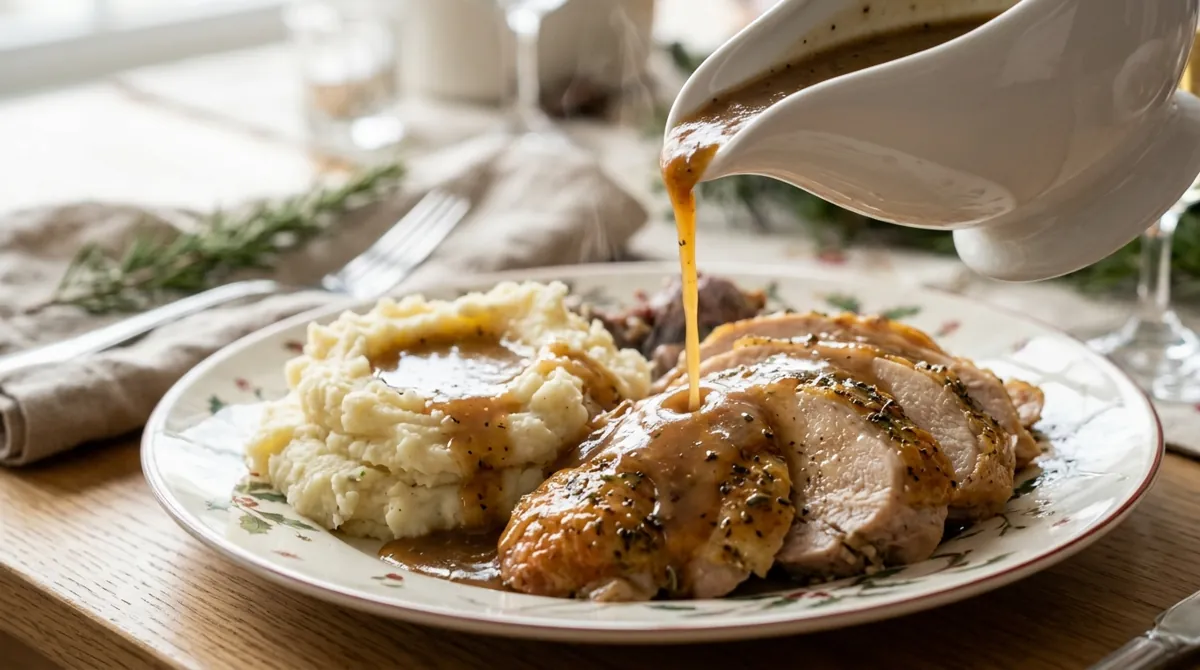
Turkey Giblet Pan Gravy
Real gravy from the bird: a giblet broth made while the turkey roasts, a nutty brown roux, and the roasting pan deglazed with white wine so every browned bit ends up in the sauce.
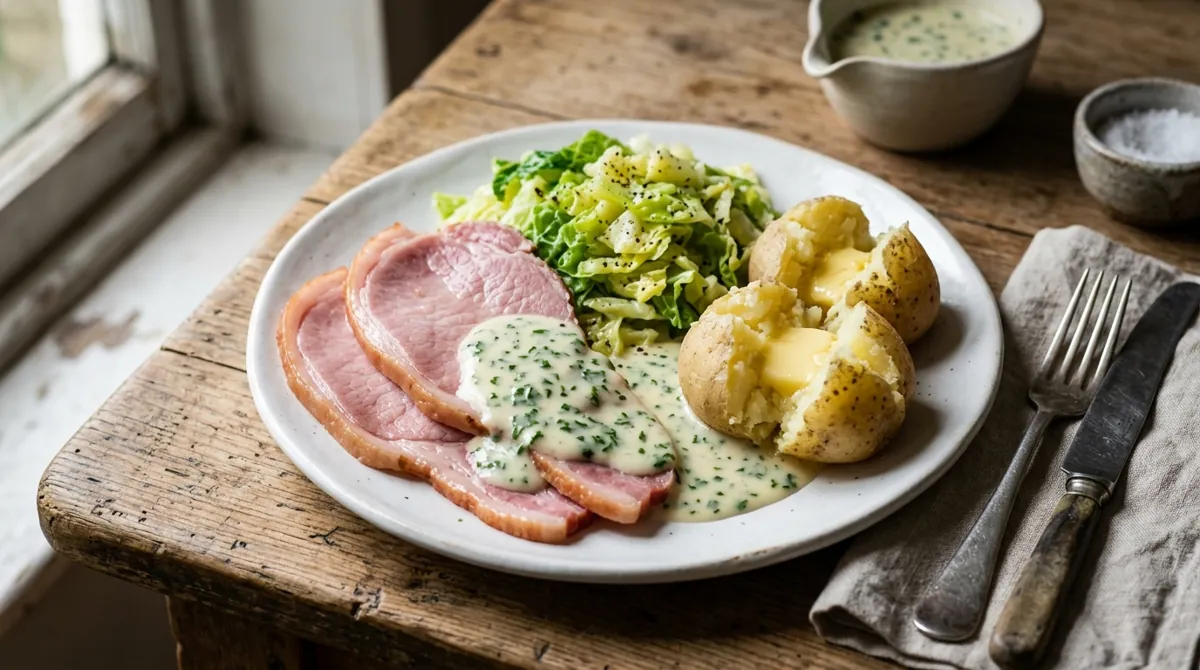
Irish Bacon and Cabbage with Parsley Sauce
The real Irish dinner behind America's corned beef and cabbage: a cured bacon joint simmered in a big pot, cabbage cooked in the salty bacon water, and a white sauce full of parsley.
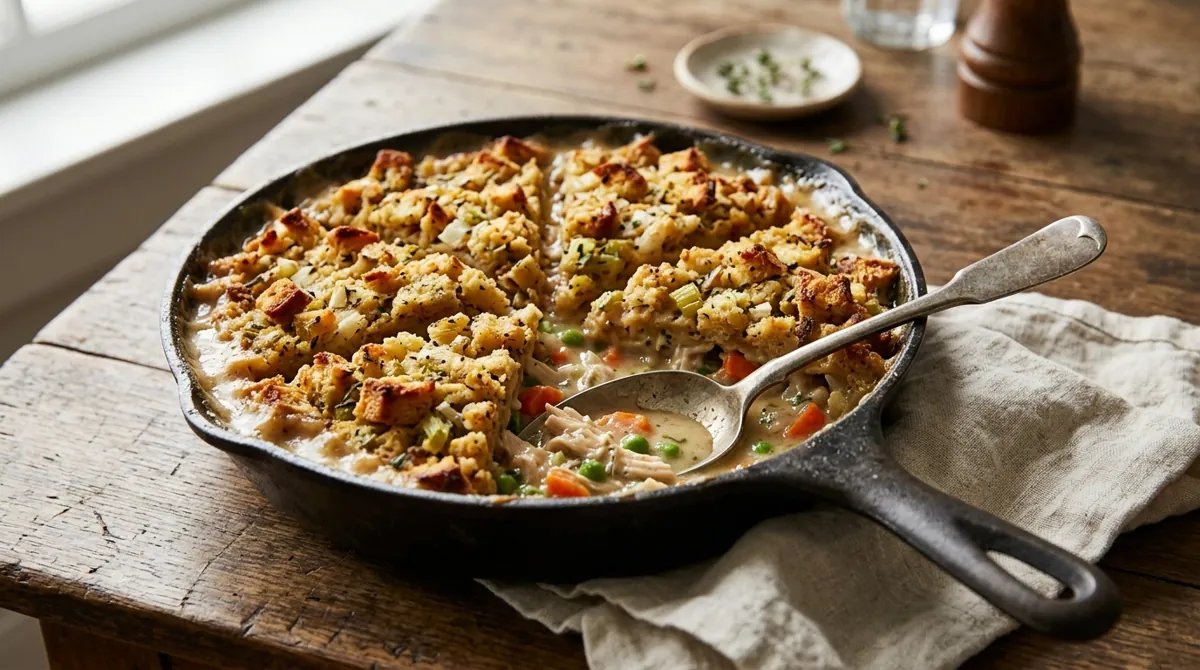
Turkey Pot Pie with a Stuffing Crust
A creamy skillet filling of leftover turkey, onion, celery, peas and carrots, topped with wedges of leftover stuffing bound with an egg and baked crisp at 475°F, in about half an hour and one pan.
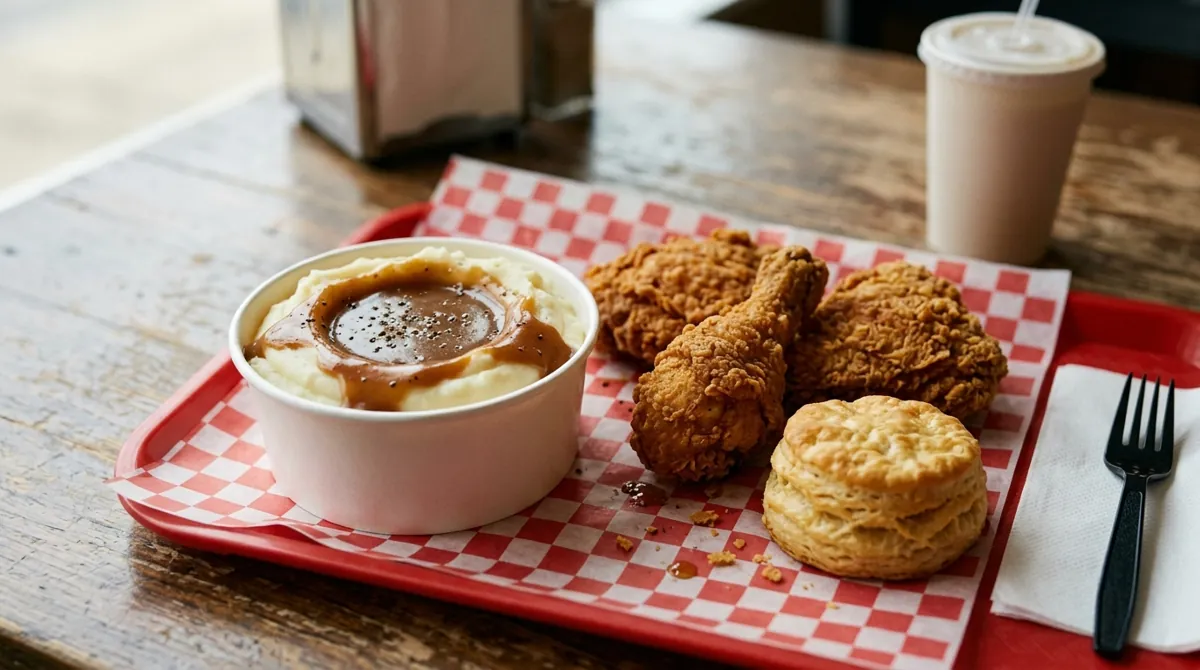
Kentucky-Style Mashed Potatoes and Gravy, Inspired by KFC
Ultra-smooth riced potatoes enriched with whole milk, heavy cream and butter, under a peppery brown chicken-and-beef gravy, the fried chicken side at home; inspired by, not official.
Sources
- Roux (Wikipedia)
- A Guide to Modern Cookery, A. Escoffier, 1907 English edition (Project Gutenberg)
- Why Color Matters for Roux (Cook's Illustrated, America's Test Kitchen)
- Smoky Chicken, Sausage, and Shrimp Gumbo (America's Test Kitchen)
- Creole-Style Shrimp and Sausage Gumbo (America's Test Kitchen)
- Does Milk Temperature Matter When Making a White Sauce or Béchamel? (Cook's Country, America's Test Kitchen)
- Getting to Know: Thickeners (America's Test Kitchen)
- Starch Paste Characteristics: White Sauces, Basic Scientific Food Preparation Lab Manual (LibreTexts)