
🥣 Stocks and Sauces · Lesson 3 of 5
The Five Mother Sauces: Béchamel, Velouté, Espagnole, Tomato and Hollandaise
The five classic French sauces every culinary student learns: what each is made of and the daughter sauces each one leads to.
- Béchamel: milk + white roux
- Velouté: light stock + pale roux
- Espagnole: brown stock + brown roux
- Tomato: tomatoes + stock, roux or reduction
- Hollandaise: butter + egg yolks, an emulsion
Why it matters
Learn five base sauces and you can make dozens more, because most classic sauces are one of the five with something added. For a home cook, that means a mac and cheese sauce, a pan gravy and the sauce on eggs Benedict stop being separate recipes and become variations on a few techniques. Culinary schools still teach them for that reason.
Where the five come from
In 1833 Marie-Antoine Carême named four grand sauces: espagnole, velouté, allemande and béchamel. Auguste Escoffier's guide, first published in 1903, organized the basic sauces as espagnole, velouté, béchamel, tomato and hollandaise, which he called the leading or mother sauces, with the small sauces derived from them. He demoted allemande, writing that it is not, strictly speaking, a basic sauce.
Three are roux sauces
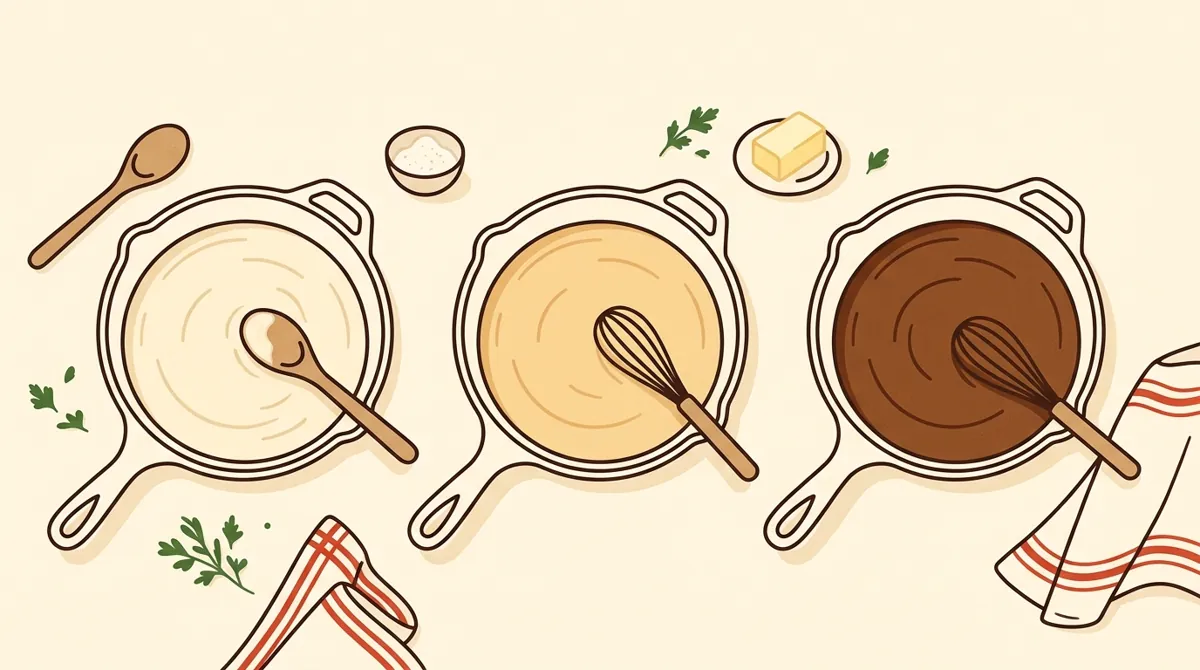
Béchamel is milk thickened with white roux. Velouté is a light stock, made from bones that were not roasted, such as veal, chicken or fish, thickened with pale roux. Espagnole is brown stock thickened with brown roux, with tomatoes and mirepoix added, and Escoffier simmered and skimmed it for hours. Learn to make a roux and you can make all three.
Tomato and hollandaise are the odd ones out
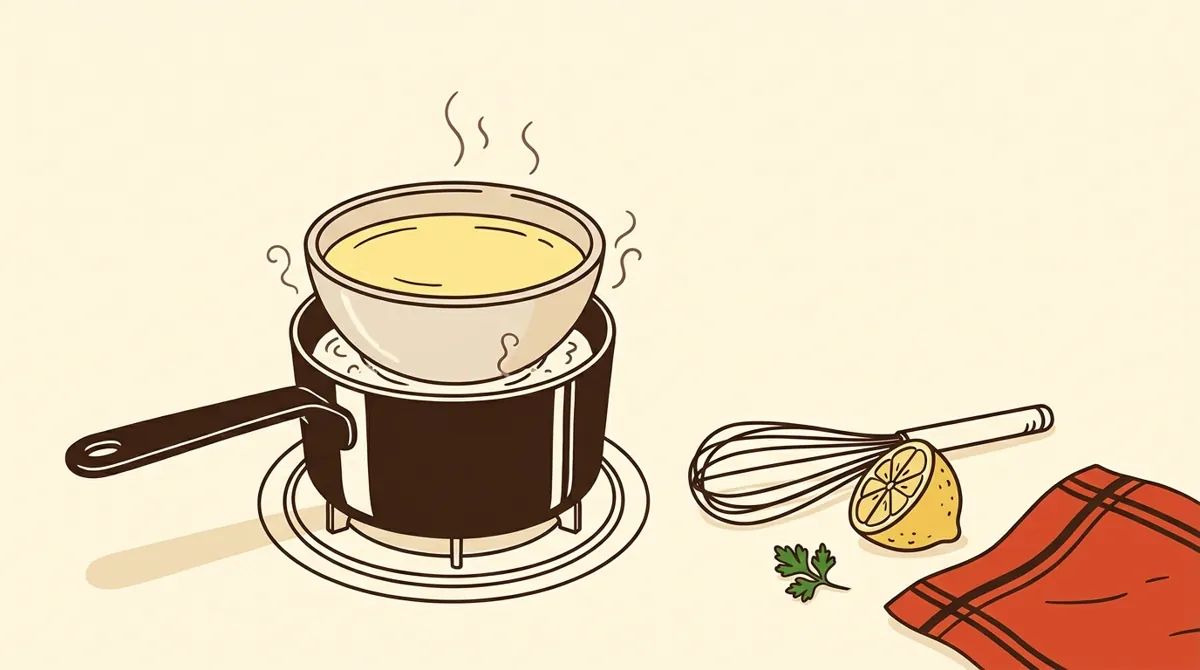
Escoffier's tomato sauce started with salt pork, carrot and onion, then flour, tomatoes and white stock, and baked for an hour and a half; today it is usually thickened just by reduction. Hollandaise has no roux at all: it is an emulsion of egg yolk and butter with lemon juice or a vinegar reduction, held together by lecithin in the yolks. Temperature control is critical, because too much heat curdles it.
Daughter sauces are the payoff
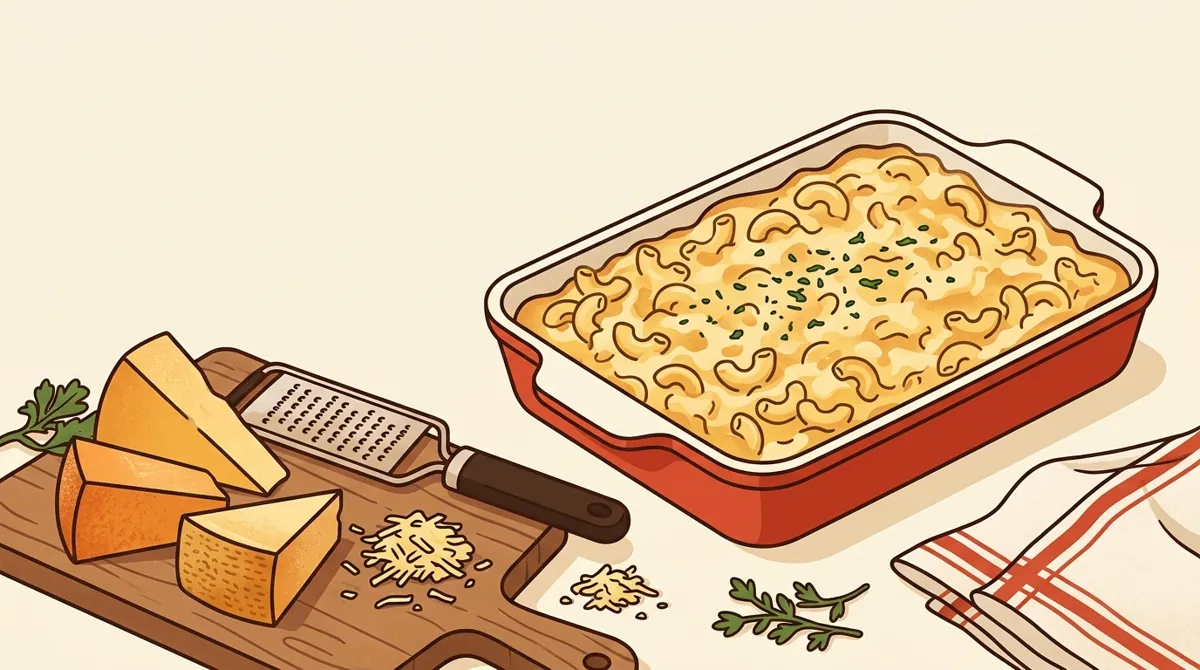
Add Gruyère and Parmesan to béchamel and you have Mornay, the idea behind most cheese sauces. Add a tarragon, shallot and vinegar reduction to the hollandaise method and you have béarnaise; fold in whipped cream and it is mousseline. Escoffier reduced espagnole with more brown stock into demi-glace, which he called the base of all the smaller brown sauces, and built bordelaise on it with red wine and shallots.
Why a home cook should care
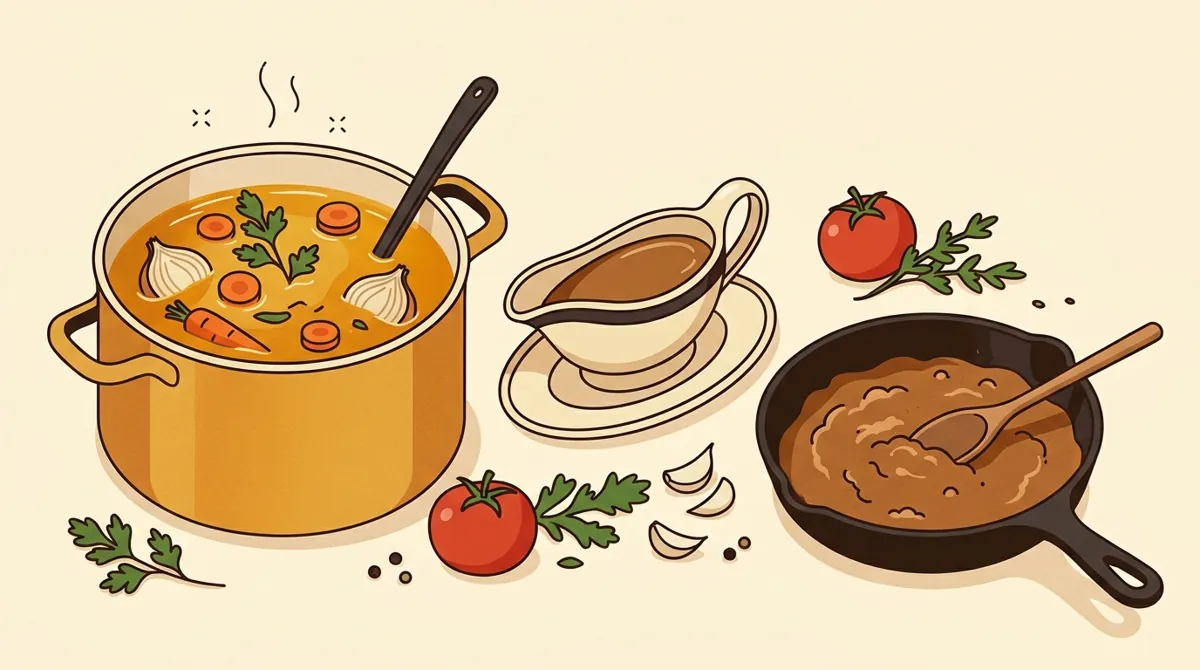
EHL, the Swiss hospitality school, says culinary schools still teach the mother sauces because they train your palate, your technique and your confidence at the same time. Once you see a gravy as stock plus roux, or a cheese sauce as béchamel plus cheese, you can fix one that is too thin, too thick or bland instead of starting over.
Step by step
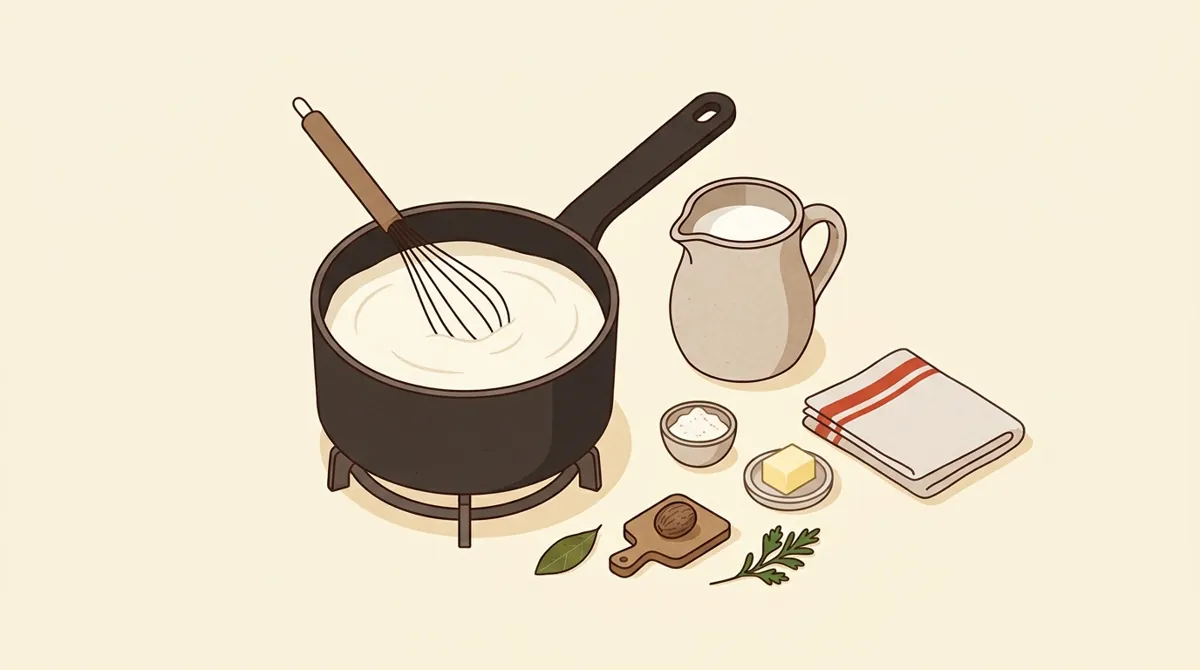
Pick the liquid: milk for béchamel, light stock for velouté, brown stock for espagnole.
Make the roux to match: white for béchamel, pale for velouté, brown for espagnole.
Whisk the liquid into the roux gradually, with one of the two cool, and bring it to a boil.
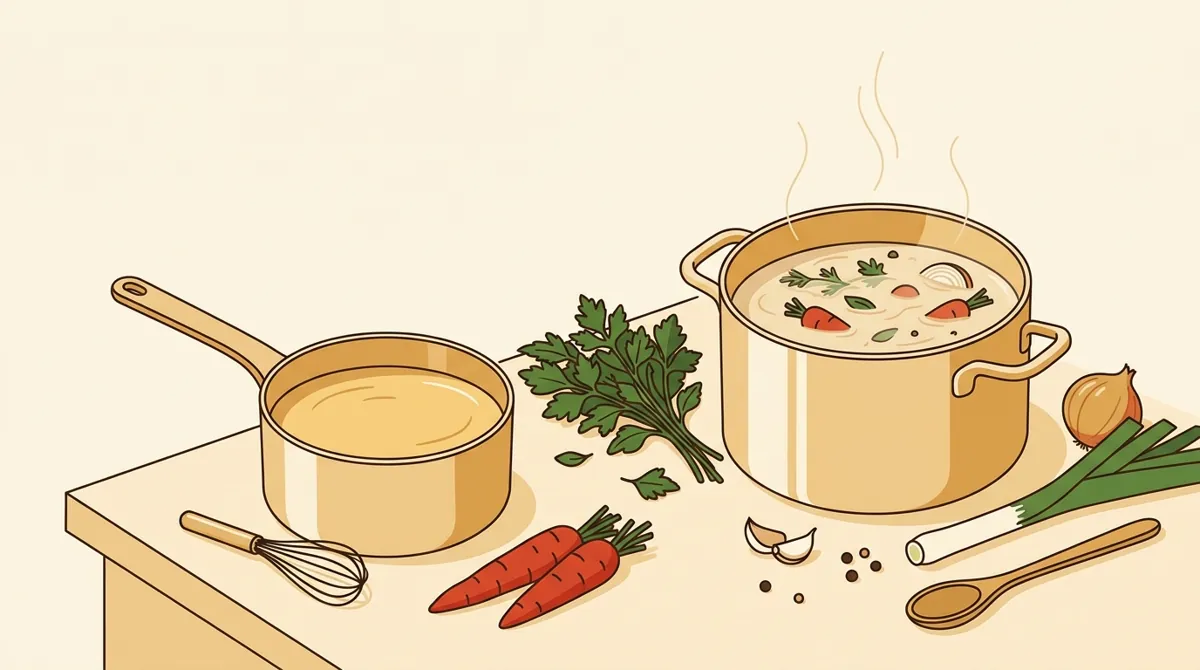
Lower the heat and simmer, skimming off whatever rises to the surface, until it no longer tastes of flour.
Strain it smooth, then keep a skin from forming by stirring as it cools or rubbing a little butter over the surface.
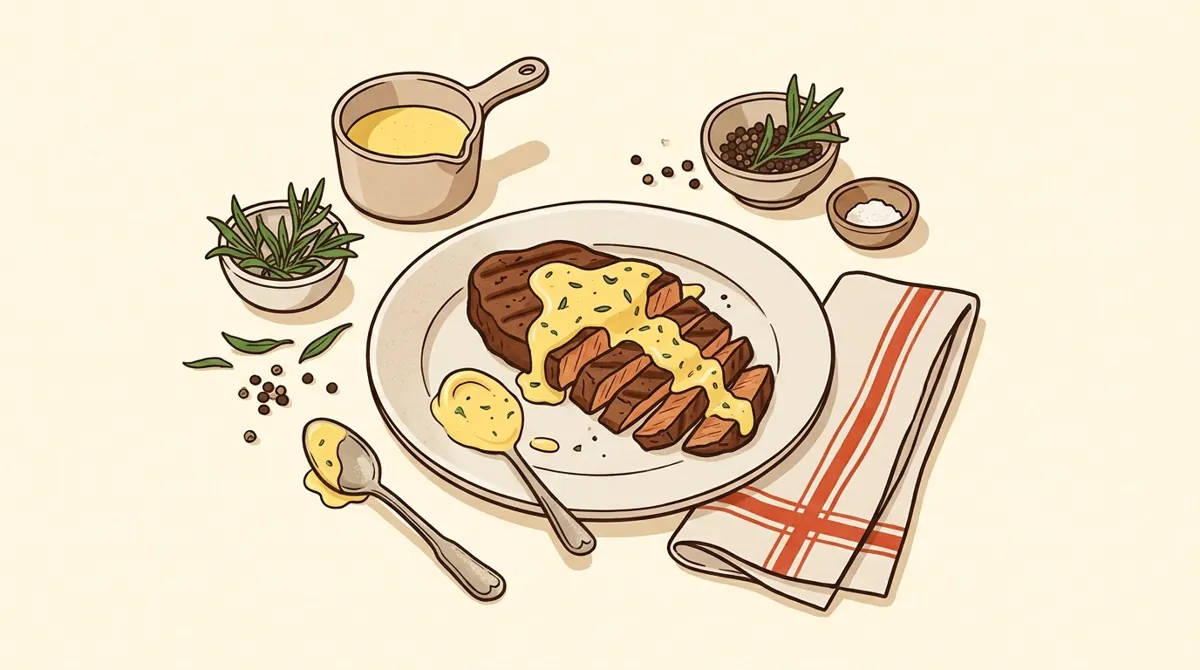
Season lightly, then turn it into a daughter sauce by adding cheese, cream, wine, herbs or tomato.
Common mistakes
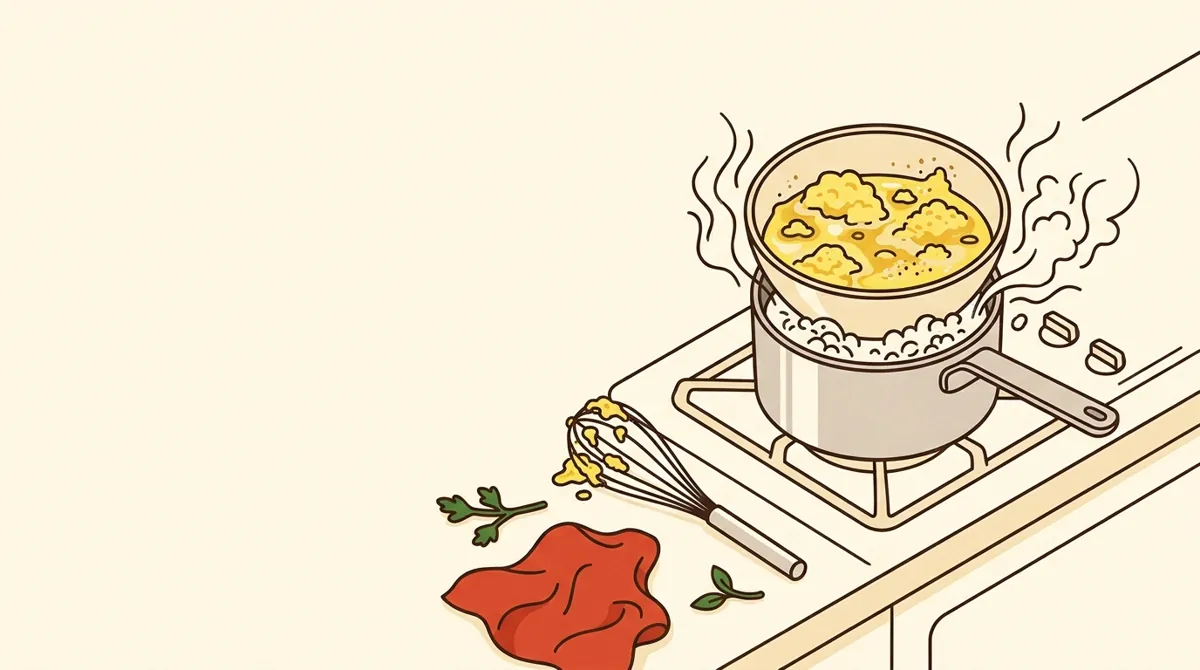
- Treating hollandaise like the others: it has no roux, so it needs gentle heat and slow whisking, not a boil.
- Making velouté with roasted-bone stock: that is the road to a brown sauce, so use a light stock from unroasted bones for a pale velouté.
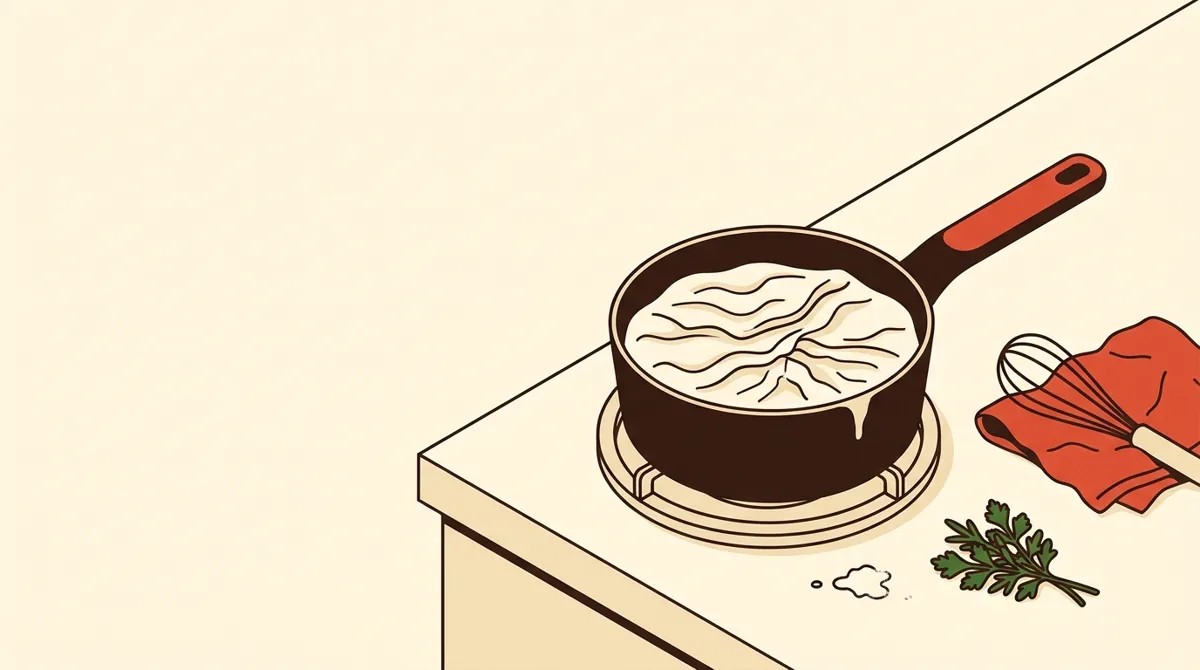
- Letting a finished béchamel or velouté sit uncovered: a skin forms, so stir it as it cools or butter the top.
- Covering a weak sauce with extra salt: Escoffier called it a deplorable practice, so fix the base (reduce it, or use better stock) and season lightly.
🏋️ Try it tonight
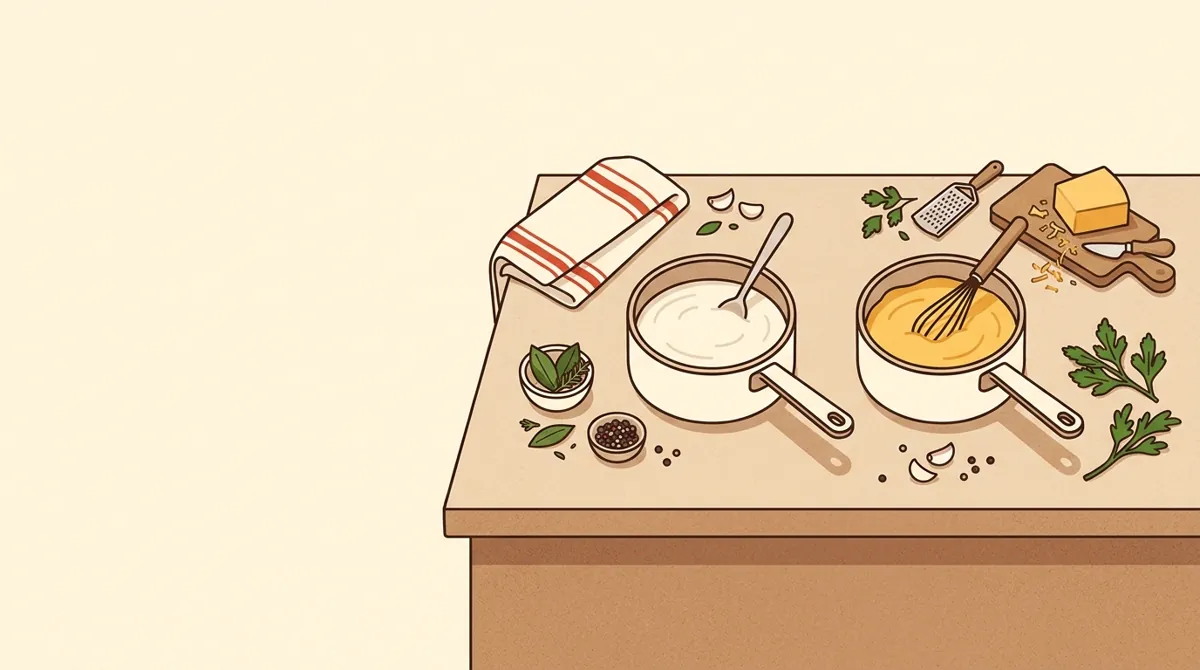
Make 1 cup of béchamel: 2 tablespoons butter and 2 tablespoons flour cooked 1 minute, then 1 cup of cold milk whisked in and boiled 1 minute. Pour half into a second pan and stir in a small handful of grated Gruyère and Parmesan, or whatever melting cheese you have, off the heat. Taste them side by side: you just made a mother sauce and one of its daughters.
💡 Did you know?
In Escoffier's original 1903 French edition, hollandaise was only a small sauce; the 1907 English edition swapped it in among the basic sauces, the likely origin of today's five-sauce list.
Use it tonight
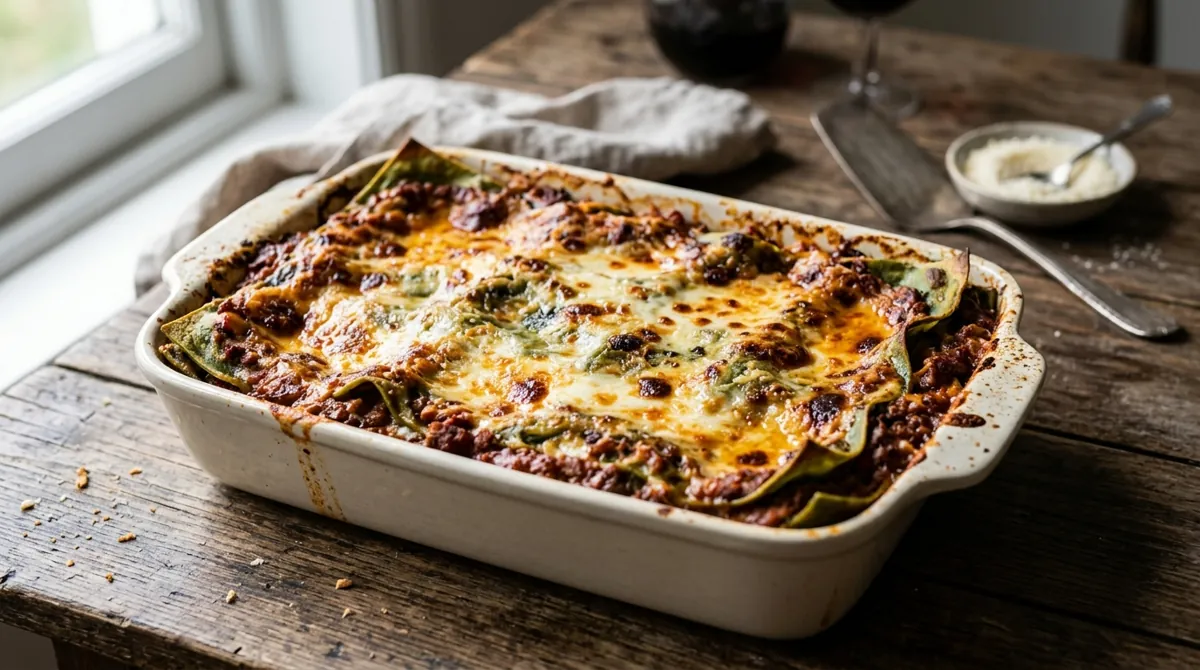
Lasagne Verdi alla Bolognese
Thin sheets of green spinach pasta layered at least six times with slow-cooked ragù, a light béchamel, butter and plenty of Parmigiano Reggiano. No ricotta, no mozzarella.
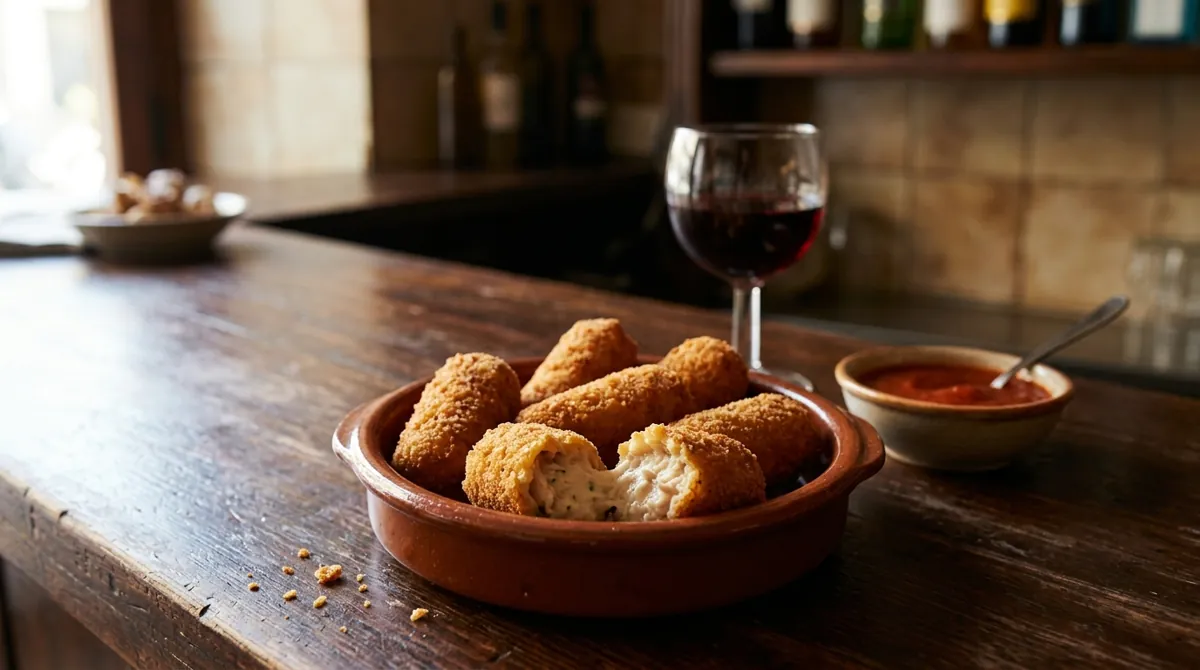
Croquetas de Pavo (Spanish Turkey Croquettes)
Spain's favorite way to stretch leftover meat: finely chopped turkey cooked into a very thick bechamel of milk and turkey broth, chilled, shaped into little logs, coated in egg and crumbs and fried until crisp outside and creamy inside.
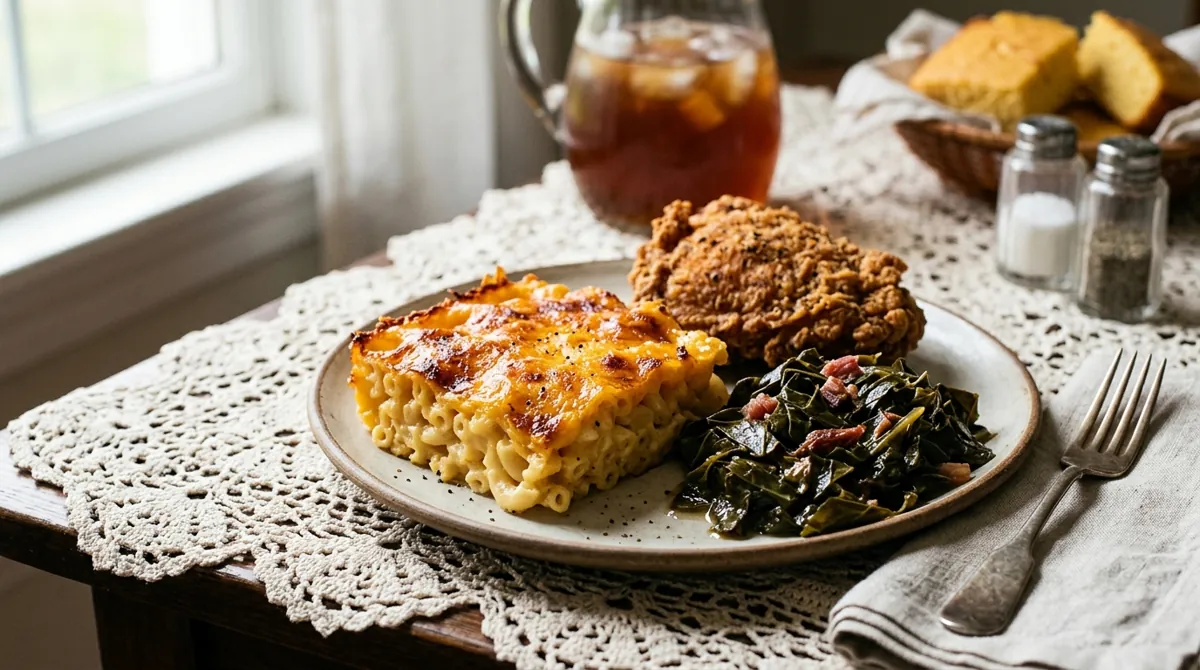
Southern Baked Macaroni and Cheese
Layers of elbow macaroni, cheddar and Jack bound with beaten eggs, evaporated milk, sour cream and butter, then baked until it sets firm enough to cut, with a crusty, browned top.
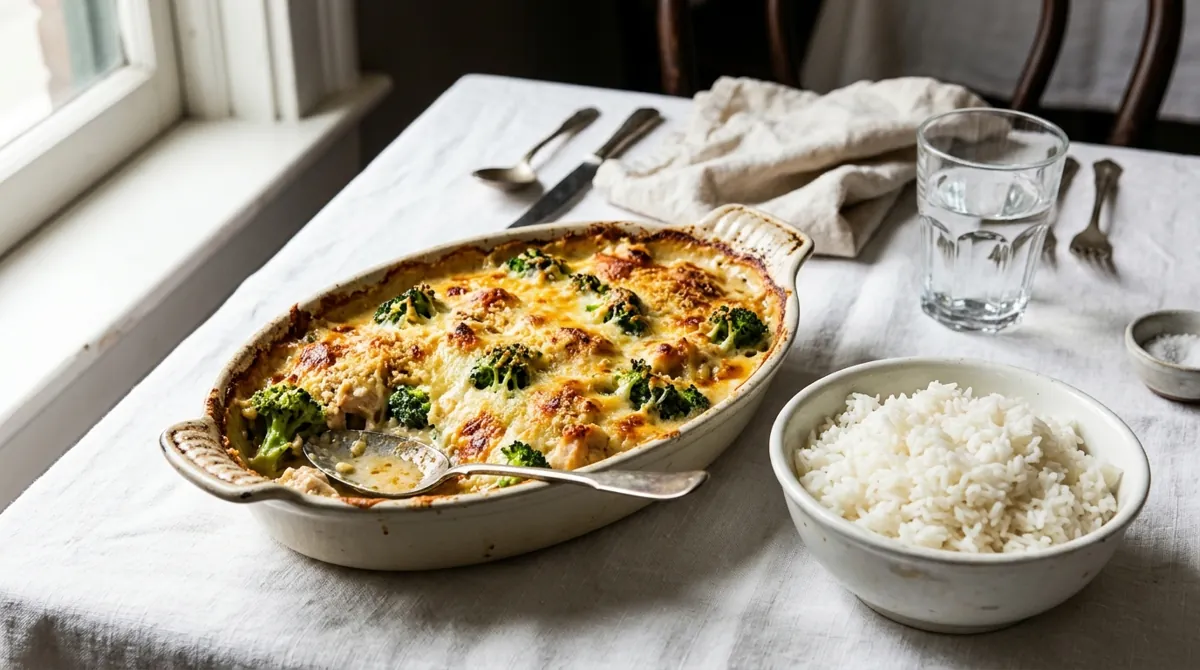
Chicken Divan (Chicken and Broccoli in Cheese Sauce)
A New York hotel restaurant's secret dish turned into a family casserole: poached chicken and broccoli under a cheddar and Parmesan cheese sauce made with the poaching broth, baked golden and served over rice.
Sources
- Mother sauce (Wikipedia)
- A Guide to Modern Cookery, A. Escoffier, 1907 English edition (Project Gutenberg)
- Béchamel sauce (Wikipedia)
- Velouté sauce (Wikipedia)
- Espagnole sauce (Wikipedia)
- Tomato sauce (Wikipedia)
- Hollandaise sauce (Wikipedia)
- The 5 Mother Sauces of Classical Cuisine (EHL Hospitality Business School)
- What Are the 5 Mother Sauces? (Culinary School of Fort Worth)