
Irish Bacon and Cabbage with Parsley Sauce
The real Irish dinner behind America's corned beef and cabbage: a cured bacon joint simmered in a big pot, cabbage cooked in the salty bacon water, and a white sauce full of parsley.
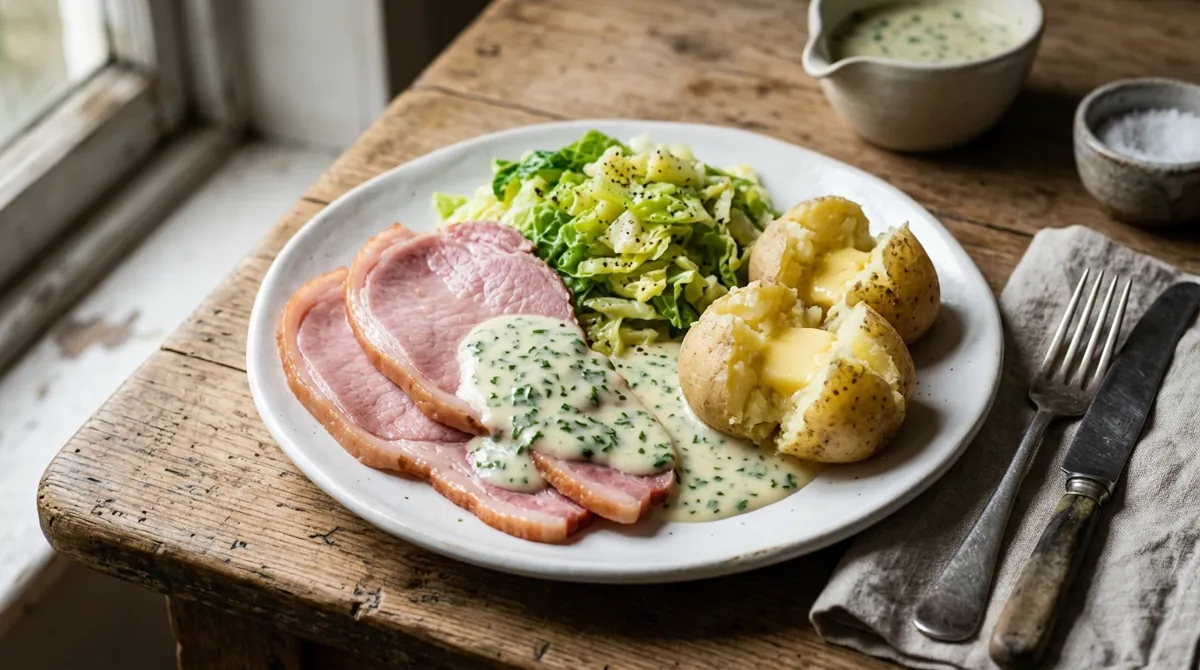
In Ireland the everyday meat was pork. Irish Times food writer Aoife McElwain, drawing on a 2011 paper by Máirtín Mac Con Iomaire and Pádraic Óg Gallagher, explains that corned beef was produced mainly for export and was too expensive for most Irish people, while a bacon joint with cabbage from the garden was the affordable treat. The export trade was real and large. The paper's abstract (Journal of Culinary Science and Technology, 2011) says England's Cattle Acts of 1663 and 1667 pushed Ireland from shipping live cattle to shipping salted beef, centered on Cork, which fed the British navy for more than two centuries and went to English and French colonies. Smithsonian magazine adds that Ireland's salt tax was far lower than England's, and that the Irish who made the beef usually could not afford it and ate salted pork or bacon instead (Shaylyn Esposito, March 15, 2013:). The same paper notes evidence that corned beef was still eaten in Ireland as a festive food, so "the Irish never ate it" goes too far (see Rules). Wikipedia describes bacon and cabbage as back bacon boiled with cabbage and served with potatoes and a parsley white sauce, a dish of homes that grew vegetables and kept pigs.
🇮🇪 The original
The real Irish dinner behind America's corned beef and cabbage: a cured bacon joint simmered in a big pot, cabbage cooked in the salty bacon water, and a white sauce full of parsley.
🇺🇸 The American version
Irish-Americans made it with corned beef brisket, simmered with cabbage, potatoes and carrots: the St. Patrick's Day dinner most Americans know. See the Corned Beef and Cabbage recipe.
📖 Myth check: Is Corned Beef and Cabbage Actually Irish? →
Why it works the kitchen science
One pot on purpose
Cooking the cabbage in the bacon water seasons it with salt and pork fat; Darina Allen traces the habit to kitchens that could hang only one pot over the fire.
Start cold, boil slowly
Heating the joint up gradually draws salt out into the water, and the froth test tells you when the cure is strong enough to change the water.
Step by step
- Step 1
Put the bacon in a large pot, cover it with cold water and bring it slowly to a boil over medium heat, about 15 minutes. If a white froth rises, the bacon is very salty: pour off the water, cover the joint with fresh hot water and bring it back to a boil.
- Step 2
Cover the pot and simmer gently for 20 minutes per pound (60 minutes for a 3 lb joint). Meanwhile, put the potatoes in a second pot of salted cold water, bring to a boil and cook 20 to 25 minutes, until a knife slides in.
- Step 3
While the bacon simmers, trim the outer leaves off the cabbage, quarter it, cut out the core and slice it thinly across the grain.
- Step 4
For the sauce, bring the milk to a simmer in a small saucepan with the parsley stalks, thyme and any carrot and onion, season it and simmer 4 to 5 minutes. Strain it. In the same pan, melt the butter, stir in the flour and cook 2 minutes over low heat, then whisk in the hot milk a little at a time until smooth and lightly coating.
- Step 5
Stir the chopped parsley into the sauce and keep it on the lowest heat for 4 to 5 minutes, then taste for salt and pepper.
- Step 6
About 20 minutes before the bacon is due, add the cabbage to the bacon pot, stir it under, cover and keep simmering until the cabbage is tender and the center of the joint reads 165°F (74°C).
- Step 7
Lift out the bacon, peel off the rind (it comes away easily when the joint is cooked) and rest it 10 minutes. Drain the cabbage, saving the water for soup if it is not too salty, and toss the cabbage with the butter and plenty of pepper.
- Step 8
Slice the bacon and serve it with the cabbage, the floury potatoes and the parsley sauce.
Irish Bacon and Cabbage with Parsley Sauce
Serves 6 · 1 bacon joint (about 3 lb), sliced, with cabbage, potatoes and about 1 1/2 cups sauce · 1 hr 45 min total
Bacon and cabbage
- 1 (3 lb) Irish-style bacon joint (loin or collar, rind on, with a good layer of fat), or a cured, uncooked boneless pork shoulder butt
- 1 Savoy cabbage (about 2 lb)
- 2 tbsp butter
- Freshly ground black pepper
- 2 lb floury potatoes (russets), scrubbed
Parsley sauce
- 1 1/2 cups whole milk
- A few parsley stalks and 1 sprig fresh thyme
- A few slices of carrot and onion (optional)
- 1 tbsp butter
- 2 tbsp all-purpose flour
- 1/2 cup chopped curly parsley (about 1 oz)
- Salt and pepper
Method
- Put the bacon in a large pot, cover it with cold water and bring it slowly to a boil over medium heat, about 15 minutes. If a white froth rises, the bacon is very salty: pour off the water, cover the joint with fresh hot water and bring it back to a boil.
- Cover the pot and simmer gently for 20 minutes per pound (60 minutes for a 3 lb joint). Meanwhile, put the potatoes in a second pot of salted cold water, bring to a boil and cook 20 to 25 minutes, until a knife slides in.
- While the bacon simmers, trim the outer leaves off the cabbage, quarter it, cut out the core and slice it thinly across the grain.
- For the sauce, bring the milk to a simmer in a small saucepan with the parsley stalks, thyme and any carrot and onion, season it and simmer 4 to 5 minutes. Strain it. In the same pan, melt the butter, stir in the flour and cook 2 minutes over low heat, then whisk in the hot milk a little at a time until smooth and lightly coating.
- Stir the chopped parsley into the sauce and keep it on the lowest heat for 4 to 5 minutes, then taste for salt and pepper.
- About 20 minutes before the bacon is due, add the cabbage to the bacon pot, stir it under, cover and keep simmering until the cabbage is tender and the center of the joint reads 165°F (74°C).
- Lift out the bacon, peel off the rind (it comes away easily when the joint is cooked) and rest it 10 minutes. Drain the cabbage, saving the water for soup if it is not too salty, and toss the cabbage with the butter and plenty of pepper.
- Slice the bacon and serve it with the cabbage, the floury potatoes and the parsley sauce.
Adapted from Darina Allen's bacon and cabbage with parsley sauce (Ballymaloe Cookery School), as printed in the Irish Examiner on March 12, 2019. Her recipe serves 12 to 15 with about 5 lb (2.25 kg) of bacon; we scale it by 0.6 to a 3 lb joint for 6. Her printed timing has a typo ("20 minutes per 2.2kg (1lb)"); we use 20 minutes per pound, which matches the standard Irish rule in Bord Bia's recipe as reprinted by IrishCentral. The 165°F (74°C) center temperature comes from Executive Chef Ed Cooney's version at The Merrion Hotel, Dublin, on Good Food Ireland. Darina Allen thickens her sauce with ready-made roux; making the roux on the spot from 1 tbsp butter and 2 tbsp flour is ours. irishexaminer.com. Ingredient list follows the source; the method is in our own words.
Tips
- In the US look for "Irish-style bacon" or a "bacon joint". Wikipedia notes that American cooks often use a brined pork shoulder butt or picnic shoulder instead.
- Savoy or spring cabbage are Darina Allen's choices; plain green cabbage works.
- Do not salt the cabbage until you taste it; the bacon water usually seasons it enough.
The rules people argue about
What the sources agree on, what they don't, and what is just a good story.
- The Irish never ate corned beef. Disputed: Smithsonian (2013) says the Irish who produced it could not afford it and ate pork instead, but Mac Con Iomaire and Gallagher's 2011 paper cites evidence that corned beef was eaten in Ireland as a festive food, and a 12th-century Irish poem already praises corned beef (Wikipedia, Corned beef).
- Irish corned beef was an export product. Documented: Mac Con Iomaire and Gallagher (2011) and The Irish Times (McElwain) both describe Cork's salted beef trade for export, the Royal Navy and the colonies.
- The Cattle Acts created the salted beef trade. Documented as the paper's argument (abstract at TU Dublin): the Acts of 1663 and 1667 stopped live cattle exports to England and shifted the trade to salted beef.
- Bacon and cabbage is Ireland's St. Patrick's Day dinner. Folklore: Smithsonian says the traditional St. Patrick's Day meal in Ireland is lamb or bacon; we found no survey of what Irish families actually eat that day.
- Cabbage must cook in the bacon water. Documented as tradition in Darina Allen's recipe; Good Food Ireland's Merrion Hotel version does the same with leftover bacon stock.
Every other corned beef
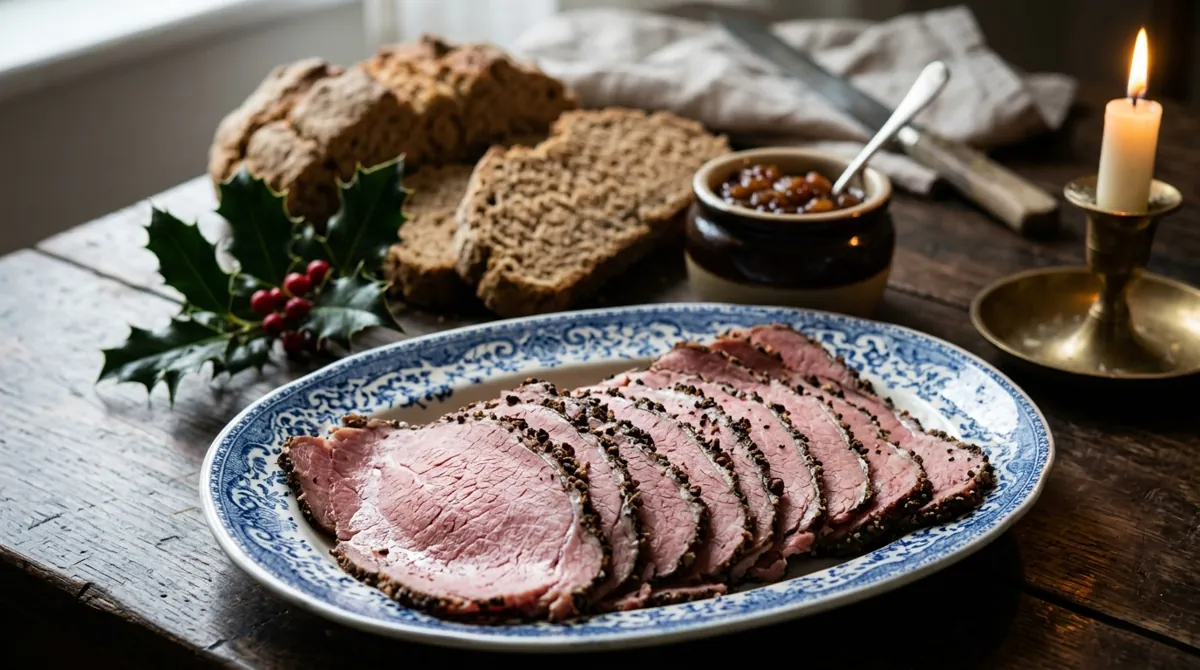
Cork Spiced Beef
Cork's Christmas beef: a corned joint marinated for a week in allspice, brown sugar and three peppers, simmered gently, cooled in its liquid and sliced thin.
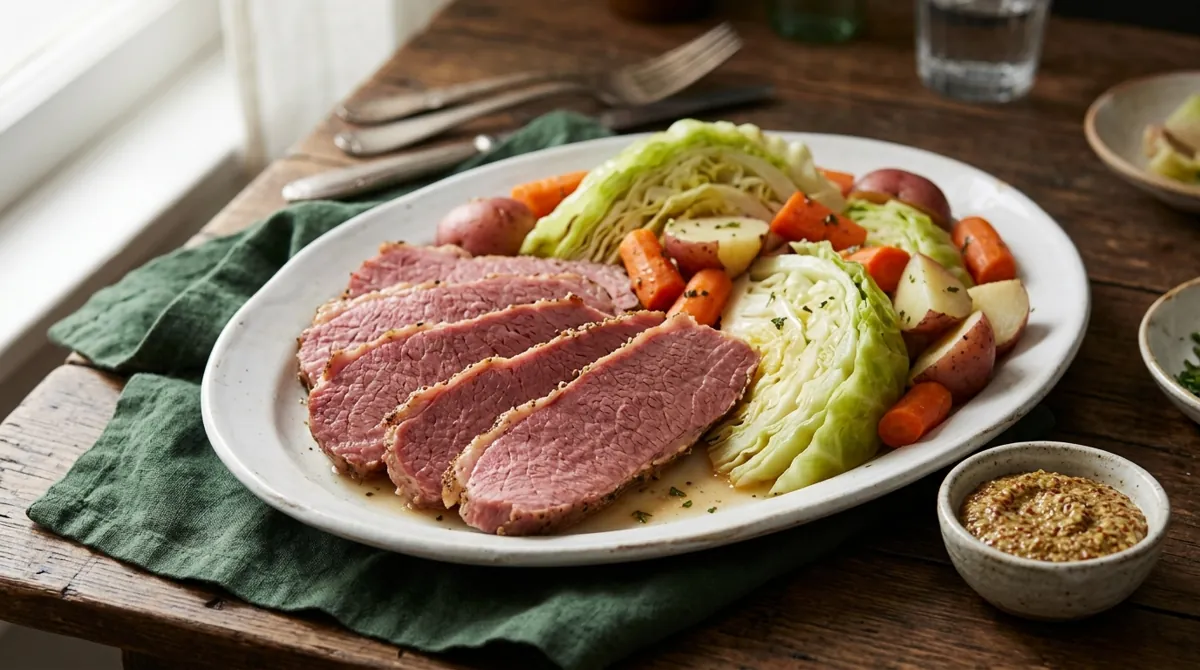
Corned Beef and Cabbage
The Irish-American St. Patrick's Day dinner: flat-cut corned beef braised low and slow in the oven, then cabbage wedges, carrots and red potatoes simmered in the strained, buttered cooking liquid.
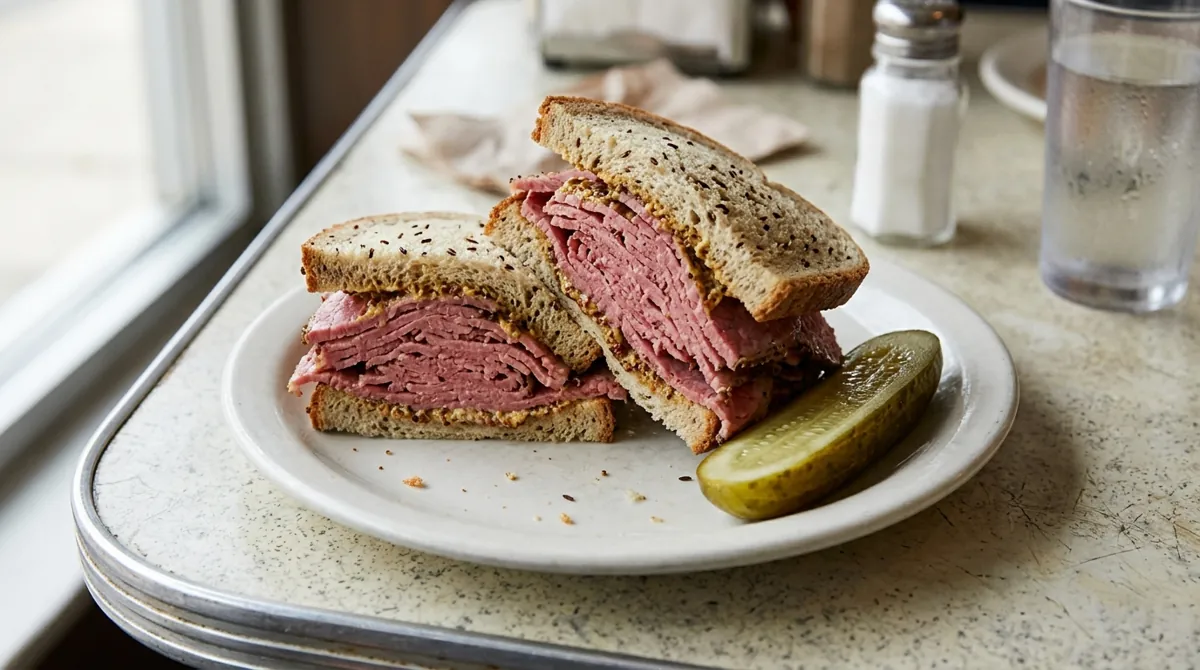
Homemade Deli Corned Beef on Rye
Cure your own brisket for six days in a salt, sugar and pink curing salt brine, simmer it in a low oven, then slice it thin, steam it and pile it on rye with deli mustard.
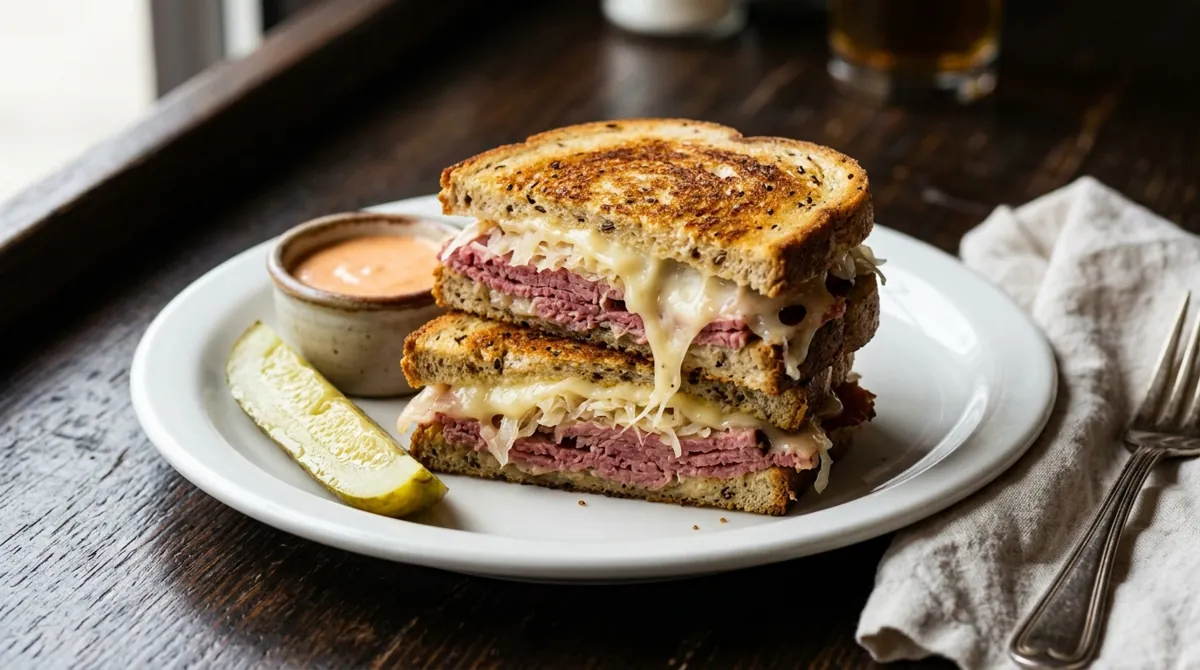
Reuben Sandwich
Corned beef, Swiss cheese and quick-cooked sauerkraut on rye with a Russian-style dressing, griddled in butter until the bread is golden and the cheese melts.
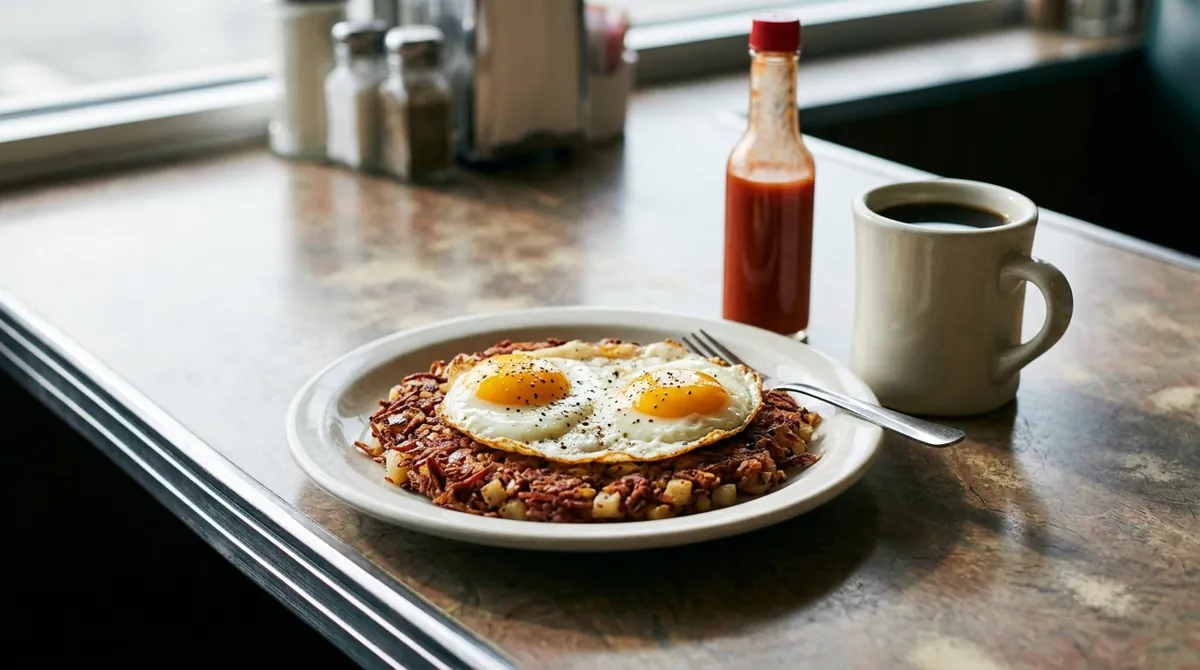
Diner Corned Beef Hash
Leftover corned beef and diced potatoes, steamed tender in one skillet, partly mashed so they hold together, then browned hard in butter on both sides and topped with fried eggs.
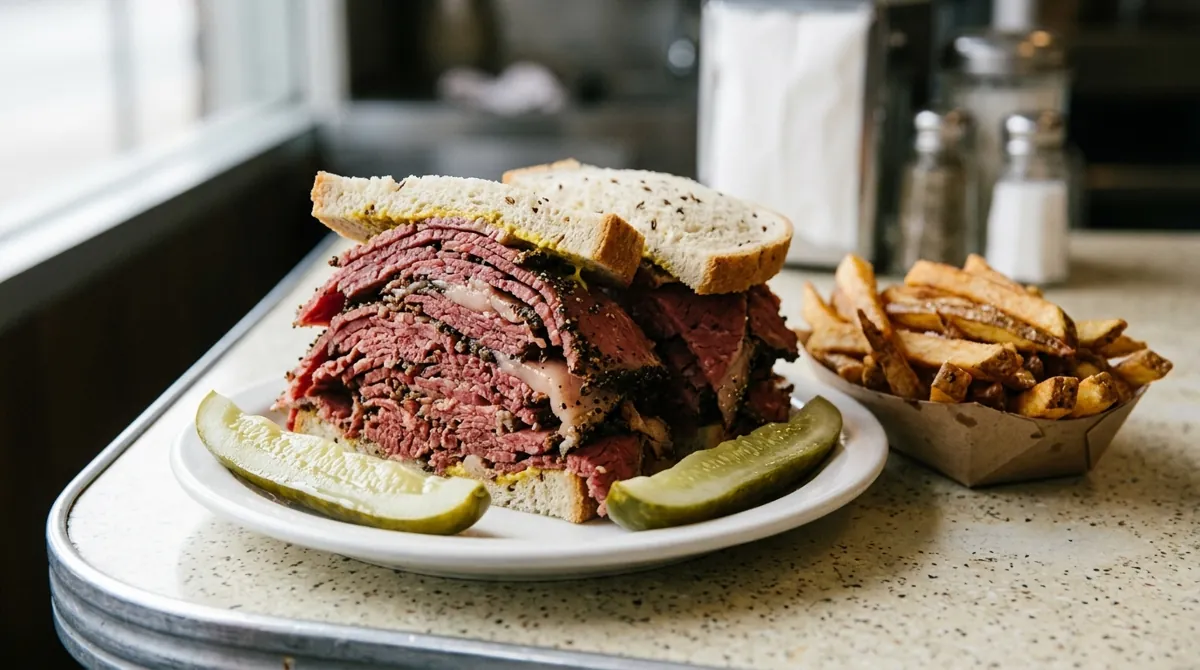
Montreal Smoked Meat
Montreal's answer to pastrami: a whole brisket dry-cured for a week, soaked, crusted with pepper, coriander and dill, smoked low, steamed in foil until tender and piled on rye with yellow mustard.
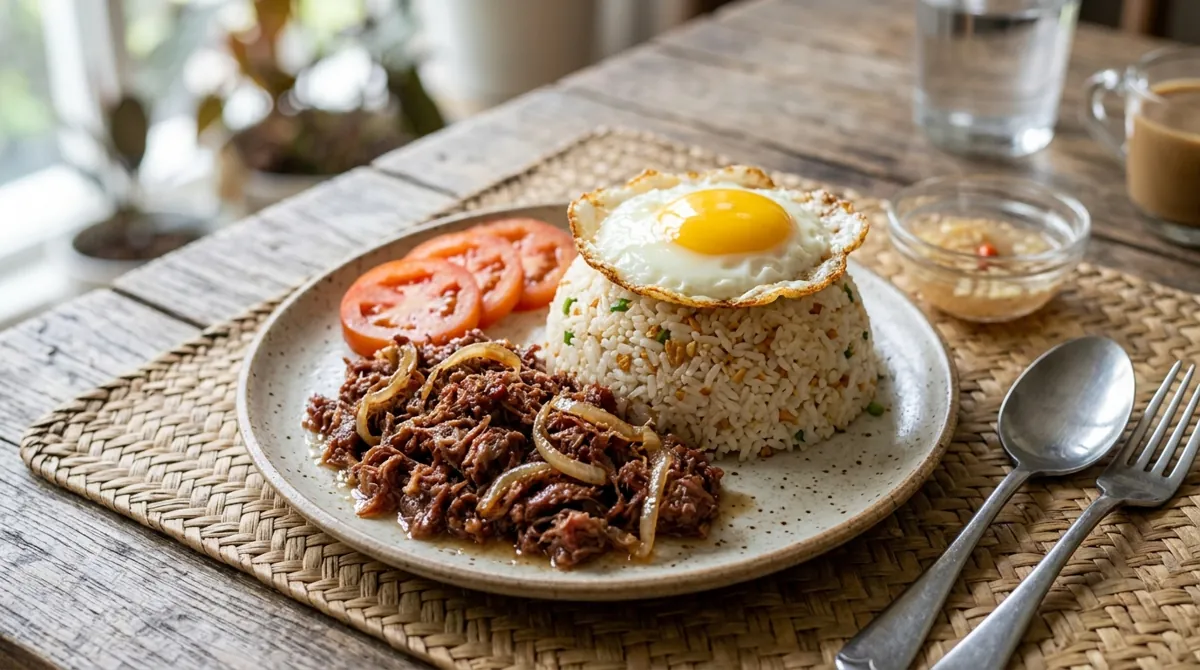
Filipino Corned Beef Silog (Corned Beef, Garlic Rice and Egg)
The Filipino breakfast plate: tinned corned beef fried with browned garlic and onion, a mound of crisp garlic fried rice and a sunny-side-up egg.
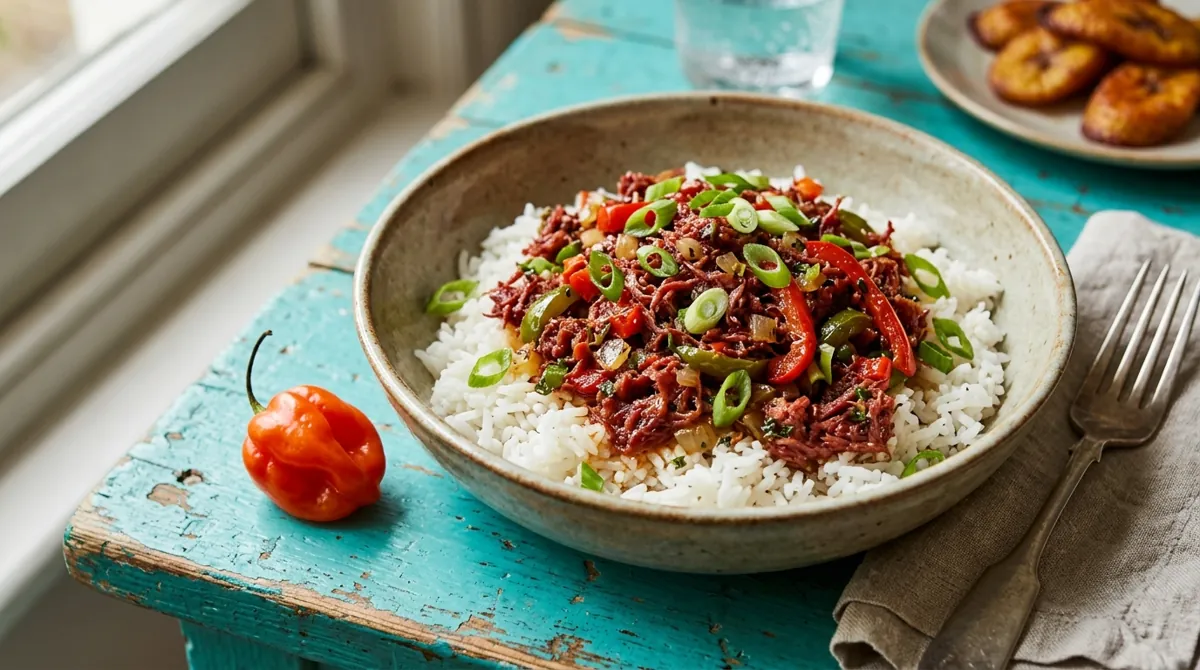
Jamaican-Style Bully Beef
Tinned corned beef simmered with onion, tomatoes, sweet peppers, thyme, ketchup and a whole Scotch bonnet into a quick, peppery stew for rice.
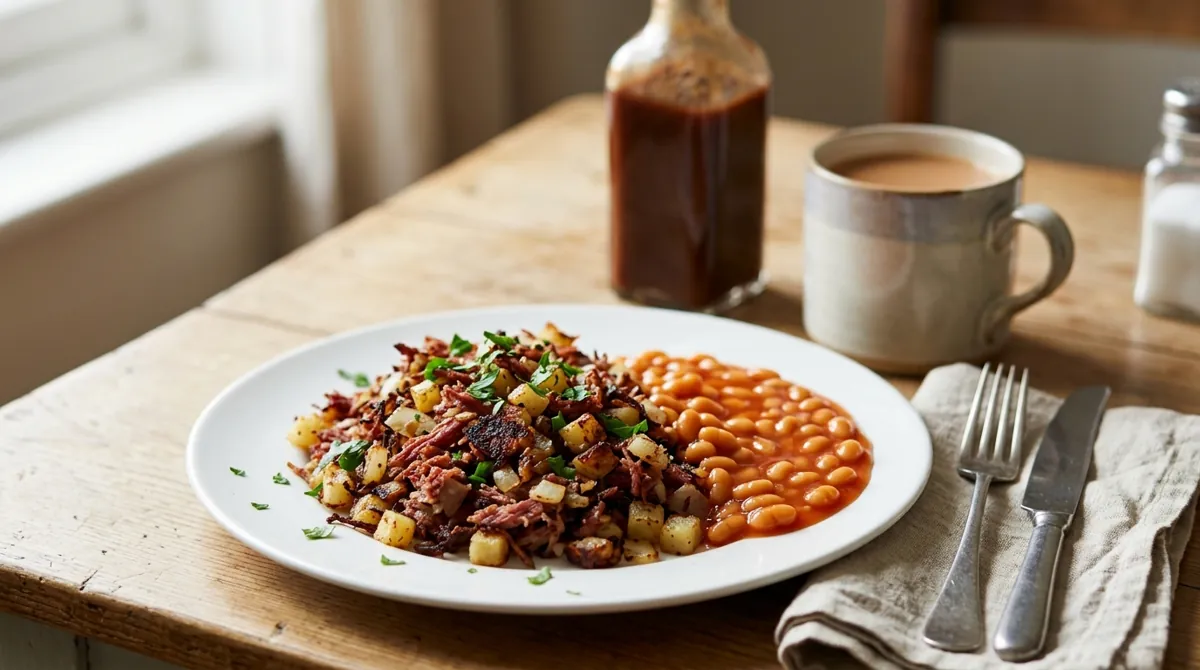
British Corned Beef Hash
The British storecupboard supper: parboiled potatoes and cubes of tinned corned beef fried with onion, pressed into a crust, splashed with Worcestershire sauce and served with baked beans.

Sheet-Pan Reubens
Four Reubens at once in 30 minutes: quick sweet-and-sour cabbage instead of sauerkraut, a mayo-mustard spread, deli corned beef and Swiss on rye, baked on a preheated sheet pan so they toast without flipping.
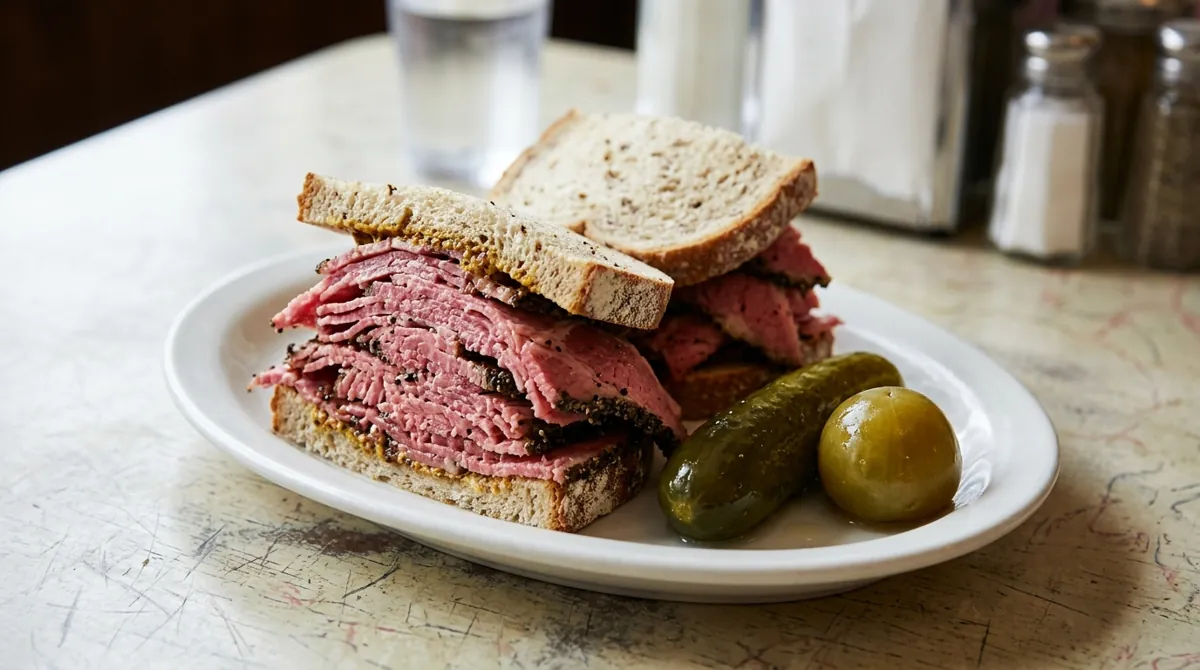
Pastrami on Rye, Inspired by Katz's
Inspired by, not official: store-bought corned beef soaked to pull out salt, crusted with cracked black pepper and coriander, smoked low, finished in foil to 203°F and hand-sliced onto rye with mustard, the way Katz's Delicatessen serves it.
Meatballs of the World

Italian-American Meatballs
Big, tender meatballs braised for an hour in red sauce over spaghetti. The one most Americans grew up with.

Pallottine (Abruzzo Meatballs)
Tiny meatballs, smaller than a marble, tossed right through square spaghetti alla chitarra. No bread at all.

Swedish Meatballs (Köttbullar)
Small, soft meatballs browned in butter, in a cream sauce made from the same pan, with lingonberry jam on the plate.

Danish Frikadeller
Pork meatballs shaped with a spoon and fried slowly in butter, crusty outside and soft in the middle.

Königsberger Klopse
German meatballs that are never fried: poached, then served in a creamy white sauce with capers.

Spanish Albóndigas in Almond Saffron Sauce
The tapas bar classic: small meatballs in a golden sauce thickened with fried almonds and bread.

Mexican Albóndigas with Chipotle and Mint
Soft meatballs with rice and fresh mint inside, simmered in a smoky tomato and chipotle broth.

Izgara Köfte (Turkish Grilled Meatballs)
Small, flat meatballs kneaded hard, rested cold, and charred on a hot grill pan.

Lion's Head Meatballs
Big, soft pork meatballs, stirred into a sticky paste, fried to set, then braised in a savory sauce.

Chicken Tsukune
Japan's chicken meatball: kneaded sticky, grilled on skewers, glazed with sweet soy tare, dipped in egg yolk.