
🥣 Stocks and Sauces · Lesson 1 of 5
How to Make Chicken Stock: Bones, Cold Water and a Slow Simmer
Stock vs. broth, why bones and gelatin matter, cold water and a gentle simmer for clear stock, and how to cool it safely.
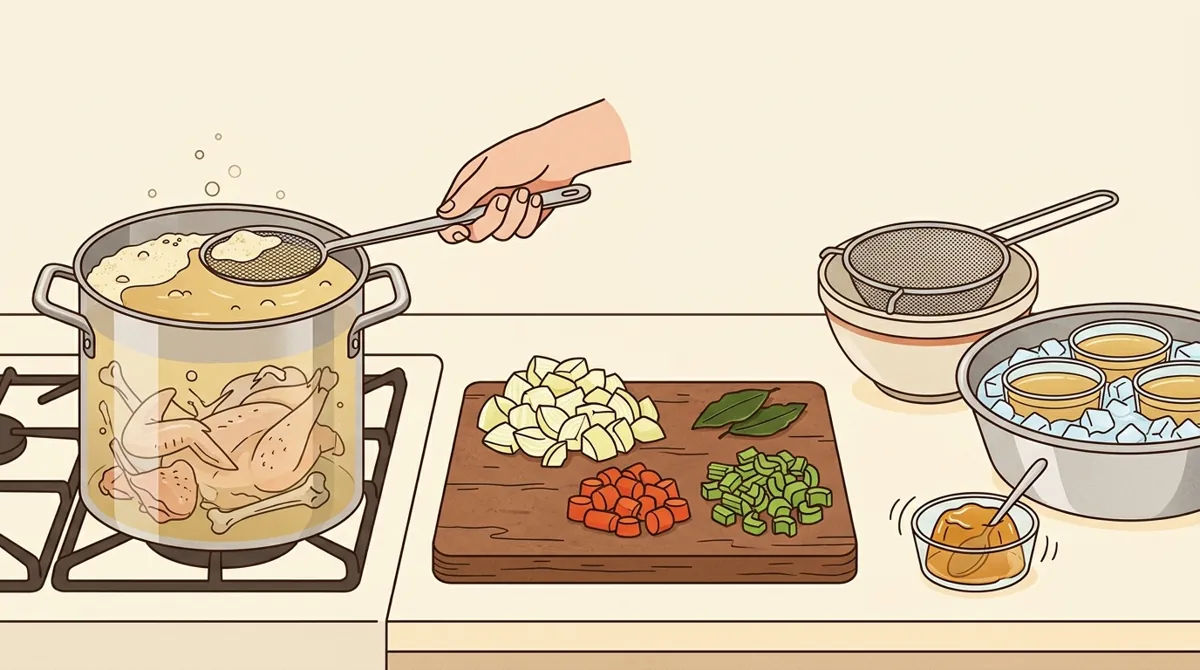
- Bones and cold water
- Bring it up slowly and skim the foam
- Simmer, never boil: chicken 2 to 5 hours
- Mirepoix: 2 onion, 1 carrot, 1 celery by weight
- Strain, then fridge within 2 hours
- Chilled stock should jiggle
Why it matters
Homemade stock is the base of soups, gravies and pan sauces, and the gelatin it pulls from bones gives them body. Most home cooks boil it hard, which turns it cloudy and greasy, then leave the big hot pot on the stove to cool, which is a food safety problem. A gentle simmer and a fast cool fix both.
Stock vs. broth
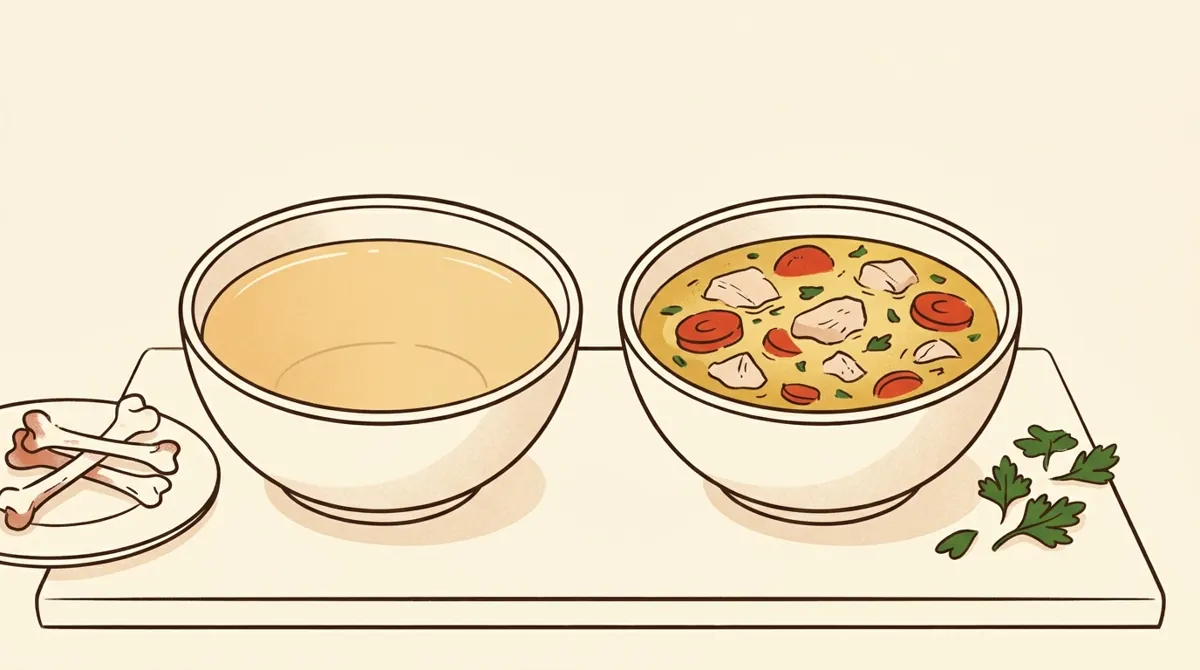
Many cooks use the words interchangeably. The usual distinction is that stock is made mostly from bones, so it carries more gelatin, while broth is made from meat and is seasoned to be eaten as is. Escoffier never salted stock, because it is always reduced into a sauce or used to cook meat that is already salted, and reduction concentrates whatever salt is there.
Bones bring collagen, collagen becomes gelatin
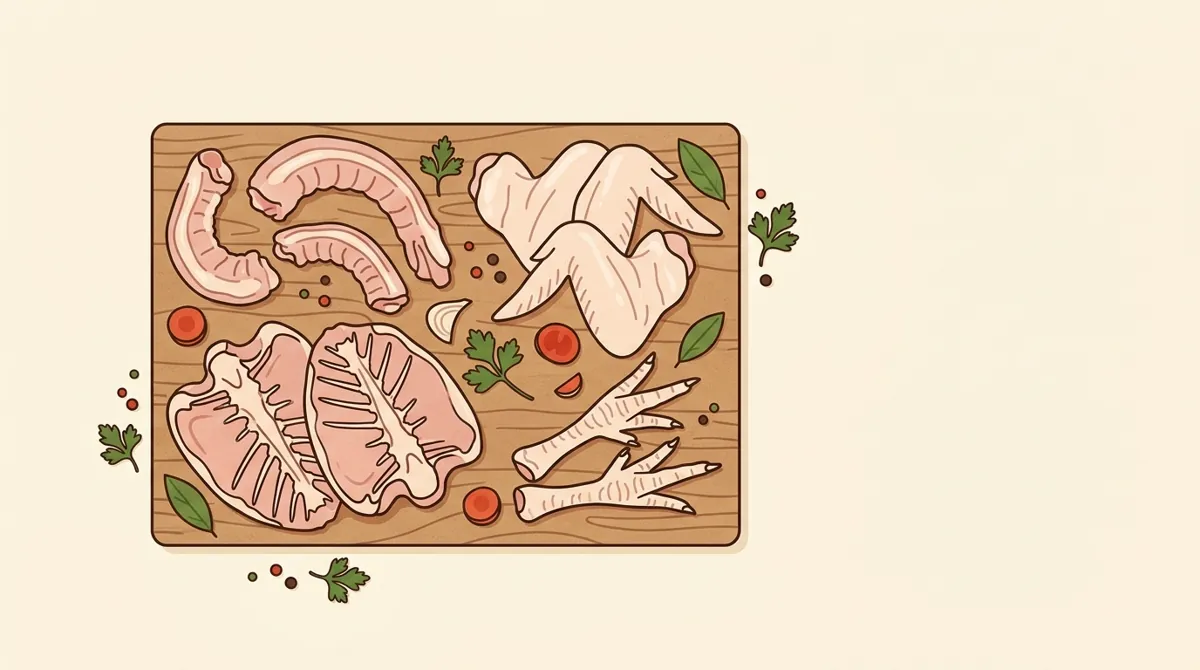
Connective tissue contains collagen, which slowly turns into gelatin in hot water and thickens the liquid. America's Test Kitchen points to necks, backs, wings, wingtips and feet as the best stock parts because they are high in connective tissue; wing skin alone is 60 to 80 percent collagen, and it begins converting to gelatin at about 135°F. That gelatin is what gives stock its body.
Start cold, simmer, never boil
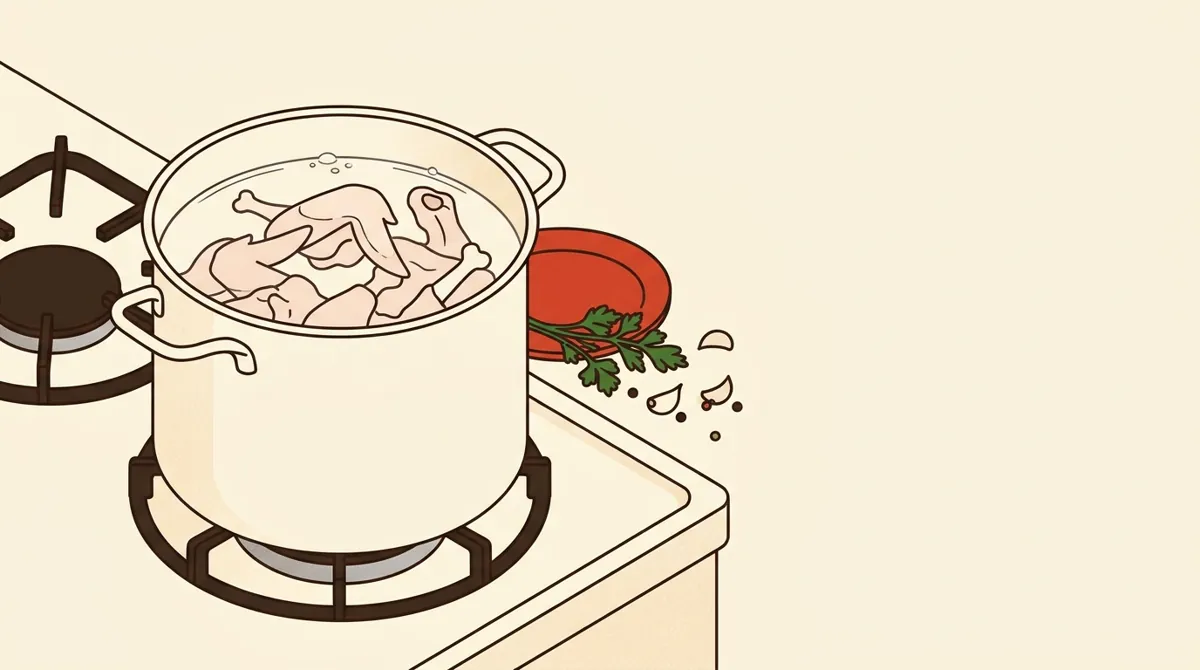
In America's Test Kitchen's side-by-side test, stock started in cold water came out clearer than stock started in boiling water, which pulled more cloudy proteins from the bones; the flavor was the same, so starting cold simply saves a step. A hard boil is the bigger problem: the churning emulsifies rendered fat and proteins into the liquid, making stock cloudy and greasy. At a gentle simmer the fat floats where you can skim it and the scum settles.
Aromatics and how long
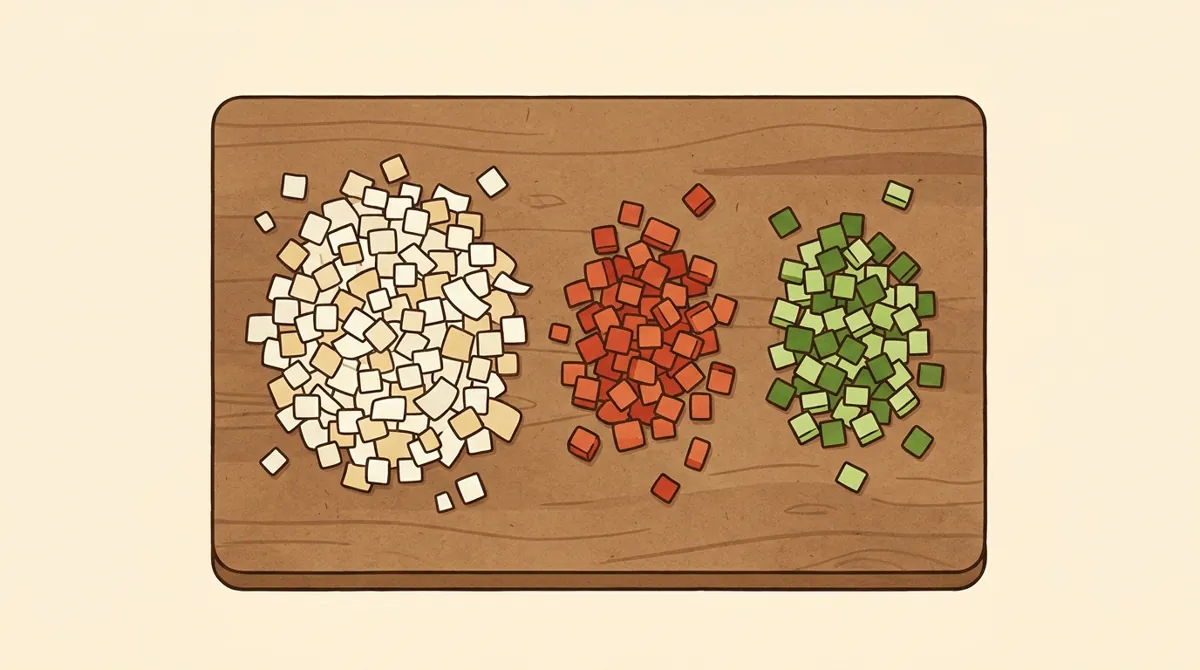
Classic mirepoix is 2 parts onion, 1 part carrot and 1 part celery by weight, the ratio taught in the Culinary Institute of America's textbook. Chicken needs less time than beef: America's Test Kitchen simmers chicken backs and wings 3 hours, adds onion and bay, then simmers 2 hours more, while Escoffier gave veal bones at least 8 hours and his brown stock 12. Sources vary widely (one dietitians' handout says 4 to 8 hours for either), so treat these as ranges.
Cool it fast, then do the jiggle test
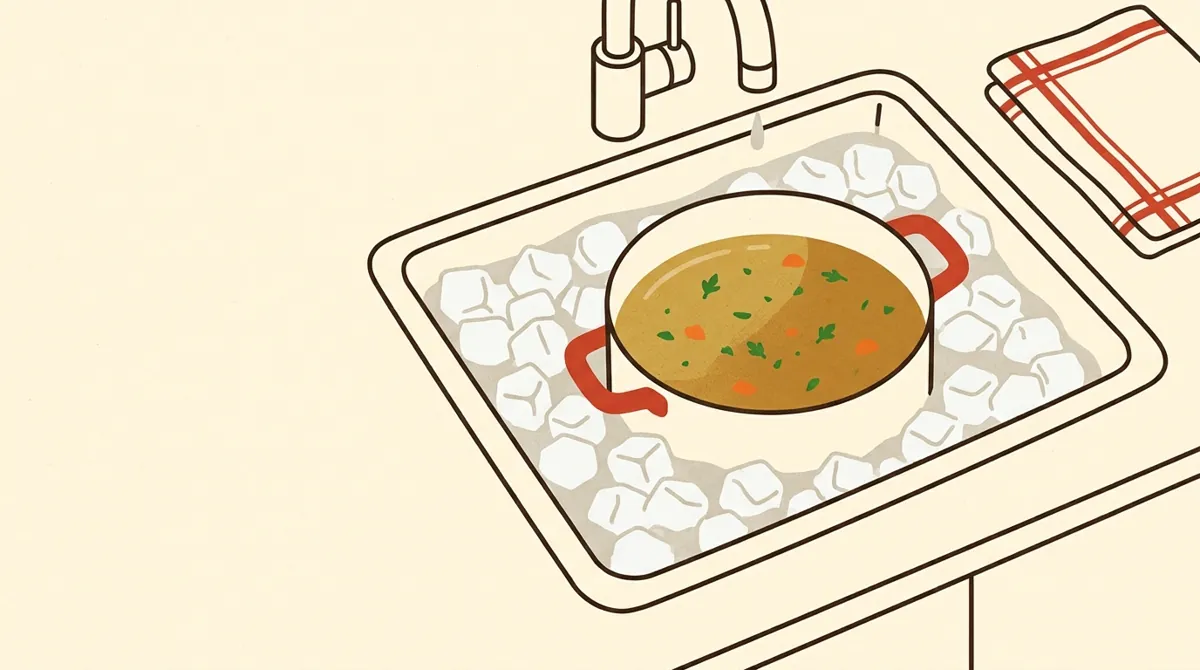
Restaurant codes cool food in two stages: from 135°F to 70°F within 2 hours, then to 41°F or below within 4 more hours. At home, Texas A&M AgriLife says to refrigerate within 2 hours, split big batches into shallow containers or chill them in an ice water bath first; Penn State Extension keeps stock in the fridge up to 3 days and freezes the rest. Once cold, a gelatin-rich stock sets into a soft gel that wobbles when you shake the container, the same way a bone broth sets into aspic.
Step by step
Put about 4 pounds of chicken backs and wings, or a roasted carcass in pieces, in a large pot and cover with about 3 1/2 quarts of cold water.
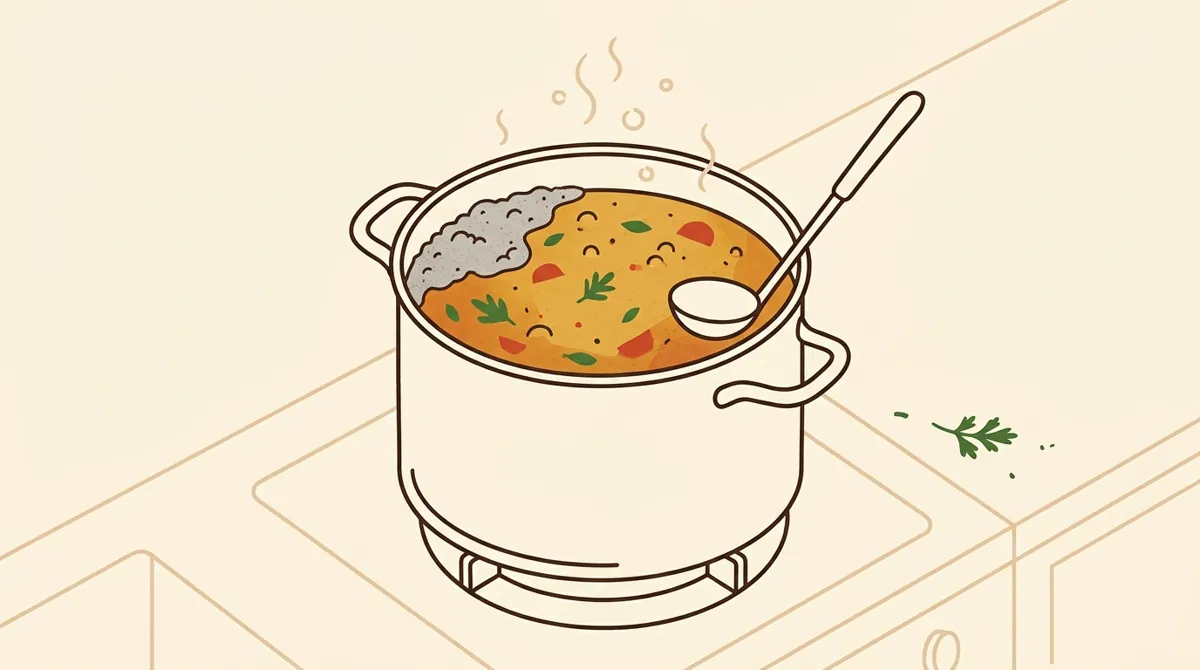
Bring it up to a boil over medium-high heat, skimming off the foam as it rises, then turn the heat to low.
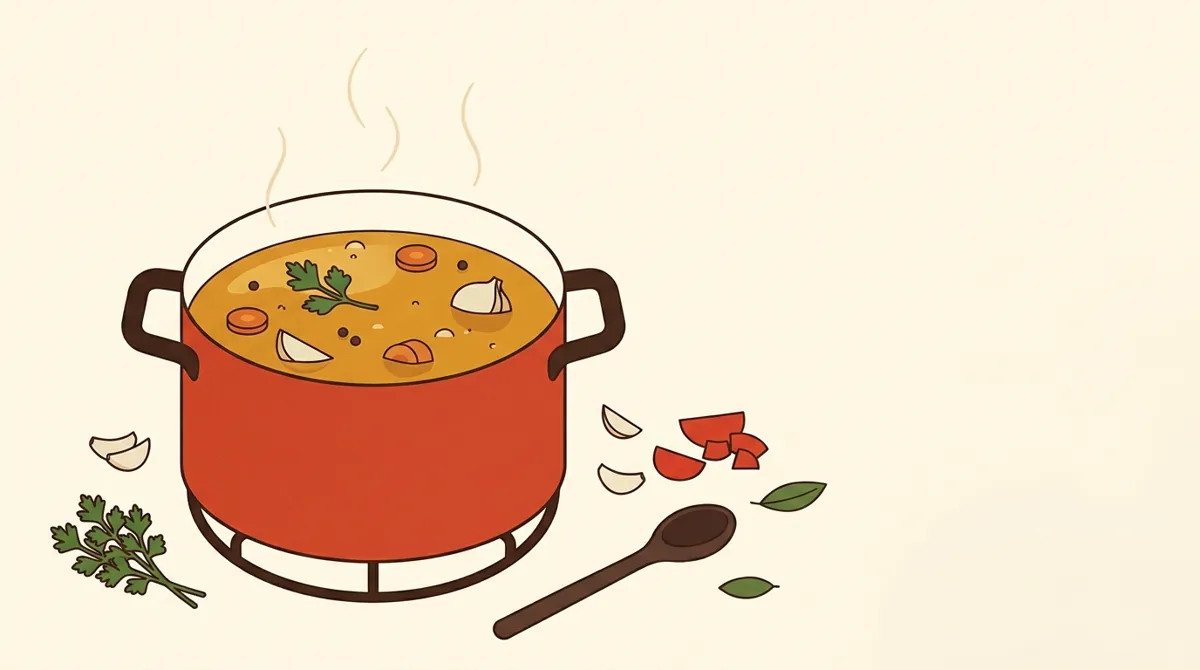
Keep it at a gentle simmer, uncovered, for about 3 hours, skimming now and then; small bubbles should break the surface, never a rolling boil.
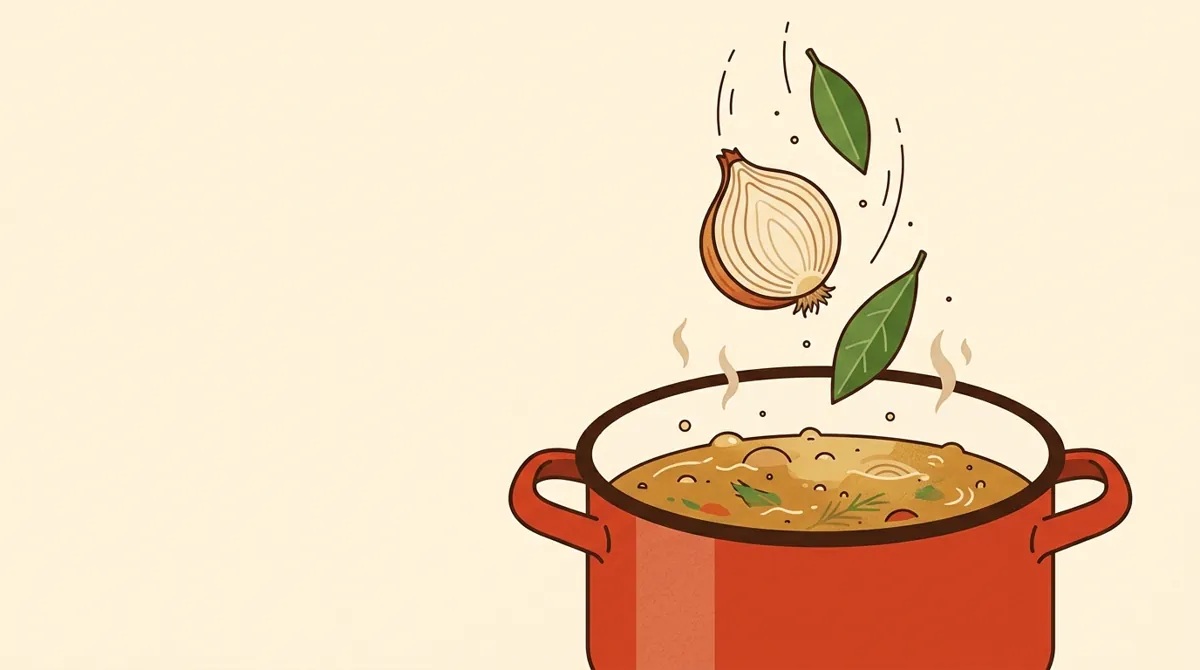
Add a chopped onion, or onion, carrot and celery in a 2 to 1 to 1 ratio by weight, plus 2 bay leaves, and simmer about 2 hours more. Leave out salt if the stock will be reduced into a sauce.
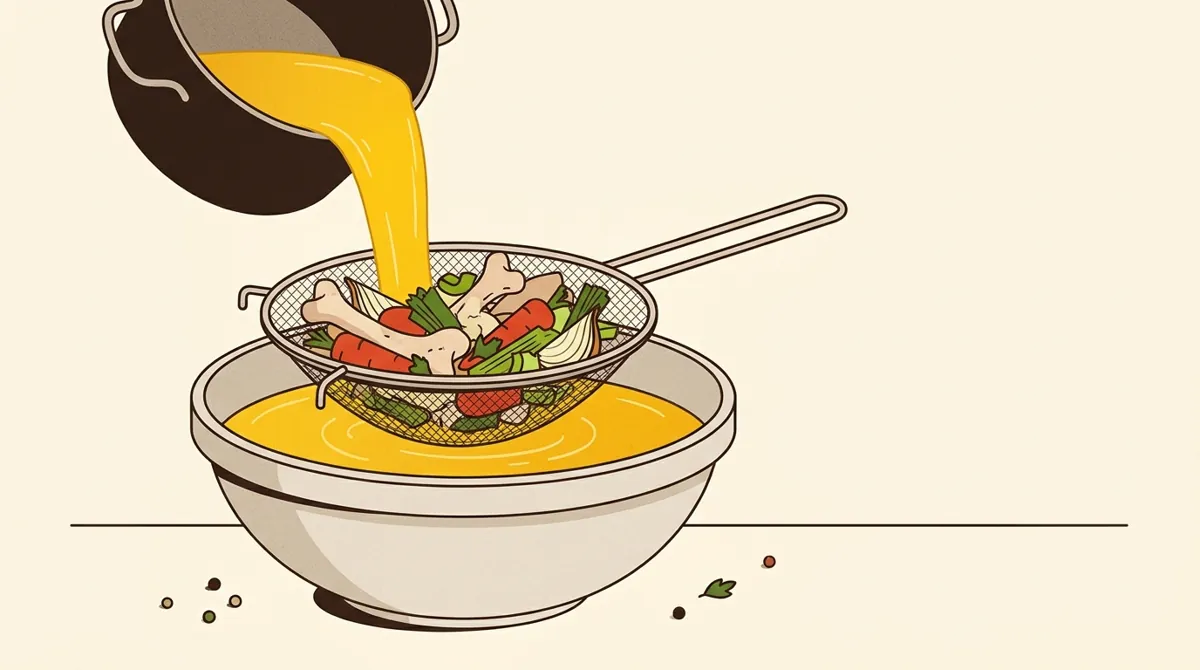
Strain through a fine-mesh strainer, discard the solids, let the stock settle a few minutes and skim off the fat.
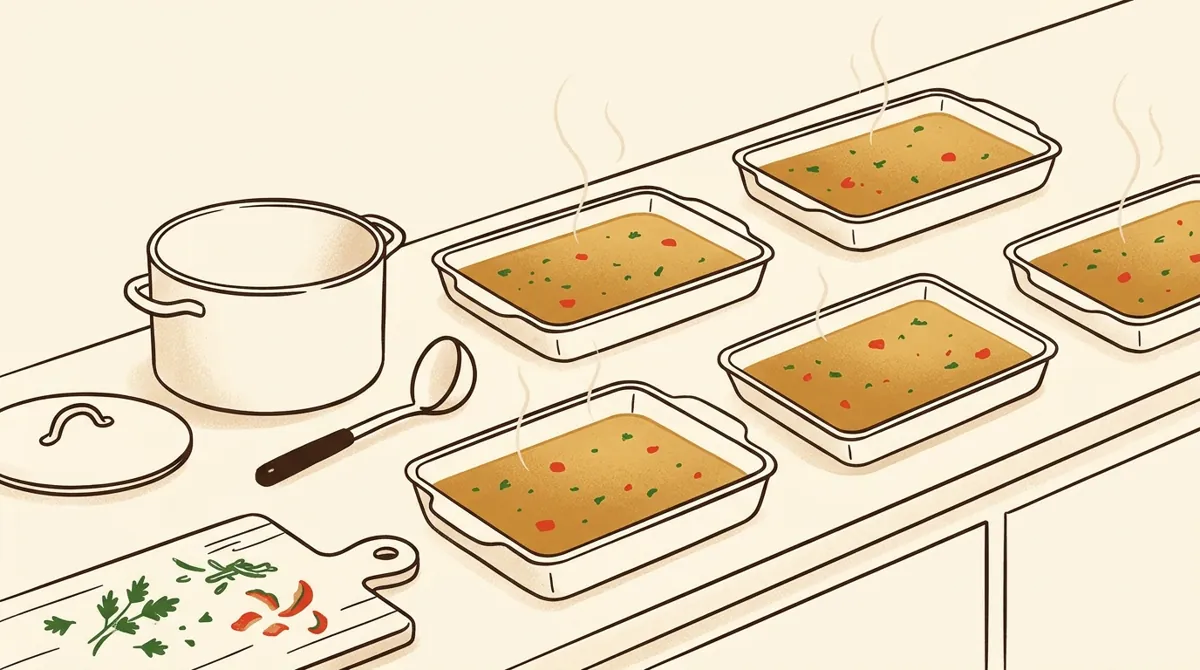
Cool it fast: divide it into shallow containers or set the container in a sink of ice water and stir, and get it into the refrigerator within 2 hours.
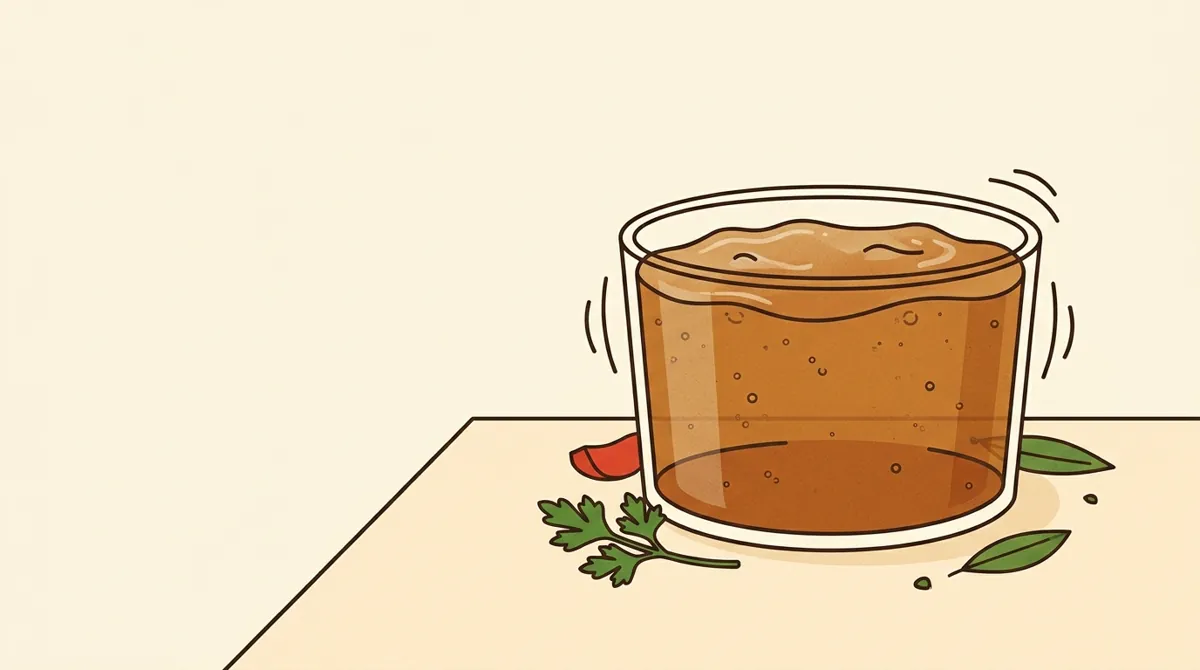
The next day, lift off the hardened fat, check for the jiggle, and use the stock within 3 days or freeze it with some headspace for expansion.
Common mistakes
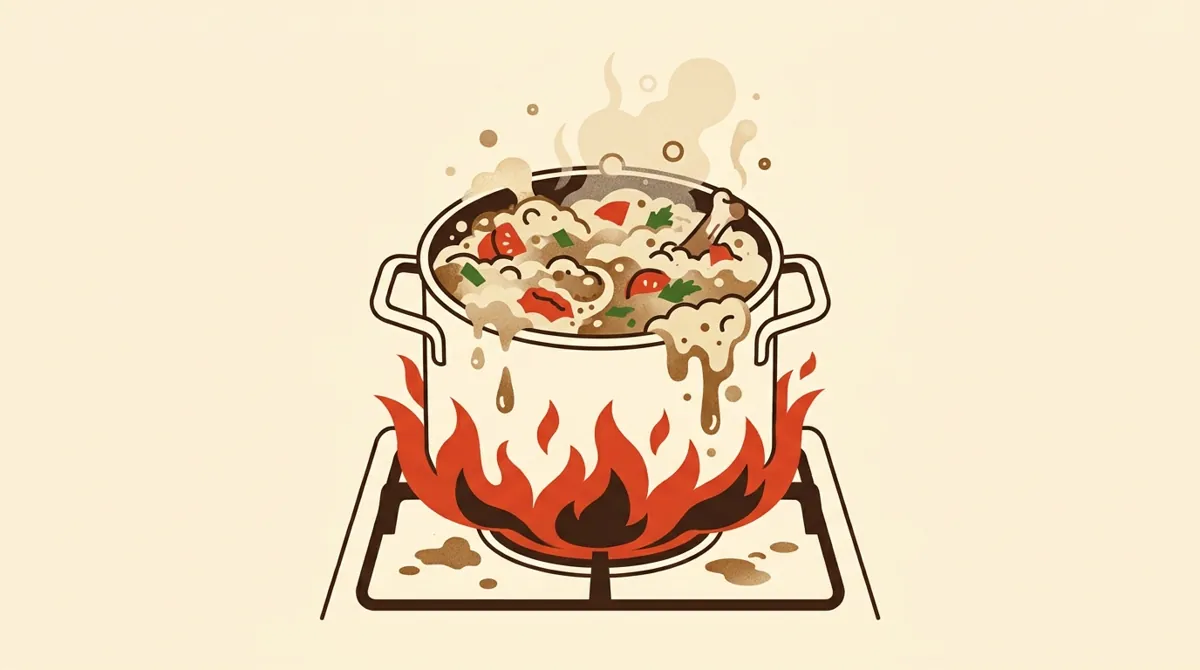
- Letting the pot boil: boiling emulsifies fat and proteins into the liquid, so keep it at a gentle simmer for a clear, clean-tasting stock.
- Using only lean meat like breasts: they have little connective tissue, so build the pot on backs, wings, necks or feet for gelatin.
- Salting stock you plan to reduce: reduction concentrates salt, so season the finished soup or sauce instead.
- Cooling the whole pot on the stove overnight: a big pot cools slowly, so divide it into shallow containers or use an ice bath and refrigerate within 2 hours.
- Judging stock only by color: chill a spoonful; if it stays watery, use more bony, collagen-rich parts or a longer simmer next time.
🏋️ Try it tonight
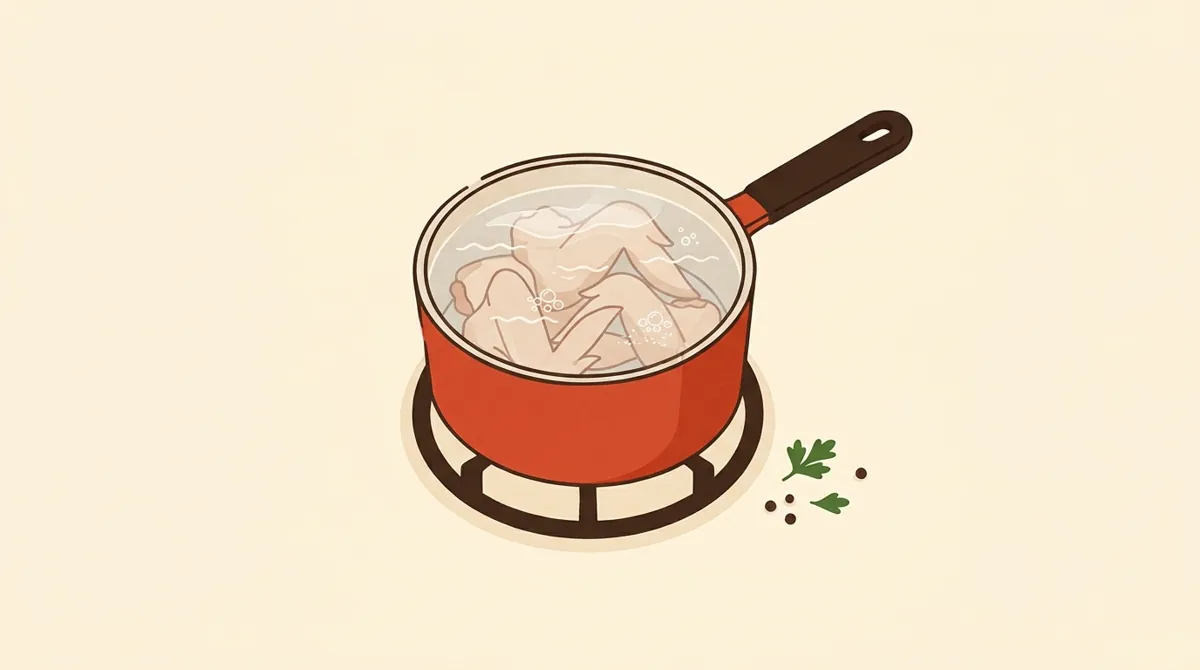
Put 1 pound of chicken wings in a small pot with 4 cups of cold water and bring it up slowly. Spend the next 10 minutes learning your burner: skim the foam, then nudge the heat down until only a few small bubbles break the surface. Let it go 2 hours, strain it into a shallow container, refrigerate it, and shake the container tomorrow to see if it jiggles.
💡 Did you know?
Escoffier's guide had cooks simmer brown stock for twelve hours and never salt it, because stock is always reduced or used to cook meat that has already been salted.
Use it tonight
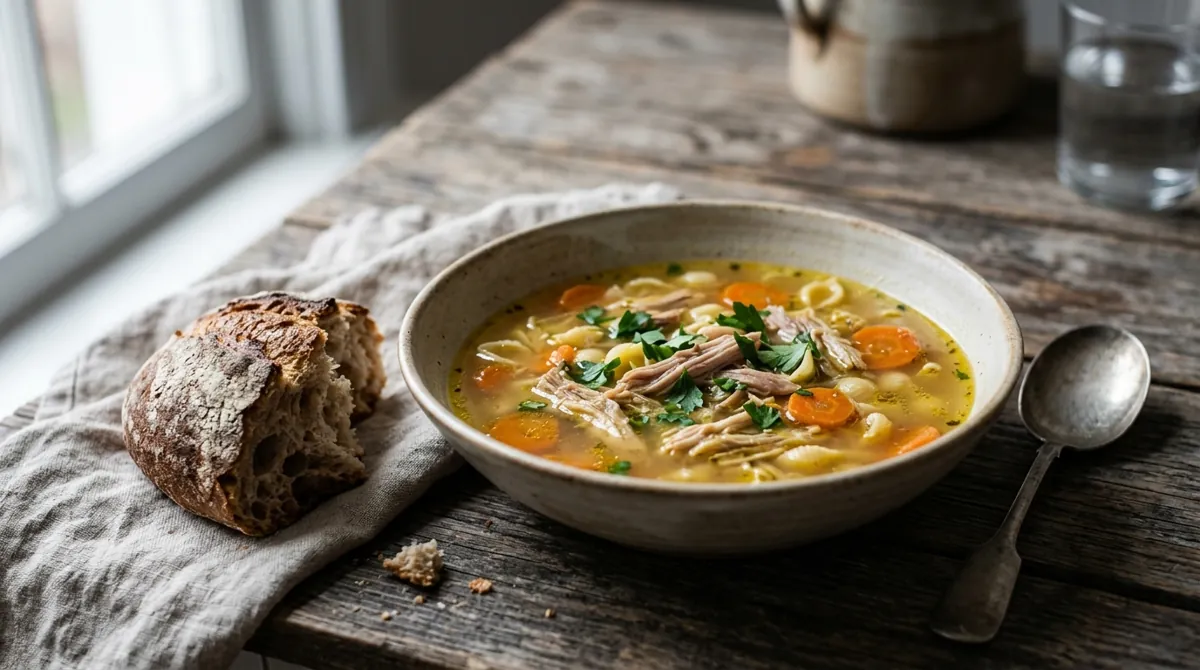
Turkey Carcass Noodle Soup
The last thing the bird gives you: the roast turkey carcass simmered four hours with onion, carrot, celery, garlic, white wine and herbs into a rich stock, then made into soup with fresh vegetables, pasta shells and the meat picked from the bones.
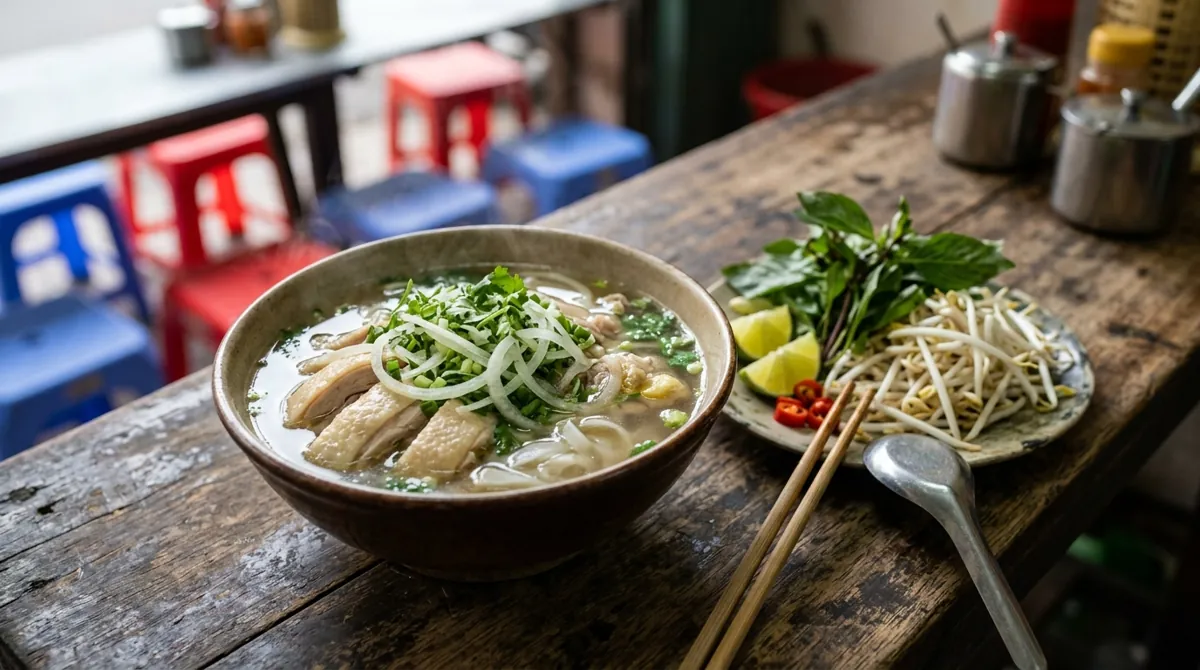
Pho Ga (Vietnamese Chicken Noodle Soup)
A clear broth from a whole chicken and extra backs, perfumed with charred onion and ginger, toasted coriander seed, cloves and cilantro, ladled boiling hot over flat rice noodles, sliced poached chicken, paper-thin onion and herbs, with bean sprouts, basil, chiles and lime at the table.
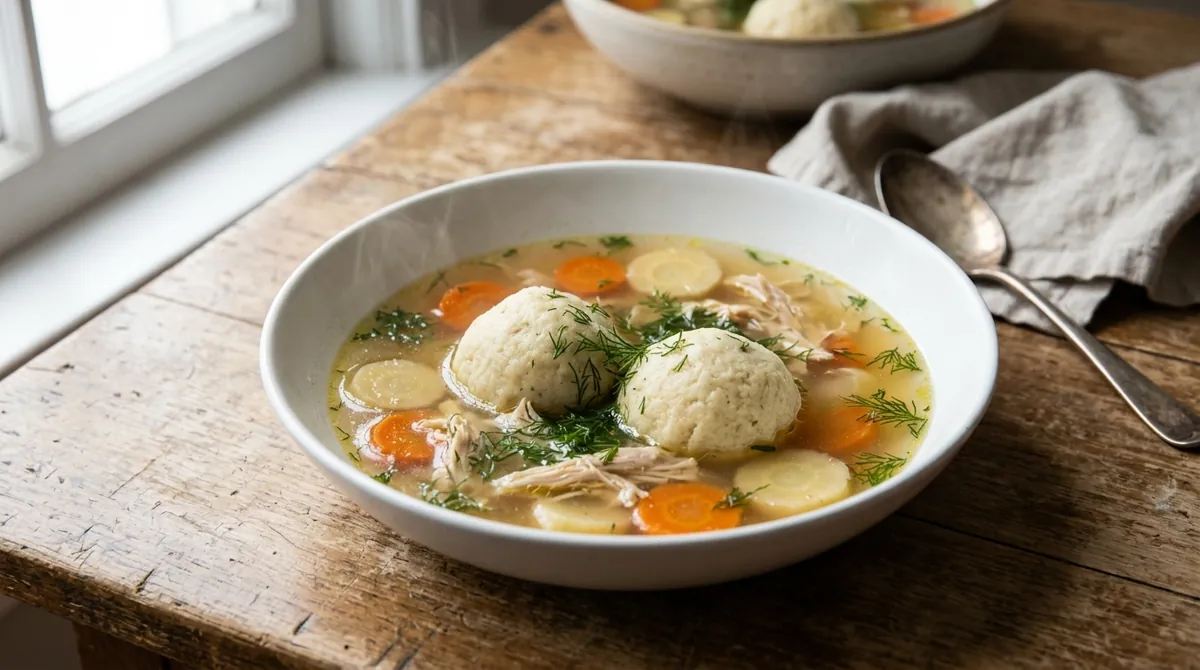
Chicken Soup with Matzo Balls
A golden broth simmered from a whole chicken with carrots, celery, dill and an unpeeled onion, with light schmaltz-and-seltzer matzo balls poached in salted water, then finished in the broth with carrot, parsnip, shredded chicken and fresh dill.
Sources
- Stock (food) (Wikipedia)
- A Guide to Modern Cookery, A. Escoffier, 1907 English edition (Project Gutenberg)
- A Stock of All Trades (Cook's Country, America's Test Kitchen)
- Are Chicken Wings White or Dark Meat? (America's Test Kitchen)
- Hot or Cold Water for Stock? (Cook's Illustrated, America's Test Kitchen)
- For a Clearer Stock, Simmer; Don't Boil (Cook's Illustrated, America's Test Kitchen)
- Classic Chicken Broth (America's Test Kitchen)
- Mirepoix (Wikipedia, citing the Culinary Institute of America's The Professional Chef)
- Make Your Own Stock, Academy of Nutrition and Dietetics handout (Kansas State University Lafene Health Center)
- Proper Ways to Cool Cooked Foods (Wisconsin Department of Agriculture, Trade and Consumer Protection)
- Storing Leftovers Safely (Texas A&M AgriLife Extension, Dinner Tonight)
- Preparing and Preserving Your Own Chicken or Turkey Stock (Penn State Extension)
- Aspic (Wikipedia)
- Pan Sauces 101 (Cook's Illustrated, America's Test Kitchen)