
Lobster Mac and Cheese
Fresh-cooked lobster folded into macaroni with a nutty, browned-roux cheddar sauce made with the lobster cooking liquid and a pinch of mace, finished with whole claws and herbs.
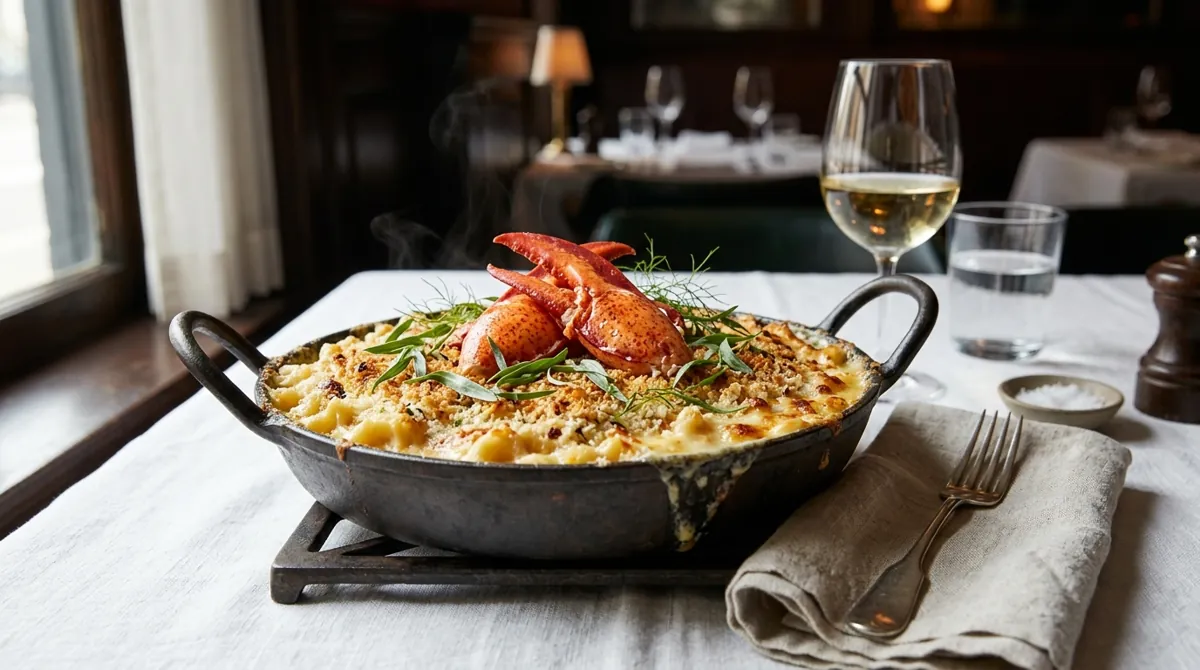
Lobster mac and cheese is the restaurant version of a family dish, and nobody has documented who first made it. Some food sites credit a New York Italian restaurant, Mamma Leone's, but we found no menu or dated source, so we treat that as folklore. What is documented is how Maine's lobster industry likes it made. This recipe is by chef Barton Seaver for Lobster from Maine, the website that promotes Maine's lobster. He calls for "new shell" lobsters if possible: lobsters that have recently molted, which Lobster from Maine says are easier to crack, more tender and sweeter, while older hard-shell lobsters carry more meat.
🇺🇸 This one is American
Fresh-cooked lobster folded into macaroni with a nutty, browned-roux cheddar sauce made with the lobster cooking liquid and a pinch of mace, finished with whole claws and herbs.
🇺🇸 The original
The oldest American recipe we could read, from 1824, is simple: boiled macaroni layered with butter and grated cheese and baked until it browns. No cheese sauce, no box. See the Virginia House-Wife Baked Macaroni (1824) recipe.
Why it works the kitchen science
The lobster seasons the sauce
Cooking the lobsters in only 3 cups of water, then using that liquid and the juices from cracking them in the sauce, puts lobster flavor in every bite, not just in the chunks (Seaver).
A browned roux for depth
Taking the roux to caramel color and blooming mace in it gives a nutty, toasty sauce that stands up to sweet lobster without extra cheese.
Step by step
- Step 1
Choose lobsters that move their legs. Bring the 3 cups water to a boil in a large pot (at least 8 quarts), put the lobsters in head first and cover tightly. Cook 7 to 9 minutes, until the shells are bright red and the meat is firm, pearly and opaque. Lift them out and keep the cooking liquid in the pot.
- Step 2
When cool enough to handle, crack the lobsters over a bowl to catch the juices. Keep 4 whole claws, cut the rest of the meat into 1/2-inch pieces and refrigerate it until needed.
- Step 3
Add enough water to the lobster pot to cook the pasta, salt it and cook the macaroni according to the package, about 8 minutes. Drain, saving 1 cup of the cooking water if you don't have enough lobster juices.
- Step 4
Melt the butter in a saucepan over medium heat until it foams. Whisk in the flour and cook, whisking constantly, about 6 minutes, until smooth and light. Keep cooking and stirring 8 to 10 minutes more, until the roux turns a deep caramel color. Stir in the mace for 30 seconds, until fragrant.
- Step 5
Whisk in the milk and 1 cup of lobster juices or cooking water, breaking up any lumps. Lower the heat to medium-low and simmer, stirring constantly, about 10 minutes, until the sauce coats the back of a wooden spoon. Off the heat, stir in the cheddar until melted and season with salt.
- Step 6
Toss the macaroni with two thirds of the sauce, then fold in the chopped lobster and stir over low heat 1 to 2 minutes, just until the lobster is warm.
- Step 7
Spoon into bowls or a serving dish, top with the remaining sauce, the whole claws and the herbs. For a restaurant-style crust, scatter the buttered panko over the dish and broil 2 to 3 minutes, until golden. Serve right away.
Lobster Mac and Cheese
Serves 4 (generous main-dish portions) · about 10 cups · 1 hr 15 min total
Lobster
- 4 live lobsters, 1 to 1 1/4 lb each, new shell if possible (or 1 lb cooked lobster meat, chilled)
- 3 cups water
Pasta
- 1 lb macaroni
- Salt for the water
Sauce
- 6 tbsp butter
- 6 tbsp all-purpose flour
- 1 tsp ground mace
- 1 1/2 cups whole milk
- 1 cup reserved lobster juices or cooking liquid
- 8 oz sharp white cheddar, shredded
- Salt to taste
To finish
- Chopped tarragon, parsley and fennel fronds
- Optional crumb top: 1/2 cup panko tossed with 1 tbsp melted butter
Method
- Choose lobsters that move their legs. Bring the 3 cups water to a boil in a large pot (at least 8 quarts), put the lobsters in head first and cover tightly. Cook 7 to 9 minutes, until the shells are bright red and the meat is firm, pearly and opaque. Lift them out and keep the cooking liquid in the pot.
- When cool enough to handle, crack the lobsters over a bowl to catch the juices. Keep 4 whole claws, cut the rest of the meat into 1/2-inch pieces and refrigerate it until needed.
- Add enough water to the lobster pot to cook the pasta, salt it and cook the macaroni according to the package, about 8 minutes. Drain, saving 1 cup of the cooking water if you don't have enough lobster juices.
- Melt the butter in a saucepan over medium heat until it foams. Whisk in the flour and cook, whisking constantly, about 6 minutes, until smooth and light. Keep cooking and stirring 8 to 10 minutes more, until the roux turns a deep caramel color. Stir in the mace for 30 seconds, until fragrant.
- Whisk in the milk and 1 cup of lobster juices or cooking water, breaking up any lumps. Lower the heat to medium-low and simmer, stirring constantly, about 10 minutes, until the sauce coats the back of a wooden spoon. Off the heat, stir in the cheddar until melted and season with salt.
- Toss the macaroni with two thirds of the sauce, then fold in the chopped lobster and stir over low heat 1 to 2 minutes, just until the lobster is warm.
- Spoon into bowls or a serving dish, top with the remaining sauce, the whole claws and the herbs. For a restaurant-style crust, scatter the buttered panko over the dish and broil 2 to 3 minutes, until golden. Serve right away.
Adapted from Barton Seaver, "Maine Lobster Mac and Cheese" for Lobster from Maine (serves 4). His recipe does not say when the chopped lobster joins the pasta, how long the roux takes to reach caramel color, or what to do with the last third of the sauce; folding the lobster in at the end, the roux timing and spooning the rest of the sauce over the top are ours. The optional broiled crumb top is ours, borrowed from ATK's method in our Creamy Stovetop Macaroni and Cheese recipe. Lobster safety is from the US FDA (see Food safety baseline). lobsterfrommaine.com. Ingredient list follows the source; the method is in our own words.
All sources (2)
Tips
- No live lobsters? Use 1 lb cooked lobster meat and swap the lobster liquid for clam juice or the pasta water.
- Add the lobster last and only warm it through; reheating cooked lobster for long makes it tough.
- Refrigerate leftovers within 2 hours (FDA) and reheat gently to 165°F.
The rules people argue about
What the sources agree on, what they don't, and what is just a good story.
- Lobster must be alive when it goes in the pot. Documented: the FDA says lobsters spoil rapidly after death and only live ones should be selected and prepared.
- Mamma Leone's in New York invented it. Folklore: repeated on food sites without a dated source.
- Italians never mix seafood and cheese. Folklore: a widely repeated kitchen rule with many exceptions; it has no bearing on this American dish.
- New shell beats hard shell. Disputed: Lobster from Maine says new-shell lobsters are sweeter and more tender, while hard-shell lobsters yield more meat and taste brinier. Both are good here.
Every other mac and cheese
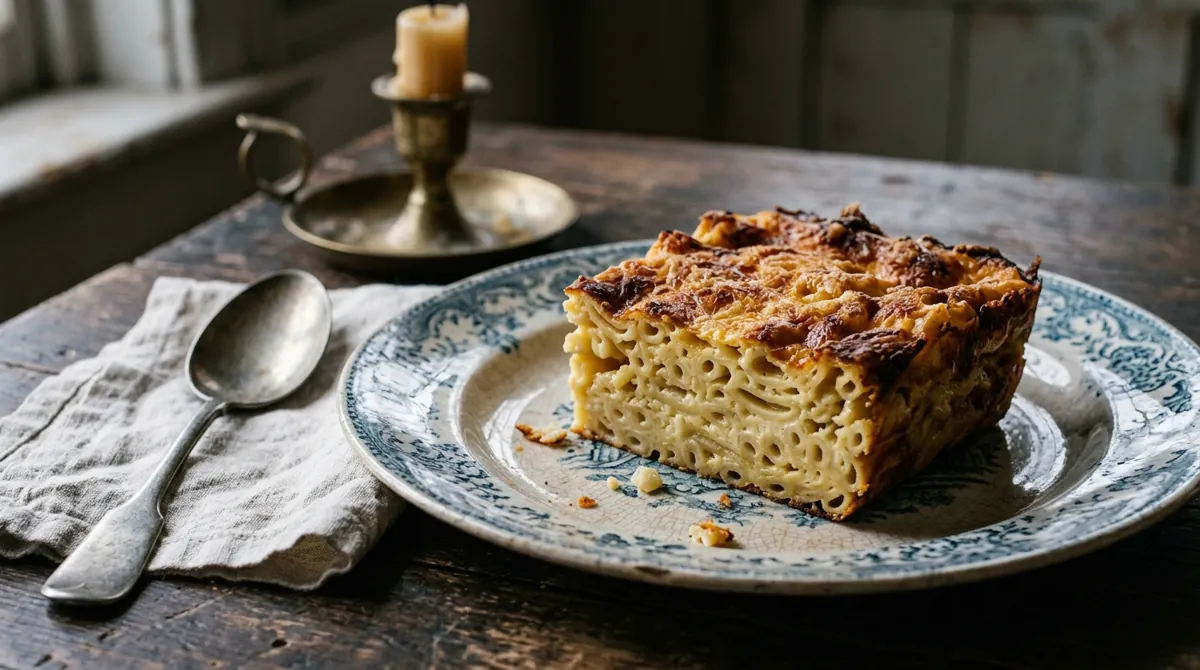
Virginia House-Wife Baked Macaroni (1824)
The earliest known printed American mac and cheese: macaroni boiled in milk and water, layered with sliced cheese and butter, and baked in a hot oven.
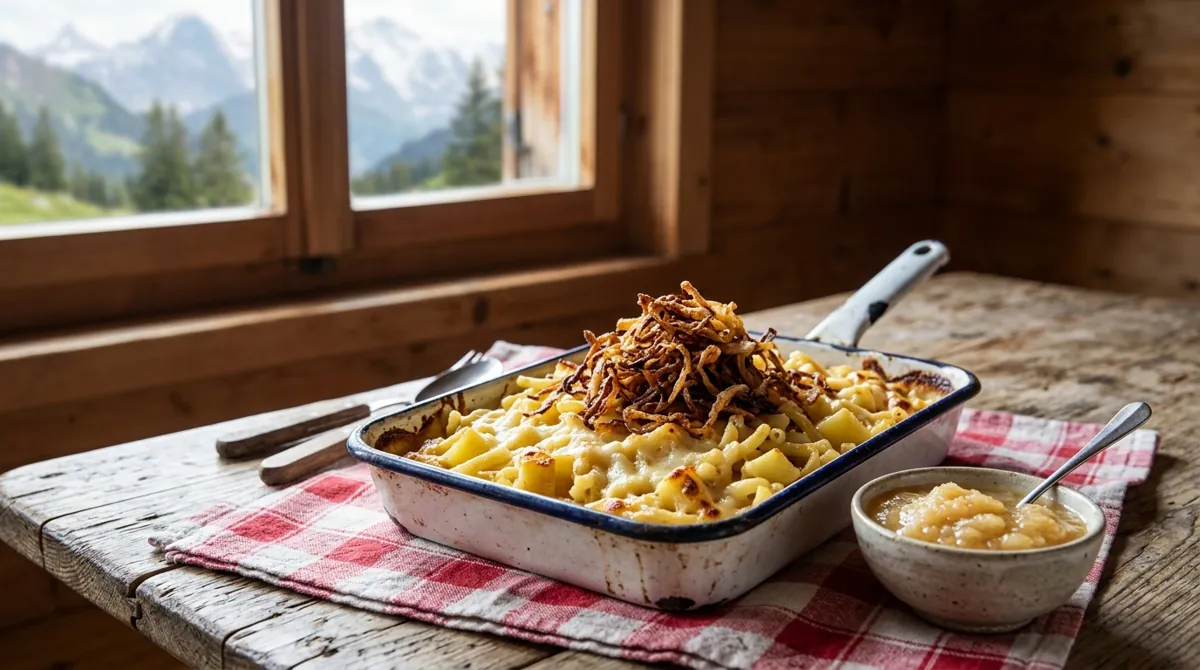
Älplermagronen (Swiss Alpine Macaroni)
Macaroni and potatoes boiled together, layered with grated Alpine cheese and a little cream, crowned with crispy onions and eaten with warm applesauce.
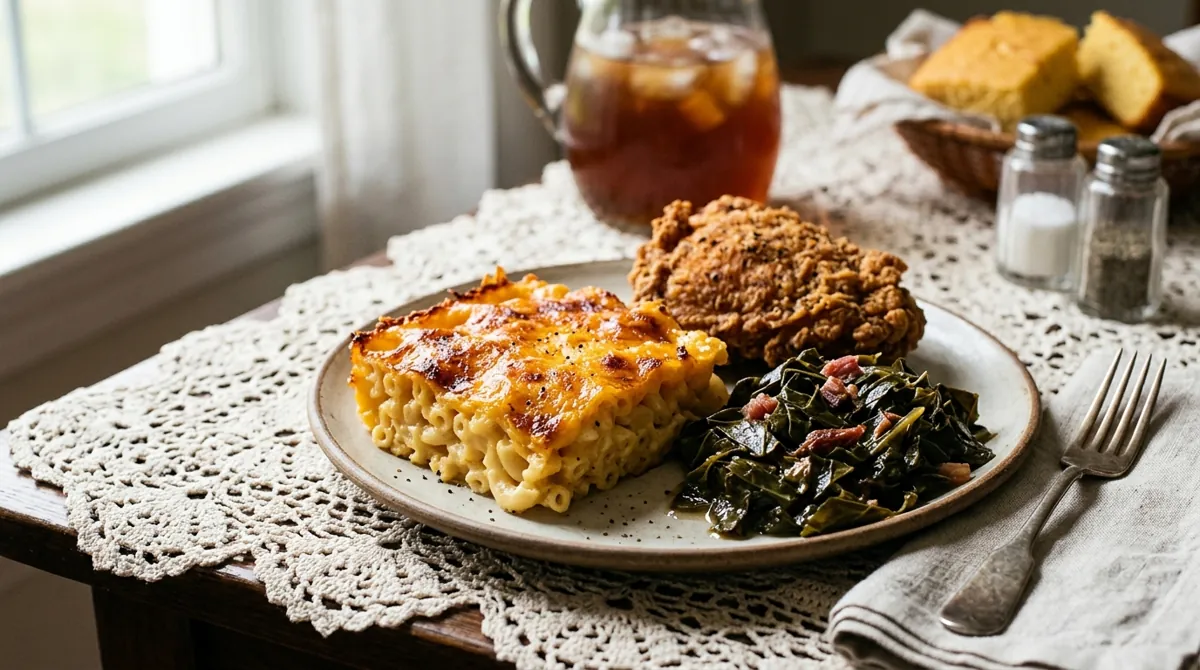
Southern Baked Macaroni and Cheese
Layers of elbow macaroni, cheddar and Jack bound with beaten eggs, evaporated milk, sour cream and butter, then baked until it sets firm enough to cut, with a crusty, browned top.
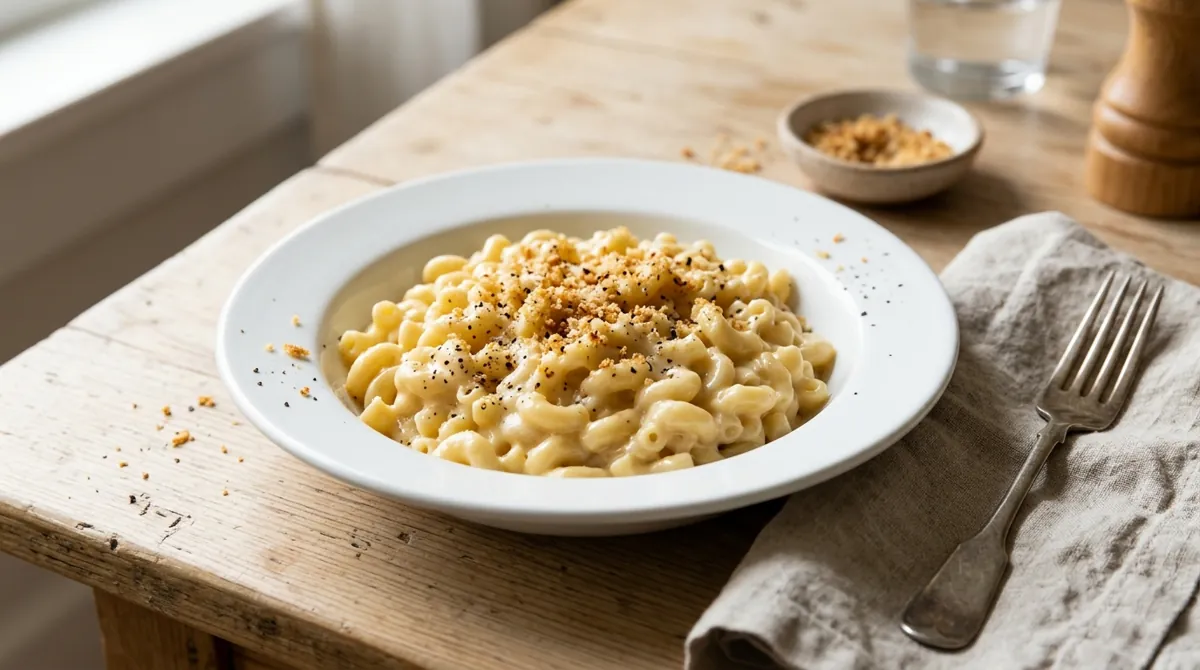
Creamy Stovetop Macaroni and Cheese
Elbows folded into a smooth béchamel cheese sauce made with Monterey Jack and sharp cheddar, with an optional buttery crumb top browned under the broiler.
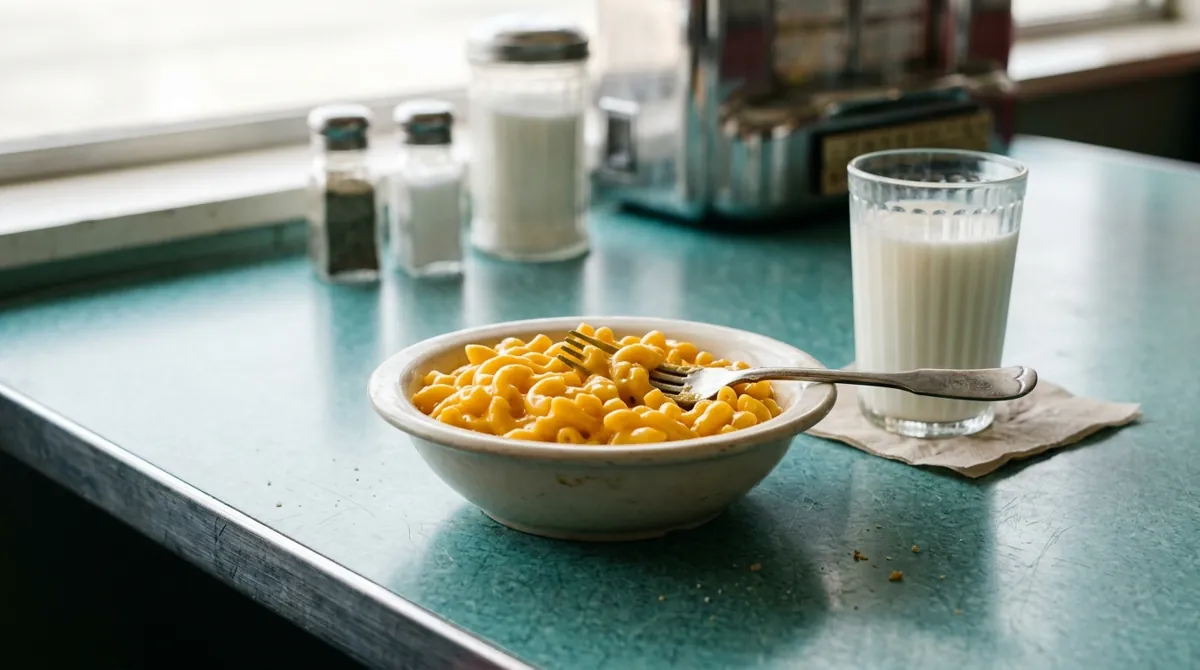
Blue Box Style Mac and Cheese (Homemade Mix)
A homemade pantry mix of cheddar cheese powder, dry milk and mustard that turns hot elbows into bright, smooth boxed-style mac in about 15 minutes. Inspired by Kraft Macaroni and Cheese, not official.
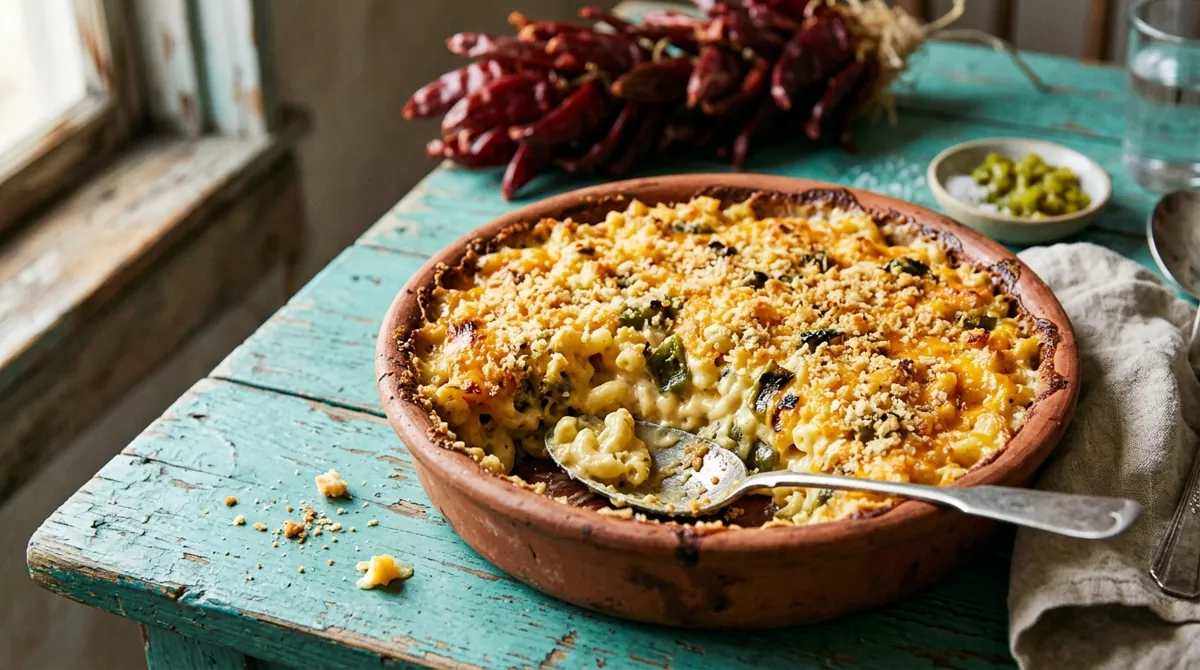
New Mexico Green Chile Mac and Cheese
Elbows baked in a tangy cheese sauce of goat cheese, fontina and aged cheddar studded with roasted New Mexico green chile, under a crunchy toasted crumb top.
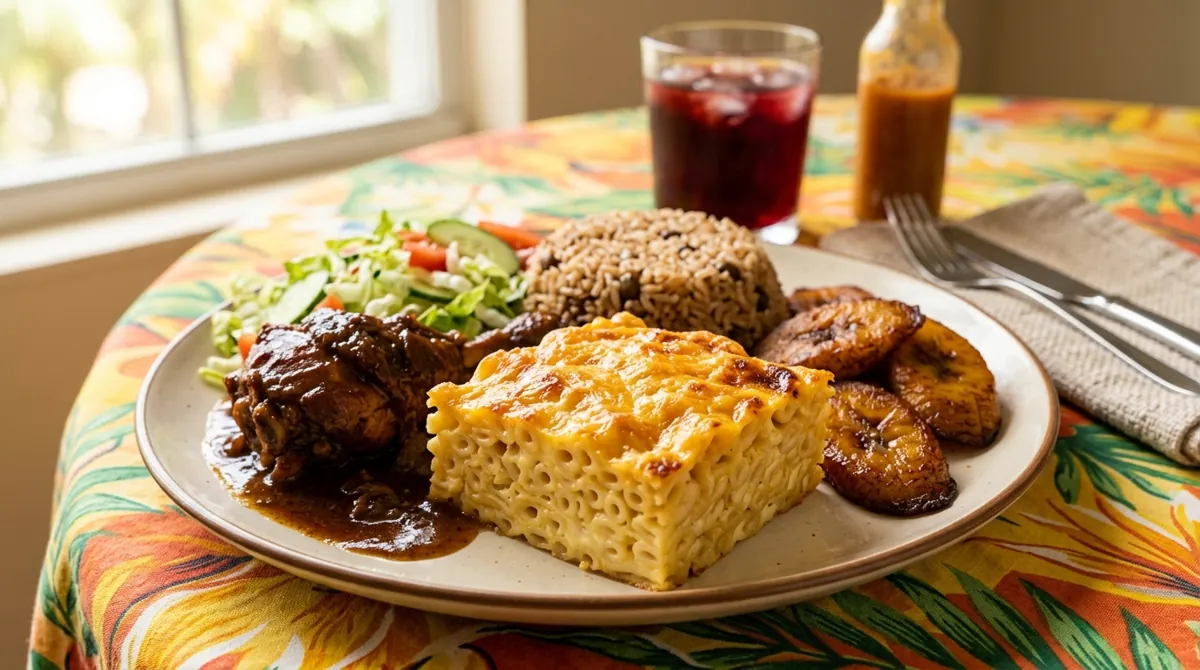
Trinidad Macaroni Pie
Macaroni bound with eggs, evaporated milk and cheddar, seasoned with onion, dry mustard and a little Scotch bonnet, then baked firm under a paprika-dusted top and cut into squares.
Barbados Macaroni Pie
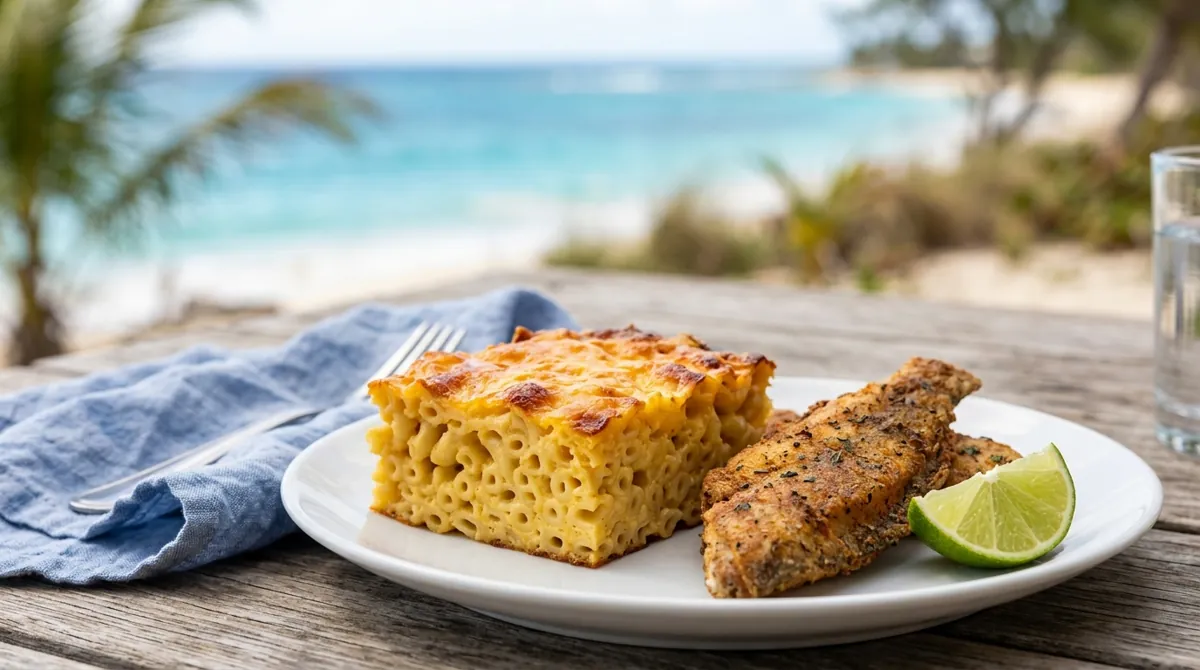
Tube macaroni baked firm with a lot of cheddar, evaporated milk, an egg, grated onion and the Bajan signature, ketchup and yellow mustard, under a golden cheese top.
20-Minute One-Pot Mac and Cheese
Three ingredients and one pot: elbows simmered in just enough water to cover, then turned into a silky cheddar sauce with a can of evaporated milk.
Meatballs of the World

Italian-American Meatballs
Big, tender meatballs braised for an hour in red sauce over spaghetti. The one most Americans grew up with.

Pallottine (Abruzzo Meatballs)
Tiny meatballs, smaller than a marble, tossed right through square spaghetti alla chitarra. No bread at all.

Swedish Meatballs (Köttbullar)
Small, soft meatballs browned in butter, in a cream sauce made from the same pan, with lingonberry jam on the plate.

Danish Frikadeller
Pork meatballs shaped with a spoon and fried slowly in butter, crusty outside and soft in the middle.

Königsberger Klopse
German meatballs that are never fried: poached, then served in a creamy white sauce with capers.

Spanish Albóndigas in Almond Saffron Sauce
The tapas bar classic: small meatballs in a golden sauce thickened with fried almonds and bread.

Mexican Albóndigas with Chipotle and Mint
Soft meatballs with rice and fresh mint inside, simmered in a smoky tomato and chipotle broth.

Izgara Köfte (Turkish Grilled Meatballs)
Small, flat meatballs kneaded hard, rested cold, and charred on a hot grill pan.

Lion's Head Meatballs
Big, soft pork meatballs, stirred into a sticky paste, fried to set, then braised in a savory sauce.

Chicken Tsukune
Japan's chicken meatball: kneaded sticky, grilled on skewers, glazed with sweet soy tare, dipped in egg yolk.