
Virginia House-Wife Baked Macaroni (1824)
The earliest known printed American mac and cheese: macaroni boiled in milk and water, layered with sliced cheese and butter, and baked in a hot oven.
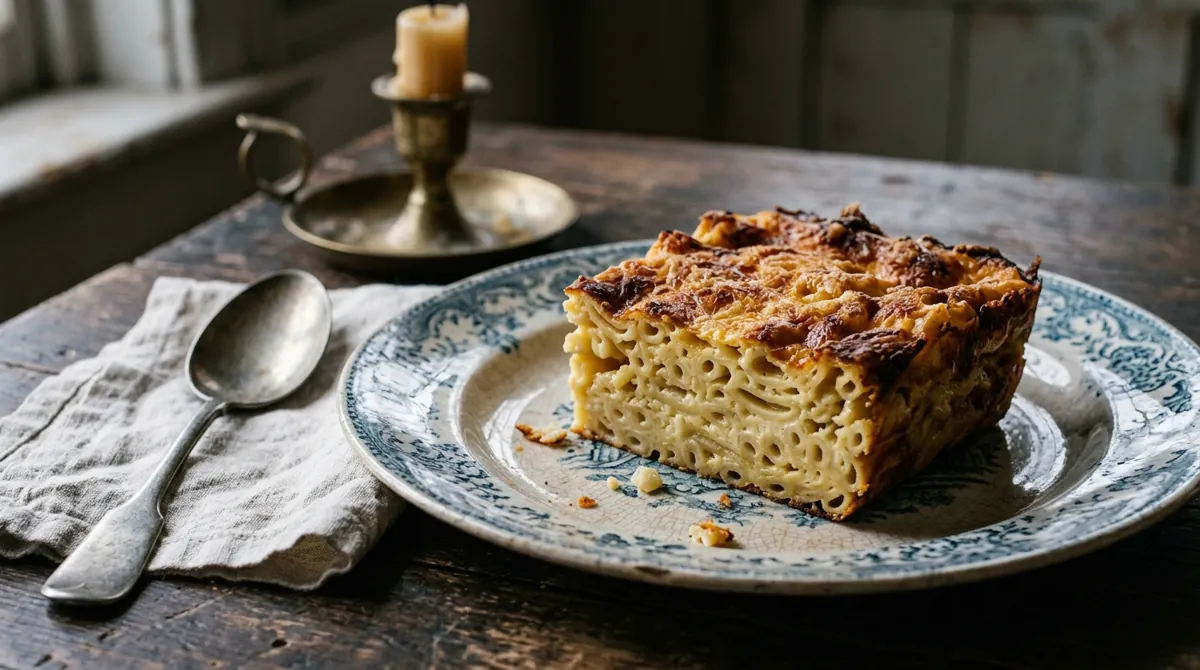
Pasta with cheese reached England long before America. A recipe roll compiled by the master cooks of King Richard II, published in 1780 as The Forme of Cury and dated to about 1390, has a dish called "Macrows": a thin sheet of dough cut into pieces, boiled, then layered with grated cheese and butter "as losyns" (Project Gutenberg text:). By 1769 Elizabeth Raffald's The Experienced English Housekeeper baked macaroni in a cream sauce under Parmesan (Wikipedia, citing Raffald:).
In the United States, the oldest printed recipe we could find is in Mary Randolph's The Virginia House-Wife, first published in 1824 and often called the first regional American cookbook. Her "Macaroni" is three ingredients: boil the macaroni in milk and water, layer it in a dish with cheese and butter "as in the polenta", and bake it in a quick oven (text from a later printing on Project Gutenberg:). Randolph's brother, Thomas Mann Randolph Jr., married Thomas Jefferson's daughter Martha (Wikipedia).
Jefferson's table matters here. In 1802 the Reverend Manasseh Cutler, dining at the President's House, reported "a pie called macaroni" on the menu, and he did not care for it (Wikipedia, citing Cutler's journals). Jefferson's enslaved chef James Hemings had trained in Paris from 1784 and is often credited with bringing baked macaroni to Virginia. How much credit he deserves is DISPUTED, and he died in 1801, before that 1802 dinner. See Rules.
🇺🇸 The original
The earliest known printed American mac and cheese: macaroni boiled in milk and water, layered with sliced cheese and butter, and baked in a hot oven.
🇺🇸 The American version
Modern America made it saucy: a creamy cheddar sauce on the stove, or a custardy Southern bake, and in 1937 a box with a cheese packet. See the Creamy Stovetop Macaroni and Cheese recipe.
Why it works the kitchen science
Milk-boiled pasta
Boiling the macaroni in milk and water seasons it and coats it with milky starch, so the layers bind into something creamy without any sauce.
Layers, not a sauce
Cheese and butter between the layers melt down through the pasta in a hot oven, the same trick Randolph uses for her baked polenta.
Step by step
- Step 1
Heat the oven to 400°F and butter an 8-inch square (2-quart) baking dish.
- Step 2
Bring the milk, water and 1 tsp of the salt to a gentle boil in a large pot over medium heat, watching closely because milk foams up fast.
- Step 3
Add the macaroni and simmer, stirring often so it doesn't scorch, until quite tender, 9 to 11 minutes. Randolph wants it soft, not al dente.
- Step 4
Drain the macaroni in a colander and sprinkle it with the remaining 1/2 tsp salt.
- Step 5
Spread a third of the macaroni in the dish, cover it with a third of the cheese slices and dot with a third of the butter. Repeat twice, ending with cheese and butter on top, the way Randolph layers her polenta.
- Step 6
Bake 20 to 25 minutes, until the butter bubbles at the edges and the top is golden in spots.
- Step 7
Let it stand 5 minutes, then serve with a spoon.
Virginia House-Wife Baked Macaroni (1824)
Serves 4 (as a side) · one 8-inch square dish · 50 min total
Macaroni
- 8 oz elbow or short tube macaroni
- 1 quart whole milk, for boiling (most is poured off)
- 1 quart water, for boiling
- 1 1/2 tsp kosher salt, divided
Layers
- 10 oz sharp white cheddar, sliced very thin
- 6 tbsp unsalted butter, cut into small bits, plus more for the dish
Method
- Heat the oven to 400°F and butter an 8-inch square (2-quart) baking dish.
- Bring the milk, water and 1 tsp of the salt to a gentle boil in a large pot over medium heat, watching closely because milk foams up fast.
- Add the macaroni and simmer, stirring often so it doesn't scorch, until quite tender, 9 to 11 minutes. Randolph wants it soft, not al dente.
- Drain the macaroni in a colander and sprinkle it with the remaining 1/2 tsp salt.
- Spread a third of the macaroni in the dish, cover it with a third of the cheese slices and dot with a third of the butter. Repeat twice, ending with cheese and butter on top, the way Randolph layers her polenta.
- Bake 20 to 25 minutes, until the butter bubbles at the edges and the top is golden in spots.
- Let it stand 5 minutes, then serve with a spoon.
Adapted from Mary Randolph's "Macaroni" in The Virginia House-Wife (1824; we read the 1860 printing at gutenberg.org), which refers back to her "To make polenta" recipe for the layering and bake, plus Sarah Lohman's modern test of it on Four Pounds Flour (January 7, 2010:), which set the amounts: 1/2 lb macaroni, 1 quart milk boiled with water, 12 oz cheese and a stick of butter, baked at 350°F for 25 to 30 minutes. Randolph names no cheese; Lohman used queso blanco and did not like the result. Our choices: sharp white cheddar (an English-style aged cheese), 6 tbsp butter instead of 8, and 400°F, because Randolph's polenta says a "quick" (hot) oven and 20 to 30 minutes. gutenberg.org. Ingredient list follows the source; the method is in our own words.
Tips
- Use a big pot and keep the heat moderate; milk boils over and scorches far faster than water.
- Lohman found that a fresh cheese tasted flat and bitter here. An aged cheese with some bite carries the dish.
- For a crustier top, finish with 2 tbsp grated Parmesan, as English cooks of Raffald's time did.
The rules people argue about
What the sources agree on, what they don't, and what is just a good story.
- The first American mac and cheese recipe. Documented as the earliest known printed American recipe (Wikipedia, macaroni and cheese article; Lohman). Earlier cooks, including James Hemings, almost certainly made baked macaroni in America before 1824 without writing it down.
- James Hemings introduced mac and cheese to America. Disputed: Wikipedia's James Hemings article says he "is credited with introducing" it, and NPR's 2016 report on historian Michael Twitty's work at Monticello says Hemings popularized macaroni pie there. The same Wikipedia article's body says only that he is "believed to be one of the first" American chefs to make it, and English recipes for macaroni with cheese go back centuries.
- Thomas Jefferson invented or introduced mac and cheese. Folklore: soul food historian Adrian Miller says Jefferson gets much of the credit but that it is "really not true", because Americans were making similar dishes earlier (Gastropod transcript, 2018:).
- James Hemings cooked the 1802 "pie called macaroni". Disputed: popular articles say so, but Wikipedia gives his death as 1801. Some accounts credit his brother Peter Hemings, whom James trained; we saw that only in search summaries.
- The Forme of Cury's "macrows" is the first mac and cheese. Disputed: Wikipedia and Guinness are cited for tracing the dish to medieval English cheese and pasta casseroles, but the 1780 editor's own footnote doubted the name, and the method (sheets of dough layered "as losyns") is closer to lasagna.
- Which cheese Randolph meant. Disputed: her recipe never says. Lohman tried queso blanco; Raffald's earlier English recipe used Parmesan. Our sharp cheddar is a choice.
Every other mac and cheese
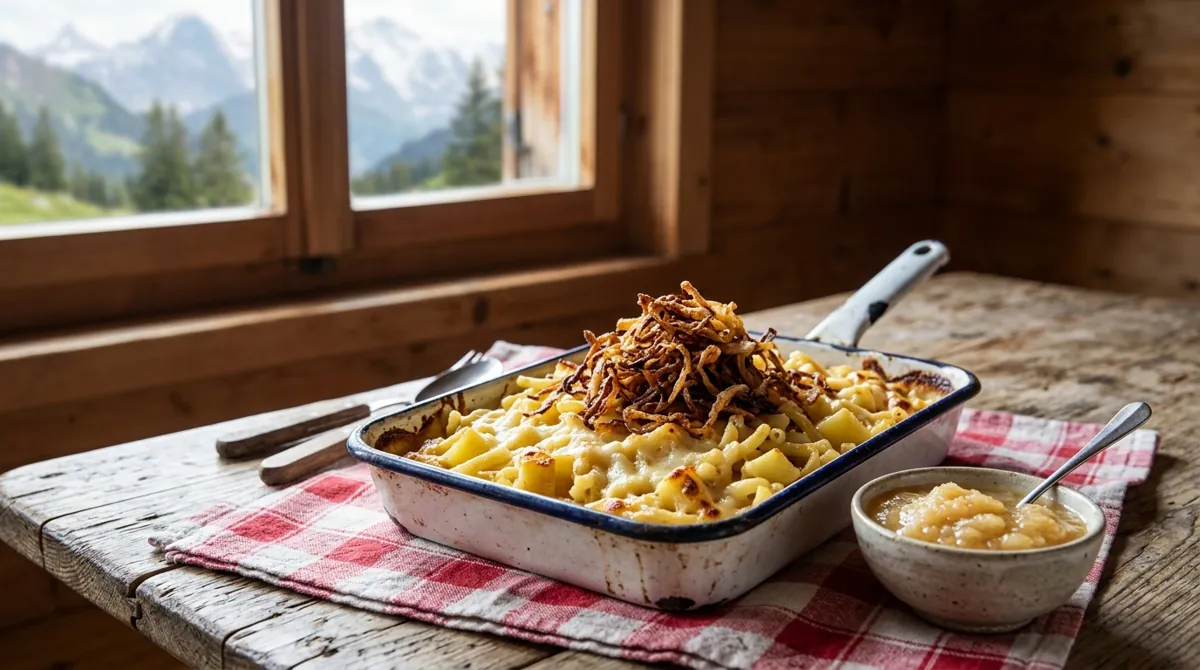
Älplermagronen (Swiss Alpine Macaroni)
Macaroni and potatoes boiled together, layered with grated Alpine cheese and a little cream, crowned with crispy onions and eaten with warm applesauce.
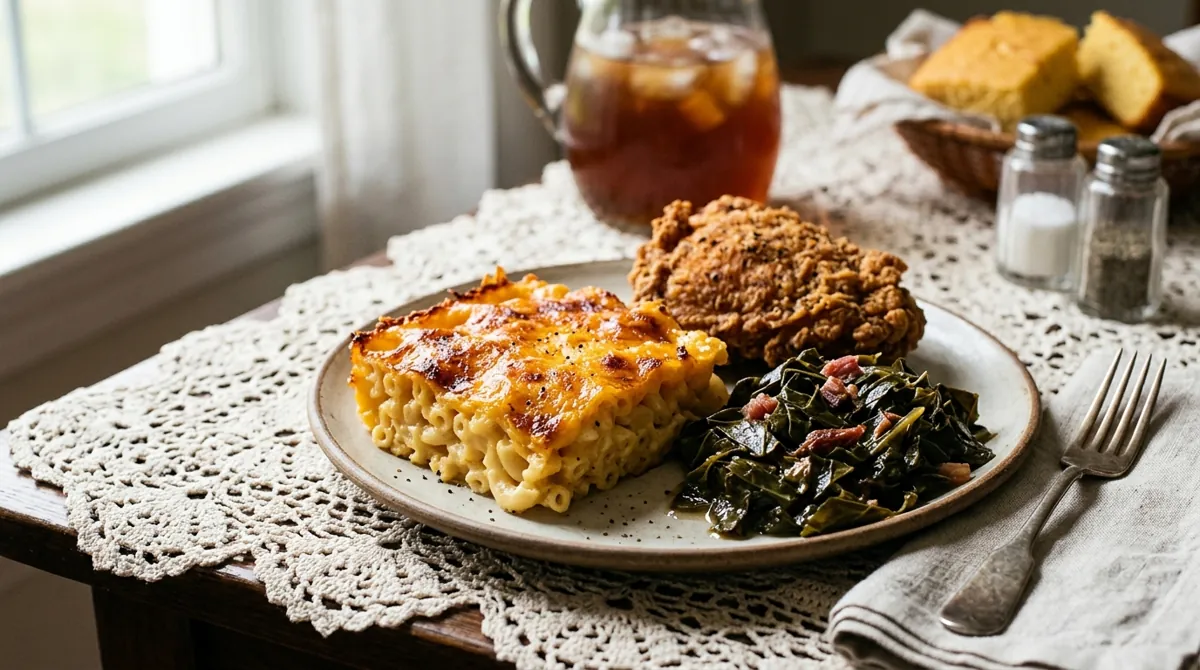
Southern Baked Macaroni and Cheese
Layers of elbow macaroni, cheddar and Jack bound with beaten eggs, evaporated milk, sour cream and butter, then baked until it sets firm enough to cut, with a crusty, browned top.
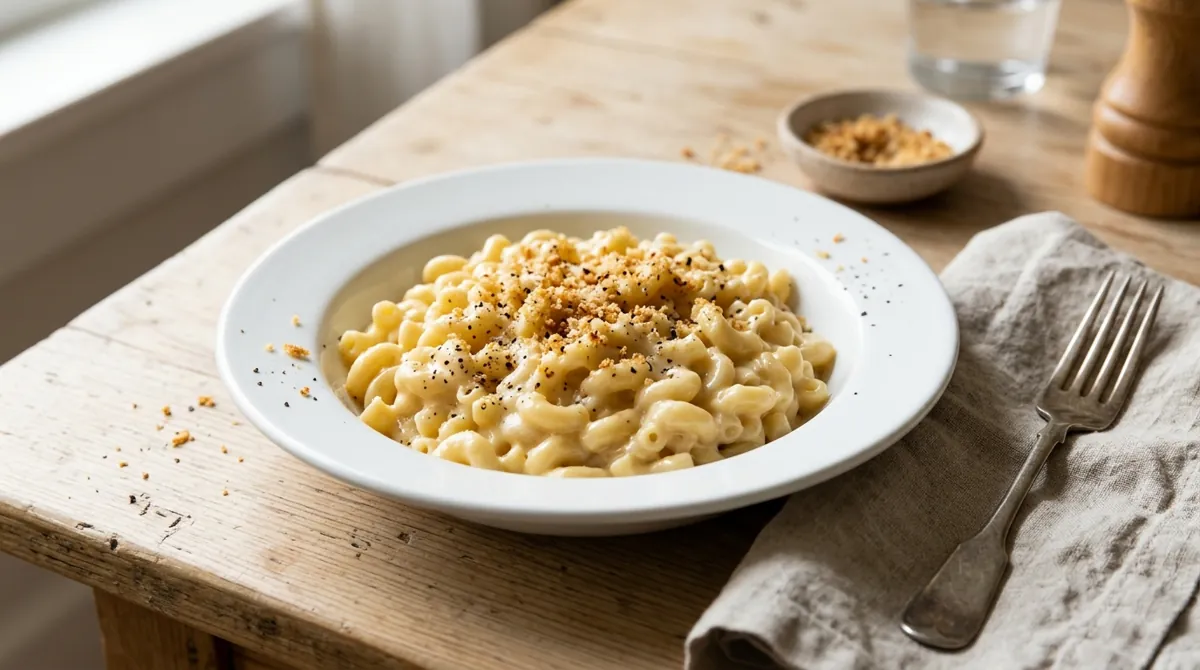
Creamy Stovetop Macaroni and Cheese
Elbows folded into a smooth béchamel cheese sauce made with Monterey Jack and sharp cheddar, with an optional buttery crumb top browned under the broiler.
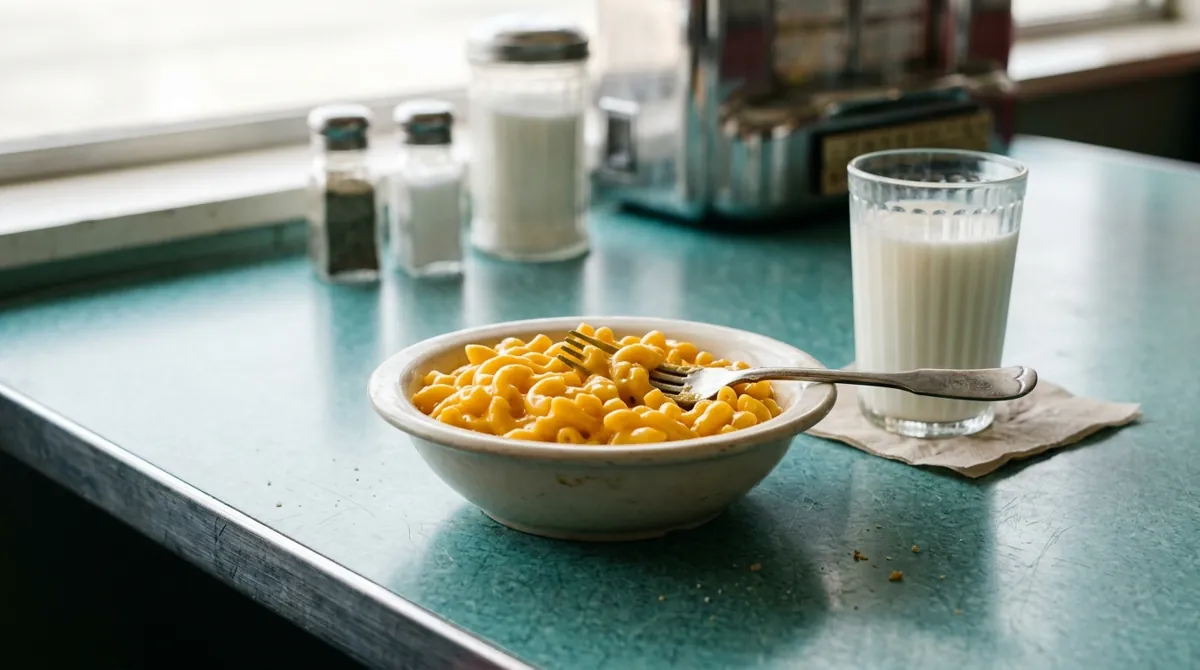
Blue Box Style Mac and Cheese (Homemade Mix)
A homemade pantry mix of cheddar cheese powder, dry milk and mustard that turns hot elbows into bright, smooth boxed-style mac in about 15 minutes. Inspired by Kraft Macaroni and Cheese, not official.
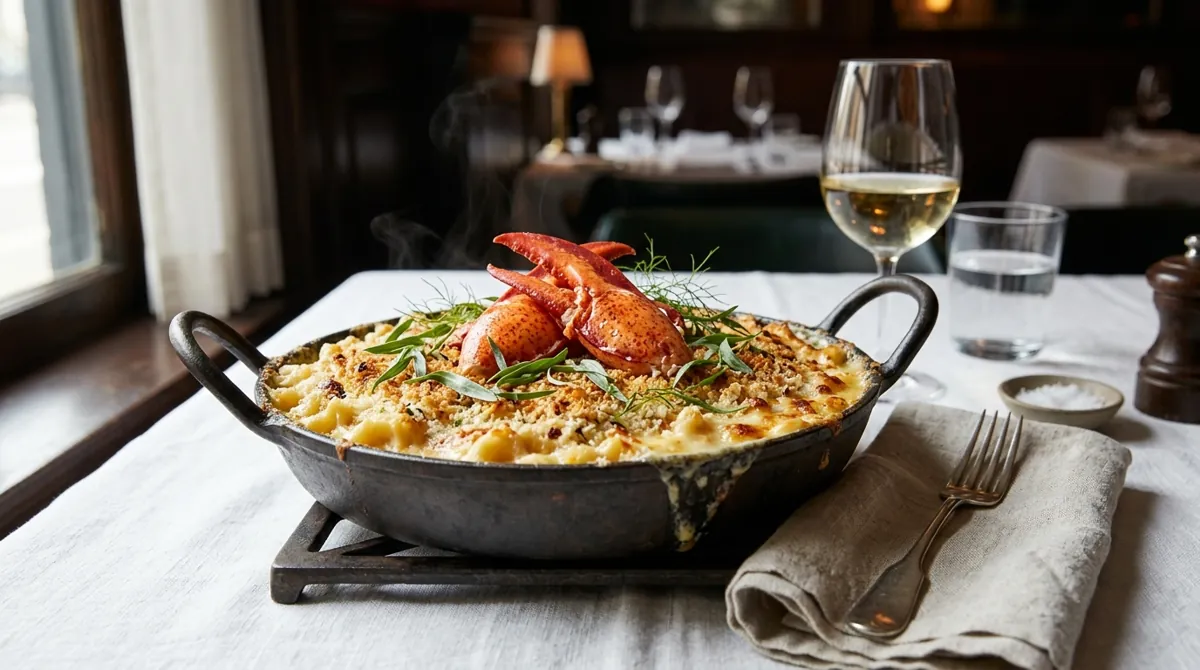
Lobster Mac and Cheese
Fresh-cooked lobster folded into macaroni with a nutty, browned-roux cheddar sauce made with the lobster cooking liquid and a pinch of mace, finished with whole claws and herbs.
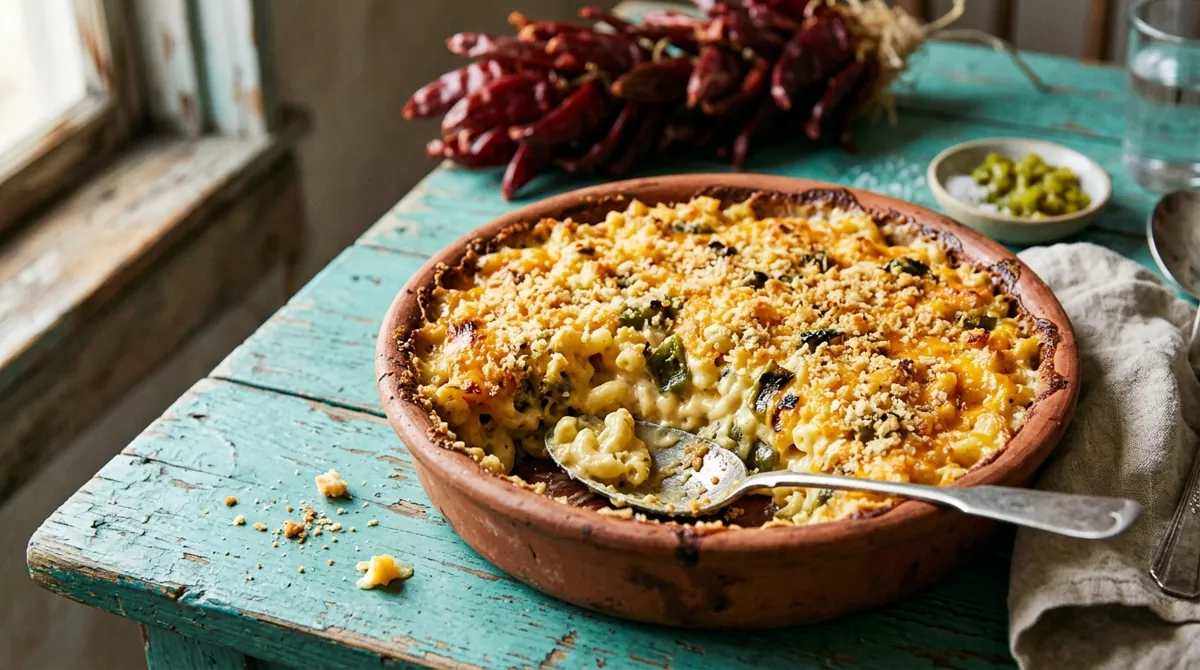
New Mexico Green Chile Mac and Cheese
Elbows baked in a tangy cheese sauce of goat cheese, fontina and aged cheddar studded with roasted New Mexico green chile, under a crunchy toasted crumb top.
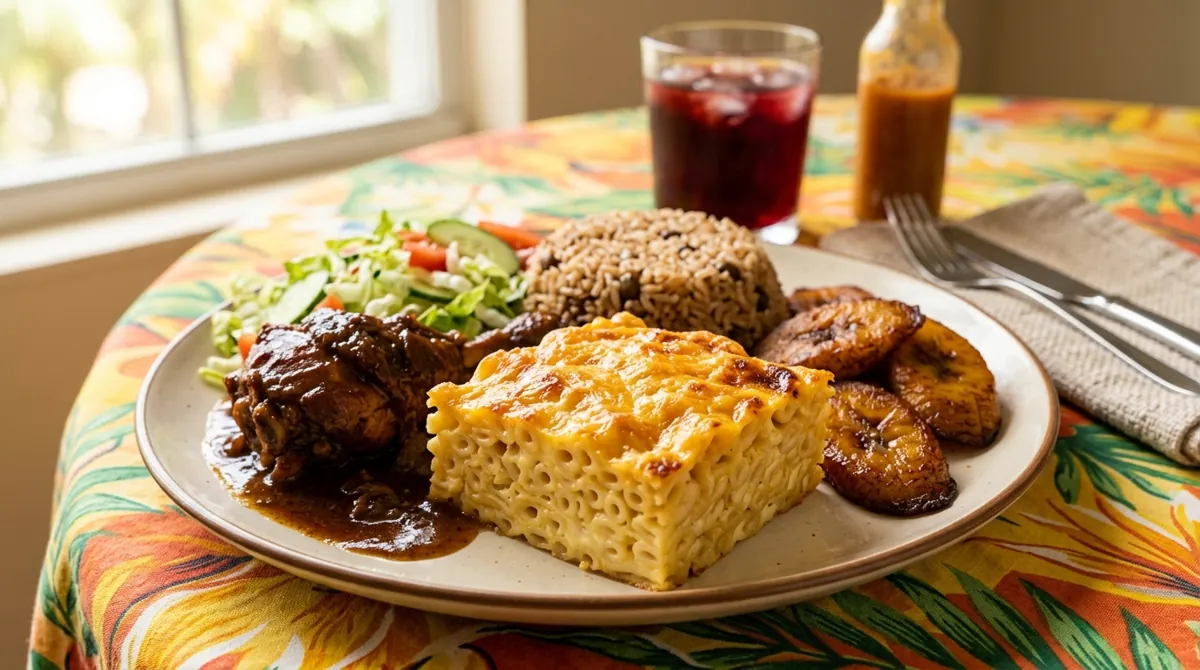
Trinidad Macaroni Pie
Macaroni bound with eggs, evaporated milk and cheddar, seasoned with onion, dry mustard and a little Scotch bonnet, then baked firm under a paprika-dusted top and cut into squares.
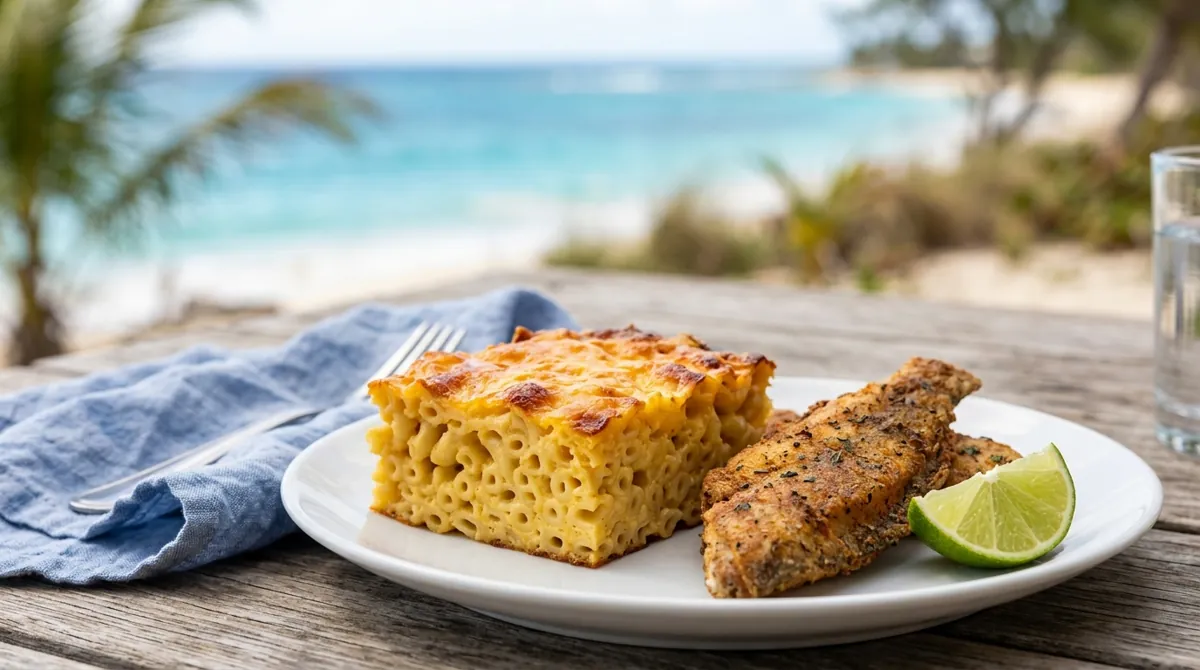
Barbados Macaroni Pie
Tube macaroni baked firm with a lot of cheddar, evaporated milk, an egg, grated onion and the Bajan signature, ketchup and yellow mustard, under a golden cheese top.
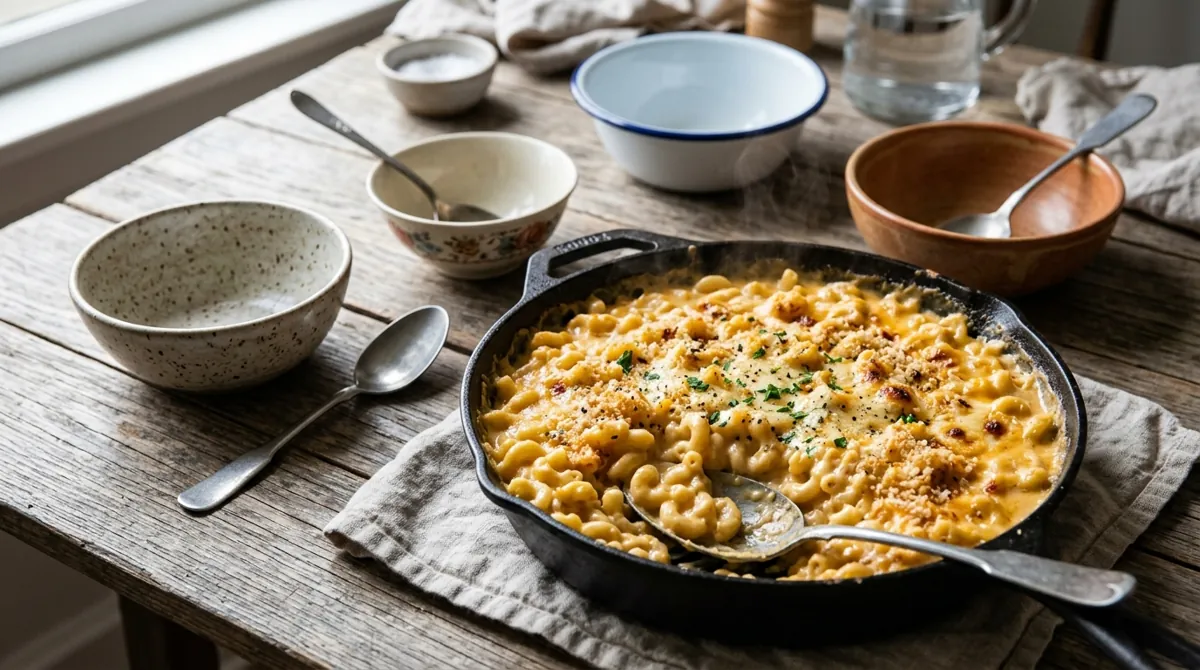
20-Minute One-Pot Mac and Cheese
Three ingredients and one pot: elbows simmered in just enough water to cover, then turned into a silky cheddar sauce with a can of evaporated milk.
Meatballs of the World

Italian-American Meatballs
Big, tender meatballs braised for an hour in red sauce over spaghetti. The one most Americans grew up with.

Pallottine (Abruzzo Meatballs)
Tiny meatballs, smaller than a marble, tossed right through square spaghetti alla chitarra. No bread at all.

Swedish Meatballs (Köttbullar)
Small, soft meatballs browned in butter, in a cream sauce made from the same pan, with lingonberry jam on the plate.

Danish Frikadeller
Pork meatballs shaped with a spoon and fried slowly in butter, crusty outside and soft in the middle.

Königsberger Klopse
German meatballs that are never fried: poached, then served in a creamy white sauce with capers.

Spanish Albóndigas in Almond Saffron Sauce
The tapas bar classic: small meatballs in a golden sauce thickened with fried almonds and bread.

Mexican Albóndigas with Chipotle and Mint
Soft meatballs with rice and fresh mint inside, simmered in a smoky tomato and chipotle broth.

Izgara Köfte (Turkish Grilled Meatballs)
Small, flat meatballs kneaded hard, rested cold, and charred on a hot grill pan.

Lion's Head Meatballs
Big, soft pork meatballs, stirred into a sticky paste, fried to set, then braised in a savory sauce.

Chicken Tsukune
Japan's chicken meatball: kneaded sticky, grilled on skewers, glazed with sweet soy tare, dipped in egg yolk.