
📖 Food facts
Gelato vs Ice Cream: What's the Difference?
They start from the same milk, cream and sugar. The differences are in how much fat goes in, how much air gets beaten in, and how cold the scoop is when it reaches you.
 By Americanized · Edited by JP Lambiase · October 18, 2026
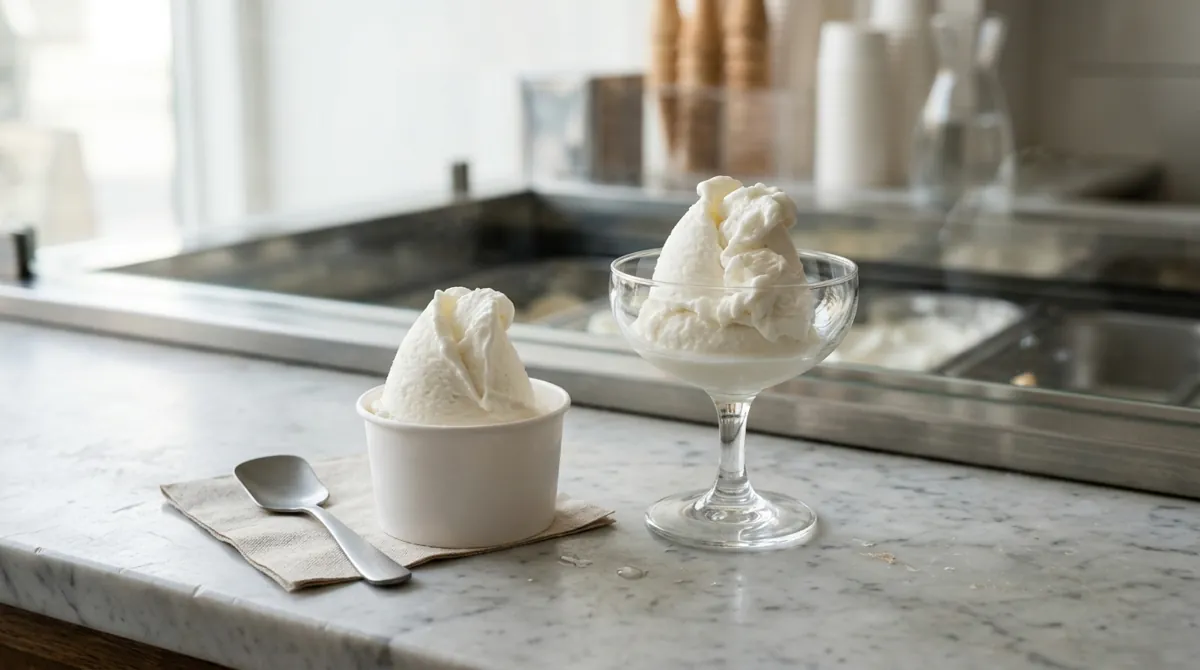
Gelato usually has less fat, less air and is served warmer. US ice cream must contain at least 10 percent milkfat by federal rule, while gelato typically runs about 4 to 9 percent. Gelato is churned more slowly, so it holds roughly 20 to 30 percent air against up to 50 percent in American ice cream, which makes it denser and more intensely flavored.
Fat: only ice cream has a legal number
In the United States, ice cream is defined in federal regulation 21 CFR 135.110. It must contain at least 10 percent milkfat, at least 1.6 pounds of total solids per gallon, and weigh at least 4.5 pounds per gallon.
Gelato has no federal standard of identity at all, the International Dairy Foods Association noted in 2013, so its makeup varies by maker. Gelato maker Morgan Morano told NPR in 2015 that authentic gelato runs about 4 to 9 percent fat, while most American ice cream runs 14 to 25 percent.
You can see the gap in our own recipes. Our fior di latte gelato uses three cups of whole milk to one cup of cream, which works out to roughly 9 percent fat by weight using USDA FoodData Central values. Our Philadelphia-style vanilla flips the ratio, two cups of cream to one of milk, for roughly 20 percent.
Air: a slower churn and a denser scoop
Air whipped in during freezing is called overrun. The 4.5-pound weight rule limits how much air US ice cream can hold, Consumer Reports explains, yet NPR reported that American ice cream can still be up to 50 percent air.
Gelato needs only about 20 to 30 percent, according to Morano, partly because gelato machines churn more slowly than ice cream makers. Less air means a heavier, silkier scoop, which is why gelato is traditionally served with a flat spade rather than a round scoop.
Served warmer, so it tastes stronger
NPR put the serving temperature of authentic gelato at 7 to 12°F, about 10 to 15 degrees warmer than ice cream. Eataly gives a similar picture: gelato held around 10°F, ice cream at 0°F or below.
Warmth and low fat work together. Luciano Ferrari of the Carpigiani Gelato University in Bologna told Consumerist that lower fat and less air put more flavor in each spoonful, and that a warmer serving temperature keeps the taste buds more sensitive. Morano added that gelato is best fresh and that her recipes are meant to be eaten within 24 hours.
Eggs, custard and where gelato came from
Authentic gelato rarely uses egg yolks, NPR reported, and when it does they are mostly there for flavor. Fior di latte has none; ours is thickened with a spoonful of cornstarch instead.
Eggs push American ice cream the other way. Under the same federal rule, ice cream with at least 1.4 percent egg yolk solids must be called frozen custard or French ice cream. Our French crème glacée uses six yolks in a cooked custard.
Who made gelato first is murky. Florence and Sicily both claim it (Eataly adds Bologna to the list), and no single inventor is settled. Pick your side in our gelato vs ice cream matchup, or browse every style in the ice cream hub.
Questions people ask
Is gelato lower in fat than ice cream?
Usually, but not by rule. Federal law sets a 10 percent milkfat minimum for ice cream and has no standard for gelato, so a pint labeled gelato can vary widely. The nutrition label is the only way to know for a given brand.
Is frozen custard the same as gelato?
No. Frozen custard is legally ice cream with at least 1.4 percent egg yolk solids, so it is rich in both fat and yolks. Gelato is typically lower in fat and rarely uses yolks.
Why does gelato melt faster?
It is served warmer to begin with, about 7 to 12°F by NPR's figures, and it has less air. Eataly notes that air acts as an insulator, so a denser scoop softens sooner in the cup.
Parts of this history are disputed. Where sources disagree, we say so.
Sources
- 21 CFR 135.110, Ice cream and frozen custard (Cornell Legal Information Institute copy)
- Linda Poon, NPR, "Why Scream For Gelato Instead Of Ice Cream? Here's The Scoop" (KPBS copy), June 16, 2015
- International Dairy Foods Association, "IDFA Opposes Petition for New Gelato Standard in California," October 16, 2013
- Consumer Reports (originally Consumerist), "What's the Difference Between Ice Cream, Frozen Custard and Gelato?", updated May 4, 2018
- Eataly Magazine, "Don't Call it Italian Ice Cream: Discover Authentic Gelato"
- USDA FoodData Central, FDC 170859 (Cream, fluid, heavy whipping) and FDC 171265 (Milk, whole, 3.25% milkfat)
More food facts
Cook it
Fior di Latte Gelato (Italian Milk Gelato)
Italy's plainest gelato and the test of every gelateria: mostly milk, a little cream, no eggs, thickened with a spoonful of cornstarch and served softer and warmer than American ice cream.
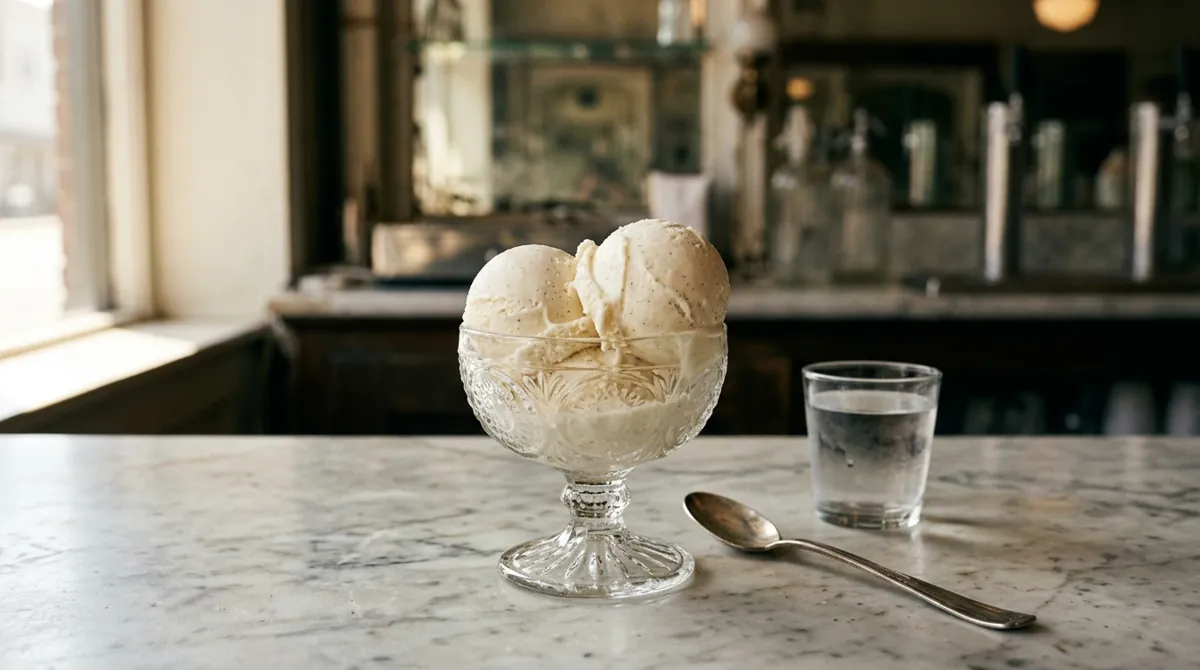
Philadelphia-Style Vanilla Ice Cream
The American eggless ice cream: cream, milk, sugar and vanilla stirred together cold, chilled and churned, with nothing cooked and nothing to temper.
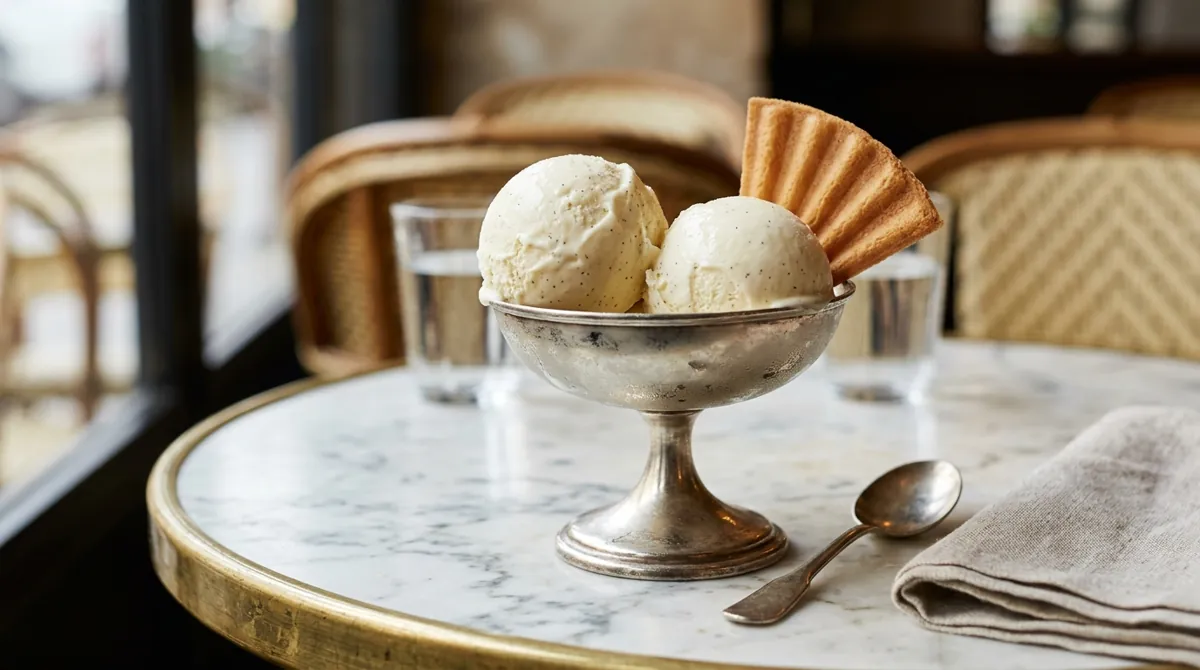
French Crème Glacée à la Vanille (Custard Ice Cream)
The French way: a vanilla crème anglaise of milk and six egg yolks, cooked until it coats the spoon, finished with a little cream and churned.
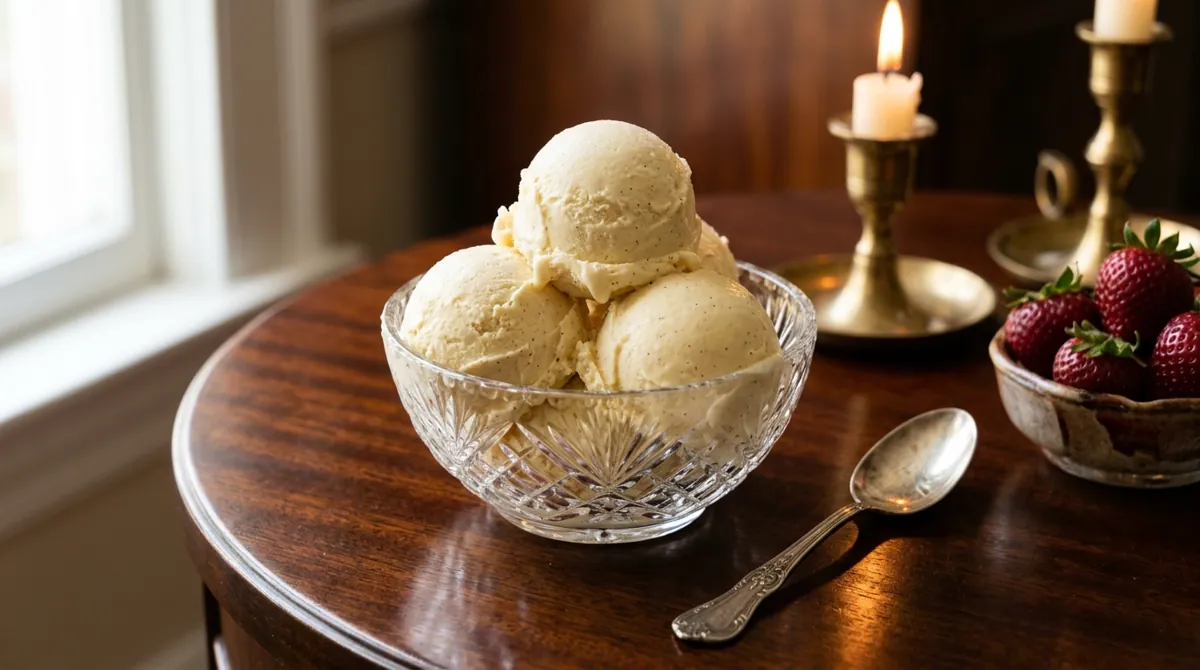
Classic Vanilla Custard Ice Cream (Jefferson's Recipe, Updated)
The rich American vanilla: a cream-heavy custard with five yolks cooked to 170 to 175°F, the same idea as the recipe Thomas Jefferson wrote out by hand.
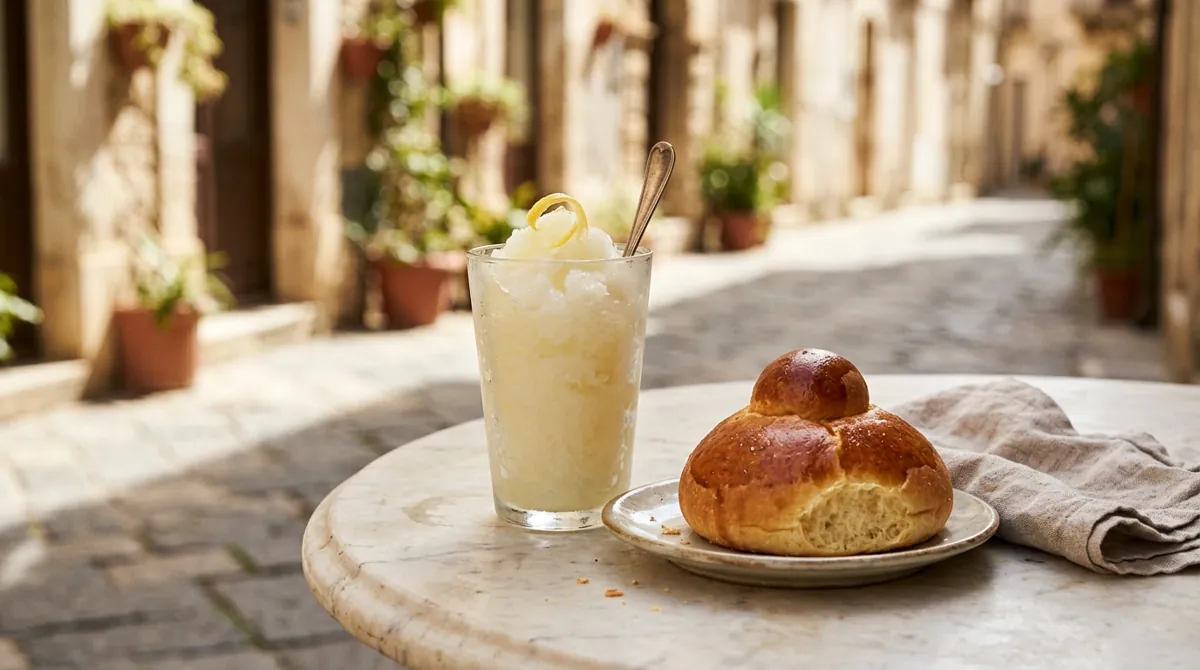
Sicilian Lemon Granita with Brioche
Lemon juice, zest, sugar and water, frozen and scraped into fine ice the Sicilian way, served for breakfast with a soft brioche for dunking.