
Fior di Latte Gelato (Italian Milk Gelato)
Italy's plainest gelato and the test of every gelateria: mostly milk, a little cream, no eggs, thickened with a spoonful of cornstarch and served softer and warmer than American ice cream.
Fior di latte means "flower of milk": no flavoring, no eggs, just milk, cream and sugar, the base that stracciatella and many other flavors are built on (Wikipedia:). Who made the first gelato is DISPUTED. Wikipedia reports that some sources credit two 16th-century Florentines, Cosimo Ruggeri, said to have made fior di latte for the Medici court, and the architect Bernardo Buontalenti, while other sources say Sicilian cooks slowly turned sherbet into gelato. What is better documented is how gelato differs from American ice cream. In a 2015 NPR story, gelato maker Morgan Morano put authentic gelato at about 4 to 9% fat against US ice cream's legal minimum of 10% (most brands run 14 to 25%), with 20 to 30% air against up to 50% in American ice cream, and served at 7 to 12°F, about 10 to 15 degrees warmer, which is why it tastes more intense. Gelato machines also churn more slowly, so they beat in less air.
🇮🇹 The original
Italy's plainest gelato and the test of every gelateria: mostly milk, a little cream, no eggs, thickened with a spoonful of cornstarch and served softer and warmer than American ice cream.
🇺🇸 The American version
America's Philadelphia style is cream, sugar and vanilla with no eggs and nothing cooked, churned with more air into the scoop most Americans grew up with. See the Philadelphia-Style Vanilla Ice Cream recipe.
🗳️ Italian gelato or American ice cream? Vote: Gelato vs American ice cream →
Why it works the kitchen science
Cornstarch instead of eggs
A small amount of starch holds water so ice crystals stay small, giving a dense, silky texture while the milk flavor stays clean.
Mostly milk
With three times as much milk as cream the fat stays low, so the gelato tastes of milk and is meant to be eaten softer and warmer than ice cream.
Step by step
- Step 1
Pour 2 cups of the milk and all the cream into a medium saucepan. Heat over medium heat, stirring now and then, until steaming with small bubbles at the edge, about 5 minutes. Do not boil.
- Step 2
Meanwhile whisk the sugar, cornstarch and salt into the remaining 1 cup cold milk in a bowl until no lumps remain.
- Step 3
Take the pan off the heat and whisk in the cornstarch mixture. Return it to medium-low heat and cook, stirring constantly with a heatproof spatula and scraping the bottom, until it thickens slightly and bubbles lazily for 1 minute, 6 to 8 minutes.
- Step 4
Off the heat, stir in the apricot preserves until melted. Strain through a fine-mesh sieve into a bowl set in a larger bowl of ice water and stir for 10 minutes to cool it fast.
- Step 5
Press plastic wrap on the surface and refrigerate 2 to 3 hours, until very cold (below 40°F).
- Step 6
Churn in an ice cream maker until it looks like thick soft serve, 20 to 25 minutes.
- Step 7
Eat it straight from the machine, the way a gelateria serves it, or pack it into a chilled container and freeze 1 hour. If it has been frozen longer, let it sit at room temperature 10 minutes before serving so it softens to gelato texture.
Fior di Latte Gelato (Italian Milk Gelato)
Serves 8 (1/2 cup each) · about 1 quart · 25 min total
Gelato base
- 3 cups whole milk, divided
- 1 cup heavy cream
- 1 cup sugar
- 7 tsp cornstarch (2 tbsp plus 1 tsp)
- 1 tbsp apricot preserves
- Pinch of fine salt
Method
- Pour 2 cups of the milk and all the cream into a medium saucepan. Heat over medium heat, stirring now and then, until steaming with small bubbles at the edge, about 5 minutes. Do not boil.
- Meanwhile whisk the sugar, cornstarch and salt into the remaining 1 cup cold milk in a bowl until no lumps remain.
- Take the pan off the heat and whisk in the cornstarch mixture. Return it to medium-low heat and cook, stirring constantly with a heatproof spatula and scraping the bottom, until it thickens slightly and bubbles lazily for 1 minute, 6 to 8 minutes.
- Off the heat, stir in the apricot preserves until melted. Strain through a fine-mesh sieve into a bowl set in a larger bowl of ice water and stir for 10 minutes to cool it fast.
- Press plastic wrap on the surface and refrigerate 2 to 3 hours, until very cold (below 40°F).
- Churn in an ice cream maker until it looks like thick soft serve, 20 to 25 minutes.
- Eat it straight from the machine, the way a gelateria serves it, or pack it into a chilled container and freeze 1 hour. If it has been frozen longer, let it sit at room temperature 10 minutes before serving so it softens to gelato texture.
Adapted from Saveur's "Milk Gelato (Fior di Latte Gelato)", made with tips from Jon Snyder of Il Laboratorio del Gelato in New York. Saveur's page refused our direct request; the amounts (1 cup heavy cream, 3 cups milk, 1 cup sugar, 7 teaspoons cornstarch, 1 tablespoon apricot preserves, about 1 quart) and the order of the method come from search results quoting the page. Saveur gives 2 to 3 hours of chilling; the cooking times and the serving temperature advice are ours. The cornstarch is the Sicilian-style thickener many Italian home recipes use in place of eggs. Saveur. Ingredient list follows the source; the method is in our own words.
All sources (4)
Tips
- No ice cream maker: freeze the cold base in a metal loaf pan and stir it hard with a fork every 30 minutes for about 3 hours, then freeze until scoopable.
- Gelato is best within a day or two; Morgan Morano told NPR it should be eaten within 24 hours.
- Use a flat spade or a spoon, not a round scoop, to serve it the Italian way.
- The apricot preserves are Saveur's trick: you will not taste apricot, only a rounder milk flavor. Use a smooth preserve with no large fruit pieces, or strain it.
The rules people argue about
What the sources agree on, what they don't, and what is just a good story.
- Gelato has less fat than ice cream. Documented: about 4 to 9% (Morgan Morano, NPR 2015) or 6 to 9% (Wikipedia) vs at least 10% for US ice cream by law (21 CFR 135.110:).
- Gelato has less air. Documented: 20 to 30% air in gelato vs up to 50% in American ice cream (NPR 2015). Wikipedia gives 20 to 35% for gelato.
- Gelato is served warmer. Documented: 7 to 12°F, about 10 to 15 degrees warmer than ice cream (NPR 2015; Wikipedia gives the same 7 to 12°F).
- Real gelato never has eggs. Folklore: fior di latte has none, but plenty of gelato flavors use yolks; NPR says authentic gelato rarely uses them and then mostly for flavor.
- Gelato was invented in Florence for the Medici. Disputed: Wikipedia credits Ruggeri and Buontalenti only through "some sources", while other sources point to Sicilian cooks reworking sherbet.
Serve it with
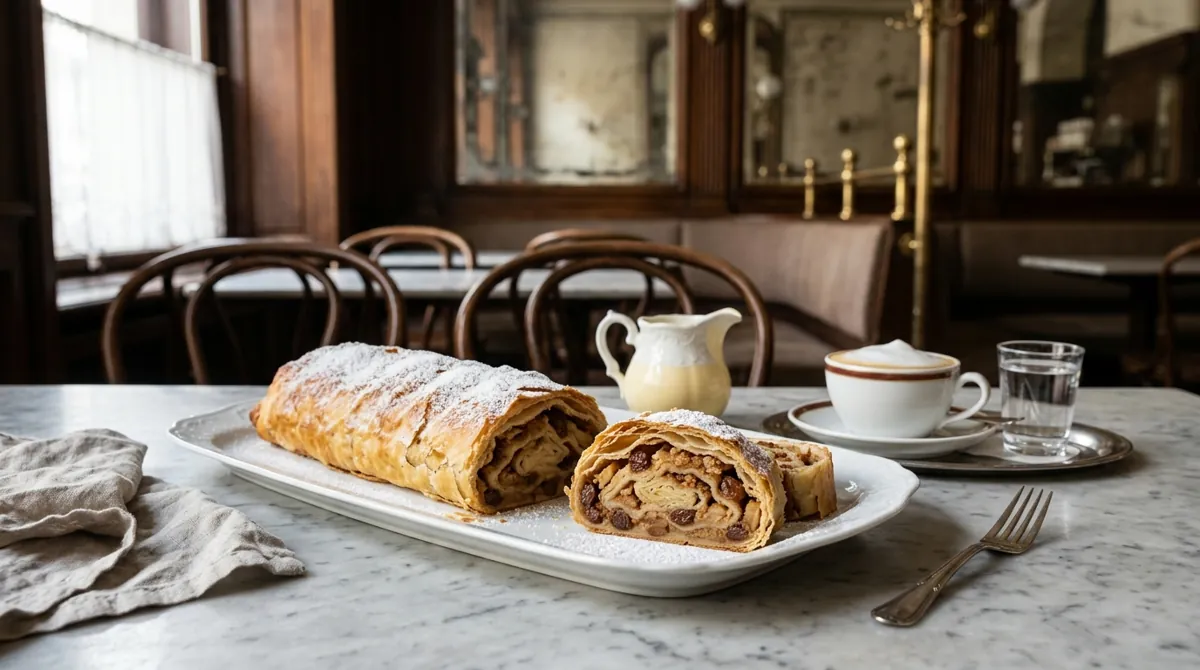
Wiener Apfelstrudel (Viennese Apple Strudel)
A soft egg and oil dough stretched over a floured tablecloth until it's paper thin, brushed with butter, layered with hazelnut breadcrumbs fried in butter, sliced apples, rum-soaked raisins, cinnamon and cloves, rolled up and baked at 350°F until golden.
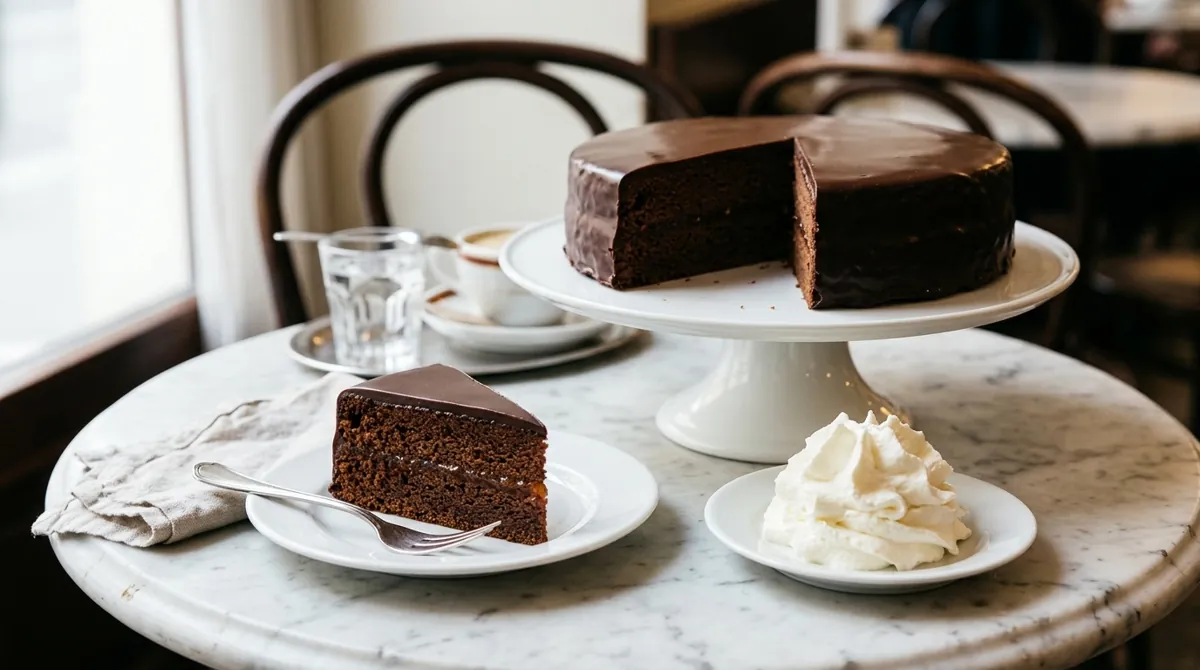
Sachertorte (Viennese Chocolate Apricot Torte)
Vienna's famous chocolate torte: a light, dark chocolate sponge split and filled with apricot jam, brushed with more jam and covered in a glossy poured chocolate glaze, served with unsweetened whipped cream.
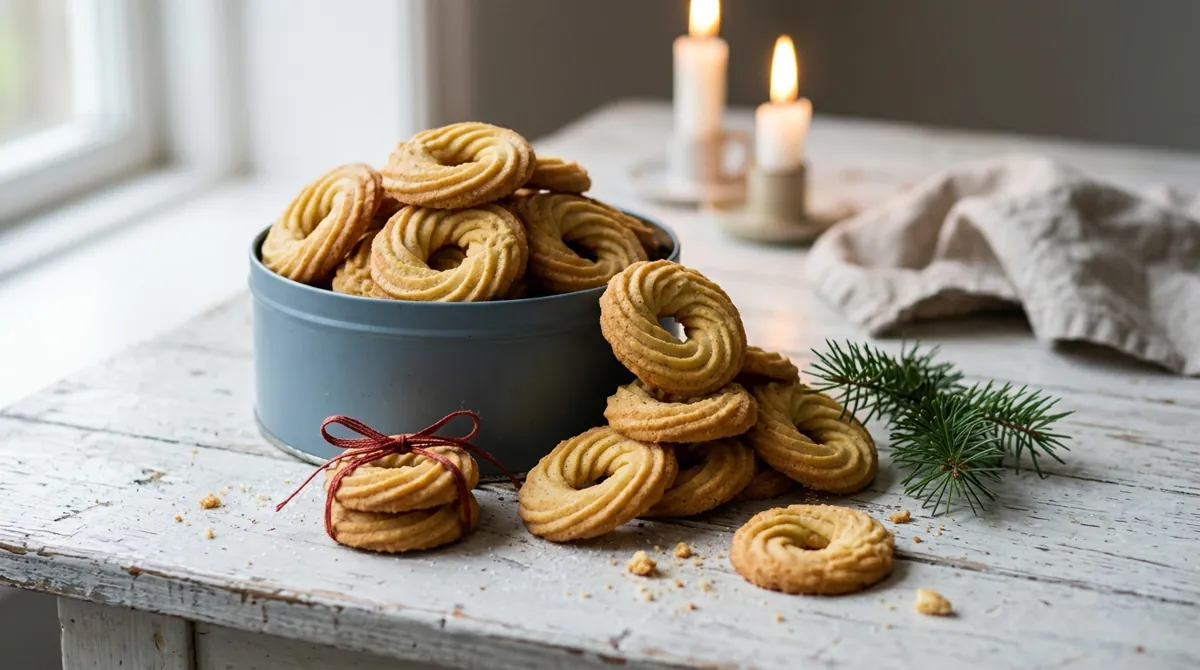
Danish Vaniljekranse (Vanilla Wreaths)
The Danish Christmas cookie behind the famous blue tin: a rich butter dough with ground almonds and a whole vanilla bean, piped through a star tip into little rings and baked crisp and golden.
Every other ice cream
Sicilian Lemon Granita with Brioche
Lemon juice, zest, sugar and water, frozen and scraped into fine ice the Sicilian way, served for breakfast with a soft brioche for dunking.
French Crème Glacée à la Vanille (Custard Ice Cream)
The French way: a vanilla crème anglaise of milk and six egg yolks, cooked until it coats the spoon, finished with a little cream and churned.
Turkish Dondurma (Stretchy Maraş-Style Ice Cream)
Milk and cream cooked with mastic resin and a starch thickener until it pulls in ribbons, churned, frozen in a loaf and sliced, with cinnamon and pistachios.
Indian Matka Kulfi (Saffron and Almond)
Whole milk boiled down to a third of its volume, sweetened, scented with saffron and cardamom, studded with almonds and frozen still in small clay pots, never churned.
Japanese Matcha Ice Cream
An eggless green tea ice cream that tastes like Japan's, not America's: earthy, sweet and a little bitter, with a generous five tablespoons of matcha.
Mexican Mango Paletas
Ripe mango, a squeeze of lime and a spoonful of sugar blended and frozen on a stick: the fruit paleta that made a Michoacán village famous.
Filipino Ube Ice Cream
Purple yam cooked down with condensed milk into a quick ube halaya, then whisked with coconut milk and churned into a violet, egg-free ice cream.
Philadelphia-Style Vanilla Ice Cream
The American eggless ice cream: cream, milk, sugar and vanilla stirred together cold, chilled and churned, with nothing cooked and nothing to temper.
Classic Vanilla Custard Ice Cream (Jefferson's Recipe, Updated)
The rich American vanilla: a cream-heavy custard with five yolks cooked to 170 to 175°F, the same idea as the recipe Thomas Jefferson wrote out by hand.
Bittersweet Chocolate Ice Cream
A dark, dense chocolate custard ice cream made with six yolks and six ounces of melted bittersweet chocolate, blended smooth before it chills.
The Classic Banana Split
A banana split lengthwise around scoops of vanilla, chocolate and strawberry ice cream, topped with pineapple, strawberry and chocolate sauces, whipped cream, peanuts and cherries.
The Hot Fudge Sundae
Vanilla ice cream under a warm, glossy hot fudge made with butter, unsweetened chocolate and Dutch cocoa, finished with whipped cream, toasted nuts and a cherry.
The Root Beer Float (Black Cow)
Two big scoops of vanilla ice cream in a frosted mug, very cold root beer poured slowly over the top until the foam rises.
Weeknight No-Churn Vanilla Ice Cream
No machine and no eggs: cold cream, condensed milk and milk powder whipped glossy in a food processor in about 15 minutes, then left to freeze.
Frozen Custard Concrete with Cookies and Fudge, Inspired by Shake Shack
A rich vanilla frozen custard, churned and frozen firm, then mashed with crushed chocolate sandwich cookies and fudge into a concrete so thick you can turn the cup upside down.
Meatballs of the World

Italian-American Meatballs
Big, tender meatballs braised for an hour in red sauce over spaghetti. The one most Americans grew up with.

Pallottine (Abruzzo Meatballs)
Tiny meatballs, smaller than a marble, tossed right through square spaghetti alla chitarra. No bread at all.

Swedish Meatballs (Köttbullar)
Small, soft meatballs browned in butter, in a cream sauce made from the same pan, with lingonberry jam on the plate.

Danish Frikadeller
Pork meatballs shaped with a spoon and fried slowly in butter, crusty outside and soft in the middle.

Königsberger Klopse
German meatballs that are never fried: poached, then served in a creamy white sauce with capers.

Spanish Albóndigas in Almond Saffron Sauce
The tapas bar classic: small meatballs in a golden sauce thickened with fried almonds and bread.

Mexican Albóndigas with Chipotle and Mint
Soft meatballs with rice and fresh mint inside, simmered in a smoky tomato and chipotle broth.

Izgara Köfte (Turkish Grilled Meatballs)
Small, flat meatballs kneaded hard, rested cold, and charred on a hot grill pan.

Lion's Head Meatballs
Big, soft pork meatballs, stirred into a sticky paste, fried to set, then braised in a savory sauce.

Chicken Tsukune
Japan's chicken meatball: kneaded sticky, grilled on skewers, glazed with sweet soy tare, dipped in egg yolk.